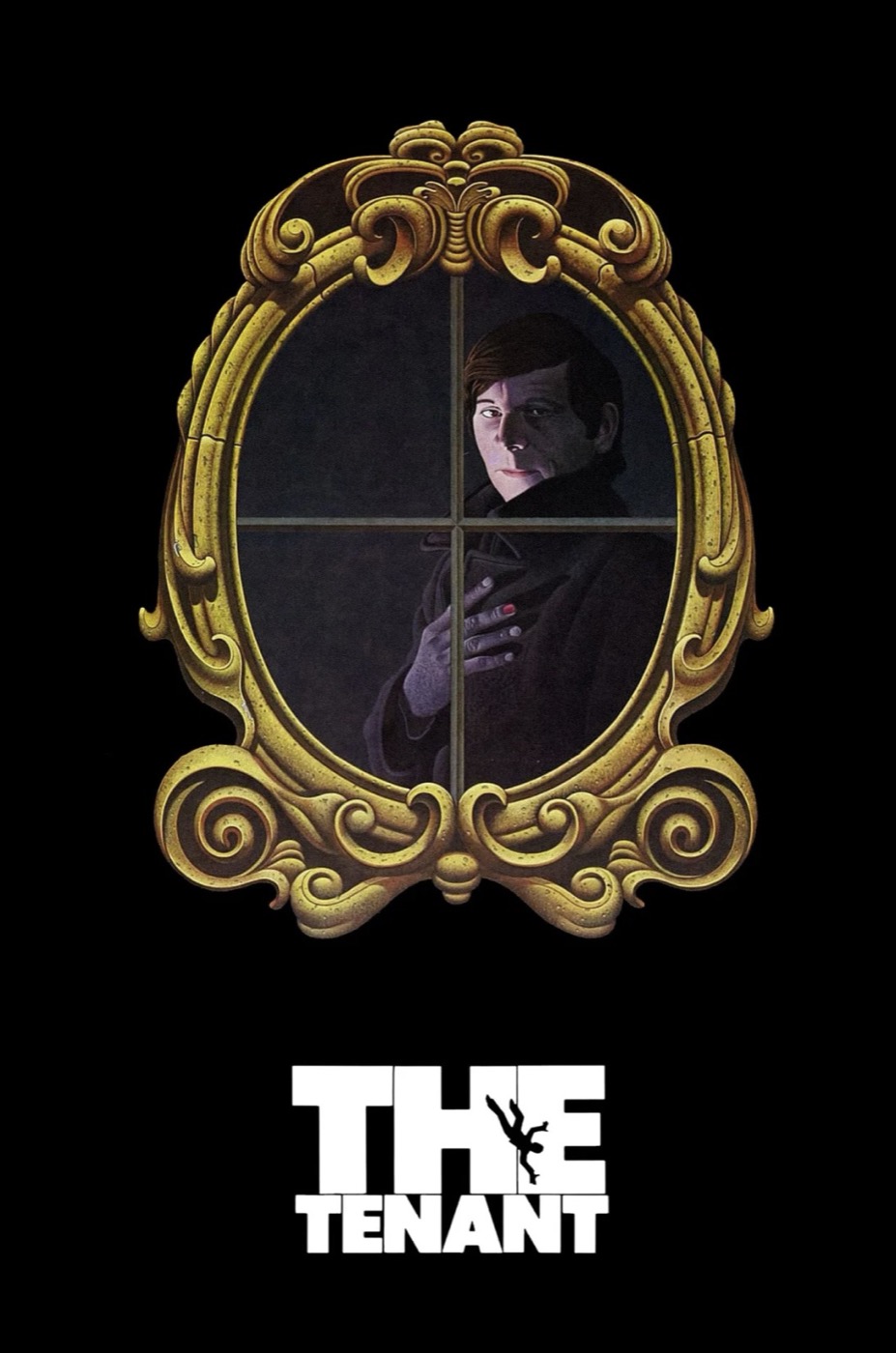
THE TENANT (1976)
A man’s grip on reality disintegrates after he moves into a new apartment


A man’s grip on reality disintegrates after he moves into a new apartment
Roger Ebert hated Roman Polanski’s The Tenant—absolutely loathed it. The film was “not merely bad”, he wrote, “it’s an embarrassment”, with “an ending that must rank among the most ridiculous ever fashioned for an allegedly reputable movie”. His British counterpart Leslie Halliwell, like Ebert a critic of essentially common-sense and populist values, was equally dismissive: “Rather like a male version of the same director’s Repulsion, this wearisome case history shows the total dissipation of whatever talent he once had.”
And yet, not everybody felt the same way. Vincent Canby in The New York Times was enthusiastic about “the most successful and most consistently authentic Polanski film in years”. Daniel Bird, the scholar of Polish film, has called it “Polanski’s masterpiece”.
It may not be a coincidence that Ebert and Halliwell were writing for a general cinema-going audience, while Canby and Bird wrote for more of an intellectual elite. Which side you fall on where The Tenant is concerned surely depends on whether you are prepared to accept the film on its own flawed terms, as a kind of subjective, impressionistic nightmare, or demand conventional elements like character development and a coherent storyline.
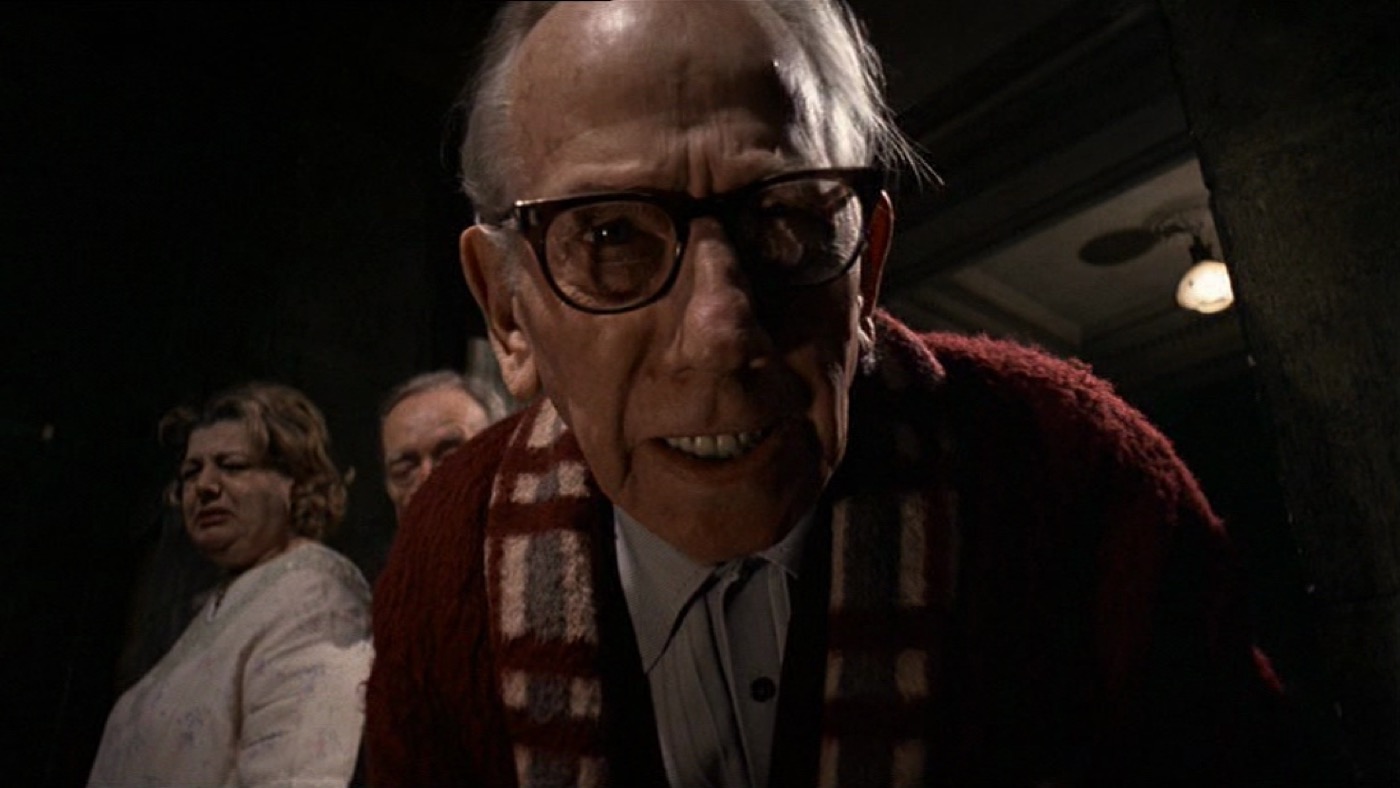
For the problem with The Tenant is that it’s very good, at its best verging on great, in half of the ways that matter – and disastrous in the other half. Polanski demonstrates here that he can be a master of the moment, the unnerving effect, the striking image; parts of The Tenant might remind you of anything from the expressionism of Alberto Cavalcanti’s final story in Dead of Night (1945), to Stanley Kubrick’s Overlook Hotel in The Shining (1980), to the murderous fever dream of Luca Guadagnino’s The Protagonists (1999).
But at the same time, he fatally neglects the larger-scale demands of narrative, compounding this weakness by abruptly shifting the tone and trajectory of the film halfway through. It starts out seeming to be a tale of modern urban stresses; then, without any groundwork having been laid, it suddenly becomes a lurid fantasia of paranoia, delusion and outright horror. The two sides of the film don’t complement or illuminate each other; they’re just stuck together.
To be fair, Polanski himself acknowledged this later: “With hindsight, I realise that [the principal character] Trelkovsky’s insanity doesn’t build gradually enough – that his hallucinations are too startling and unexpected. The picture labours under an unacceptable change of mood halfway through.” But, of course, his later realisation does nothing to rescue the film itself.
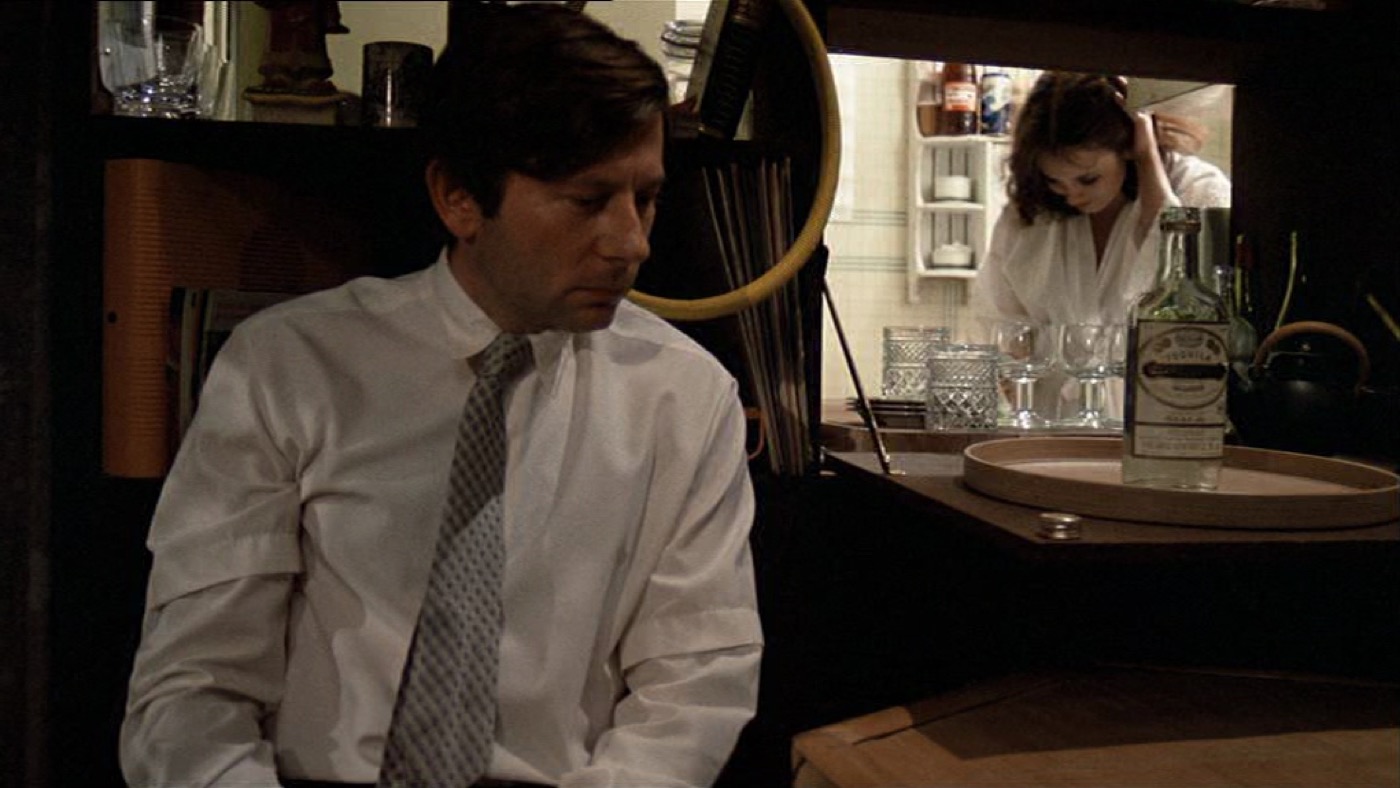
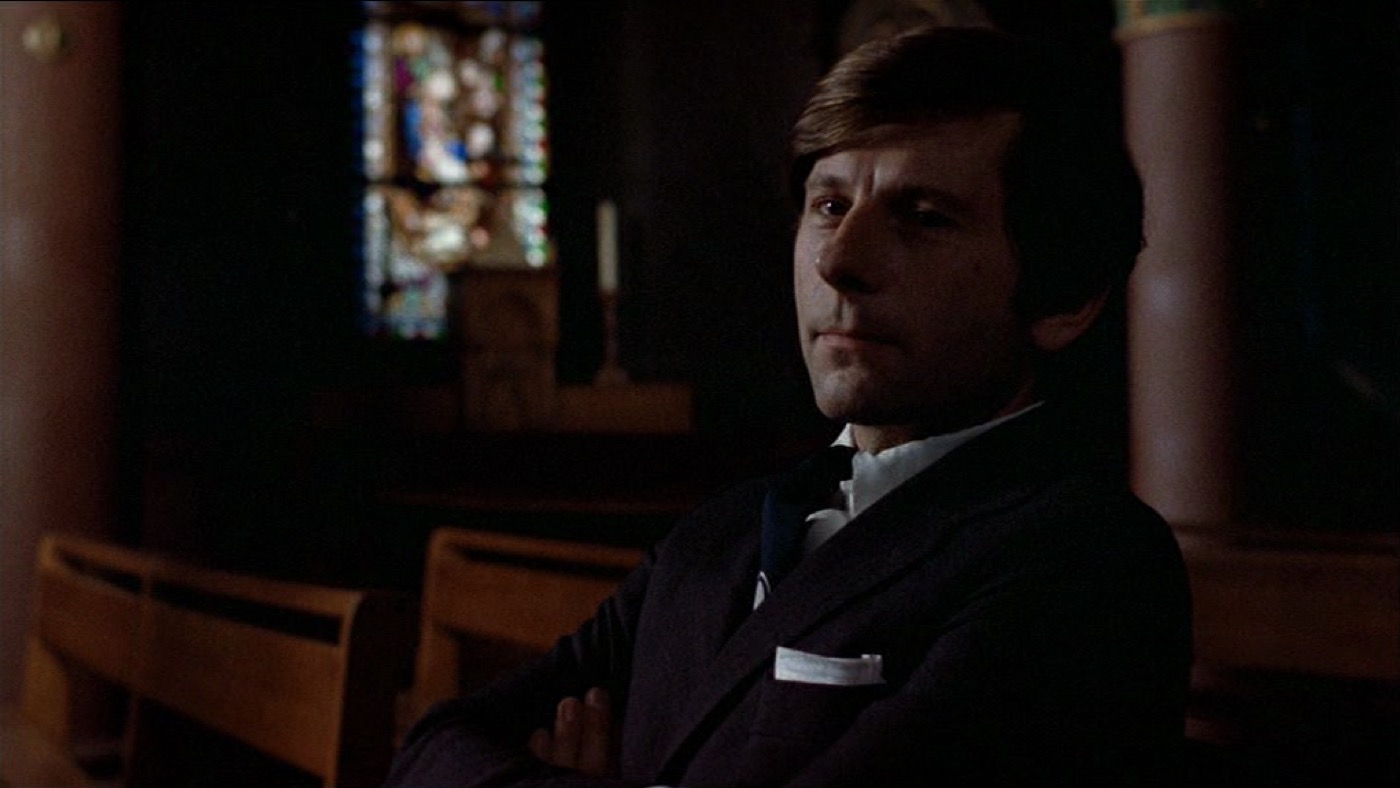
As well as directing and co-writing, Polanski plays Trelkovsky, a Polish man (like Polanski) living in Paris (where Polanski was born, though he largely grew up in Kraków). We learn nothing about his past and indeed very little about his present – he is single, seemingly honest and likeable, holds what appears to be a relatively junior office job, and has a few male friends from work with whom he doesn’t seem very comfortable. This lack of character depth works well at first, though it becomes a weakness later.
At the very start of the film, Trelkovsky visits an apartment building, where he rents a flat. The previous tenant, Simone, is in hospital after attempting to kill herself by jumping from the flat’s window, and he feels compelled to visit her – it’s not quite clear why, but perhaps it’s just because he’s a nice guy.
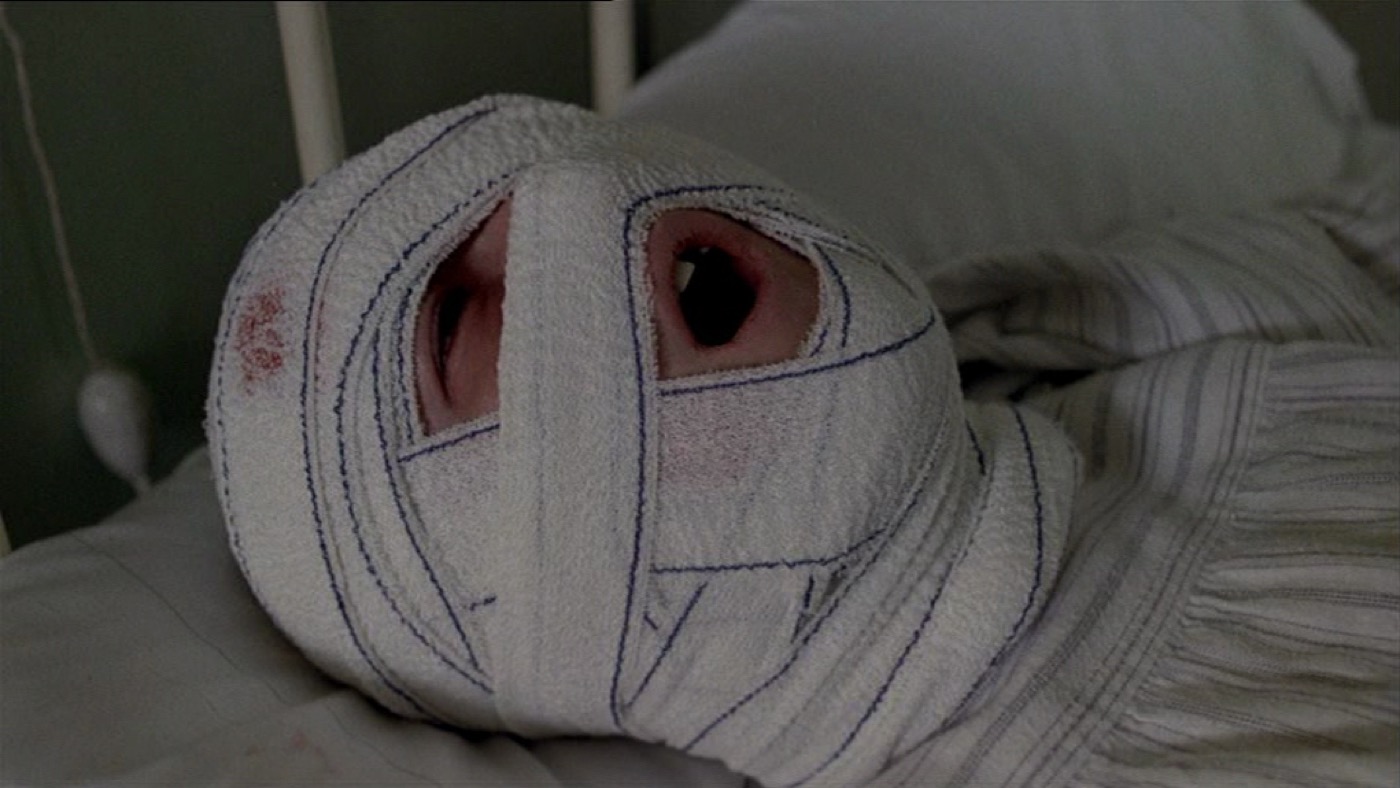
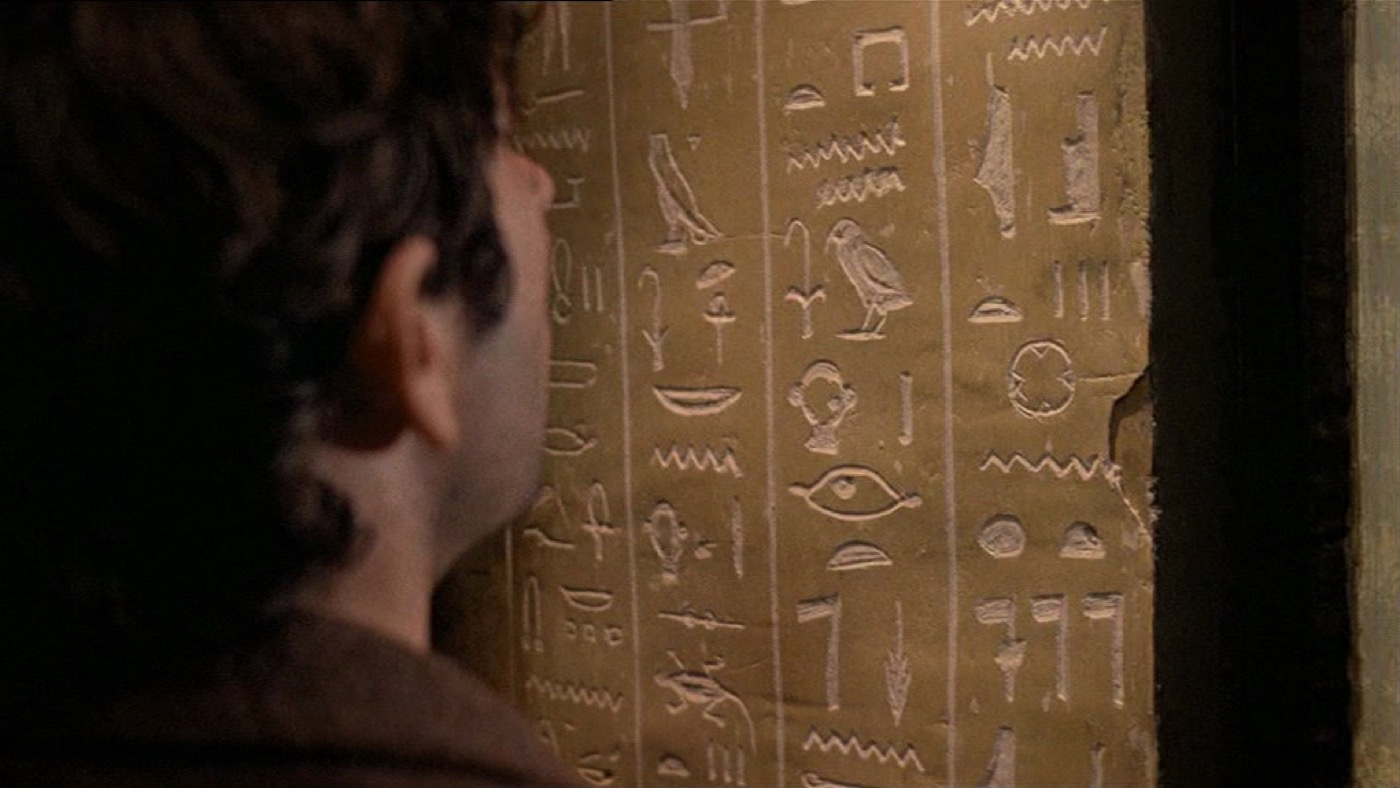
She is wrapped head to toe in bandages, like the Egyptian mummies she studied as a historian, and at the end of the hospital-visit scene she screams from inside them, suddenly, long and loud; it’s a shocking moment, perhaps the most shocking in the whole movie. Far wilder things happen later, but in this scene there is also normalcy, and it’s the contrast that makes the scream so disturbing.
Trelkovsky forms a brief friendship with Stella (Isabelle Adjani), a friend of Simone’s (or, in some readings of the film, her lover). Not long after, Simone dies in hospital.
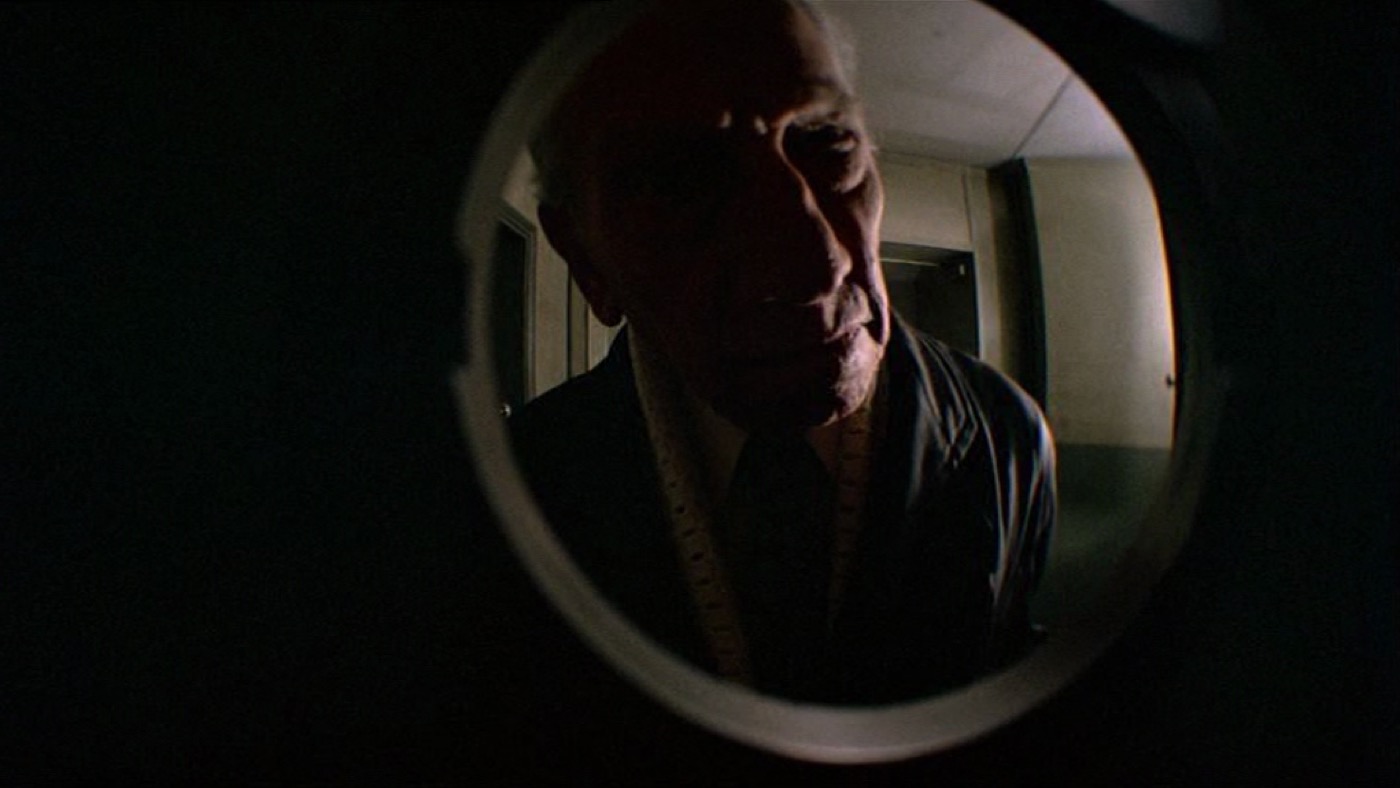
Trelkovsky tries to settle into his new apartment, but it isn’t easy. The landlord, M. Zy (Melvyn Douglas), is constantly disapproving, both he and the neighbours seem obsessed with noise, and there are repeated, unnerving incidents: a tooth found in a hole in the wall, and strange, immobile figures in the bathroom across the courtyard. As with many other apartment-based movies, from Hitchcock’s Rear Window (1954) to Chloe Okuno’s Watcher (2022), The Tenant often uses things seen through the window, beyond the home’s boundaries, to threaten its apparent safety.
At the local café, meanwhile, the staff seem determined to treat Trelkovsky just like Simone, bringing him her preferred hot chocolate and Marlboro cigarettes despite his protestations that he wants coffee and Gauloises.
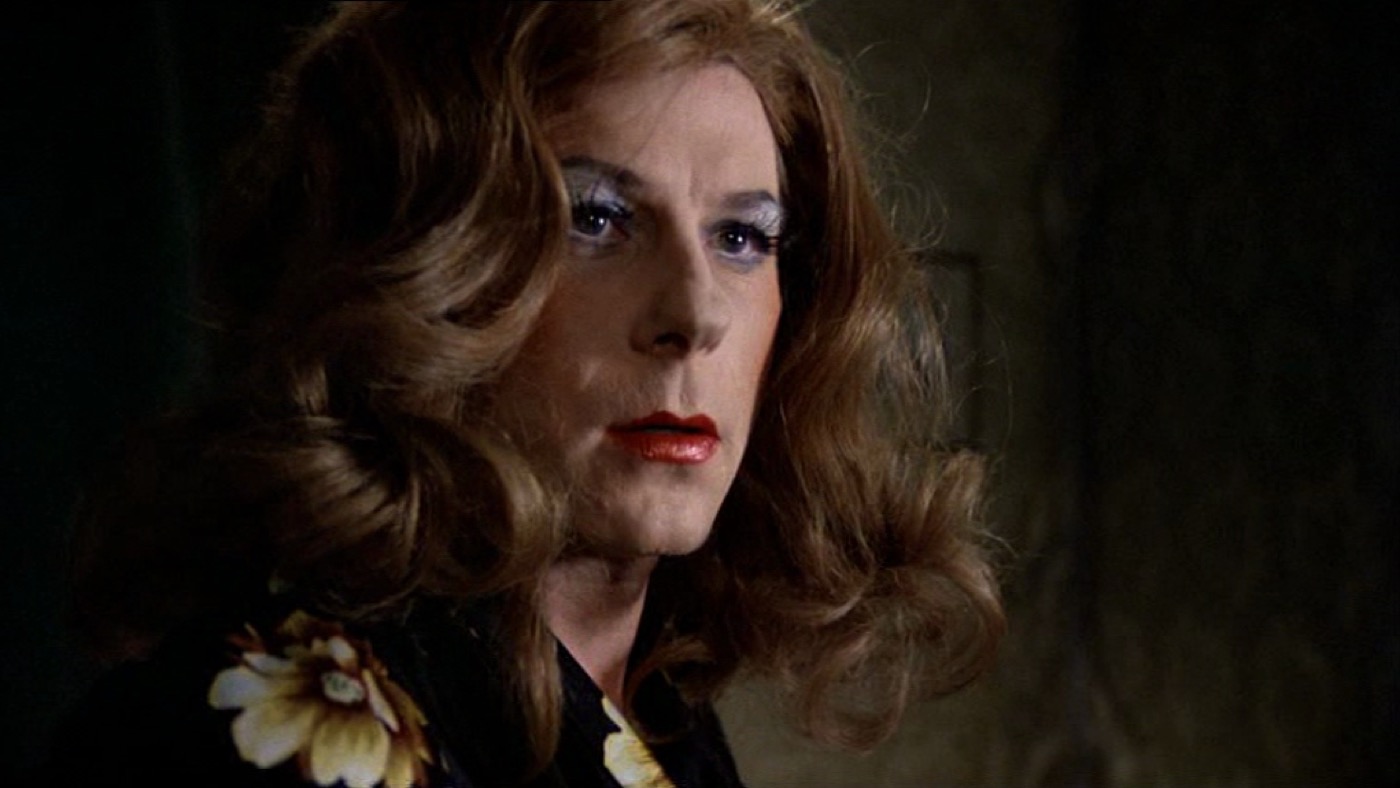
Eventually, Trelkovsky becomes disconnected from reality, at times seemingly imagining he is Simone, at others believing that the others in the building are trying to make him think that. Of course, he is still sure that he is the sane one in a mad world, and the very last line is one of anguished protest – “I’m not Simone Choule, I’m Trelkovsky!” – but by then it is clear to the audience that his hold on the difference has largely disintegrated.
The problem is that all this comes pretty much out of the blue. Early on, the film seems more likely to be wryly humorous than anything else – there is even some very nicely handled physical comedy in a scene where Trelkovsky struggles on the stairs with bags of rubbish. But then suddenly, for no apparent reason, he is painting his nails, buying a woman’s wig and trying to strangle himself. Earlier weird things could be put down to satire or the genuine strangeness of people; now they can only be understood as hallucinatory, and by the end The Tenant has descended into what Ryan Gilbey calls “near-operatic horror”.
A few scenes simply make little sense, even in the context of the principal character’s breakdown. Why does Trelkovsky slap a small boy in the park for no reason? Why, when Trelkovsky takes his new acquaintance Badar (Rufus) to a bar, does a drunk stranger turn on Badar? Is senselessness itself the point? Maybe, but that line of reasoning leads to a place where absolutely anything can be inserted into a plot.
The kind of old-fashioned, highly theatrical take on mental illness in which Polanski indulges with The Tenant only really works if there is some internal logic to it, and here it is often missing. Trelkovsky’s big speech about halfway through about identity and the loss of it gives some clue as to what is happening, but not to why; and letting the audience see so little of the inner Trelkovsky before his breakdown also makes it difficult to know how much he has changed, making it less troubling that he has.
Despite all these problems with the concept and the writing, it must be acknowledged that Polanski’s performance as Trelkovsky does a lot to hold the film together and keep the viewer’s attention, especially in its first, saner half. Polite to a fault, slightly feminine, but not at all passive – firm about what he thinks and wants – he is a completely believable person. Even when the bigger narrative picture becomes shaky, Trelkovsky’s actions and reactions within individual scenes mostly seem very plausible.
Outstanding elsewhere in the cast are Douglas as the courteously hostile landlord, and a wonderful Shelley Winters as the apartment building’s irritable, misanthropic concierge; the first time she smiles is when she tells Trelkovsky about Simone’s suicide attempt, and if you need convincing that it is possible to wash a window angrily, The Tenant is the movie for you. The casting of these two American veterans as Parisians is a little odd, though, and the international nature of The Tenant’s cast led to an awkward compromise over language – the film was shot with some actors speaking English and some French, and then dubbed as necessary into single-language versions. This dubbing must be the reason for the very artificial delivery of lines in some small roles.
Just as important as any of the people in The Tenant are the settings, particularly Trelkovsky’s flat: this is the last in Polanski’s so-called “apartment trilogy” that also comprises Repulsion (1965) and Rosemary’s Baby (1968).
All three films deal in different ways with mental illness, despair and the loss of identity, and depend heavily on their apartment settings, but it is Repulsion that The Tenant resembles more strongly (although the presence of the supernatural in The Tenant, as in Rosemary’s Baby, is not a totally unsupportable idea either). Indeed, Polanski had originally resisted adapting his friend Roland Topor’s novel The Tenant precisely because it was too similar to Repulsion.
Both movies are much more concerned with depicting than explaining a mental breakdown, although Repulsion is more successful because – unlike The Tenant – it doesn’t introduce events that promise a fully fledged plot and then just abandon them. There are visual connections too: the prone woman at the beginning of Repulsion anticipates The Tenant’s Simone in her hospital bed, and the cracks in the walls of Catherine Deneuve’s apartment are echoed by the tooth Trelkovsky finds in the wall of his in the later film.
And just as the physical decay of the apartment and its contents in Repulsion parallels Deneuve’s decline, so does Trelkovsky’s flat and indeed his whole building signal that not all is right in his world. The camera’s meander around the dilapidated courtyard at the very beginning is thoroughly disorienting, as is the interior layout of the block; it’s impossible to grasp how different parts of this structure relate to one another. Trelkovsky, newly moved in, turns on a tap and a pan hanging on the wall immediately starts to rattle. The lighting of the apartment scenes is suffused with an unpleasant green (it’s notable that the lighting is much nicer in Stella’s apartment).
More generally, the city of Paris is far from welcoming. A huge construction site past which Trelkovsky walks in an early exterior scene seems like an attack on the ground itself. The Seine and the Eiffel Tower are unglamorous, grey and industrial in ambience. Several times on the street we see in the background what seems to be a large poster dominated by a superbly sinister illustration, mysteriously but worryingly entitled La Peinture Lure (“the painting trap”; Topor, the novelist, painted it).
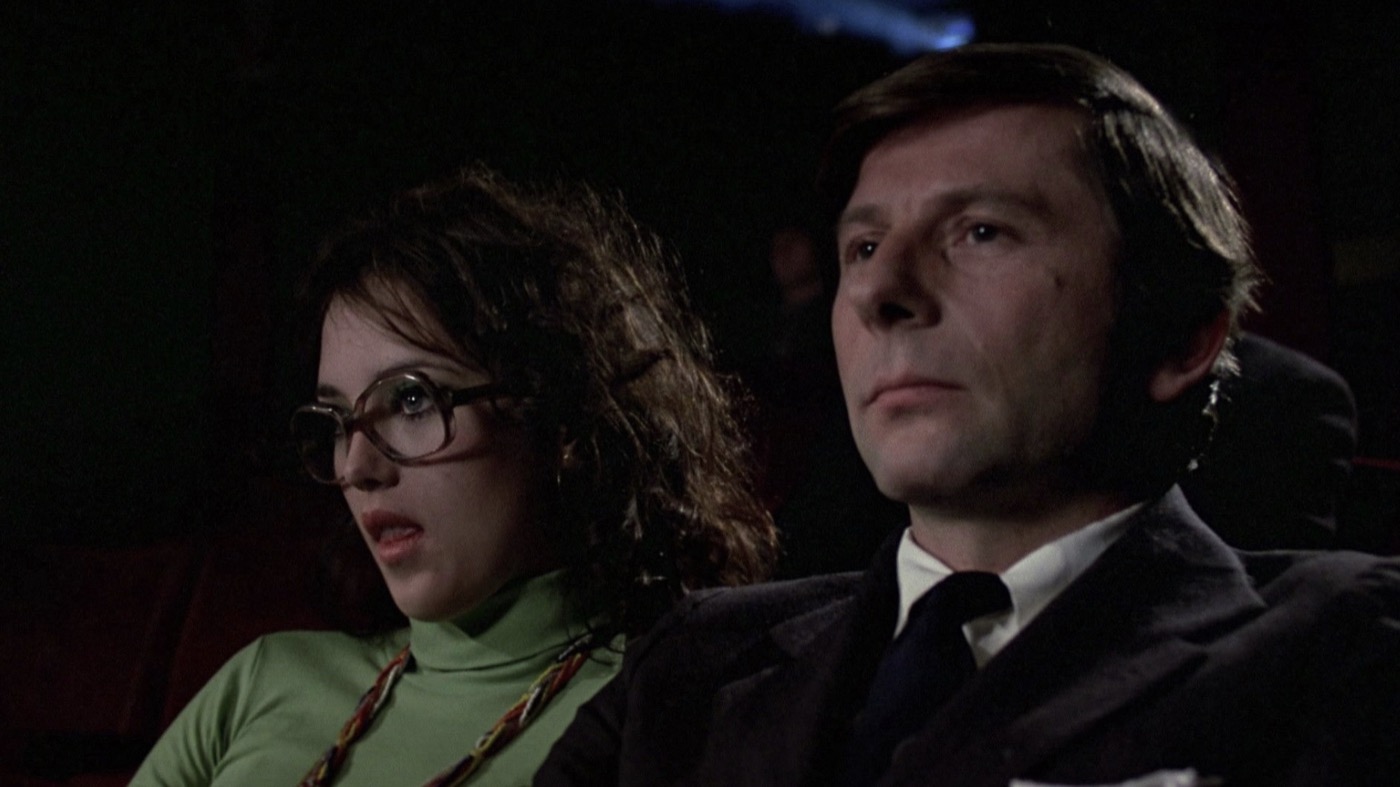
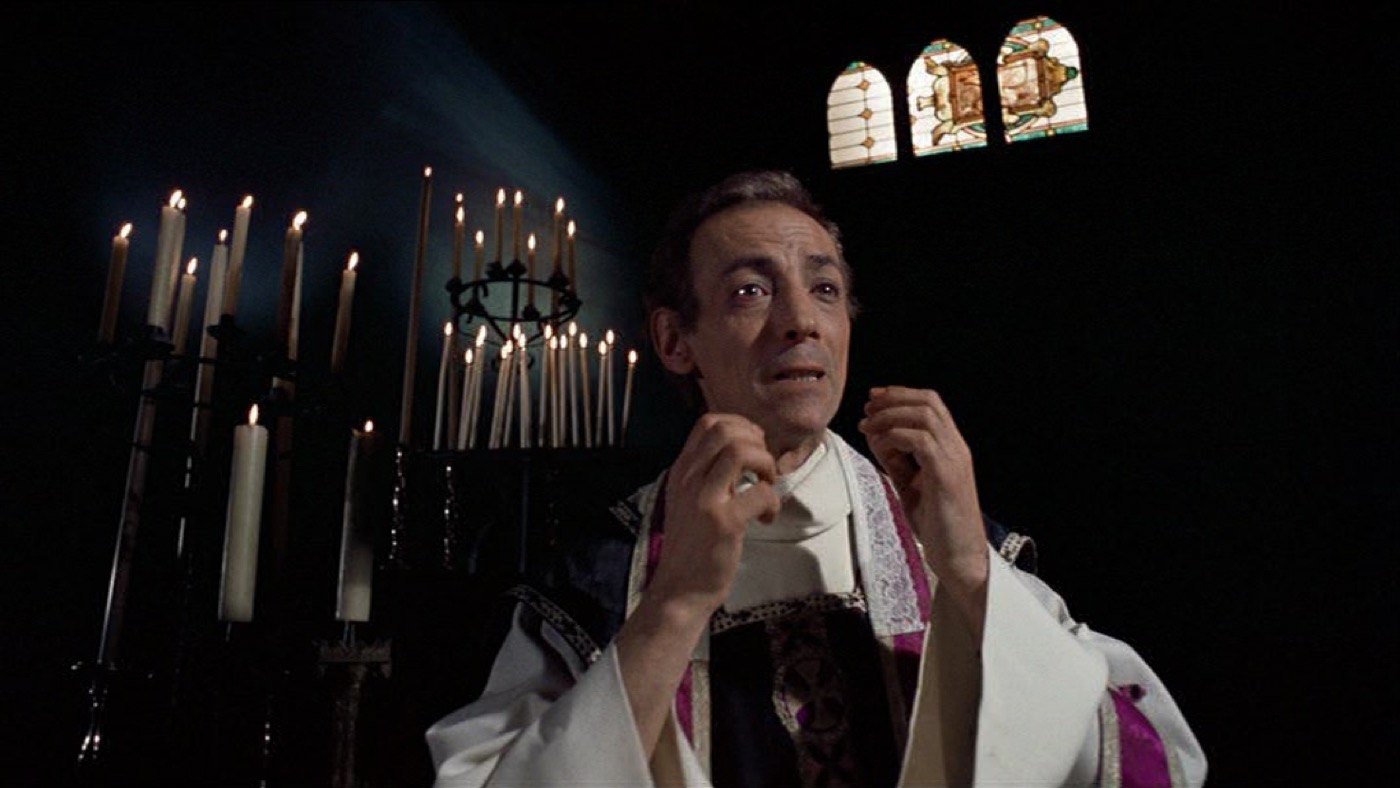
Almost everyone is aggressive, from a nurse in Simone’s hospital to Trelkovsky’s boorish colleagues. (Their faces are often unusual, too – Polanski must have cast for this.) The priest giving Simone’s funeral address starts off talking in conventional religious terms but is soon warning of the worms and putrefaction that await the dead; where, in this scene, does the reality stop and Trelkovsky’s hallucination begin? Polanski is determined, even, to insert the unpleasant into the few scenes of real human connection. While Badar cries to Trelkovsky about the loss of Simone, an indifferent café proprietor counts his takings. When Trelkovsky and Stella visit a cinema, their embraces come across as clumsy, frustrated gropes.
Individually, many of these touches are highly effective. Performances are often good, too, and the environment is used powerfully; the great cinematographer Sven Nykvist sustains a claustrophobic, unsettling visual atmosphere throughout the entire movie. But even so, The Tenant remains the least satisfying of Polanski’s apartment trilogy.
The protagonist’s mental collapse is not nearly as convincing as in Repulsion, nor is Polanski’s brand of surrealist horror quite as creepy (in The Tenant it gets downright silly at times), nor is the apartment as powerful a metaphor. (It’s never clear in The Tenant whether Polanski wants us to understand that the place itself has had some malign influence on Simone and Trelkovsky.)
The realistic, the darkly humorous, and the moments of more extreme horror are not tied together nearly so well in The Tenant as in Rosemary’s Baby, either. For example, there are obvious allusions to Trelkovsky’s outsider status as an immigrant to Paris. He has to adjust to a flat full of someone else’s things, his repeated insistence that he is a citizen does nothing to alleviate others’ suspicions of him, and eventually he finds himself turned into someone he doesn’t want to be. But none of this melds as naturally with the rest of the storyline as Mia Farrow’s doubts about pregnancy and motherhood do in Rosemary’s Baby. The points feel tacked-on.
In the end, this is the fundamental problem with The Tenant. It brings together a bunch of ideas – from psychosis to xenophobia to reincarnation to urban alienation – that don’t naturally fit together, and then offers no persuasive overall premise, story arc or character development to consolidate them. Instead, it lurches from one to the next without making it clear how they connect, if they even do.
Critics like Roger Ebert and Leslie Halliwell may somewhat overstate the case against the film – there are good things in it, for sure – but still, it’s difficult to see it as more than a curiosity.
FRANCE | 1976 | 126 MINUTES | 1.66:1 | COLOUR | ENGLISH

director: Roman Polanski.
writers: Gérard Brach & Roman Polanski (based on the novel by Roland Topor).
starring: Roman Polanski, Isabelle Adjani, Melvyn Douglas & Shelley Winters.