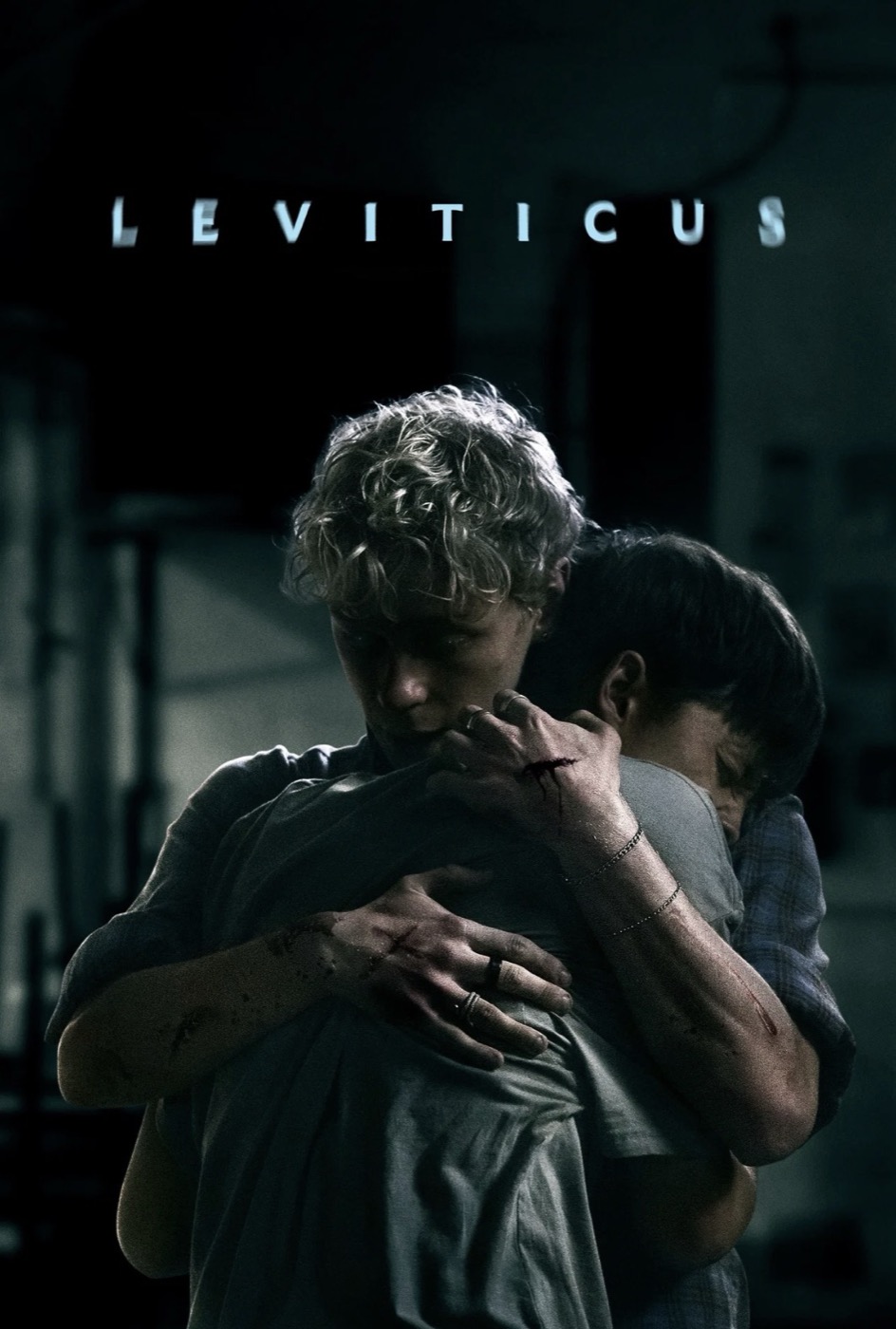
LEVITICUS (2026)
Two teenage boys must escape a violent entity that takes the form of the person they desire most... each other.


Two teenage boys must escape a violent entity that takes the form of the person they desire most... each other.
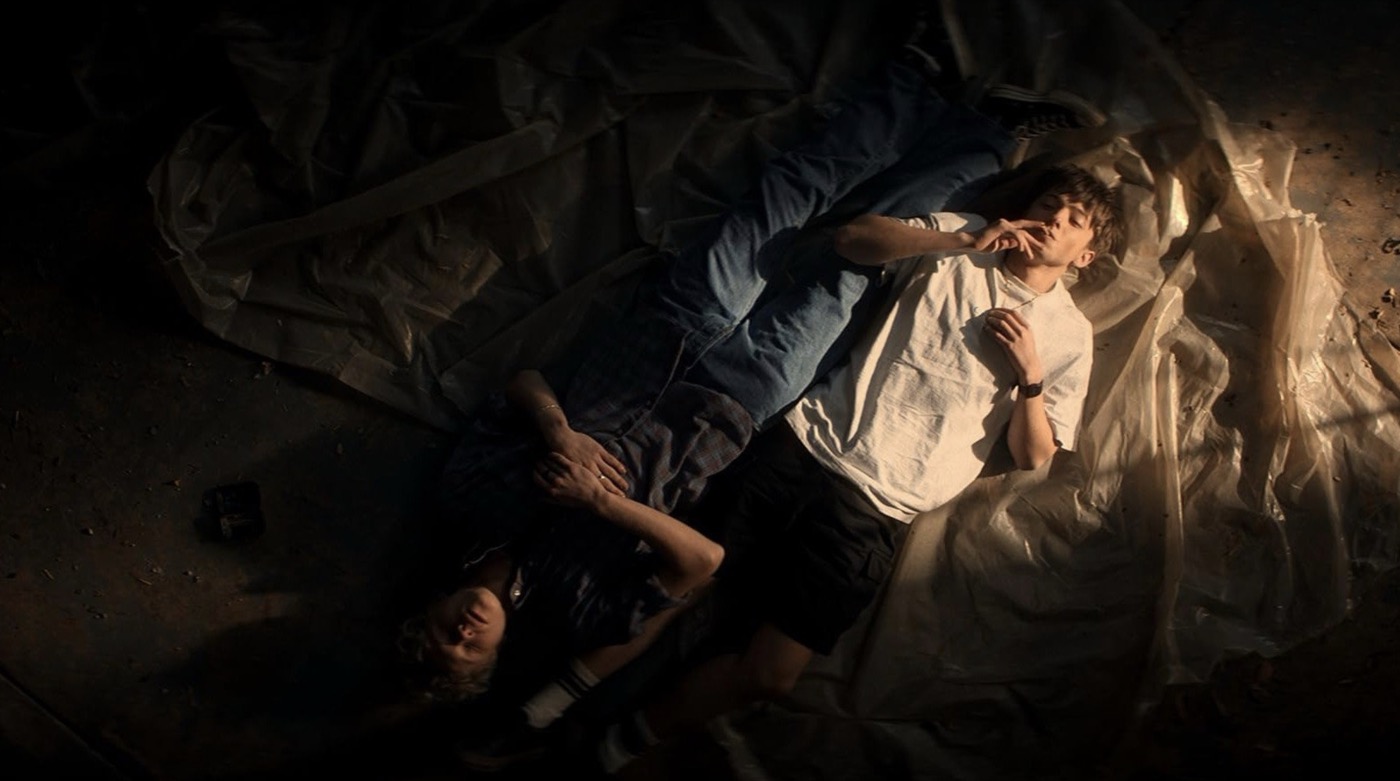
The story follows Naim (Joe Bird), a young man who moves with his mother Arlene (Mia Wasikowska) to Leviticus, a small Australian industrial town. Written and directed by Adrian Chiarella, the film tracks Naim as he falls furtively in love with local boy Ryan (Stacy Clausen). However, when he sees Ryan being intimate with the pastor’s son Hunter (Jeremy Blewitt), jealousy turns into an act of betrayal. The church, of which Naim and his mother are members, conducts a conversion therapy ritual incorporating mysticism. Soon, Ryan and Hunter are pursued by malevolent doppelgängers of their hearts’ desire, while Naim grows closer to becoming the ritual’s next target.
I wish Leviticus were more engaged with its namesake. As it stands, the film feels as if it were named purely because the filmmakers are vaguely aware of the Bible’s anti-gay verse. It’s a much weirder, richer book than a simple interpretation can cover, and I probably would’ve liked the film more under a different title—like& Doppelgänger, or even 18:22, referencing the specific verse.
I wanted richer characterisation and deeper religious or mythological themes; the characters felt a shade thin and the themes a touch vague. I might be making a genre error, though. At its heart, this is a love story with horror trappings, and it will no doubt resonate with younger queer audiences. I liked the romance well enough.
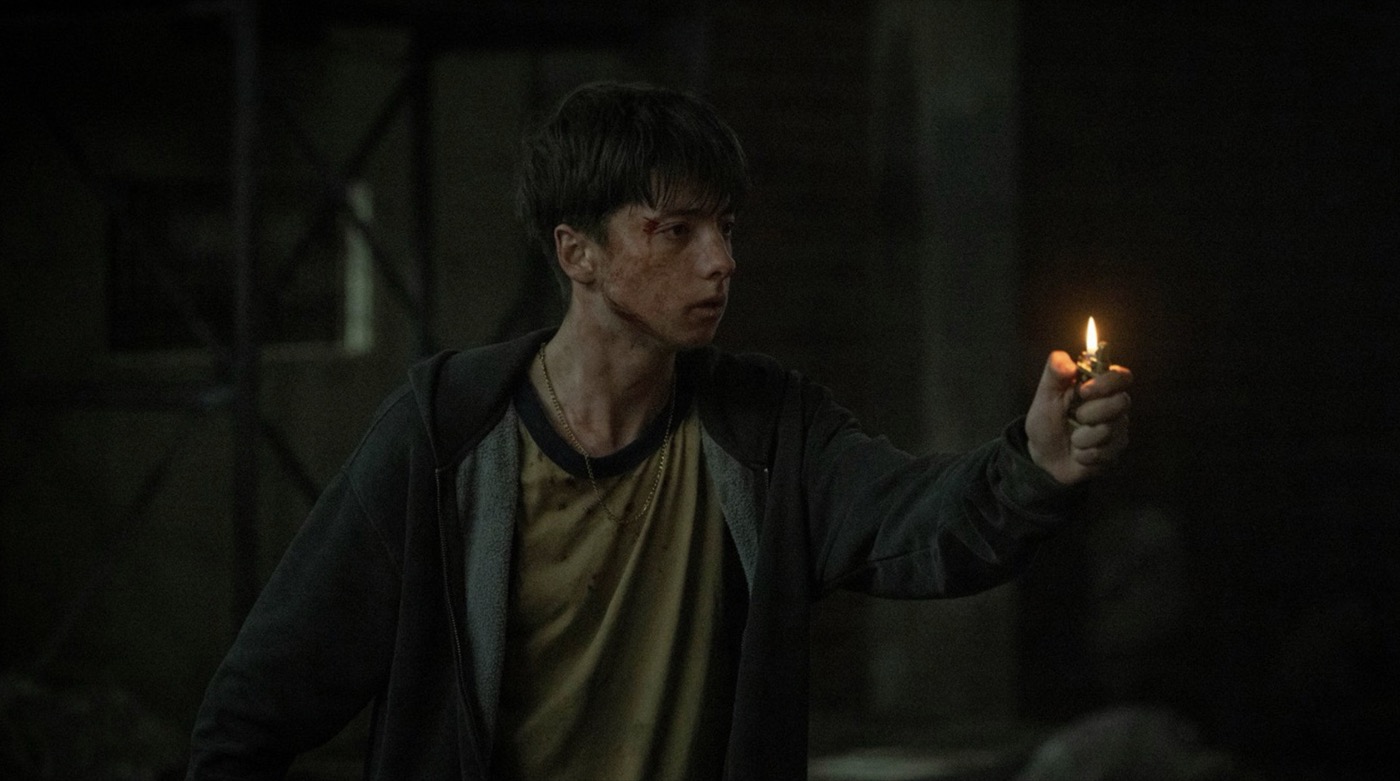
The cinematography beautifully evokes a small, working-class industrial community: smokestacks billowing within huge, fenced-off plants; the sky perpetually burnished to a late-summer glow; crabgrass dividing the tract houses. It suits the romantic mood and underscores the story’s coming-of-age themes as the characters reach childhood’s end. It reminded me of Daniel Clowes’ use of colour to similar effect in his 1997 graphic novel Ghost World, which was bathed in the muted blues of 1990s TV screens at night.
The mood and atmosphere are probably the most developed “characters”, which presents a problem. None of the people in Leviticus are particularly detailed beyond their plot function. Naim has a brief conversation with his mother about liking “psytrance” (psychedelic trance—a fast, hypnotic form of electronic dance music), and that might literally be it.
Unless I missed something, every other character moment is directly tied to the plot. Ryan doesn’t even have the sliver of backstory that Naim and Hunter receive. We don’t see any family for him (perhaps they were in the crowd at the conversion ritual). Blond, curly-haired, muscular, and unfaceted, Ryan reads more like a fantasised projection of burgeoning sexual cravings than a flesh-and-blood human with deep interiority.
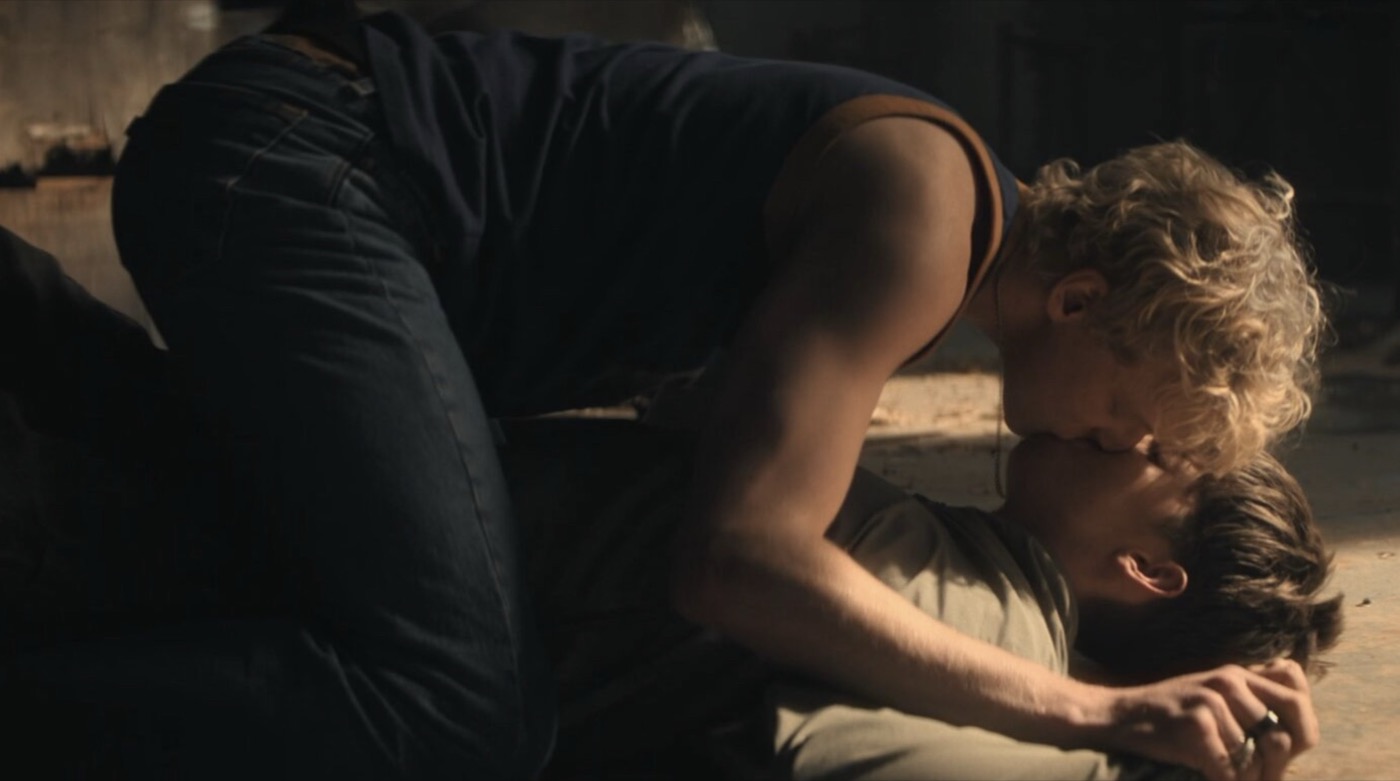
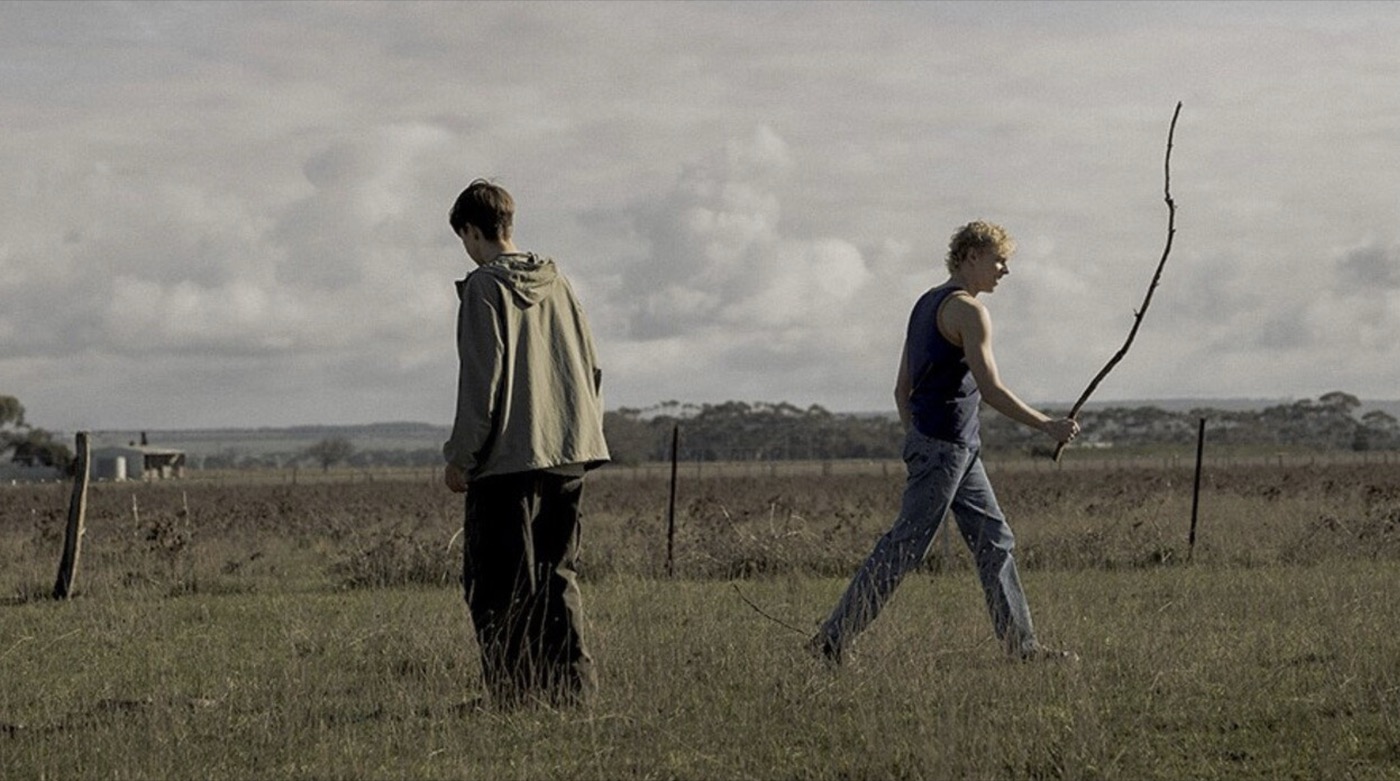
Although Hunter at least gets a family, he’s essentially just Ryan with different-coloured hair. Scenes where they throw stones at each other as a prelude to intimacy are clearly meant to evoke the punishments set down in Leviticus, yet they strike me as a little silly—like a straight writer’s conception of gay male intimacy, where touch must be filtered through aggression. That’s probably unfair; Chiarella is a gay man, and I have as much experience of extremely religious outback industrial towns as I do of alien planets. Nonetheless, the characters felt undeveloped and not especially “queer”—a consequence of that missing detail, since there are obviously a million ways to be queer.
This lack of characterisation extends to the town itself. There’s surprisingly little theology in a film named after an entire book of The Bible. What does Hunter’s dad really think about his son and the horror he subjected him to? Again, we get only enough to push the plot forward. One scene of homophobic mob violence is bizarrely inconsequential; the attackers live in the town, yet show no interest in following up on the event. This makes the setting feel less like a community gripped by religious mania and more like a painted backdrop.
My complaints about engagement with Leviticus as a historical text are really a “me” problem. The title is ultimately used as shorthand for religious homophobia, though it’s jarring to find so little religion in a film marketed on it. Even if the characters merely used that single verse to justify hatred without understanding the Bible, that would still be a strong thematic point. It calls to mind the old Family Guy joke where Brian accuses Stewie of “judgementally quoting Bible verses when you don’t even know how to read,” to which Stewie replies, “Welcome to America, Brian.”
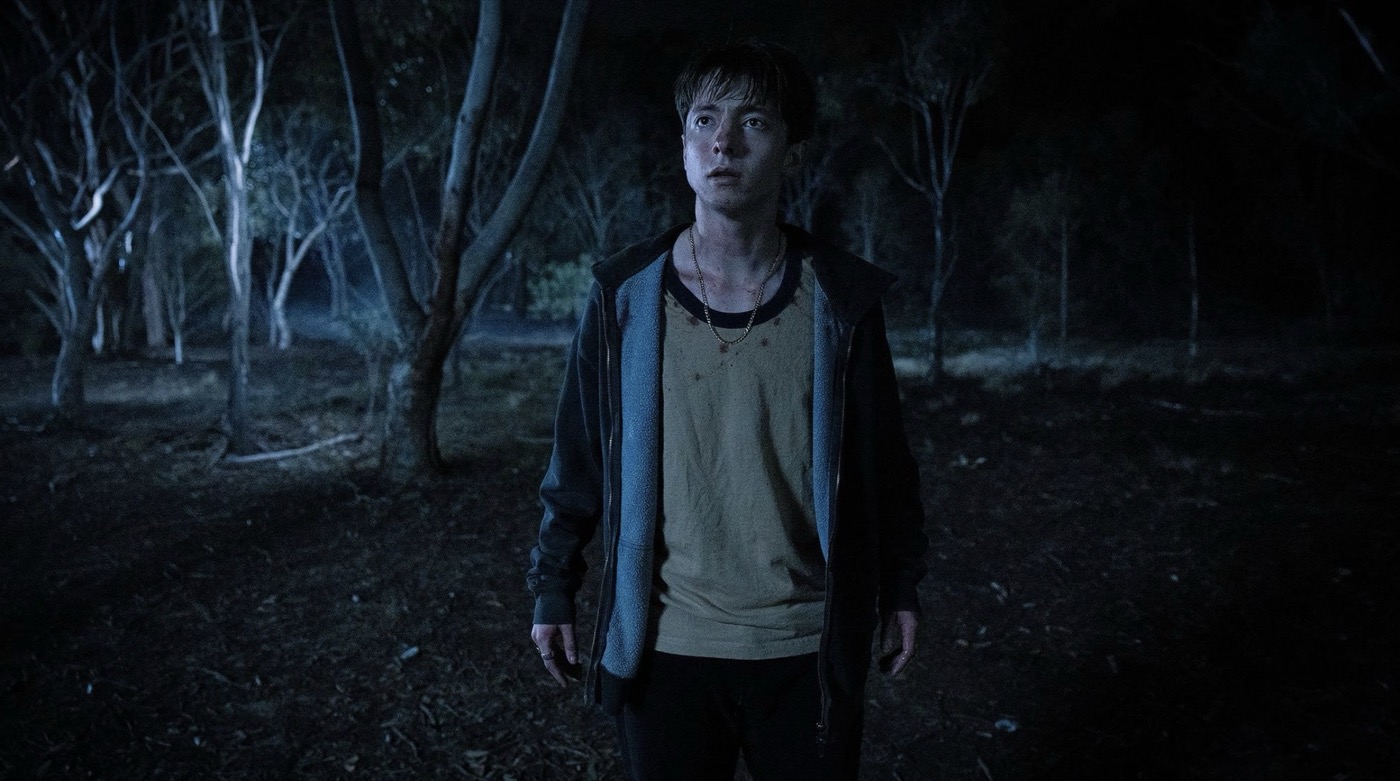
You shouldn’t judge a film for what it isn’t trying to be. (Can you tell that’s exactly what I’m about to do?) Still, if I were making a film called Leviticus, I’d set it in a town of the same name, led by a preacher obsessed with the idea that the book’s dictates are a manual for living that must be obeyed, even in the 21st-century. He discovers that his son—our protagonist—is having an affair with an oddly rootless boy. An orphan, perhaps.
He tries to convince his son that this boy is a mirage, a demon sent to tempt him away from the light. Just as Jesus didn’t come to abolish the laws of the prophets (Matthew 5:17), we must pay obeisance to those laws by structuring our lives around Leviticus.
At first, these rules are relatively innocuous: tabernacle maintenance (Leviticus 6:12), taking the Lord’s name in vain (19:12), or principles for feasting (23:2). But as the pastor sees immorality proliferating, the rules become increasingly unhinged, until a woman is stoned to death after being perceived to approach an animal for sex (18:23). Soon, the pastor’s son and his boyfriend plan their escape, pursued by mysterious doppelgängers summoned by a strange old exorcist…
Alternatively, if you want to focus exclusively on 18:22, make the pastor a Fred Phelps figure—the late Kansas leader of the Westboro Baptist Church, whose psychopathy regarding homosexuality made other bigots look sane. That would yield a three-dimensional antagonist, a psychological portrait of monomania, and a lesson on why sacred texts shouldn’t be monopolised by the fearful and foolish.
To return to my central thesis, though, perhaps I’ve made a category error. The acting is good; there’s a funny moment near the end involving a convenience store clerk, alongside some lovely romantic scenes. My favourite is a moment of heavy petting on the back of a bus that escalates into something more intense. It neatly illustrates how these characters must snatch relief where they can, forbidden from their homes and standard romantic spots. It’s sweet, tender, and highlights what this movie really is: a young adult love story with a bit of horror dressing.
AUSTRALIA | 88 MINUTES | 2.39:1 | COLOUR | ENGLISH

writer & director: Adrian Chiarella.
starring: Joe Bord, Stacy Clausen, Jeremy Blewitt & Mia Wasikowska.