HARLAN COUNTY, USA (1976)
A heartbreaking record of the 13-month struggle between a community fighting to survive and a corporation dedicated to the bottom line.


A heartbreaking record of the 13-month struggle between a community fighting to survive and a corporation dedicated to the bottom line.
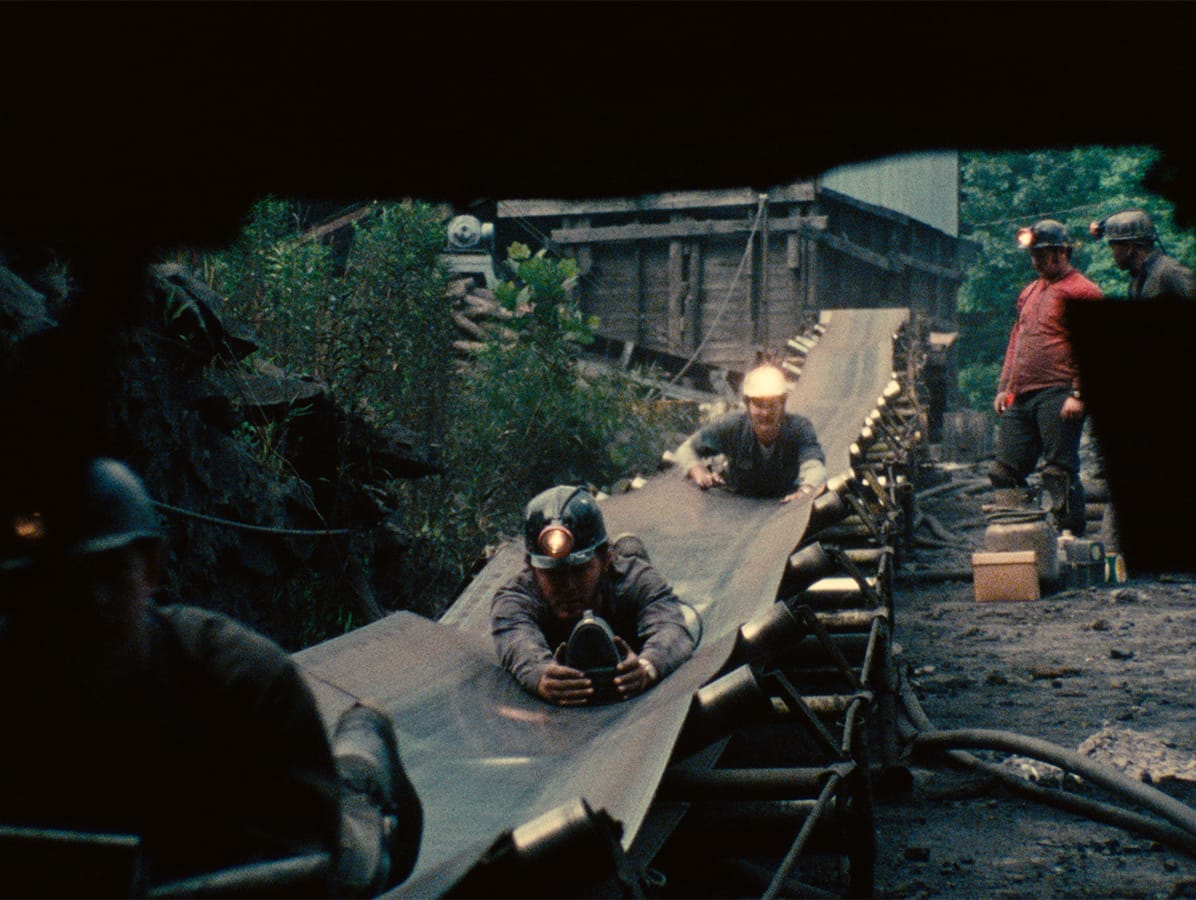
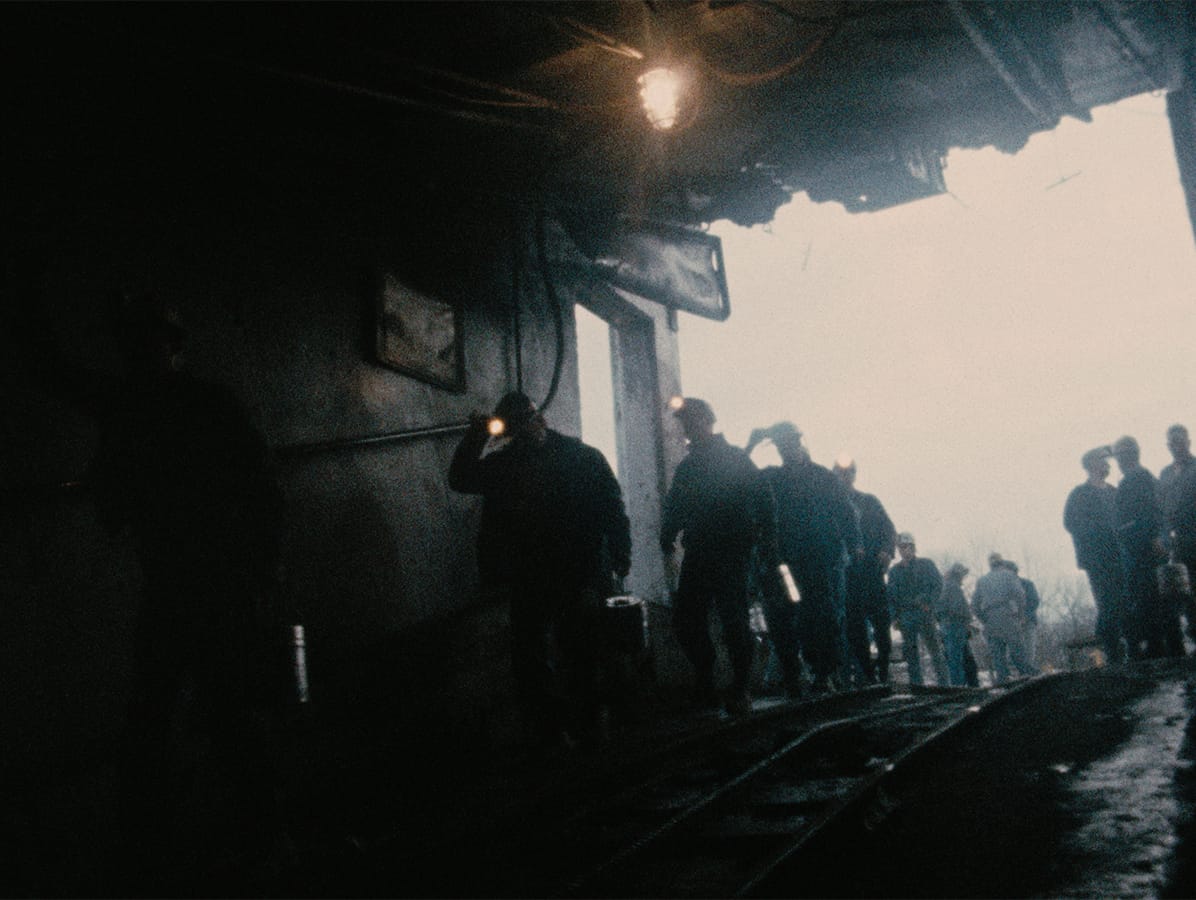
People crawl on hands and knees through the darkened bowels of the earth. The daylight shining on the entrance dwindles the further in we go, until all is pitch black. Hardhat lights cast silhouettes and shadows, bringing into relief walls blackened with coal and centuries of suffocation. Figures take form and dissolve into the murk. We glimpse a face here, a sweat-beaded forearm there. They appear like strange, giant visitors to a scorched earth, kept in permanent darkness and far from view so that we need not trouble ourselves with what they endure.
In this coal mine in Harlan County, southeast Kentucky, men sing, shout, and call out, ‘Fire in the hole!’. The walls of this godforsaken place ring with life—voices laughing or exclaiming, as if to prove to one another that they are still alive, not yet victims of this purgatory. The men enter the mine through a structure resembling a magic-carpet slide,lying on their bellies, clutching their lunch pails, and nodding at the camera as they whoosh by. It’s just another day at work for them.
Barbara Kopple’s galvanising documentary, Harlan County USA, explores the lives of these people below and above ground, where they fight tooth and nail for their rights as workers and human beings. Filmed over four years, Kopple set out to document the plight of the American miner and their struggle for industrial reform. The result is a film that goes beyond a pragmatic document to become one of the most stirring and poignant meditations on labour,exploitation, and community ever captured on screen.
In a rocking chair, the midday sun warm on his skin, an old man—skeletally thin and with no teeth left—tells his story through talk and song. He performs a folk song about ‘black lung’, the condition that blights miners after years of breathing in coal dust in unventilated spaces. It’s an irreversible illness that destroys the body. Yet the man is sharp as a tack and carries a quiet dignity. Another miner points out that “men are worth less than a mule”.
The old man sings like Woody Guthrie. “Both lungs were broke down from breathin’ bad air,” he cries. Throughout the film, we hear protest songs, sometimes accompanied by a single guitar or banjo, each spelling out in no uncertain terms the suffering inflicted upon this community. The folk tradition presented here is as natural a function as sleeping, eating, laughing, or crying. Pain felt so deeply for so long pours forth in howled tales and plucked strings. It suggests that what is happening here is as much about the soul as the body.
In the background of almost every interview filmed in the town, children can be heard playing. These are close-knit communities of families—people with young children and new spouses for whom they will work themselves to death to provide. But the sound of the children carries a bittersweet weight. This old-timer, used and abused to the point of bodily breakdown, with not a penny to his name: is this what the children have to look forward to in their own futures?
If the sound of men’s voices echoing off the mine walls is disconcerting, it’s even more disturbing to consider what the film presents next: mere decades before Harlan County USA was filmed, children as young as five were sent into mines by companies looking to save dollars and cents. That this was recent practice at the time offers hope that change can happen, yet it’s a grim reminder of what a company will do to a human being it views as less than human. For every right granted, another can be taken away.
Kopple shows the men pouring from the mines at the end of their shifts. Bedraggled and exhausted, they smile as the air hits their skin once more. There’s a constant cycle here of birth and death, of tumbling into nothingness before clawing back to brief sanctuary on the surface. We’re reminded of the long tradition not just of work and life, but of work and life filmed—stretching all the way back to Workers Leaving the Lumière Factory, the five-minute silent clip Louis Lumière shot in 1895.
While Lumière’s film was ostensibly positive in tone, it nonetheless connects across time to Harlan County USA. In one film, we watch people leave their workplace, prompting the questions: where are these people going? Where are their homes? Whom do they love? In Kopple’s film, we focus on the reprioritisation that must happen when we’re off the clock. Do we remember who we were or what we wanted before we were so tired our thoughts became a blur?
Yet here, lives are consumed by labour. There’s no shaking off the toxic dust; it’s carried home in the lungs. Pay is pitiful and nobody can make ends meet. The dust bowl years, just a few decades prior, aren’t over—they’ve simply migrated south. The townspeople know how deep the agony runs. They all know the story of the 1970 Hurricane Creek mining disaster just down the road in Hyden, Kentucky, which killed 38 men. ‘Disaster’ implies an act of God, but there’s no God in charge here—only corporate ownership. Striking is the only option.
It’s here that Harlan County USA expands from a slice-of-life social drama into a fiery document of corruption and perseverance. A palpable, bloody history haunts the living in Harlan. The Harlan County War of the 1930s saw fighting, killings, and bombings as the battle between unionising coal workers and corrupt energy firms escalated irreversibly. Miners were murdered. Union leaders were gunned down in the night. Eventually, federal troops were sent in to restore order. Did anything change?
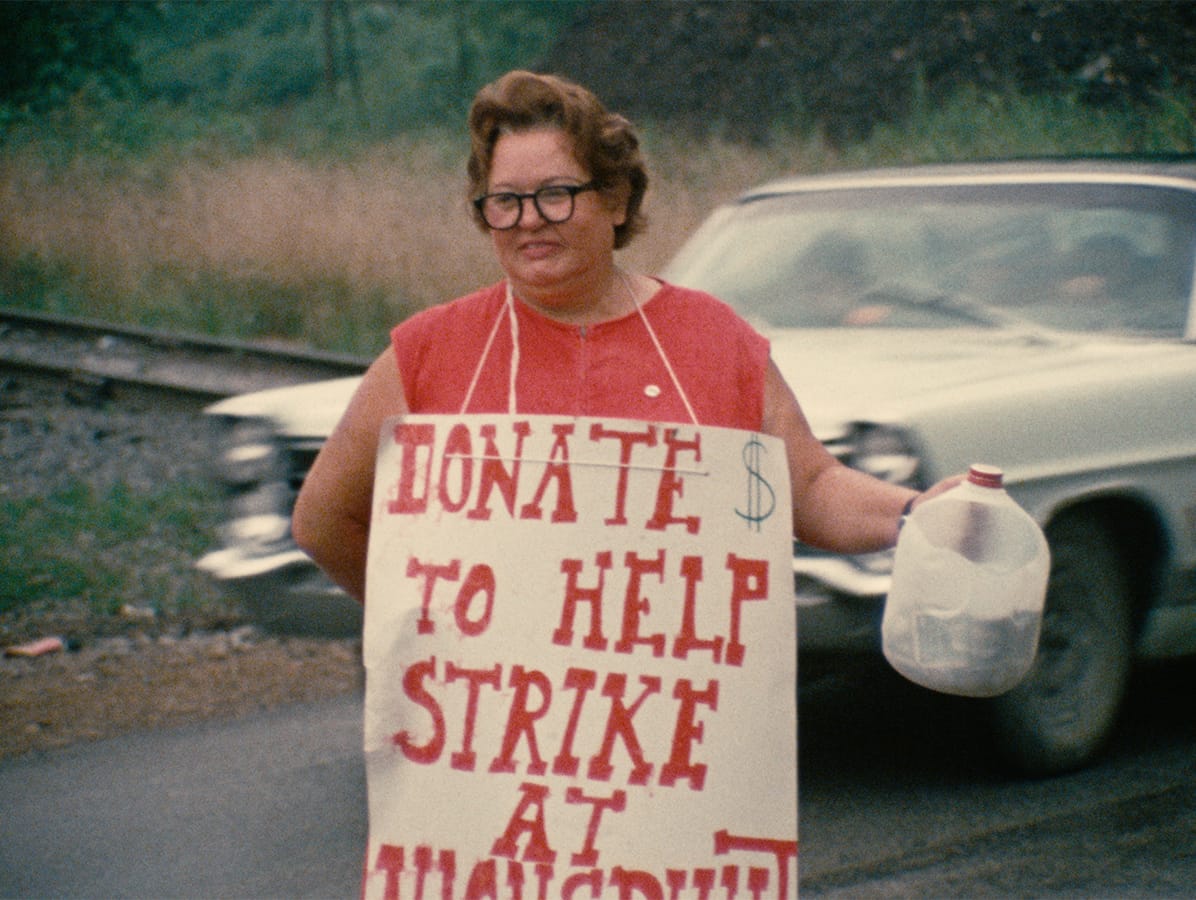
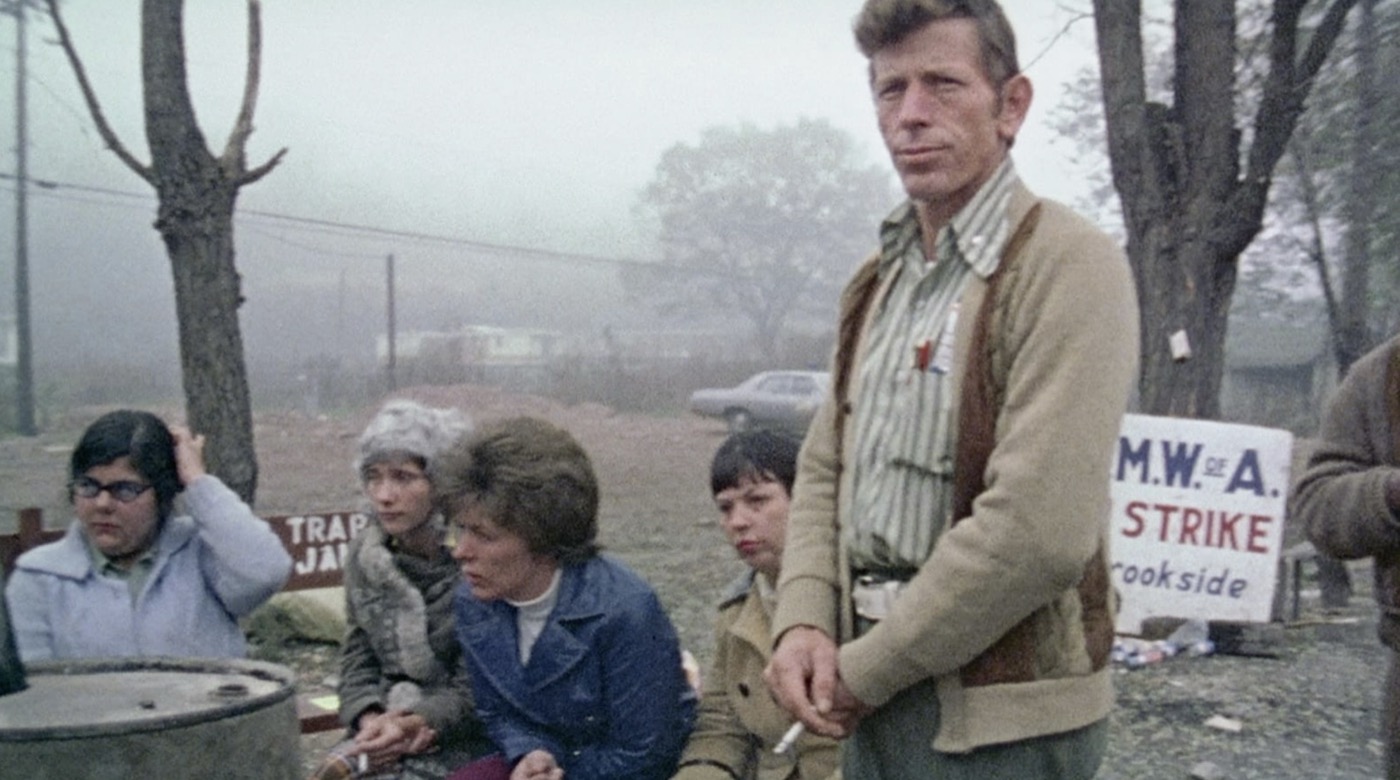
In Harlan County USA, it appears not. The miners and their families know the risks of speaking out—that every picket line will bring lurking thugs crawling along in cars with their headlights off. But striking is essential, particularly given the no-strike clause in the workers’ contracts, which forbids them from striking to change their dire conditions. Their demands are clear: better pay, safer working conditions, and basic workers’ rights. They aren’t asking for much.
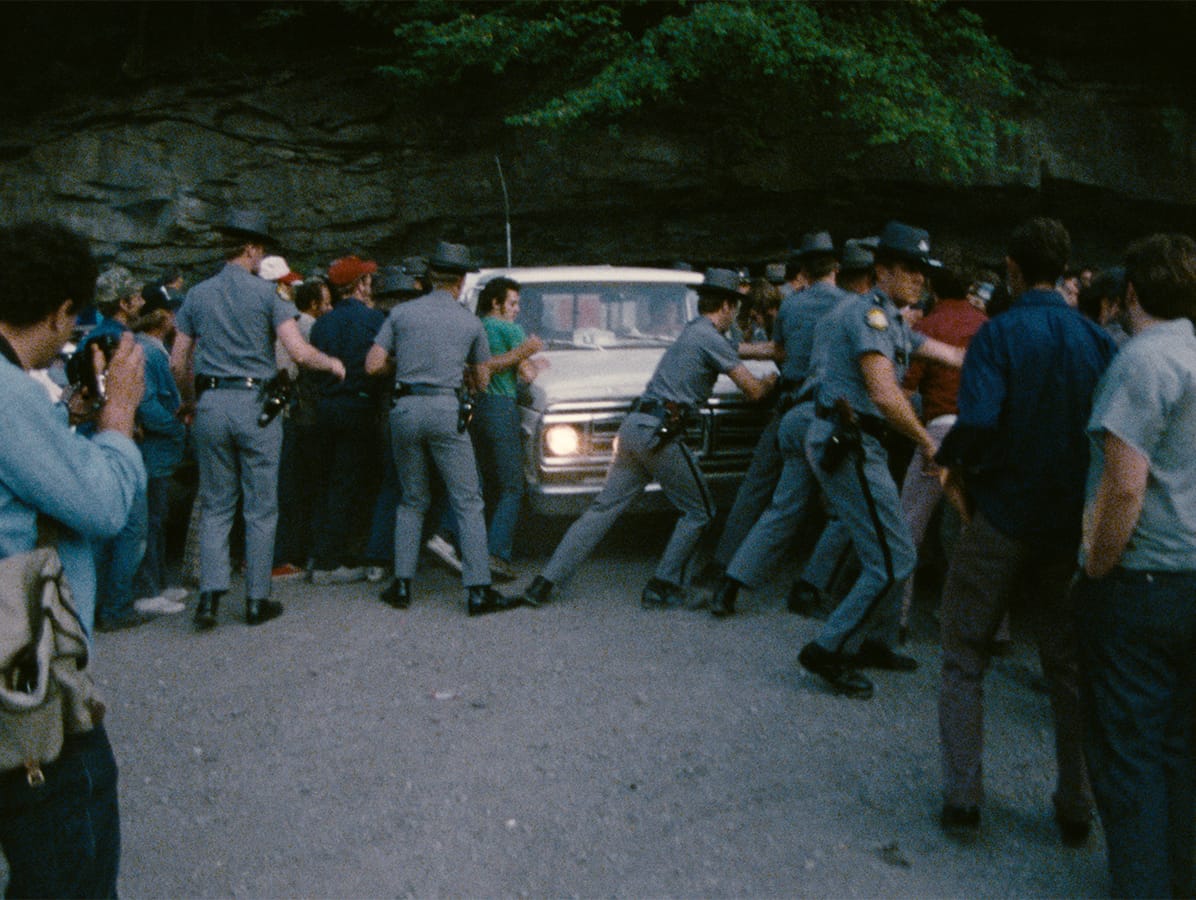
Yet before long, local politicians sweat under newsroom lights, one grinning as he says, “I’d like to have them off my back.” Is there a flash of guilt in his smile? Strikebreakers appear, patrolling the dusty streets—‘gun-thugs’, as the strikers call them. Rifles poke from rolled-down windows; six-shooters sit in waistbands. When intimidation fails,violence follows. Policemen, indistinguishable from the thuggish strikebreakers, crash onto the scene, dragging away men with clubs clamped around their throats. This atmosphere of violence suggests a system gone rotten, but Kopple’s film demonstrates that corruption isn’t a deviation from the norm—it’s standard operating procedure.
Among the protesters, folk heroes emerge. Sudie Crusenberry, the proxy leader of a group of miners’ wives, is one such figure. Her no-nonsense attitude is steeped in pain. Her husband, a former miner, is permanently disabled from years on the job and unable to work. In meetings, she cuts an imposing figure, the room always pivoting towards her.
In some of the film’s most moving scenes, Sudie leads the wives in peaceful protest. They stand in front of cars and lie in the street, blocking traffic to the mine. They risk their safety for a cause they know is worth fighting for. This image of solidarity inspires in a way rarely felt; Kopple’s close focus on the strikers is as much a testament to the power of documentary filmmaking as it is to her subjects.
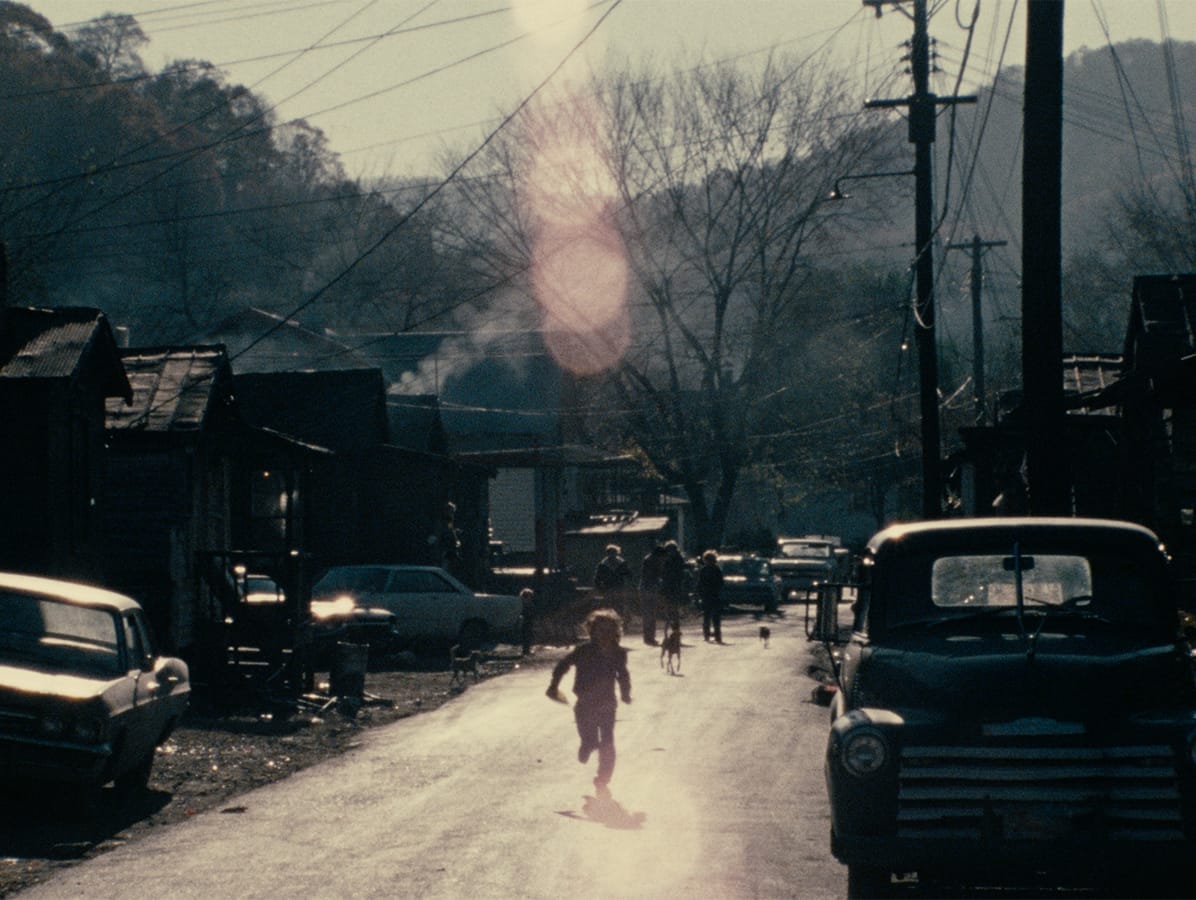
There’s no narration from Kopple, and she never appears on screen. We hear her voice only once or twice, such as when a group of strikebreakers demand her ID. She doesn’t back down, and there’s quiet satisfaction in watching these men crumble under mild pushback. She asks for their ID. Flustered, they laugh sheepishly, rendered powerless before a documentarian and her camera.
Here, Kopple’s filmmaking reveals itself not just as a record of time and place, but as a tool capable of altering reality.Faced with a camera, these men wilt, back down, panic, and speed away in pickup trucks down dusty tracks. With their seedy actions exposed to an objective eye, they’ve nowhere to hide. This is filmmaking as direct action—the camera as an arbiter of truth.
We don’t look away, even as events turn increasingly uncomfortable and violent. We see Sudie, wracked with nervous exhaustion, picking fights with fellow protesters over trivial matters. A camera isn’t enough: “It’s time for us to stand together and get just as violent as they are,” she declares. At this point, a sense of grief and futility begins to build.
Lawrence Jones, a striking miner in his twenties with a young family, is shot by the side of the road. A colleague crouches on the tarmac in the howling silence, pointing to a piece of brain matter that resembles chewed bubblegum.What thoughts, memories, or love did it contain? Whatever was there, it was worth less than a piece of coal to company executives. A lump of coal is more useful to them: it has no memory, cannot love, feels no pain, and will never strike or require a funeral.
By the time we attend Lawrence Jones’s funeral, the folk songs have fallen silent. Guitar strings no longer vibrate. The only sound is the wailing of Jones’s elderly mother. Frail and supported by family, she shuffles towards her son’s open casket. He lies pallid and unfamiliar—not like the boy she knew or the ghost he’ll become, but a broken object,destroyed first by the mines and finally by a bullet. What was it all for?
She cries in horror and disbelief before fainting into her family’s arms. It’s one of the most harrowing moments ever captured on film. But it had to be recorded. Of Harlan County USA’s many strengths, perhaps the most significant is that Kopple captures everything from start to finish, producing a tragic study of cause and effect. The writing was on the wall from the beginning. Now, fifty years on, it feels horribly inevitable.
Folk songs tell stories that recur across the world, differing only in form. It’s the universality of these events—the endless cycle of blood, corruption, death, and exploitation—that gives the folk song its timeless power.
These voices are ghosts warning us of what we cannot see from our limited perspective. As the film reflects on what we’ve witnessed, the music begins again. This cycle is bound to repeat. Yet just as capitalist forces assert themselves through the crack of gunshots and the endless churn of machinery, the voice of protest—that eternal song—will always rise from the depths of the earth and the human soul, unsilenced and enduring.
USA | 1976 | 103 MINUTES | 1.33:1 | COLOUR | ENGLISH

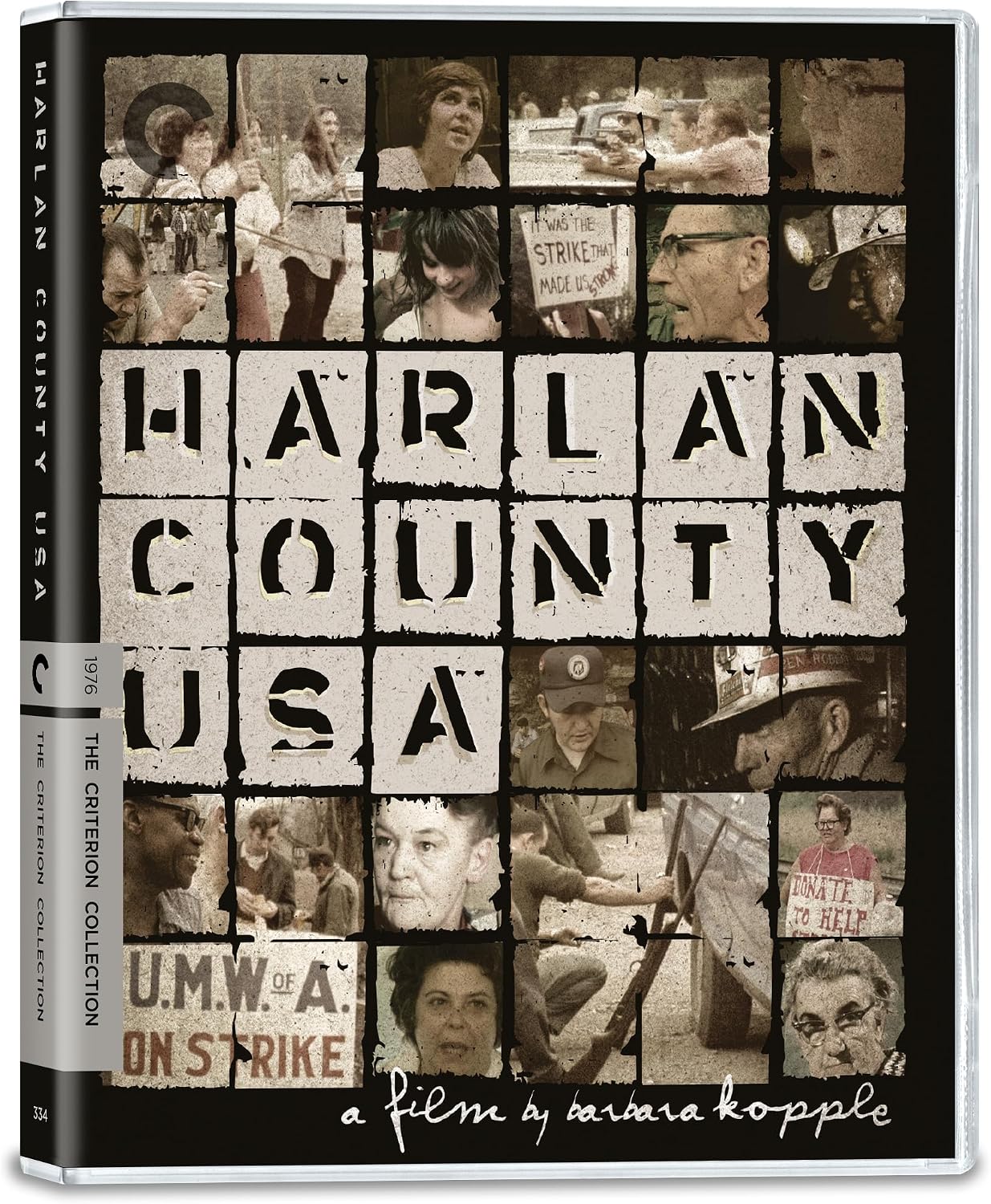
Harlan County USA was shot on 16mm cameras with a small crew, almost guerrilla style. The grit and grain of the film’s images are therefore distinct and tactile, and this 4K restoration from Criterion remains true to the film’s aesthetic whilst also providing some essential upgrades. The colours of the documentary, rich and vivid on film, are as striking in a scene set in a kitchen as those shots of the topography of the county. A film shot in 8K today could not provide such a clear and vivid sense of a time and place, down to the weather and atmospheric conditions. The monoaural soundtrack featured is surprisingly full and rich sounding, particularly during the folk songs which reoccur throughout.

director: Barbara Kopple.
editors: Nancy Baker, Mary Lampson & Lora Hays.
music: Hazel Dickens, Merle Travis & David Morris.