‘Cruel Tales of the Bohachi’: Code of the Forgotten Eight (1973) • The Villain (1974)
Prime examples of the ero guro jidaigeki genre, offering perfect portraits of the shifting depictions of sex and violence in Japanese cinema of the 1970s.


Prime examples of the ero guro jidaigeki genre, offering perfect portraits of the shifting depictions of sex and violence in Japanese cinema of the 1970s.
If you’re not sure what ero guro jidaigeki means, you’re probably not in the market for this double feature from Eureka Entertainment, which presents two early classics of the samurai slice-and-dice sexploitation genre. Teruo Ishii’s Code of the Forgotten Eight is presented in Ultra HD and Blu-ray formats—scanned from a luscious 4K restoration—alongside Takashi Harada’s The Villain on a Blu-ray bonus disc, with both films making their UK home video debut under the prestigious ‘Masters of Cinema’ label.
The 1970s were a time of existential turmoil for Japanese cinema. Not only was the proliferation of television keeping a significant portion of potential audiences at home, but the wider socio-economic situation was also in flux. Japan’s post-war ‘economic miracle’—which saw a trade boom coupled with a spectacular uptick in earnings and investments—declined swiftly in the early-1970s, largely due to the international oil crisis of 1973.
The four major studios—Toho, Toei, Nikkatsu, and Daiei—found they had to adapt quickly to mitigate rapidly declining revenues. Churning out the kind of content they had relied on for decades was no longer viable. Yet, as they floundered and innovated, all four studio giants produced some truly inspired movies—sometimes silly, often shocking—in a bid to provide something television couldn’t.
Daiei didn’t pivot quickly enough and went bankrupt. Toho relied on its Godzilla kaiju franchise, shifting its emphasis to a more child-friendly ‘Saturday matinee’ style while exploring a new chanbara samurai subgenre with Sword of Vengeance (1972). This was the first entry in the popular Lone Wolf and Cub film series, defined by stylised violence based on the dynamic, adult-orientated manga by Kazuo Koike and Goseki Kojima.
Nikkatsu shifted to adult thrillers with plenty of explicit sex and violence that couldn’t be shown on the small screen, creating the influential RomanPorno genre. Which brings us to Toei, which had built a solid reputation for artful chanbara epics such as the five-film Miyamoto Musashi series (1961–65) and ninkyo eiga chivalrous yakuza classics like The Red Peony Gambler franchise (1968–1972). Although action-packed period dramas remained popular, they’d become a television mainstay, and their stoic, chivalrous heroes were losing traction with an increasingly disillusioned audience of young post-war baby boomers.
Toei reshaped the cinematic landscape with Kinji Fukasaku’s first five films in the Battles Without Honor and Humanity franchise (1973–74), defining the new genre of jitsuroku eiga—realistically unchivalrous and ultra-violent yakuza crime thrillers. Alongside the success of that series, Toei sought to exploit the considerable talents and experience of the contracted cast and crew responsible for the samurai films that had built the studio’s reputation.
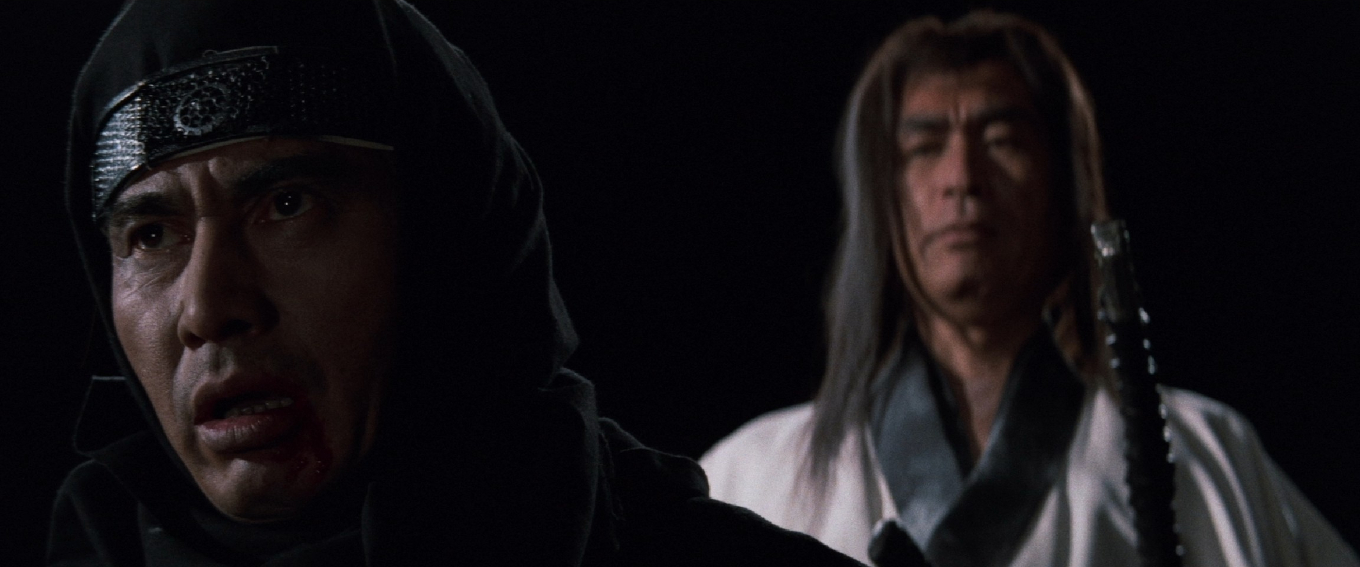
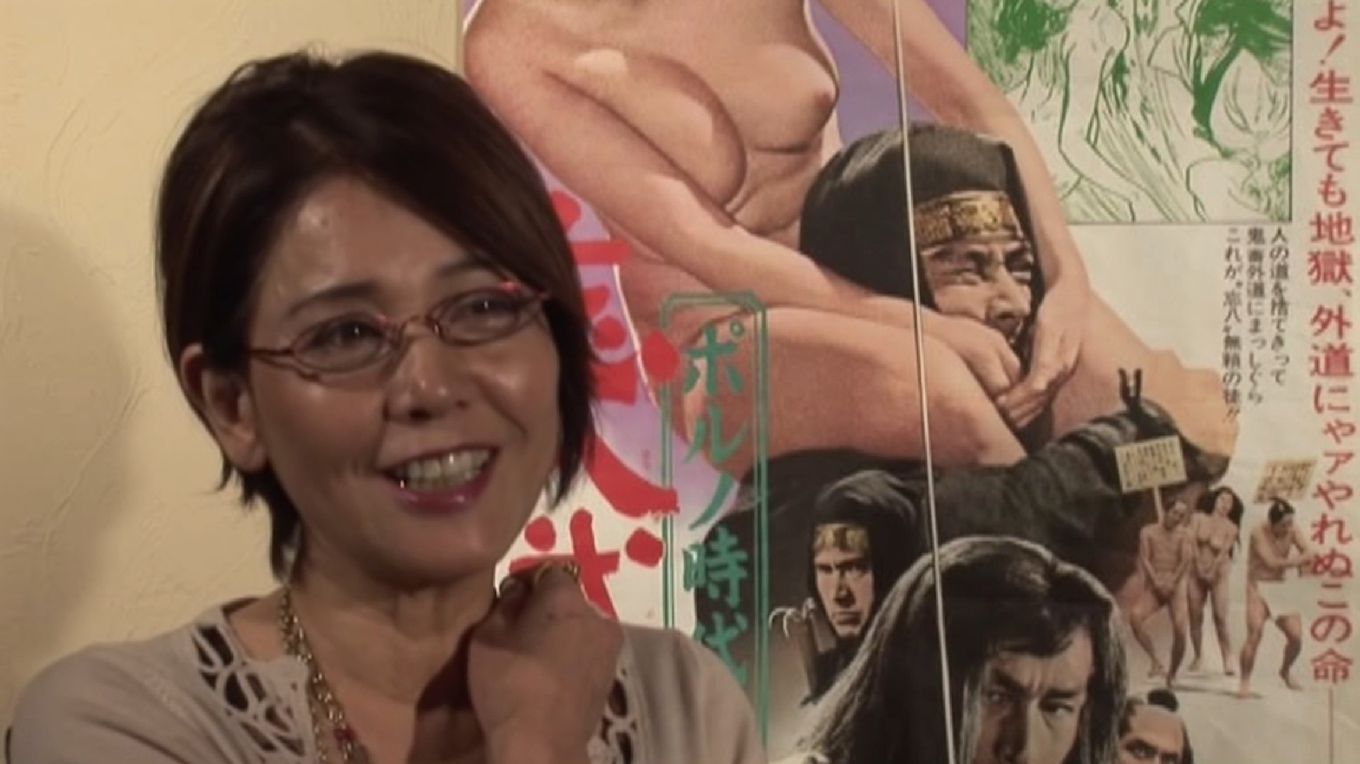
The best way to refresh a flagging genre is to fuse it with elements of others: so how about samurai movies just as unchivalrous and ultraviolent as the new-style yakuza? And, not to be outdone by rivals at Nikkatsu, what if enthusiastically transgressive sex was mixed with visceral violence? Thus the ero guro jidaigeki genre was born—a fusion of grotesque eroticism and stylised samurai costume drama. Such films unashamedly revel in the taboo blend of sex and death and aren’t for the faint-hearted. There are plenty of stylish sword fights, beautiful women, ugly men, inventive torture, ingenious executions, rape, and bloody murder—sometimes all at once. However, the gore is theatrical rather than realistic, and the foregrounded sexual deviance falls squarely into the softcore category. The Japanese title of the first film presented here, Bohachi Bushido: Code of the Forgotten Eight / ポルノ時代劇 忘八武士道, translates as “Pornographic Period Drama: The Way of the Forgotten Samurai”—the clue’s right there in the title.
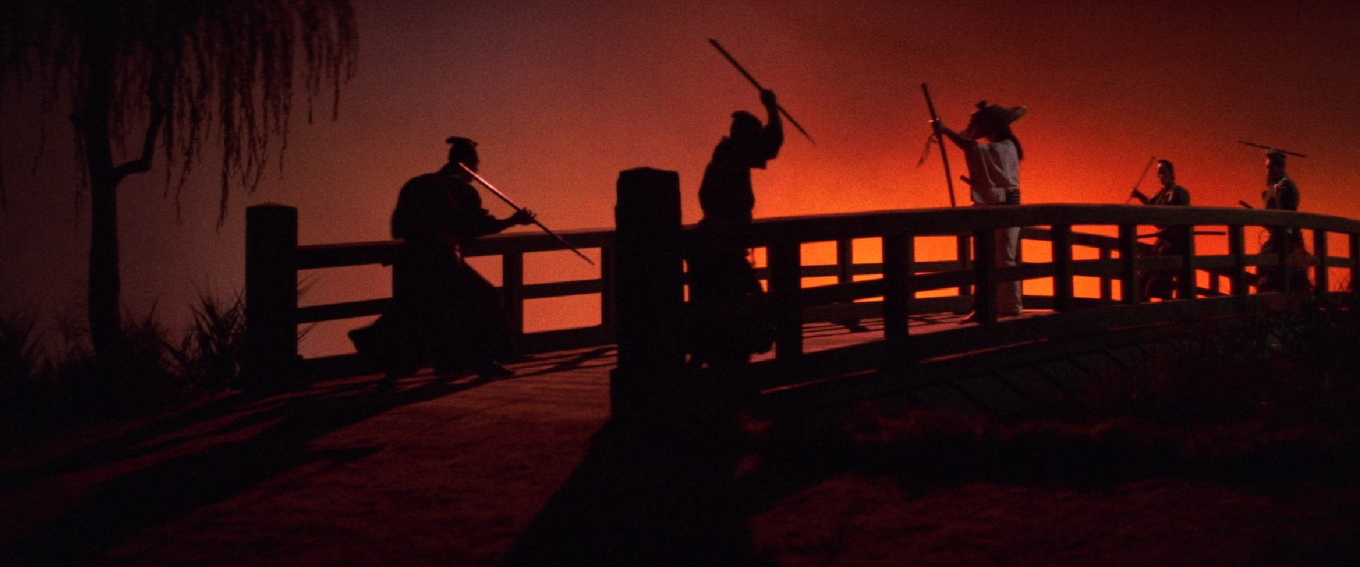
A formidable rōnin is rescued from certain death by a powerful yakuza clan feared for their ruthless cruelty and becomes their enforcer.
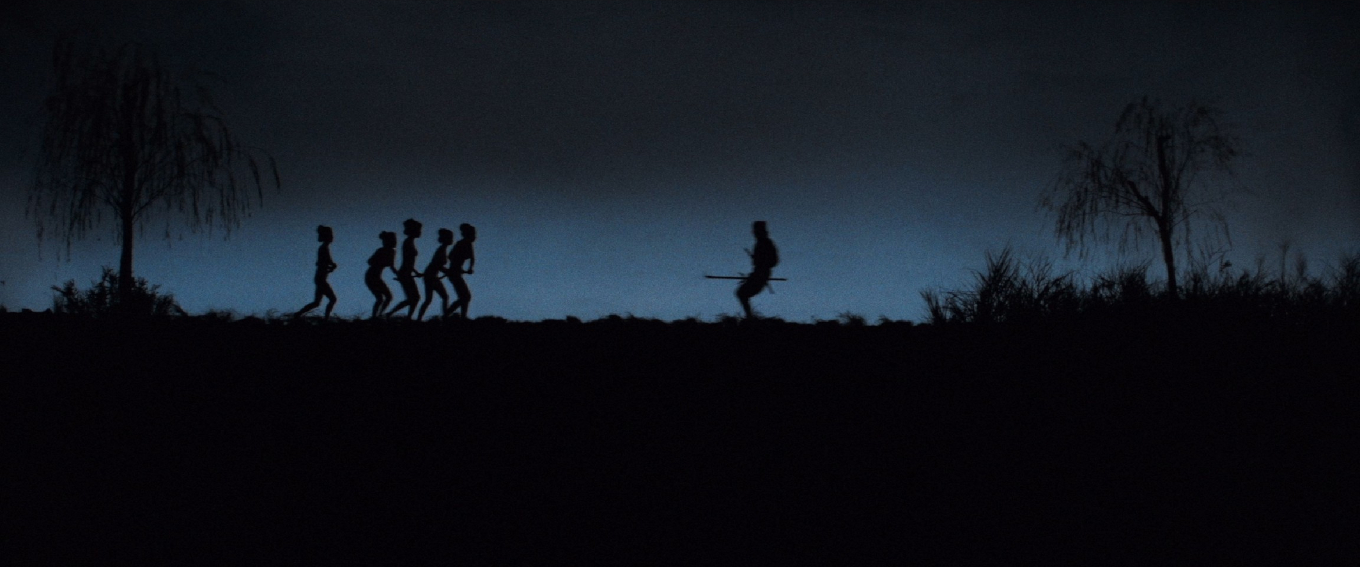
The opening scenes of a battle on a bridge are beautifully bathed in the blood-red light of a saturated sunset—appropriate enough, given that red is the colour associated with blood, war, passion, and prostitution, which are all key ingredients here. Standing his ground against an endless stream of adversaries, the solitary samurai Shino (Tetsurō Tanba) seems unassailable. Yet he decides to jump—choosing the manner of his own demise in the icy waters below. It would be a fitting finale, but the story has only just begun.
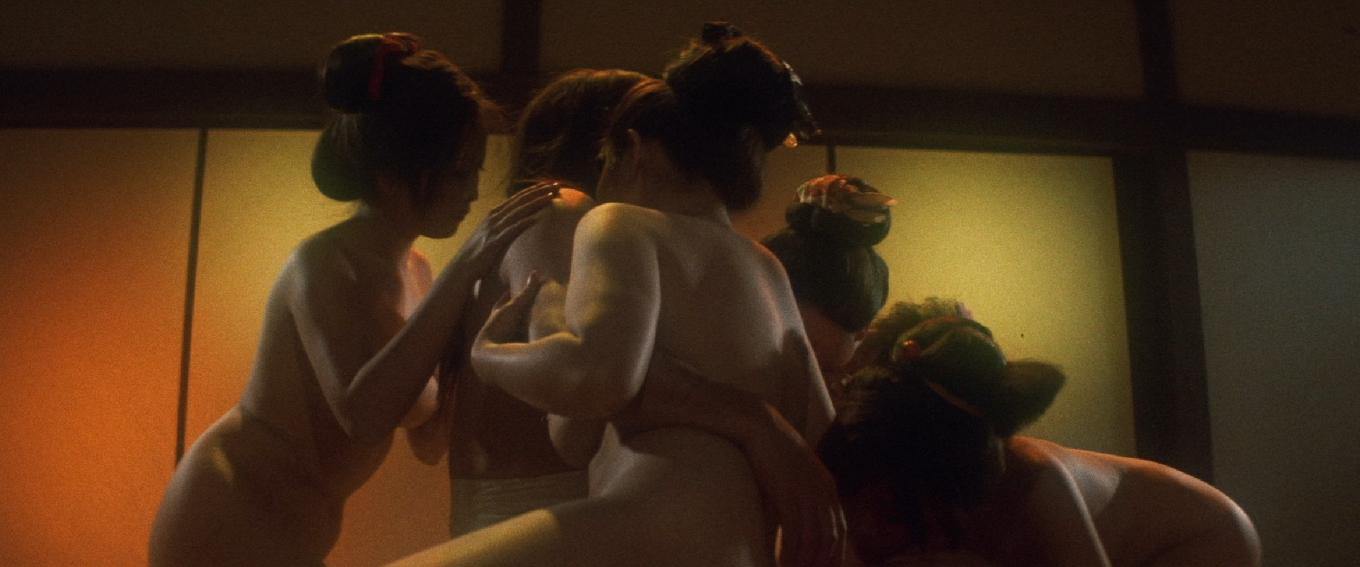
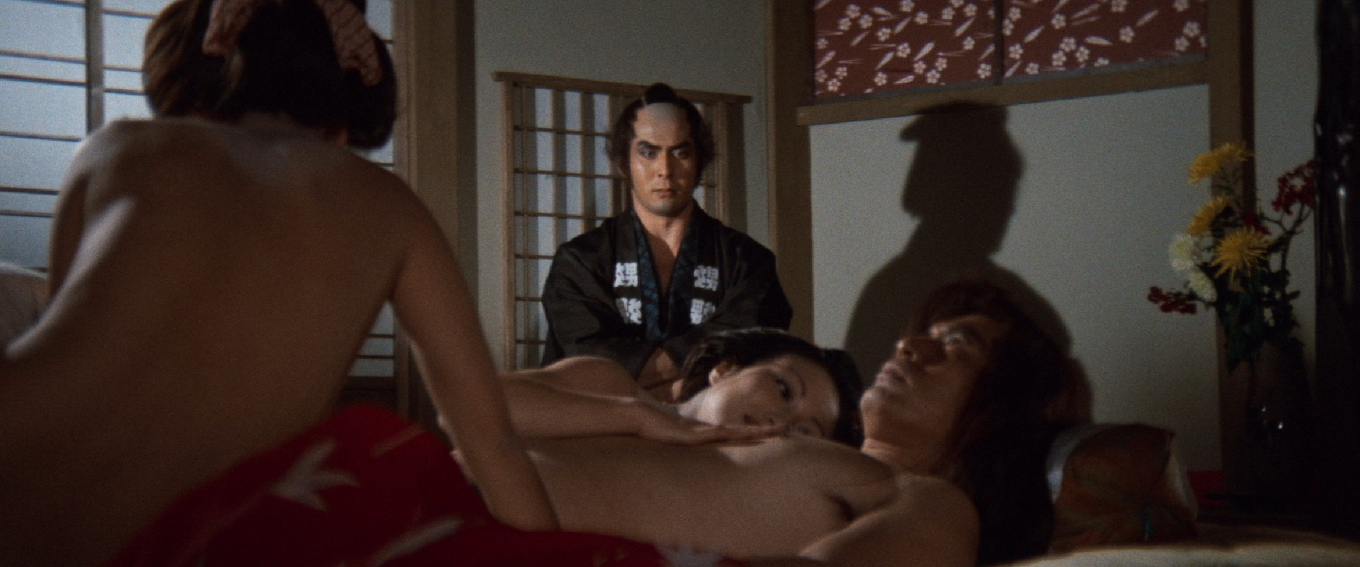
Shino is revived by two young women using their naked bodies to warm his, but he wants to know why they saved him. It’s Kesazō Shirakubi (Gorō Ibuki) who provides the long and rather circuitous answer: Shino was rescued from drowning to join the Bohachi—an infamous yakuza clan that relinquishes all honour and humanity to run a trafficking syndicate. The organisation abducts young women and conditions them through torture and ritual sex to become compliant, saleable ‘dolls’. Shino is given a tour of the processing chamber, where men inflict suffering on bound women using candles and water torture. He remains outwardly stoic as Kesazō lists the eight virtues every Bohachi clan member must abandon on their way to becoming “beasts hidden in human skin”. When asked if he’ll join them,Shino replies, “It’s as if I’m looking at myself.”
The first ten minutes lay the cards on the table with stylistic swordplay, blood-spurting dismemberment, nudity,misogynistic torture, and sexual sadism. It’s certainly attention-grabbing, while aligning with unhelpful stereotypes of the ‘depraved Oriental man’ rife in the 1920s. There are many examples from the tail-end of the colonial age, among them Sax Rohmer’s Fu Manchu novels and Flash Gordon’s arch-enemy, Ming the Merciless, with his evil alien empire.But this is a movie made in 1970s Japan demonising the nation’s own past, so is that acceptable? Perhaps not, but what makes it palatable—and indeed entertaining—is that it leans heavily into stylistic expressionism rather than any pretence of realism or historical accuracy. It actively challenges the viewer’s morality and lets us roleplay transgressive behaviour in a world where capitalism and corrupt bureaucracy run the show. Sound familiar?
Of course, it’s a matter of historical fact that women were oppressed, subjugated, and disempowered—as in most patriarchal societies of the past. Though it would be foolish to push a feminist reading here… or would it? The men are also shown to be equally enslaved—to their codes and superiors. While women are expected to relinquish freedom and individuality to serve men, the men—most of them, at least—are expected to surrender free will in service to an elite few. While the men kill and die, the young, desirable women are valued as assets that can turn a profit by extracting wealth from men. This can be read as a clear critique of capitalism, reducing human beings to components of a greater economic mechanism that appeared to be malfunctioning on a national scale while the film was in production.
The Bohachi saved Shino because his skills and reputation as a ruthless assassin make him a formidable enforcer. With the breakdown of feudal rule under the Tokugawa Shogunate, such high standards of samurai swordsmanship have become rare. However, he fails their first test by displaying a vestige of honour, and he’s immediately cast out of the clan to meet his postponed fate at the hands of magistrate soldiers waiting to arrest him for past crimes. Just in the nick of time, Shirobei Daimon (Tatsuo Endō), head of the Bohachi, intervenes—and even the magistrate must yield to influence built on historic corruption stretching back to the early Edo period.
Trouble is brewing for the Bohachi because independent brothels are springing up—run by the women themselves and cutting out the middleman (or what we’d call pimps). These undercut Bohachi brothels, impacting their revenue stream and challenging their monopoly. Shirobei Daimon enlists Shino as the Bohachi assassin, instructing him to clear the area of competition and ensure all rivals are eradicated or expelled. Shino commits to this new role for food, shelter,and protection from the law, though he also seems to seek a fitting end for a samurai—and this scenario provides the closest thing to battle. Tellingly, in the original Japanese version, he states his name using characters that mean “Tomorrow, I Can Die”.
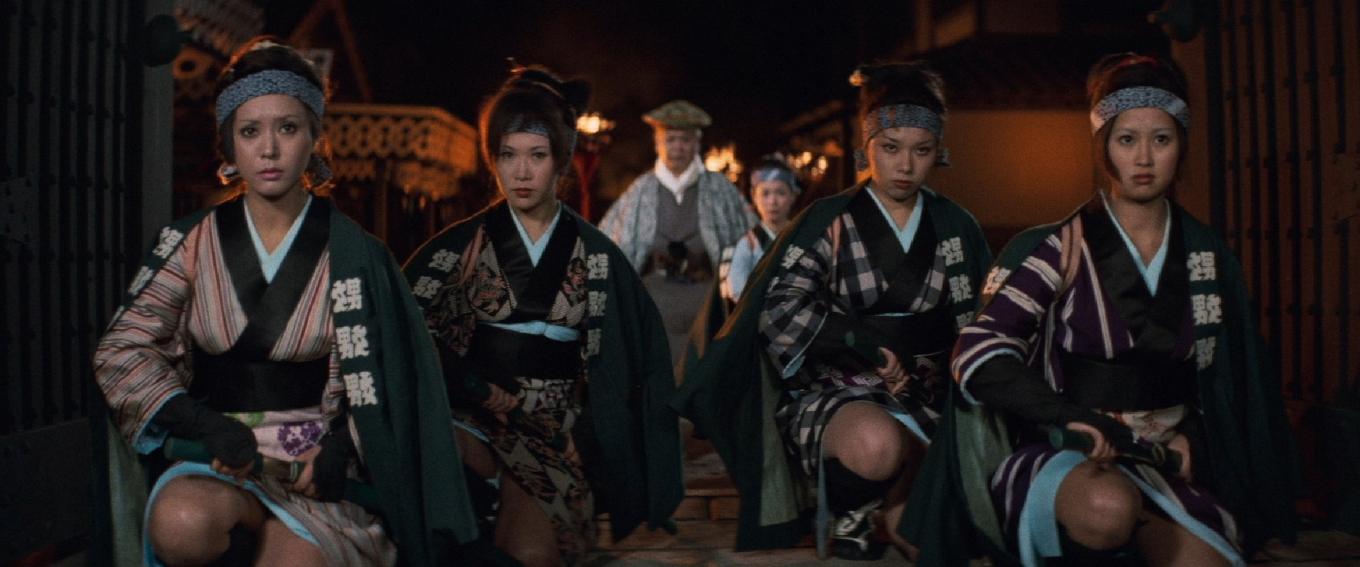
It’s obvious from the strong compositions, dynamic framing, slow motion, and quick cuts that there’s a heavy influence from manga aesthetics. San Kaji’s screenplay was freely adapted from the manga by Kazuo Koike—creator of Lone Wolf and Cub, Lady Snowblood, Bodyguard Kiba, and Crying Freeman, among many others. At the height of his career, Koike worked on 15 serialisations a month, which directly inspired 24 movies and 32 television or home media productions. His work is famously admired by Frank Miller and was championed by Quentin Tarantino as a key inspiration, particularly for Kill Bill: Vol. 1 and Vol. 2 (2003–2004).
From its opening scenes, Code of the Forgotten Eight is packed with gorgeous set-pieces, beautifully shot by cinematographer Jūhei Suzuki as his penultimate feature. Naturally, the crew were all highly competent studio regulars,so it looks as good as any mainstream period drama—boasting impressive sets, excellent costumes, and reasonably accurate period detail, provided one forgives incongruous hairstyles and tan lines.
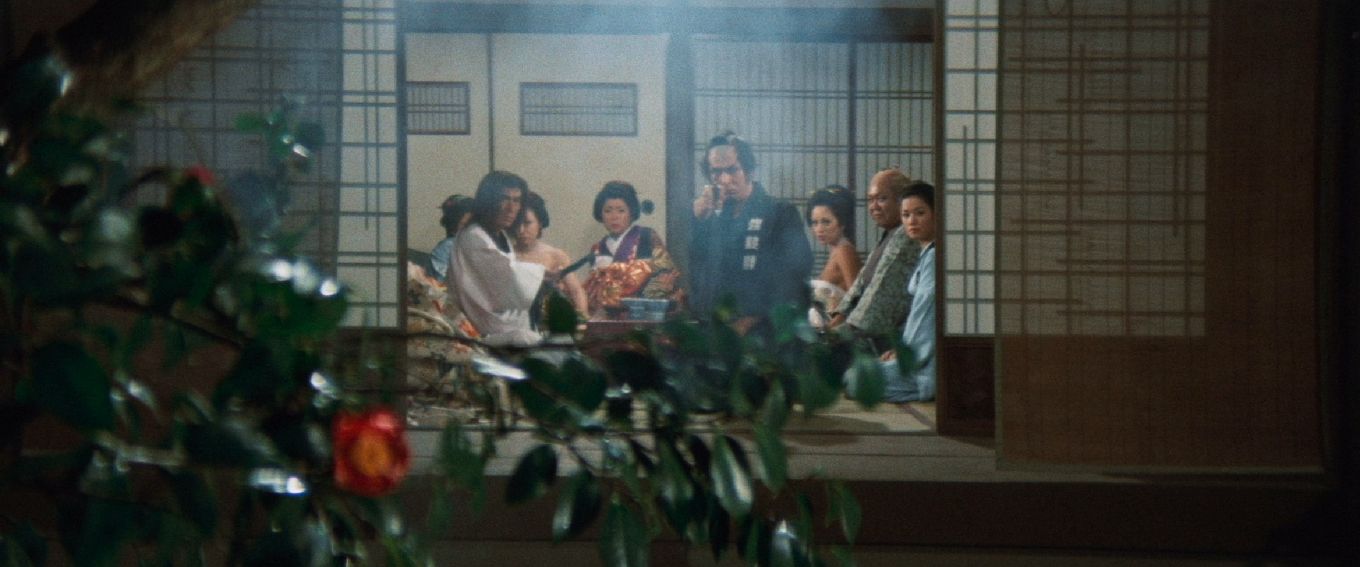
Teruo Ishii had already earned notoriety with Horrors of Malformed Men (1969), which took the ‘Pinky Violence’ trend into more avant-garde territory bordering on horror. He’s credited with consolidating ero guro jidaigeki—placing the sickeningly grotesque alongside the uncomfortably erotic. Compared with many of his other works, Code of the Forgotten Eight is somewhat restrained. It’s a brave fusion of genres, but essentially a nihilistic jidaigeki with a gritty yakuza turf-war plot. Shift the setting to the post-war period, and it could easily have been made as a violent jitsuroku eiga—a ‘true account’ crime movie.
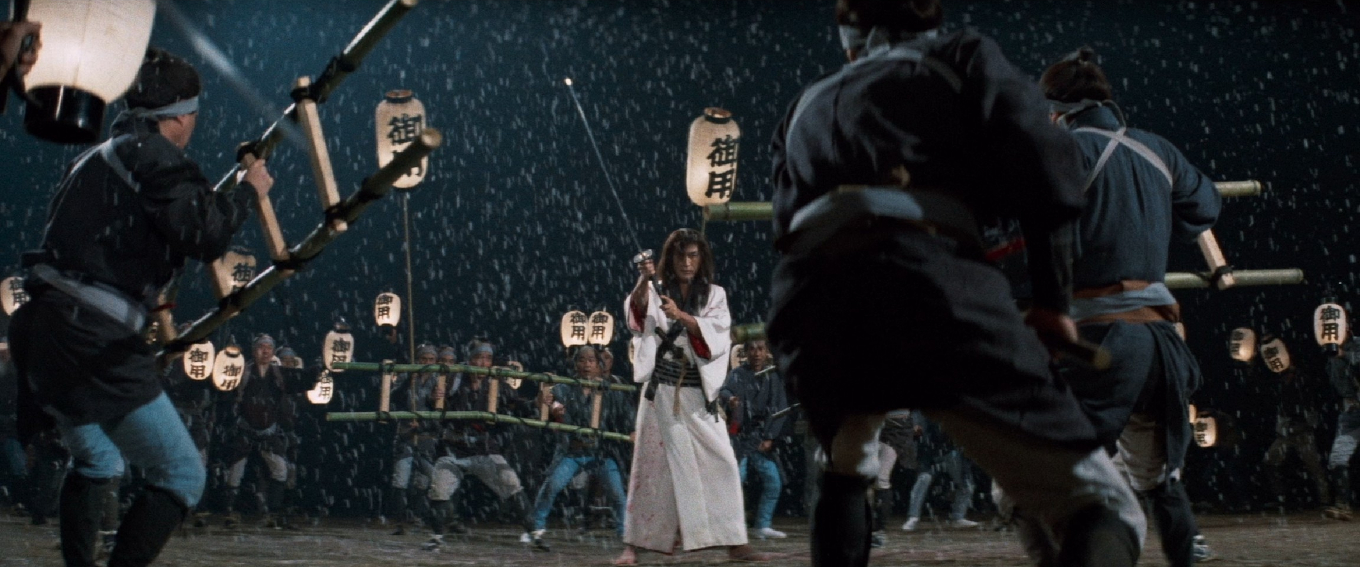
It only occasionally looks like porn and rarely like erotica, though anything beyond brief nudity was novel at the time.Here, there’s plenty of skin—mainly women’s breasts and bums, alongside the hairy legs of men. There are a few protracted sex sequences, including an attempted assassination by means of drugs and continuous copulation, as we near a finale that pays clear homage to the epic duel of one against hundreds in Tokuzō Tanaka’s The Betrayal (1966).
JAPAN | 1973 | 81 MINUTES | 2.35:1 | COLOUR | JAPANESE
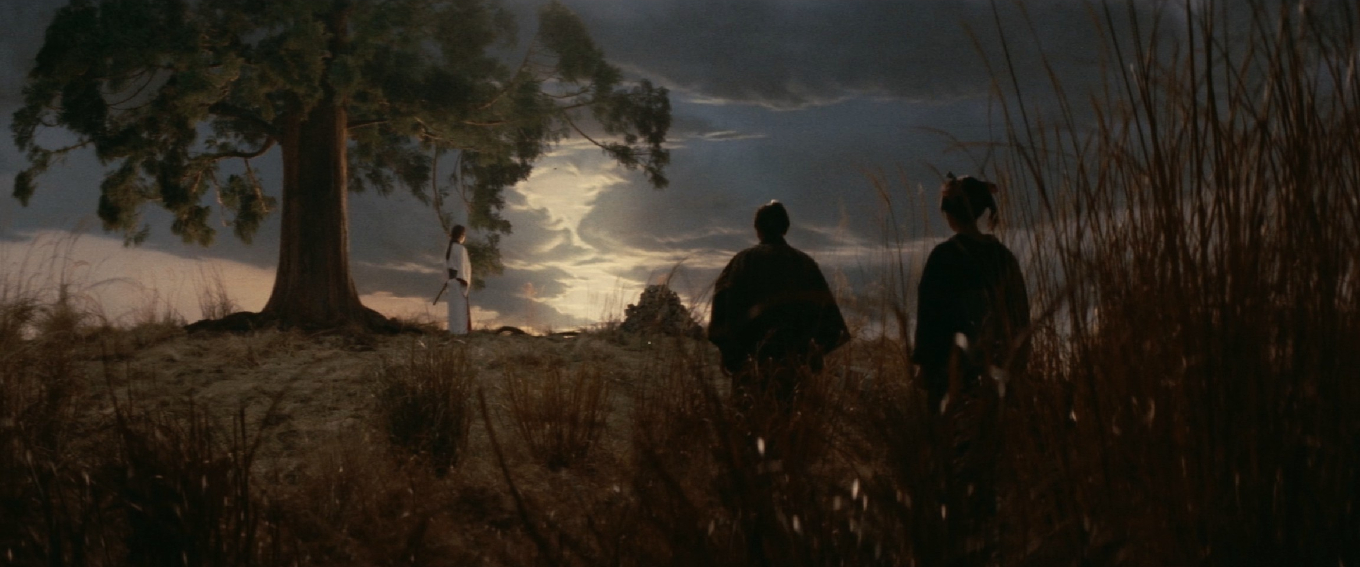
A murderous rōnin is rescued from execution by the depraved Bohachi clan but they find him difficult to control.
From the general consensus, I was expecting an even more exploitative venture into samurai sex and violence, complete with a fragmenting narrative. However, with Takashi Harada at the helm, the result feels far more cogent. After kicking off with an inexcusably immoral opening sequence involving the rape and murder of a Dutch captive, the contentious content remains generally relevant.
Again, the first act includes a rather prolonged explanation of the Bohachi ‘doll-making’ ritual. It’s more inventive this time and carries a mad mystique, such as the suffocating ‘clay torture’—which would almost certainly prove fatal in reality. The central narrative follows a tightly structured yakuza turf-war plot that’s similar to Code of the Forgotten Eight, yet noticeably more coherent. Rather than a straightforward sequel, it’s closer to a remake or a set of variations on a theme, and it has habitually been dismissed as a paler imitation. However, the script by Takeo Kaneko and Sadao Nakajima delves deeper into the relational dynamics that drive character development. This time, our anti-hero, Kyūshi-Issho (Gorō Ibuki), is more obviously changed by his experiences, even if this doesn’t ultimately alter his destiny.
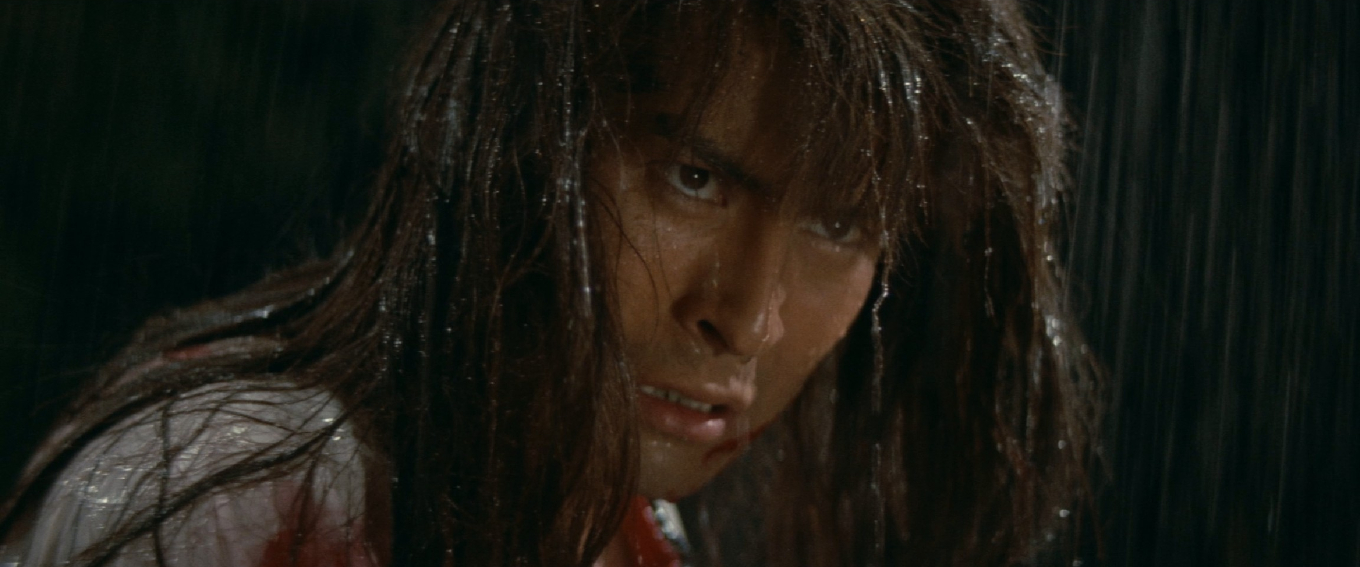
Kyūshi-Issho’s morality—or lack thereof—is less ambiguous and far more objectionable. To say he starts out as a true villain is an understatement: he’s a rapist and mass murderer with no redeeming qualities beyond the fact that a corrupt and decadent society made him this way. He kills a woman simply because she’s a witness to, and evidence of, his crimes—she was doomed the moment the sleazy client he abducted her for welched on the deal. He certainly deserves the guilty verdict handed down to him, yet his execution is stayed by a bribe from Tanahashi Saibei (Bin Amatsu), the Bohachi boss who admires a deadly efficiency unencumbered by moral judgement. For it’s judgement, after all, that leads to defeat.
Neither Shino nor Kyūshi-Issho are heroes, or even remotely moral, yet both refuse to allow their individuality to be erased. They’re determined to make an impression on the world they inhabit—an ultimate expression of ‘the rebel’ within a society that routinely dehumanises and monetises people as units of production or profit. It may be a heavy-handed metaphor, but it’s one worth reiterating.
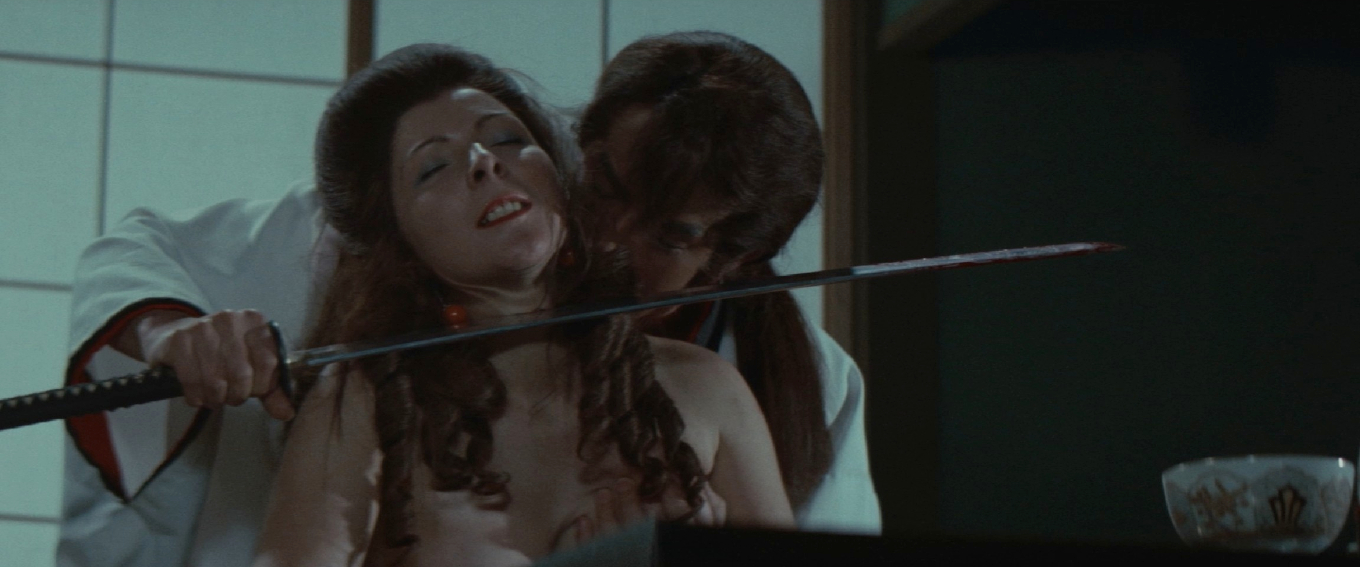
Overall, this feels like a more accomplished piece of cinema. It perhaps lacks some of the raw energy and stylistic flourishes in the set-pieces, but it relies less on flying limbs and delivers a more cohesive plot. However, it suffers from familiarity—especially if watched back-to-back with the first film—as the stories are so similar. One major difference is a twist borrowed wholesale from the first Shinobi movie, Band of Assassins (1962), alongside a couple of nods to Red Peony in the pistol-packing anti-heroine Monkumatsu (Reiko Ike).
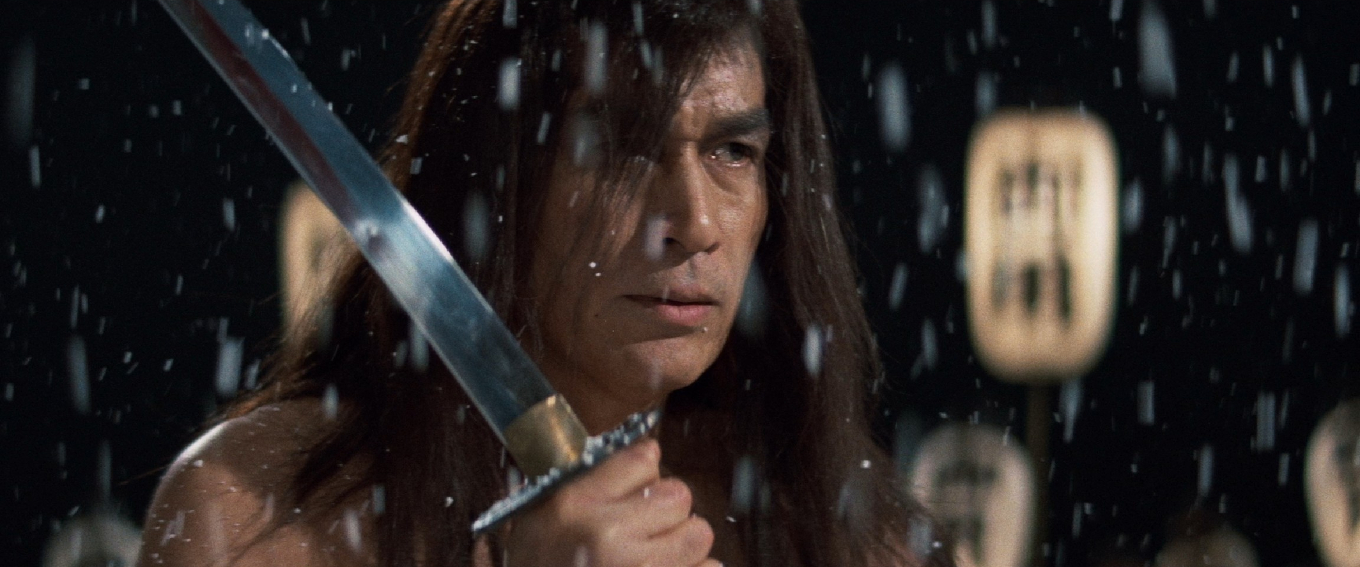
It also recalls Kihachi Okamoto’s The Sword of Doom (1966), a superior, more mature character study of a psychotic samurai’s descent into hell that served as a blueprint for both Bohachi films, right down to the climactic one-versus-many battles. Instead of the lyrical snowfall by lamplight that delivers the fatalistic message in Code of the Forgotten Eight, The Villain offers a dynamic lightning storm as a fine example of the pathetic fallacy, ending with a definitive bang.
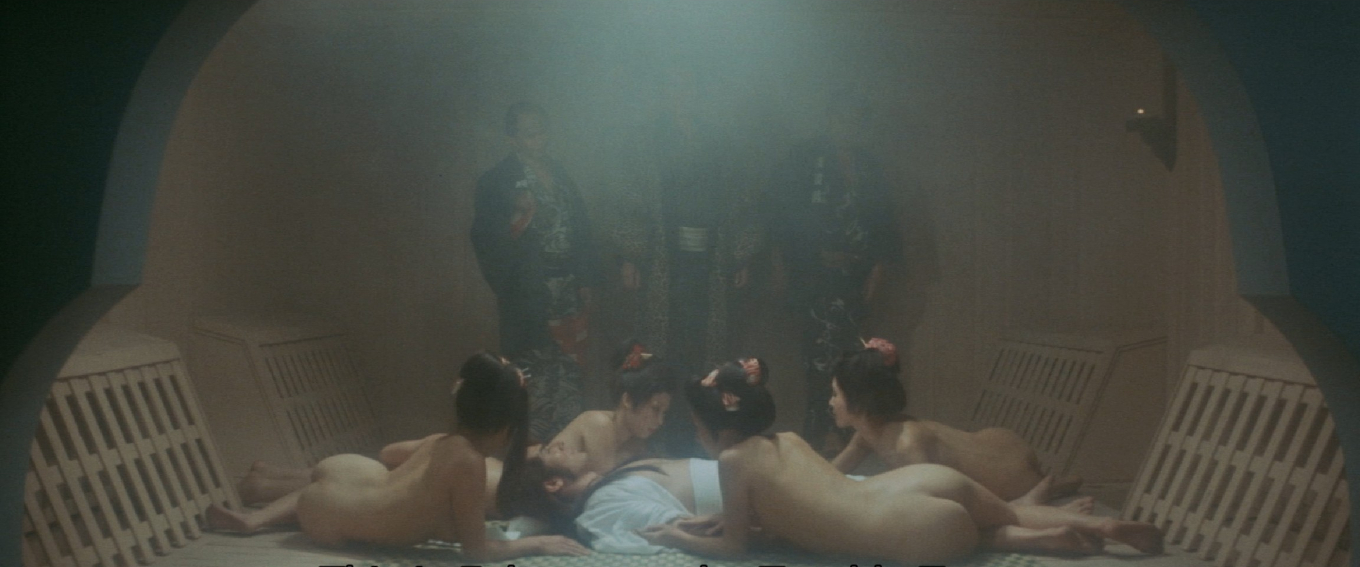
I’d say Tetsurō Tanba has the edge as the monolithic, stoic samurai—he had plenty of experience in that department, after all. Gorō Ibuki is more convincing as a human being suffering from terminal ennui; he often looks merely bored, yet he explodes into moments of deadly petulance and remains highly unpredictable. There are several hints at an intriguing premise: that this might be the same soul on the next turn of the karmic wheel, descending into an even deeper circle of hell.
Without giving too much away, the finale of Code of the Forgotten Eight teases a metaphysical transition open to a dual interpretation. One possible reading is that death presents a hell in which the rōnin is denied battle with others—the only metric by which he can measure and define himself. Here, he’s granted another chance, but he remains unable to escape the hell of life, whether he survives or not.
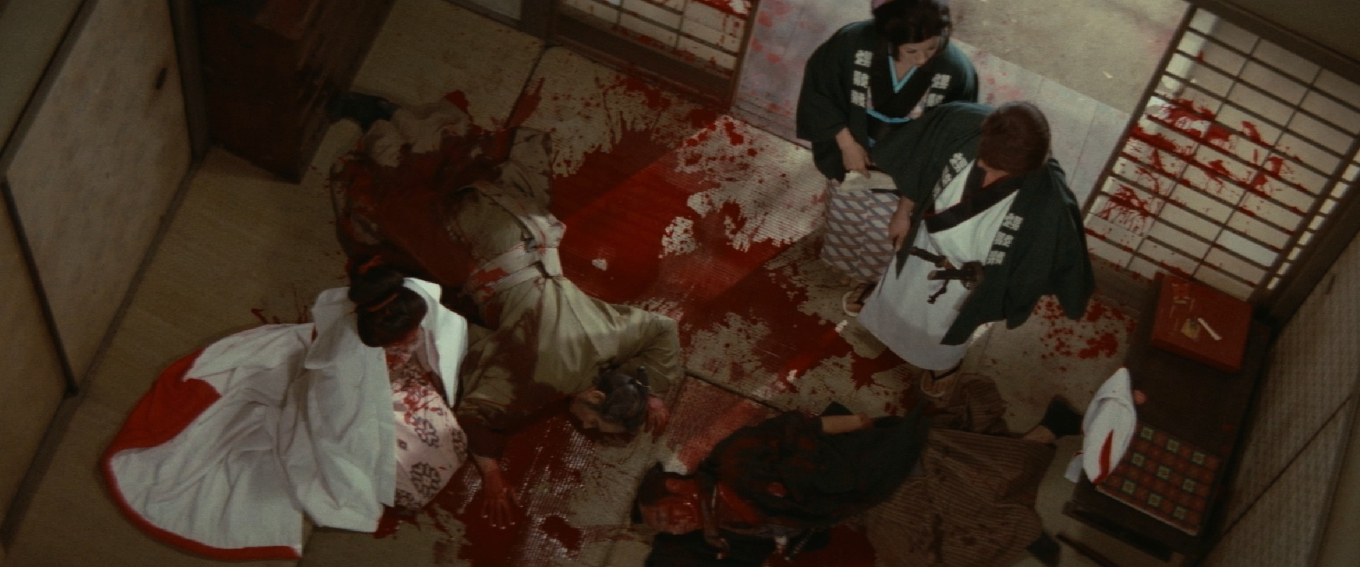
Thus, both films work together to reinforce the cyclical repetition of several narrative beats, likely unintentionally inviting a reading of reincarnation or the repeated cycles of doom perpetuated by a society that resists change. Both Shino and Kyūshi-Issho are little more than ciphers, yet neither can escape his destiny, even as his very presence disrupts every environment he enters. They represent the distilled essence of a power structure that seeks to harness their violent energy, yet they also become the unleashed weapon its creators ultimately cannot control. There’s a pertinent post-war metaphor there regarding other, albeit vastly scaled-up, weapons of mass destruction.
In one pivotal scene, when Kyūshi-Issho kills a young woman’s fiancé and father in terrifyingly swift succession, her sanity cracks. She sings a snippet of what sounds like a dark nursery rhyme about a black crow cawing from the underworld, beckoning or heralding the spirits of the departed. Perhaps this implies that Kyūshi-Issho is himself a lost soul returned from the dead. Something about the rhyme strikes a chord, and he takes the young woman into his care, fully aware that she’ll seek revenge at the first opportunity. Is this really what he desires, or what she truly wants? Will they prove to be each other’s salvation or damnation?
JAPAN | 1974 | 83 MINUTES | 2.35:1 | COLOUR | JAPANESE

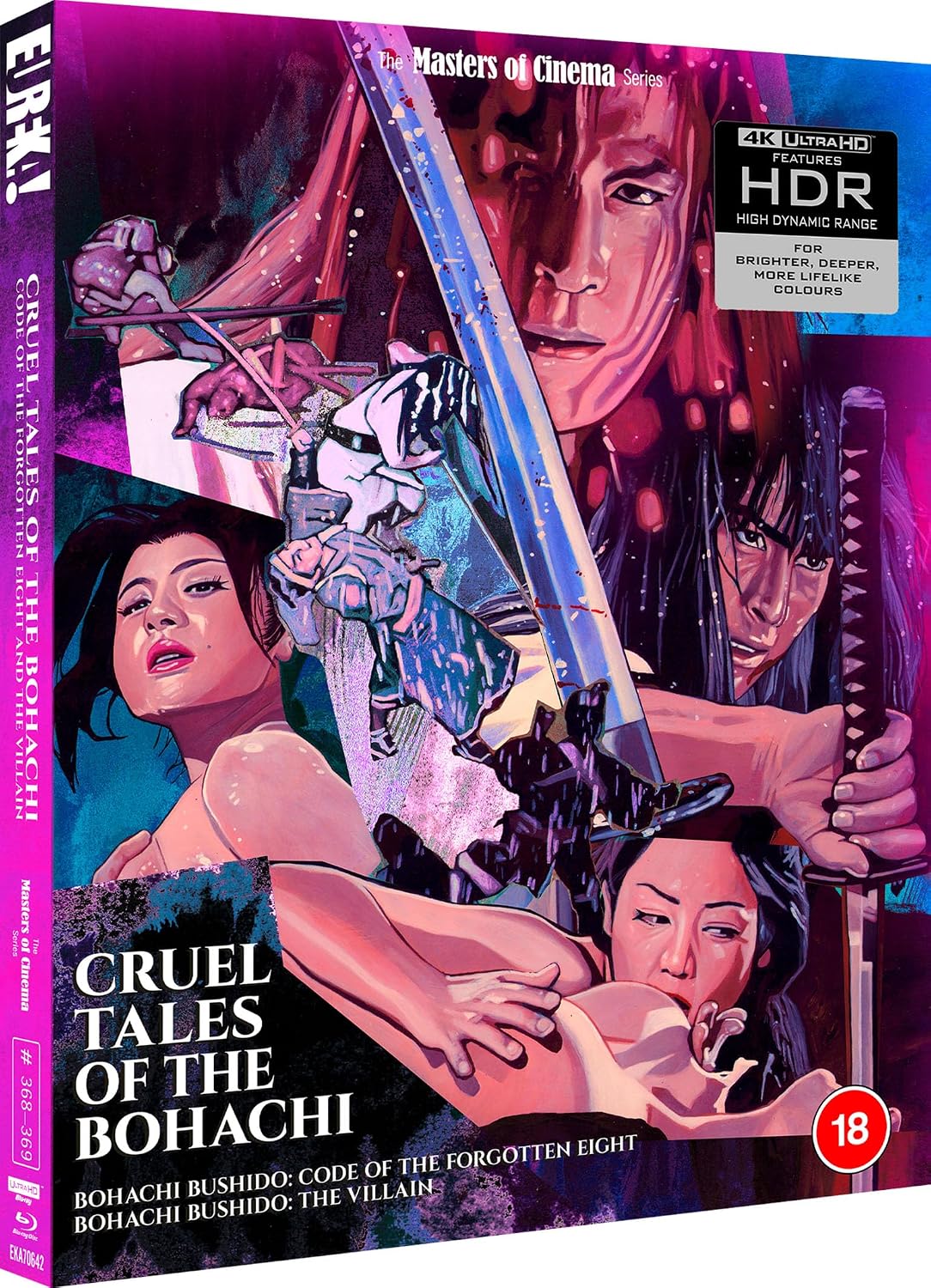

director: Teruo Ishii (Code) • Takashi Harada (Villain).
writer: San Kaji (Code) • Takeo Kaneko & Sadao Nakajima (Villain).
starring: Tetsuro Tanba, Yuriko Hishimi, Keiko Aikawa, Ichinose Rena, Emi Jō, Ruriko Ikeshima & Tatsuo Endo (Code) • Gorô Ibuki (Code & Villain). Reiko Ike, Bin Amatsu, Keiko Aikawa, Kenji Kusumoto, Takashi Ebata & Takuzô Kawatani (Villain).