MARGIN CALL (2011)
Follows the key people at an investment bank over a 24-hour period during the early stages of the 2008 financial crisis.

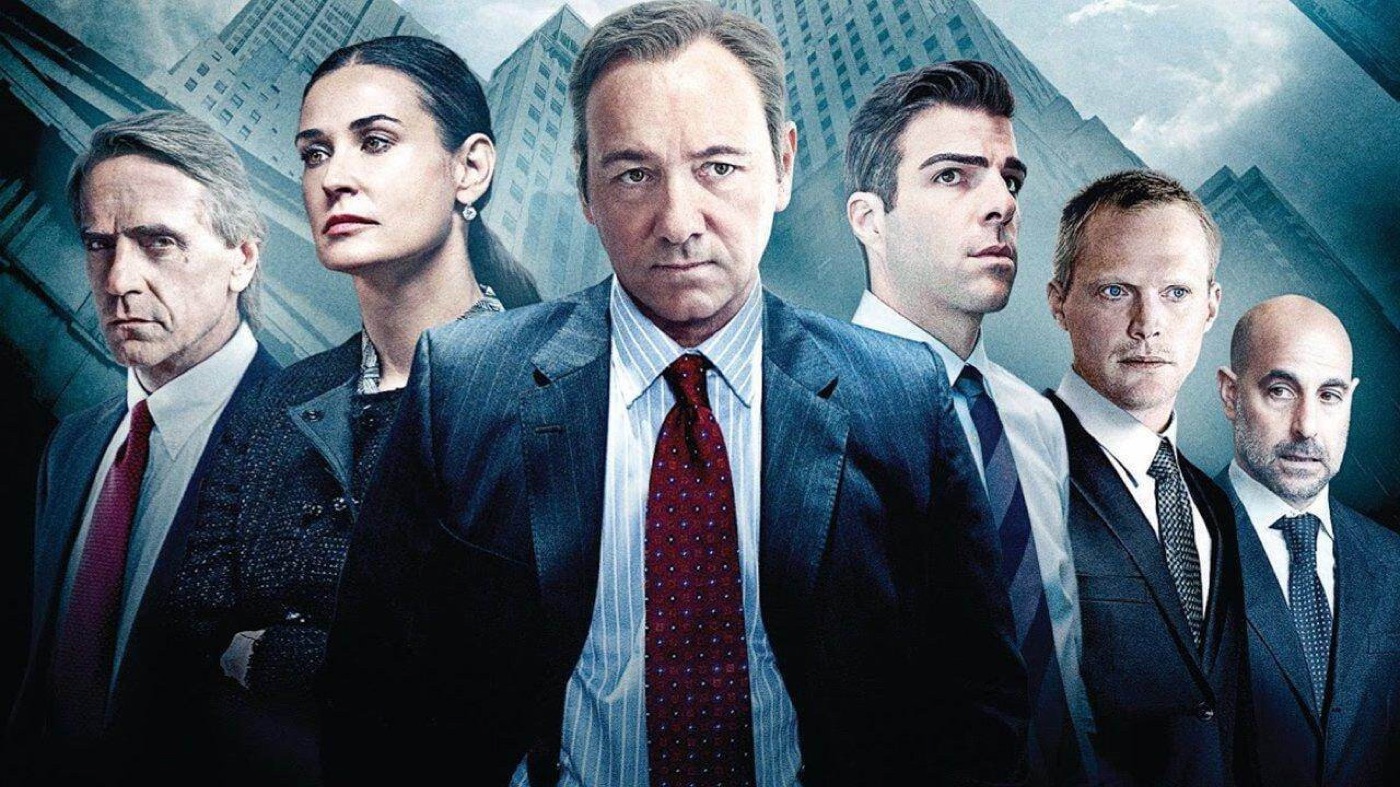

Follows the key people at an investment bank over a 24-hour period during the early stages of the 2008 financial crisis.
Margin Call begins with an act of controlled brutality, where corporate-speak and quiet office environments underscore the cruelty on display. Word has filtered through the film’s office setting—a Wall Street investment bank—about a slew of incoming firings. Workers hunker down in their figurative forts, crouched over their workstations, silently praying that the all-important woman with her all-important clipboard doesn’t call their name. She’s the bearer of bad news, but she too could be excised down the line. Everyone’s expendable, even if they do good work. As some workers escape this death knell and others sadly shuffle out of the place that lent structure—and maybe even meaning—to their lives,it’s hard not to feel as though these decisions are utterly arbitrary.
Writer and director J.C. Chandor has a keen understanding of how to convey uncomfortable silences and quiet desperation. We watch the entire firing process for employee Eric Dale (Stanley Tucci), the head of risk management.He’s led to a small room, then herded back out, while a stocky figure observes his every move to ensure he doesn’t take anything he shouldn’t or copy any of his work. Evidently, this bodyguard-like figure is atrocious at his job, setting the whole film in motion in ways that really should’ve been flagged. Dale hands a flash drive of his work to Peter Sullivan (Zachary Quinto), an analyst in his department, with an ominous final warning: ‘be careful’. With that, the firing process is complete; the elevator doors shut and separate both men forever. The sequence is as swift as it’s brutal, light on its feet as we glide from room to room, but carrying an oppressive air of dread throughout.

Margin Call freely capitalises on the burgeoning apathy of its characters, as they feed their worst instincts and undergo a constant devolution because of it. But it also capitalises on our aversion to bearing witness to distress—the same impulse that prompts most people to look away from a crying stranger or a rough sleeper on the street. It’s not that we do so out of apathy, but cowardice. The fear stems from reckoning with that person’s misfortune and knowing we’ll do nothing to help relieve it. We’re afraid of their knowing stares between our furtive glances.
It’s almost as if you feel that person’s energy in your physical surroundings; the more it calls out to you, the stronger the instinct to look away. But what if that concept reaches its breaking point, where difficult circumstances can’t be ignored? At its core, Margin Call is the answer to this question. Yet it’s precisely at this point—continually orbiting these pressing matters without knowing quite how to get to the heart of them—that it betrays a lack of scrutiny.
Dale’s chief area of concern, before his life was upended in an instant, is of grave importance to the company’s future,with implications that stretch worldwide. As someone ill-equipped to discuss anything financial, I already feel out of my league explaining the most basic plot points, though Margin Call’s screenplay is remarkably accessible—perhaps too accessible, but I’ll get to that. Essentially, Dale was devising a model exploring major shifts in volatility levels, which Sullivan completes. The model makes it clear that the company is in debt from over-leveraged assets so severe it might bankrupt it entirely.

The film deftly shifts from Dale as our vessel for this ruthless world to Sullivan, as the old guard is torn down and the fresh-faced employee confronts an uncertain future. There’s an exactness about Quinto that makes Sullivan’s diligence believable, as he works well past his shift hours and into the night to map out his former boss’s data model. Naturally, Dale was onto something big, and naturally, Sullivan is quick to uncover it—using his own talents to magnify the still-grainy picture of despair into a crystal-clear image of a hollowed-out future, reflected back at him through graphs and figures.
It all seems so arbitrary: these stray dots and flashes of colour, carefully arranged into a pattern that spells doom. Then, with sickening clarity, progress grinds to a disorienting halt as one finds oneself standing over a precipice. Or, in the case of Margin Call’s central dilemma, something worse: walking upon a patch of empty air, certain that solid ground lay just beneath, only for your stomach to catch in that half-second before falling into oblivion.
Over the course of a single night—which stretches far into the following day for these sleepless office workers—the ramifications of Dale and Sullivan’s discovery dawn on the firm’s key players. Watching this helplessness unfold means watching characters continually play catch-up on the big picture, where financial details are kept sparse to keep those illiterate in its mechanics—this reviewer included—engaged. But even without business jargon, viewers know tension is in the air and despair is on the horizon long before many of these characters do.
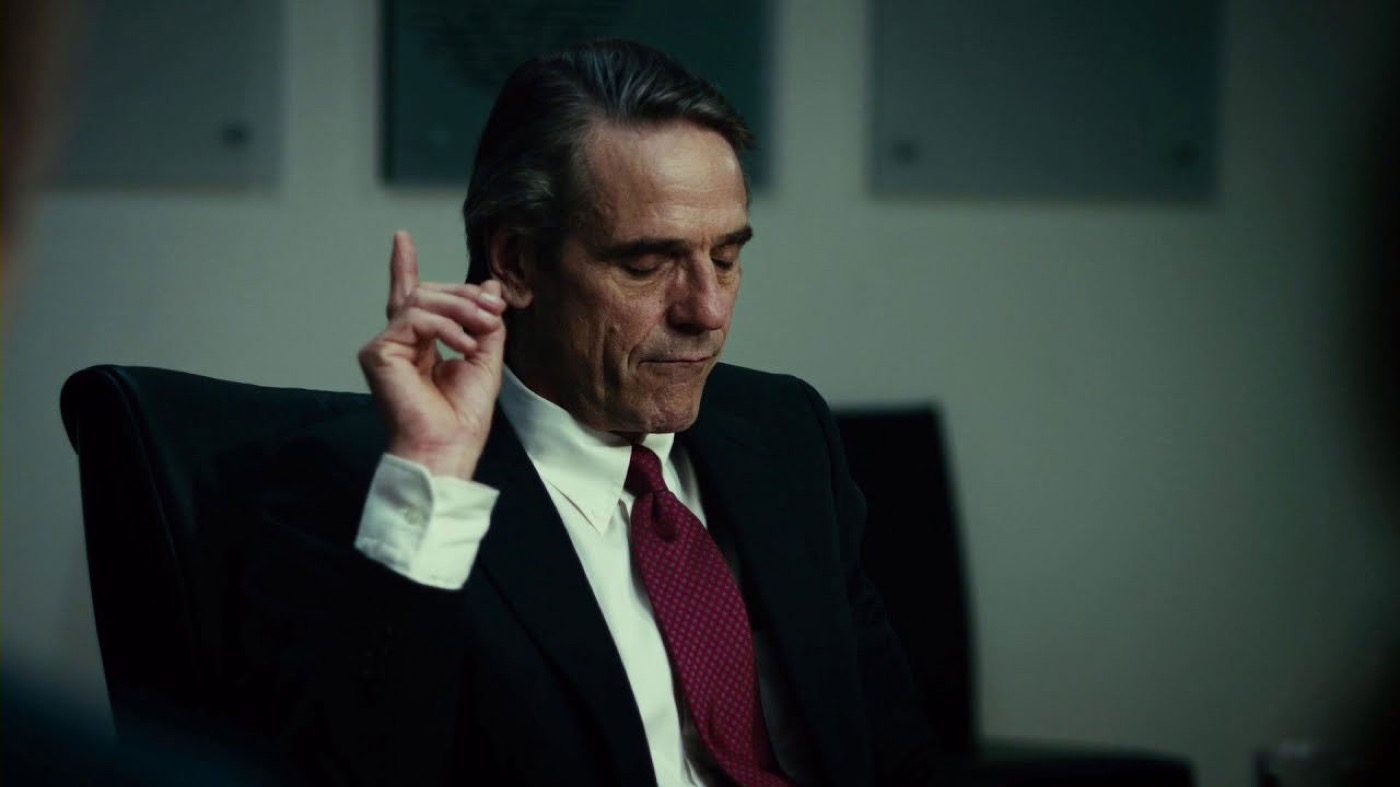
It sounds rather brilliant: a clean-cut depiction of decimation, where shop talk and expensive suits are paired with a hopeless void as the familiar elements of this workplace fade away. In execution, however, it’s a case of watching the same scene play out repeatedly, repackaged ever so slightly. There’s a new face here, a new facade being shorn down there, but the formula remains unchanged. Slowly, each of these characters reveals more human qualities, but never in truly illuminating ways. It’s not as if we were ever led to believe these elite players in the financial world are bereft of feeling, even if that mask complements their career aspirations. It isn’t illuminating to see, time and again, that these people can fear and love as deeply as anyone else.
The frustrating element of Margin Call is the trap that ensnares viewers: the promise of something better on the horizon. Perhaps, one is led to think, character X learning of the company’s misfortune will be more entertaining than when character Y was made aware of it. Maybe character Z will have a more crushing breakdown. Maybe, when it feels as if we’ve looped back to the beginning of this formula, character A will accept a compromise we know they were going to take, because that’s the way of the world. It’s the way of this script that the same kinds of conflicts appear ad infinitum, always promising something bigger. It’s an understandable promise, given that the story’s wider ramifications for the general public are far more devastating. But when the film can’t illuminate those tragic elements and simply repeats them throughout its runtime, it mirrors the shallow, constant coaxing of its sleazy professionals.
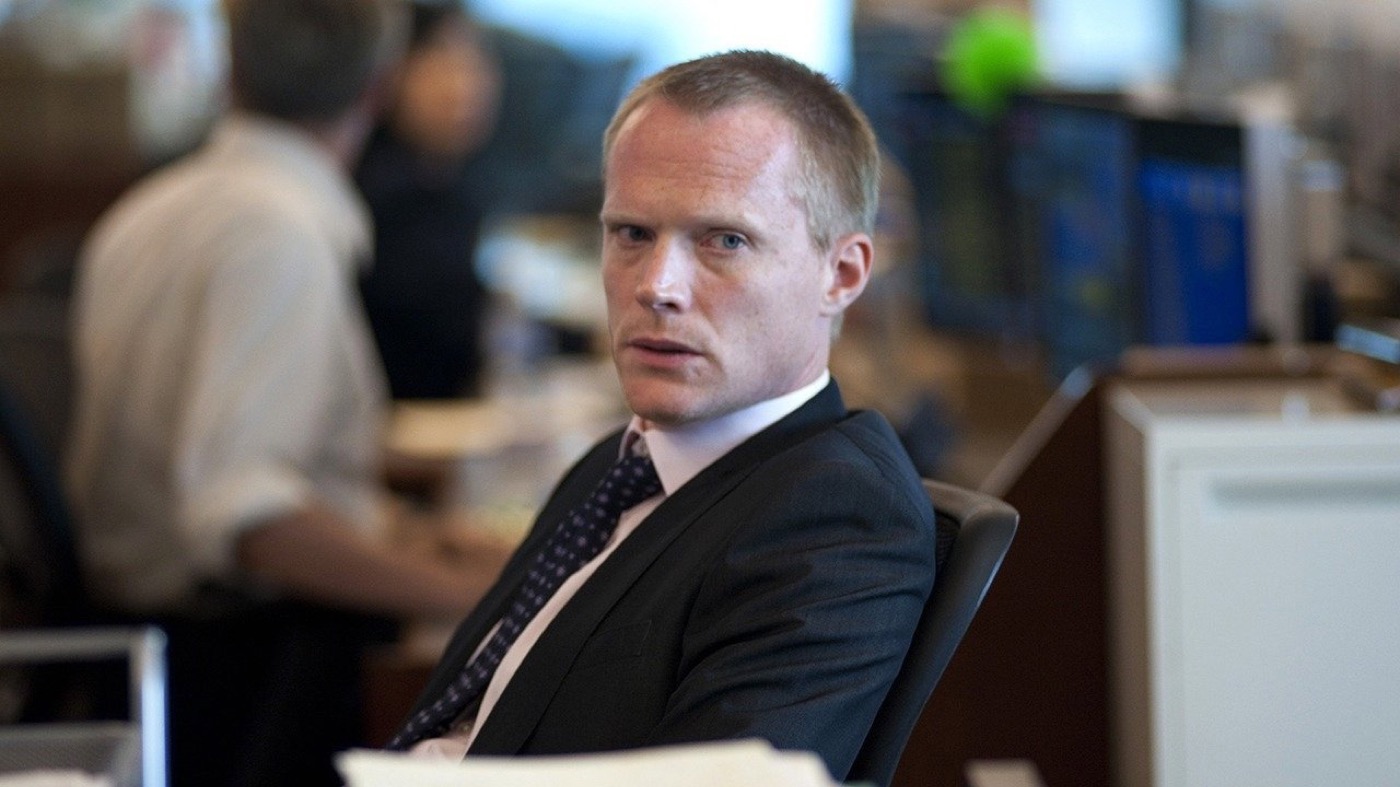
Margin Call stakes its moral arguments well, even if there’s little to comment on there. Obviously these shallow figures are human; obviously compromise is human. Beneath these basic acknowledgements lies an industry that activates and manipulates the greed of its employees, with everyone so immersed in the system that they can’t see it’s rotten from within. If the centre cannot hold, the structure is bound for ruin. Of all these characters, Sullivan is arguably the centrepiece, but he’s also the least interesting. He’s slowly forgotten about, though not for any distinct narrative or thematic reason. He simply doesn’t have much to say or do, and he’s certainly not interesting in his own right.
With moral ceilings following these characters wherever they go, there’s little room for further exploration. Nothing can shock or depress in this morally stunted world. But just because that’s the film’s point doesn’t mean it isn’t progressively less interesting to watch. The opening 10 minutes of Margin Call tell a brilliant, bracing story—tense, polite, and devastating all at once. The rest of its runtime, while promising greater heights, is always lagging behind.
USA | 2011 | 107 MINUTES | 1.85:1 | COLOUR | ENGLISH

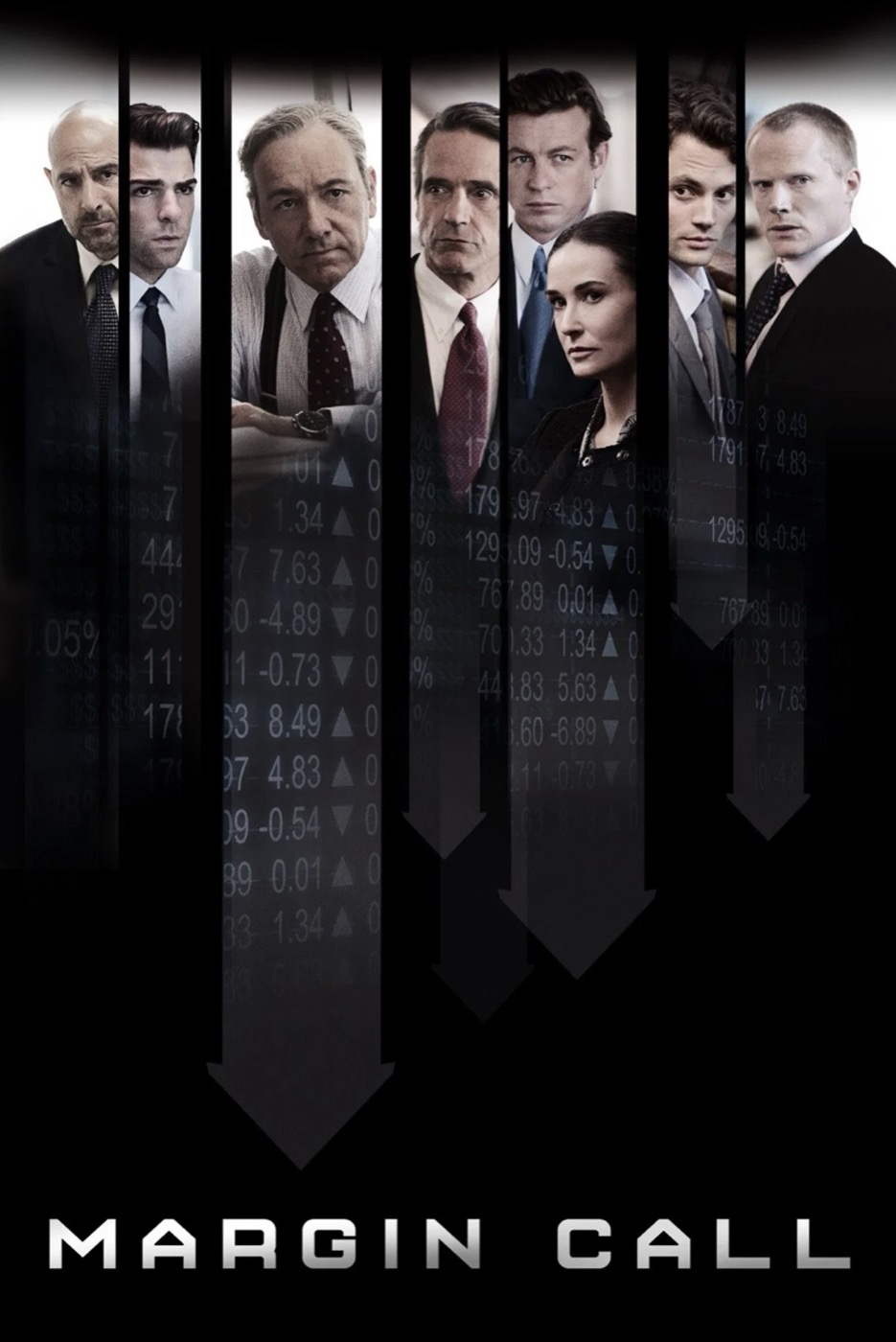
writer & director: J.C Chandor.
starring: Kevin Spacey, Paul Bettany, Jeremy Irons, Zachary Quinto, Penn Badgley, Demi Moore, Stanley Tucci, Simon Baker & Mary McDonnell.