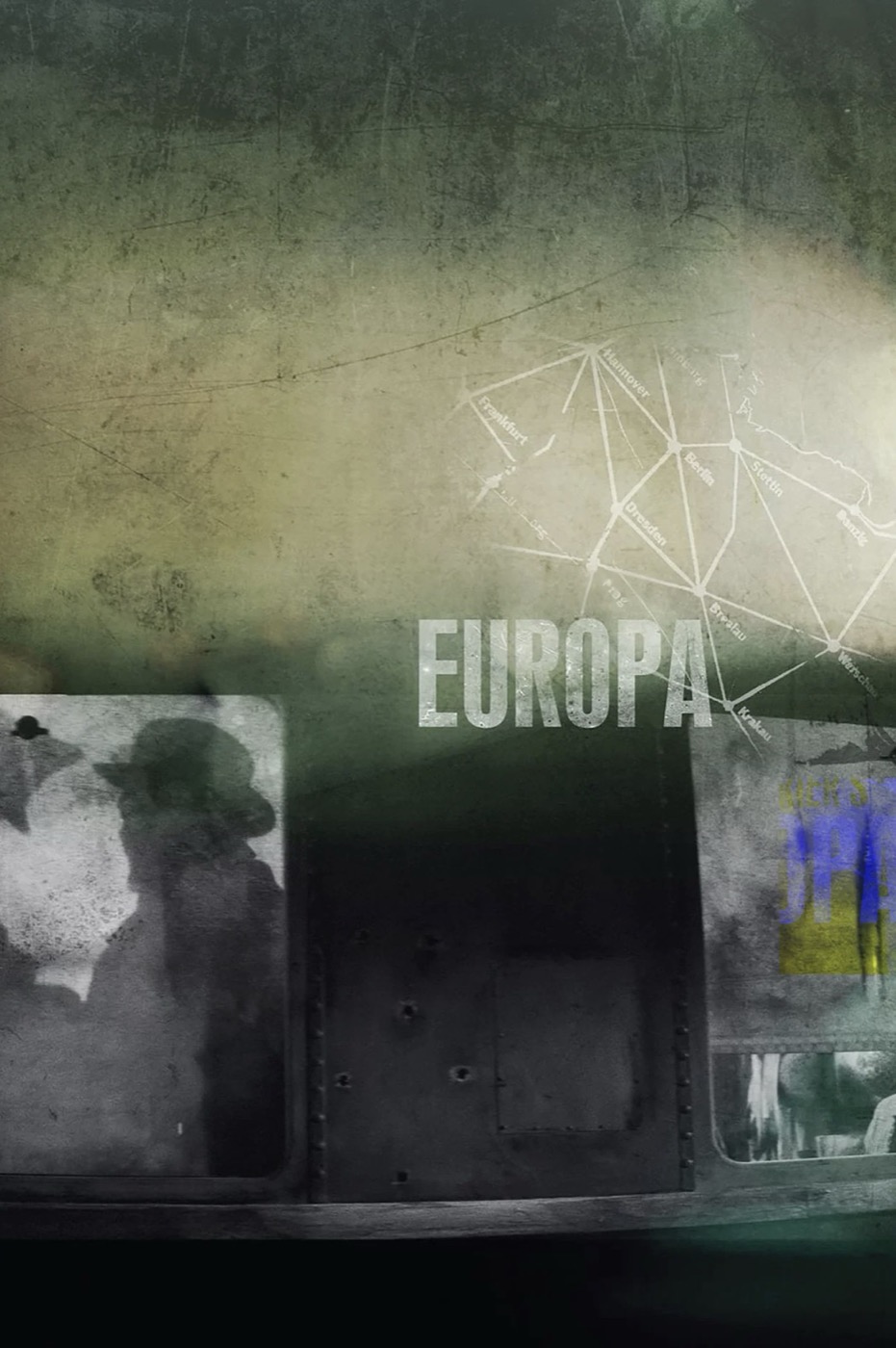
EUROPA (1991)
Just after World War II, an American takes a railway job in Germany, but finds his position politically sensitive with various people trying to use him.


Just after World War II, an American takes a railway job in Germany, but finds his position politically sensitive with various people trying to use him.
At first glance, Europa is one of Lars von Trier’s least audacious films. The Danish director has crafted a unique, consistent sensibility over the last two decades, often imposing strict limitations on how he conveys his suffering subjects. Suffering itself is a hallmark of a von Trier film nowadays, where depression or sadism is never far from his characters’ thoughts. His vision is usually crystal-clear and uncompromising, depicting hellscapes of the mind and body that leave viewers with an unrelenting knot in their stomach for extended periods.
To articulate these bleak emotional lows, frequent handheld camerawork imposes a documentary-like, fly-on-the-wall effect. The movements themselves are conspicuous, taking time to adjust to, but ultimately the atmosphere von Trier creates is one of intense, almost unbearable intimacy. Some of his films are even ugly to look at, with an abrasive quality inspired by the Dogme 95 movement, of which von Trier was a co-founder. The movement emphasised a return to story, dictating that shooting must be done on location using natural lighting and handheld cameras. The effect of these films is two-fold: viscerally distasteful at first, then disarming in their immersion.
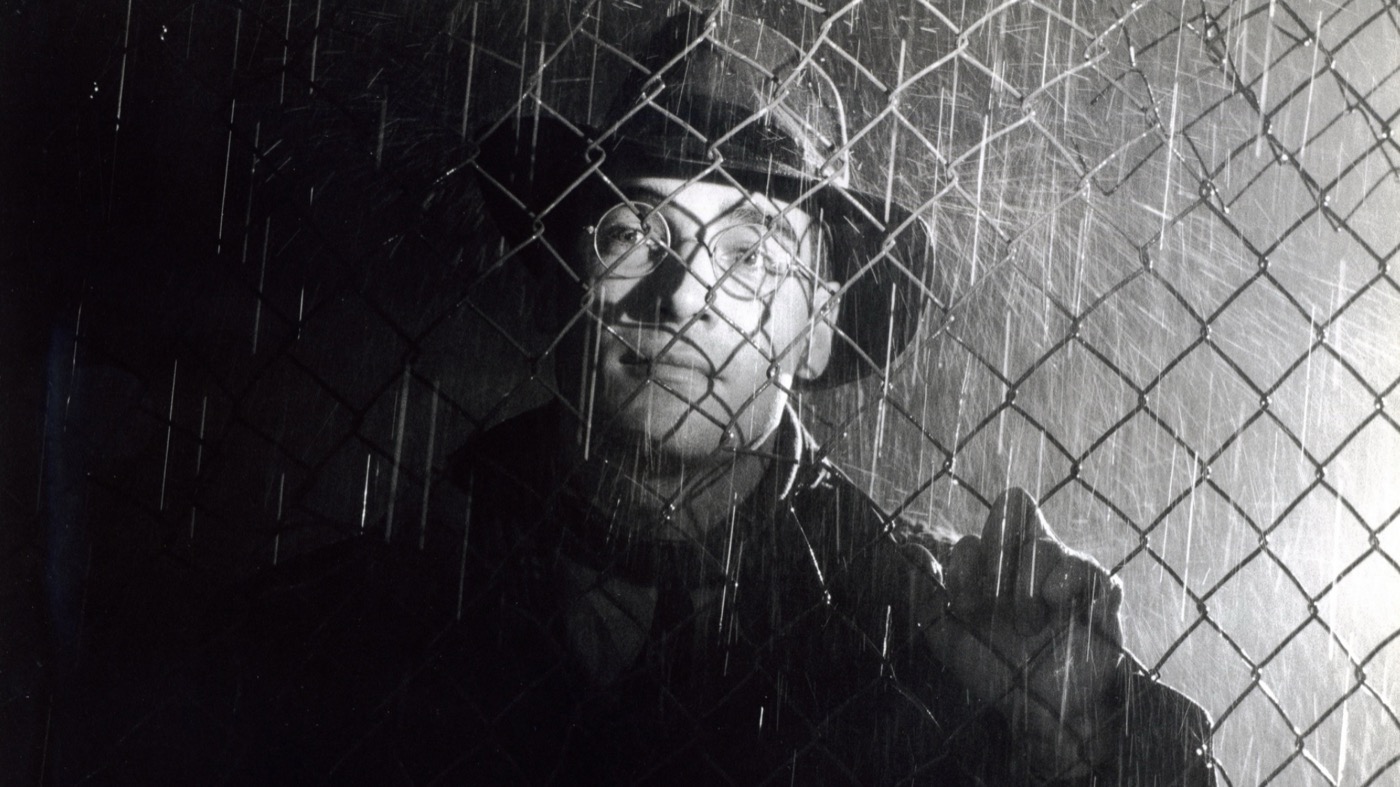
Compared to these efforts, Europa—one of von Trier’s earlier films—takes a far more traditional approach to filmmaking. When the camera moves, it glides smoothly, while frequent stationary shots depict the shifting circumstances of train conductor Leopold Kessler (Jean-Marc Barr). An American of German heritage, Kessler travels to the US-controlled section of West Germany following the end of World War II, ostensibly to contribute to humanity. How exactly a train conductor is supposed to do that is anyone’s guess, but the film struggles to poke fun at its protagonist’s folly.
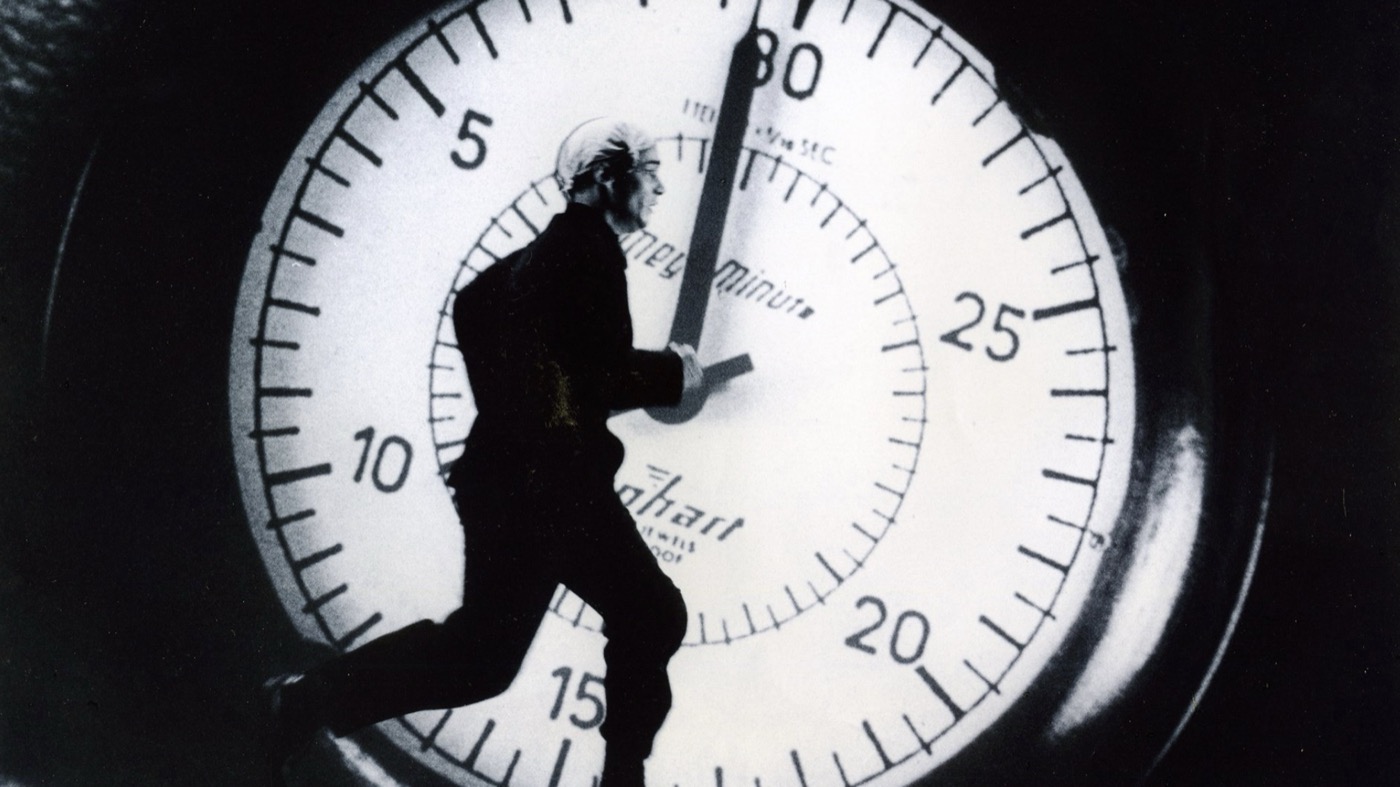
Instead of aiming for abrasive filmmaking, von Trier is at his most lyrical here, utilising sweeping camera movements and gorgeous black-and-white compositions. This is not to say that Europa is entirely monochromatic; it features occasional splotches of colour, sometimes within the same shot. Von Trier constantly toys with form, creating sudden closeness or distance between characters through striking colour differentials, layering images, or having actors interact with footage displayed on a projector behind them. Most impressive is his clever, unusual use of train imagery, whether he is reimagining large-scale set pieces through miniatures or layering a train over Kessler’s face.
Europa is a frequently gorgeous film, constantly immersed in experimentation as von Trier uses everything in his creative arsenal to showcase his vision. It is a visually stunning presentation of a time of uncertainty and anxiety, where the fate of Germany looms large in each character’s thoughts, and no easy answers can be found on how to navigate this state of limbo. That they have unequivocally lost the war is the only guarantee; everything else is a confused, surreal scramble for control.
While Europa is far less controversial than von Trier’s later works—which are notable for their disturbing subject matter and extreme violence, particularly Antichrist (2009) and The House That Jack Built (2018)—it examines an era and setting that few filmmakers have explored. World War II has received more attention in the media than any conflict in human history, yet these filmic representations usually posit Germany during this period merely as a state of terror, bigotry,and debasement.
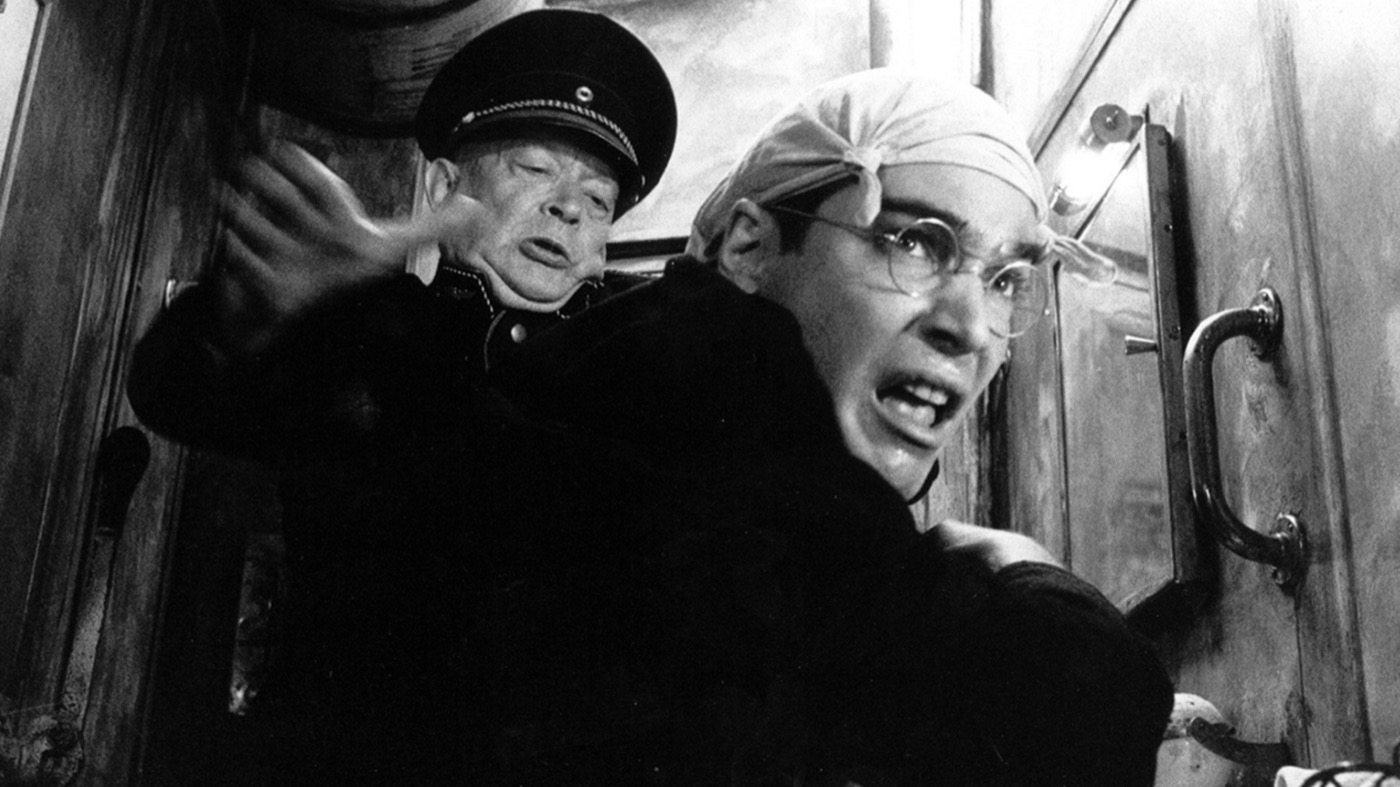
But what of the remaining citizens in the aftermath of the war, who have been conditioned into adopting these abhorrent beliefs? The structure of the Nazi Party has been torn down and Germany divided, but ideas do not simply perish overnight. There is much room for dramatic urgency here, as a dispossessed population, having followed their tyrannical leader in a mad bid for global supremacy, is now forced to live under the thumb of foreign combatants.
Rather than completely ignoring this political reality, Europa fluctuates in its presentation of anxiety and dispossession. Its characters are faced with an unenviable choice: accept defeat or continue fighting a war that is already beginning to recede into the past. Only Kessler—the bumbling foreigner whose very existence reminds the natives of their defeat—cannot connect with these anxieties.
We never get in-depth insight into the German population’s thoughts, as Kessler can never ingratiate himself with them. Try as he might to forge ahead in his new role, his only meaningful connection is with the Hartmann family, whose patriarch, Max Hartmann (Jørgen Reenberg), owns Zentropa, the railway company employing him. Max’s daughter, Katharina (Barbara Sukowa), soon catches Kessler’s eye. The first time we see her, she’s radiant to him—a sparkle of colour in a black-and-white world.
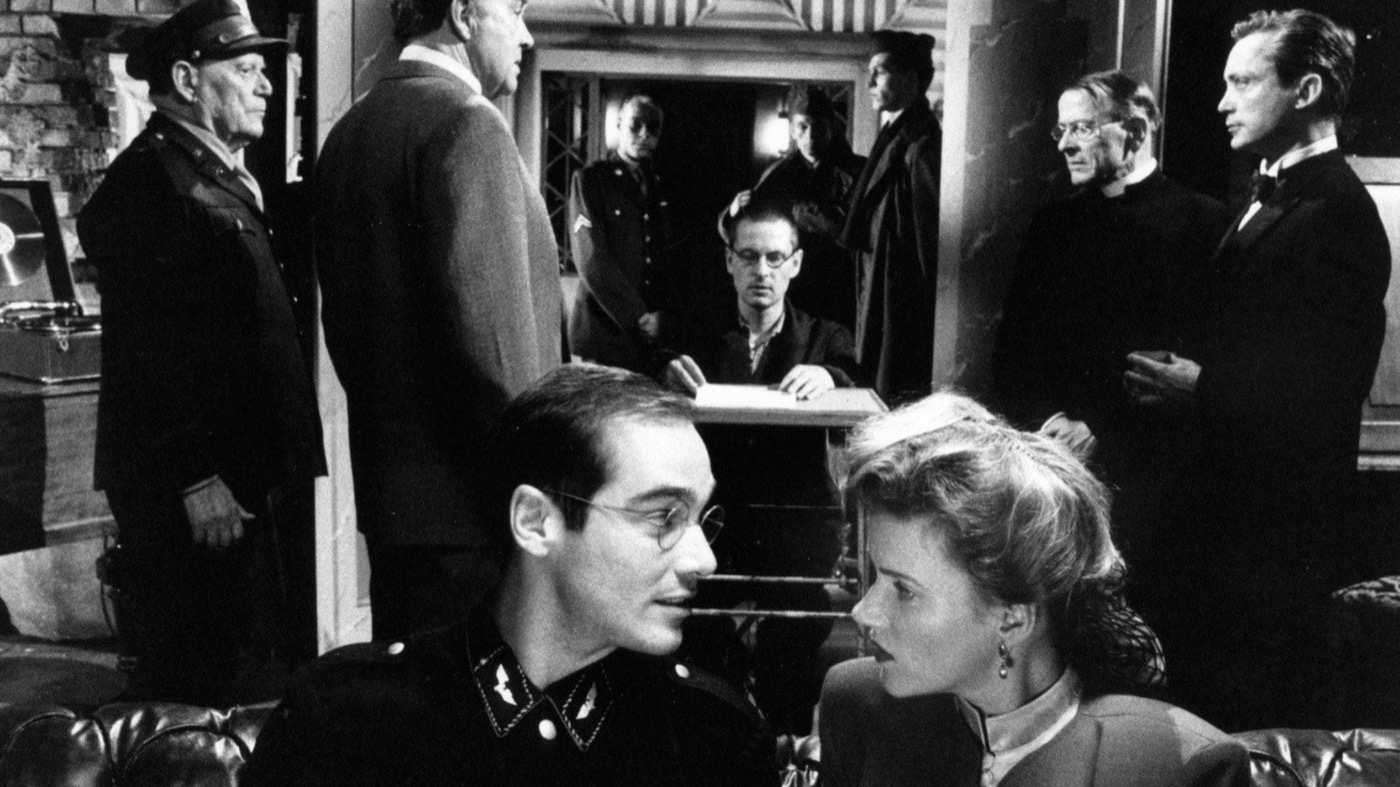
The message behind this colour imbalance is clear, neatly converging form and feeling. It’s more than simple attraction; in an instant, the monochrome Kessler has transported this beautiful woman to another world, free from the surrounding poverty and despair. It is an act of mercy that renders her an unknowable fascination, and him a pitiful wreck unable to consummate his burgeoning desire.
It is understandable why this young, naive protagonist would envision the woman of his dreams as existing in an entirely different sphere. He needs to feel burdened by her existence, just as he feels burdened by the war that sparked his desire to travel to Germany and inspire something positive from the horrors that eclipsed the nation. In both cases,this misplaced need to be a saviour—or a martyr—represents the foolish whims of a young man lusting for opportunity,even as he shies away from it.
But then, seconds later, Kessler is depicted in colour while Katharina is shown in black and white. The message collapses in on itself, and von Trier’s formal experimentation suddenly amounts to nothing more than trickery. It is no wonder the director later became disillusioned by what he perceived as deception in cinema, since it is littered all over this film. Europa, a film about a country and a protagonist in a perpetual state of crisis, is ultimately in crisis over its own identity. It ambles on with no clear emotional direction, as formal reinvention supersedes the story.
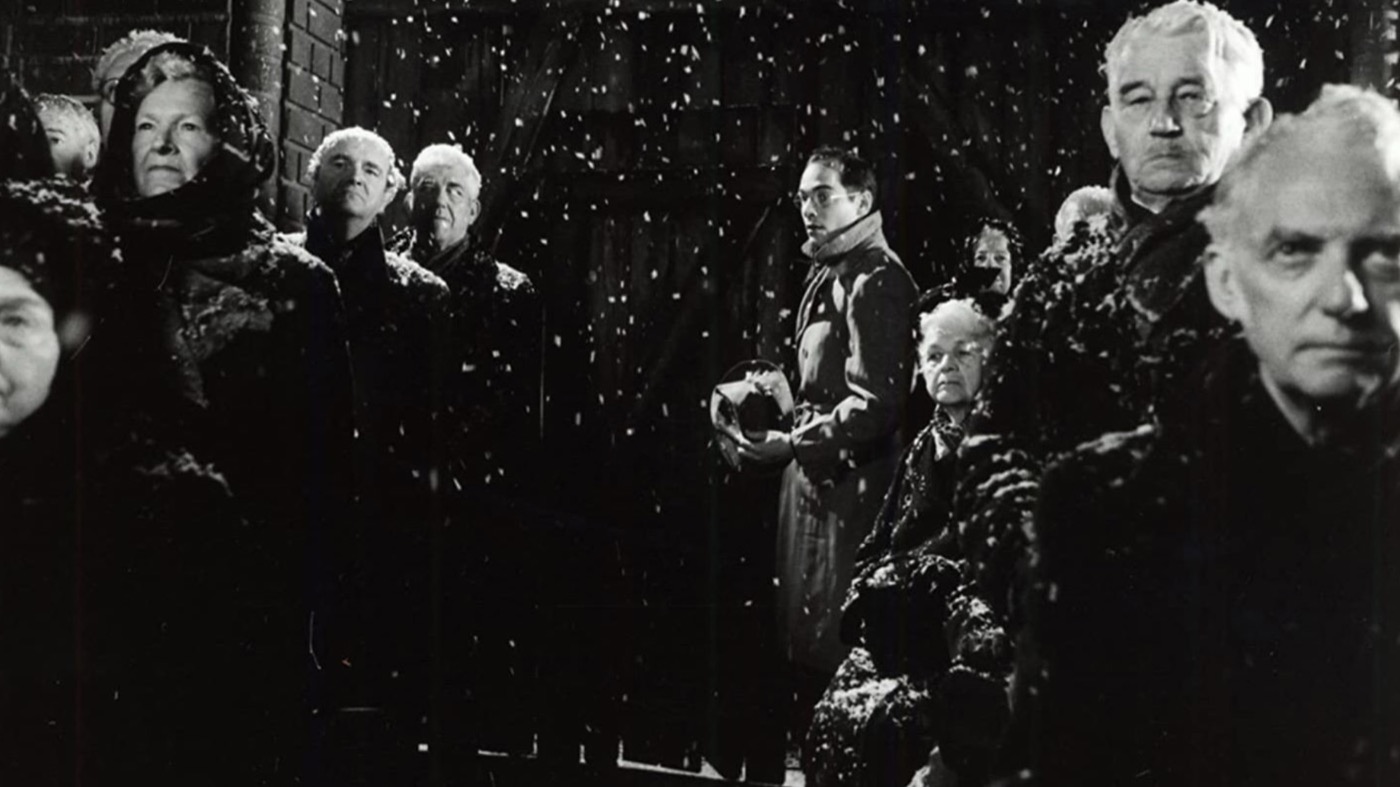
Minutes before this confused tone is solidified, audiences are invited to behold a delightful piece of music as Kessler wanders through a train carriage, marvelling at its perfunctory nature. The score suggests a series of tremors, as swells of emotion threaten to bubble over into ecstasy or sorrow, yet lack the confidence to do so—much like this pining, idealistic protagonist. We get an immediate sense of how enamoured Kessler is by his surroundings. Is this a dark, cosmic joke on how work provides meaning? A more obviously comedic statement on his desire to promote goodness when all he really seeks is stable employment? Or simply a brief snippet of raw emotion from a young man on the cusp of something important, soon to become a mere daily obligation?
Though the last hypothesis seems the most likely, none of these explanations adequately addresses the surge of feeling conveyed by the scene. This is true for much of the film, which sacrifices its narrative to style. The tone is heavily reminiscent of 1940s and ’50s melodramas, suiting its visual aesthetic. But to what end? This melodrama-tinged plot is neither amusing nor urgent, let alone insightful. It bounces from one plot beat to another without a consistent throughline of emotional investment, falling back on stylisation to supplement its narrative pitfalls. Kessler is unable to understand the German people, so neither can we. But is he worth understanding? He certainly isn’t worth laughing at,even if he is prone to folly.
Von Trier’s Dogme 95 manifesto didn’t just mention story; acting and theme were also crucial. For the former, it is impossible to bask in these performances given the extensive dubbing, achieved, again, for purely stylistic purposes.Von Trier constantly imposes a distancing effect between the viewers and characters, flattening performances to a dreadful degree—particularly Eddie Constantine’s turn as Colonel Harris. Constantine, an American actor famous for his work in France as the noir secret agent Lemmy Caution, should have been a dead ringer for this 1940s-inspired film. Instead, his distinctive voice sounds so alien through the dubbed dialogue that it’s as if he’s a non-English speaker phonetically testing out the language for the first time.
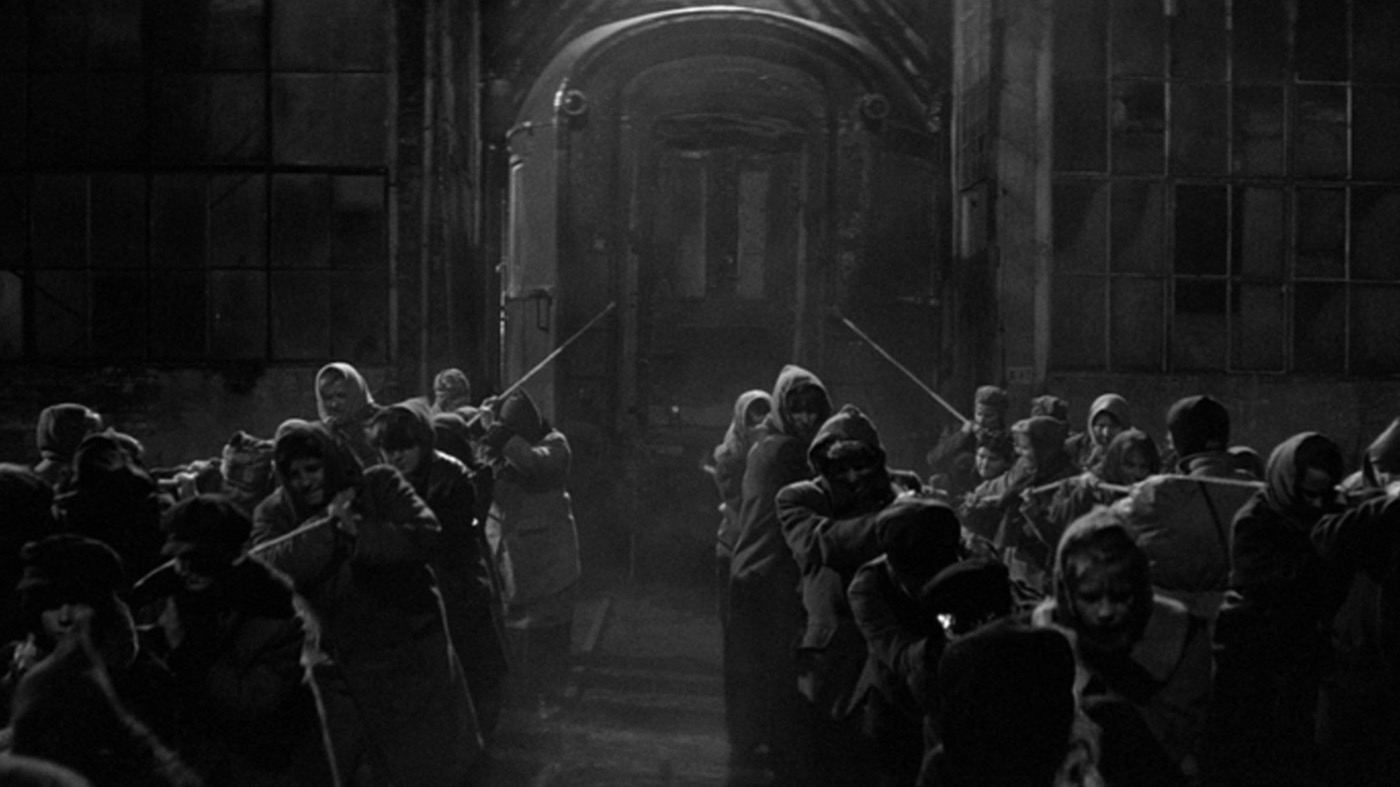
As if the need for reinvention were not overplayed enough, the film skips back and forth between English and German,while further tonally confused mismatches of colour palettes deaden Europa’s emotional appeal. This patchwork style treats its own structural insecurities as though they were intended irony, though there is little actual humour to be found across the runtime.
Though it is more strongly influenced by it than a strict adaptation, the film presents an inversion of Franz Kafka’s final, incomplete novel Amerika, as an idealistic American finds himself enshrouded in a European bureaucratic hellscape. At least Kafka’s vision was crystal-clear; Europa’s as confused as its protagonist.
DENMARK • SWEDEN • FRANCE • GERMANY • SWITZERLAND | 1991 | 114 MINUTES | 2.35:1 | COLOUR • BLACK & WHITE | ENGLISH • GERMAN • FRENCH • LATIN • ANCIENT GREEK

director: Lars von Trier.
writers: Lars von Trier & Niels Vørsel.
starring: Jean-Marc Barr, Barbara Sukowa, Udo Kier, Ernst-Hugo Järegård, Erik Mørk, Eddie Constantine & Jørgen Reenberg.