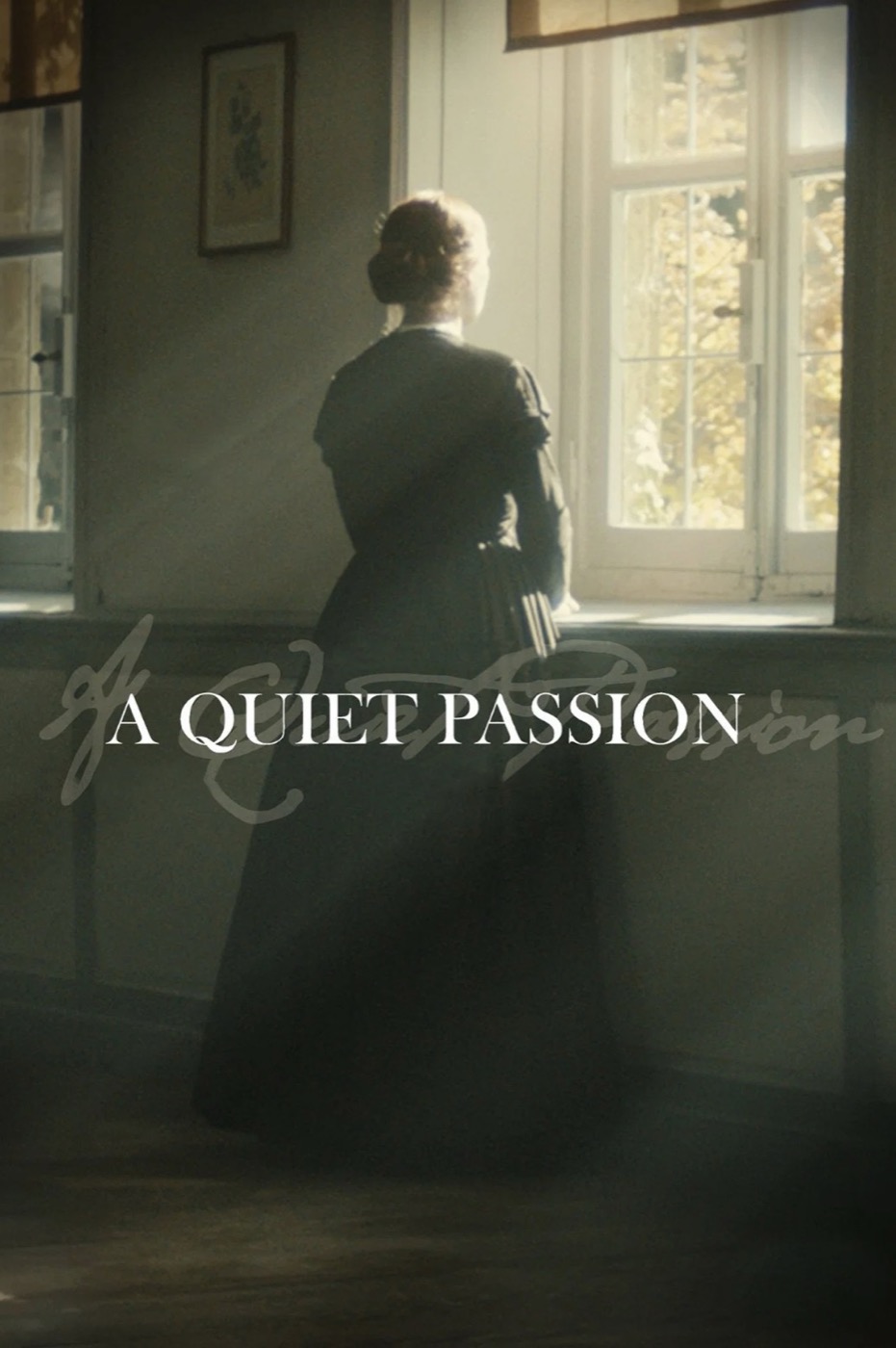
A QUIET PASSION (2016)
The story of American poet Emily Dickinson from her early days as a young schoolgirl to her later years as a reclusive, unrecognised artist.


The story of American poet Emily Dickinson from her early days as a young schoolgirl to her later years as a reclusive, unrecognised artist.
In Terence Davies’s penultimate film, the iconic English director attempts to have his cake and eat it too. Charting the life of acclaimed American poet Emily Dickinson (Emma Bell and Cynthia Nixon), A Quiet Passion follows the major moments in her all-too-brief time on this Earth, where her gift was seldom acknowledged and hardly ever appreciated.Her personal life was marred by her seemingly random propensity for callousness, expressed through biting, witty, scathing comments that laid waste to the norms of good manners, especially where women were involved.
Dickinson is presented as conflicted throughout A Quiet Passion, caught so deeply between repression and passion that she’s never quite sure where she stands with either. The only certainty in her feelings emerges through her poetry, which allows Dickinson to illuminate her struggles and lend them a voice richer and sweeter than any spoken conversation could express.
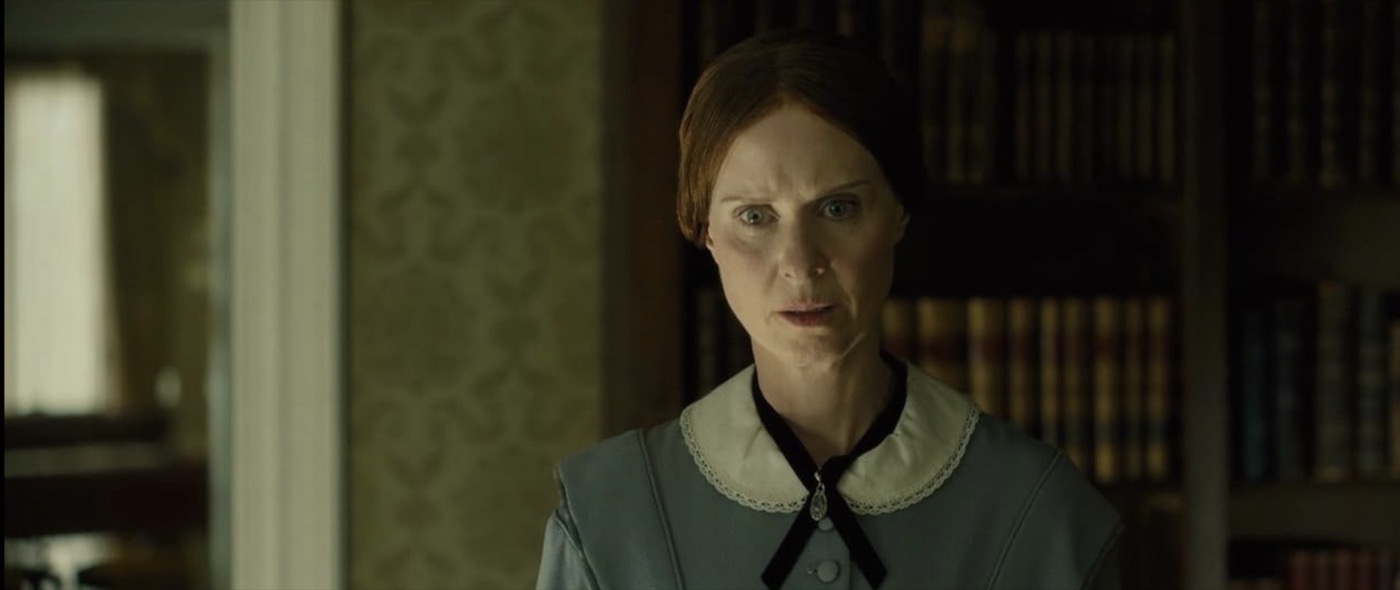
How does one go about orchestrating a film around the life of someone who was intransigent yet vulnerable, easy to provoke, and bitterly cold when this sporadic impulse took hold? A traditional biopic wouldn’t do Dickinson justice, as that largely dull genre sanitises even the most interesting true stories. It also wouldn’t be something Davies, with his aversion to heritage cinema, would’ve engaged in; he famously referred to Jane Austen adaptations as ‘paralysingly boring’. Since traditional story arcs and cosy, standard biopics offered little appeal to the English director, he devised a rather ingenious tactic for conveying the depth of emotion in this semi-tragic figure, while orienting her squarely under the stultifying glare of a repressive society.
Each scene is conventional, while the story structure, though linear, forms a unique shape in how it glides from one point in Dickinson’s life to another, refusing to settle on any kind of finality about who she was or what she made of her life. Declarative, sweeping statements—the kind forlorn lovers in tear-stained melodramas make as they slowly die in one another’s arms—are absent here. In theory, this is the only possible approach to convey the contradictions at the heart of this story. In practice, it disappoints more often than it invigorates.
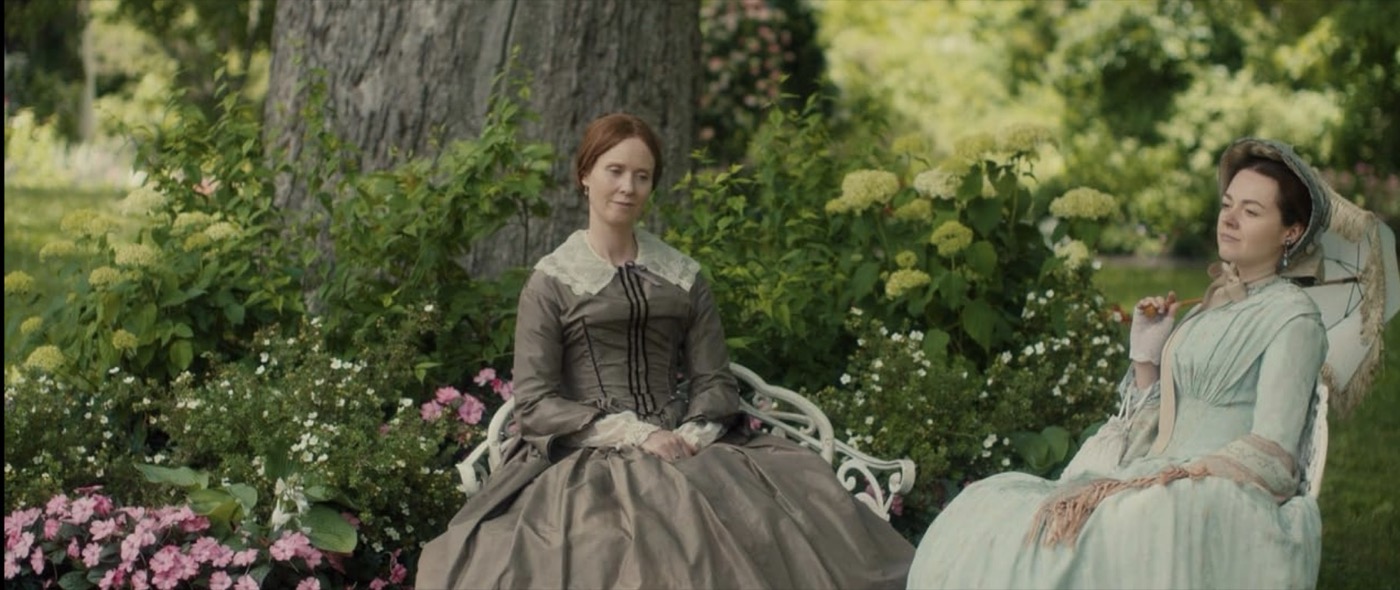
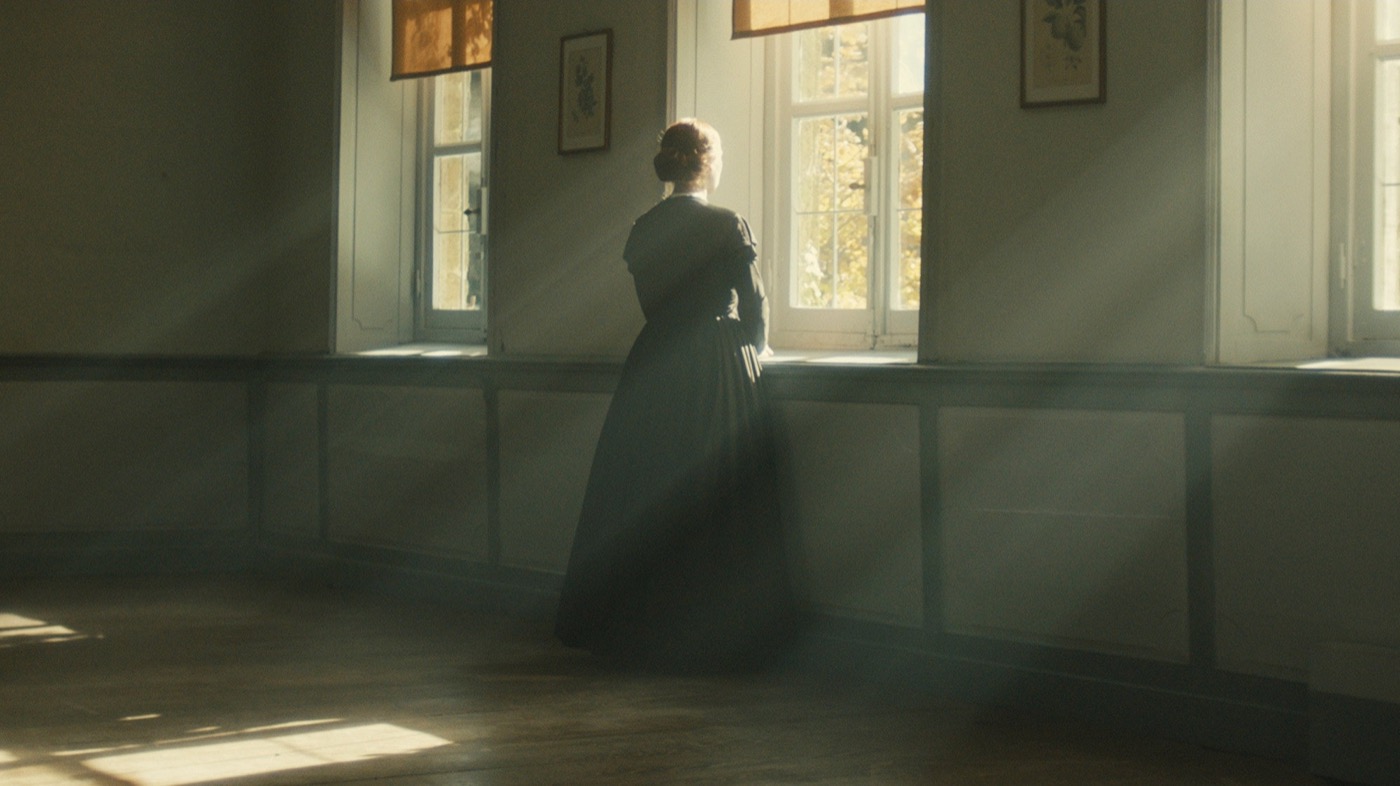
Although the cinematography in A Quiet Passion is respectable—nothing ever looks ugly—it distinctly lacks tactile symbols or the ghostly hues of memory. In Davies’s early films, by far his most personal, you could almost feel the displacement in the air, something the filmmaker was acutely acquainted with; his father’s abusive behaviour meant he developed an innate gift for recognising unspoken tension in a room. It was unbearable to him, as are some of the memories in his feature debut, Distant Voices, Still Lives (1988), a bittersweet tribute to his childhood in Liverpool. Revolving around three children whose lives are forever marked by their tyrannical father’s presence, the present and past are never far apart. Both are awash with a saintly, almost reverent light, creating a unique kind of ghost story.
This creates a remarkable balancing act between upholding and critiquing nostalgia. That contradiction is the key ingredient in these final expressions and depictions of half-remembered days—moments that will be filtered through memory again and again until they lose all their colour (the film’s colour grading already suggests this process is well under way). The memories are forever preserved as beautiful and terrifying, forever tactile, always threatening to leave a bruise. A Quiet Passion was always going to disappoint by contrast, as it isn’t nearly as interesting or profound. However, it’s also disappointingly conventional in its visual palette, with static shots that go through the motions with little care, while Davies sifts through memories of a long-past life with a similar emotional distance. His camerawork and cinematography, which in his early films were heavenly—both in quality and character—are bereft of personality in A Quiet Passion.
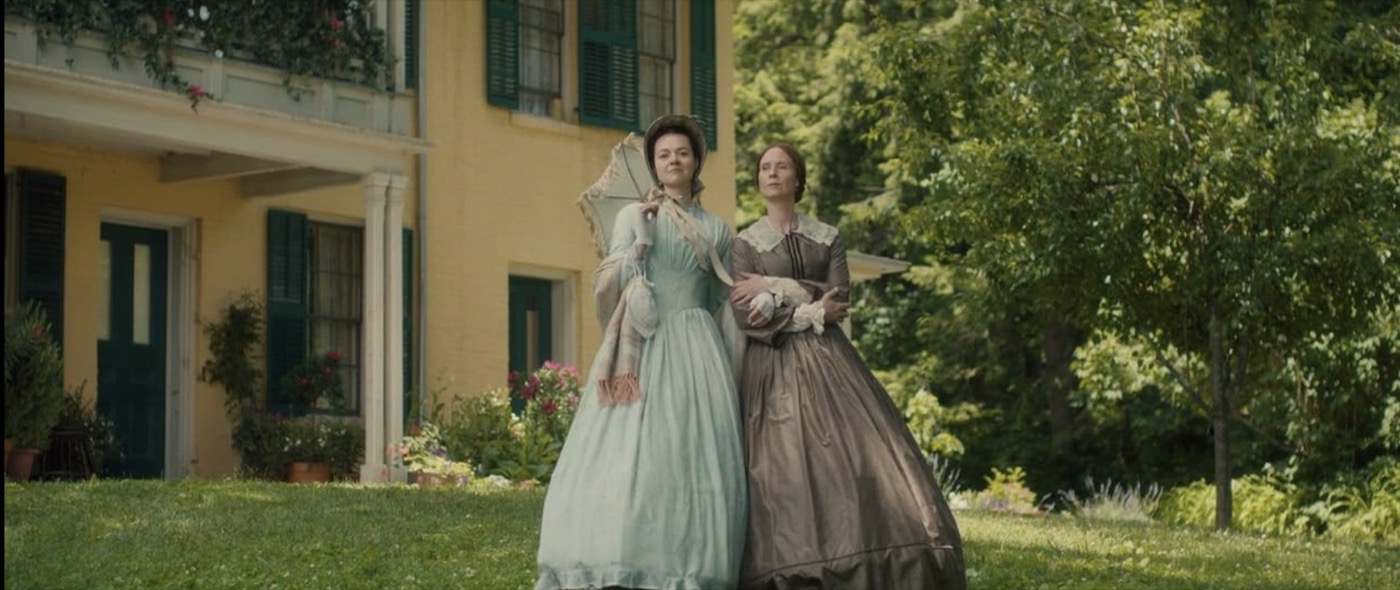
Fans of the director have an easy out in rushing to defend this approach by claiming that this lack of stylisation is all part of a grand effort to comment on a placid, stifling atmosphere of repression, whether for women at the time or for despondent dreamers. But some maturity is required to parse this notion. The film is simply unremarkable, which is a crying shame given Davies’s flair for giving visual form to the whims of dreamers. In his envisioning, a star isn’t a scientific, tangible thing, but a distant echo of spiritual rumblings so great that you feel you can almost glimpse these invisible forces. It’s a style of poetic filmmaking that’s extraordinarily rare, presenting a dream world that never holds back on its brutality where it counts, while concealing it on the surface.
A similar kind of force has invaded Dickinson’s life, but it’s a more confusing blend of internal and external deficiencies. The poet could’ve handled her interpersonal conflicts better, but her world, whether on a macro or micro level, was as inhospitable as it was briefly beautiful. The ideas are there, but there’s nothing in A Quiet Passion’s filmmaking to give them the weight they so urgently require. The film’s momentum dies a quiet death long before the poet’s own demise. As for the way it flits through different stages of Dickinson’s life, these yield mixed results. The transitions themselves, though bearing superficial elegance through slow, gliding camera movements, never segue seamlessly into new conflicts or developments.
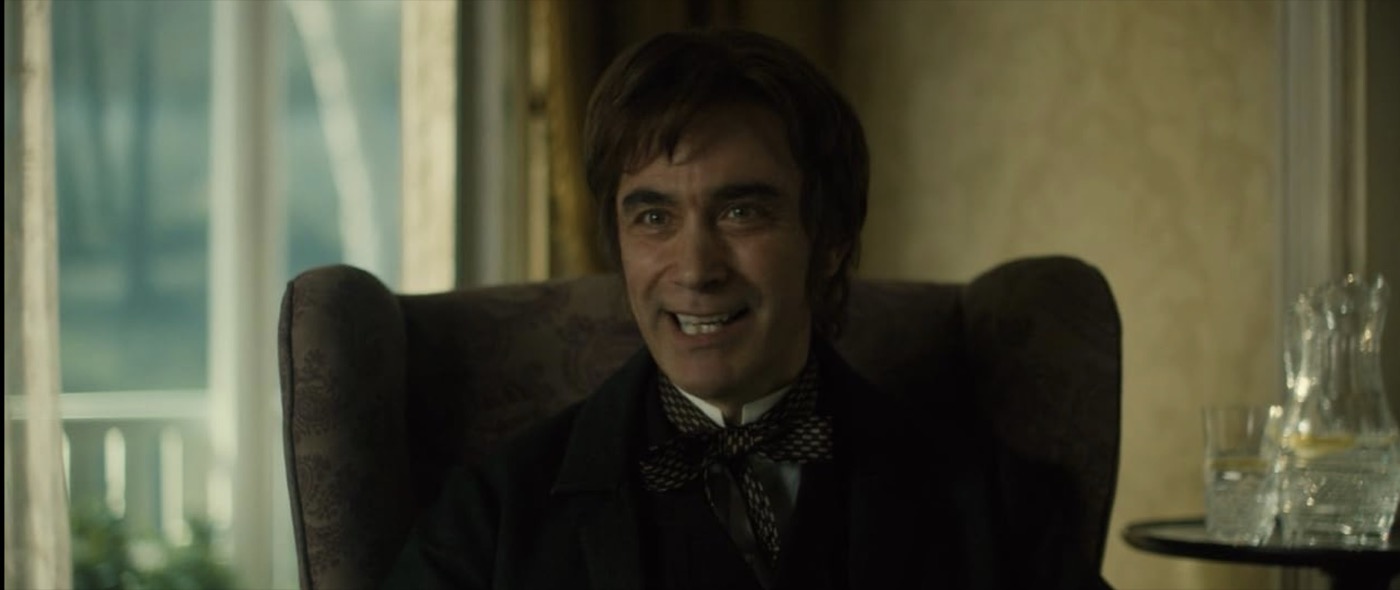
That’s because the preceding scenes often don’t carry enough force to justify the story skipping forward. Nor do they contain enough gentle poetry to make one admire the way A Quiet Passion appears to glide through a figurative photo album of Dickinson’s most dramaturgically relevant interactions. Nixon is a strong performer, but she can only do so much with the heritage-film script Davies provides her with, seemingly trampling on his own sensibilities.
Dickinson’s incisive dialogue is enjoyably cutthroat but ultimately weightless. That’s the trouble with these comfortable period pieces: you never feel as though you’ve stepped through that necessary portal into the past. Instead,you watch a very general image, rendered hazy by the vagueness of this world. I never once felt transported into this environment, whether through sensory stimulation or by being made to feel—rather than simply be aware of—the limitations and particularities of this time in American history.
Jennifer Ehle (She Said), who portrays the older version of the protagonist’s sister Vinnie (Rose Williams portrays the younger version), seems like an ideal candidate for a Terence Davies film. She brings a beautiful elegance and warmth to her countenance and mannerisms, which were exploited so well in the BBC’s Pride and Prejudice (1995) miniseries. But even when these fine actresses are together, portraying two sisters who understand one another acutely and won’t ever change, for better or worse, these sequences never soar. They languish in the same placid presentation that Davies’s opinions and prior work are stridently opposed to. A Quiet Passion is certainly quiet, but in a banal rather than delicately evocative sense.
UK • BELGIUM • CANADA • USA | 2016 | 125 MINUTES | 2.35:1 | COLOUR | ENGLISH

writer & director: Terence Davies.
starring: Cynthia Nixon, Jennifer Ehle, Duncan Duff, Emma Bell, Rose Williams, Benjamin Wainwright, Joanna Bacon & Keith Carradine.