THE END OF OAK STREET (2026)
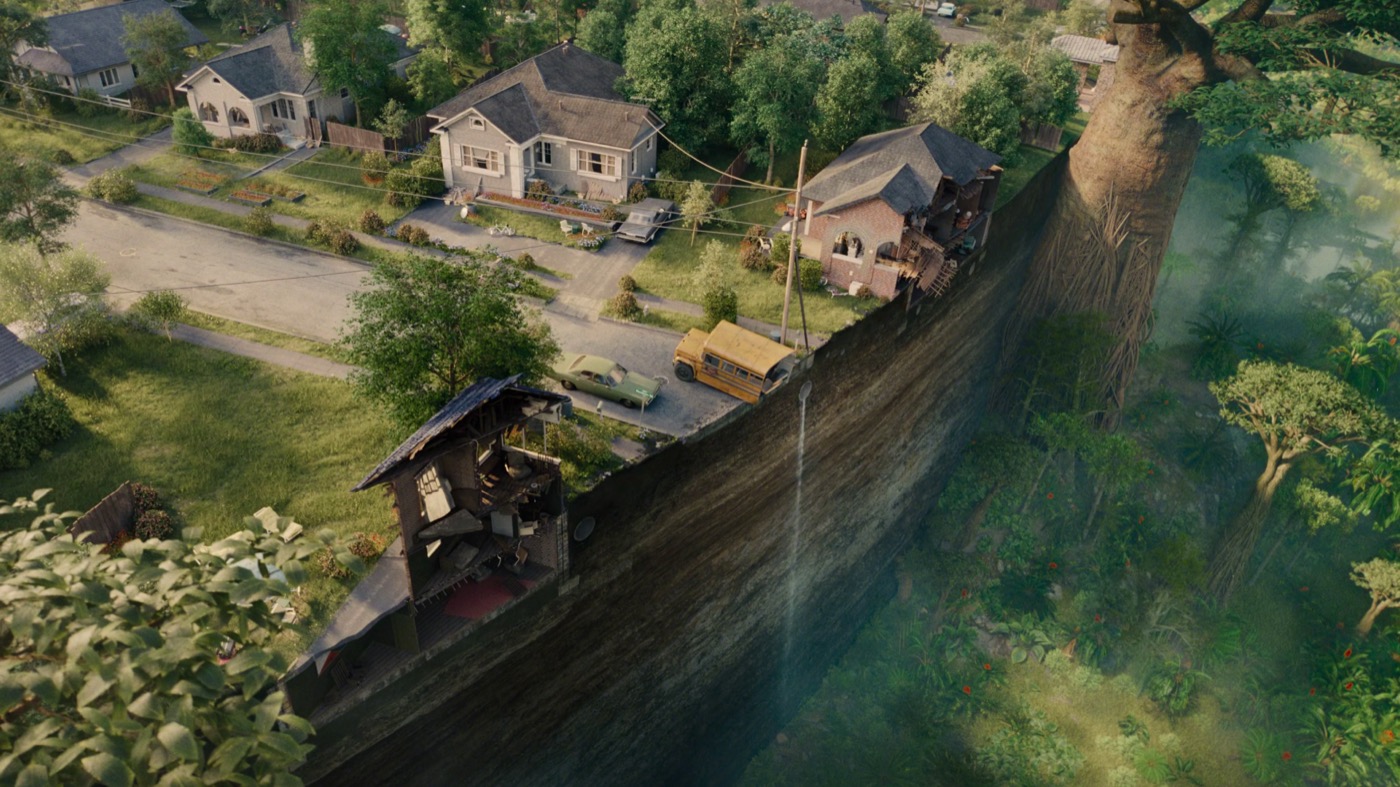
A 1980s family bands together to navigate their surroundings after a cosmic event transports their neighbourhood to someplace unknown…


A 1980s family bands together to navigate their surroundings after a cosmic event transports their neighbourhood to someplace unknown…
David Robert Mitchell made a splash with his incredible high-concept horror film It Follows (2014), before falling into the Richard Kelly trap of following it up with a more ambitious but alienating feature, Under the Silver Lake (2018). Kelly’s mistake was following his twisty, moody masterpiece Donnie Darko (2001) with the chaotic and unrestrained Southland Tales (2006), a failure from which his career never truly recovered. One-hit wonder status is a cruel sentence in cinema, but producer J.J Abrams has thrown Mitchell a lifeline in the form of an $85M summer blockbuster with a premise that seems almost impossible to screw up: The End of Oak Street.
A mishmash of familiar Steven Spielberg and Stephen King tropes, the film is essentially an oversized episode of The Twilight Zone (1959-1964). The Platt family — aspiring novelist mother Denise (Anne Hathaway), newly unemployed father Greg (Ewan McGregor), and their teenage children Audrey (Maisy Stella) and Brian (Christian Convery) — are living the American Dream in 1982 suburbia.
An idyllic opening sequence showcases a vibrant neighbourhood street party, though Mitchell subtly hints at underlying friction: a neighbour annoyed by the Platts’ disobedient dog, and a quiet strain in the parents’ marriage. Then, without warning, their entire town is mysteriously transported back into prehistory inside a Terminator-style time bubble. Initially assuming the storm simply knocked out the power and phone lines, the Platts soon realise their suburban street is being prowled by curious dinosaurs, man-eating pterosaurs, and various other prehistoric interlopers.
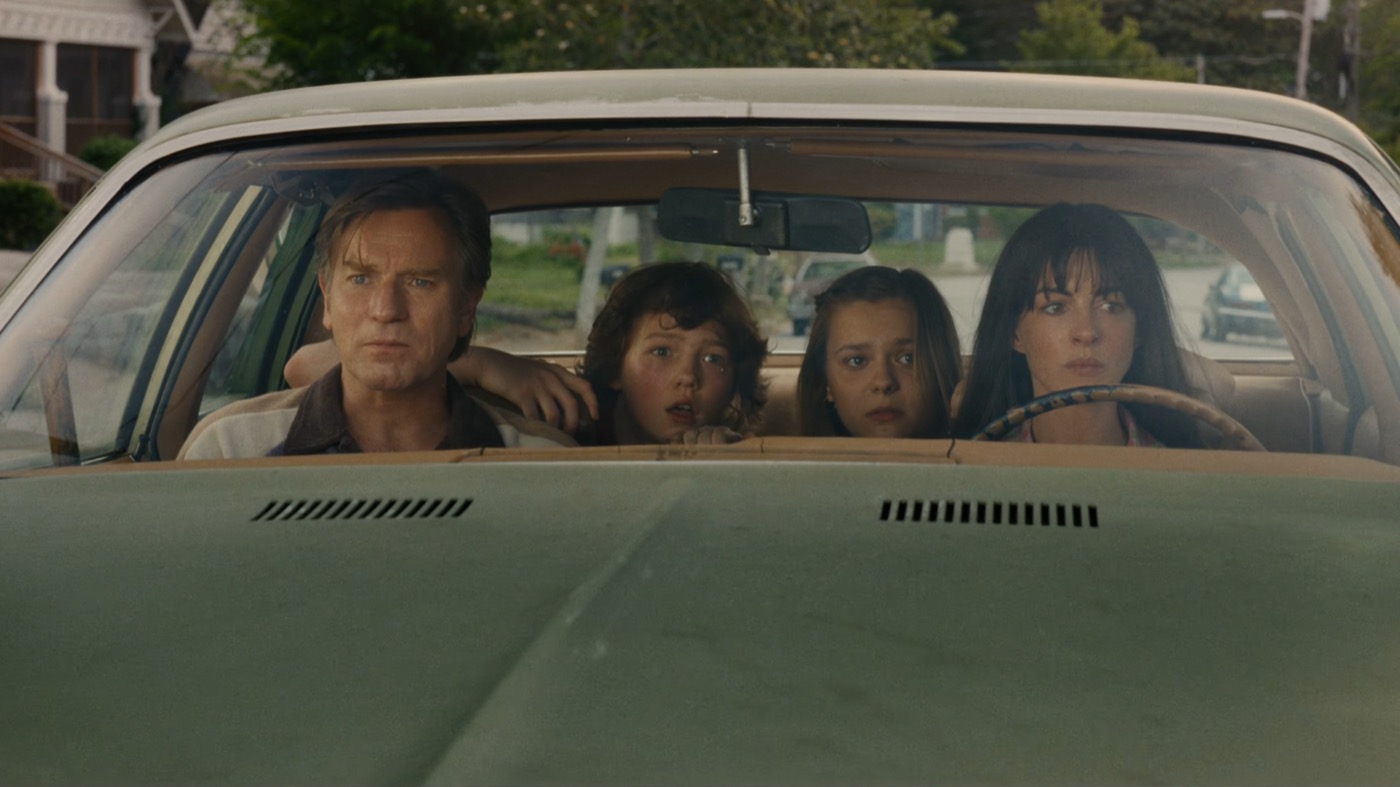
The End of Oak Street certainly has its strengths, but they’re frequently dragged down by uneven execution. Beyond evoking classic Amblin productions of the era — a nostalgic crutch Abrams previously relied on in Super 8 (2011) — it’s unclear why the film is set in 1982. Once the Platts catch up to the premise already revealed in the marketing, the narrative settles into an entertaining yet functional family survival story. It’s refreshing to see a dinosaur film unburdened by the Jurassic Park (1993) brand and lore, but much of the action fails to truly excite or terrify.
And while Mitchell is a talented director, he lacks Spielberg’s visual flair; he struggles to craft set-pieces where camera movement and spatial choreography carry genuine magic. The standout sequence instead belongs to a giant “slow worm” slithering undetected into a home — a moment that succeeds precisely because the creature feels novel and unpredictable, whereas dinosaurs running down suburban streets feel strangely routine by modern standards.
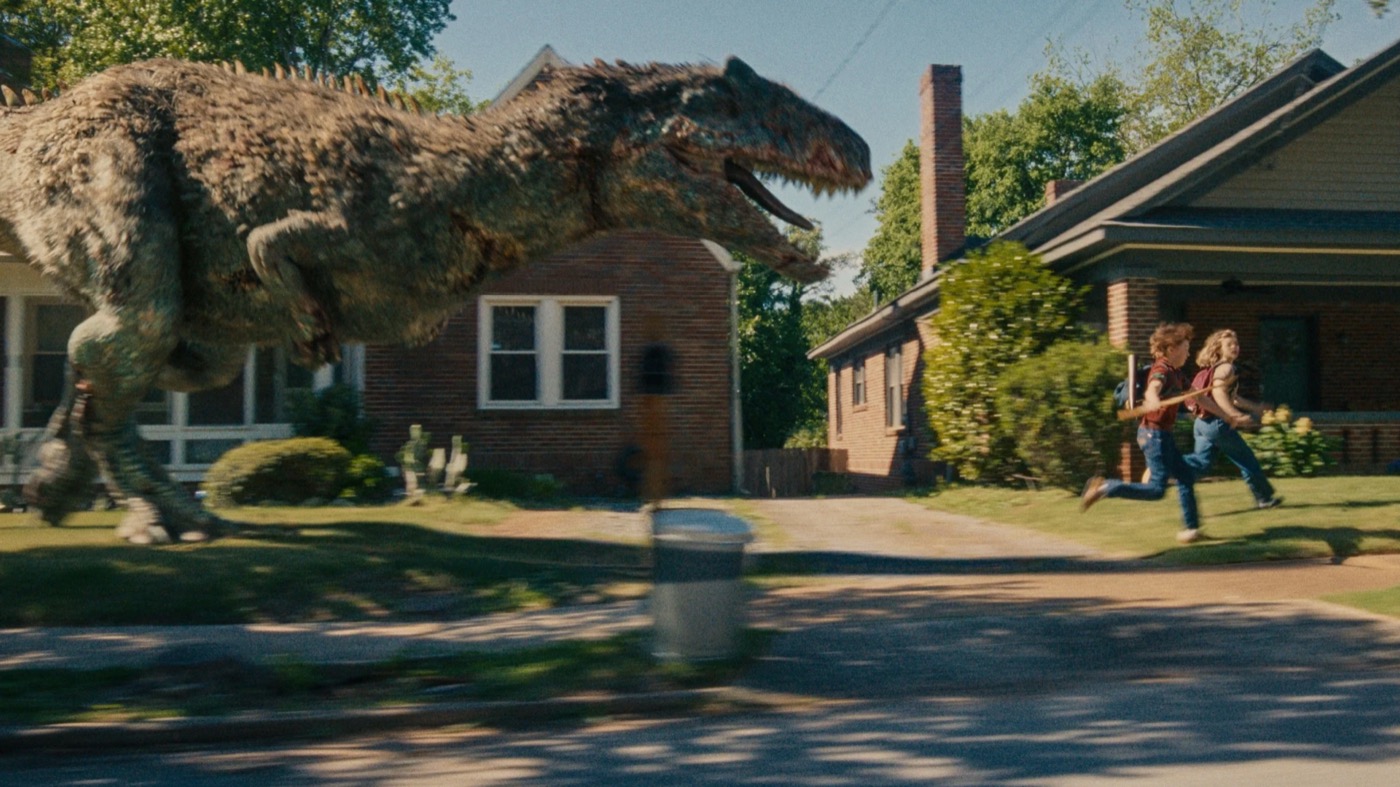
Character dynamics and world-building also suffer from odd creative choices. The performances are solid across the board, but placing Denise and Greg in a marital slump yields little emotional payoff. Their relationship is neither fractured enough for the ordeal to feel like a meaningful restoration, nor tight enough to create a compelling, united front.
Furthermore, the film suffers from a baffling sense of scale. Transporting an entire town suggests thousands of residents are involved and just as confused and scared, yet we barely see anyone outside the main family. While a few neighbours briefly encounter creatures, there’s no sense of a broader community attempting to organise or survive. Given that the opening scene emphasises a close-knit neighbourhood, the Platts’ immediate decision to barricade themselves inside without contacting their friends feels unnatural. A line of dialogue clarifying that only a small cluster of homes was transported would have resolved this logic gap easily.
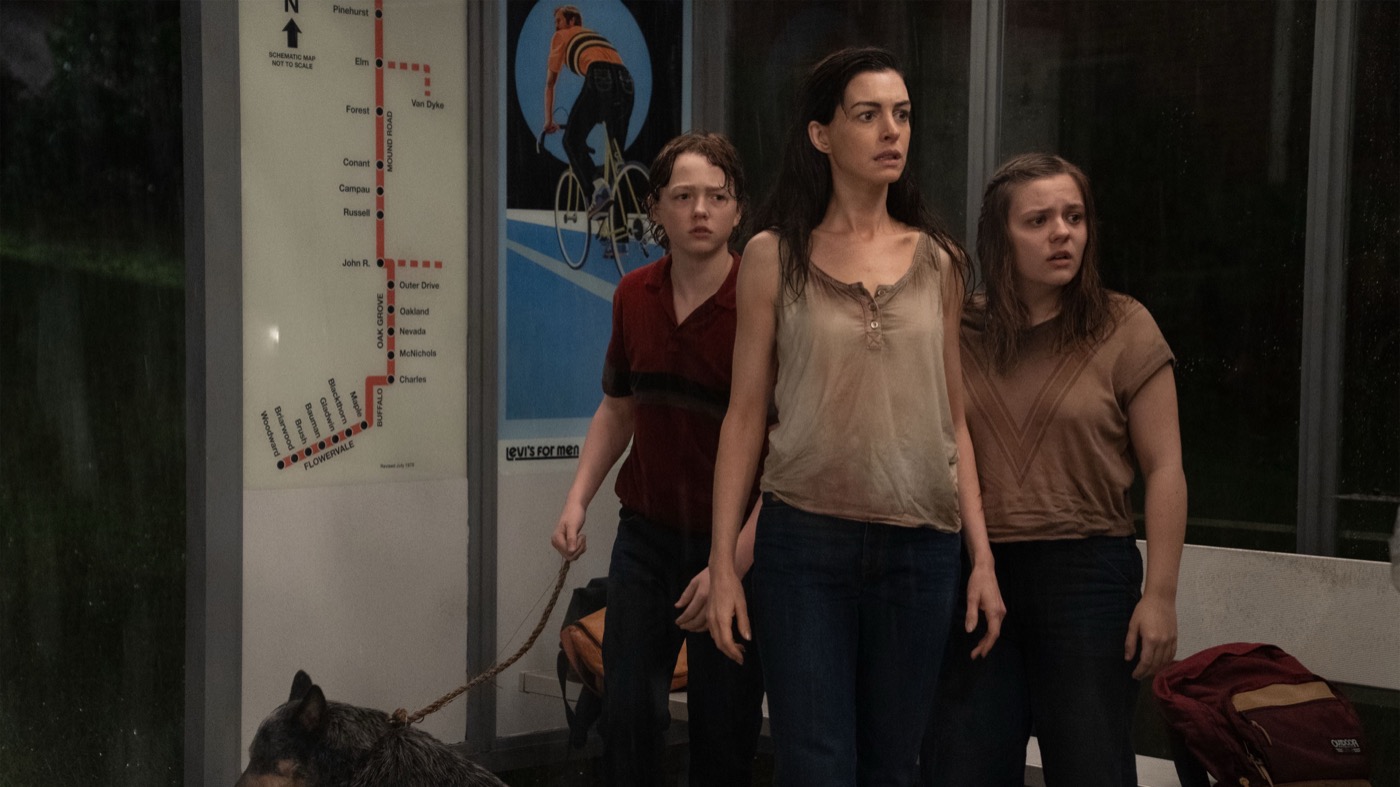
On a technical level, the film offers plenty to admire. Dinosaur attacks are always fun, particularly when the beasts interact with everyday suburban objects like paddling pools and ice cream trucks. The creature design also aligns smartly with modern paleontological thinking, featuring colourful plumage and feathers that set them apart from traditional cinematic designs of smooth-skinned giant lizards. Mitchell’s screenplay also delivers one genuinely unexpected shock towards the end, though it’s so massive that audiences will immediately wonder how the story plans to undo it!
Clocking in at a lean 99 minutes, the narrative moves at a decent clip, even if the underwhelming climax leaves you expecting a final twist and “real ending” that never arrives. Ultimately, while The End of Oak Street misses the darker, more portentous tone promised by its brilliant trailer, it remains a fun, throwback summer blockbuster — even if its high-concept premise is in service of what is essentially just Jumanji: Dinosaur Edition.
USA • CANADA • AUSTRALIA | 2026 | 99 MINUTES | 2.39:1 | COLOUR | ENGLISH

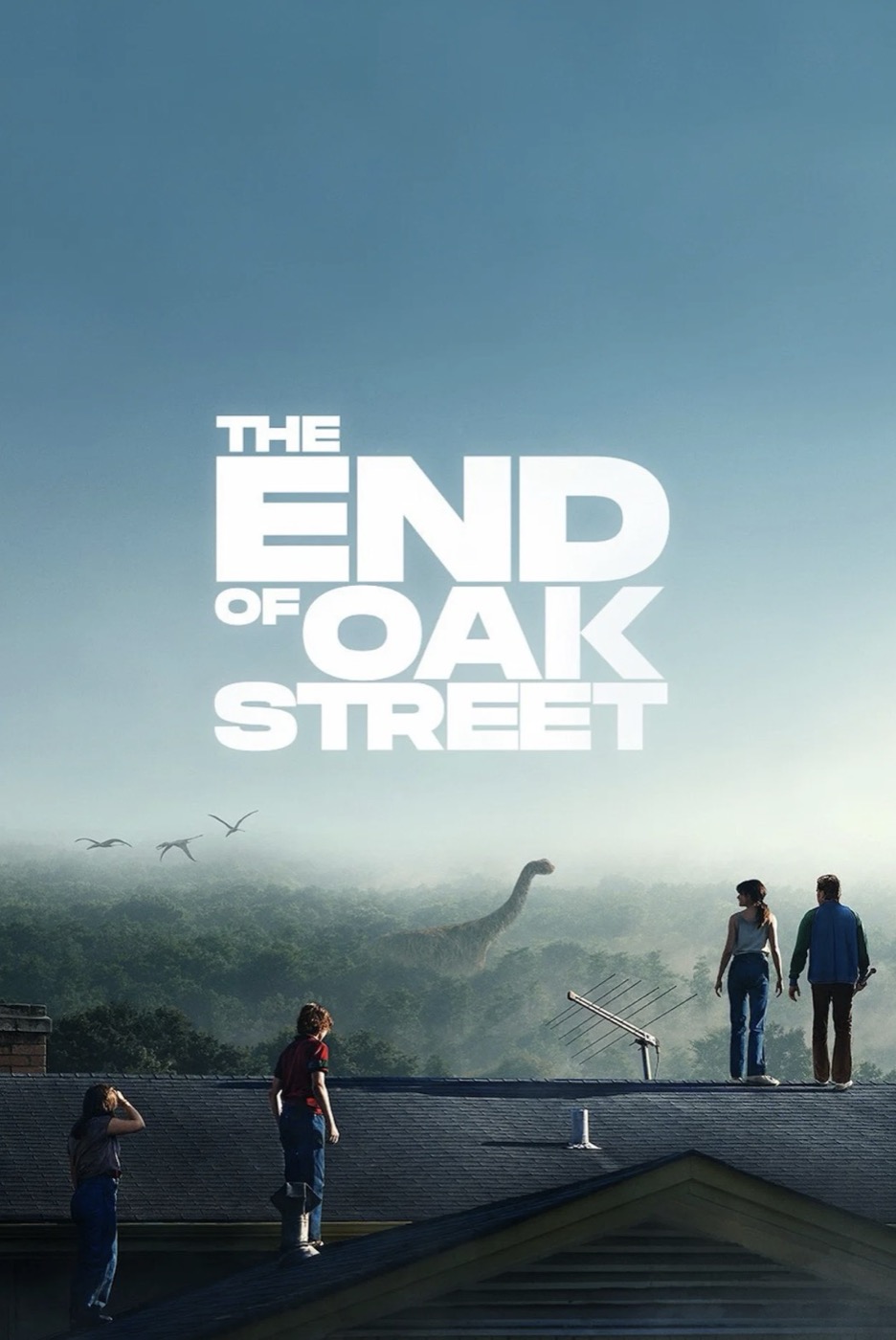
writer & director: David Robert Mitchell.
starring: Anne Hathaway, Ewan McGregor, Maisy Stella & Christian Convery.