THE BELIEVER (2001)
A young Jewish man develops a fiercely anti-Semitic philosophy...

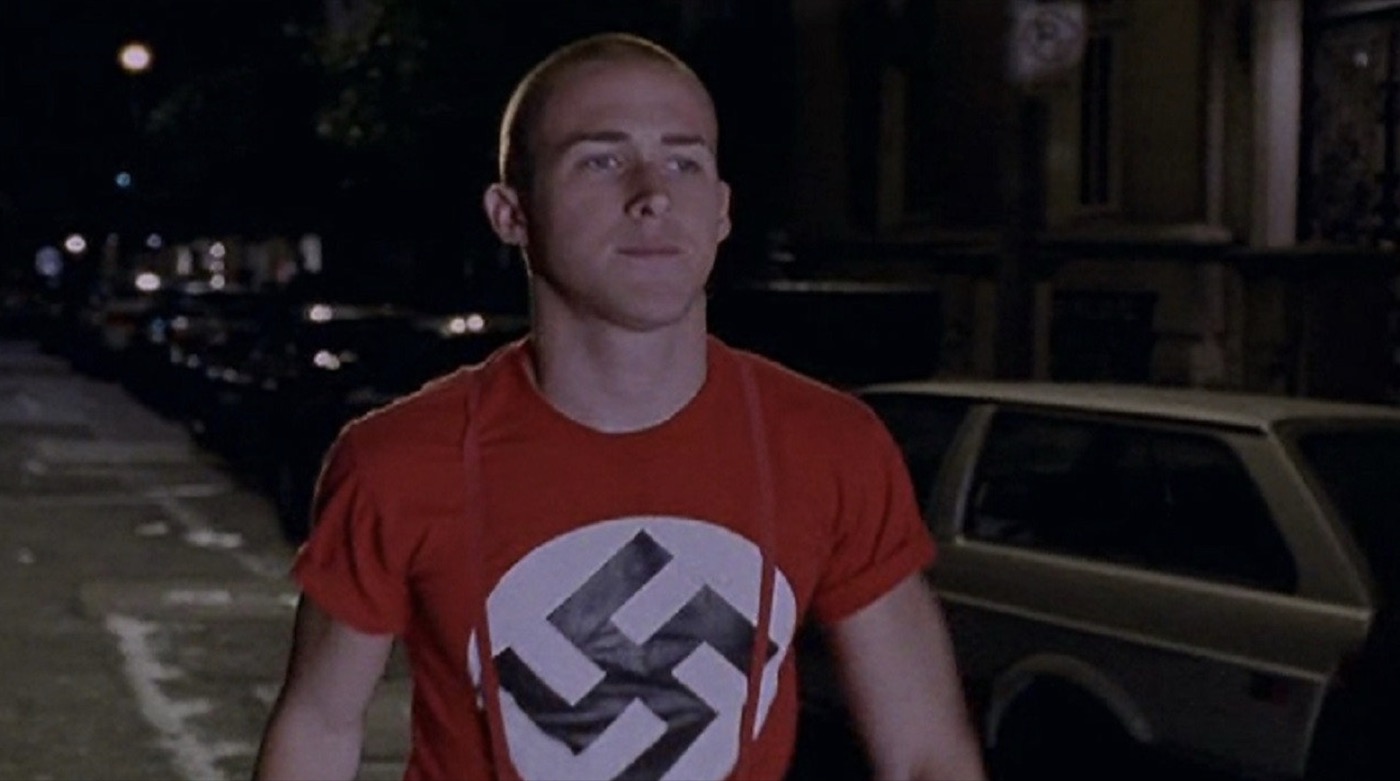

A young Jewish man develops a fiercely anti-Semitic philosophy...
Five years before his critically acclaimed, Academy Award-nominated performance in the indie drama Half Nelson (2006), 10 years before he became beloved by film lovers for taking on the role of a near-silent driver in Nicolas Winding Refn’s Drive (2011), and 15 years before he cemented himself as one of Hollywood’s biggest stars in the musical drama La La Land (2016), Ryan Gosling took on a daring lead role at just 21 years old in Henry Bean’s The Believer. Loosely based on the true story of Dan Burros—a Jewish member of the American Nazi Party who committed suicide after his heritage was revealed by a New York Times report—Daniel Balint (Gosling) is a live wire compelled to despise himself.
Everything this budding neo-Nazi and young Jewish man says about others is an act of projection, including an early scene where he harasses and assaults a Jewish stranger. After stalking the man, Daniel viciously beats him and practically begs to be hit back. On the surface, he weaponises this stranger’s terror to bolster his view that Jews are cowardly and weak, but the real truth is that he knows what he’s doing is wrong and is actively seeking punishment.
It’s no doubt a case of cosmic absurdity to Daniel that, despite sharing a core aspect of his identity with this stranger, he manages to evade exposure. After all, a skinhead sporting a Swastika T-shirt provides a strong cover-up for Jewish roots. Yet over the course of this tight-knit, clever drama, Daniel’s true personality emerges beneath his abrasive veneer. His hate doesn’t disappear during this process of discovery; instead, it shifts to make himself the target of his own ire. There’s a reason why, in the film’s most intriguing monologue, Daniel projects these emotions onto Jewish people once again by stating that they long to be hated.
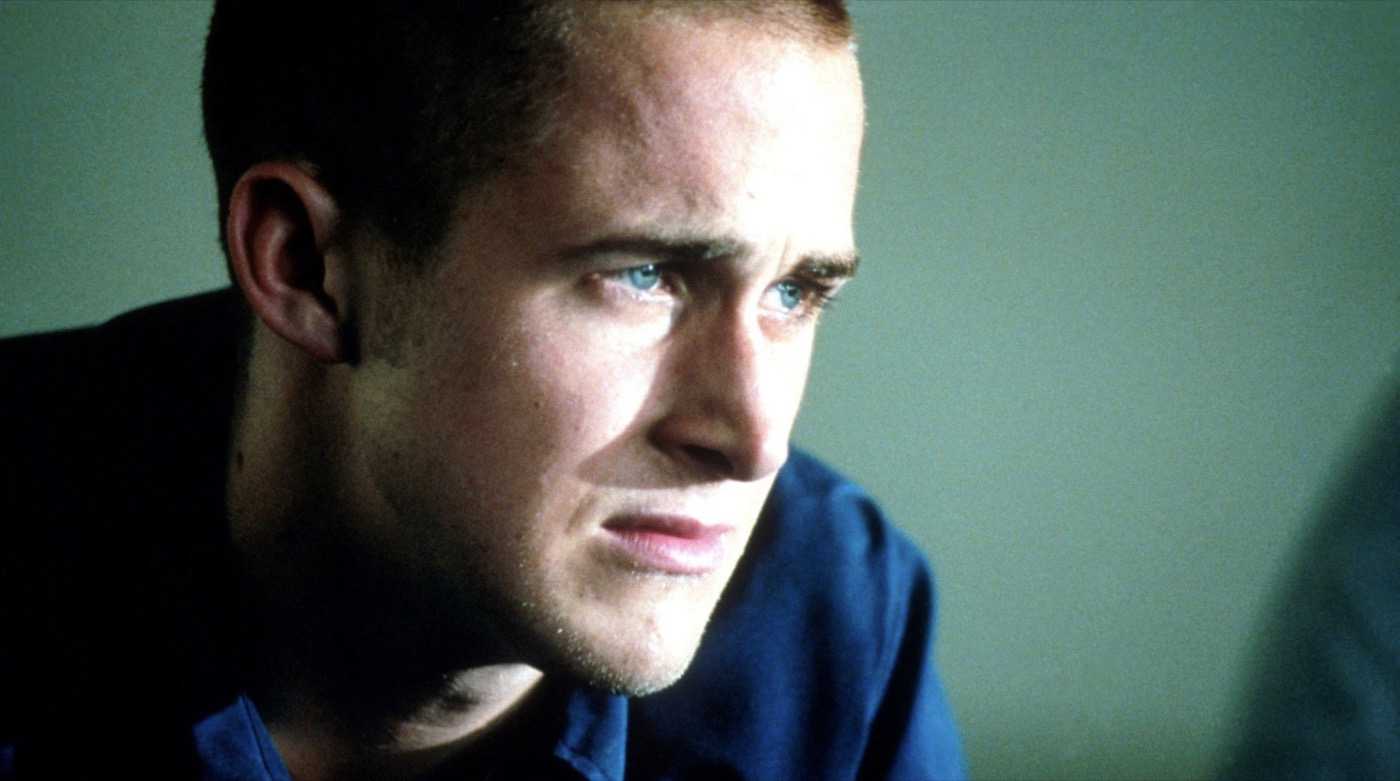
Though there isn’t a wealth of in-depth psychological profiles to dissect in The Believer, Bean’s feature directorial debut unearths clever ways to explore its protagonist’s identity crisis without devolving into cheap emotional manipulation. It’s clear Daniel looks down on his racist, fascist peers much like he regarded his devoutly religious classmates as a teenager. Yet he doesn’t scream at them for their stupidity or implore them to be better people.
Instead, he destroys their backwards logic to impose his own neo-Nazi viewpoint, which promotes hate for hate’s sake. Any attempt at logic or rationality to support antisemitism isn’t just unfounded in Daniel’s eyes (he exposes several of these contradictions in a sharp, insightful scene)—it’s simply window dressing for the disgust he and his peers feel towards these people.
Hatred is instinctive for the group, but self-loathing runs far deeper as an urge for Daniel, who can never reconcile his conflicting identities throughout The Believer. Attempting to enmesh himself in one world only drowns him further in a sea of self-doubt. As the brash, intelligent, hypocritical Daniel, Gosling is a revelation—a picture-perfect interpretation of a soul in constant conflict. He endears himself to others, puts on an abrasive front in the outside world, and can never quite mask his contempt for his white supremacist peers. Predictably, they’re too stupid to see it. But it’s a impressive facade all the same, and one that only a clever writer-director and a supremely talented lead actor could tease out.
Bean trusts the viewer to recognise the folly behind the teachings of fascist group leader Curtis Zampf (Billy Zane). Zampf bemoans how the erosion of local communities has destroyed the fabric of society, yet he has cultivated a hateful community with no solid foundation of warmth or goodwill on which to rest. Bean also trusts viewers to recognise Daniel’s turmoil without needing to insert endlessly anguished monologues or dramatic close-ups of conflicted expressions.
Composer Joel Diamond’s soundtrack for The Believer is restless and haunting, presenting a tortured cacophony that encompasses intense rage and profound sorrow. Although The Believer ;was made before the events of 9/11, this New York-set movie features an eerily similar score to Spike Lee’s 25th Hour (2002), a film that used its music to convey the tragic scope of the city’s terrorist attack. The music itself serves as a character study of a person in crisis, acting as a prophetic symbol of a nation in mourning.
When reading about Dan Burros and his suicide, it’s difficult not to pity him in spite of his abhorrent beliefs. The Believer finds solid ground by expanding on this simple yet sorrowful concept, though its commitment to this complicated protagonist comes at a cost. The remaining characters aren’t entirely one-note, but between a few unconvincing performances (such as Summer Phoenix as Carla Moebius, Curtis’ daughter and Daniel’s burgeoning love interest) and generally underwritten side roles, there isn’t enough meaningful contrast between Danny and the dual worlds he inhabits.
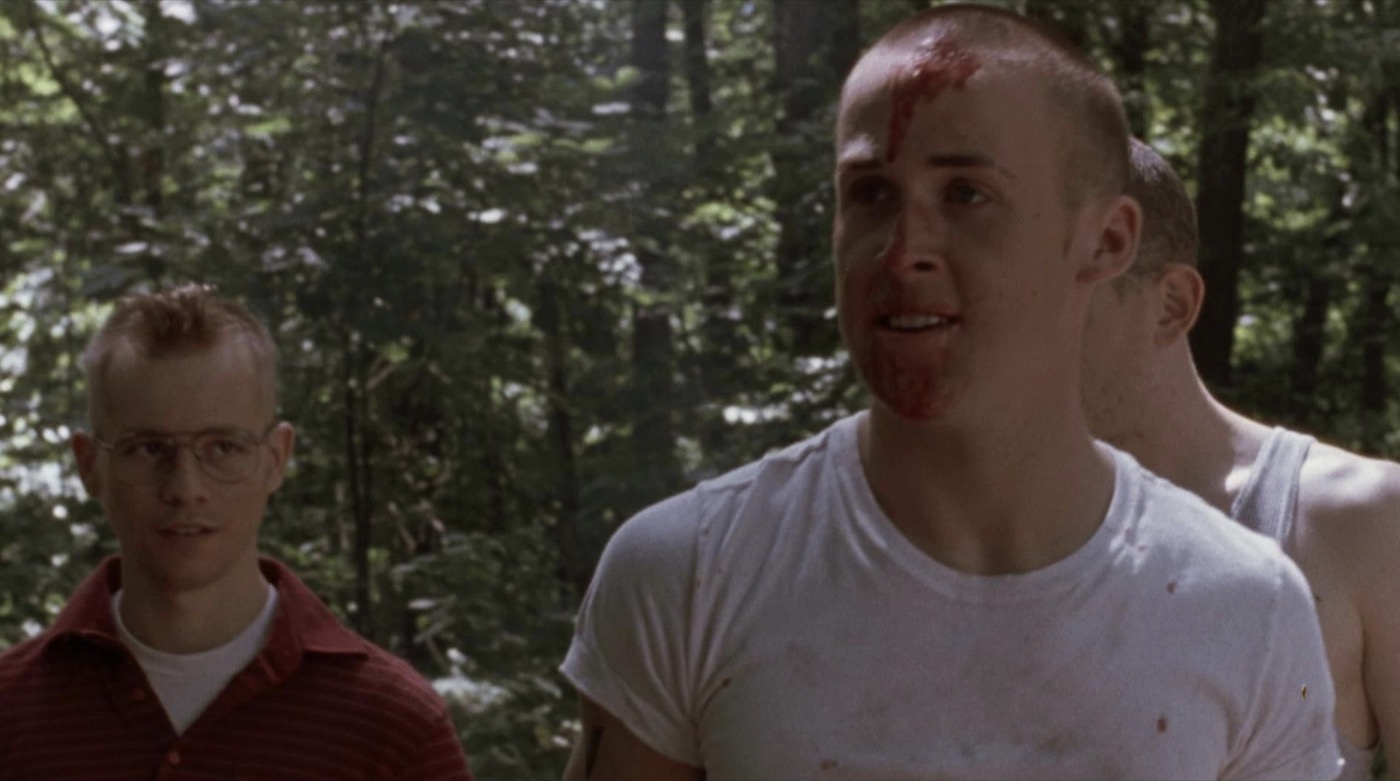
As Danny’s inner conflict deepens and he divides his time between neo-Nazis and childhood Jewish acquaintances, the film fails to fully explore these competing dynamics, missing the chance to convey the simultaneous distance and closeness between him and everyone else. It doesn’t help that Danny is portrayed as an attractive ladies’ man despite being a hateful, self-loathing skinhead; his relationship with Carla feels far too easily established to feel earned, leaving no strong emotional avenues to explore between them.
If the neo-Nazis around Danny were to gain prominence in their pathetic club while he became an increasingly wayward, distant figure within it, that shift would further alienate a man who has always felt out of place. But to achieve that, another character would need to rise to the occasion. Ultimately, The Believer keeps its sights too low and its aims too modest to deliver an unforgettable, deeply moving experience. The film’s black-and-white dream sequences are particularly poor: the action moves in a stuttering slow motion rather than gliding smoothly, while shallow symbolism makes this complex protagonist seem like a dunce, spelling out the warring sides of his soul in terms so literal they do a disservice to his psyche.
Nevertheless, Bean and Gosling do a stellar job overall of drawing us into this unique, turbulent world with sensitivity and poise. Bean redeems his uninspired dream sequences with a moving final scene that reimagines a rarely explored aspect of the human experience. It brushes against the sublime and the unknowable, leaving the impression that the film—much like Daniel—is still searching for answers, never truly knowing what to believe.
USA | 2001 | 98 MINUTES | 1.66:1 | COLOUR | ENGLISH • HEBREW

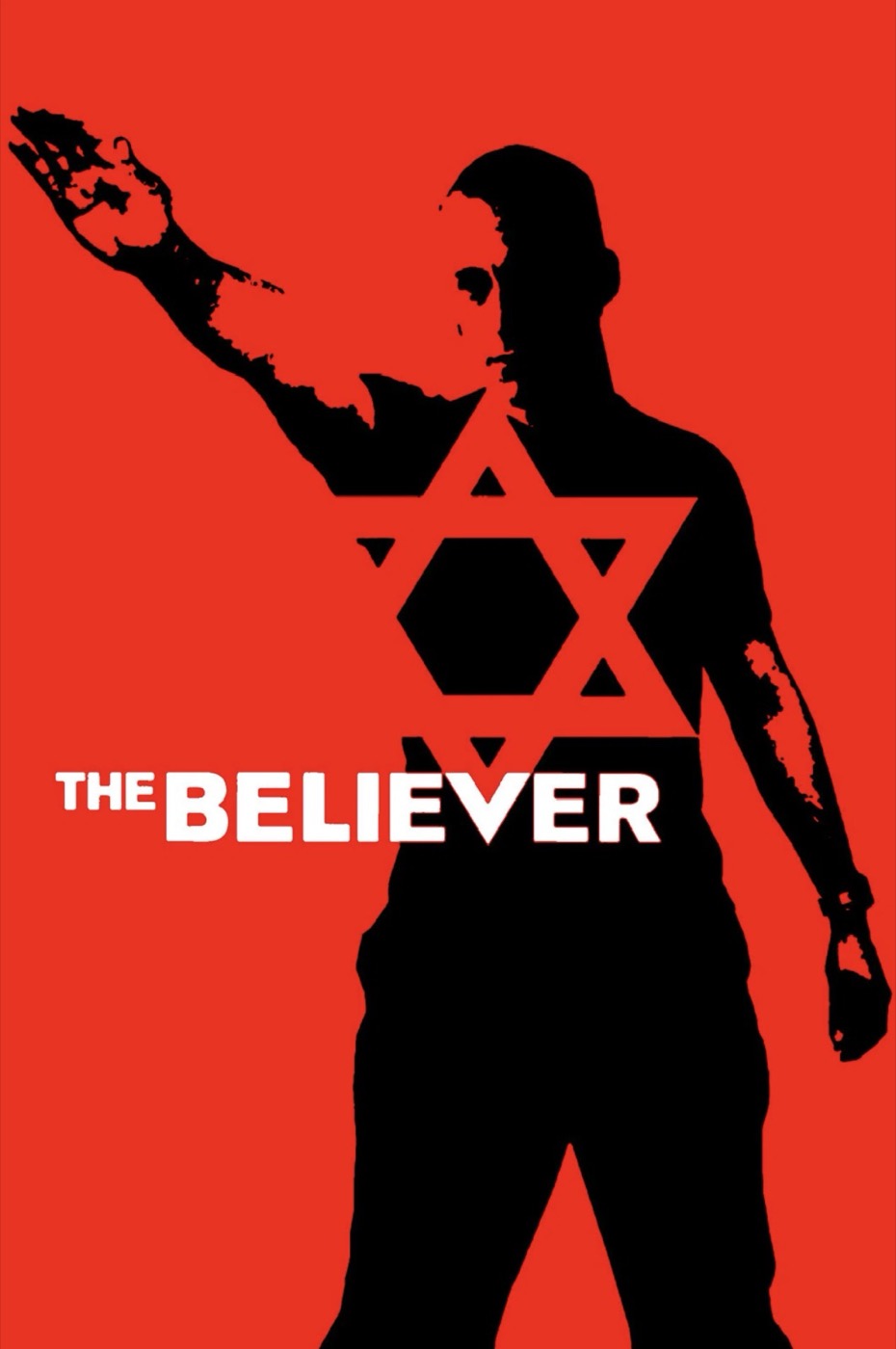
director: Henry Bean.
writer: Henry Bean (story by Henry Bean & Mark Jacobson).
starring: Ryan Gosling, Summer Phoenix, Billy Zane, Theresa Russell, Ronald Guttman, Glenn Fitzgerald, Garret Dillahunt, Heather Goldenhersh & Jacob Green.