TROY (2004)
An adaptation of Homer's great epic, the film follows the assault on Troy by the united Greek forces.

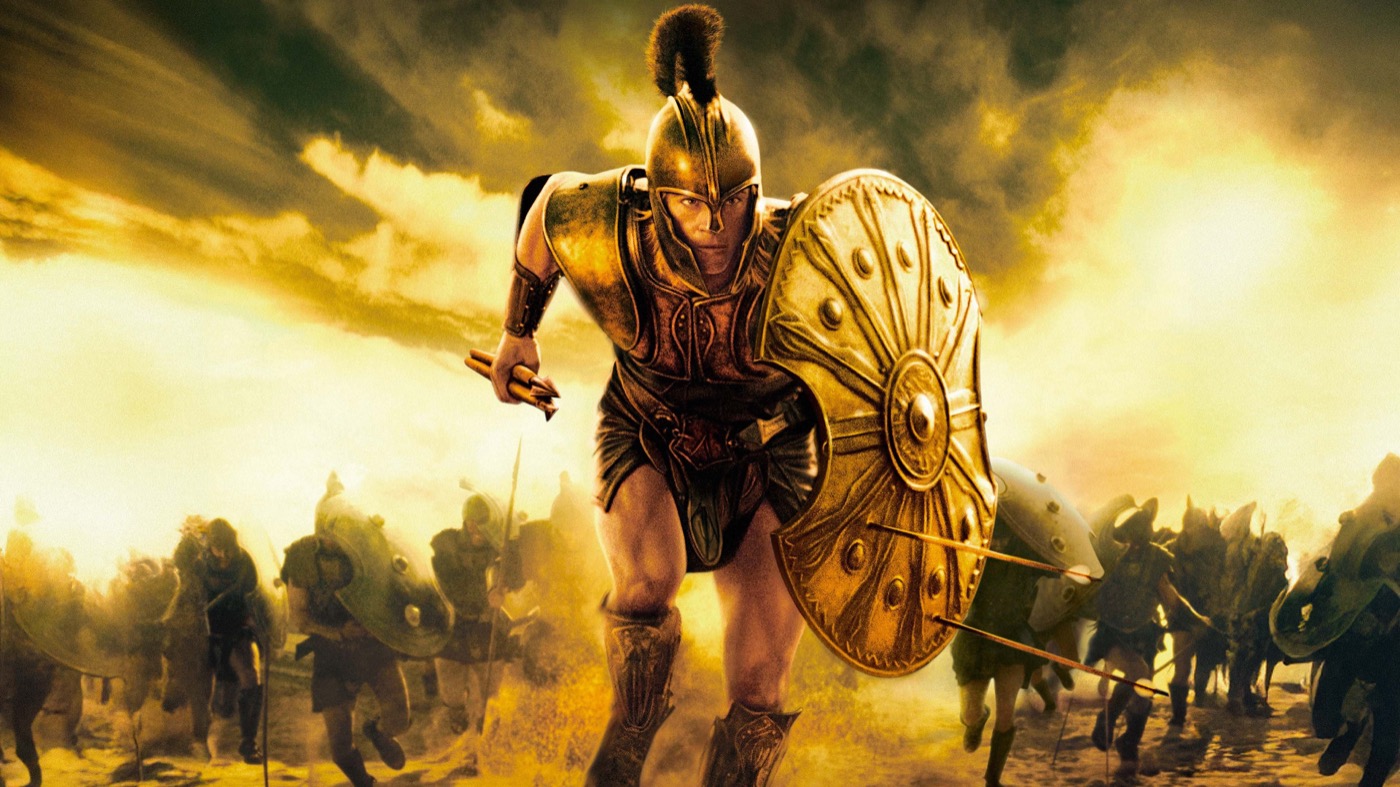

An adaptation of Homer's great epic, the film follows the assault on Troy by the united Greek forces.
Few works of literature have had as profound an impact on Western civilisation as The Iliad. Composed almost three thousand years ago, Homer’s masterwork has shaped countless interpretations of heroism, war, and human mortality. Yet despite its immense cultural significance, the material has repeatedly challenged filmmakers seeking to translate it to the big screen. Robert Wise transformed the myth into a sweeping historical romance with Helen of Troy (1956), but beneath its expansive CinemaScope photography lay a conventional melodrama that softened Homer’s thematic complexity. Italian sword-and-sandal productions such as Giorgio Ferroni’s The Trojan Horse (1961) and Marino Girolami’s The Fury of Achilles (1962) were equally reluctant to grapple with the poem’s subtext, using the legend as a mere backdrop rather than confronting its philosophical and mythological foundations.
At the turn of the millennium, these lavish historical epics seemed a relic of Hollywood’s past. Following the notoriously expensive production of Joseph L. Mankiewicz and Rouben Mamoulian’s Cleopatra (1963), studios grew reluctant to gamble on sprawling tales of antiquity. However, the remarkable success of Ridley Scott’s Gladiator (2000) proved that audiences still had an appetite for ancient history. This renewed enthusiasm, coupled with rapid advances in visual effects, convinced Warner Bros. that the legend of Troy could finally be realised on the scale it demanded. After commissioning David Benioff (Game of Thrones) to undertake the monumental task of adapting Homer’s tale, The Iliad reached cinema screens as Troy.
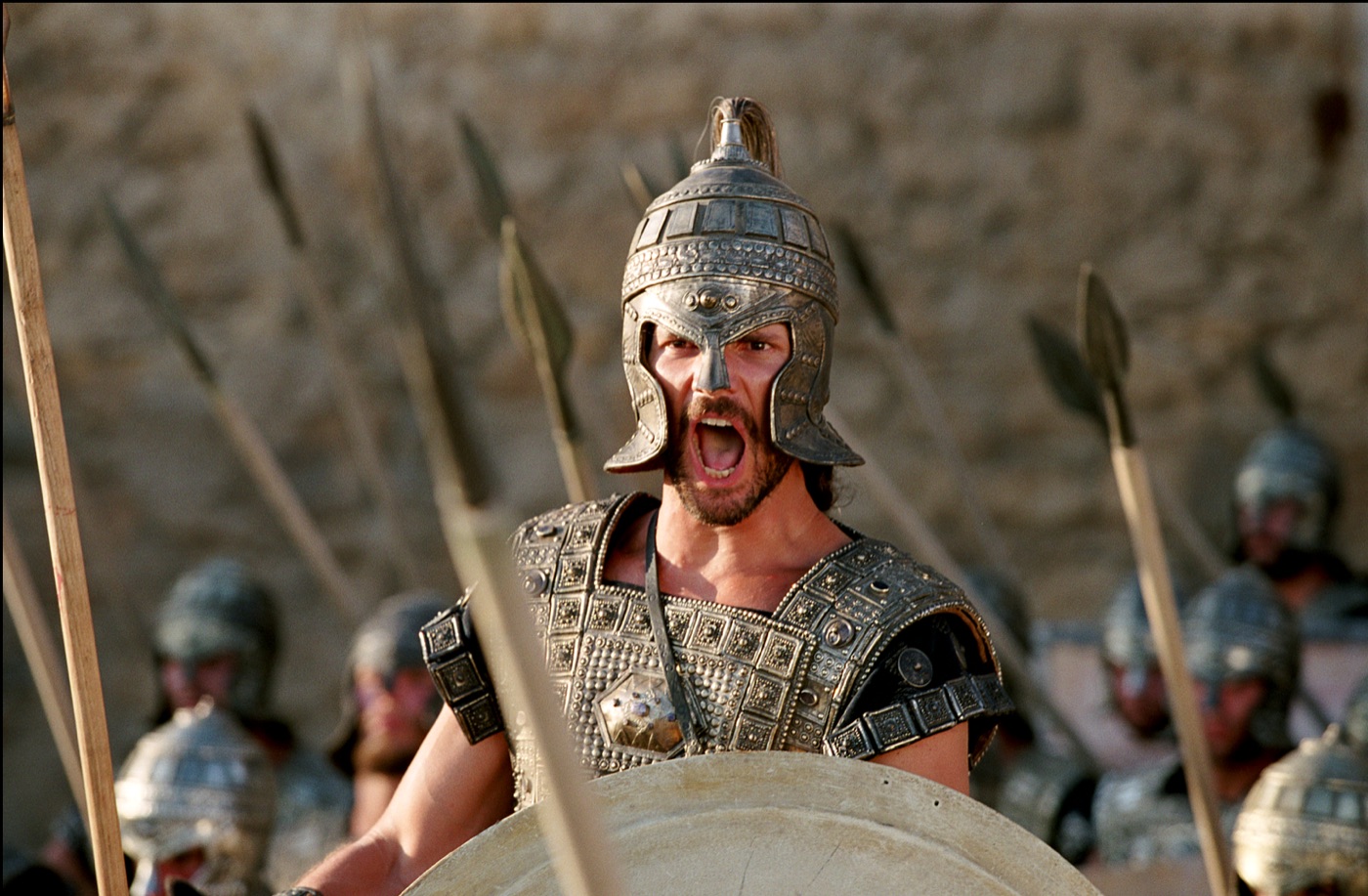
Set during the late Bronze Age, the film follows King Agamemnon (Brian Cox), who has conquered the Greek kingdoms and forced them into subservience in his quest for power. The one city that has resisted his expansion is Troy. Surrounded by enormous walls that have withstand countless invasions, it stands as the final obstacle to Agamemnon’s supremacy. The city is protected by a fragile peace treaty negotiated between his brother, King Menelaus of Sparta (Brendan Gleeson), and the Trojan princes, Hector (Eric Bana) and Paris (Orlando Bloom). However, their agreement unravels following an extravagant banquet celebrating the peace. Unbeknownst to Menelaus, Paris has fallen in love with his wife, Helen (Diane Kruger), and persuaded her to abandon Sparta for Troy.
When Menelaus discovers Helen’s flight, he swears vengeance against the Trojan princes. Agamemnon readily supports his brother’s cause, seizing the opportunity to conquer Troy, control the Aegean Sea, and solidify his reign. Assembling a vast army, Agamemnon dispatches Odysseus (Sean Bean) to persuade Achilles (Brad Pitt) to join the campaign. Disgusted by Agamemnon’s tyranny, the Greek warrior initially refuses, but after seeking guidance from his mother, he relents. As the Greek fleet sets sail across the Aegean, two great civilisations prepare for one of antiquity’s most enduring conflicts.
If this plot outline appears straightforward, that’s because Benioff’s screenplay streamlines Homer’s epic into something barely passable as an adaptation. Where Troy diverges most sharply from its source material is in stripping away divine intervention and philosophical introspection in favour of a grounded interpretation of the Trojan War. As Benioff explained, “It was part of the pitch from the get-go that I really wanted to concentrate on the human aspect of the story.” Elaborating on his approach, he noted: “When Paris fights Menelaus in the book, it’s fairly similar to the movie except at the end, when Paris is about to get killed, Aphrodite magically teleports him from the battlefield to Helen’s chamber. I just didn’t want it that way. I didn’t want to see the gods coming in and using magic to change the course of events.”
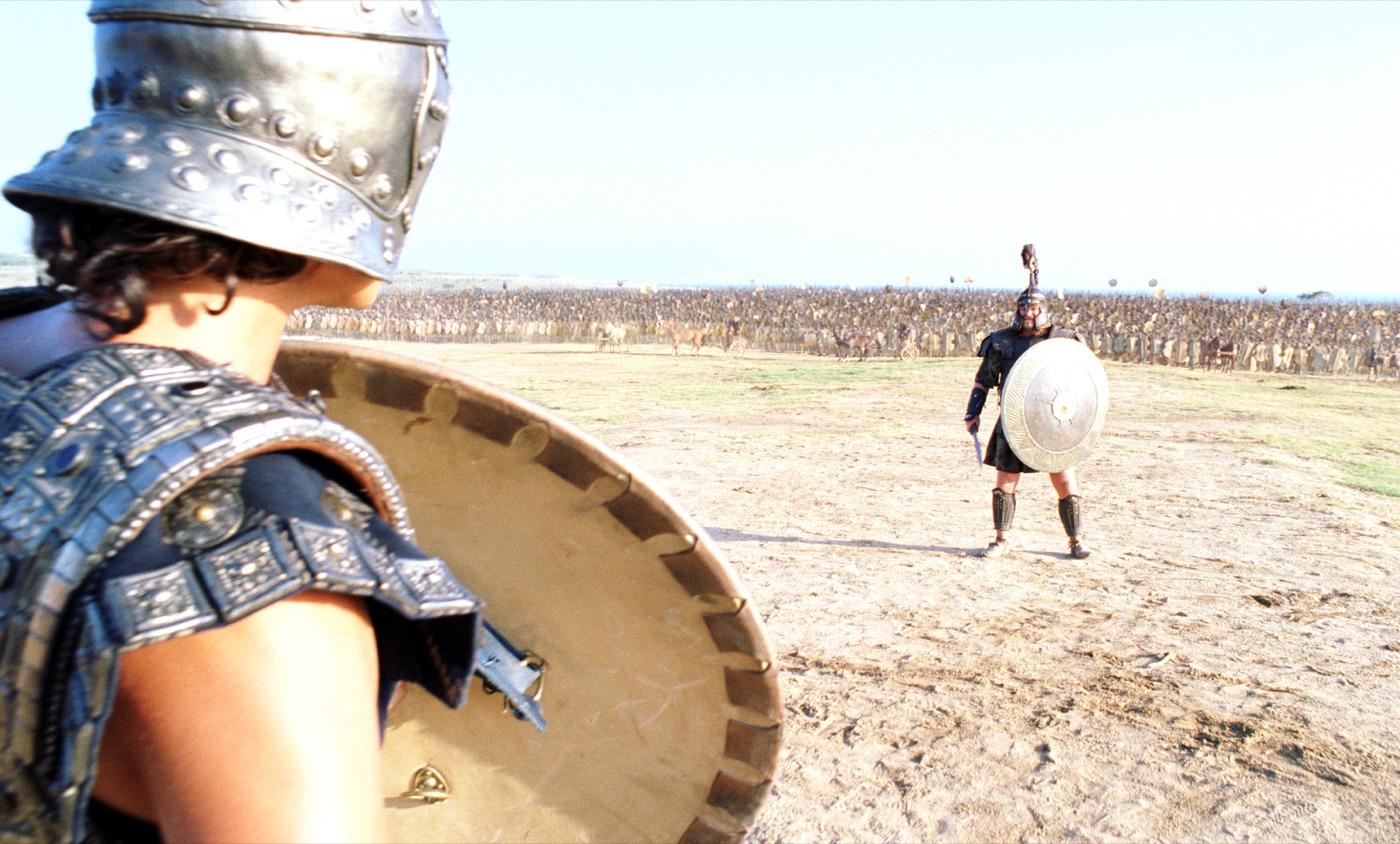
There’s nothing inherently wrong with treating the Trojan War as a grounded historical conflict. In the wake of Braveheart (1995) and Gladiator, it’s understandable that Hollywood viewed a simplified Iliad as more commercially viable than embracing Homer’s mythological universe. Yet this agnostic approach abandons much of the poetic framework that has sustained the story for three millennia. In Homer’s depiction, the Trojan War is both a human catastrophe and a struggle shaped by the gods. The Olympians are active participants throughout, directly intervening in mortal lives and manipulating events. Their presence raises one of the poem’s core questions: whether human beings possess genuine autonomy, or if our choices are subordinate to forces beyond our control.
By jettisoning the Greek gods, Troy struggles to maintain its identity. The film features legendary figures and depicts a recognisable account of the war, but by treating The Iliad as inspiration rather than a direct text, Benioff strips away its inherent fatalism. Achilles is no longer a figure caught between divine lineage and an unavoidable destiny; he’s reimagined as a gifted warrior searching for immortality through glory. Similarly, the war is no longer orchestrated by Olympians, but driven by Menelaus’ desire for revenge, Agamemnon’s political ambition, and Paris’ lust. Benioff uses Homeric iconography as the scaffolding for a conventional action film rather than a philosophical meditation. The result is a film caught in limbo, suspended between demythologising Homer’s poem and preserving the grandeur of the legend.
Fortunately for Benioff, Troy was spearheaded by the late director Wolfgang Petersen (Poseidon). The filmmaker puts immense care into recreating the scope of the original poem, ensuring every penny of the $185M budget is visible across its 160-minute runtime. Nowhere is this clearer than in the action sequences. The Greek assault on the Trojan shoreline is a particular highlight, combining hundreds of extras, elaborate choreography, and practical staging to depict a civilisation at war. While it may not be the greatest battle scene ever committed to celluloid, there’s an undeniable thrill in watching thousands of warriors collide beneath the walls of Troy. The sequence’s physical realism grounds the violence in something tangible rather than letting it devolve into digital spectacle—a welcome choice at a time when Hollywood was becoming reliant on VFX.
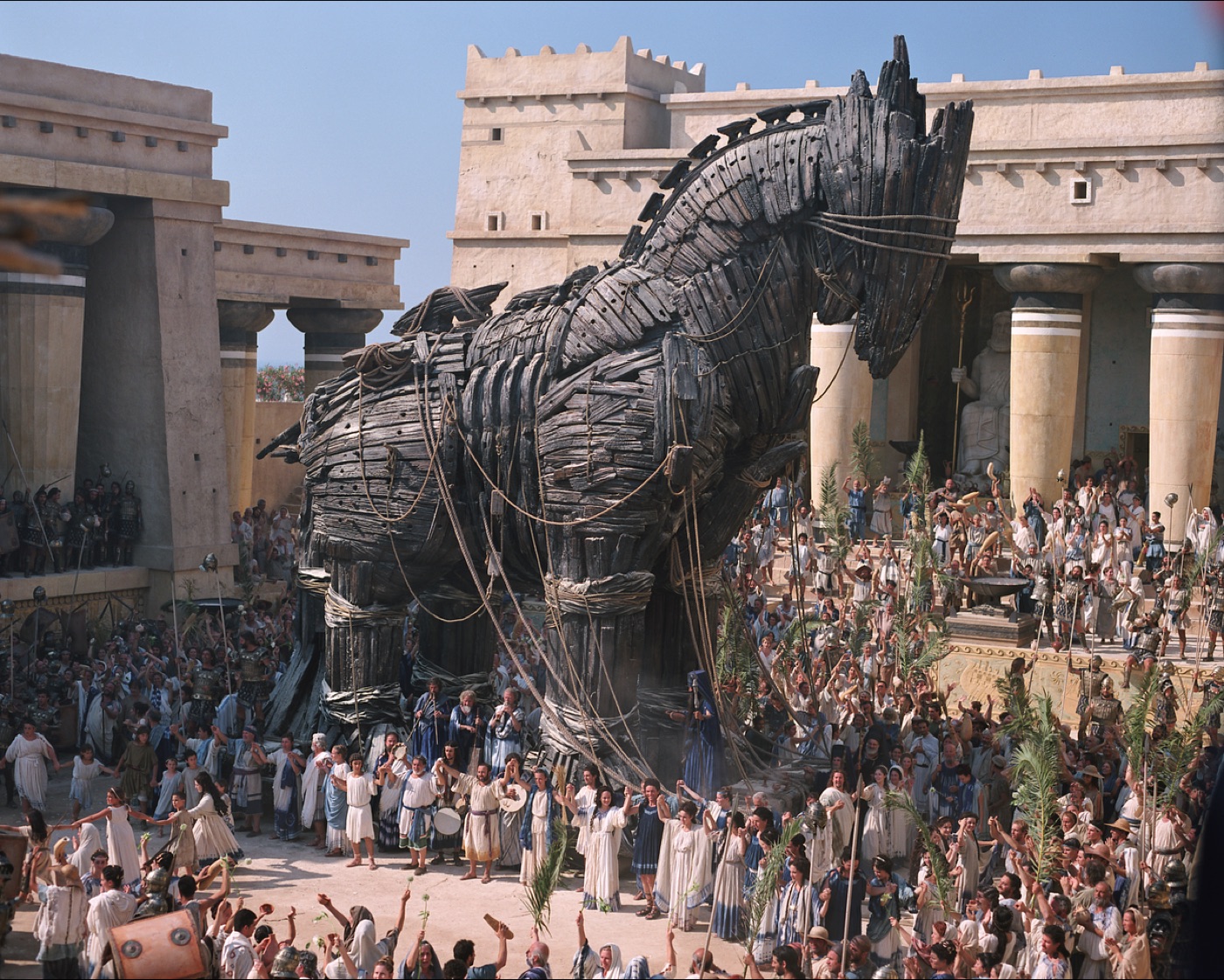
Equal praise belongs to Nigel Phelps’ (Batman) meticulously crafted production design and Roger Pratt’s (Twelve Monkeys) sun-drenched cinematography. Pratt’s expansive compositions make the most of Phelps’ ancient Greek-inspired architecture, capturing the grandeur of the Bronze Age with an impressive sense of scale. Whether depicting Troy’s imposing fortifications, densely populated courtyards, or richly ornamented temples, the pair create an immersive world. While digital trickery was used to expand the environments, the film retains a charming, old-fashioned tactile quality. It feels like one of the last major Hollywood epics where physical sets remained central to the illusion.
Troy’s impressive scale is matched by its ensemble cast. Few contemporary actors possessed the physical presence required to embody the hero Homer described as the greatest Greek warrior, but Brad Pitt (Fight Club) commits to Achilles with conviction. Following months of intensive physical conditioning and sword training to transform his frame, Pitt looks genuinely formidable. Yet away from the battlefield, he brings an unexpected degree of introspection to the role, imbuing Achilles with a vulnerability that reveals a warrior tormented by doubt, anger, and his own mortality. Pitt’s Achilles is no simple hero; he is painfully aware that his extraordinary abilities will define his legacy and that his pursuit of glory will inevitably cost him his life.
Elsewhere, Eric Bana (Black Hawk Down) brings both strength and tenderness to Hector. Though not the central protagonist, he is the film’s emotional anchor. Rather than playing Hector as a grandiose warrior, Bana portrays a decent man burdened by duties he neither chose nor can escape, quietly conveying the internal conflict between his obligations as a prince and his instincts as a brother. Meanwhile, Sean Bean (Anemone) brings welcome intelligence and pragmatism to Odysseus, imbuing the master strategist with the dry wit of a man who understands the futility of war even as he fights in it. Finally, Diane Kruger (Inglourious Basterds) delivers a restrained debut performance as Helen. Rather than playing an irresistibly seductive femme fatale, she emphasises a quiet melancholy and profound discomfort with the consequences of her beauty. It’s unfortunate the script rarely gives her enough room to develop these qualities, often treating Helen as an object fought over rather than an active participant.
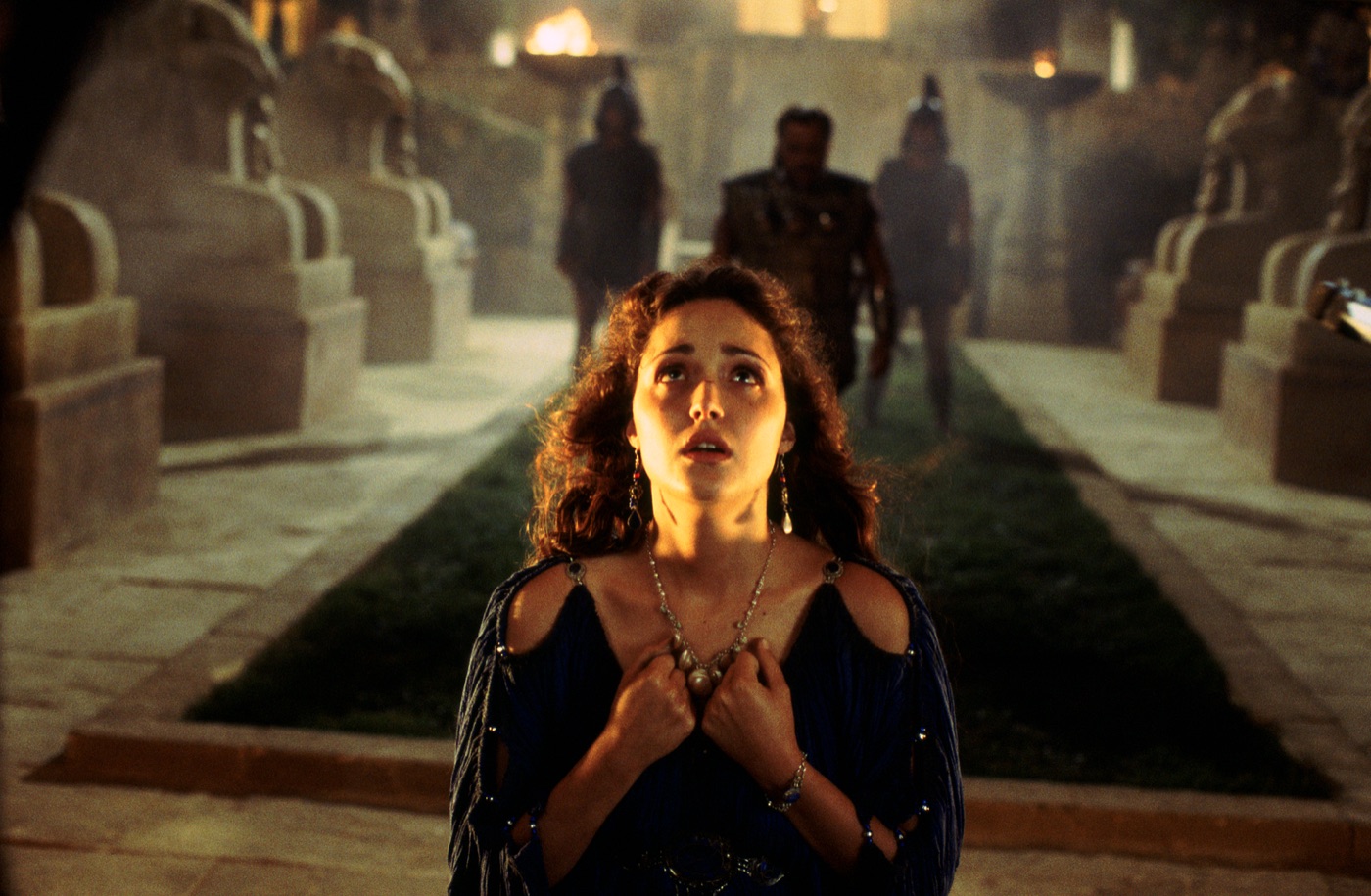
Upon release, Troy seemed destined to become a classic, boasting a star-studded cast, a massive budget, spectacular action sequences, and the cultural momentum of Gladiator and The Lord of the Rings: The Fellowship of the Ring (2001). While it wasn’t the critical triumph its pedigree suggested, it was a commercial hit, earning roughly $497M and ranking among the highest-grossing blockbusters of 2004. The most interesting phase of the film’s afterlife has emerged two decades later, as what was once dismissed as a flawed adaptation has found a more sympathetic audience. Whether this reappraisal was spurred by Christopher Nolan’s anticipated version of The Odyssey (2026) or social media discourse, modern viewers are noticeably more receptive than critics were at the time.
Ultimately, Troy succeeds as a visually arresting attempt to bring the Trojan War to modern screens. Its scale, production design, and striking cinematography create a convincing vision of antiquity, while its expertly staged battle sequences provide genuine visceral excitement. Yet for all its technical accomplishments, Benioff struggles with his source material. By stripping Homer’s masterwork of its piety and mysticism, thematic complexity is reduced to Hollywood spectacle. For audiences unfamiliar with The Iliad, Petersen’s adaptation is an entertaining historical epic; for those acquainted with Homer, its creative liberties remain hard to overlook.
USA • UK • MALTA • BULGARIA | 2004 | 164 MINUTES | 2:39:1 | COLOUR | ENGLISH

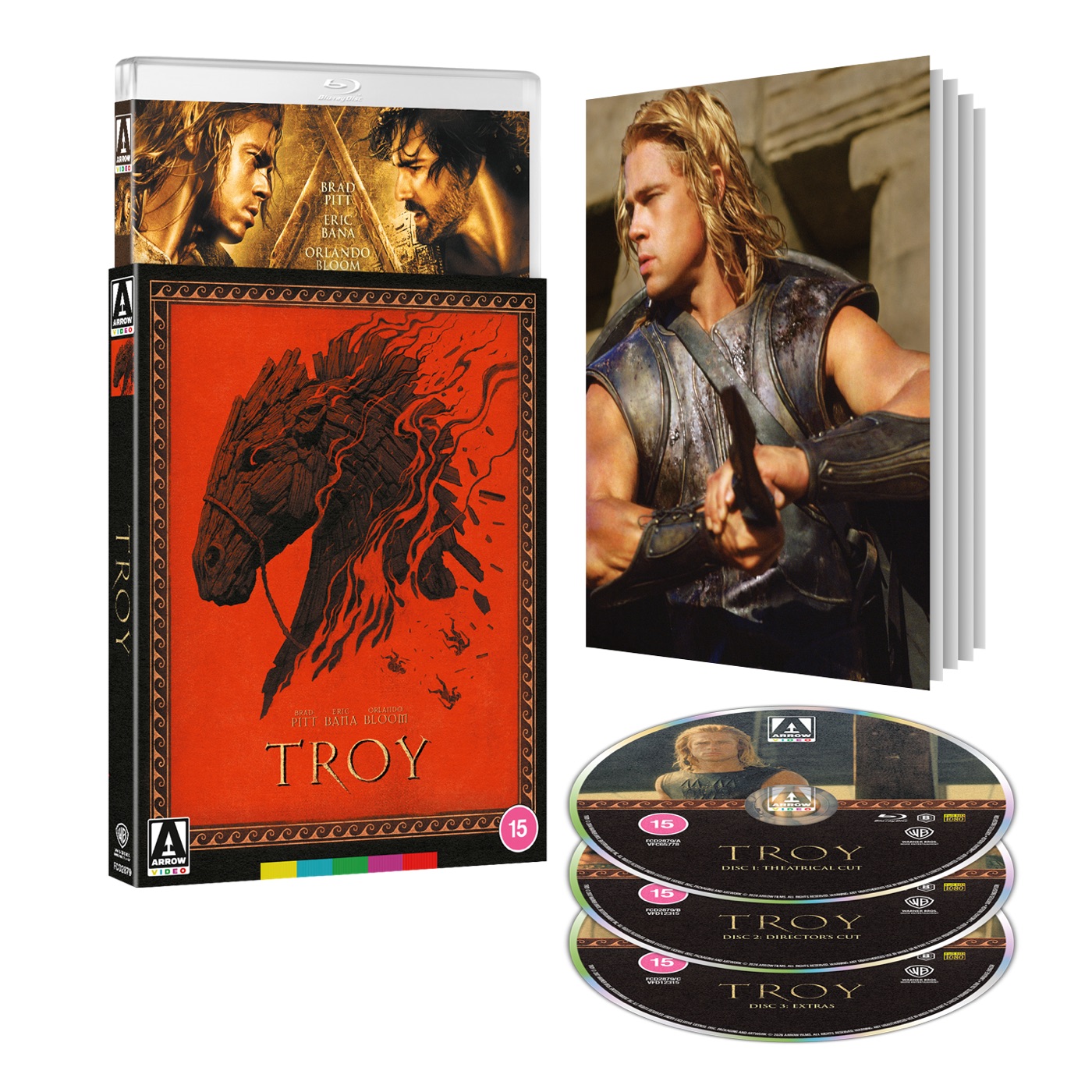
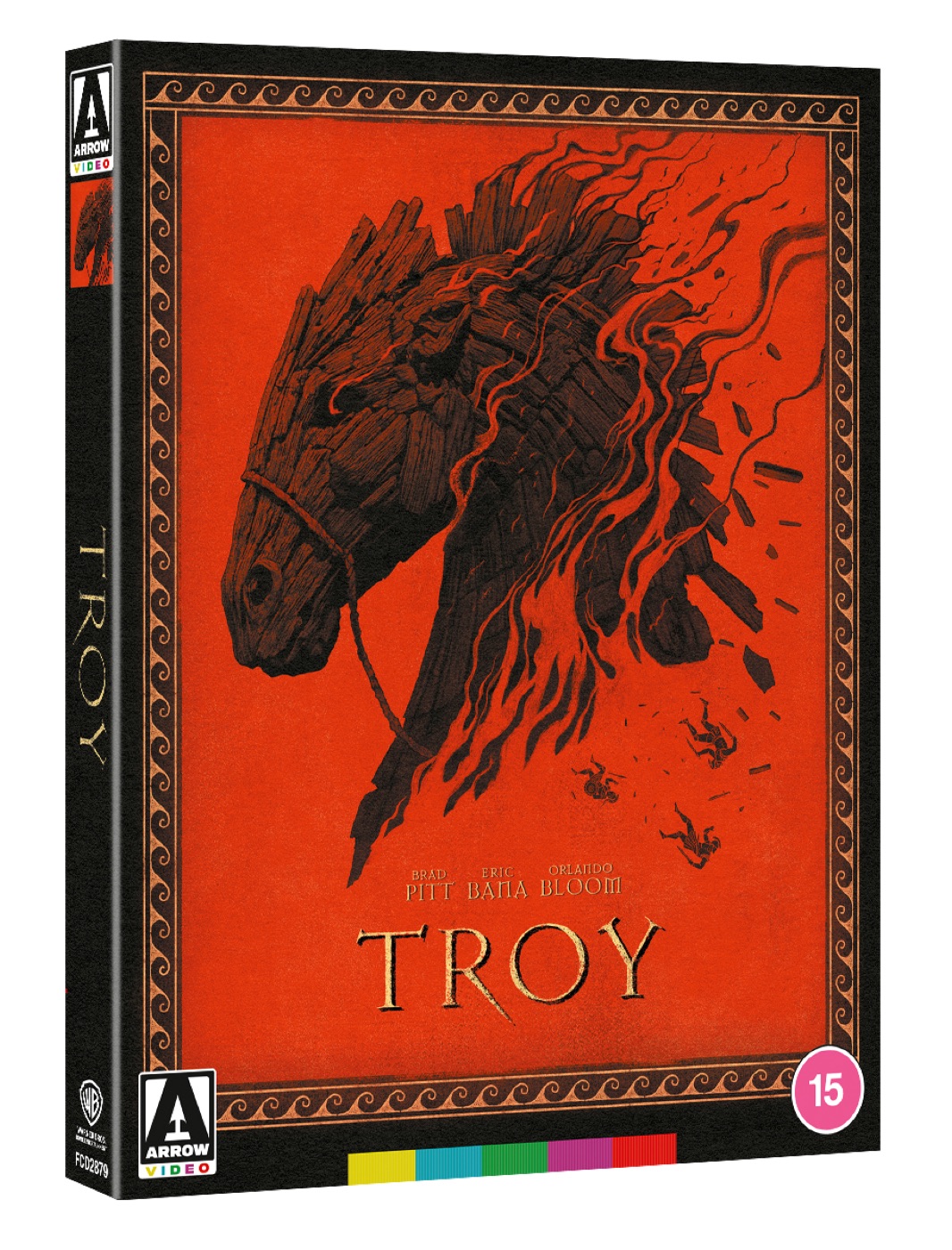
Making its UK debut, Troy receives a wonderful 4K restoration courtesy of Arrow Video. Both the Theatrical Version and the Director’s Cut feature an impressive 2160p Ultra HD transfer presented in their original 2.39:1 aspect ratio. The Theatrical Cut benefits from a fresh scan of the original 35mm camera negative, while the additional footage in the Director’s Cut has been upscaled from the existing 2K digital intermediate.
Troy has always possessed a distinctive visual identity, but the inclusion of Dolby Vision HDR adds new dynamism to Roger Pratt’s cinematography. Outdoor scenes are particularly breathtaking, offering vibrant colour reproduction without looking overblown; golden yellows, Mediterranean blues, and burnished bronzes pop with vitality. Black levels remain satisfyingly deep and contrast is expertly managed, particularly during interior scenes set inside Troy’s dimly lit palaces and temples.
The transfer boasts exceptional image depth and fine detail. Viewers will appreciate how clearly the print renders the intricate patterns of Bob Ringwood’s (Dune) costumes, from the distressed leather of the Greek pteryges to the ornate detail of Trojan armour. Close-ups reveal individual beads of sweat on Achilles’ brow and subtle imperfections etched into bronze weaponry. While there are minor fluctuations in picture quality during the Director’s Cut due to the 2K source material, these variations are barely noticeable. It may have taken Odysseus 10 years to find his way back to Ithaca, but Arrow’s restoration brings Troy home in its finest presentation yet.
This 4K release comes equipped with two audio options and optional English subtitles. While the disc lacks a Dolby Atmos upgrade, Arrow Video provides immersive English DTS-HD 5.1 Master Audio and LPCM 2.0 stereo tracks with excellent fidelity.
Both tracks feature strong dynamic range, prioritising dialogue through the centre channel while using surround channels for atmospheric effects. Battle scenes make full use of the sound stage, with clashing swords, whistling spears, and the roar of thousands of soldiers sweeping effectively across the room. James Horner’s (Avatar) score benefits enormously from the mix, sounding precise and full-bodied. While the absence of Dolby Atmos is a missed opportunity, this audio presentation represents a significant upgrade over previous releases.

director: Wolfgang Peterson.
writer: David Benioff (based on Homer’s “The Iliad”).
starring: Brad Pitt, Eric Bana, Orlando Bloom, Brendan Gleeson, Brian Cox, Diane Kruger, Sean Bean, Peter O’Toole & Rose Byrne.