MASTERS OF THE UNIVERSE (2026)
A young man on Earth discovers a fabulous secret legacy as the prince of an alien planet, and must recover a magic sword and return home to protect his kingdom.

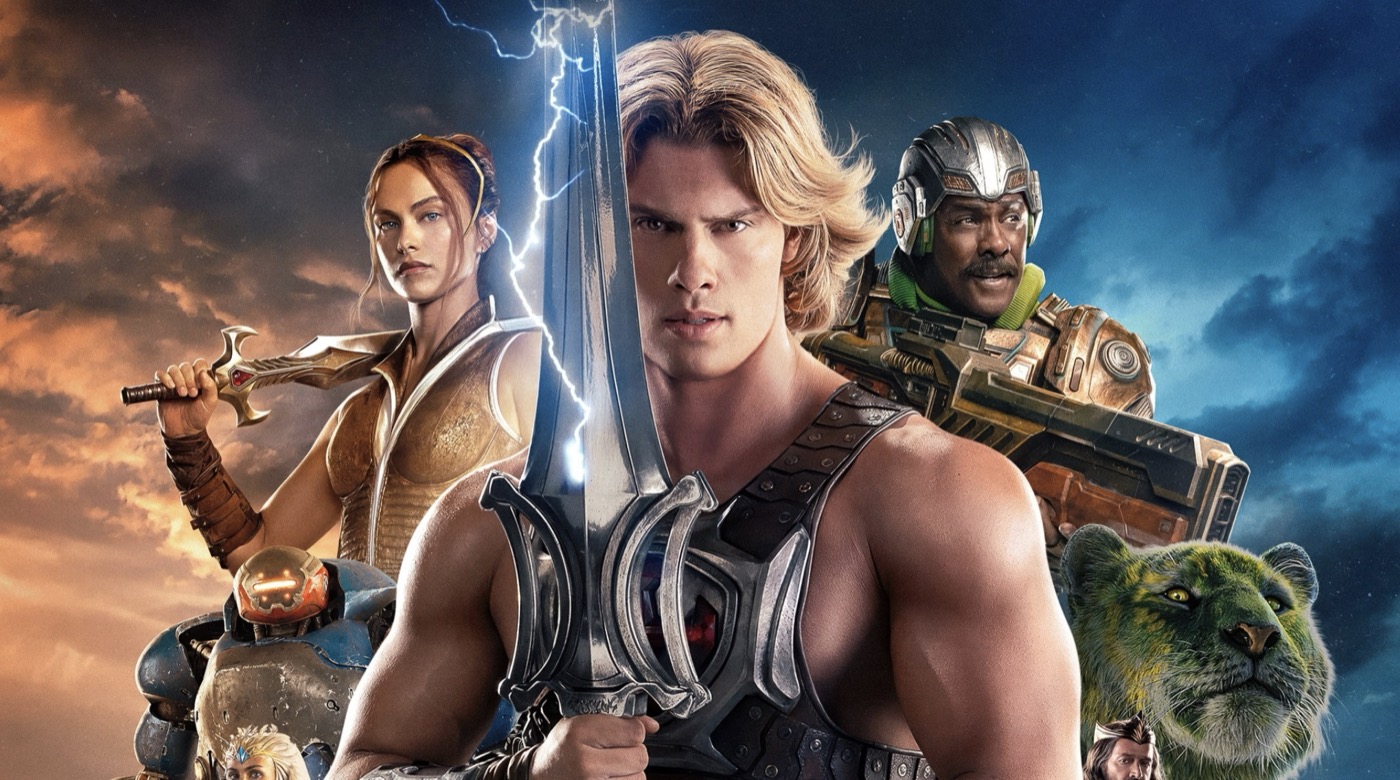

A young man on Earth discovers a fabulous secret legacy as the prince of an alien planet, and must recover a magic sword and return home to protect his kingdom.
Eternia hosts Prince Adam (Artie Wilkinson-Hunt), the 10-year-old son of King Randor (James Purefoy). Struggling to distinguish himself under the defensive tutelage of Duncan (Idris Elba), the king’s man-at-arms, his heroic journey receives a jump-start when he’s entrusted with the Sword of Power and pushed through a vortex. Meanwhile, Skeletor (Jared Leto) and Evil-Lyn (Alison Brie) arrive to seek the source of Castle Grayskull’s power.
15 years later, the prince has become Adam Glenn (Nicholas Galitzine), a mundane Human Resources drone. Having lost the sword on his way to Earth, he finally locates it through diligent internet research. And so the adventure begins as he teams up with school friend Teela (Camila Mendes) to reclaim Eternia for its citizenry.
Masters of the Universe looks good and features some classic rock tunes on its soundtrack. Its nearly two-and-a-half-hour running time is a massive flaw, though. Blockbuster intellectual properties like this are engineered to keep viewers on an eventual streaming platform, regardless of whether the narrative actually warrants more than 90 minutes.
The film has four credited writers, including Chris Butler, brothers Aaron and Adam Nee, and David Callaham. They’re known respectively for children’s comic fantasies (ParaNorman, Missing Link), action-comedies (Band of Robbers, The Lost City), and video-game or comic-book adaptations (Doom, Wonder Woman 1984). Director Travis Knight is known for family-oriented genre films like the upcoming Wildwood (2026), as well as Kubo and the Two Strings (2016) and Bumblebee (2018).
While this creative pedigree makes sense for a blockbuster picture, it also signals a studio attempt to mine several disparate creative voices without allowing any single one to shine through. There is barely enough plot in Masters of the Universe to sustain 90 minutes — boy struggles with a poor self-image, becomes empowered, fights the villain, the end — which likely explains why the runtime is padded with two lengthy dialogue scenes that explicitly dissect its themes. Barbie (2023) did the same, virtually holding up an intermission card while delivering a Feminism 101 lecture. I suppose if George Orwell could pause Nineteen Eighty-Four (1949) for 30 pages to lecture us on The Theory and Practice of Oligarchical Collectivism, He-Man and Barbie can follow suit.
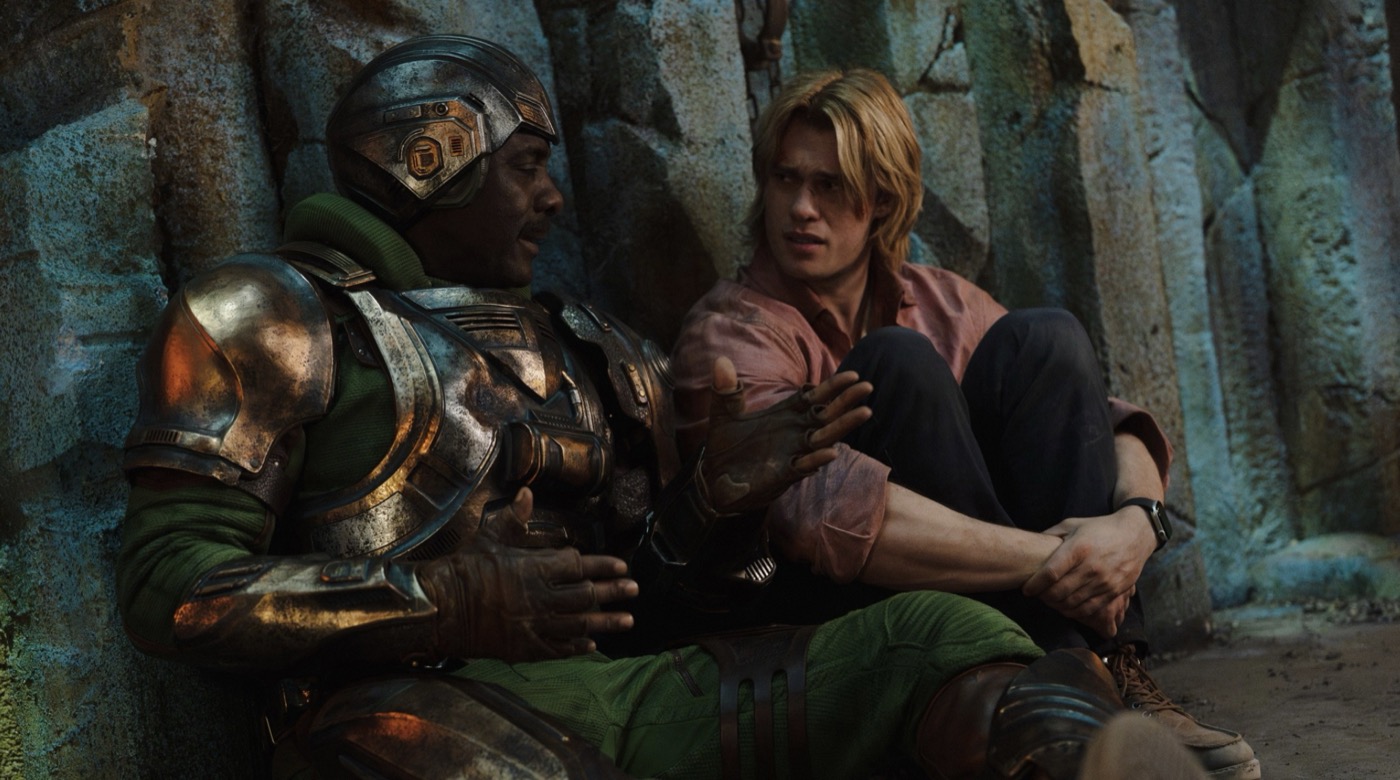
The acting is perfectly fine. Brie and Elba are the most memorable, perhaps because they are the strongest performers in the main cast. Galitzine is serviceable as He-Man — Adam’s alter ego, a moniker the film feels strangely reluctant to use. He plays a kinder, slightly less “himbo” version of the character than Dolph Lundgren’s iteration from the original 1987 Masters of the Universe film (who makes a cameo here). Incidentally, I didn’t spot a single child in my fairly packed matinee screening.
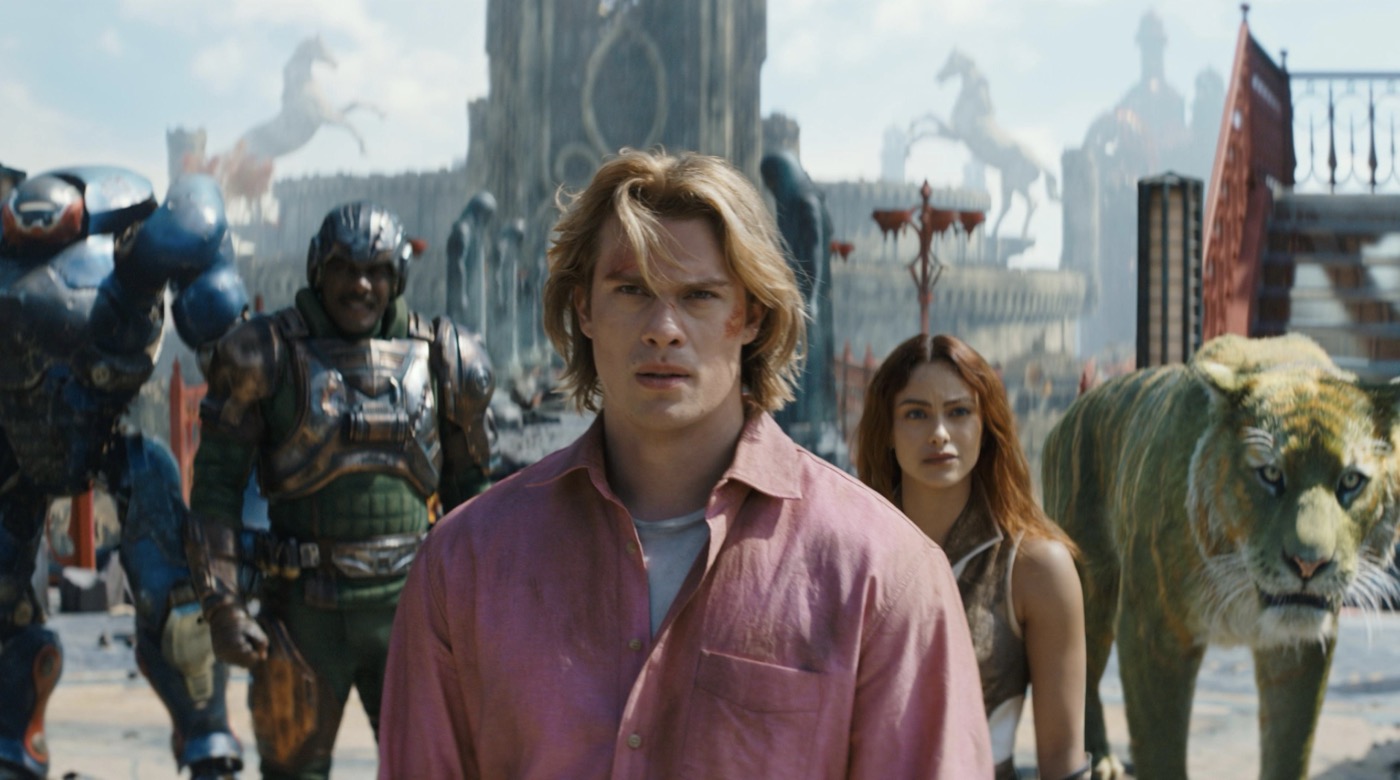
The film’s thematic framework is bizarre. Early on, Adam’s Earth workplace is diverse, his nameplate lists his pronouns, and he’s forced to endure buzzword-heavy team-building seminars. Yet later, he’s told that when times are tough, it isn’t “the poets” who step up. For a moment, I thought that the film was genuinely trying to appeal to the “traditional masculinity” crowd who believe power and domination define a man. It moderates this later with homilies about Adam’s gentleness, suggesting that this sensitivity is exactly what he needs to unlock He-Man and find his inner power. None of it convinces.
No modern media appealing to the male id can seemingly avoid addressing “toxic masculinity” and what it “means to be a man”. The ubiquity of this cultural trend can be exhausting. Recent British dramas like Adolescence (2025) — tracking a schoolboy who murders a classmate after falling down an incel rabbit hole — are no doubt brilliant and necessary. But in a property like Masters of the Universe, can’t the muscle-bound goofball just be exactly that? (And perhaps get a few butt shots? Asking for a friend.)
Some of the thematic work is so inane that it actively contradicts itself. When the character Orko appears at the end to deliver a moral lesson — a nod to how episodes of the original animated show concluded — he essentially argues that true power comes from within… while simultaneously concluding that anyone with a skull for a face is invariably evil. It’s meant as a joke, but it reinforces the idea that physical appearance dictates morality. In other words, kids: if you’re a weak little dweeb, you might be destined for greatness; but if your face is disfigured, you’re just evil. Go punch that kid in his evil face.
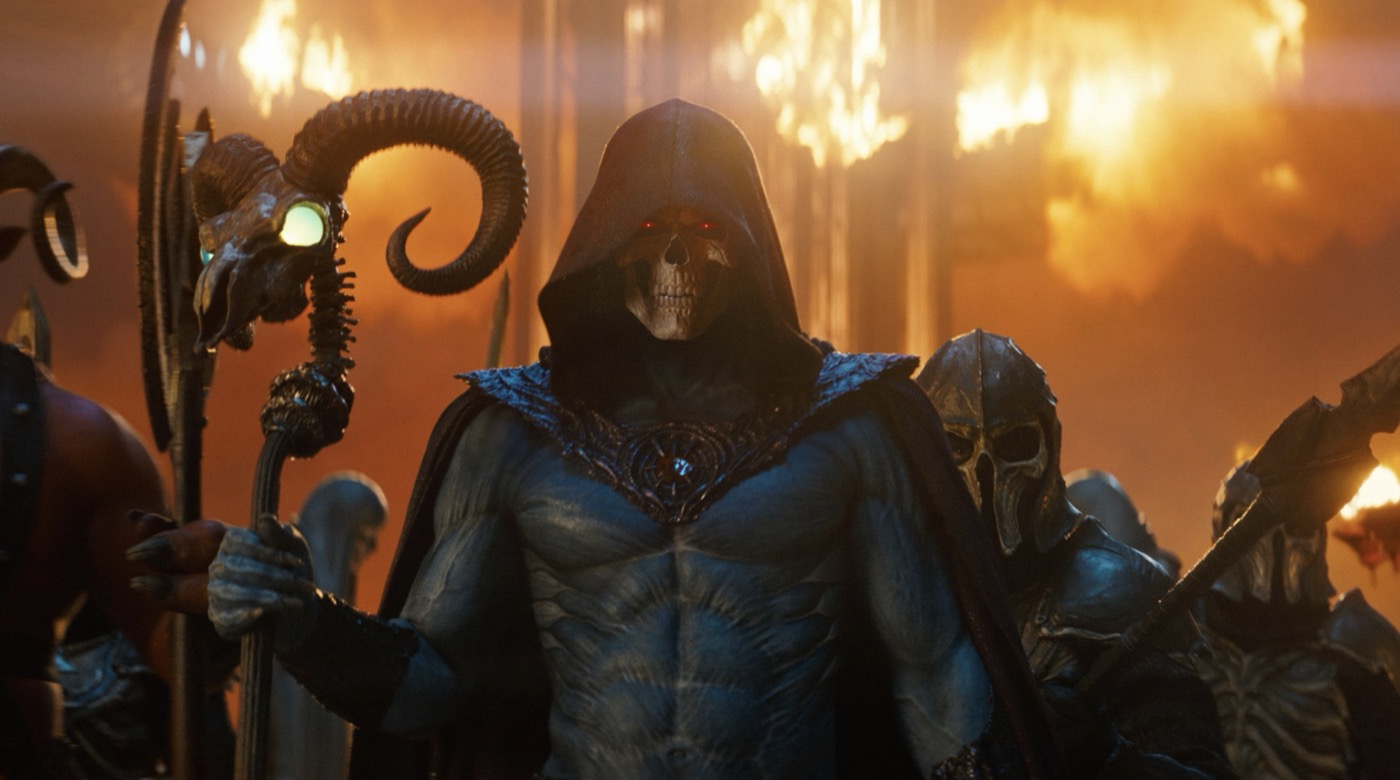
Masters of the Universe seems actively ashamed of its own source material. The original cartoon was a byproduct of 1980s Reaganomics — a period of aggressive deregulation under Ronald Reagan that allowed children’s programming to effectively function as unrestricted advertising. This birthed a highly “toyetic” aesthetic, where the action figures and their vehicles took priority. Masters of the Universe and countless other animated properties were little more than 20-minute toy commercials. (Indeed, I visited a comic shop before heading to the cinema and saw rows of vintage He-Man characters on display, while the film itself was preceded by an advert for them.)
Yet so much of the dialogue feels like an apology for the franchise’s existence. Whenever Adam introduces a concept like the Sword of Power or a character named Fisto (so-called because he possesses a giant fist), the film invariably smirks to remind the audience how silly it is. Even the opening monologue features Adam kind of breaking the fourth wall to say, “I know, I know… just go with it.” Why must the film act as though it’s above its roots? It really isn’t. Masters of the Universe may have been conceived to sell plastic toys, but audiences remember it fondly for a reason. It was an entertaining action show about barbarians fighting a magical skeleton in front of a skull-shaped castle.
Here’s a radical alternative. The film’s genre is classified as “sword and sorcery”. It’s adapted from a 1980s cartoon with 20-minute episodes. Maybe — and I am thinking entirely outside the box here, so brace yourselves — the film should simply be a tight, 90-minute story about Skeletor and Evil-Lyn trying to storm Castle Grayskull while He-Man and his crew fight them off. Cue spectacular swordplay and magical battles, perhaps punctuated by a brief moment where He-Man shows mercy to illustrate good values.
I know, I know… just go with it.
USA | 2026 | 140 MINUTES | 2.39:1 | COLOUR | ENGLISH

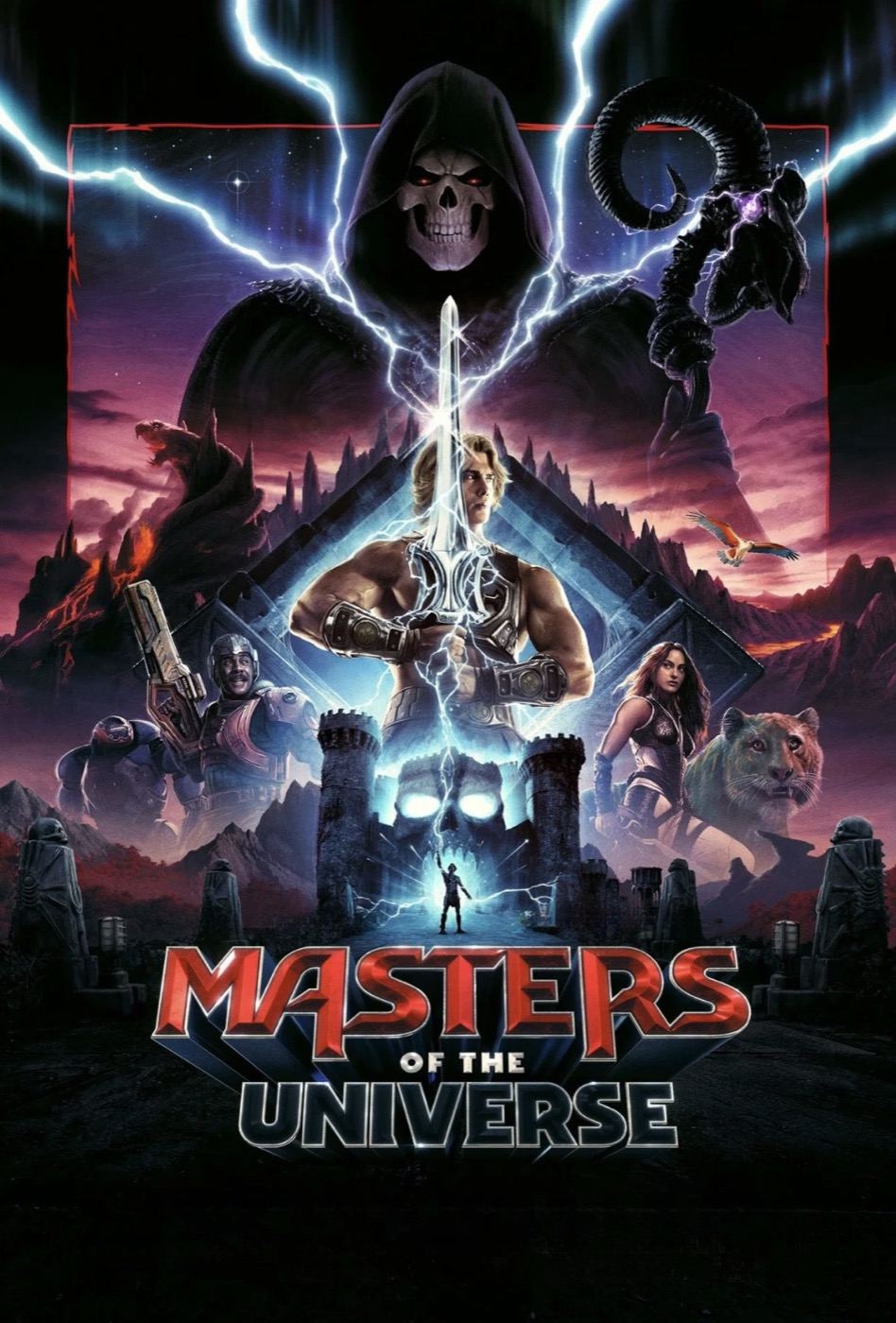
director: Travis Knight.
writers: Chris Butler, Aaron Nee, Adam Nee & David Callaham (story by Aaron Nee, Adam Nee, Alex Litvak & Michael Finch; based on ‘Masters of the Universe’ by Mattel).
starring: Nicholas Galitzine, Camila Mendes, Alison Brie, James Purefoy, Morena Baccarin, Jóhannes Haukur Jóhannesson, Kristen Wiig, Jared Leto & Idris Elba.