THE SARAGOSSA MANUSCRIPT (1965)
During the Napoleonic wars in Spain, a soldier finds a magical book and loses himself in its stories.


During the Napoleonic wars in Spain, a soldier finds a magical book and loses himself in its stories.
This is one of those films movie buffs already know of, even if they haven’t had a chance to view it, and it’s been on my radar for some time. A DVD copy has sat on my shelves for a decade or more, yet I never managed to find the right time for this three-hour, black-and-white, Polish-language philosophical fantasy romp. But with this new 4K restoration from Radiance, scanned from the original camera negative, I could no longer resist.
The Saragossa Manuscript / Rękopis znaleziony w Saragossie comes highly recommended by several distinguished cinéastes. Presented by Martin Scorsese and Francis Ford Coppola, it was endorsed by David Lynch and loved by Jerry Garcia of The Grateful Dead—which is why it’s often described as a counterculture classic. Classic it may be, but there’s nothing particularly countercultural about it. Certainly not in the sense of Roger Corman’s The Trip (1967), Bob Rafelson’s Head (1968), or Dennis Hopper’s Easy Rider (1969), though it does resonate with later entries in the category, like Alejandro Jodorowsky’s The Holy Mountain (1973) and Robert Fuest’s The Final Programme (1973).
It’s cited as a masterpiece of Polish cinema and one of the most important cinematic works of Surrealism—both more apt descriptions for this puzzling picaresque portmanteau. But does it live up to such high expectations?
It reminded me most of Luis Buñuel’s best films, especially Viridiana (1961) and The Exterminating Angel (1962),both of which wouldn’t seem out of place if chopped up and dropped into the fractured narrative as additional vignettes. Buñuel is yet another important filmmaker who championed The Saragossa Manuscript. Its influence becomes evident in his later philosophical satires The Milky Way (1969), The Discreet Charm of the Bourgeoisie(1972), and The Phantom of Liberty (1974). Anyone who enjoyed those titles should certainly seek out and immerse themselves in the equally challenging, similarly unorthodox opus of Wojciech Jerzy Has.
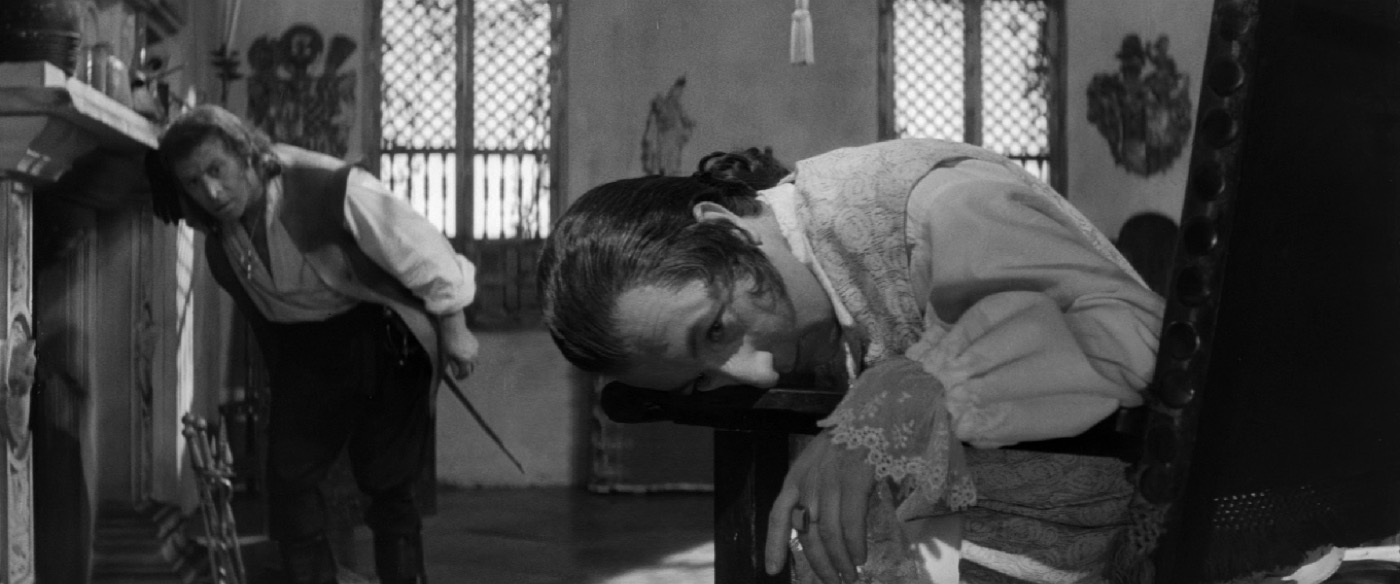
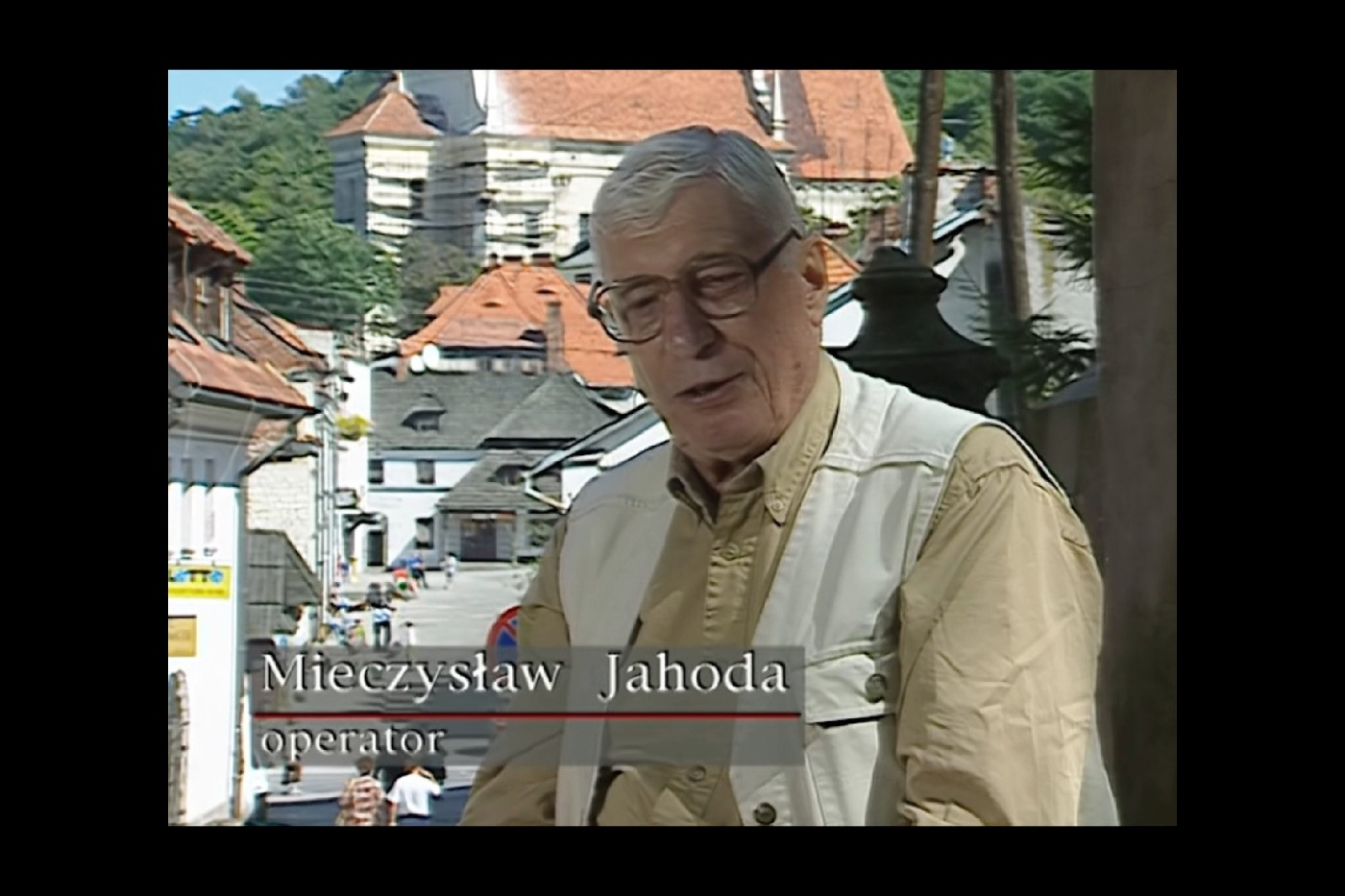
The story opens at the tail end of a battle between Napoleonic soldiers and the Spanish resistance that’s turned Saragossa into a ghost town. It’s immediately clear from Mieczysław Jahoda’s beautiful widescreen cinematography and the generous use of pyrotechnics that this isn’t a small arthouse offering, but a lavish production backed by a respectable budget. As such, what follows is endlessly surprising because it’s certainly not what you expect from a major mainstream movie.
The battle hasn’t gone well for Napoleon’s army, and an officer (Igor Przegrodzki) seeks refuge in an abandoned inn.There, he peruses the pages of an impressively large book, captivated by illustrations suggesting an intriguing story of macabre mystery and erotic promise. He becomes so engrossed that he barely registers the Spanish soldiers attempting to capture him at gunpoint, politely asking to be allowed a little longer with the volume. After glancing at the pages, the Spanish officer (Gustaw Lutkiewicz) sends his men away and joins his enemy at the table—revealing the core theme that storytelling can help us find common ground. Equally enraptured, he begins translating the text, which he claims is the story of his own grandfather…
Although this prologue acts as a framing story, we never return to the war-torn world of the French and Spanish officers. Instead, the tale of Alfonse Van Worden (Zbigniew Cybulski), a newly appointed Captain of the Walloon Guard, becomes another framing device to contain a series of nested narratives that continually unravel and entwine.Van Worden has been tasked with finding a direct route to Madrid to take up his commission. Despite a warning from a local gypsy, he decides to travel via a mountain pass where demons dwell. He becomes separated from his squire and seeks shelter in an abandoned inn, falling asleep while waiting to be found.
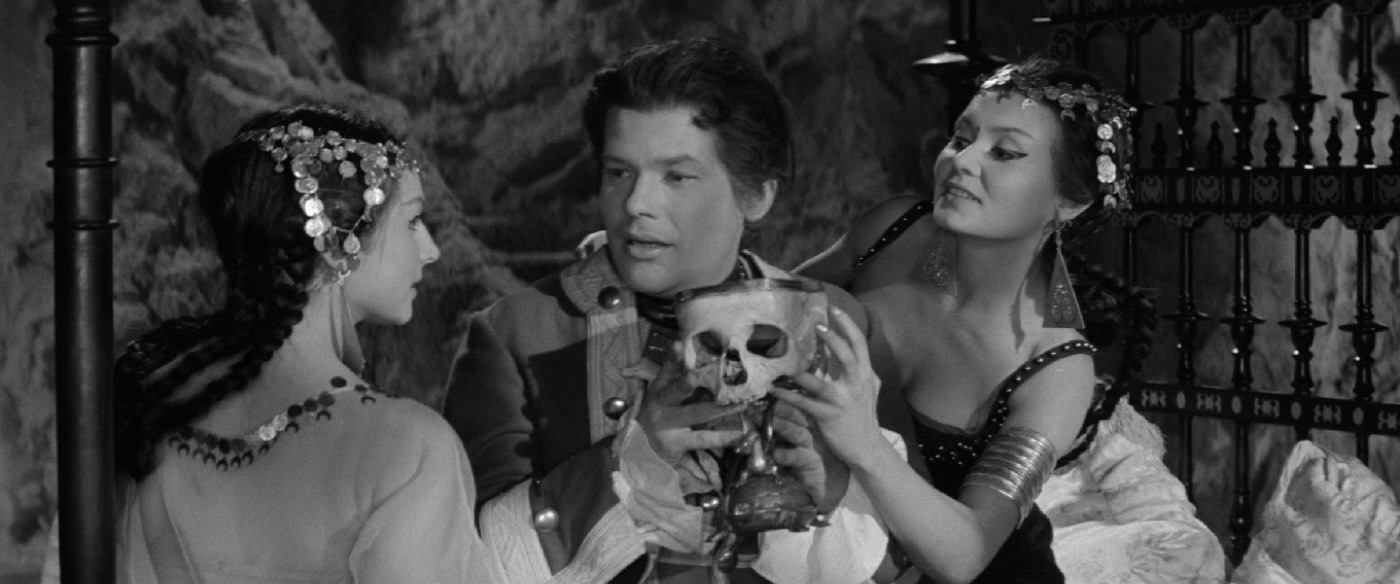
What follows may be a dream or a ghostly encounter. Van Worden is introduced to two Moorish princesses, Emina (Iga Cembrzyńska) and Zibelda (Joanna Jędryka), recognisable from an illustration glimpsed earlier in the big book. Their exotic attire isn’t period-correct, instead reflecting eroticised notions of harem costumes found in illustrations for One Thousand and One Nights—possibly the earliest example of a portmanteau assembled within a framing story, dating back to the 11th century. It’s a collection of tales, some containing further stories and multi-layered narratives that provided a template for The Saragossa Manuscript. In a typical male harem fantasy, Van Worden is seduced by the two young women—who’ve been raised “hidden from the eyes of men”. He then drinks from a chalice fashioned from a human skull and passes out. This isn’t the last we’ll see of the chalice or the princesses.
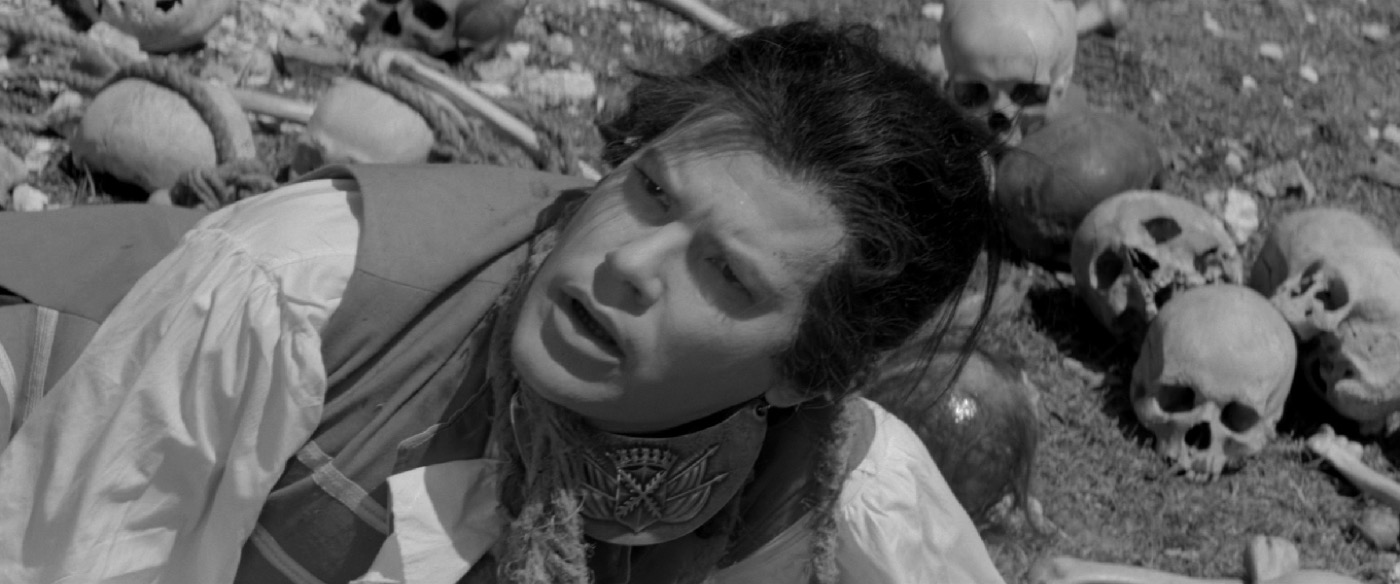
Accompanied by an evocative, decidedly spooky score from maverick modernist composer Krzysztof Penderecki, Van Worden awakes in the shadow of a gallows where the corpses of two hanged bandits dangle—another image seen earlier as an illustration. Disorientated, he staggers on until he’s taken in by a hermit (Kazimierz Opaliński), who prompts him to tell his own story, beginning with how his father (Sławomir Lindner) met his mother (Mirosława Lombardo). This is the first of several tales examining the dynamics between fathers and sons. It’s followed almost immediately by the story of Pacheco, the goat herd (Franciszek Pieczka), whom the hermit explains is possessed by demons. His story is uncannily similar to Van Worden’s experiences, right down to a male harem fantasy about two sisters, one of whom is his stepmother. At the end of his tale, he also awakes under the same gallows, where zombies attacked him and plucked out one of his eyes. For me, The Saragossa Manuscript is at its best when embracing these folkloric elements.
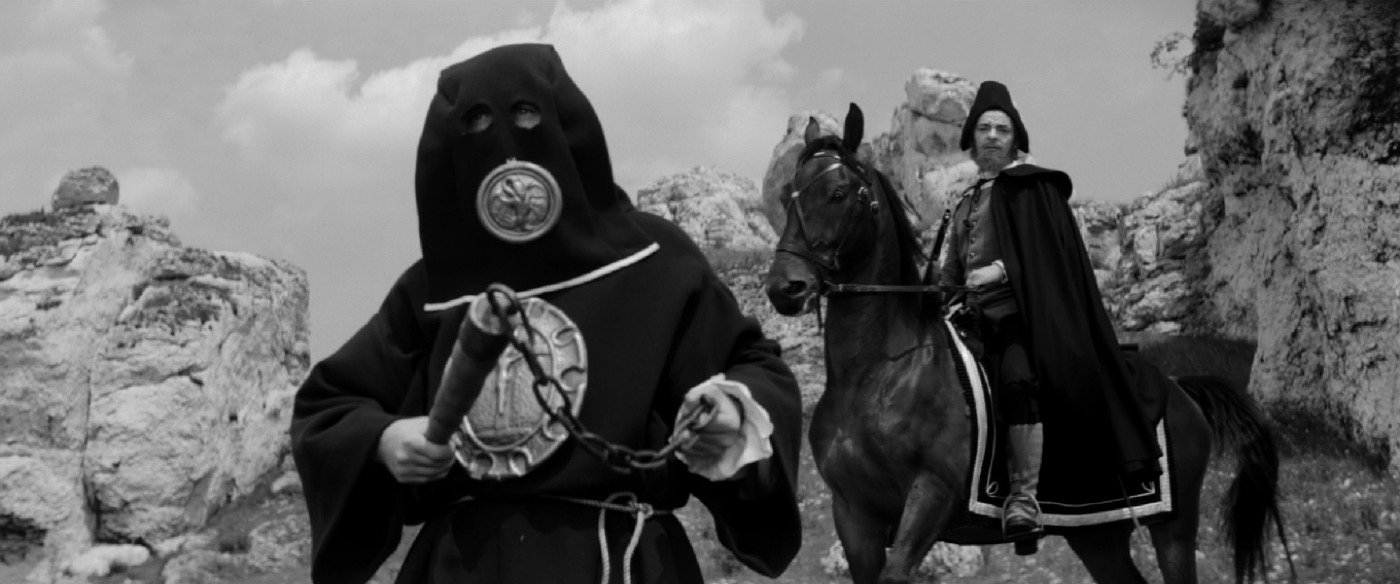
Next, suspected of being demonically possessed himself, Van Worden is arrested by the Spanish Inquisition. For a while, it seems we’re heading into full-blooded Gothic horror—Van Worden is even fitted with a metal demon mask reminiscent of Mario Bava’s Black Sunday (1960). Alas, that’s as far as the similarity goes; his torture is cut short by the intervention of Emina and Zibelda, who whisk him back to the inn. However, their father awaits to condemn Van Worden to death for sullying the princesses. Prepared to meet his fate with honour, he drinks the poison from the skull chalice… and awakes in the shadow of the gallows once more. Just as things start getting a tad frustrating—we’re already about 90 minutes in—a stranger appears. Introducing himself as a Kabbalist (Adam Pawlikowski), he provides a bridge into part two, where things get both more interesting and more confusing.
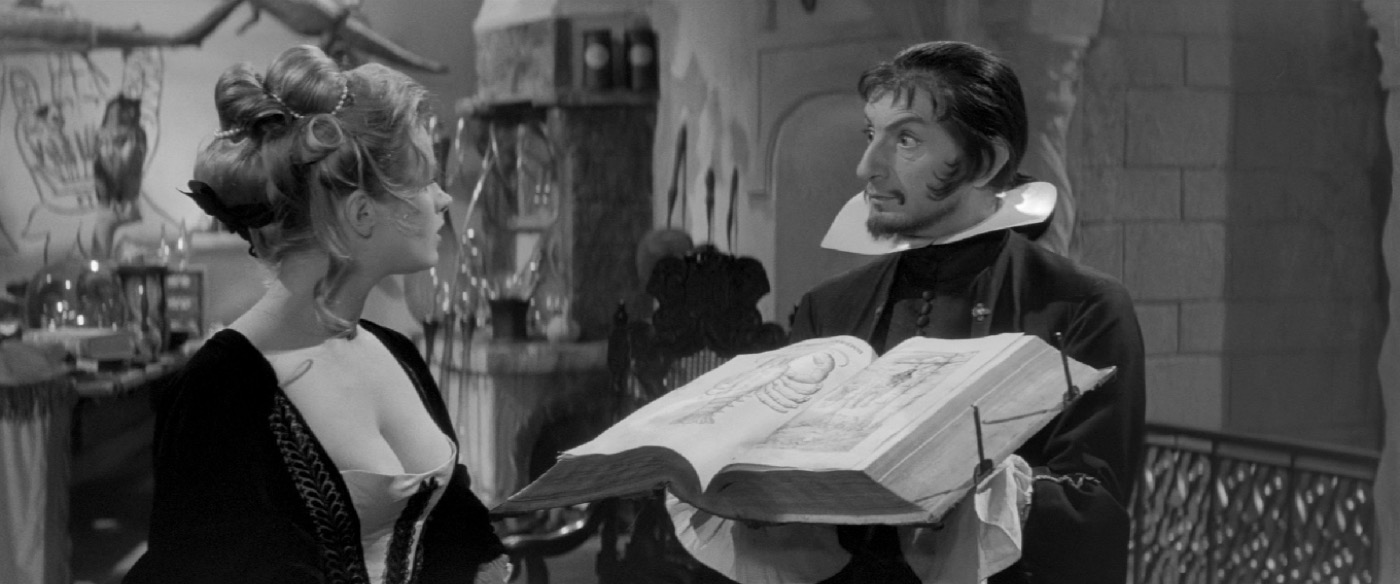
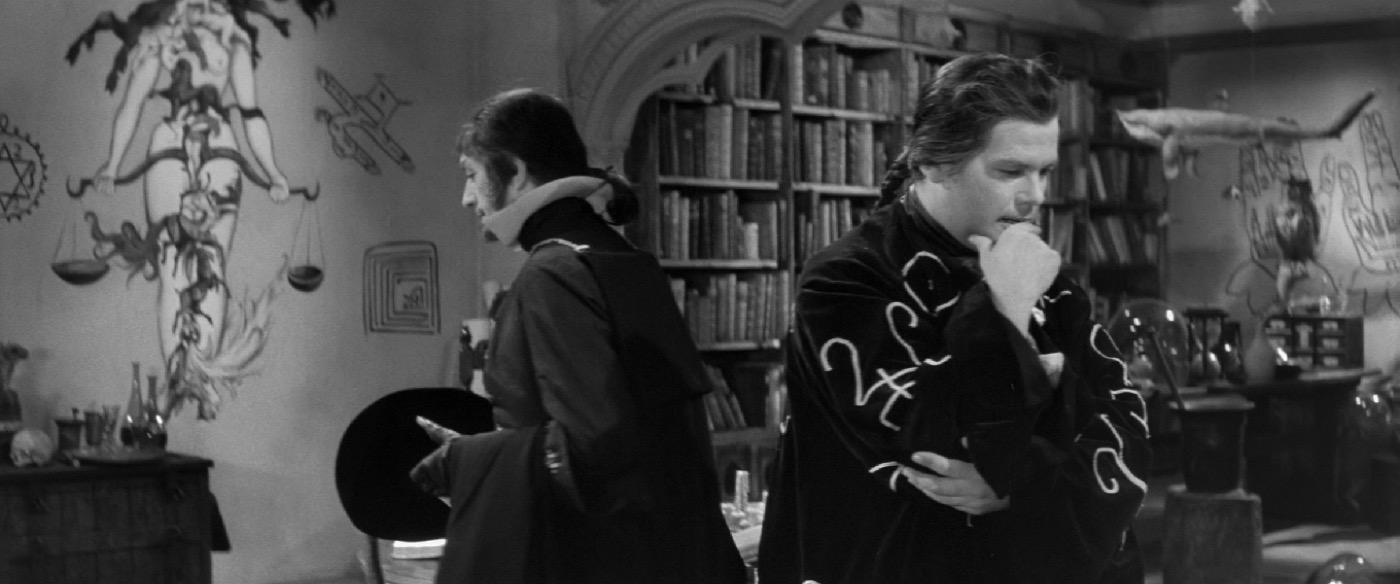
The segment set in the Kabbalist’s castle is a highlight, sharing a striking aesthetic resonance with Jean Cocteau’s Orphic Trilogy (1930–1960), which tackled similar grand themes. Both share a fascination with high magic and occult philosophies, though Cocteau confronts what Has merely skirts around. Of course, Cocteau had the advantage of being the singular creative voice from script to screen, whereas Has makes a valiant attempt at adapting a sprawling mess of a novel that had been deemed unfilmable.
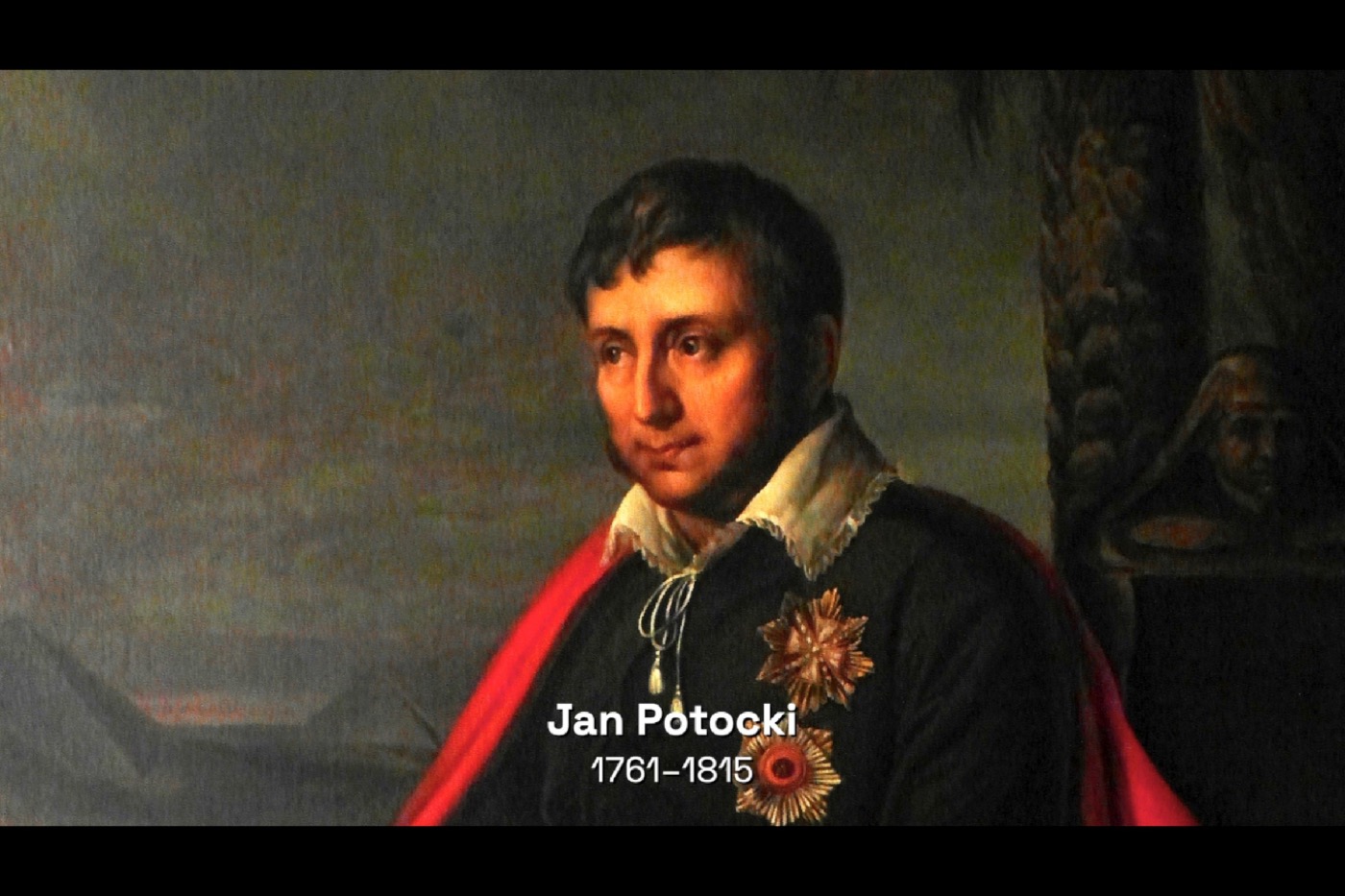
The source material is an epic, Chaucerian work by Count Jan Potocki, published in instalments from 1805 until his suicide in 1815. The remaining sections were published posthumously, though it remains unclear whether the book was ever truly finished. The full manuscript interweaves 33 distinct strands; while some elements are merged and simplified in Tadeusz Kwiatkowski’s multifaceted screenplay, the film jettisons about two-thirds of them to give us an extra dénouement that could only have been conceived in the aftermath of Surrealism.
Although Potocki was a respected Polish writer, known mainly for his extensive travelogues, he wrote Manuscrit trouvé à Saragosse in French, and a Polish translation wasn’t available until 1847. It’s a notable literary achievement that pastiches the Rabelaisian tradition of a narrator telling satirical and sometimes bawdy tales. It also invites comparison with other late Gothic literature, particularly Giovanni Boccaccio’s The Decameron. In some ways, it embraced the Gothic revival ahead of Mary Shelley’s Frankenstein; or, The Modern Prometheus (1818) and John William Polidori’s The Vampyre (1819).
Indeed, Count Potocki may have embraced Gothic notions a little too enthusiastically as his mental health declined. It’s said that his suicide via a self-inflicted gunshot was partly driven by the belief that he was a werewolf and posed a danger to others. Scholars now debate whether he actually used a silver bullet but with this context, the film’s recurring images of death and occult symbolism land rather differently.
However, the narratives really get going in part two, when the gypsy king, Don Avadoro (Leon Niemczyk), arrives at the Kabbalist’s castle and regales Van Worden with several stories, some containing their own storytellers. His tales are the most fun, packed with swashbuckling duels, farcical bedroom antics, and action approaching burlesque and pure slapstick. It’s about time things got this lively, given we’ve already sat through the equivalent of a standard feature film.
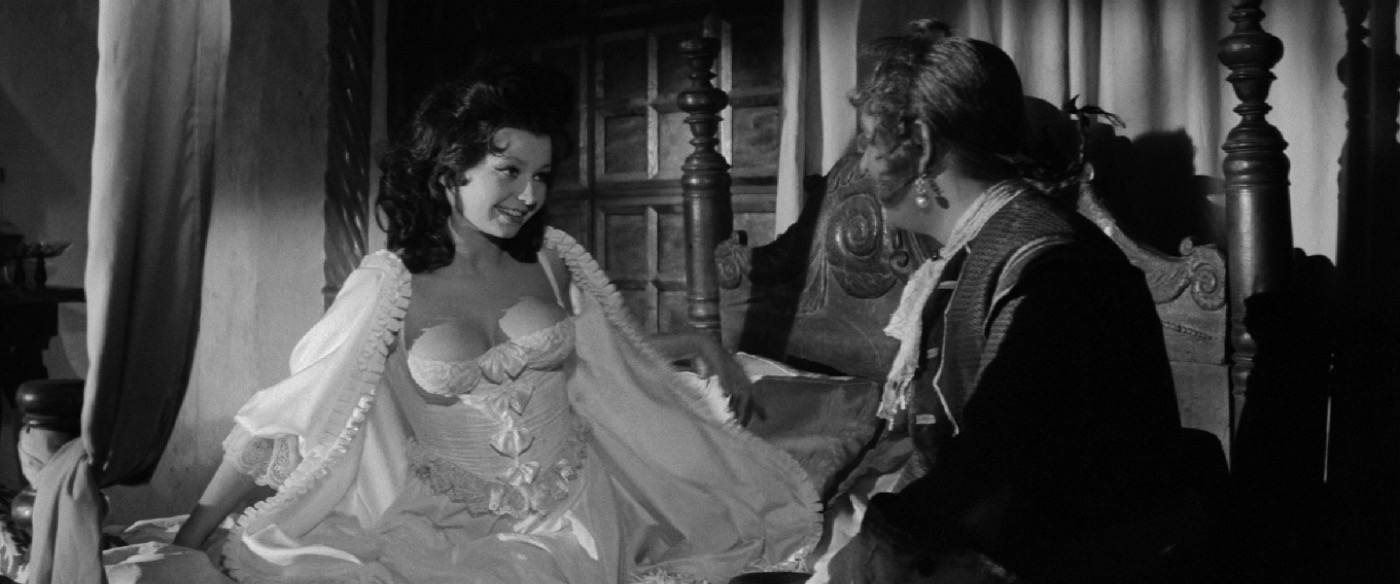
Don Avadoro’s storytelling is overtly gendered and caters to masculine fantasies, though the scheming women consistently get the better of the men in a supposedly male world. There’s an abundance of alluring women in Hammer-horror-style diaphanous gowns with dangerously low-cut bodices—a big plus for some viewers, and something I certainly didn’t mind.
He begins with his own, clearly embellished story before telling the tale of the young, brazen Frasquetta (Elżbieta Czyżewska), who outwits both her husband, Don Diego Salero (Janusz Kłosiński), and the ‘Jack-the-lad’ chancer Don Roque Busqueros (Zdzisław Maklakiewicz), who dominates the second half. We come full circle with Van Worden’s reunion with the two Moorish princesses and their father, whom we now recognise as the hermit. By this point, the narrative structure has broken down entirely, leaving us unable to track whose story we’re actually in.
Wojciech Has refuses to offer closure, leaving many of the braided narrative threads unresolved. The ending is either a clever conceit or a complete cop-out, fully embracing the surrealist pretensions hinted at throughout. If you don’t try to hold too tightly to a rational explanation and simply enjoy the mystery and milieu, it’s an entertaining enough three-hour sojourn. However, I’m not sure the entertainment value quite compensated for the time invested. I relished the rich mise-en-scène alongside the wonderful production design, enjoyed how the locations were shot like a spaghetti western, and was carried along by the vigorous performances of a talented cast—but, ultimately, I remain ambivalent.
POLAND | 1965 | 182 MINUTES | 2.35:1 | BLACK & WHITE | POLISH

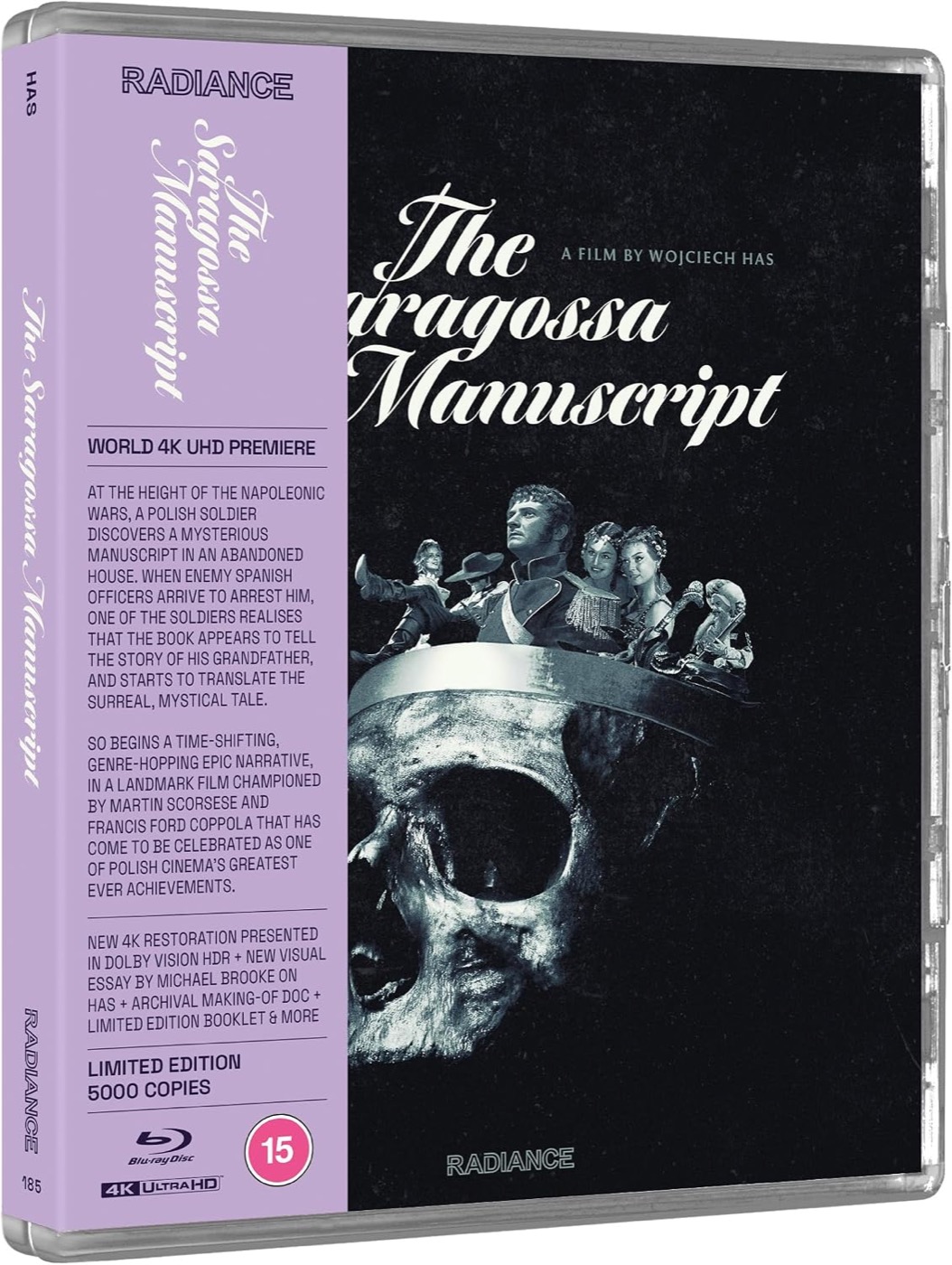
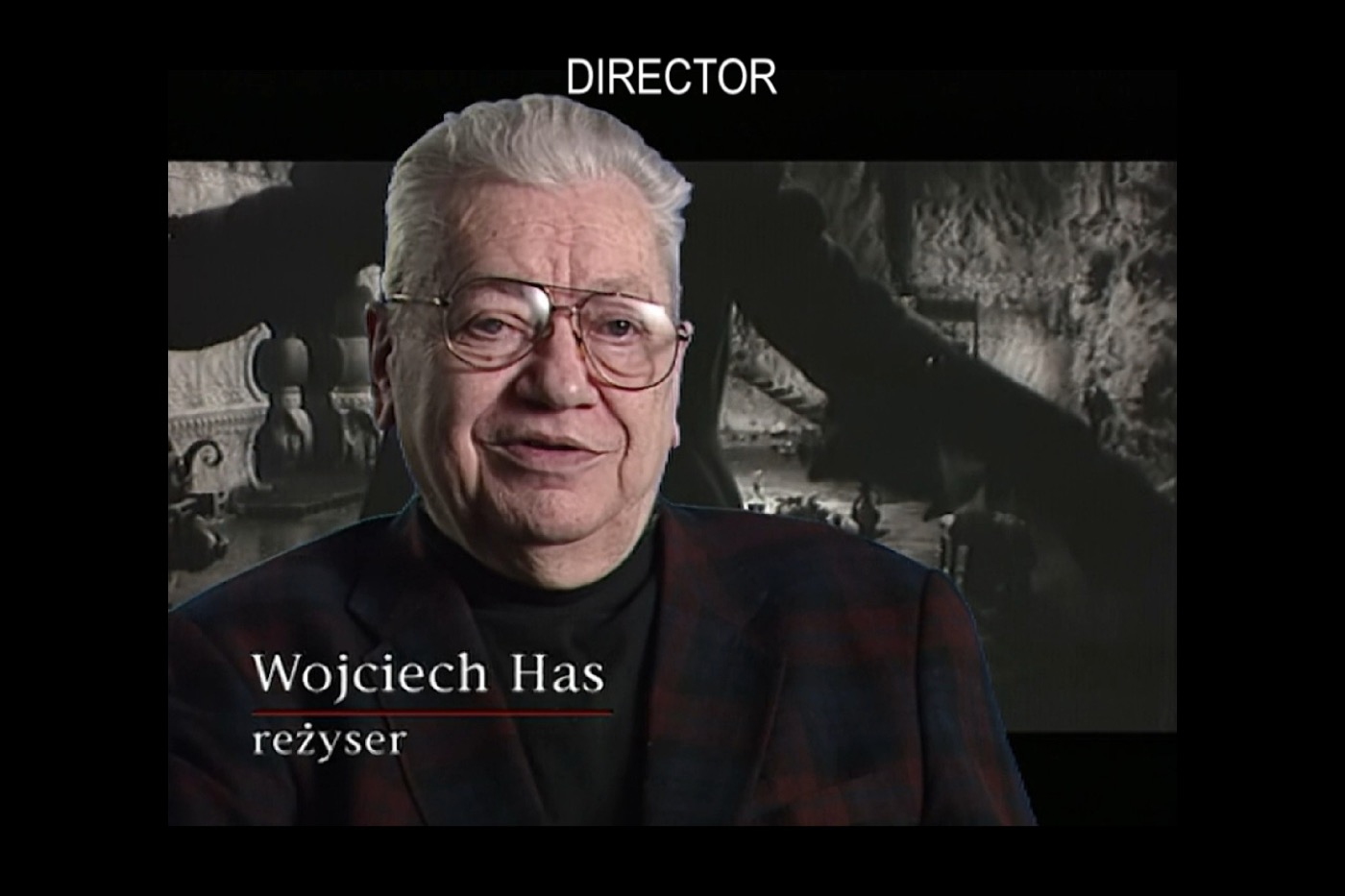
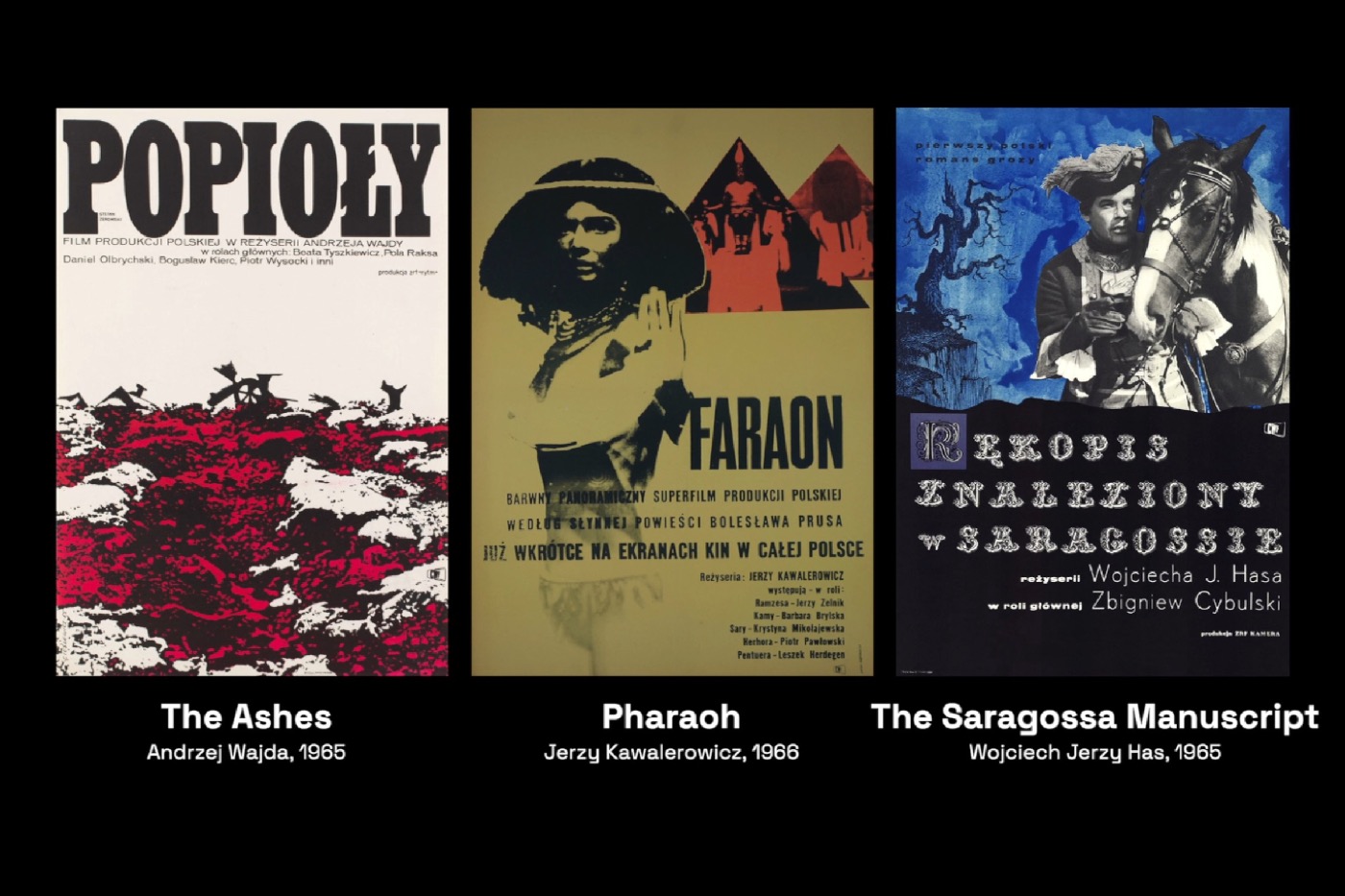
director: Wojciech Has.
writer: Tadeusz Kwiatkowski (based on the novel ‘The Manuscript Found in Saragossa’ by Count Jan Potocki).
starring: Zbigniew Cybulski, Iga Cembrzynska, Elzbieta Czyzewska, Gustaw Holoubek, Stanislaw Igar, Joanna Jedryka, Janusz Klosinski, Bogumil Kobiela, Zdzislaw Maklakiewicz, Leon Niemczyk & Adam Pawlikowski.