LA BOLA NEGRA (2026)
Spanning 1932, 1937, and 2017, three men confront the ghosts of a Spain torn between desire and repression.

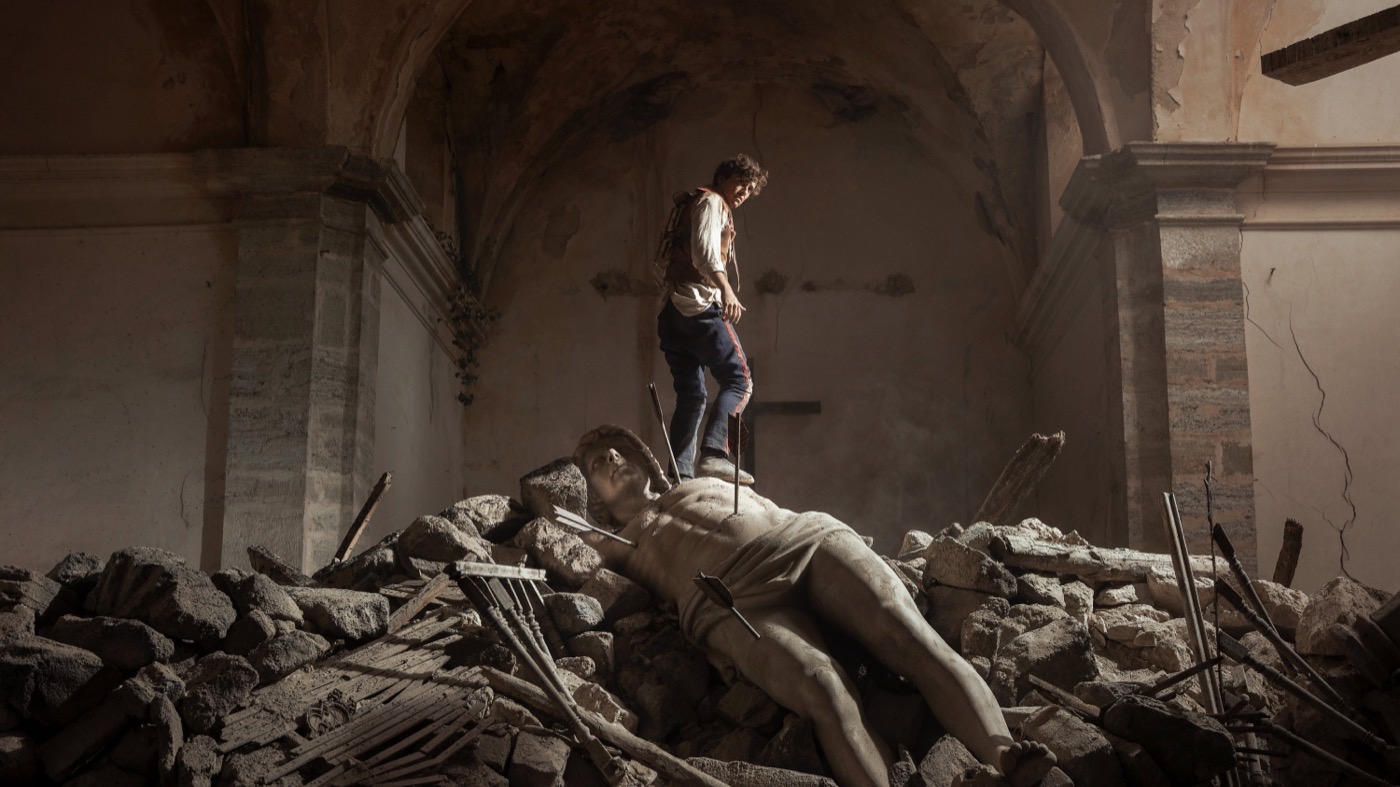

Spanning 1932, 1937, and 2017, three men confront the ghosts of a Spain torn between desire and repression.
The poet and playwright Federico García Lorca, in effect, predicted his own death in 1929. That year, he published a poem titled The Fable and Round of the Three Friends, a parable about three Spanish citizens erased by the very institutions that turned against them. When the Spanish Civil War broke out in 1936, Lorca was assassinated by Francoist forces because of his homosexuality and support for the Republicans, who defended democracy. In the aftermath of the Franco regime, Lorca’s body remains undiscovered. The continuing search was, indeed, prophesied in The Fable and Round, where Lorca wrote: ‘I understood they had murdered me. / They searched the cafés and the graveyards and churches […] / Still, they could not find me.’
Among the incomplete works Lorca left behind is a play called La bola negra / The Black Ball, of which only four pages survive. The rest has never been found, but Spanish filmmakers Javier Calvo and Javier Ambrossi, known as Los Javis, have attempted to reinterpret the play within the broader context of queer Spanish history. Echoes of films such as The Hours (2002) abound in their ambitious adaptation and expansion of Lorca’s play, also titled La bola negra. Its ambition spans generations, one of its defining traits.
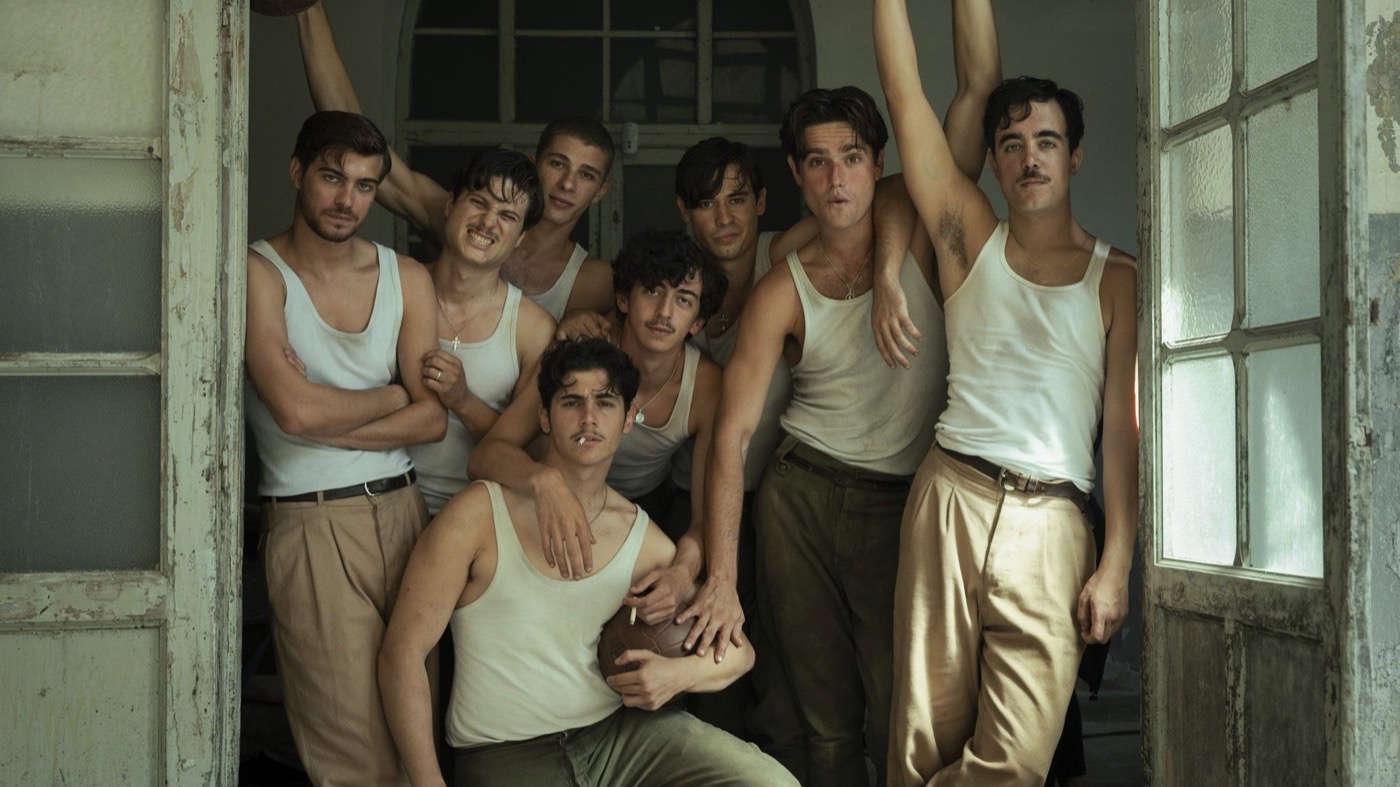
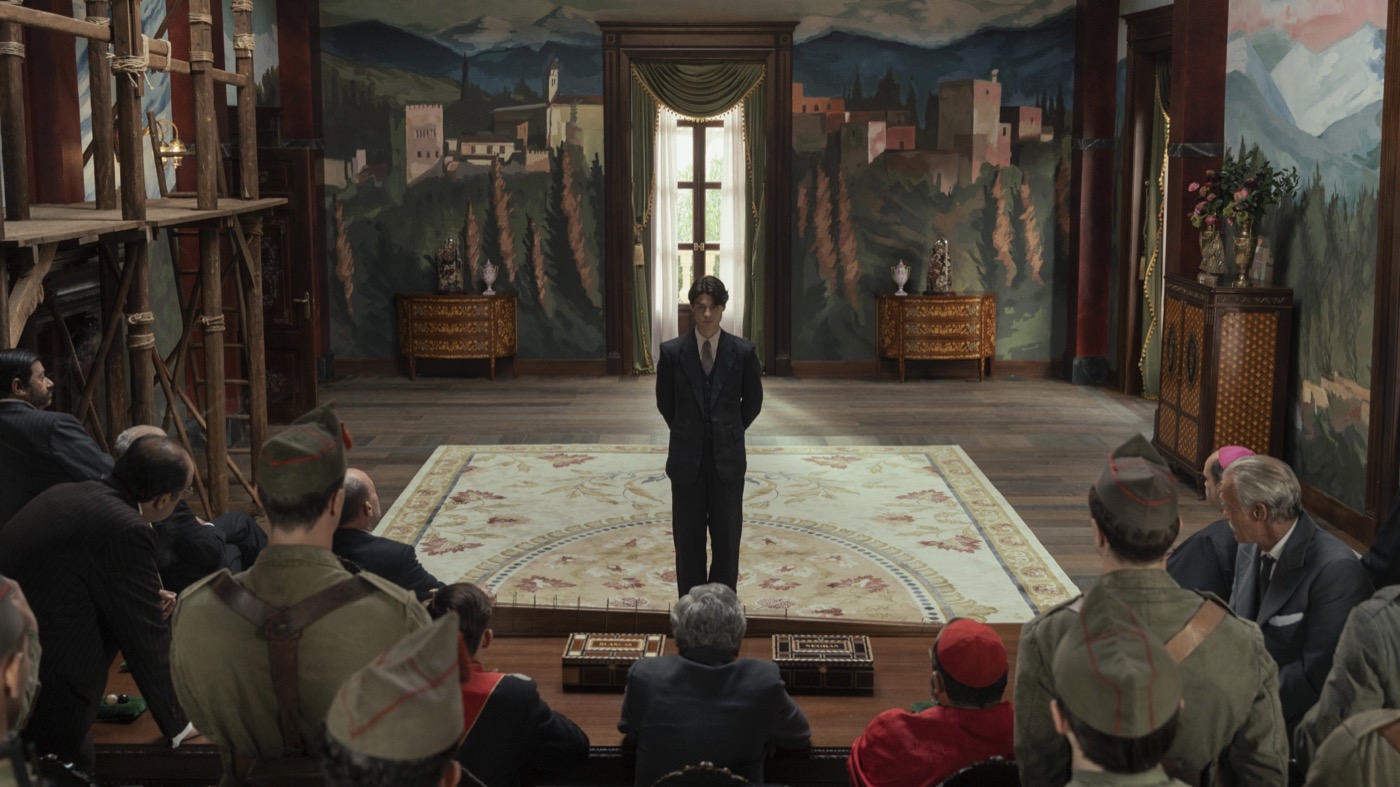
The first narrative thread, set in 1932, follows a young man named Carlos (Milo Quifes), who hopes to join an upper-class social club in Granada, known as a casino. The club is due to vote on his admission. Members cast white balls for acceptance and black ones for rejection, and they decisively give Carlos a plurality of black balls. They’re troubled by rumours that he’s homosexual. Carlos’s father, Vicente (Antonio de la Torre), advises him to deny it, forcing Carlos to confront a major moral reckoning over his sexuality and identity.
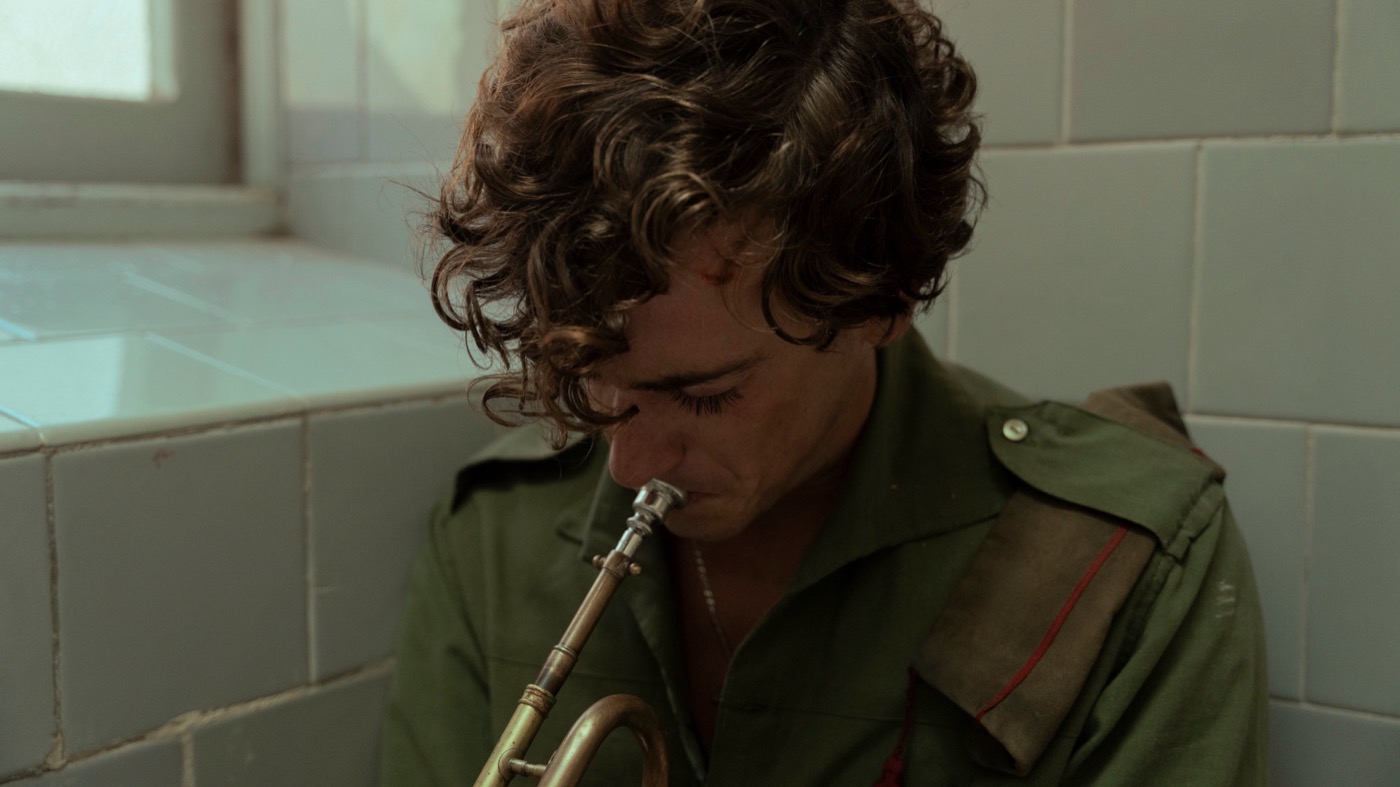
Five years later, in 1937, Sebastián (Guitarricadelafuente) plays trumpet for a village sympathetic to the fascists. When Italian aircraft attack, his mother is killed in the crossfire. Sebastián eventually enlists in the fascist army and is assigned to guard a prisoner, Rafael Rodríguez Rapún (Miguel Bernardeau), an actor in Lorca’s theatre troupe and Lorca’s lover. The two begin as adversaries, but Sebastián’s desire for Rafael grows, and they become close even as Rafael’s execution looms. Further ahead, in 2017, we meet Alberto (Carlos González), a struggling playwright and researcher. After his grandfather dies, Alberto begins to connect with the two earlier timelines and discovers the weight of the inheritance he has been left with.
Calvo and Ambrossi shared this year’s ‘Best Director’ award at the Cannes Film Festival, tying with Paweł Pawlikowski for Fatherland (2026). It’s not hard to see why they received such a specific distinction. La bola negra is audacious in the way it navigates an ambitious story with stylistic control, while keeping its narrative threads clear and easy to follow.
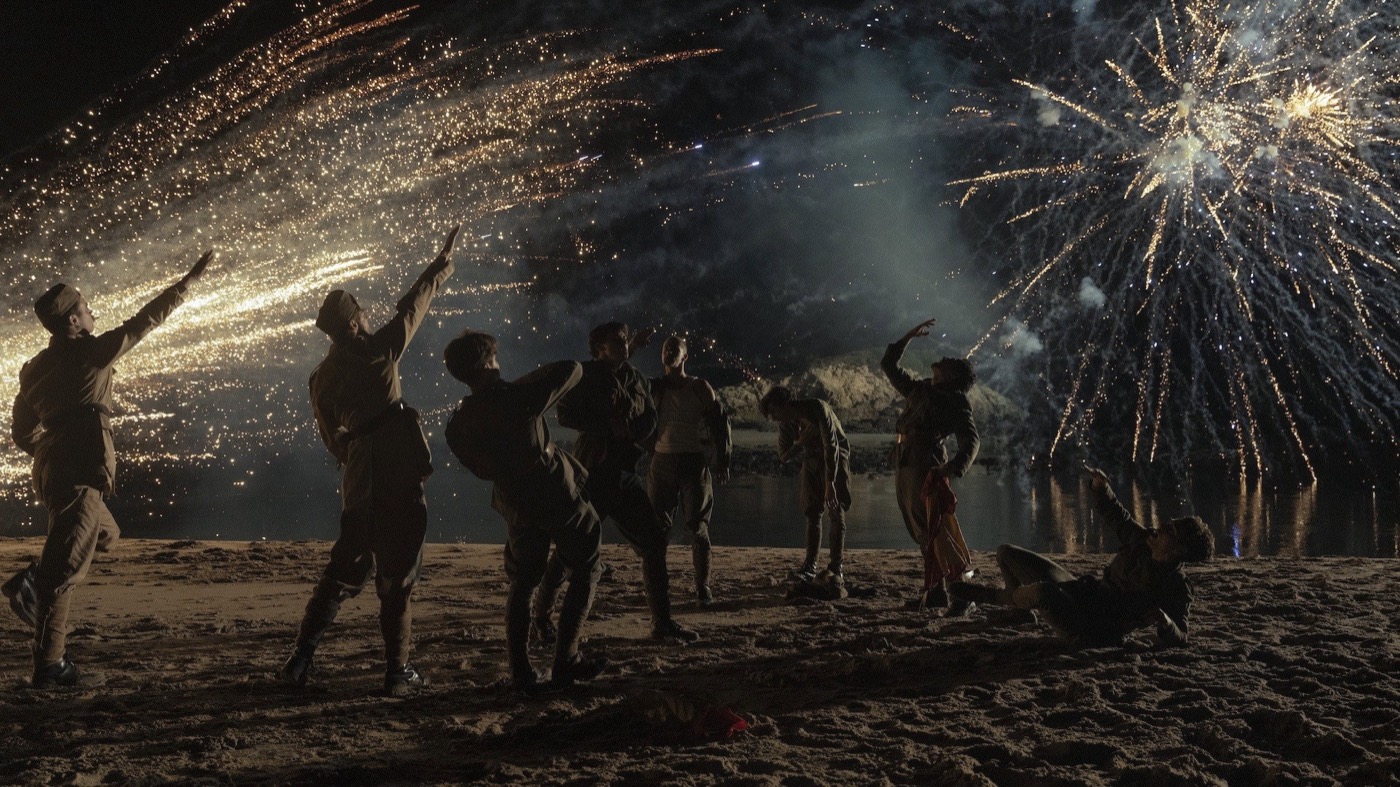
Los Javis root each thread in a different set of discernible institutions. In 1932, Carlos navigates Granada’s snobbish, ornate high-society buildings. In 1937, Sebastián inhabits fascist prison camps and military establishments. In 2017, Alberto undertakes a globe-spanning, almost archaeological research journey. The story’s cohesion derives further from the fact that all three protagonists are gay and at different stages of reckoning with their sexuality. The differences and similarities between them lie at the heart of the film’s themes.
In both threads set in the 1930s, repression runs deep. Carlos must submit to it if he wants a place in Granada’s high society; Sebastián needs it to survive in a military that would kill him if his homosexuality were discovered. For Alberto in 2017, repression takes a different form, both for his identity and the nation that surrounds him. He’s in a committed relationship and surrounded by queer communities, yet still feels rootless.
The silence Alberto encounters comes from modern Spanish society’s unwillingness even to discuss the consequences of the Franco regime. It’s embodied most clearly by his hostile mother, Teresa (Lola Dueñas), who bitterly opposes his attempt to uncover his grandfather’s inheritance. As the story unfolds, it becomes clear how entangled their family was in the Civil War and the Franco dictatorship. This is one of La bola negra’s most daring elements: the film brings a culture lost to fascism back into view and insists on a conversation that should have begun decades ago.
Two of the film’s most noteworthy cameos are Penélope Cruz as Nené Romero, a stage performer who puts on a vibrant musical show for Sebastián’s troop, and Glenn Close as Isabelle Durand, a historian who archives Lorca’s work and whom Alberto seeks out. Cruz’s Nené offers a vision of gender fluidity as imagination, while Close’s Isabelle delivers a monologue that firmly connects the three timelines—a revelation best experienced without spoilers. Yet these revelations also expose the limits of the film’s imagination.
Sebastián is the most dubious link in the story. He occupies the most screen time, yet never becomes the subject of real moral interrogation. At times, it feels as though Los Javis absolve him of participating in the fascist military—yes, an act largely driven by survival—by continually emphasising his sexuality and his repression. Guitarricadelafuente, a renowned musician making his acting debut, also struggles to convey the weight of Sebastián’s desire for Rafael—which cinematographer Gris Jordana frames through intimate close-ups of Sebastián’s gaze. What Sebastián ultimately commits at the end of the 1937 story, and what we learn he did after the regime fell, carries a weight that can’t be brushed aside simply by understanding how his sexuality set him against his role in the regime.
For all its emphasis on preserving queer Spanish history, La bola negra also offers up a limited vision of queer progress. That’s largely because we learn surprisingly little about Alberto’s life, even as we understand how he lives his life openly. His work as a researcher and playwright is reduced to passing lines of dialogue and newspaper clippings, while his relationship with his boyfriend, Juan Pablo (Julio Torres), appears mostly in FaceTime calls while Alberto is researching abroad.
What really defines Alberto’s life as a modern queer man is his quest to uncover the past. As a result, we get little sense of his present-day experience as a gay man, or of much connection to the liberating gender expression Nené espouses. Because the 2017 thread presents a more normative version of gay life as a result, the eighty years between Alberto and Sebastián feel less and less like an epochal, if tense, shift towards acceptance.
What La bola negra lacks is a more tangible sense of ideology. Its boldest gesture is to recontextualise Federico García Lorca: to imagine a future for his legacy beyond what we know of his death, and to show how work lost to censorship can still have an impact in a troubled modern era. But the film’s understanding of Lorca seems rooted more in his identity as a gay poet than in his socialism and anti-fascism, something that winds up extending into the rest of the film.
In Los Javis’ vision, queer history is worth celebrating for its own sake, a force that endures despite attempts to eradicate it. It’s a deeply noble intention, but the film lacks texture because it treats sexuality as an all-encompassing force, rather than something that intersects in complex ways with belief systems and different ways of living and expressing oneself. As a result, La bola negra loses sight of complications that could make its instinct to preserve the past even more powerful. It also fails to grasp the contradictions that would help us see clearly what it means to resist oppression today.
SPAIN • FRANCE | 2026 | 160 MINUTES | 1.85:1 | COLOUR • BLACK & WHITE | SPANISH • ENGLISH • ITALIAN

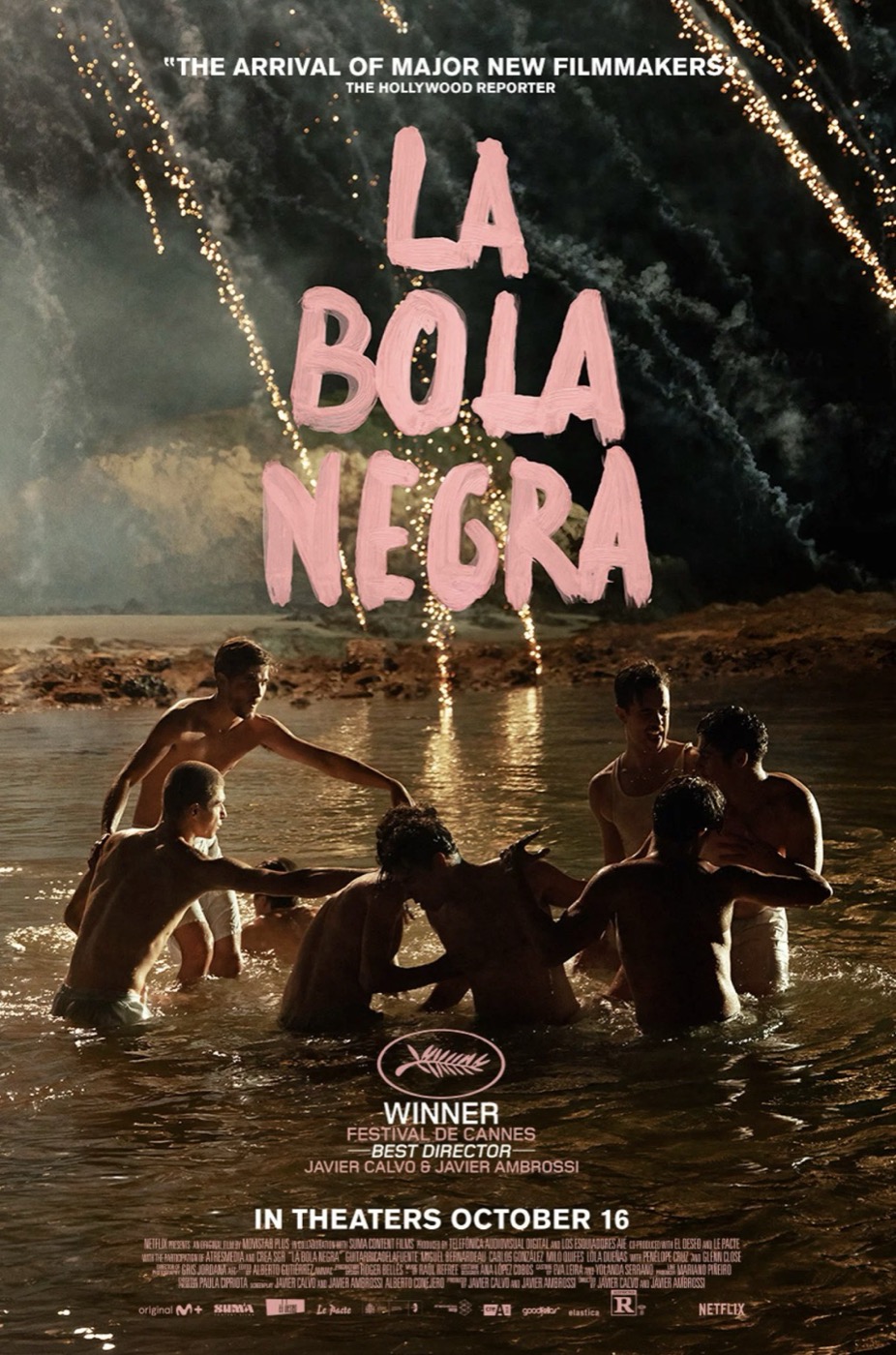
directors: Javier Calvo & Javier Ambrossi.
writers: Javier Calvo, Javier Ambrossi & Alberto Conojero (based on ‘La bola negra’ by Federico García Lorca & ‘La piedra oscura’ by Alberto Conojero).
starring: Guitarricadelafuente, Carlos González, Miguel Bernardeau, Milo Quifes, Lola Dueñas, Penélope Cruz & Glenn Close.


