PUNISHMENT PARK (1971)
A pseudo-documentary purporting to be media coverage of a film crew of a team of soldiers escorting a group of hippies, rebellious and dissident types across the desert.

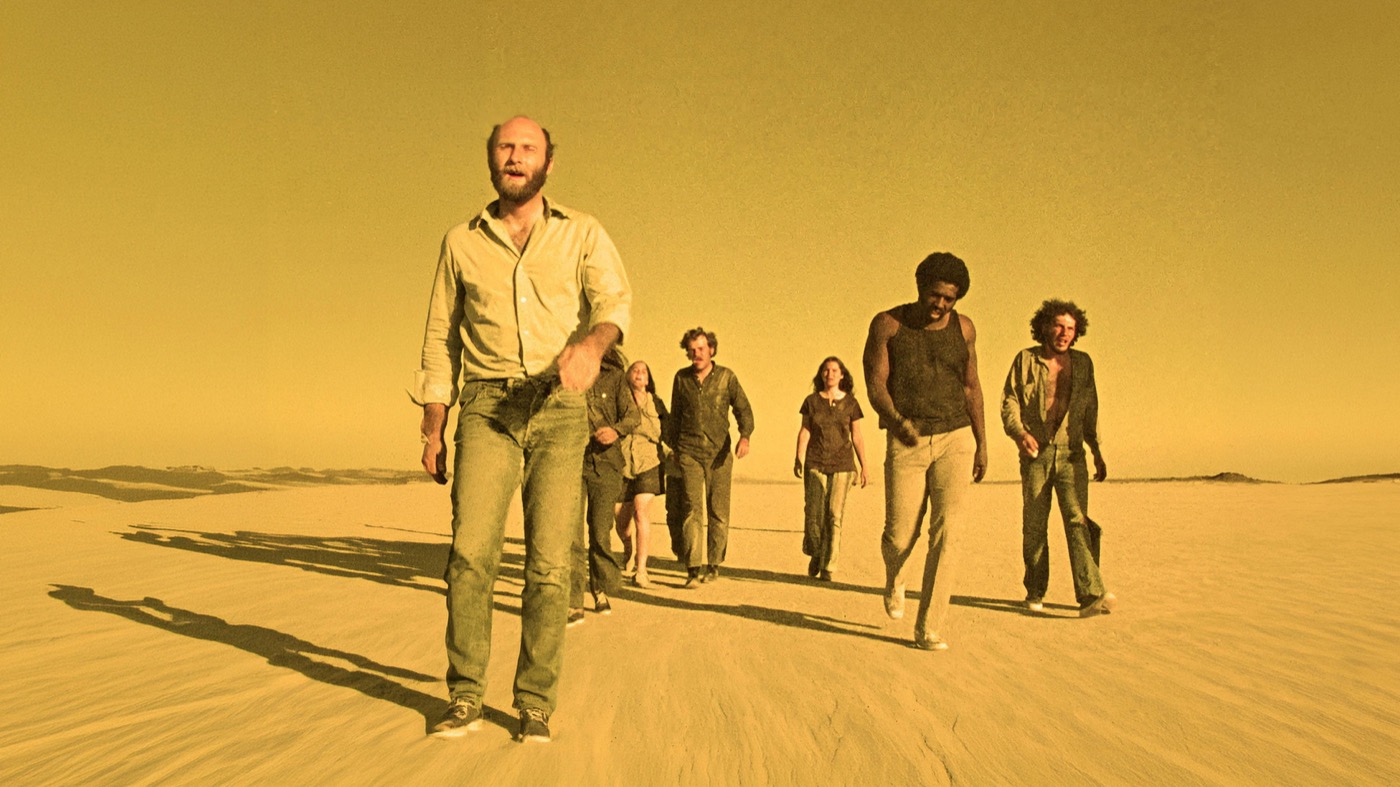

A pseudo-documentary purporting to be media coverage of a film crew of a team of soldiers escorting a group of hippies, rebellious and dissident types across the desert.
Long before Charlie Brooker’s hit series Black Mirror imagined distorted, nightmarish versions of reality, Peter Watkins’s Punishment Park did much the same. More formally daring and accomplished than anything Black Mirrorhas attempted, this 1971 pseudo-documentary expertly blends fiction and reality. Watkins’s commitment to form is unwavering.
The characters in Punishment Park feel authentic. None immediately stands out as a protagonist or overarching villain. They’re ordinary people caught up in a bizarre experiment that makes them extraordinary. The banality of evil and the price of civil disobedience are on full display in this fiery indictment of the repression of civil liberties. In the film’s fictional version of the US government in 1970, while the Vietnam War still rages overseas, protesters face a horrifying dilemma: accept a drastically increased prison sentence or endure four days of torment in the fictional ‘punishment park’.
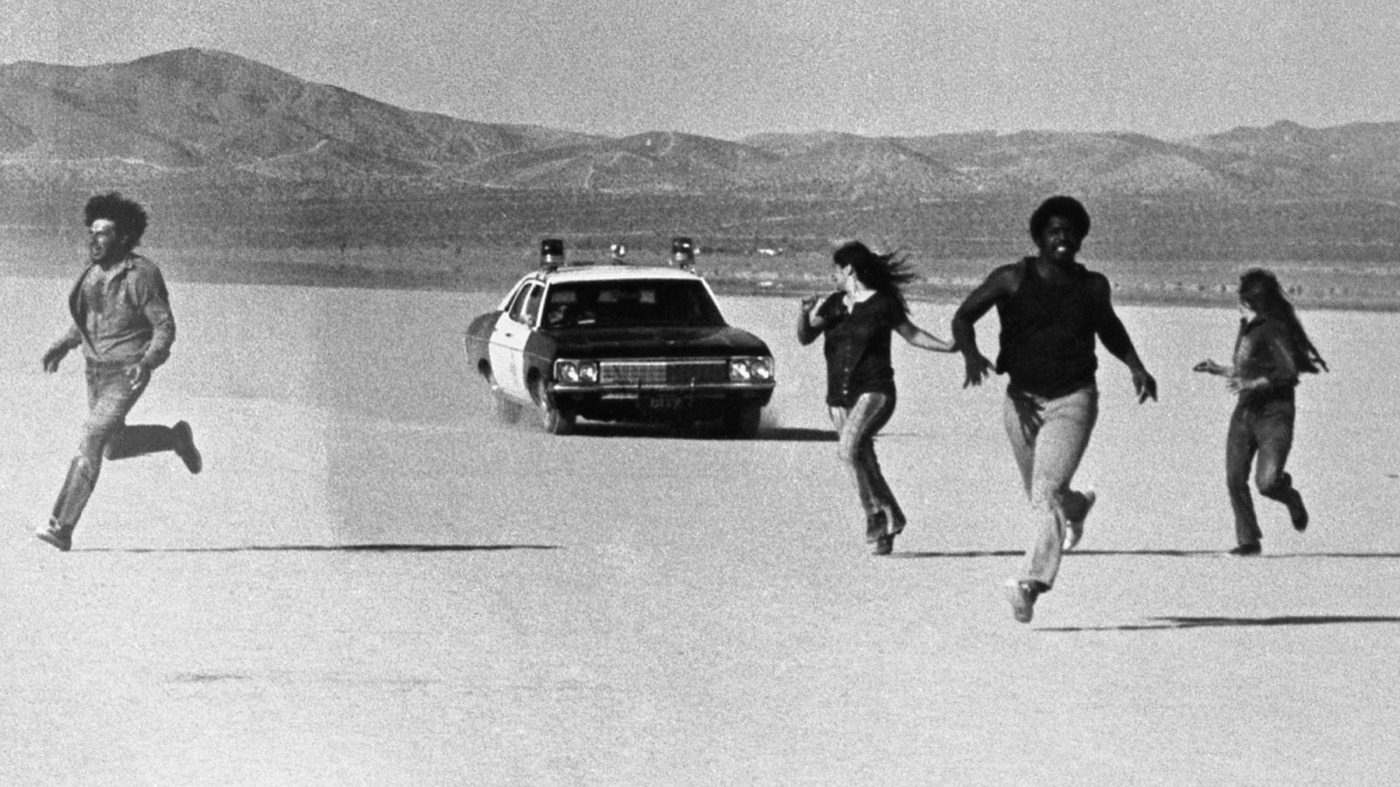
The dozen or so people in Punishment Park choose the latter and face excruciating days in a barren wasteland. First, they’re interrogated and sentenced by an emergency tribunal made up of community members. Among them are a blue-collar worker disgusted by laziness and left-wing economic values, and a stay-at-home mother whose greatest nemesis is the sexual revolution. Then the activists, conscientious objectors and protesters must walk 53 miles across the California desert.
If they reach an American flag planted in the distance without being caught by the guards, they’ll be free to return to society. The guards begin hunting them after a two-hour head start. If the prisoners fail, their original sentences will be reinstated and they’ll languish in federal prison. In this world, writing songs with lyrics that incite revolution can earn you a sentence of five to seven years. More radical acts carry sentences of up to 21 years.
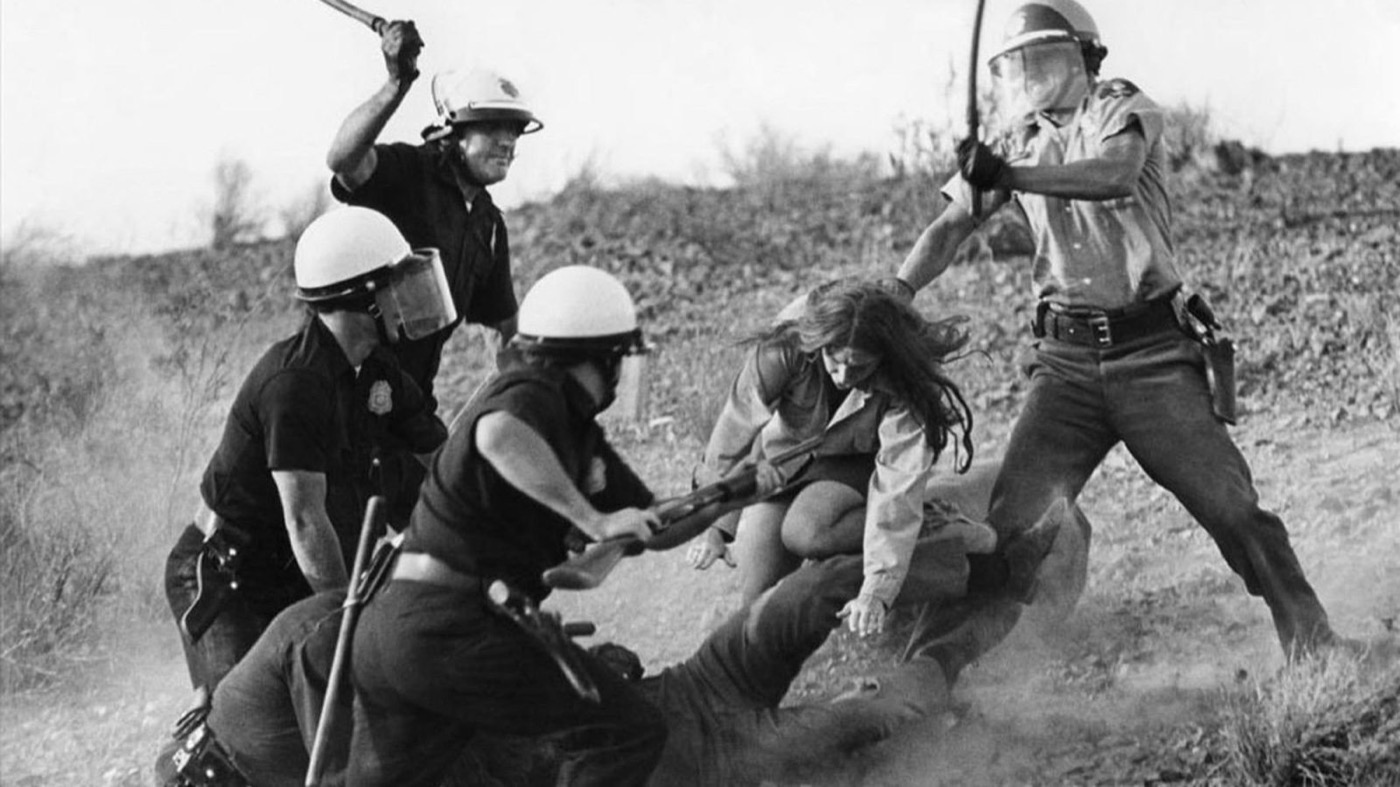
The group naturally opt for the swift, brutal punishment of wandering through the desert without food or water. Before long, they’re deprived of hope, too. That loss is the final step in a cycle that began long before their imprisonment, when the young activists first started losing faith amid political injustices at home and abroad.
Voice-over narration, delivered in the style of television and radio news reports, tells viewers from the outset that this is an intensified portrayal of wartime anxiety. President Richard Nixon has declared a state of emergency, giving him the power to authorise these sham court proceedings. The world has been drained of light, and in the beady eyes of the court’s officers and interrogators, there’s no room for mercy.
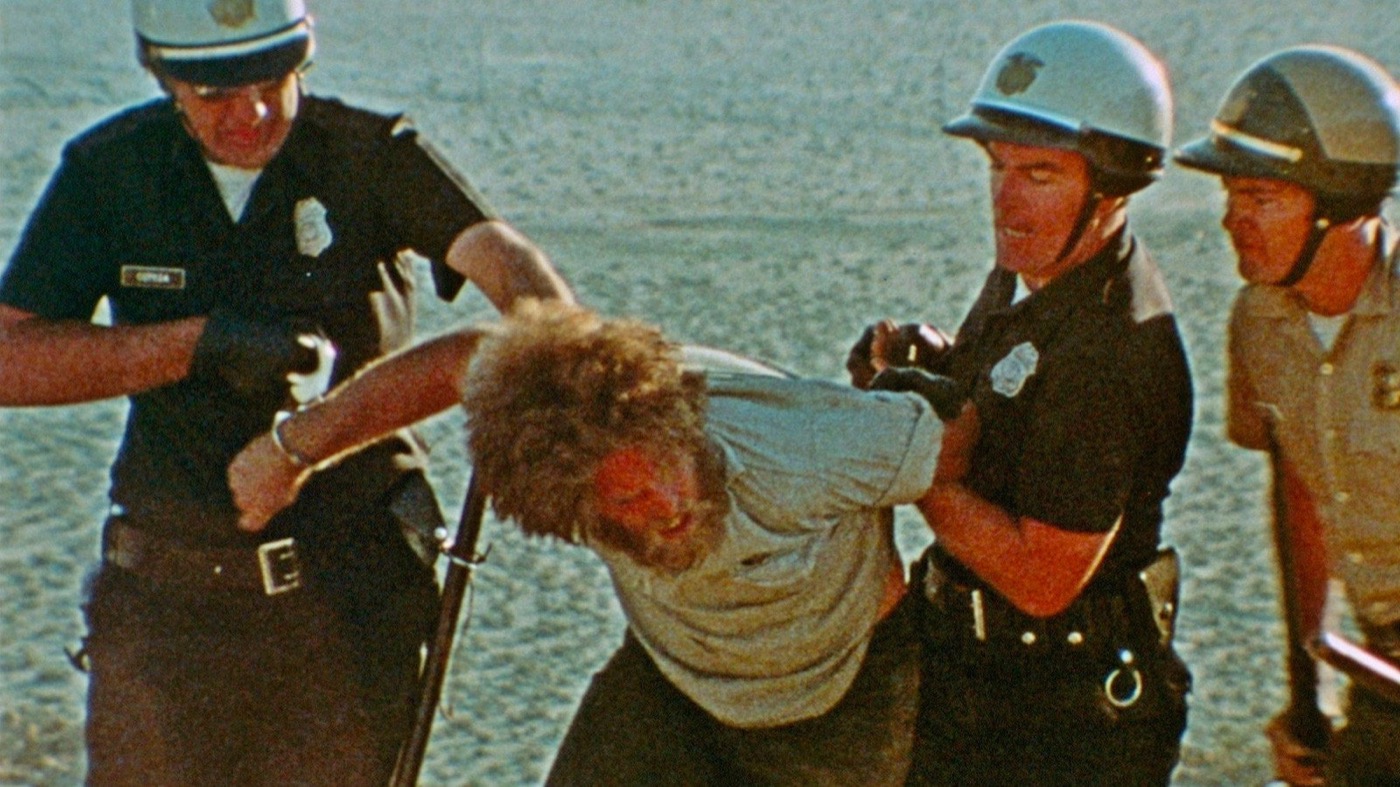
You feel the constant oppression in Punishment Park, but never directly. We learn little about the US beyond what the narration tells us and the tribunals show us. The film begins and ends in the desert. We can imagine the young prisoners being brought there after they were forcibly removed from their homes by plain-clothes officers who refused to identify themselves to anyone who asked. The film’s parallels with ICE officers’ expanded powers—and the resulting repression of civilians’ rights—make for a particularly depressing watch. But you don’t need to draw on the present day or consider how the film’s pointed message still resonates to feel for these characters.
Nor do viewers need to see a kidnapping to imagine how these young people ended up here. The mock tribunal, conducted shamelessly by the tyrants who impose it, makes that clearer than any scene or voice-over could. Once the prisoners escape their chains and drag their tired, thirsty bodies through the desert, the sham nature of the exercise quickly becomes obvious.
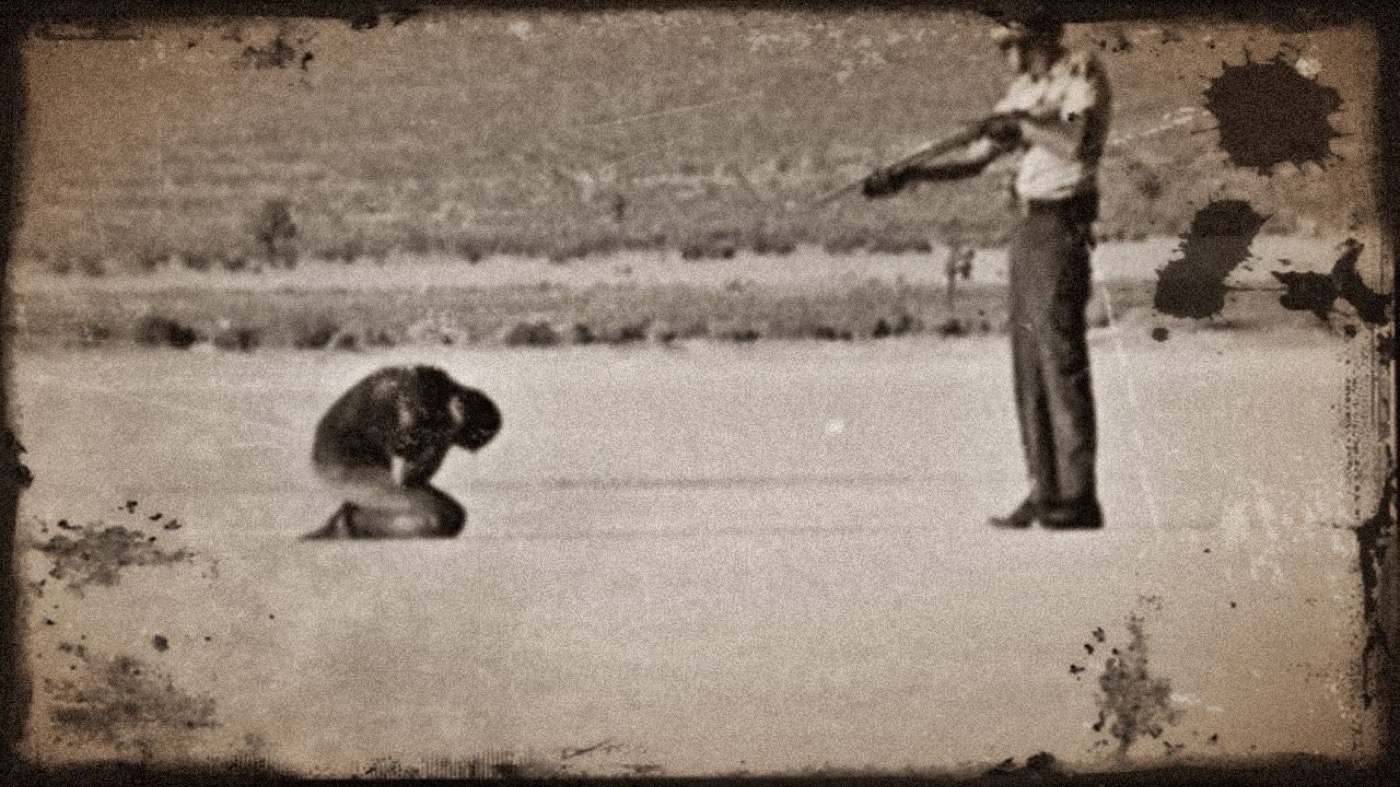
The oppressive heat bears down on the weary protesters as harshly as the tribunal’s interrogators, the vindictive officers and even the President himself. The death knell of this reimagined United States has already sounded in the hastily arranged kangaroo court. Everything that follows simply hammers home the dire consequences. It doesn’t matter whether the characters are enclosed in a tent or ‘free’ outdoors: they can’t know true freedom. More than almost any other film, Punishment Park was made in the editing room. It builds towards its fiery conclusion by cutting between the prisoners dragging themselves through the desert and their attempts to defend themselves at the tribunals.
As a result, the film never stays with any one character for long, a creative choice that resists both boredom and deep immersion. If it had chosen three or four prisoners as protagonists, Punishment Park might have done more than simply rankle. Even a few meaningful conversations—more substantive than one-liners or scattered, confused arguments over what to do—could have helped inspire the fury the film continually seeks to provoke.
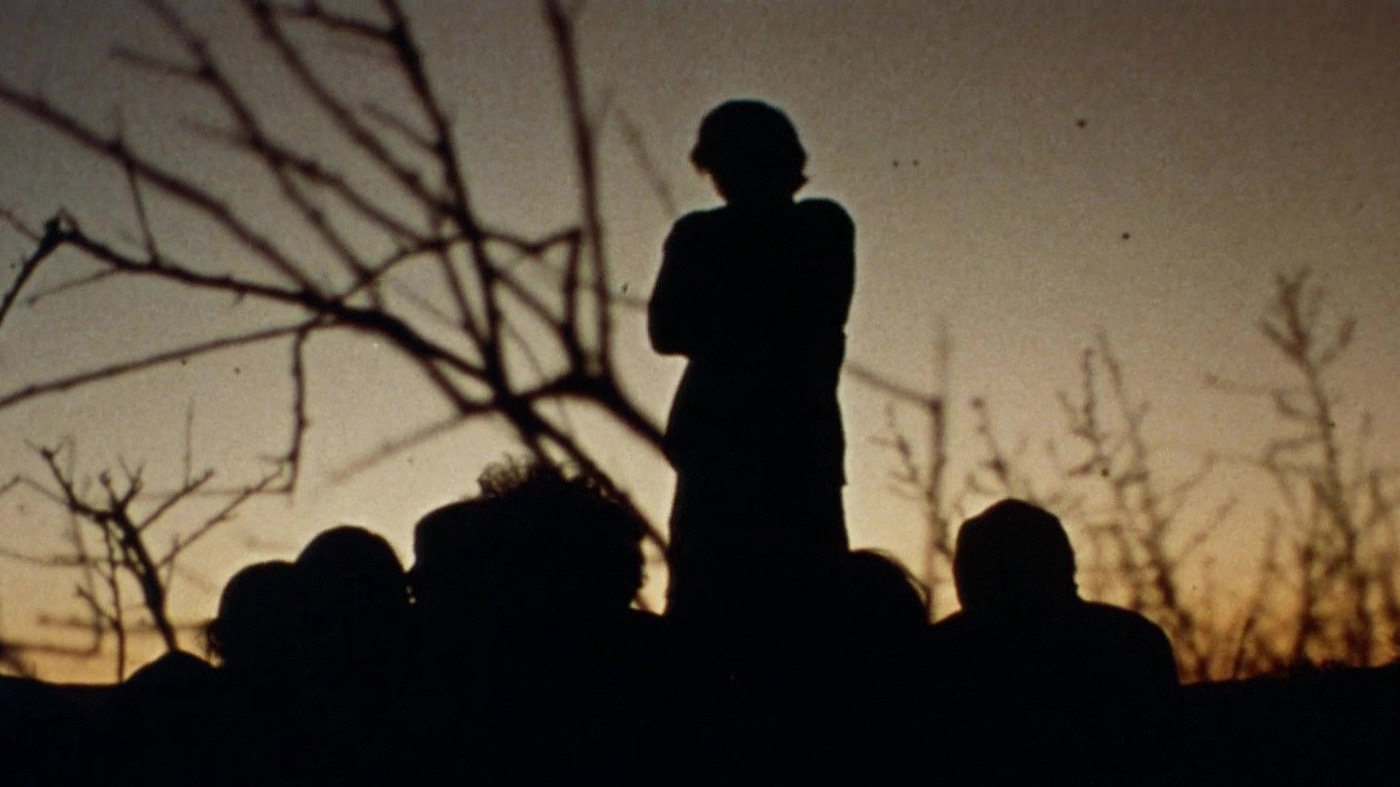
Watkins’s greatest strength here is how easily he draws us into this lived-in world, filmed just as you’d imagine a team of documentary-makers would capture this strange hunting game. He even gives the cameramen a plausible reason to be there: they’ve been hired to document the whole procedure. If it seems strange that such an open display of what amounts to torture would be sanctioned, that only underlines the administration’s brazenness. The same quality is evident in the bloodthirsty officers, eager to kill a prisoner by any means necessary—even when the prisoners have their hands raised in surrender. The actors’ portrayals of lost souls trapped in a broken system are just as remarkable as Watkins’s commitment to the format.
There are moments that will inflame viewers’ sense of justice, but Punishment Park doesn’t try to turn its officers or tribunal jurors into villains. They’re easy to hate, but their relative powerlessness is also apparent. Even when they wield enormous influence over the young activists’ lives, they can’t recognise, let alone appreciate, how much control they have in this sordid ordeal. It’s all so pathetically pointless: the moral hand-wringing, the dead-eyed brutality and the armed men operating with impunity and without a hint of shame.
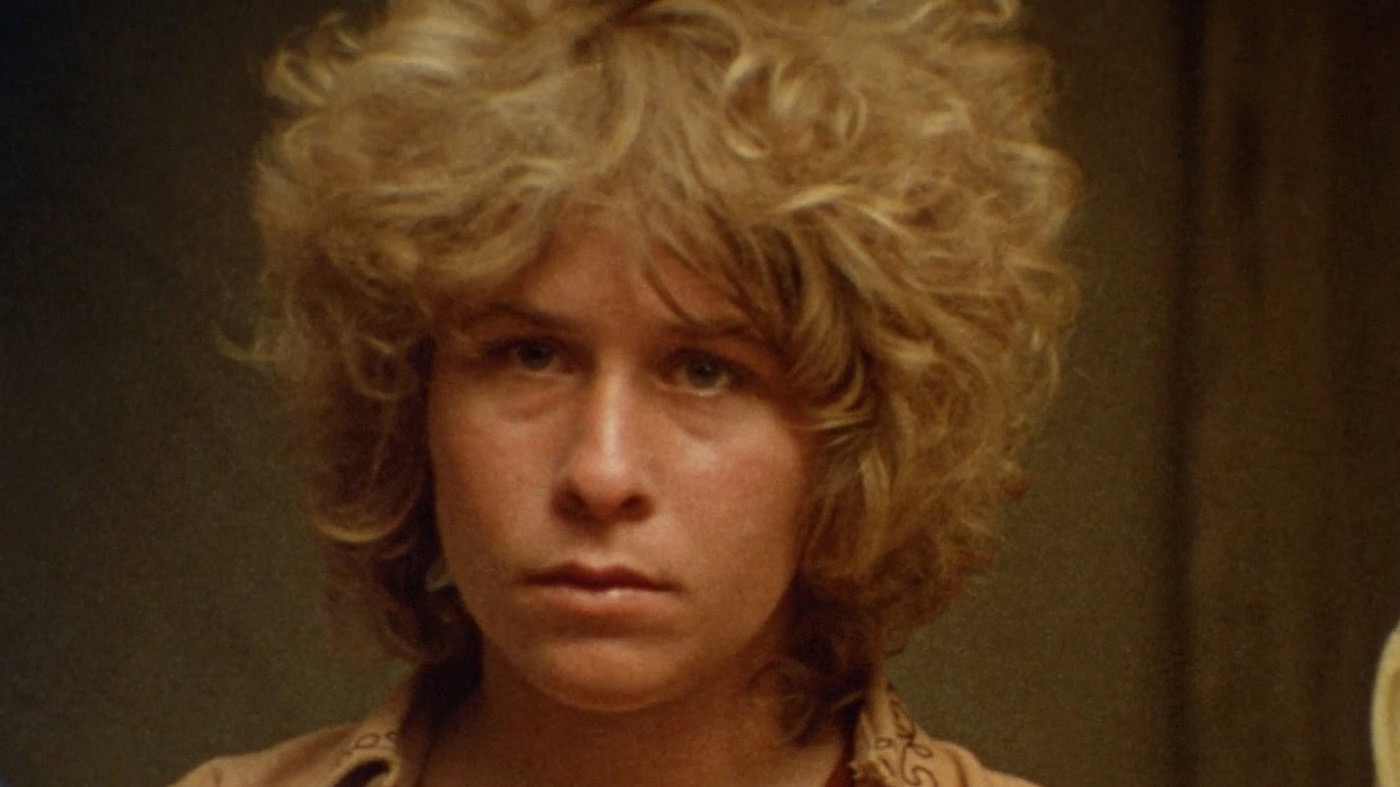
If the film could set aside its strict realism about this fictional experiment, even briefly, Punishment Park might be unforgettable. But without the emotional hook needed to draw viewers in and break their hearts, Watkins’s 1971 pseudo-documentary is fascinating and furious, but not as memorable as it should be. Characters could invite that deeper engagement, but Watkins refuses to depart from his formalism and elevate them to that status. Instead, they remain believably anguished subjects throughout.
Of course, the film’s prescience matters: both its distinctive political perspective and the way it pushed the boundaries of what a film could be. I didn’t have the opportunity to see Punishment Park in a cinema, though even that experience would pale in comparison with how boundary-pushing it must have seemed to audiences in 1971. Sadly, the film didn’t get a wide release; its fiery politics provoked a storm of fury that scuppered its chances. It failed to secure a North American distributor, despite its obvious potential for success.
Whether Punishment Park would have been praised or reviled, it was bound to start a conversation. But scathing reviews—many taking offence at a British filmmaker documenting a distinctly American crisis—ensured that it was practically dead on arrival after its premiere at the 1971 New York Film Festival. Yet, if only for its ability to provoke a strong reaction and spark discussion about its relevance, Punishment Park remains a film everyone should see. Its acting is surprisingly brilliant, largely delivered by performers who went on to have modest careers. It’s a marvel that the film was made at all in the 1970s, especially on a budget of just $95,000 and with so few crew members. More miraculous still, its palpable anger remains as urgent now as it was then.
USA UK | 1971 | 89 MINUTES | 1.37:1 | COLOUR | ENGLISH

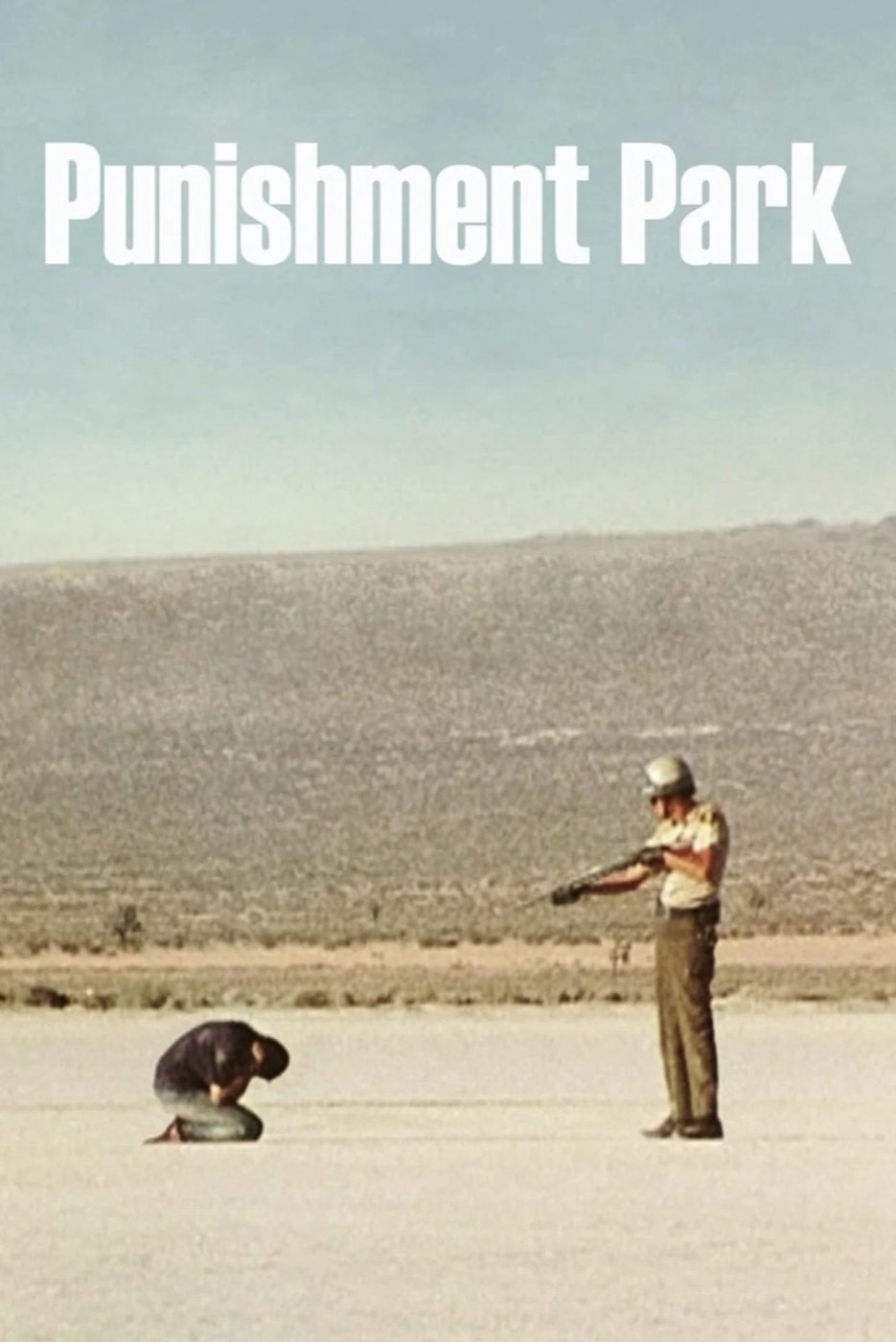
writer & director: Peter Watkins.
starring: Carmen Argenziano, Harold Beaulieu, Jim Bohan, Stan Armsted, Paul Alelyanes, Luke Johnson, Katherine Quittner & Scott Turner.


