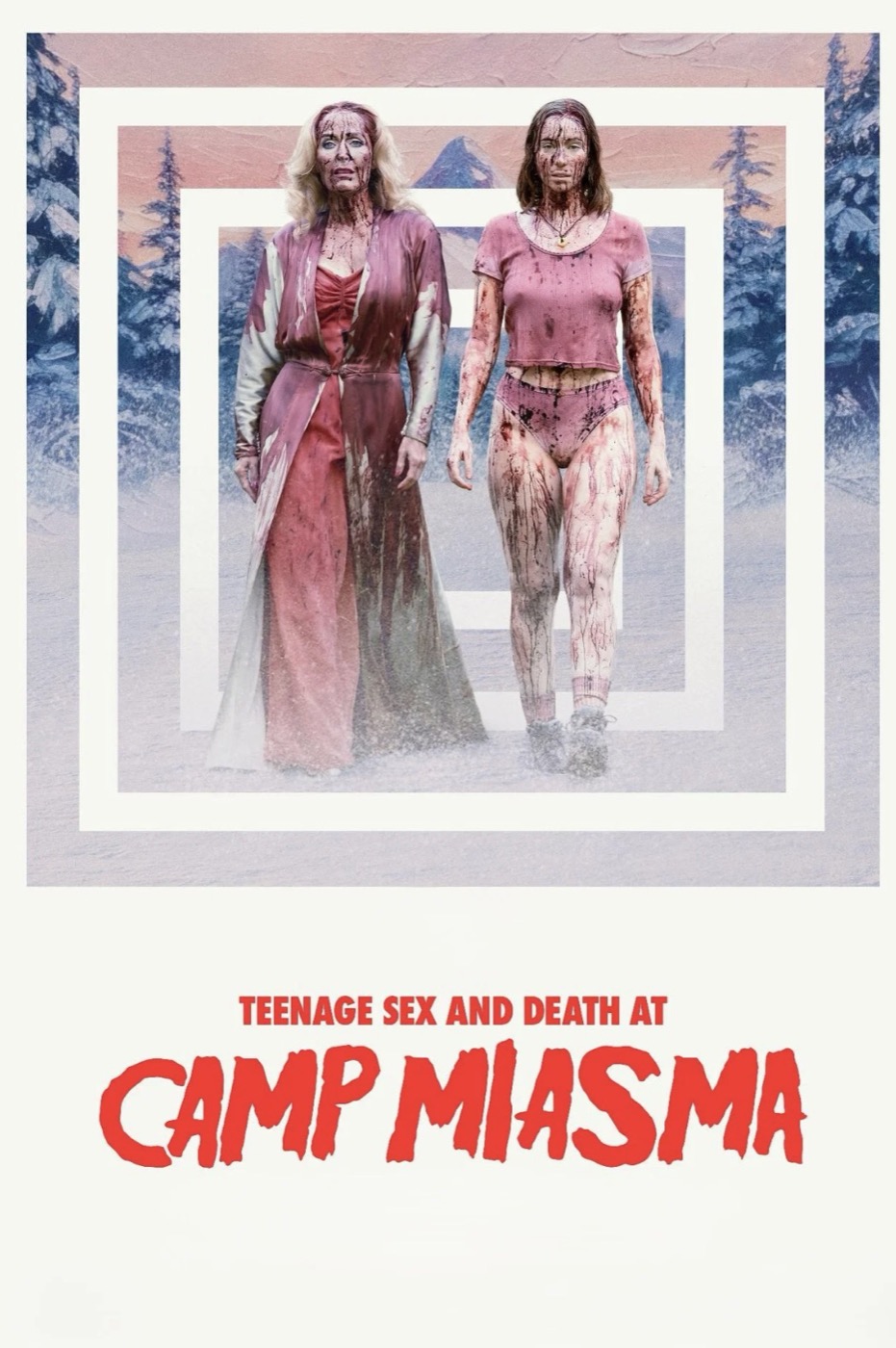
TEENAGE SEX AND DEATH AT CAMP MIASMA (2026)
A director making a slasher sequel becomes obsessed with casting the original film's 'final girl,' leading both women into psychological and sexual chaos.


A director making a slasher sequel becomes obsessed with casting the original film's 'final girl,' leading both women into psychological and sexual chaos.
Writer-director Jane Schoenbrun is clearly a talented filmmaker, whose own queer, non-binary journey has provided the jumping-off point for their work. Schoenbrun’s previous feature, I Saw the TV Glow (2024), was an allegorical tale about the dangers of repressed gender dysphoria and trans identity, wrapped up inside the story of two lonely high-school students who bond over a late-night, surreal 1990s show called The Pink Opaque. That movie proved to be a critical smash; however, its subject matter and deliberately oblique narrative style left it far removed from the mainstream crowd.
Schoenbrun’s latest, Teenage Sex and Death at Camp Miasma, whilst more accessible, may still prove too bizarre for some viewers. Personally, I found it—for the most part—a hugely enjoyable and fascinating piece of cinema. This is largely down to the chemistry of its two leads, alongside its sharp satirical take on the slasher genre and bold exploration of queerness, sexual awakening, and desire.
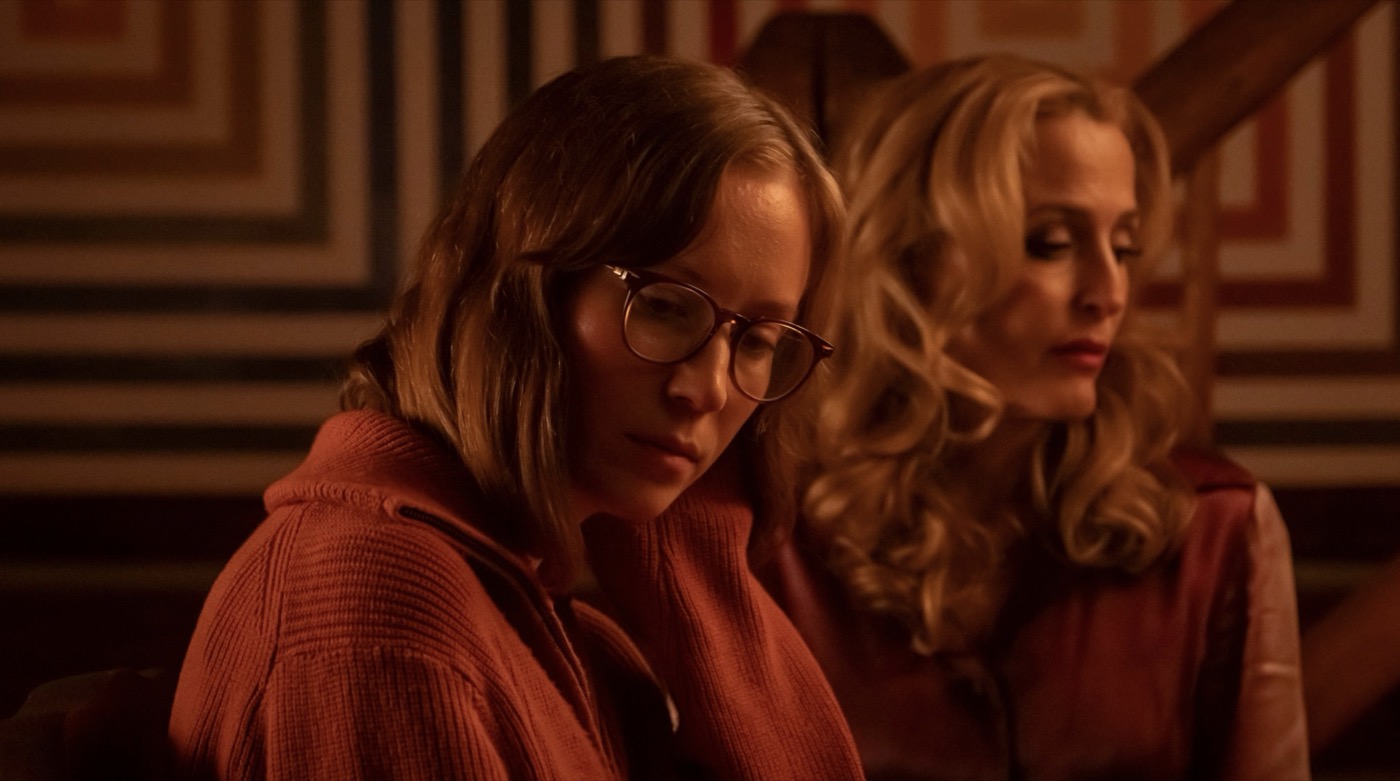
The title’s a nod to the Friday the 13th era: like those actual films, Camp Miasma was a big hit that was followed by a string of increasingly bad sequels. Decades later, a young queer director named Kris Williams (Hannah Einbinder) gets hired to reboot the franchise. Chasing inspiration, she heads to the remote camp where the original was shot and tracks down the reclusive Billy Presley (Gillian Anderson), the actress who played the original final girl. From there, it soon stops being a nostalgia trip. As Kris and Billy dig back into the old movie, the mythology of Camp Miasma starts bleeding into real life, whilst a strong relationship quickly develops between the pair.
Camp Miasma’s killer is first revealed to us through a brilliant introductory montage showing lurid videocassette covers and posters. Nestled amongst this fake-franchise ephemera sits a wind-up toy: a little version of Little Death.This murderous villain is the Miasma universe’s take on Jason Voorhees, wearing a camera-like box for a mask and a white plastic forensic-style jumpsuit, armed with a large spear.
Coming from the mind of Schoenbrun, it’s no accident that this odd-looking individual is called Little Death—in French, this translates as la petite mort, meaning a brief loss of consciousness post-orgasm. When Little Death slays their victims, glorious, over-the-top geysers of blood explode into the air.
This is obviously the director having fun at the expense of those 80s and 90s splatterfests. Yet later on, the killer’s origins are revealed: they were bullied and drowned for being gender-fluid. All of a sudden, this homage to past slashers becomes a clever stab—pun intended—at transfeminine-coded horror villains such as Psycho’s Norman Bates and Sleepaway Camp’s killer, Angela. Alongside those films, Schoenbrun’s self-confessed love of the genre is all too apparent, with touches of David Cronenberg’s Videodrome (1983) and Stanley Kubrick’s The Shining (1980) cleverly deployed along the way.
Much like Schoenbrun’s last film, this might not be everyone’s cup of tea. Admittedly, as much as I admired that film’s ambition, its pacing was too slow, and its indirect storytelling made it hard for me to connect emotionally. Here, despite complex themes of sexual and personal identity sitting alongside a deconstruction of the slasher genre, the movie plays out like a trippy fever dream that stays with you long after the credits roll.
Whereas the director’s previous film was shot through a prism of pain and rage, the focus here has switched to joyous discovery and pleasure—and its tone has shifted appropriately to something far more playful.
In lesser hands, this film could have been a complete disaster. However, Schoenbrun keeps all the script’s interesting thematic elements intact whilst having fun with horror fandom and remake culture—particularly in one hilarious scene involving a Zoom meeting that shows how narrow-minded studio execs clearly fail to understand Kris’s deeply personal concept.
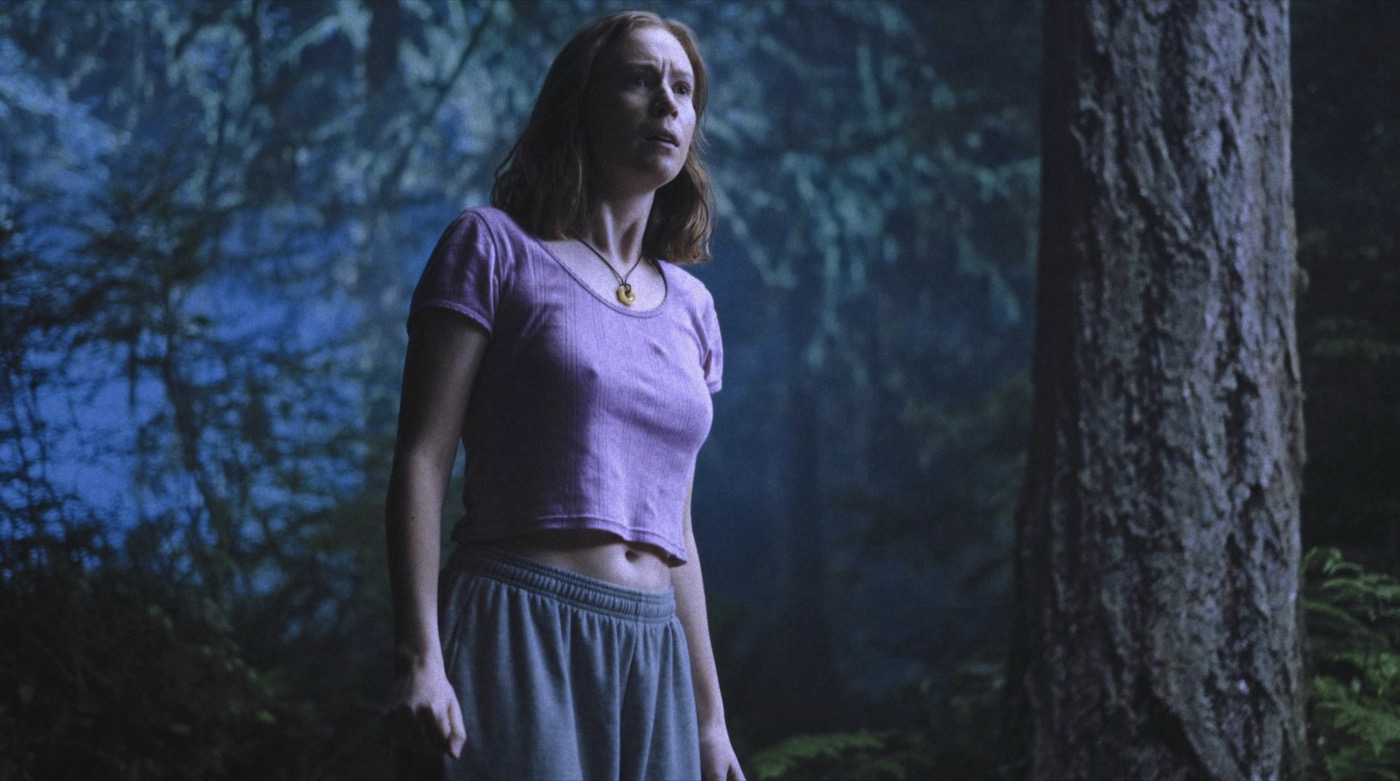
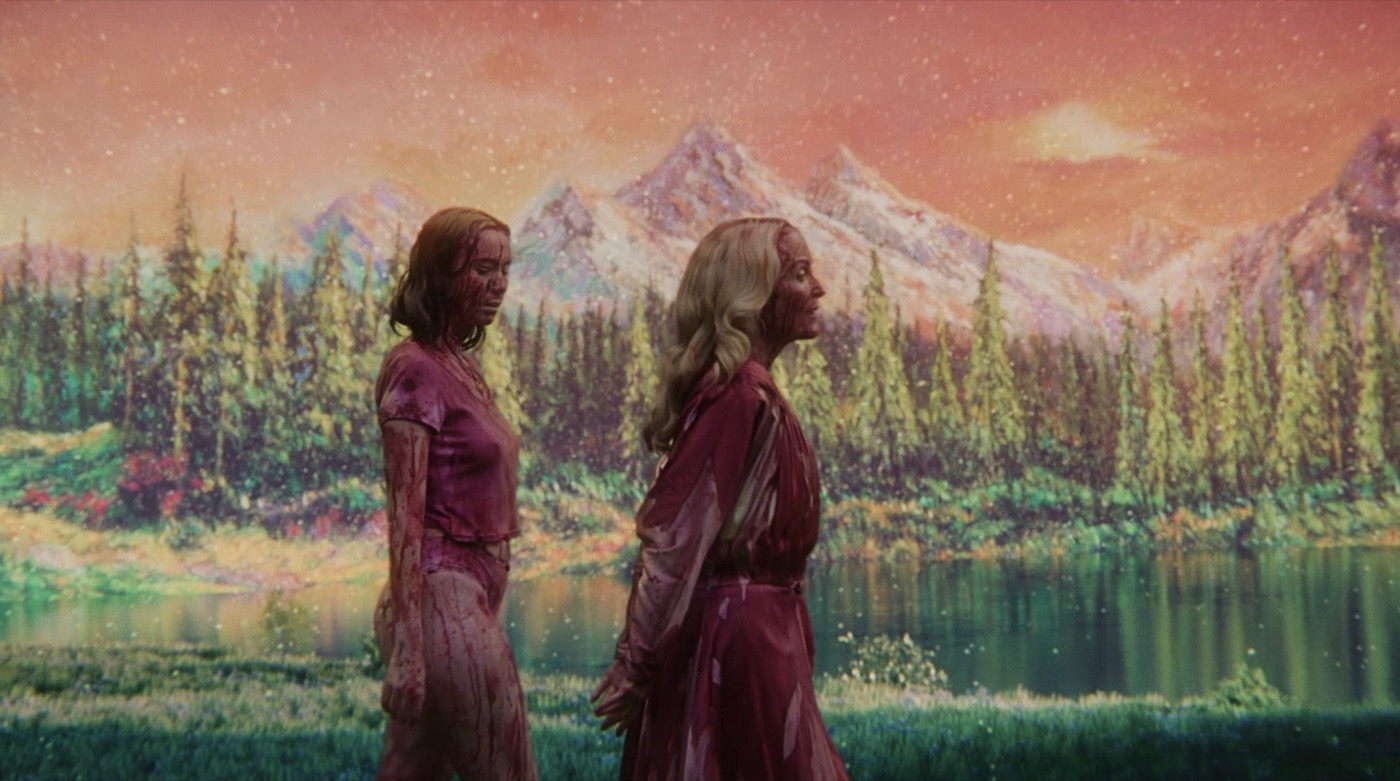
Visually, it’s stunning. Eric Yue’s 35mm cinematography gives everything a warm, dreamy glow. The woods and old camp buildings feel beautiful one second and genuinely off the next; meanwhile, a rough-around-the-edges, grainy aesthetic is used for the old Camp Miasma footage.
Whenever the film drops into the Little Death sequences, the camera gets properly off-kilter: drifting and wobbling, as though you’re watching from somewhere you shouldn’t be. Sound does a lot of heavy lifting, too. Little Death’s laboured breathing becomes its own character almost instantly, setting an eerie, suspense-filled atmosphere.
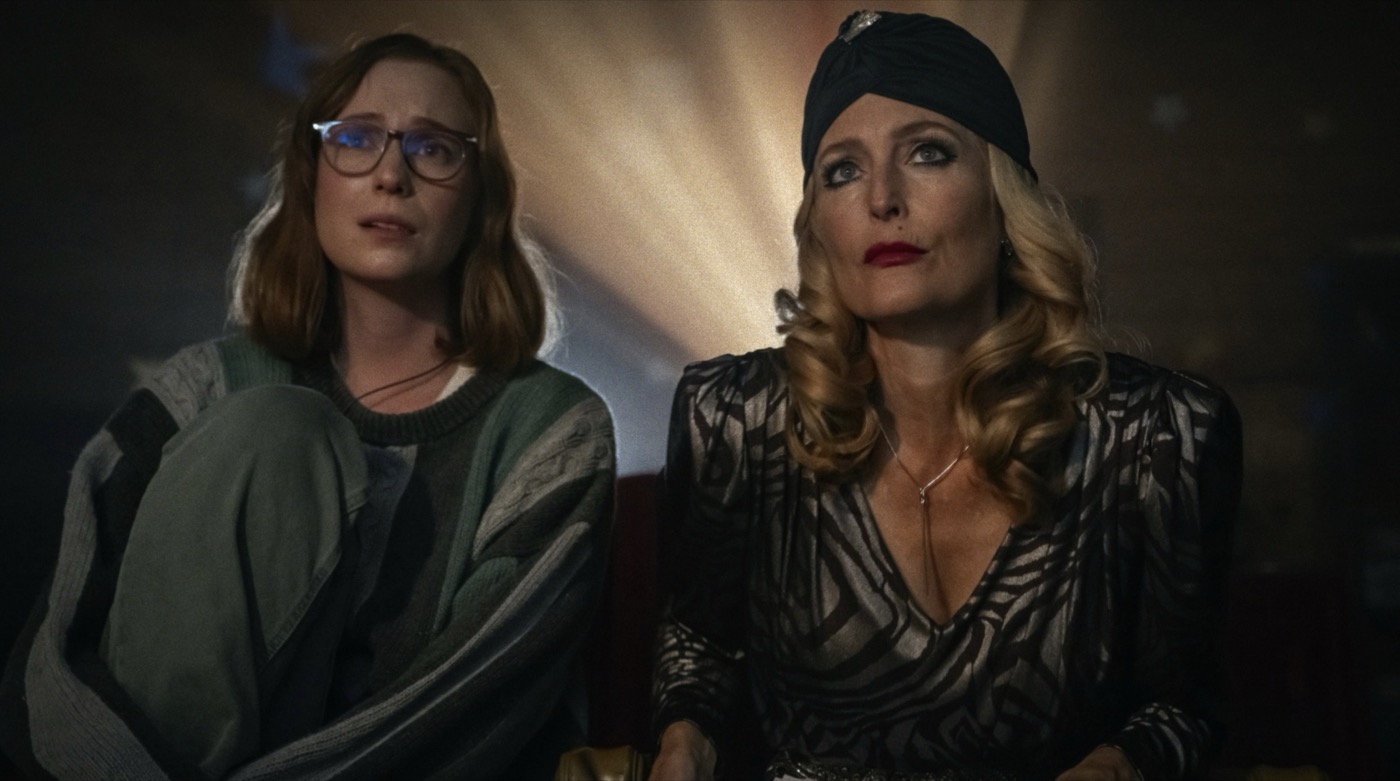
Throughout all the technical achievements, the performances by stars Gillian Anderson and Hannah Einbinder take this film to another level. Anderson’s in typically top form as Billie Presley. Directly channelling Gloria Swanson’s tragic, forgotten star Norma Desmond from Sunset Boulevard (1950), she moves across the screen wearing a velvet turban and full makeup with a hypnotic grace and power that commands attention from minute one.
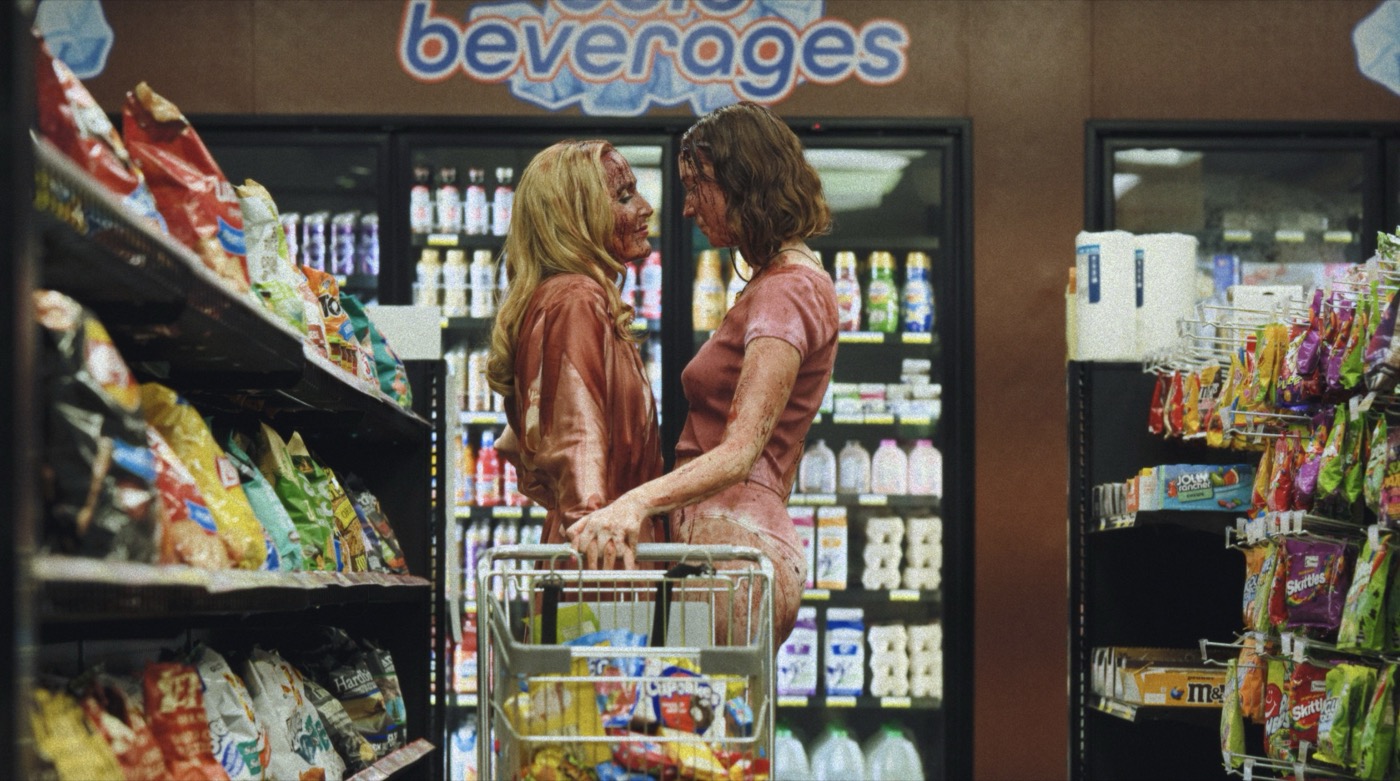
I hadn’t come across Einbinder’s previous work as a stand-up comedian or her starring role in HBO’s Hacks (2021-26), but she more than holds her own against Anderson’s powerhouse performance. Einbinder’s Kris effortlessly comes across as shy and lonely, yet through her clumsy awkwardness she remains funny and captivating. Together, the pair’s sizzling chemistry is entirely believable.
Ultimately, your enjoyment of this movie depends on your own sensibilities. If you’re looking for a straight-up, entertaining horror-thriller, you’ll come away sorely disappointed. However, if you like films that are challenging, thought-provoking, and different, I urge you to seek it out. I doubt you’ll see anything like this for quite some time. Sure, it’s messy and weird, and perhaps there’s too much going on at times for it to be completely satisfying, but it’s undeniable that it’s sexy, funny, romantic, and completely original.
CANADA • UK • USA | 2026 | 112 MINUTES | 1.85:1 | COLOUR | ENGLISH

writer & director: Jane Schoenbrun.
starring: Gillian Anderson, Hannah Einbender, Jack Haven & Patrick Fischler.