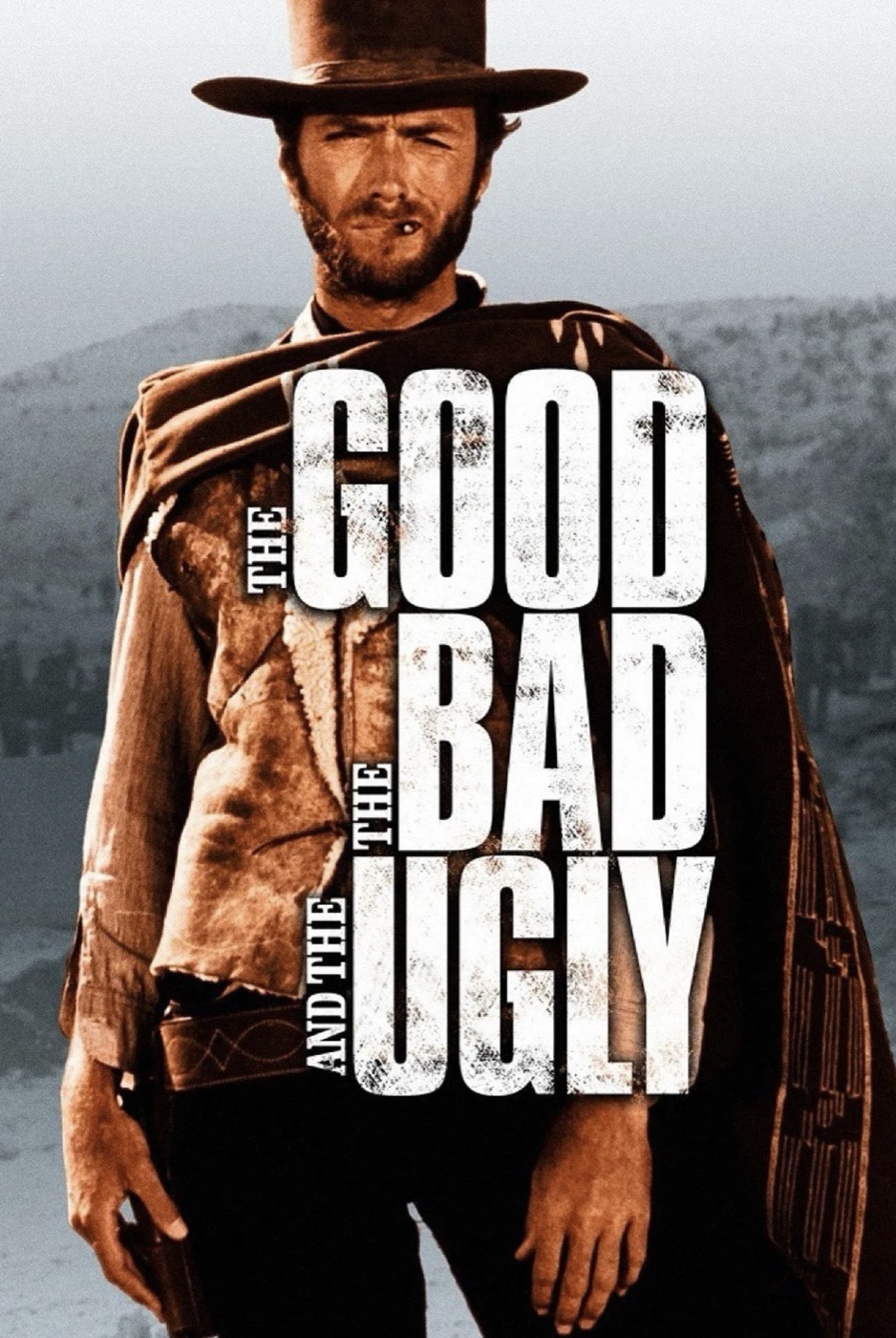
THE GOOD, THE BAD AND THE UGLY (1966)
A bounty-hunting scam joins two men in an uneasy alliance against a third in a race to find a fortune in gold buried in a remote cemetery.

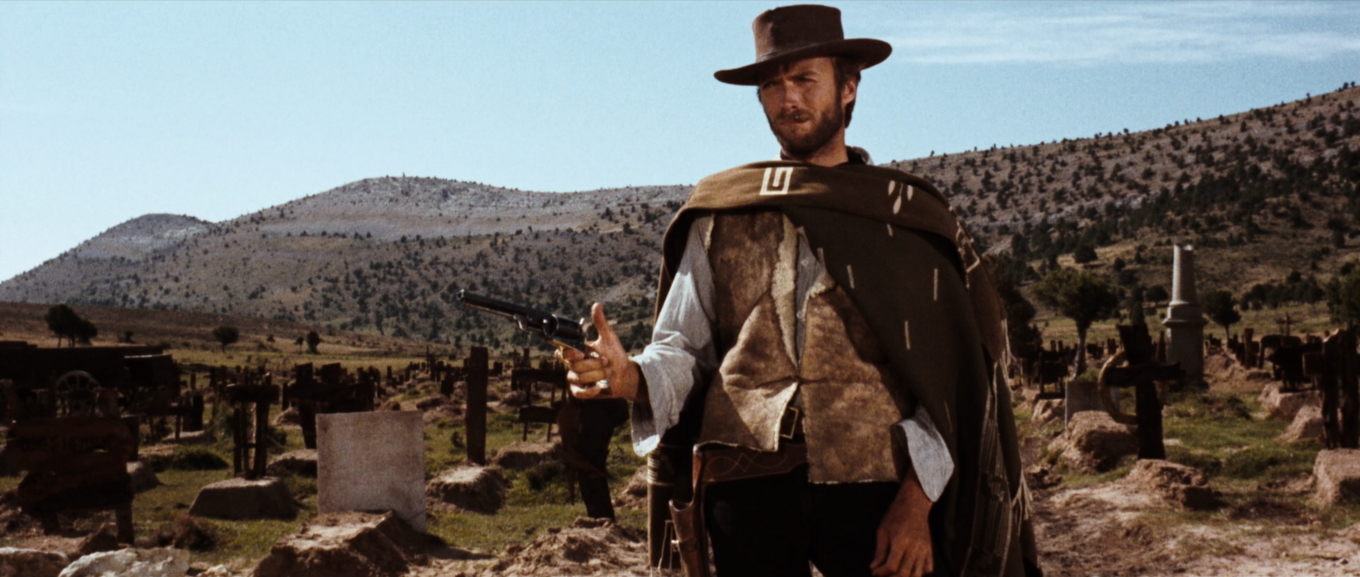

A bounty-hunting scam joins two men in an uneasy alliance against a third in a race to find a fortune in gold buried in a remote cemetery.
Sergio Leone defined the Spaghetti Western with A Fistful of Dollars (1964). A surprise international success, it became the first of his landmark Dollars Trilogy and reshaped how Italian filmmakers approached the genre. In the decade that followed, around 500 westerns emerged from Italy, usually as co-productions with Spain, France, and Germany. Most of these movies were made in the second half of the 1960s, before the formula tired and the Italian giallo rose to prominence in the early-1970s.
Since Hollywood’s inception, westerns had dominated American screens, both big and small, revising frontier history with narratives and stereotypes that framed colonial settlers as ‘pioneers’ who tamed the West. This stilted idealism lost some of its gloss under the scrutiny of a counterculture backlash during the era of the civil rights movement, the Vietnam War, and peace protests.
Unencumbered by America’s self-mythologising, Italian directors approached the West as raw material to be dismantled and reassembled—a vast canvas for human-scale stories where morality was a line drawn in shifting sand, and the definitions of hero and villain existed on a sliding scale. As a youngster, Sergio Leone was enthralled by classic Westerns. His ambition to follow in his film-director father’s footsteps was confirmed when, aged 10, he appeared in one of his movies. By 18, he had dropped out of law school to pursue a career in cinema.
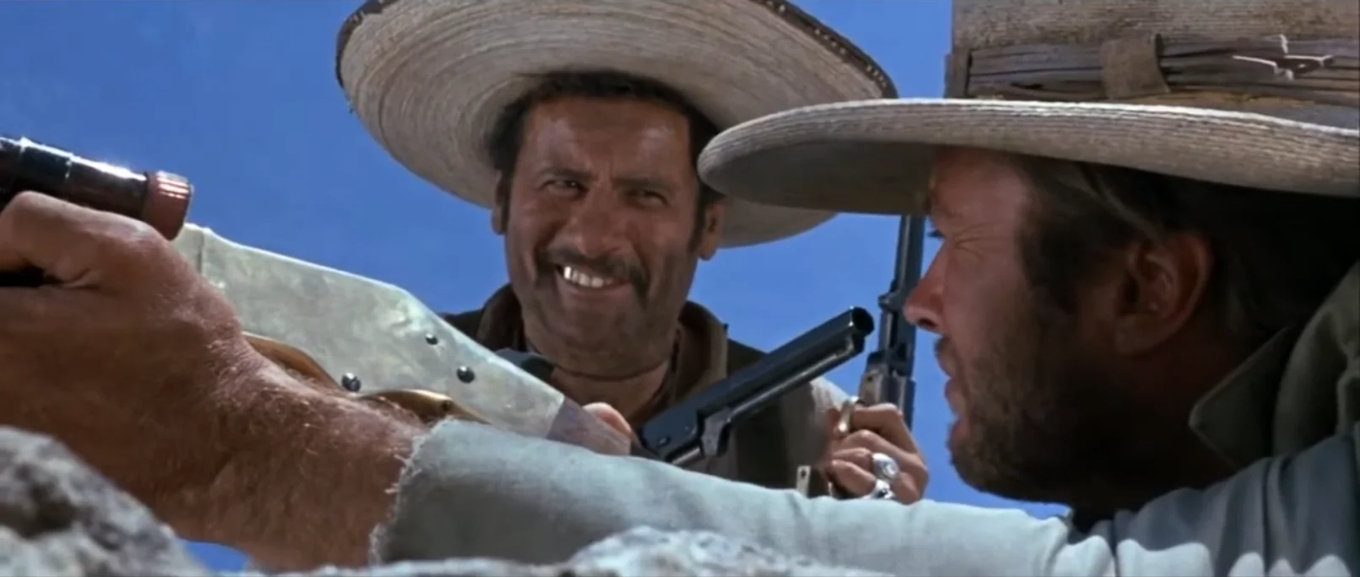
The Italian Civil War provided the backdrop to those formative years. The realities of conflict disillusioned him with the black-and-white virtues defined in Hollywood movies, leading him to realise that cinema was closer to myth or fairytale than historical reality. So, whilst still hoping to capture the magic of the John Ford westerns he had devoured as a child, he looked east to Japanese cinema to inform his approach to the genre.
A Fistful of Dollars was a remake of Akira Kurosawa’s Yojimbo (1961). In Leone’s westerns, the drifter with preternatural gunslinging skills is templated on the wandering rōnin—an established staple of samurai movies. With a script by Luciano Vincenzoni, reputedly written in nine days, For a Few Dollars More (1965) was rushed into production to capitalize on the buzz surrounding the first film. Although not a direct sequel, it established Leone as a consummate stylist forging a new direction for an entire genre. Few directors leave their mark so boldly upon cinema, but it was his next film that many cite as the greatest western of all time—and I confess, up front, that I concur.
Vincenzoni was given another chance to write the third instalment based on a story by Leone, who once again looked to Japan for inspiration. While not directly based on any single predecessor, The Good, the Bad and the Ugly shares clear parallels with Hideo Gosha’s feature debut Three Outlaw Samurai (1964)—itself influenced by westerns—forging a trans-Atlantic-Pacific fusion.
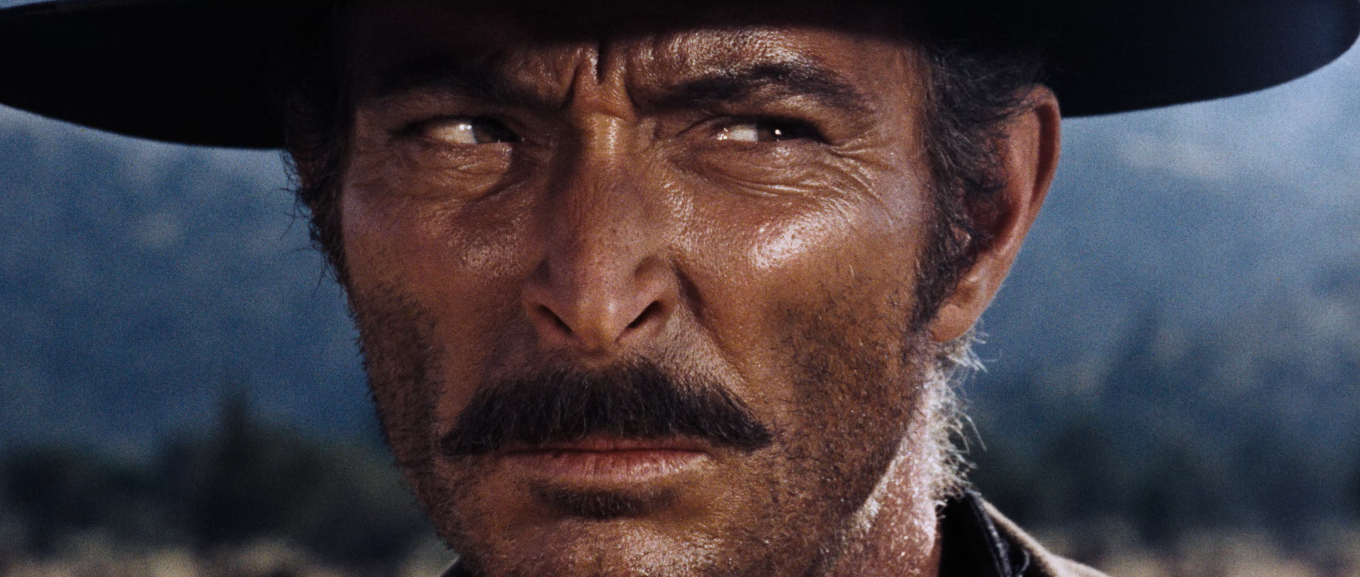
By the time The Good, the Bad and the Ugly went into production, the audiovisual lexicon of the Spaghetti Western was firmly established. The distinctive treatment of the human face as a landscape, and the landscape as an externalisation of psychological terrain, was introduced to international audiences with A Fistful of Dollars. That film picked up on a fresh cinematic language already creeping into Italian pulp cinema, equally exemplified by Duccio Tessari’s A Pistol for Ringo (1965). Interestingly, Tessari and his screenwriter, Fernando Di Leo, contributed to both films while they were in parallel production.
Ennio Morricone’s music is vital to the Dollars Trilogy’s cohesive milieu, particularly when married with the opening credits by motion-graphics legend Iginio ‘Gigi’ Lardani. Their distinctive mix of solid pop-art colours, rotoscope animation, and dynamic typography set the tone for all three films, though the main theme for The Good, the Bad and the Ugly remains the most iconic. Its familiar cue, built by oscillating between just two notes, echoes across global pop culture and has been sampled or covered by at least 150 artists, including Hikashu, Sly & Robbie, Kylie Minogue, Le Sserafim, and—my personal favourite appropriation—Cameo in Word Up!
Apart from songwriters for major Hollywood musicals, it was unusual for a film composer to become a household name. Even the equally iconic James Bond Theme, first heard in Dr. No (1962), didn’t bring Monty Norman comparable fame. By contrast, Ennio Morricone’s soundtrack album for The Good, the Bad and the Ugly entered the Billboard charts on release in 1968 and stayed there for more than a year, peaking at No. 4. It was surpassed that same year only by Hugo Montenegro’s Moog synthesiser cover, which reached No. 2.
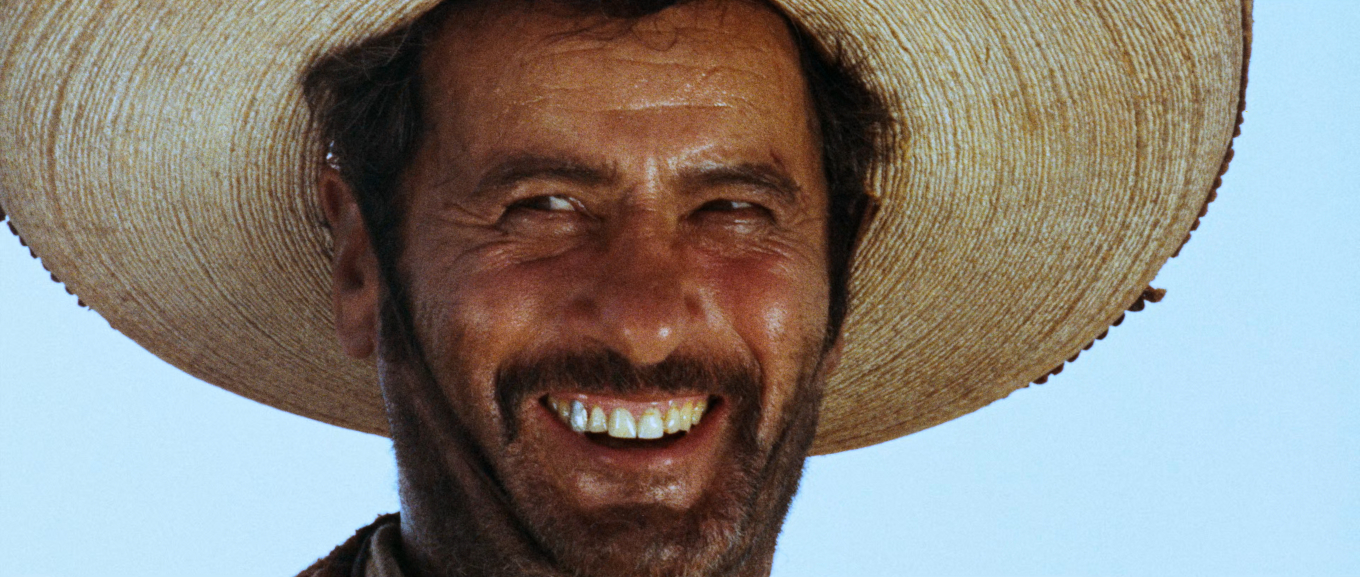
The first time we hear this distinctive phrase, it arrives as a strangely tuneful howl that could be a coyote, preceding an extreme close-up of a weather-beaten face (Al Mulock) that looks as parched and dusty as the landscape it blocks from view. He is one of three bounty hunters closing in on a ramshackle shack. When they enter, a series of shots ring out before Tuco (Eli Wallach) crashes through the window to the same two-note phrase—only this time as a distinctly human yell. The frame freezes as Tuco ruptures both cinematic space and time, labelled by onscreen text as “the ugly”.
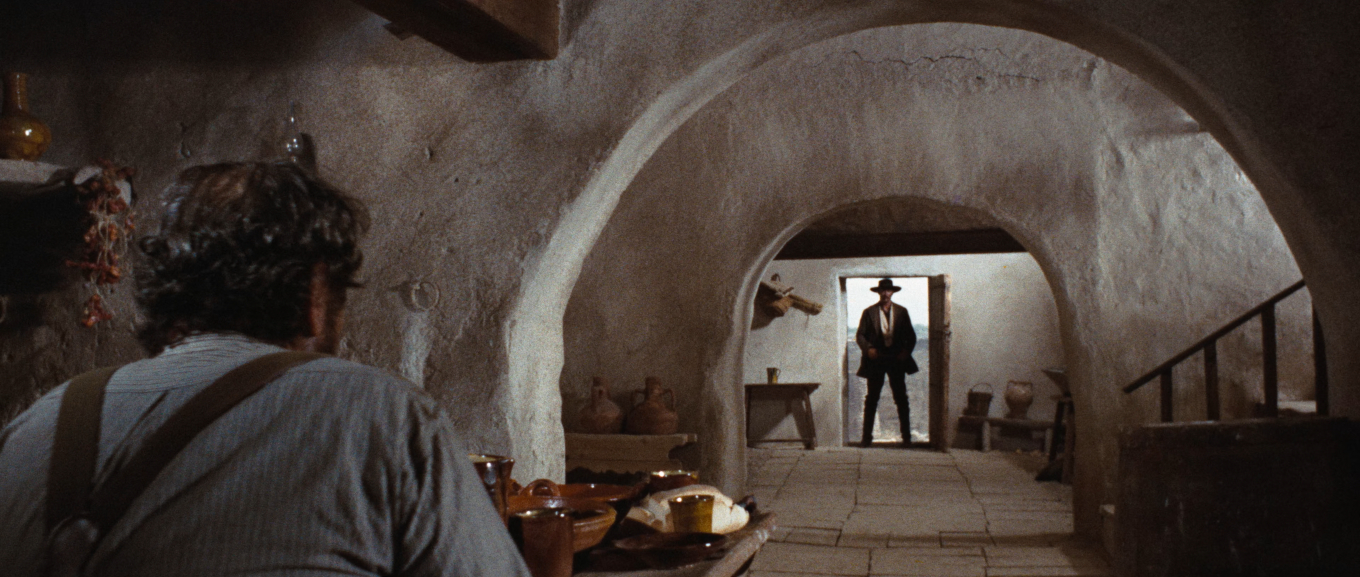
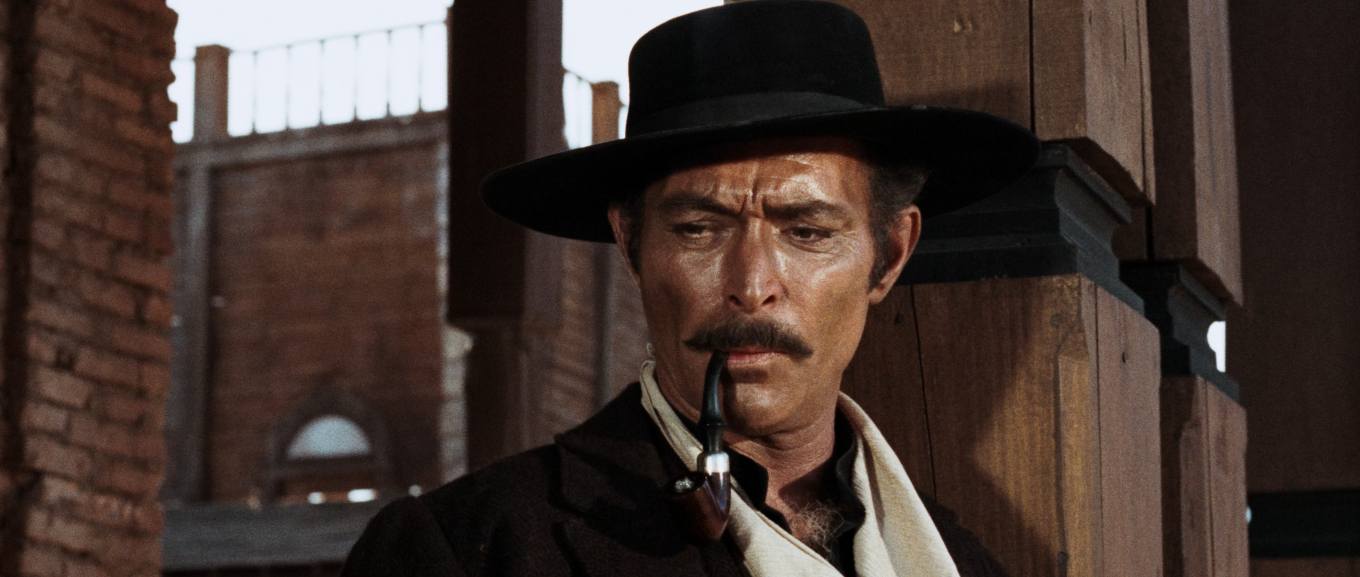
The next, equally suspenseful set-piece introduces Angel Eyes (Lee Van Cleef), who coolly walks into an adobe homestead and menacingly eats soup at a man named Stevens (George Gonneau). Duly intimidated, Stevens reveals a lost chest of Confederate army gold and mentions another man, Bill Carson, who supposedly knows its whereabouts. The pursuit of Carson is the MacGuffin upon which Leone hangs the narrative, using a treasure-hunt structure to guide the characters through a landscape of greed, war, and happenstance.
The doomed Stevens offers to double Angel Eyes’ fee. Angel Eyes explains that he always completes a job once paid, then shoots Stevens and one of his young sons before returning to his client and shooting him too—leaving himself as the only living person who knows Carson’s name. The freeze-frame for Angel Eyes carries the label “the bad”—a slight understatement given the chilling precision Van Cleef brings to the role.
There are differing interpretations regarding the translation of ‘ugly’ from the original Italian title, Il buono, il brutto, il cattivo. Buono directly translates as ‘good’, whereas brutto can mean ‘rugged’, ‘bad’, or ‘ugly’. Cattivo undeniably translates to ‘villain’ or ‘the bad guy’. The order of the title and the onscreen labelling were changed from the Italian version; it seems “the ugly” was originally intended for Angel Eyes, referring to his irredeemable malevolence rather than Eli Wallach’s appearance. The title was meant to suggest a gradient from good, to bad, to worse.
We pick up Tuco’s tale as he is apprehended by another trio of bounty hunters, only to be ‘rescued’ by a mysterious stranger known as Blondie (Clint Eastwood). After handing Tuco over and collecting the reward, Blondie waits for the hanging and, just as the noose tightens, shoots and severs the rope. Following their escape, he shares the money and suggests they repeat the risky scam, as the bounty on Tuco’s head will have increased. When their second attempt nearly goes disastrously wrong for Tuco, Blondie decides to keep the cash and abandons his partner in the desert. Up to this point, their bond has been purely transactional.
It is more than 25 minutes into the movie before we receive confirmation of who “the good” is supposed to be, but Blondie isn’t good in any conventional genre sense. Western heroism usually relies on notions of honour, loyalty, and virtuous behaviour. Unlike his two counterparts—the ugly and the bad—Blondie is ‘good’ merely because he operates within the law, despite having exploited and betrayed Tuco, whom he ultimately leaves alive and free.
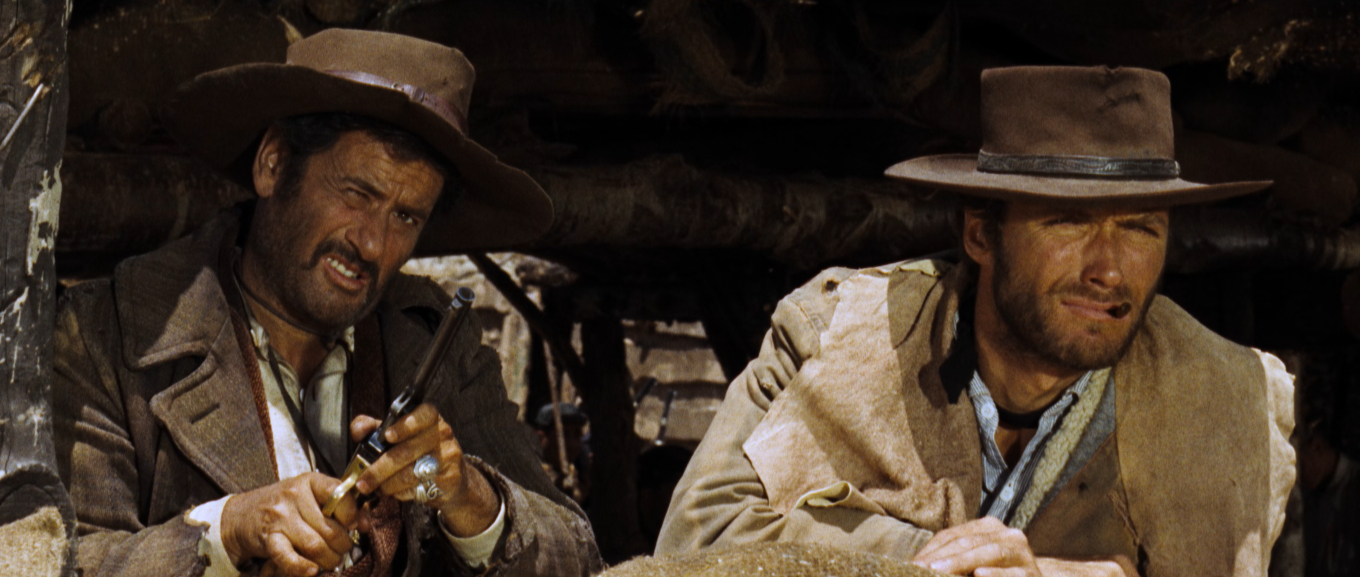
Leone cleverly breaks the narrative into an episodic structure, introducing the three main characters through distinct vignettes where Morricone’s music asserts itself as part of the narrative architecture. Leone commissioned the score ahead of filming, as he had for the previous two entries in the Dollars Trilogy; his collaboration with the composer was effectively part of the writing process. To guide the pace and performances, he would play the corresponding themes on set while shooting key scenes, later editing the film directly to the score.
That iconic cue becomes a recurring motif, but it is rendered differently for each character. The clear tones of a flute accompany the ‘good’ Blondie; a bass ocarina—which sounds like a deeper, breathier flute—signifies the sinister Angel Eyes; and edgy human voices accompany the ‘ugly’ Tuco, highlighting him as the most human of the three. In many ways, Tuco is our protagonist: he is the first and last character we see, and he enjoys the most screen time and dialogue.
Wallach’s performance is physical and expressive, often blending pathos with comedic resilience. His face betrays intentions that contradict his dialogue, revealing unexpected psychological complexity in a man pretending to be driven solely by base appetites. As a founding member of New York’s Actors Studio, Wallach trained in method acting under Lee Strasberg alongside Marilyn Monroe and Marlon Brando. Wallach and Brando are often credited with introducing naturalistic method acting to the western—a genre more accustomed to restrained stoicism. By contrast, both Eastwood and Van Cleef appear cool and calculating; in this way, Leone cleverly subverts familiar stereotypes.
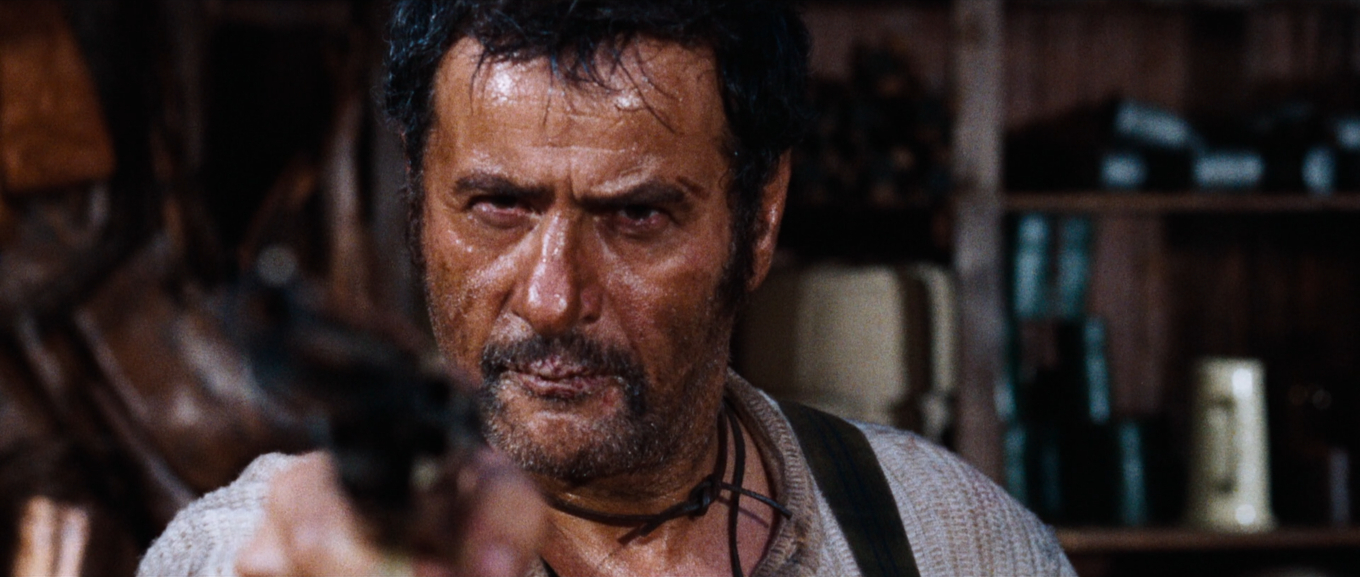
This mini-portmanteau, which gradually draws the three leads together, mesmerises us for roughly half an hour. Yet it feels as though we are only just getting started, leading us to mentally discount this opening against the three-hour runtime. When the film was sold to television across various territories, this extended duration proved problematic. Most versions shown on the small screen during the late 1960s and 1970s were severely curtailed. Scenes of brutality and the sequence depicting prolonged suffering under the desert sun were trimmed, whilst extreme close-ups were deemed too visually shocking for television and removed. One pertinent scene—in which Angel Eyes shows an unexpectedly human side, genuinely moved by the plight of wounded soldiers dying without care or comfort—was also excised from international cuts.
Furthermore, an entire, narratively essential segment was almost completely removed in most territories to bring the film under two hours, closer to the standard 90-minute feature length. For instance, in the days before home media restored the theatrical cut, many viewers never saw the full narrative leading up to the spectacular bridge sequence. The prolonged beating Tuco suffers in the army camp was deemed too violent, and the time he and Blondie spend amongst the ranks was thought to drag.
On the contrary, this sequence represents the very heart of the movie, and Leone clearly thought so too—he had to have the entire bridge set rebuilt after an army explosives expert detonated it prematurely on the first attempt. The bridge’s destruction serves as a cathartic climax where the shifting power dynamic between Blondie and Tuco finally finds balance as both men contemplate the absurdity of war. At least their personal conflict is driven by a clear goal and potential gain, just as Angel Eyes’ cool, professionalised violence is driven by intelligence. By contrast, the countless deaths on both sides of the Civil War appear utterly meaningless. Every soldier who dies believes he is fighting for his nation’s future, yet they are the very ones tearing it apart. The two warring factions remain locked in a stalemate over strategic control of a bridge; Blondie and Tuco, unburdened by ideology, agree on a solution that breaks the impasse, allowing them to pass and resume their search for the gold.
It is here that Leone’s anti-war views—formed during his youth at the intersection of the Second World War and the Italian Civil War—become palpable. The drunken Union captain (Aldo Giuffrè) gives voice to this despair in the face of widespread death. Ironically, the bridge his battalion defends should symbolise connection—a transition from past to future. Instead, it stands as a barrier. Leone stages the battle without romantic heroism, stripping the conflict of any noble illusion. It becomes a deadly farce in which humanity is subsumed by the machinery of war.
There is a conspicuous absence of women throughout the narrative, a trait common to much of the western genre leading up to the 1960s. There are exceptions, of course, but even prominent female roles were typically restricted to love interests, mothers, or damsels requiring protection. Occasionally, they might be in the thick of the action, helping to reload the hero’s rifle, but here the narrative is deliberately masculine.
This choice can be understood through several lenses. The story follows three loners navigating a war-torn, lawless country—a journey that would have been practically difficult for a solitary woman at the time and would have added unnecessary narrative complexity. Furthermore, the film confronts war, violence, greed, and murder: negative human traits closely linked to toxic masculinity rather than the traditional, nurturing qualities of the feminine principle. One could argue that those who survive to the closing credits have, to some extent, tempered their purely aggressive impulses. Alternatively, the gender balance may simply reflect the all-male writing and production team.
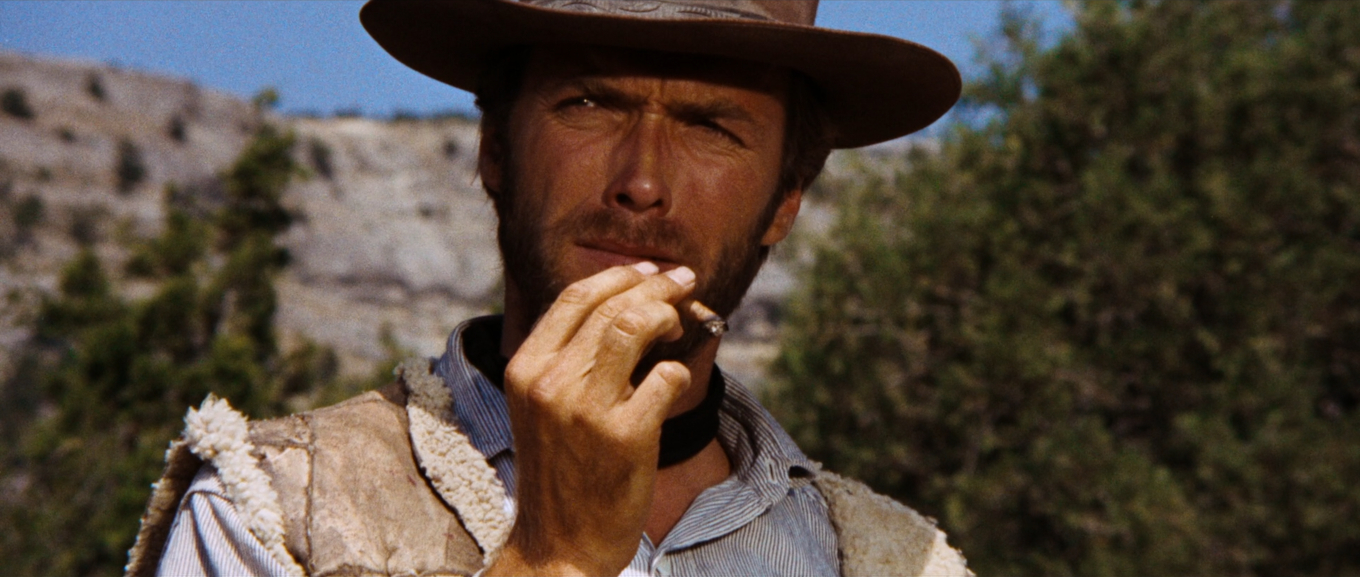
Once Blondie and Tuco’s explosive intervention ends the battle, they resume their tense partnership, as each holds a crucial piece of information regarding the gold’s location. This leads them to a massive cemetery where Angel Eyes, tracking them through his own investigation, sets the stage for Leone’s signature three-way stand-off.
Like the army camp and bridge sets, the vast cemetery was constructed by the Spanish army on location. Leone wanted the graveyard to appear immense and surreal for his mythic finale, accompanied by what may be the greatest piece of film music ever composed. Ennio Morricone’s emotive The Ecstasy of Gold, featuring the transcendent vocals of Edda Dell’Orso, is deployed in perfect harmony with Tonino Delli Colli’s astonishing cinematography. Long lenses pan and swoop, tracking Tuco through a delirious swirl where reality dissolves into a dizzying blur. For a moment, he exists within an abstract psychological state where the world yields to pure cinema.
This mastery of form explains why the film continues to resonate today. The Good, the Bad and the Ugly stands as a technically brilliant western that doubles as a profound exploration of the human condition. Yet, it is never weighed down by its grandiose themes, remaining emotionally devastating, witty, thoughtful, and—above all—immensely entertaining.
ITALY • SPAIN • WEST GERMANY | 1966 | 178 MINUTES | 2.35:1 | COLOUR | ENGLISH • ITALIAN • SPANISH

director: Sergio Leone.
writer: Luciano Vincenzoni, Sergio Leone, Agenore Incrocci & Furio Scarpelli..
starring: Clint Eastwood, Eli Wallach, Lee Van Cleef, Aldo Giuffrè, Antonio Casas, Rada Rassimov, Aldo Sambrell, Enzo Petito, Luigi Pistilli, Livio Lorenzon, Al Mulock.