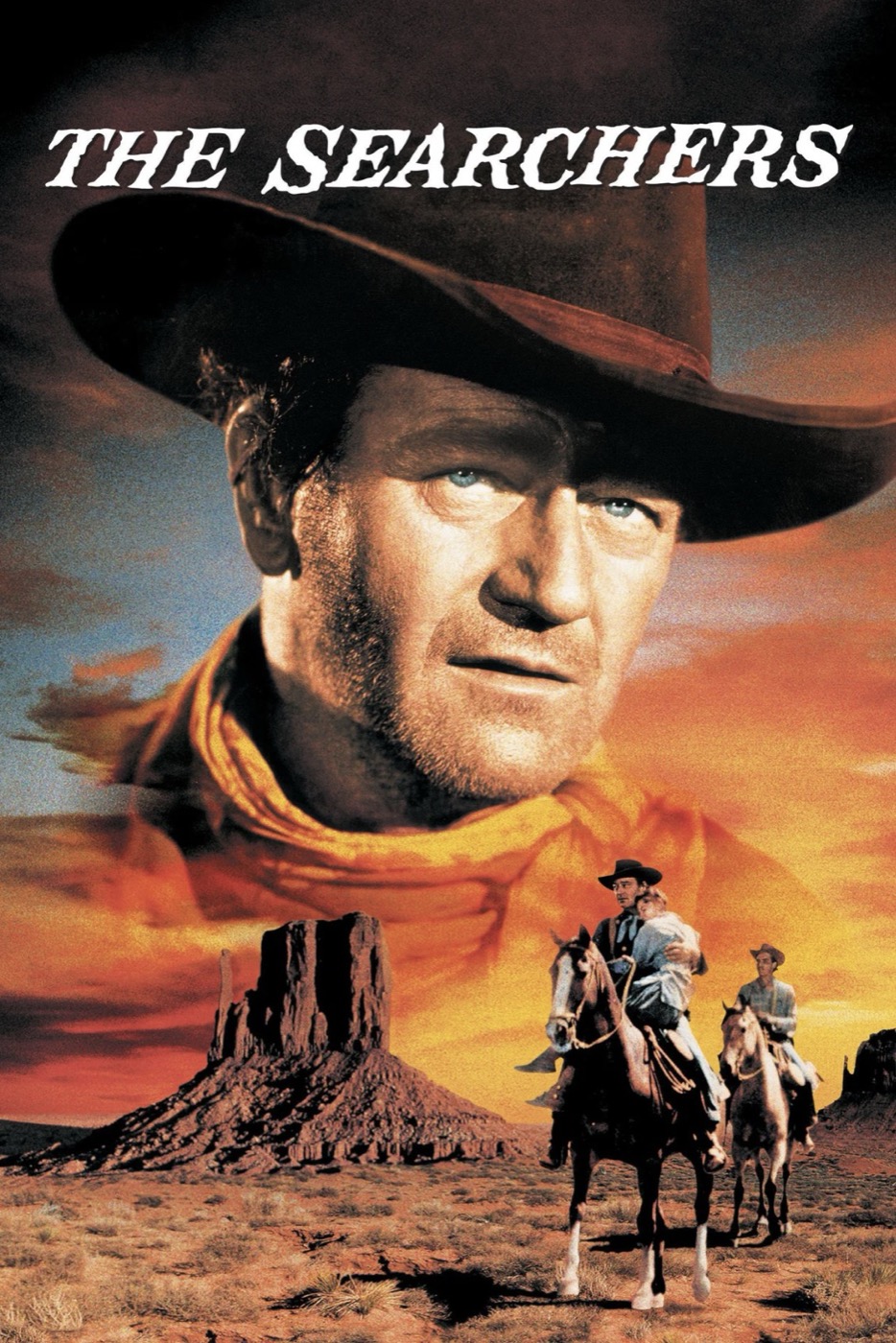
THE SEARCHERS (1956)
An American Civil War veteran embarks on a years-long journey to rescue his niece from the Comanches after the rest of his brother's family is massacred in a raid on their Texas farm.


An American Civil War veteran embarks on a years-long journey to rescue his niece from the Comanches after the rest of his brother's family is massacred in a raid on their Texas farm.
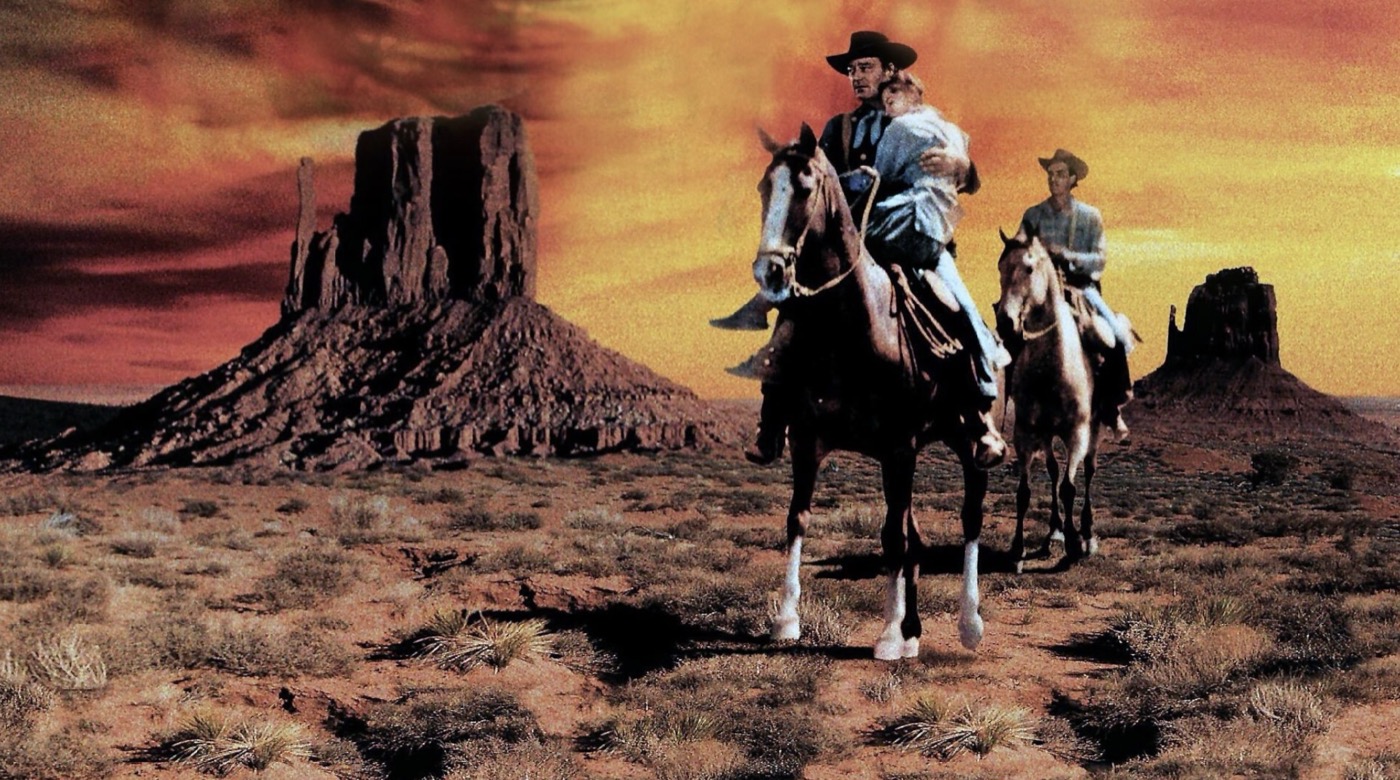
There’s a shot near the opening of The Searchers that’s never left anyone who’s seen it. A door swings open from domestic darkness into the blinding light of the desert. Inside is the home. Outside is the frontier. And there, balanced on the threshold, stands Ethan Edwards (John Wayne), returning from a war that ended for the world but not for him.
It’s one of the great entrances in American cinema, telling you almost everything you need to know about what John Ford is doing. This is a film about a man who can’t cross certain thresholds. Not because the world bars his way, but because something inside him has hardened into a shape that no longer fits through ordinary doors.
The Searchers has the outline of a western adventure. It’s 1868, three years after the end of the American Civil War, and Ethan arrives at the remote Texas homestead of his brother Aaron Edwards (Walter Coy) carrying the remnants of a defeated military identity, gold of uncertain provenance, and a silence that weighs more than any confession. Ford never tells us exactly what Ethan has been doing since the war ended, and wisely so. That biographical void doesn’t explain him; it renders him opaque — and opacity, in Ford’s hands, is a form of moral weight.
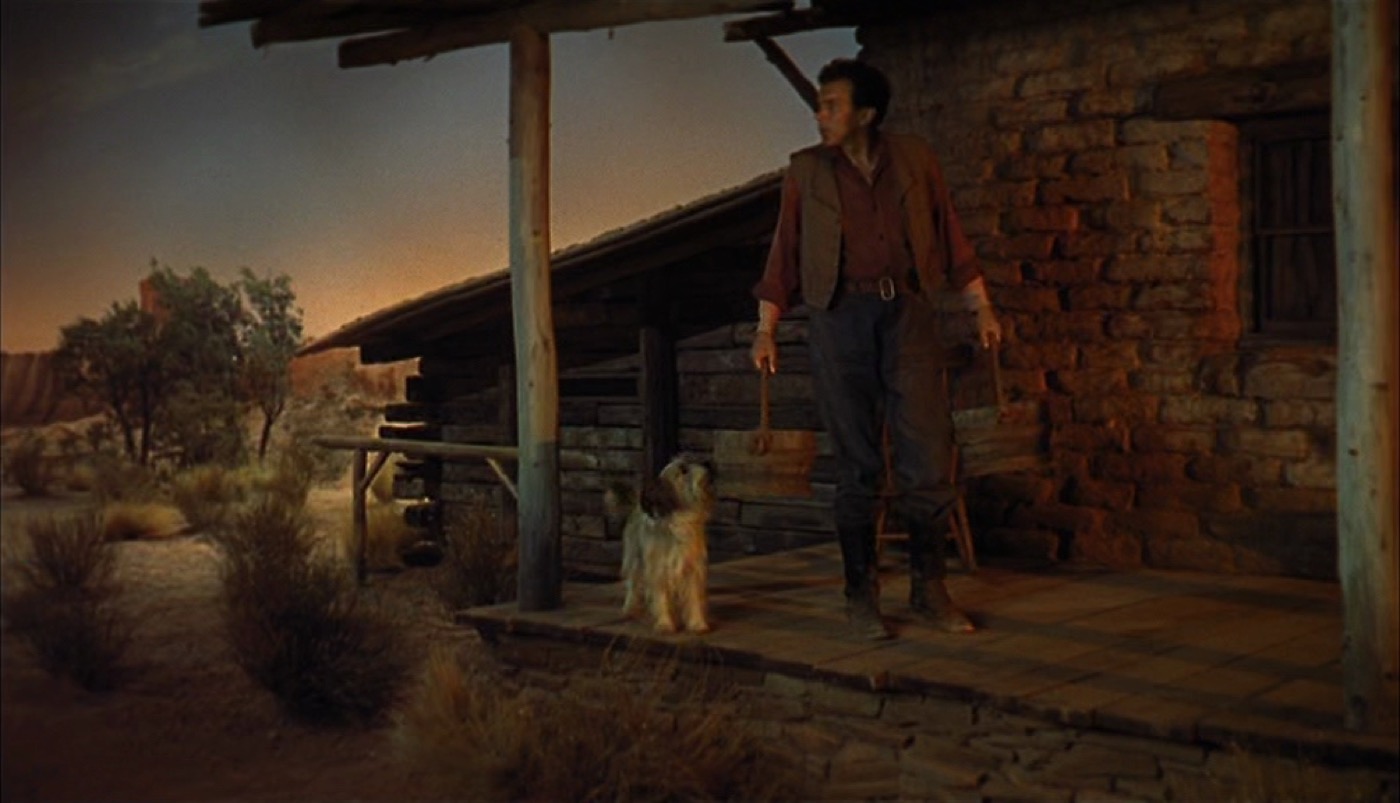
When violence shatters the family and young Debbie Edwards is abducted by a Comanche raiding party, Ethan joins Martin Pawley (Jeffrey Hunter), the family’s adopted son, on what becomes a years-long search across an enormous and indifferent frontier. The setup has the shape of a rescue mission, but Ford is doing something stranger and more unsettling beneath that surface. Ethan isn’t simply a hero on a righteous errand. He is a man whose capacity for obsession and violence makes him both indispensable and deeply troubling, and the film never lets you forget either of those things.
What makes Ethan so compelling — and so uncomfortable — is that he isn’t cold. He is frozen. There is a crucial difference. The feelings are present; they simply don’t circulate. They’ve hardened over years into mission, command, and a barely contained fury that occasionally surfaces in ways that unsettle everyone around him, including the audience. Ford and Wayne understand that the most dangerous men are not those emptied of emotion, but those in whom emotion has curdled into something with no outlet except forward motion.
John Wayne, so often reduced to an icon rather than an actor, does some of the most controlled and physically intelligent work of his career here. He builds Ethan through weight, posture, and delay — through the way he enters a room, mounts a horse, or pauses before answering a question. There is no vanity in it. Wayne understood that Ford needed the icon in order to crack it from the inside, and he gave him exactly that: the silhouette of the western hero, inhabited by something that makes heroism feel like a very complicated word.
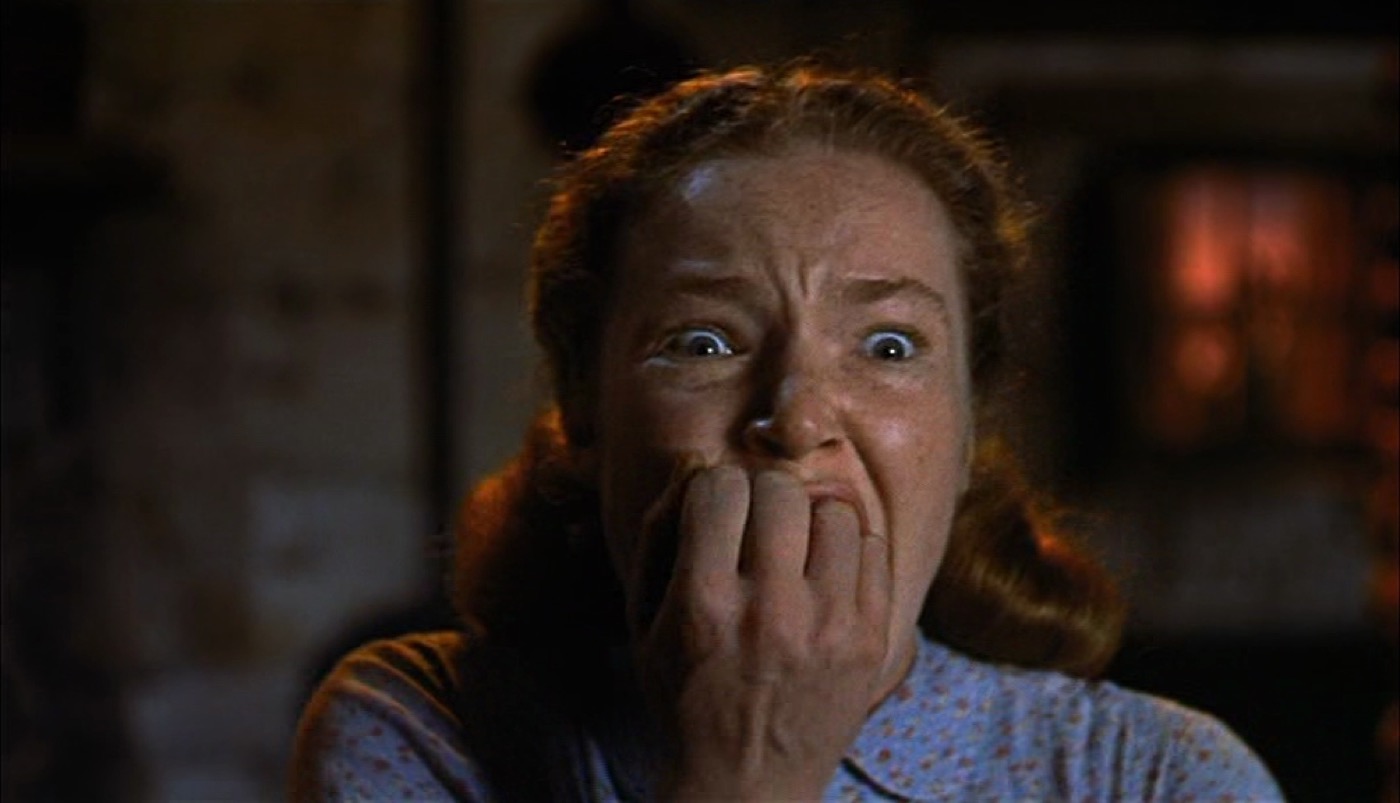
Against him, Jeffrey Hunter as Martin Pawley provides something the film absolutely requires: a different kind of endurance. Where Ethan is formidable, Martin is resilient. Ethan is rigid; Martin is durable. Ethan can cross any desert, navigate any terrain, and outthink any opponent — but he risks shattering the moment the world asks him to change shape. Martin can bend, doubt, be hurt, love, make a fool of himself, and carry on. The dynamic between them gives the film its moral tension and its emotional pulse, and Hunter plays it with a quiet, underrated intelligence that holds up across repeated viewings.
Vera Miles, too, brings far more than a conventional romantic counterpoint as Laurie Jorgensen. She could easily have been merely the waiting fiancée — the domestic promise, the sentimental function that reminds us what the men are theoretically fighting for. Instead, Miles makes her concrete, impatient, funny, and alive. Laurie wants Martin, provokes him, loses her temper, and demands that ordinary life not be held hostage indefinitely to someone else’s obsession. She is the home, yes — but a living home, not a moral display case. In a film full of large gestures and vast landscapes, her specificity is its own kind of relief.
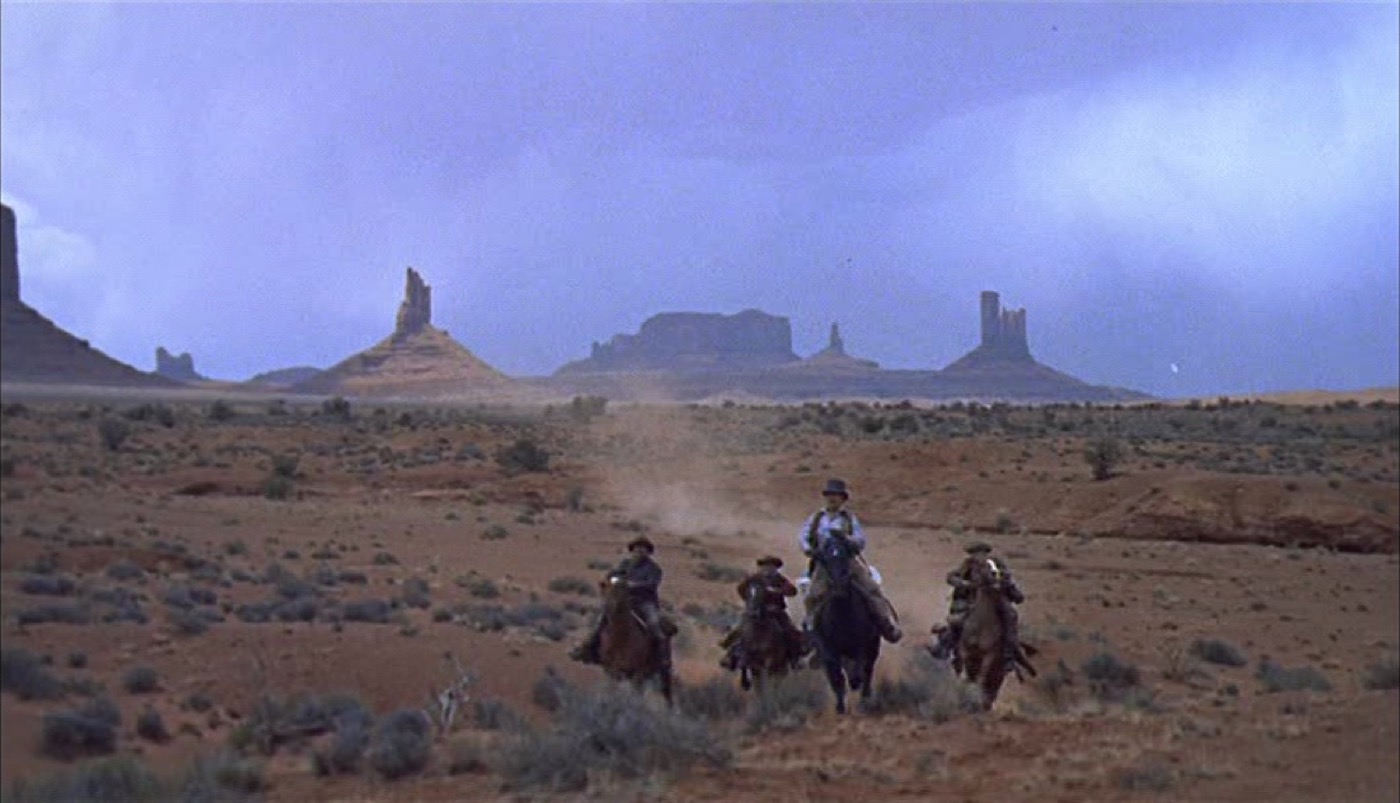
Visually, The Searchers is one of the most beautiful films ever made in the genre — and that beauty is never merely decorative. Ford and cinematographer Winton C. Hoch construct a world of thresholds and open spaces, warm interiors and magnificent indifference. Monument Valley, used here more thoughtfully than perhaps anywhere else in Ford’s work, doesn’t feel like a backdrop. It feels like a judgement. It’s not a place built for human habitation, but a space that measures the people passing through it and reveals their proportions. The Edwards homestead, pasted against that immensity, already looks like a fragile argument against the landscape rather than a feature of it.
And then, unexpectedly, the desert gives way to snow. The film doesn’t stay in one climate or one season, and those winter sequences — riders reduced to dark marks on a world drained of all warmth — are among the most visually striking in the western canon. This is not pictorial variety for its own sake. It’s the sign that the search has exceeded the ordinary measure of time. It’s no longer simply a pursuit; it’s an obsession moving through seasons, wearing years like weather.
Ford’s greatest skill here, though, lies in what he withholds. The Searchers is a film that trusts its audience, and that trust feels bracing in an era when so much cinema is afraid to leave anything unexplained. Deaths are intuited rather than displayed. Horrors are traced rather than shown. A saddle without a horse. A room Ethan enters alone, closing the door before anyone can follow. A blanket. Ford gives you the outline of the terrible thing and relies on you to complete it. The effect is more lasting than any explicit image could be, because the mind finishes the work in ways that belong specifically to each viewer.
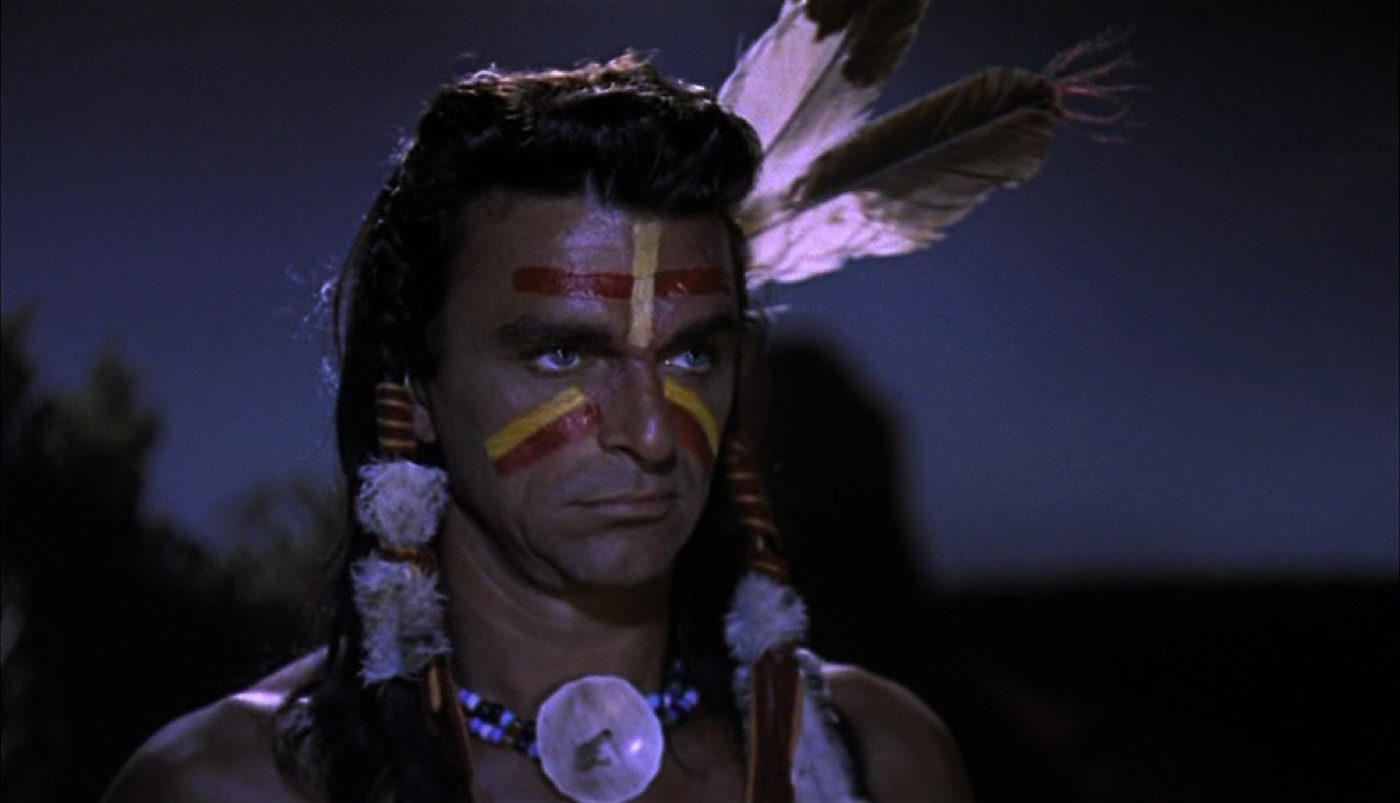
The Searchers isn’t a perfect film. Some of its comic passages — brawls and jealousies and frontier roughhousing — sit awkwardly beside the darker material, and its representation of Native Americans reflects the blind spots of its era in ways that are impossible to ignore and that contemporary viewers will rightly find troubling. These are real limitations, and there is no reason to pretend otherwise.
But its greatness is not diminished by those flaws. 70 years on, it remains one of the most psychologically alert westerns ever made — a film about obsession, about the cost of violence to those who wield it, and about the kinds of damage that do not heal but instead organise themselves into a permanent way of being in the world.
It’s also a film about thresholds. About who can cross them, who cannot, and what it costs a community to need someone it can never quite absorb. Ford frames that question in images of extraordinary beauty and leaves the answer — as all the best films do — hanging in the air after the final shot.
It haunts. That is perhaps the simplest and most accurate thing to say about it.
USA | 1956 | 119 MINUTES | 1.85:1 | COLOUR | ENGLISH • NAVAJO • SPANISH

director: John Ford.
writer: Frank S. Nugent (based on the 1954 novel by Alan Le May).
starring: John Wayne, Jeffrey Hunter, Vera Miles, Ward Bond, Natalie Wood, John Qualen, Olive Carey, Henry Brandon, Ken Curtis & Harry Carey Jr.