MISSION: IMPOSSIBLE (1996)
An American agent, under false suspicion of disloyalty, must discover and expose the real spy without the help of his organisation.

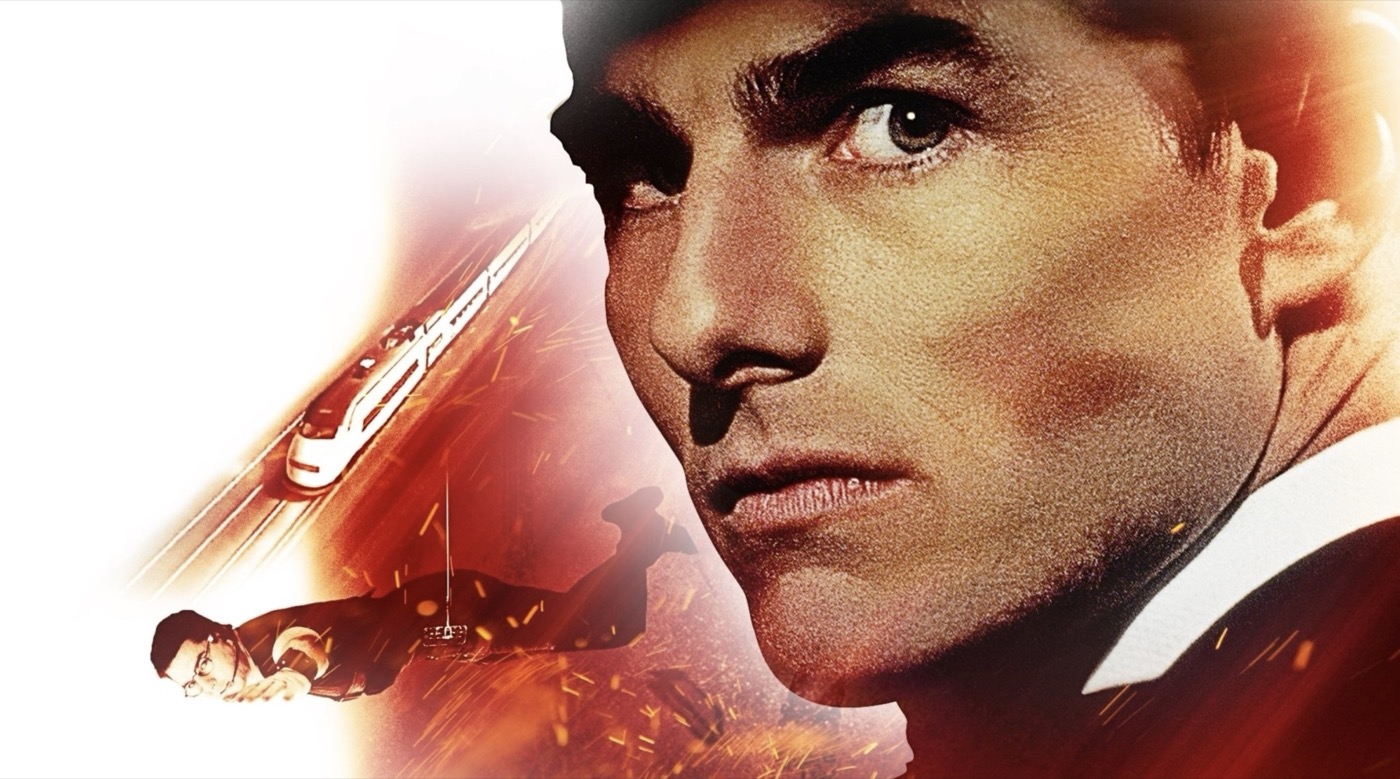

An American agent, under false suspicion of disloyalty, must discover and expose the real spy without the help of his organisation.
Long before Ethan Hunt (Tom Cruise) became so all-important, and the Mission: Impossible movies so self-important, that you could practically imagine the franchise protagonist being shot out of a cannon into space to punch God himself, Brian De Palma’s Mission: Impossible cemented itself as a 1990s pop-cinema classic. A popcorn flick just as enjoyable on a rewatch, De Palma’s effort has gone undersung amidst praise for the blockbuster franchise he wound up launching.
In fact, current user ratings and contemporaneous critical reviews have not been nearly as kind to Mission: Impossibleas they have to some of its many sequels — especially the recent films by Christopher McQuarrie, who took on directing and co-writing duties for the last four entries. While his work excels at the nuts-and-bolts craftsmanship of straightforward, no-nonsense direction for truly insane stunts, the graceless competence of his style is a far cry from the pure entertainment De Palma excels at conveying. The iconic director’s form of spectacle, where high-octane action sequences were shot on film by an auteur, has sadly become a relic in modern Hollywood.
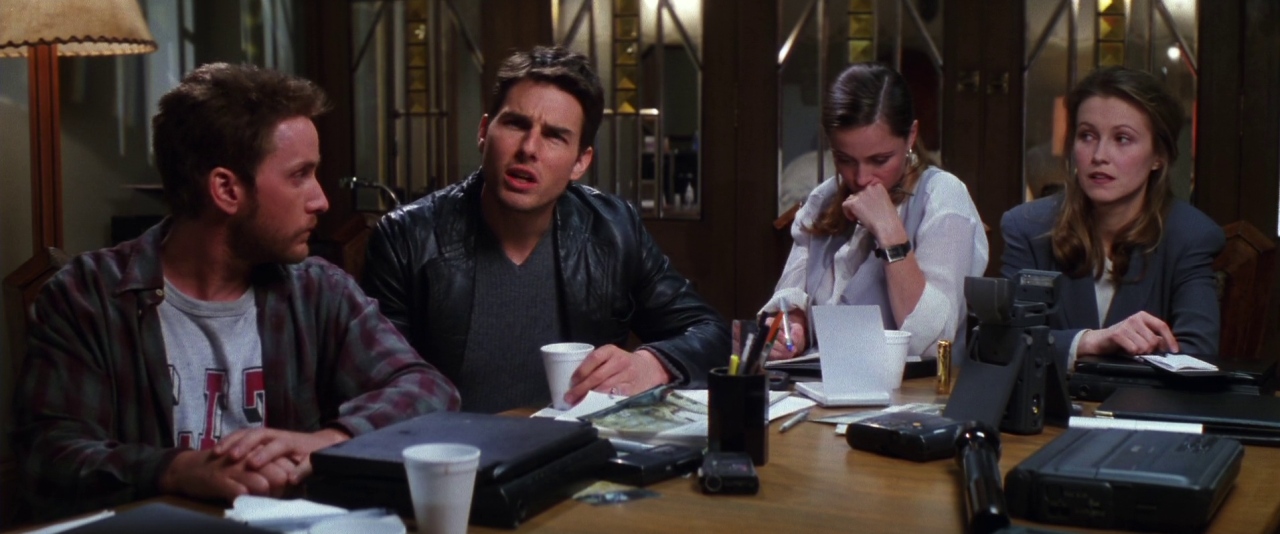
If one is looking to build a franchise, McQuarrie is the ideal filmmaker, since he can shape his sensibilities around a story instead of making something unmistakably his own. He’s the man to transform Ethan Hunt from a cocky yet hyper-efficient government agent into a bona-fide deity-killer (or deity himself), as the reverent later films in the series imply.
The first Mission: Impossible is no masterpiece — its convoluted plotting is likely to lose many viewers in its first third, and it only gets less meaningful from there — but it represents a brighter time for action blockbusters. Shot on film and imbued with an impressive degree of restraint and patience, it’s a joy to listen to the near-silence of numerous scenes and appreciate their quietly confident filmmaking. Then, when the film’s thunderous music and iconic theme kick into full throttle, it’s as if you are left buoyed on a dinghy in the Bermuda Triangle, having spent the previous few minutes sipping martinis by a lake. You feel the weight of silence and noisy chaos alike, instead of having the latter blur scenes into one another, as so many recent action blockbusters do. De Palma isn’t racing for the next snappy quip, hunt-or-be-hunted showdown, or thrilling set piece; he’s focused on telling a story rather than constantly trying to outdo himself.
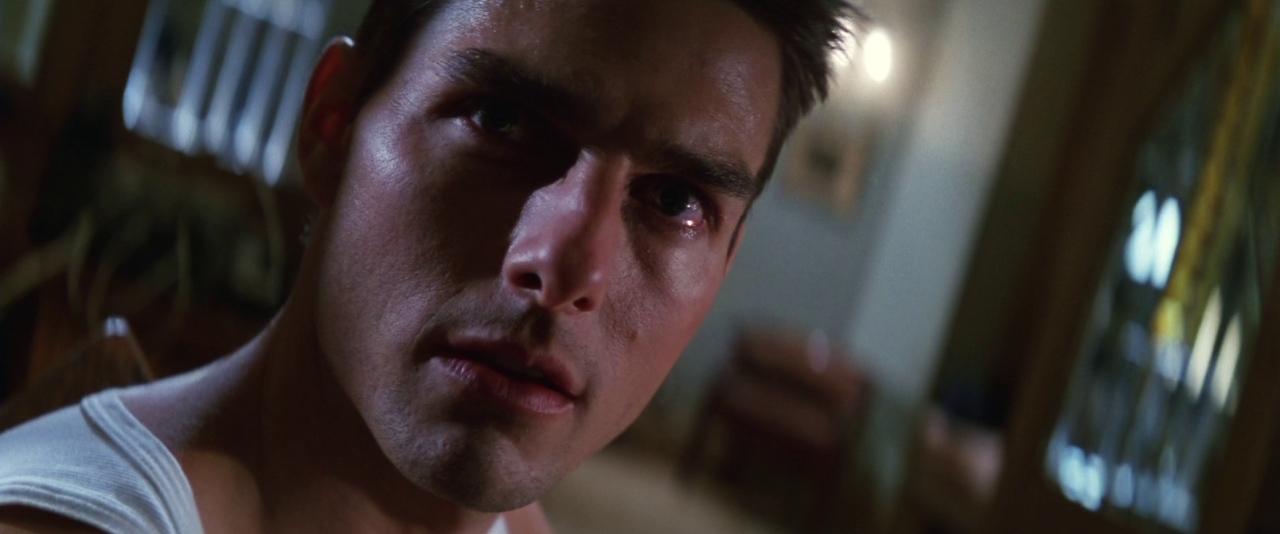
Long before the protagonist became humanity’s saviour, Ethan Hunt had a far more selfish, if equally understandable, goal: to save himself. After a top-secret mission to thwart a rogue CIA agent goes awry, Ethan is suspected of being a mole and hunted by his employers. This forces him to go undercover to track down his enemies, evade his handlers, and clear his name. It’s a classic, trope-filled tale of espionage and double-crossing, where no one is quite who they seem.
The inclusion of hyper-realistic face masks never fails to amuse in the Mission: Impossible universe, since in reality it would lead to secret agents constantly prodding each other’s faces to ensure the person they are talking to isn’t wearing a flawless disguise. That said, while looking for plot holes or contrivances in a film of this kind will yield more than a few answers, the search is a fruitless one. These are gimmicky action thrillers that know exactly what they are and who they are catering to, and with a director like De Palma at the helm, one wouldn’t want it any other way.
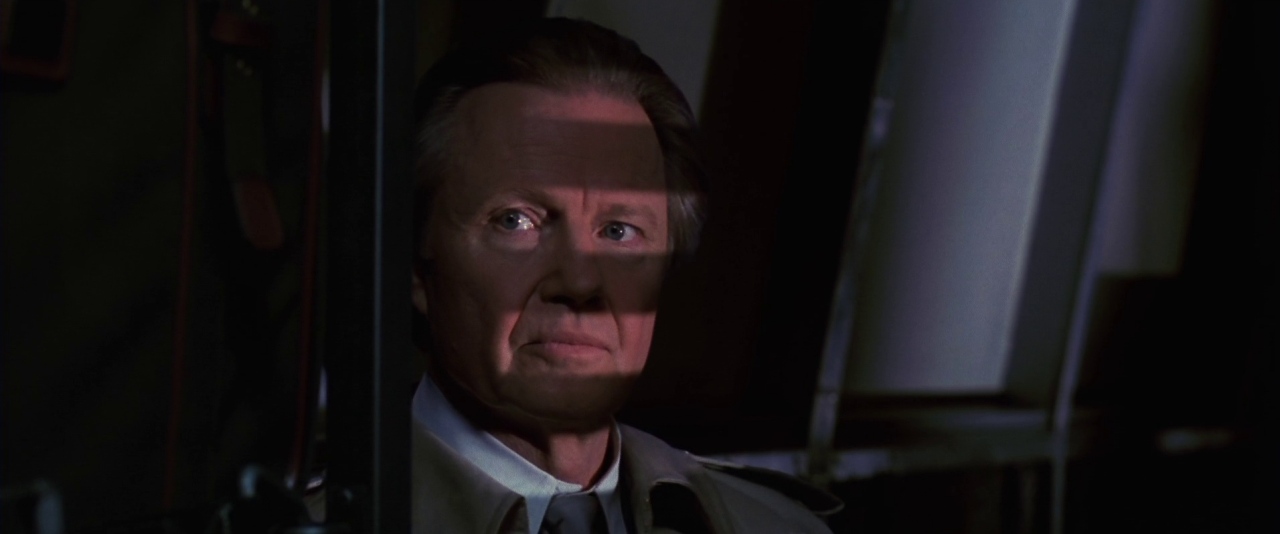
His use of Dutch angles is iconic here, mapping perfectly onto the distortions that have rocked Ethan’s world. There is no one the protagonist can rely on, and the supporting cast play into this beautifully. There are numerous occasions where someone in Ethan’s life appears suspicious, but when suspicion equals normalcy, how can viewers begin to separate a red herring from a surprise villain?
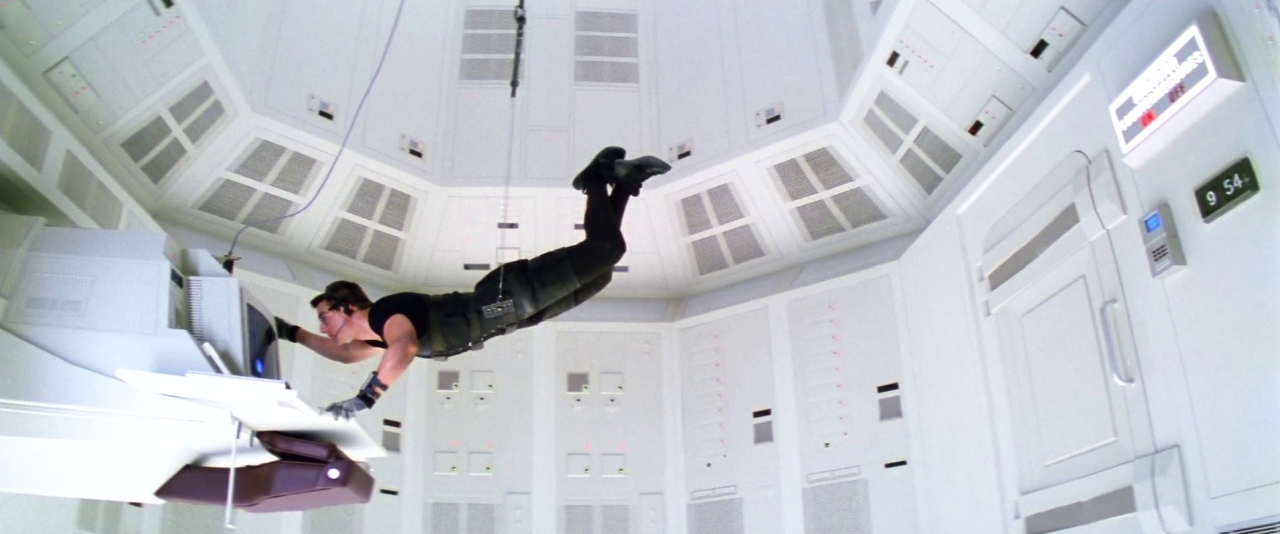
Knowing the clichés of the genre certainly helps; it had been so long since I watched the original film that each plot point felt new, but figuring out the story’s deceptive figures is not particularly difficult. The plot, which manages to feel convoluted even without too many moving parts, dispels much of the story’s general tension, though there are still exciting, thrilling sequences in their own right. The heist sequence in CIA headquarters is paced to perfection, while the opening set piece in Prague is beautifully lit.
Much like Paul Verhoeven, who made his best projects his own even when they were big-budget action spectacles, De Palma never shies away from how silly Mission: Impossible is, even as he gives his all to win viewers over to the alluring qualities of spycraft. The film’s many gadgets are outlandish, but I would be lying if I said they didn’t appeal to a boyish fascination with spyware that hasn’t completely died in adulthood. The silliness adds immensely to the charm, but calibrating this emotional experience is a surprisingly difficult tightrope to walk. Too much ridiculousness and the entire film becomes waterlogged, weighed down by weightless action and inane sequences. Too little self-awareness or too much self-seriousness, however, betrays a lack of understanding of the material.
Verhoeven straddled this line spectacularly in his finest works, especially given the satirical edge embedded in the likes of Starship Troopers (1997). He would have made an excellent director for one of these franchise entries, but De Palma’s note-perfect command of creeping tension and action thrills is unparalleled for a film series with this tone. The screenplay itself, while containing a few amusing quips, snappy one-liners, and dependable genre tropes, is hardly a source of great emotional investment. Thin characterisation is a hallmark of Mission: Impossible — from villains to side characters to everyone in between — while the film’s final action set piece relies so heavily on CGI that it now looks incredibly dated.
At the same time, the lack of deep characterisation presented fertile ground for this franchise to blossom into a near 30-year saga, for better or worse. Instead of fully fleshed-out characters, the series uses moulds and tropes to partially fill in throughout each film. Over the years, the stunts became more elaborate and the character dynamics more layered (if not exactly emotionally richer, since no one watches these films to feel anything but exhilarated).
Mission: Impossible presented the perfect jumping-off point for a series that ballooned into an entirely different entity over the course of its long reign, though this film’s highs have never quite been replicated. When the thunderous, goofy, climactic theme music kicks in, I find myself equally enthralled by how it juxtaposes patient and thrilling storytelling, and because it reverberates with the childlike wonder of espionage — something which the later films, for all their technical proficiency, missed out on.
USA | 1996 | 110 MINUTES | 2.39:1 | COLOUR | ENGLISH • FRENCH • CZECH

director: Brian De Palma.
writers: David Koepp & Robert Towne (story by David Koepp & Steve Zaillian; based on the TV series created by Bruce Geller).
starring: Tom Cruise, Jon Voight, Emmanuelle Béart, Henry Czerny, Jean Reno, Ving Rhames, Vanessa Redgrave & Kristin Scott Thomas.