THE CRAFT (1996)
A young girl new to a Catholic school befriends a coven of witches whom the other students either shun or fear.


A young girl new to a Catholic school befriends a coven of witches whom the other students either shun or fear.
For much of the 20th-century, mainstream depictions of witches were confined to a tediously narrow binary. There were the grotesque caricatures stirring cauldrons in shadowy corners, forever immortalised in works such as Snow White and the Seven Dwarfs (1937) and The Wizard of Oz (1939). Alternatively, they were rendered as domesticated enchantresses with contained supernatural abilities, as demonstrated in Bewitched (1964–1972) and The Addams Family (1964–66). An argument could be made that these constraints were due to the Motion Picture Production Code. Until its eventual dissolution in 1968, the Hays Code discouraged any overt depictions of nudity, profanity, excessive violence and—perhaps most tellingly—female agency and sexuality.
Thankfully, the erosion of these archaic constraints initiated a gradual reconfiguration of the archetype. As sexual politics progressed, witches were no longer confined to monstrous or domesticated roles. Rather than a symbol of deviance, witchcraft became a conduit for articulating feminist anxieties. This evolution had already begun to manifest clearly in Rosemary’s Baby (1968), but Season of the Witch (1972) developed these themes further, portraying women rejecting conventional societal roles and using witchcraft to awaken sexuality. By the release of The Witches of Eastwick (1987), the occult had been tempered with playful sensibilities, yet it still retained an undercurrent of autonomy and empowerment. It’s within this evolving cinematic lineage of transgressive femininity that The Craft positions itself.
Before being summoned by Columbia Pictures, screenwriter Peter Filardi had already demonstrated a penchant for blending adolescent volatility with supernatural conceits. His debut screenplay for Flatliners (1990) sparked a bidding war and achieved notable commercial success. When producer Douglas Wick (Wolf) subsequently commissioned the writer for another project, Filardi had been developing a narrative loosely inspired by the real-life teenage Satanist Ricky Kasso. However, the studio envisioned a female counterpart to The Lost Boys (1987), reimagining adolescent power through an explicitly gendered lens. When Andrew Fleming (Bad Dreams) came on board as director and co-writer, the project took on a more grounded sensibility, embedding its supernatural framework within the very real struggles of female adolescence. By aligning witchcraft with the feminist movement of the 1990s and the disaffection of Generation X, The Craft emerged as an expression of adolescent rage and a defiant response to social marginalisation.
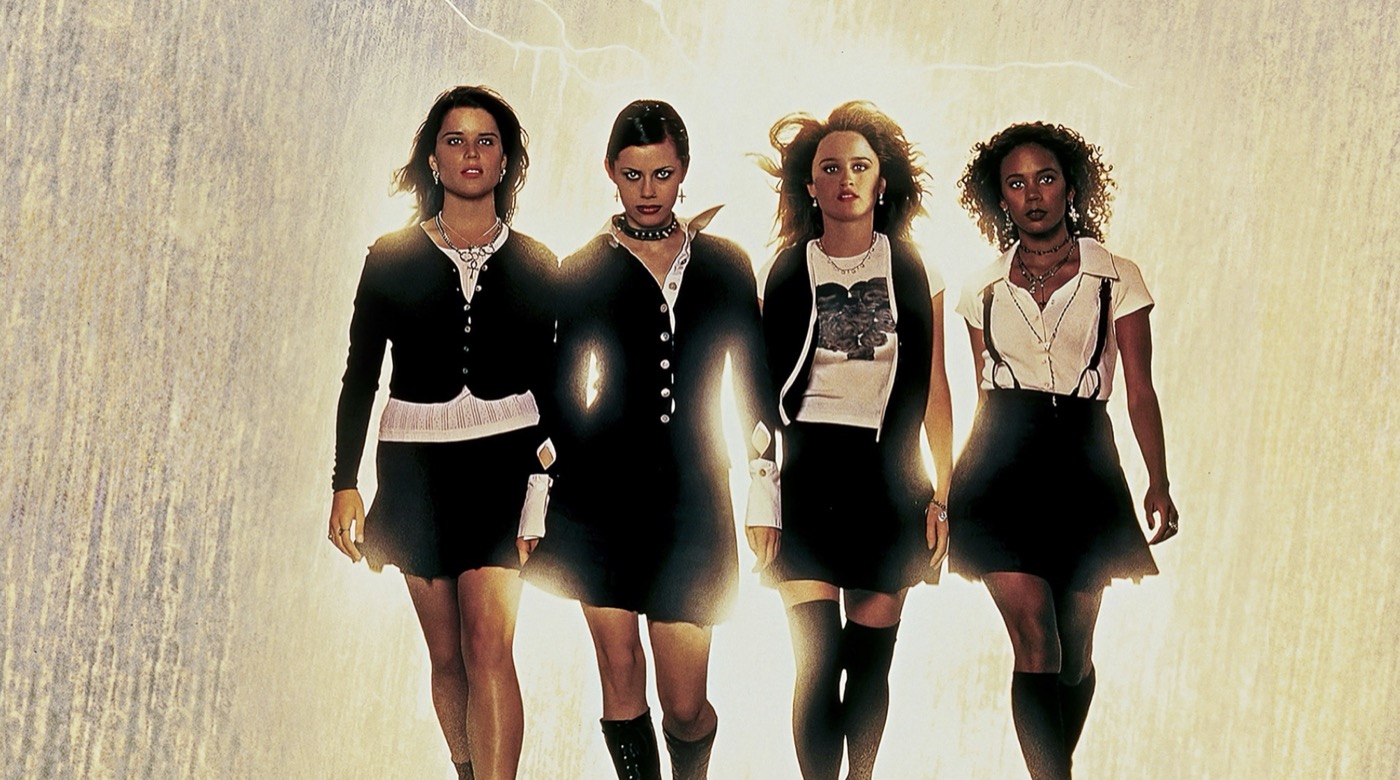
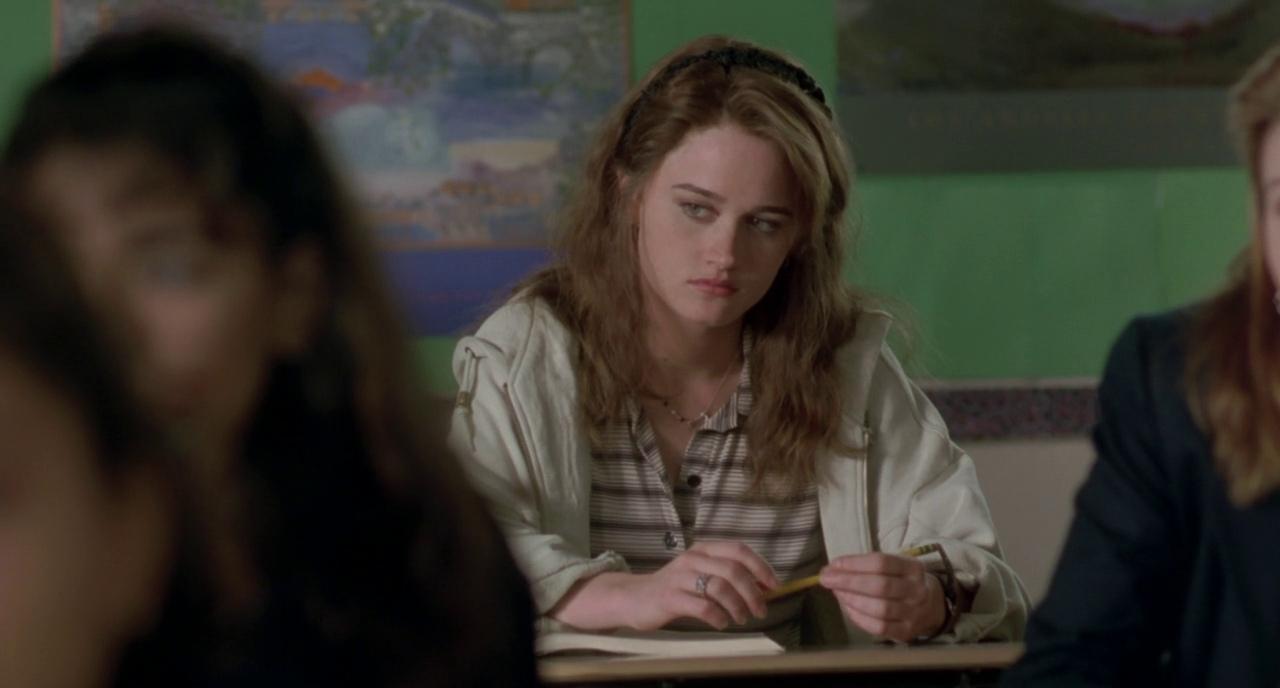
After struggling with mental health issues, Sarah (Robin Tunney) relocates to Los Angeles with her father and stepmother. Upon enrolling at her new Catholic high school, the troubled teenager is quickly ostracised and treated abhorrently. When a vicious rumour isolates her further, she befriends Nancy (Fairuza Balk), Bonnie (Neve Campbell) and Rochelle (Rachel True). The three young women have formed a coven, practising witchcraft to protect themselves from the horrors of high school. When Sarah inadvertently demonstrates her telekinetic ability during class, she’s inducted into the group. As a quartet, the circle is complete, and their collective power is amplified dramatically. Initially, they tentatively experiment with self-improvement rituals and romance spells. However, as their confidence and supernatural abilities intensify, so too do their cruelty and sadistic impulses.
Much like her breakthrough role in Empire Records (1995), Robin Tunney delivers an emotionally resonant performance as Sarah. The actress initially presents her character as reserved and understandably apprehensive, imbuing the introverted teenager with a gentle fragility. The grief of losing her mother is immediately apparent in the inherent sadness that lingers in her gaze. She’s both vulnerable and isolated—not just emotionally, but physically alienated in her new school. However, as Sarah becomes entangled in the dangerous world of witchcraft, Tunney subtly hints at a deeper strength beneath the surface. She allows the slightest facial expression and casual body movement to communicate her newfound confidence. Her ability to play characters torn between inner turmoil and external pressures would become a defining trait in her career, making her a natural fit for The Practice (1997–2004) and The Mentalist (2008–2015).
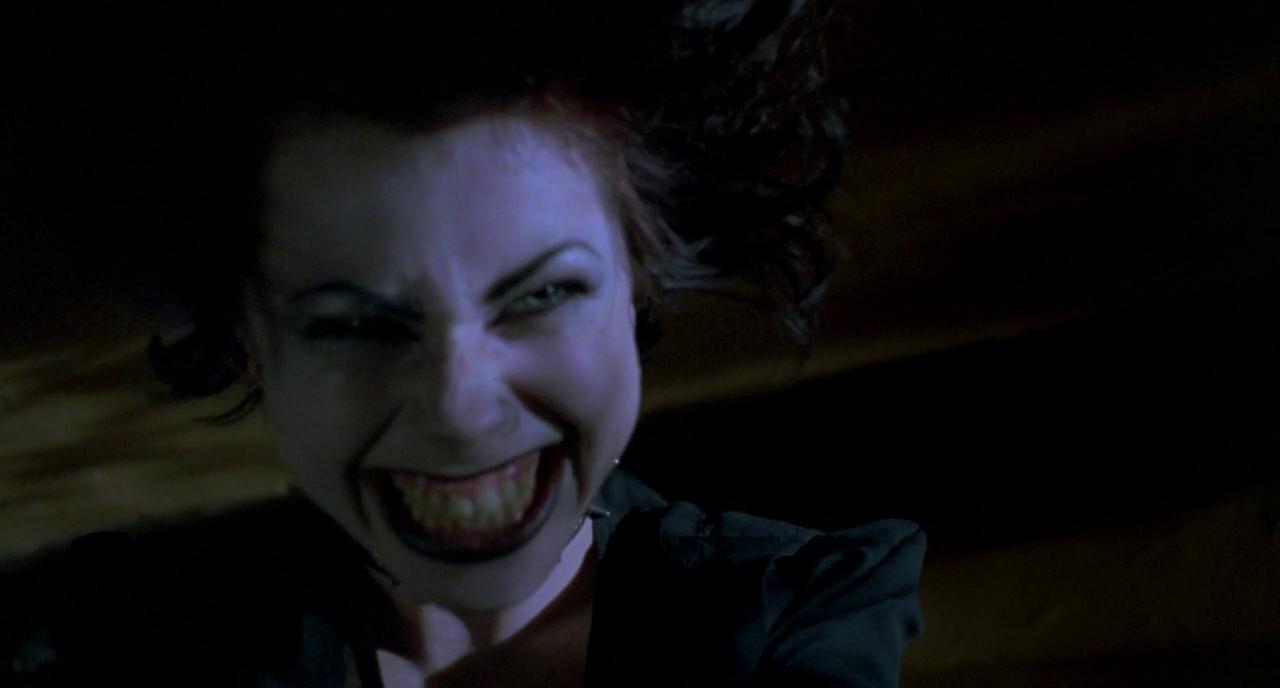
In contrast, Fairuza Balk effortlessly transcends the chaos to deliver an unforgettable performance as Nancy. She’s captivating as the volatile leader of the coven, imbuing the character with a magnetic charisma and unpredictable energy. Nancy has suffered deeply and is driven by rage and desperation; her embrace of witchcraft is simultaneously an act of rebellion and a way to assert control over a life that has afforded her very little. Balk’s performance is magnetic, and her face functions as an expressive canvas. The various ways she contorts her features to reveal the character’s vulnerability and capacity for cruelty is hypnotic. The actress continued to demonstrate her talent for portraying troubled women in The Waterboy (1998) and American History X (1998), yet it was The Craft that marked the height of her career as an actress capable of embodying volatility with both fierceness and unpredictability.
It would be remiss not to highlight the supporting cast. In a film dominated by supernatural chaos and intense emotional conflict, Neve Campbell’s turn as Bonnie adds an additional layer of complexity. She offers an understated portrayal of a young girl yearning for both external validation and personal healing. Campbell’s performance would prove to be a pivotal moment; just months after the film’s release, her trajectory changed drastically when she starred in Scream (1996). Her role as Sidney Prescott practically cemented her place as one of the defining horror icons of the decade. Similarly, Skeet Ulrich functions as a catalyst for much of the narrative’s conflict. As the archetypal high-school athlete, Chris, Ulrich subtly infuses the character with an undercurrent of predatory menace. Much like Campbell, his involvement proved to be an early indicator of what was to come; his subsequent role as Billy Loomis in Scream solidified his place in the pantheon of ‘90s horror villains.
Although it never quite ascends to the heights of Carrie (1976) or Heathers (1988), it’s understandable why The Craft has consistently drawn parallels to both. It openly borrows the trajectory of social alienation erupting into anarchic spectacle from Brian De Palma’s supernatural horror, while its fascination with the intoxicating allure of social inclusion owes a conspicuous debt to Michael Lehmann’s cynical comedy. Yet, where Fleming and Filardi’s screenplay distinguishes itself is in its willingness to probe the complexities of adolescence with both empathy and intensity. Rather than reducing the central characters to familiar high-school archetypes, a substantial portion of the 100-minute runtime invests in their individuality. Sarah’s vulnerability is shaped by her history of suicide attempts and the trauma of losing her mother; Nancy’s volatility is a product of her impoverished background and abusive home; Bonnie’s struggle with body dysmorphia stems from severe scarring; and Rochelle’s experience is marked by persistent racial harassment.
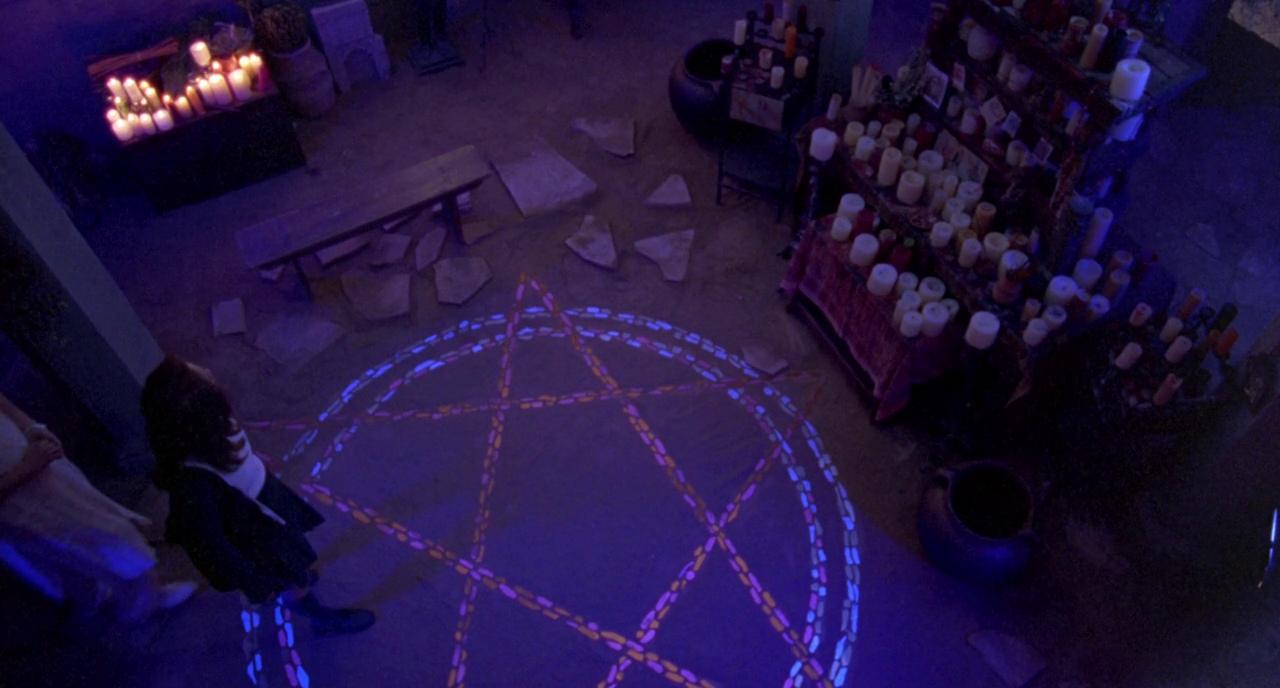
When the four teenagers summon the fictional god Manon, they delight in their newfound powers. Initially, they use witchcraft as a form of resistance against those who have marginalised them. Sarah performs a love spell to make Chris desire her, Nancy punishes her abusive stepfather, Bonnie removes her scars, and Rochelle exacts revenge on her tormentor. The great strength of The Craft is that it doesn’t pass judgement on the girls’ actions; they all have legitimate reasons that motivate them. Indeed, Nancy’s thirst for power eventually spirals out of control, resulting in the death of two sexually and physically abusive men. Though the escalation certainly raises moral complications, witnessing the quartet reclaim control feels both emotionally understandable and profoundly relatable—especially when viewed through a contemporary lens.
Despite its strengths, The Craft is not without its shortcomings. It begins as a somewhat grounded supernatural horror, but once the chasm between a morally challenged Sarah and an unhinged Nancy tears the coven apart, the narrative quickly collapses under the weight of its own ambition. During the climactic showdown, the magical chaos reaches a peak where the uneven integration of outdated digital effects creates a visual disconnect. This ultimately weakens the impact of what should be the film’s most powerful moments. Nevertheless, there’s a certain nostalgia embedded in these flaws that enhances the film’s undeniable charm.
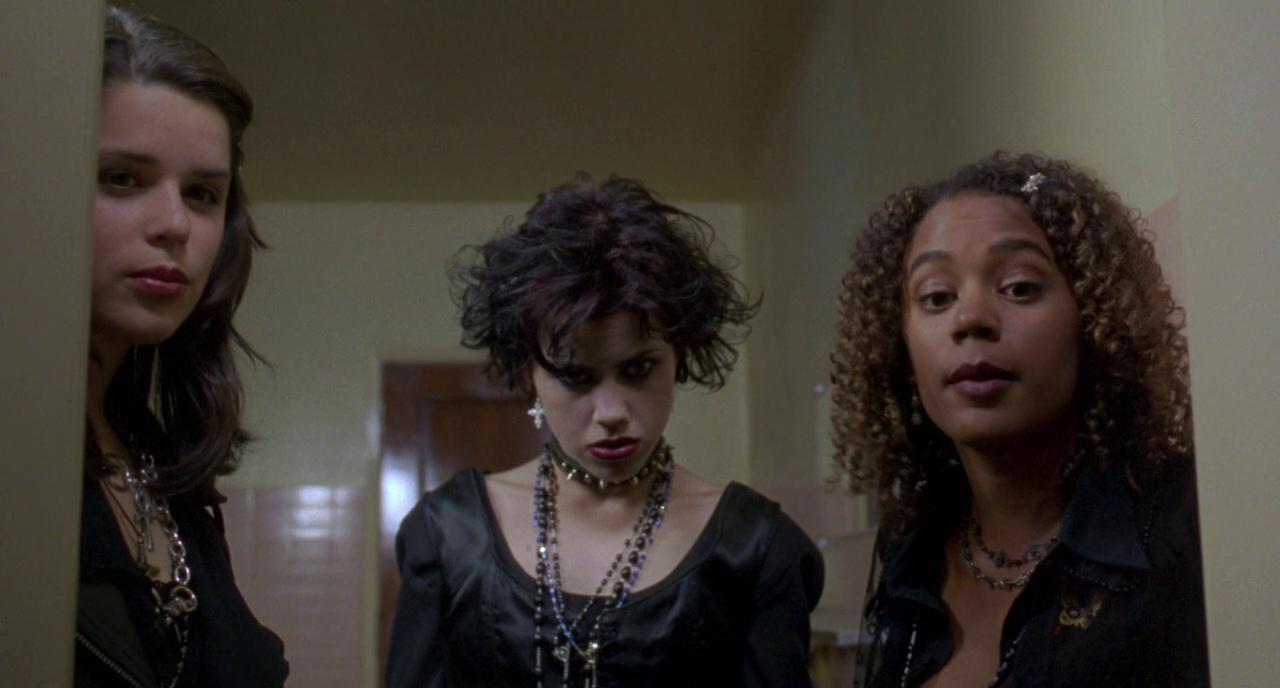
To reduce The Craft solely to a revenge fantasy would overlook the more resonant qualities woven into its narrative. Beyond its supernatural trappings lies a celebration of female friendship and a compelling depiction of how camaraderie can become a conduit for identity. One of the most iconic moments encapsulating this is the sleepover sequence. The four girls experiment with their burgeoning abilities through the ritualistic game ‘Light as a Feather, Stiff as a Board’. As Rochelle unexpectedly levitates and the girls realise their potential, they collapse to the ground with almost childlike glee. There’s a genuine tenderness during these early sequences that imbues their friendship with a sense of magic that goes far beyond incantations.
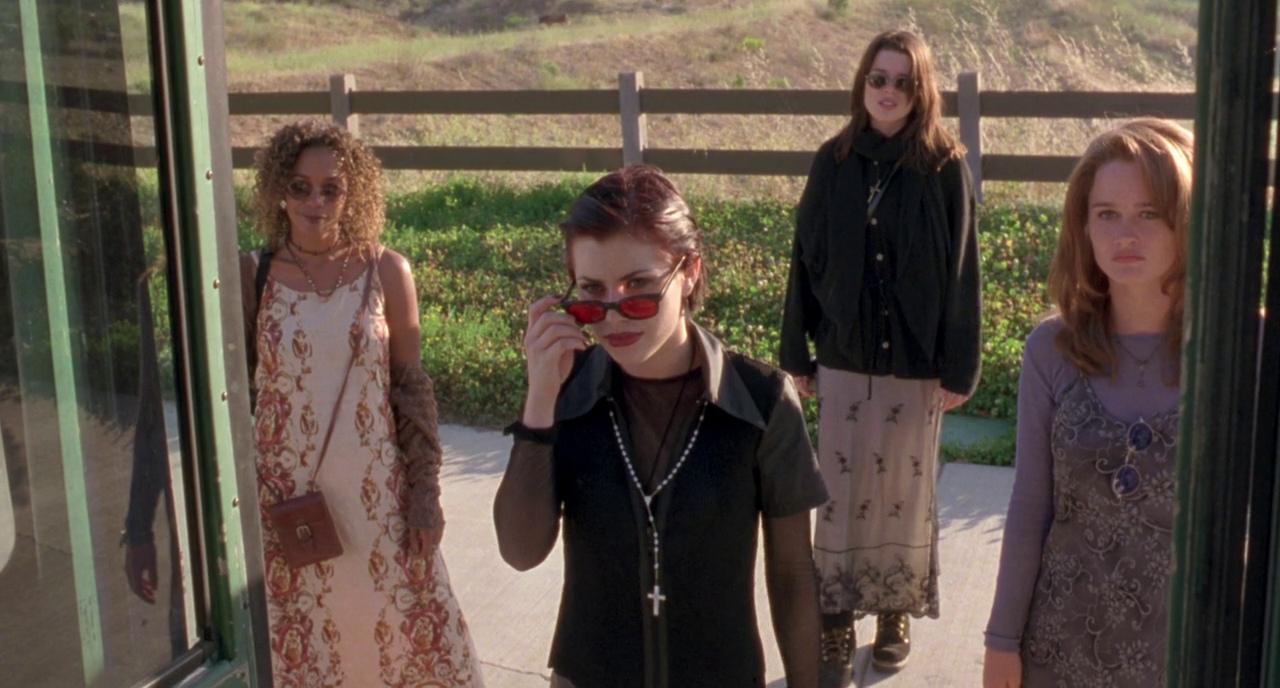
Equally resonant is a quieter moment when the girls leave the city on a bus. Fully embodying their newfound confidence, Nancy and Bonnie sport leather jackets and black lipstick, while Sarah and Rochelle wear soft floral dresses and combat boots. As they prepare to disembark, the driver warns them to “watch out for those weirdos”. In an iconic shot, Nancy lowers her sunglasses and unflinchingly responds: “We are the weirdos, mister.” It’s this reclamation of otherness that underscores why The Craft continues to resonate three decades after its release. It reassures audiences that being unconventional may be isolating, but when embraced collectively, it can transform into a source of strength and belonging.
The term ‘witch’ has historically been used as cultural shorthand for women who challenge societal hierarchies or male authority. The same hysteria that fuelled the Salem witch trials of the late-17th-century found an unexpected echo during the release of The Craft. Its depiction of teenage girls experimenting with occult power provoked a degree of moral unease; the film was met with suspicion and even attracted a higher age certificate than expected. Regardless, this did little to hinder its commercial success. Released in a year dominated by blockbuster spectacles such as Independence Day and Mission: Impossible, it grossed a staggering $55M against its $15M production budget. In the wake of this success, it quickly amassed a devoted cult following and contributed to a renewed interest in Wicca. Moreover, it helped normalise witchcraft within popular media, paving the way for television series including Sabrina the Teenage Witch (1996-2003) and Charmed (1998-2006).
USA | 1996 | 101 MINUTES | 1:85:1 | COLOUR | ENGLISH • FRENCH

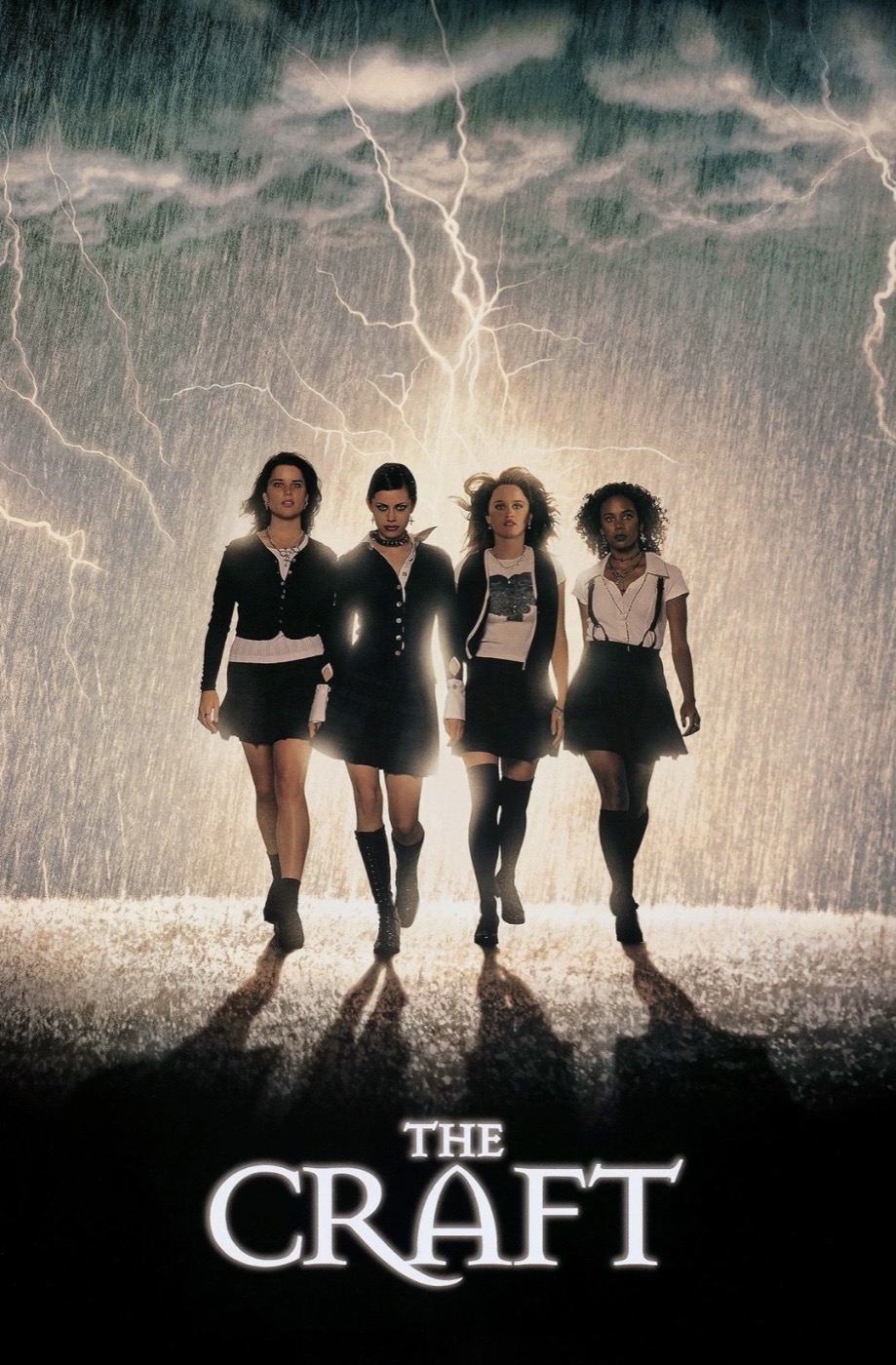
director: Andrew Fleming.
writers: Peter Filardi & Andrew Fleming.
starring: Robin Tunney, Fairuza Balk, Neve Campbell, Rachel True & Skeet Ulrich.