JASON X (2001)
Jason Voorhees is cryogenically frozen at the beginning of the 21st-century, and is discovered in the 25th-century and taken to space.

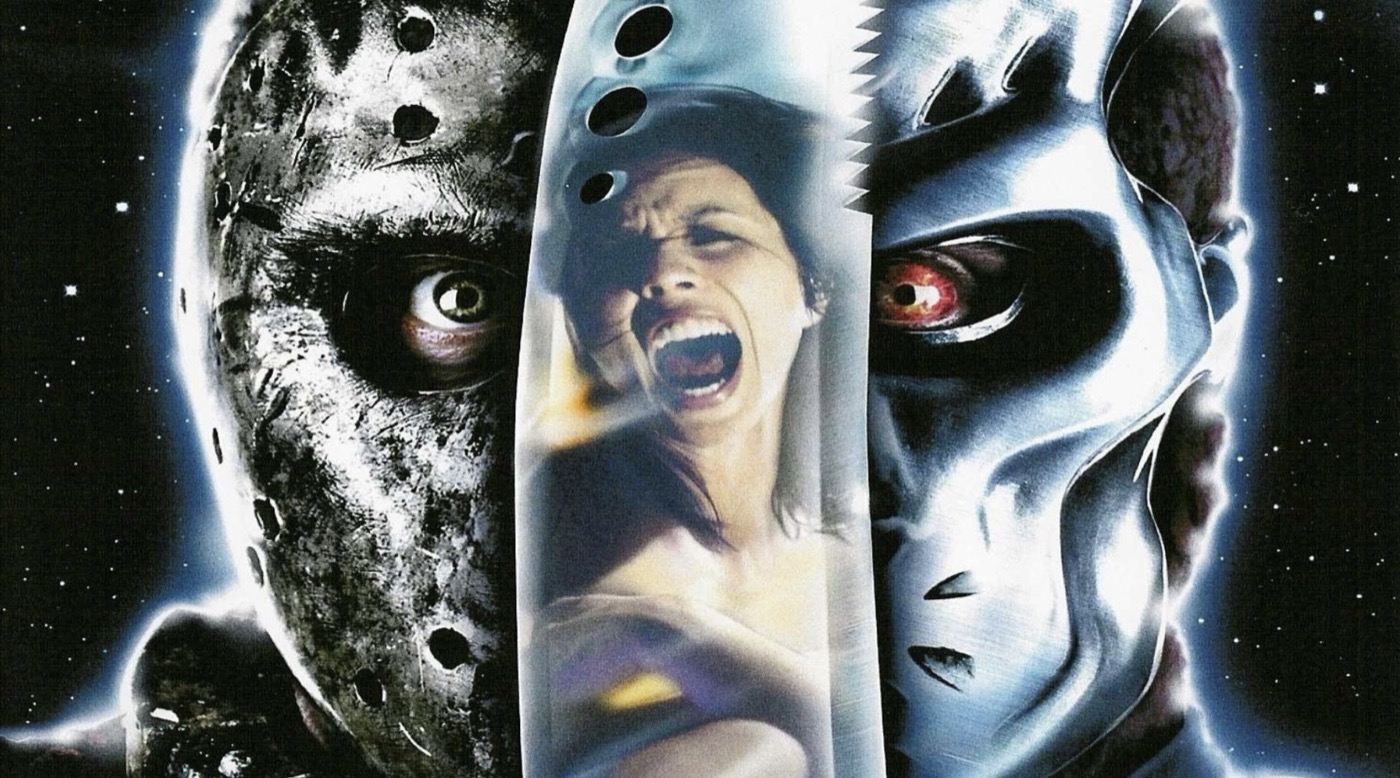

Jason Voorhees is cryogenically frozen at the beginning of the 21st-century, and is discovered in the 25th-century and taken to space.
Having covered all nine previous Friday the 13th instalments, it feels almost like kismet that Jason X was left until now. It remains canonically the final Friday, even after fans’ futile attempts to wedge the 2009 reboot into the original timeline. Jason X is set in the far-flung future of 2010! For the opening—then it jumps to 2455 A.D. This is the one where they send Jason Voorhees to space. Incredibly, there were reasons for this beyond “Jason Voorhees in space”.
“Jason in the hood, Jason underwater. We had him fighting gangs in LA, in the Arctic, on safari, the NASCAR circuit—everything!” recalls producer Noel Cunningham regarding New Line Cinema’s scattershot pitches. This arbitrary desperation stemmed not only from Jason being trapped in Hell in the previous sequel, but from the studio’s decade-long effort to produce Freddy vs. Jason (2003), which was itself trapped in development hell.
That project had its own separate whiteboard of terrible ideas. These pitches were for a new solo adventure to “retain interest.” As if people might have forgotten the guy in the hockey mask. It’s always a promising start when a sequel exists merely to vent frustration at being unable to make a different film, or as franchise producer Sean S. Cunningham put it: “Fuck it. We’ve got to do something with this.”
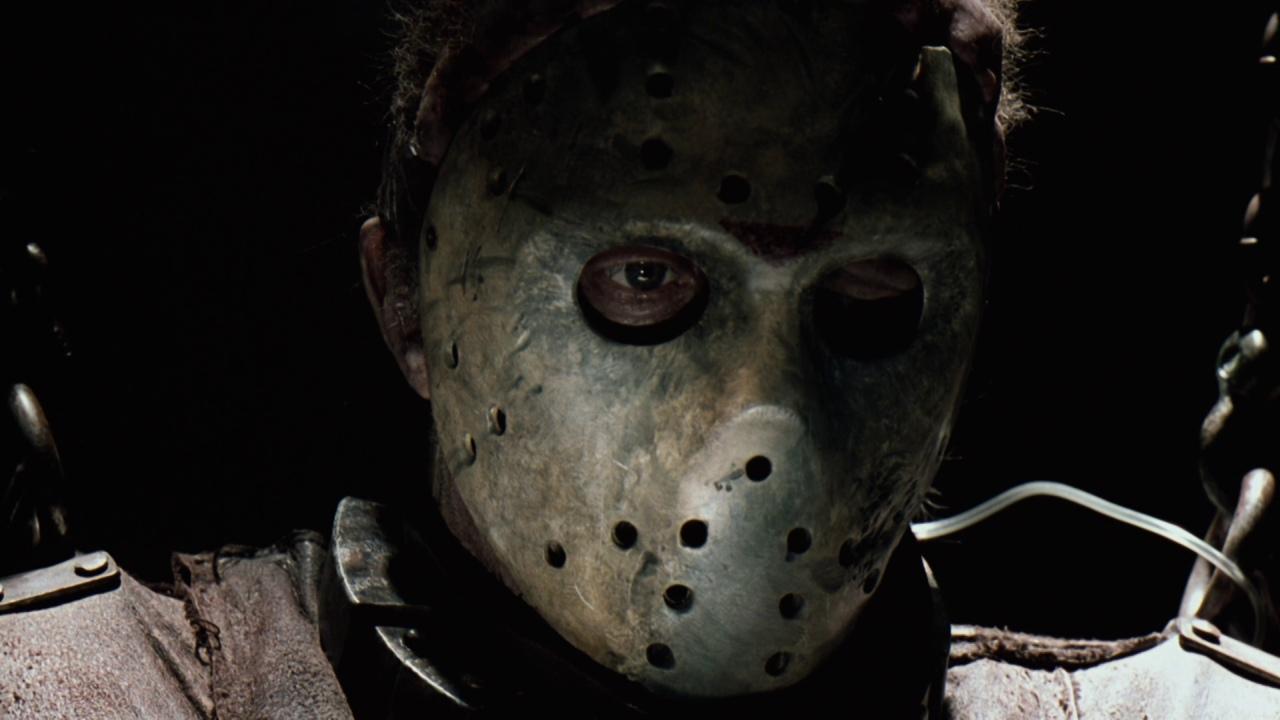
Despite the stellar track record of interstellar slasher sequels like Hellraiser: Bloodline (1996) and Leprechaun 4: In Space (1996), debut screenwriter Todd Farmer sold this futuristic setting as a logistical sidestep for their other production. Though at their current rate, the bout with Krueger could’ve taken another 400 years to develop. Those sci-fi films are nothing compared to all-time greats like Alien (1979), Aliens (1986), and even Event Horizon (1997). All of which Farmer steals from to beef up his story of a man wandering corridors and stabbing people.
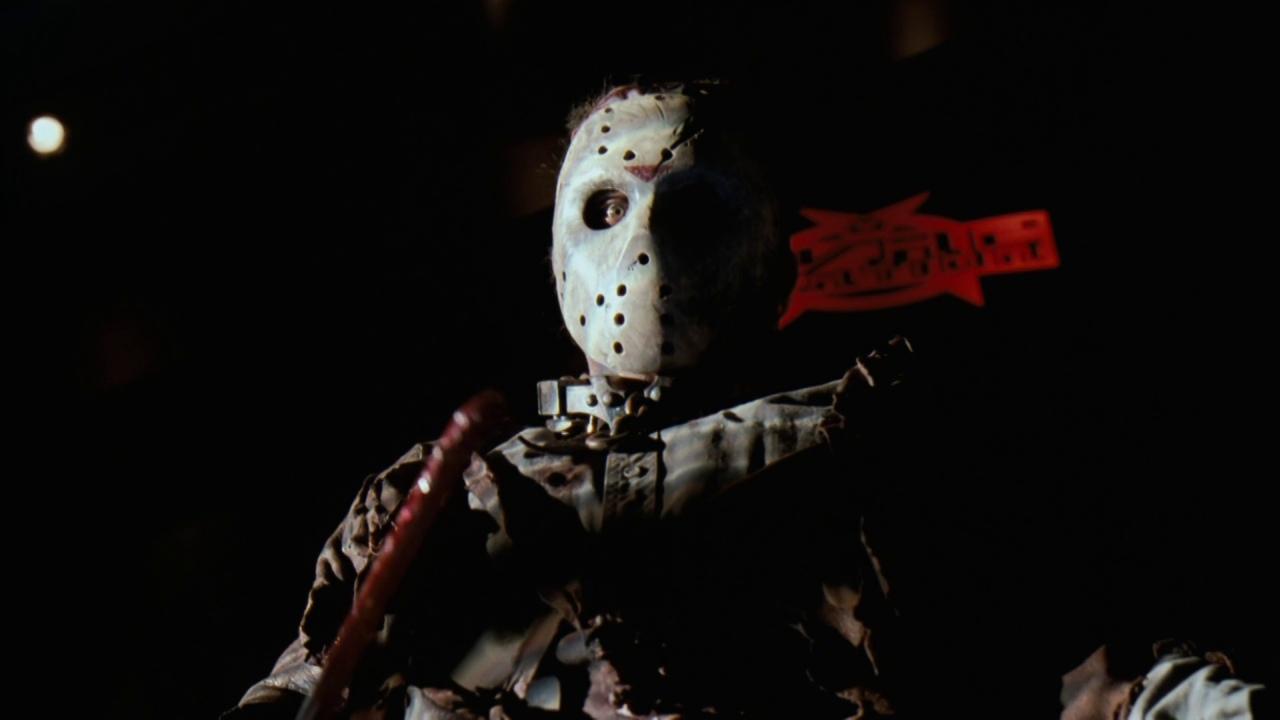
Starting impressively with a CGI panorama of Hell, we pan out through the opening credits to realise this is actually the hellish brain of Jason Voorhees. Never quite a zombie, he’s now a guy with magical regenerative powers that David Cronenberg is interested in studying under lock and key in the (try not to laugh) Crystal Lake Research Facility. We’ve come a long way since summer camp.
“I want him soft,” insists Cronenberg, in dialogue he rewrote for himself. Jason X was directed by James Isaac, who worked for Cronenberg on The Fly (1986), Naked Lunch (1991), and eXistenZ (1999). This connection is notable for two reasons: Isaac asked permission to use Cronenberg’s legendary effects team, to which the director agreed on the condition that Jason kill him; and I’ve never seen a director’s Wikipedia page where the primary photo is David Cronenberg rather than the director himself.
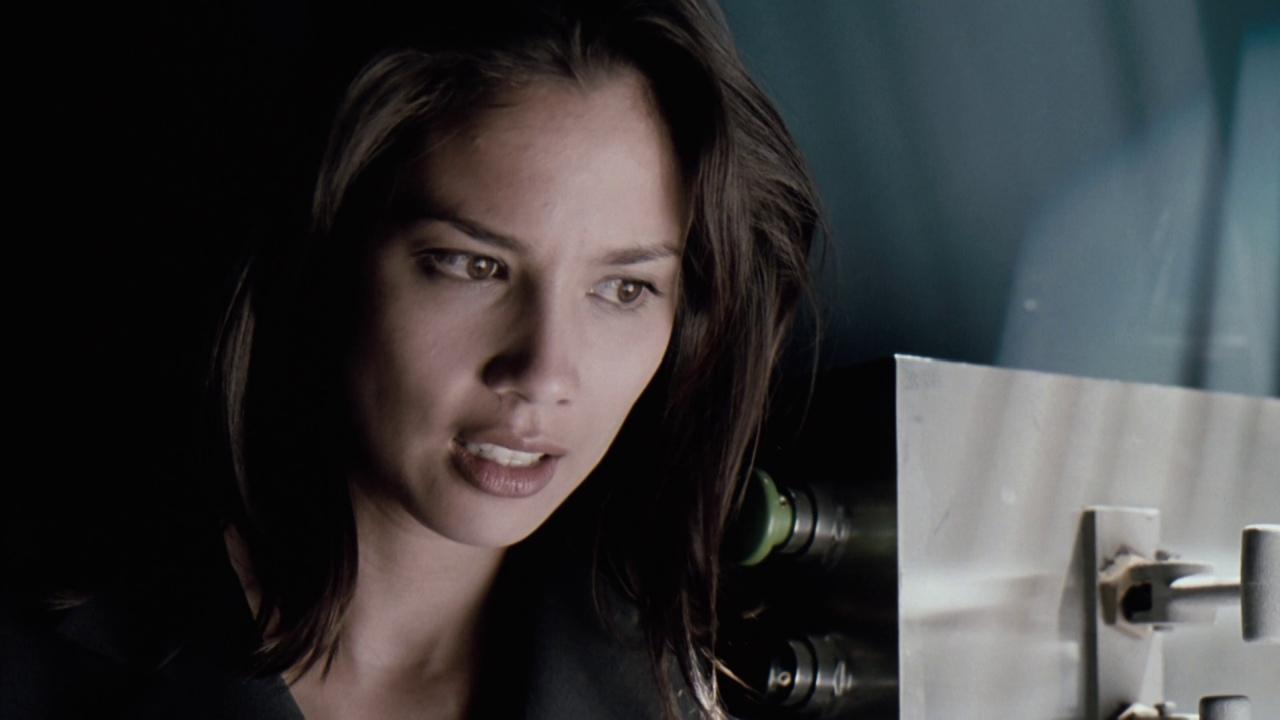
Overcoming insults like “how does he function with a brain that small?”, it’s only minutes before Jason performs a Houdini act, escaping and putting his jailer in chains for a neat surprise. More impressive is when the heroine, Rowan (Lexa Doig), investigates the only entrance being smashed open by a body—only to find Jason has somehow teleported outside behind her.
Kane Hodder, in his fourth and final appearance as Jason Voorhees, has plenty to work with. He survives cryogenic freezing (as does Rowan, who wasn’t even in a pod) and still manages to fall over and cut someone’s arm off, though he suffers the indignity of hockey being outlawed in 2024, resigning him to the status of an ageing hipster.
He achieves the film’s best kill almost too early: a poor doctor’s head is frozen in liquid nitrogen and then shattered. We can thank Stephan Dupuis, the head of makeup effects who won an Oscar for The Fly, for that. The moment proved so memetic in pop culture that it was tested on MythBusters in 2009. Spoiler: it didn’t quite work. Even in his scathing half-star review, critic and “Dead Teenager Movie” deprecator Roger Ebert admitted this was the “one good effects shot”.
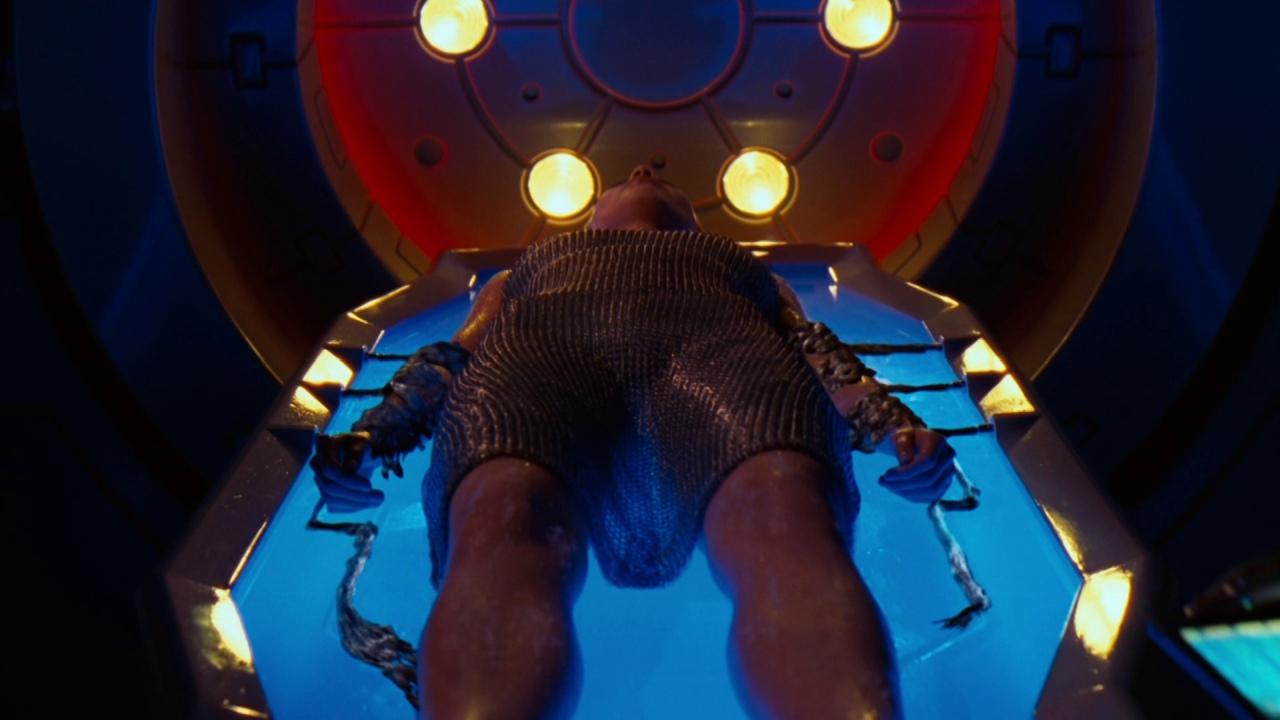
That’s a brutal score. Alas, I must concede the point, as not all the slashing in this slasher is effective. I can only imagine Ebert’s catatonia; even I found myself bored during the middle act’s dearth of suspense, featuring generic army grunts in a dark cargo warehouse. Aliens this is not. Bless the man who tries karate-kicking Jason and ends up “screwed”. These stormtroopers are so incompetent they light up Jason with a firing squad and somehow lose sight of him while he’s right in front of them. Turning a light on might have helped.
Cinematographer Derick Underschultz had just finished the single-season Total Recall 2070 (1999), and Jason X rests comfortably between the TV aesthetics of Star Trek: Enterprise (2001–05) and one of the pre-Abrams feature films. The Grendel spaceship looks decent from the outside, and there’s enough variety in the interiors to stop things from feeling repetitive. This is a B-movie script with an A-movie budget; at $14M, it was nearly three times more expensive than any previous Friday the 13th entry, as Paramount’s tactic had always been low budgets equals easy profits.
It has always been the writing that holds the series back critically, both because of and despite the heart-stopping, high-cholesterol cheese. Friday the 13th films were never for curmudgeonly critics; they were for loyal audiences who could predict every beat and found satisfaction in having those expectations met. It’s fun when you know you could do better if you were in those bloodied shoes. Jason X possesses that post-Scream (1996) self-awareness, where our future cast naturally happens to be a class of horny teenagers who bring two “popsicles” aboard to thaw. Sci-fi medicine can heal a severed arm, no problem, but the irreparable damage is in their brains.
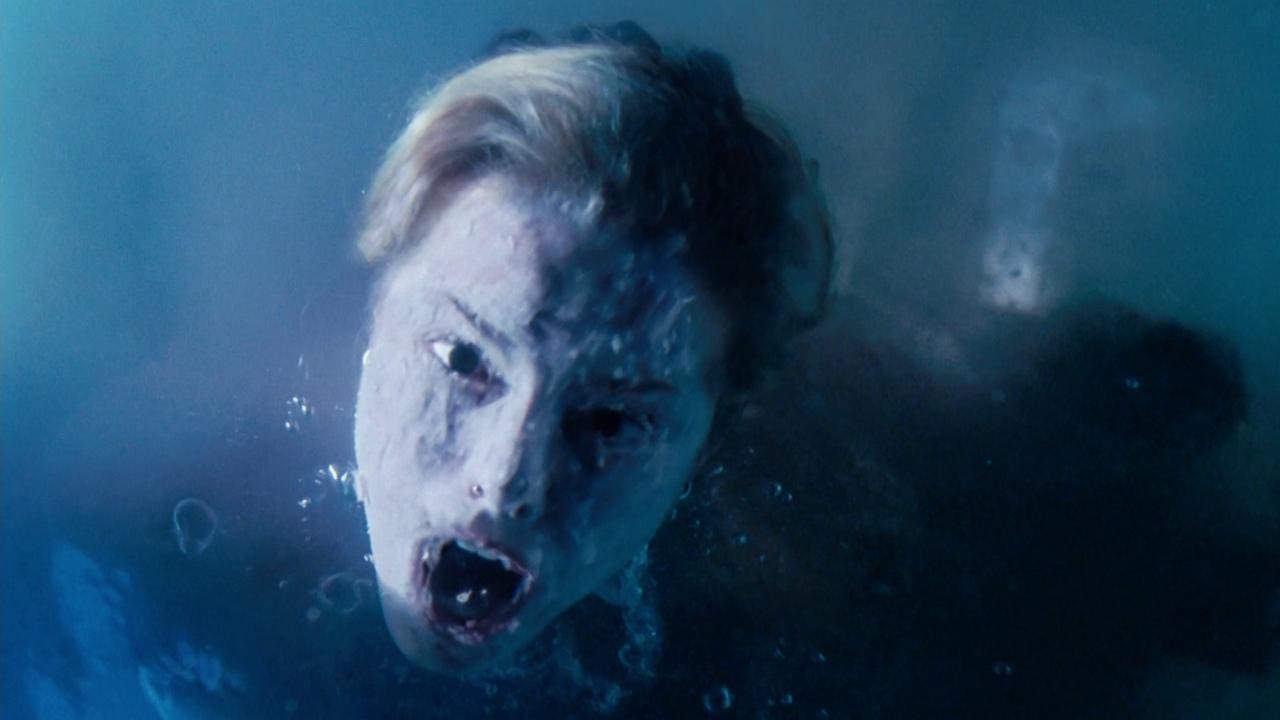
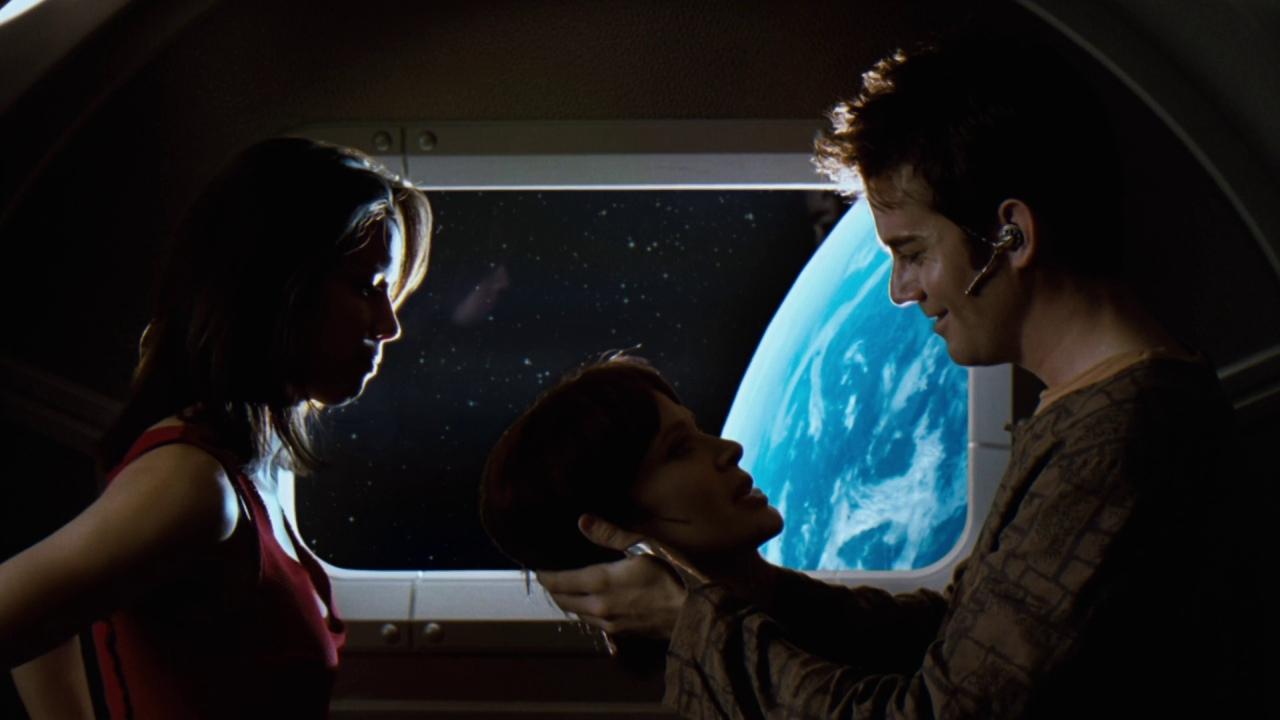
Jason is literally awoken by the hilariously on-the-nose cross-cutting of multiple sex scenes. Almost every woman’s avant-garde wardrobe looks as though it was slashed with a machete. Only the robot has a fully intact top, though her nipples keep falling off. Kay-EM 14 (Lisa Ryder) makes out with her creator to “boost the statistical chance of success”—a trick rarely used by Data on Star Trek: The Next Generation (1987-1994). Ryder relishes every scene-stealing moment; grateful that Isaac chose the 30-year-old actress when the role was written for another teen. Rather than acting above it all, she commits to the ridiculous confidence of fighting Jason in space.
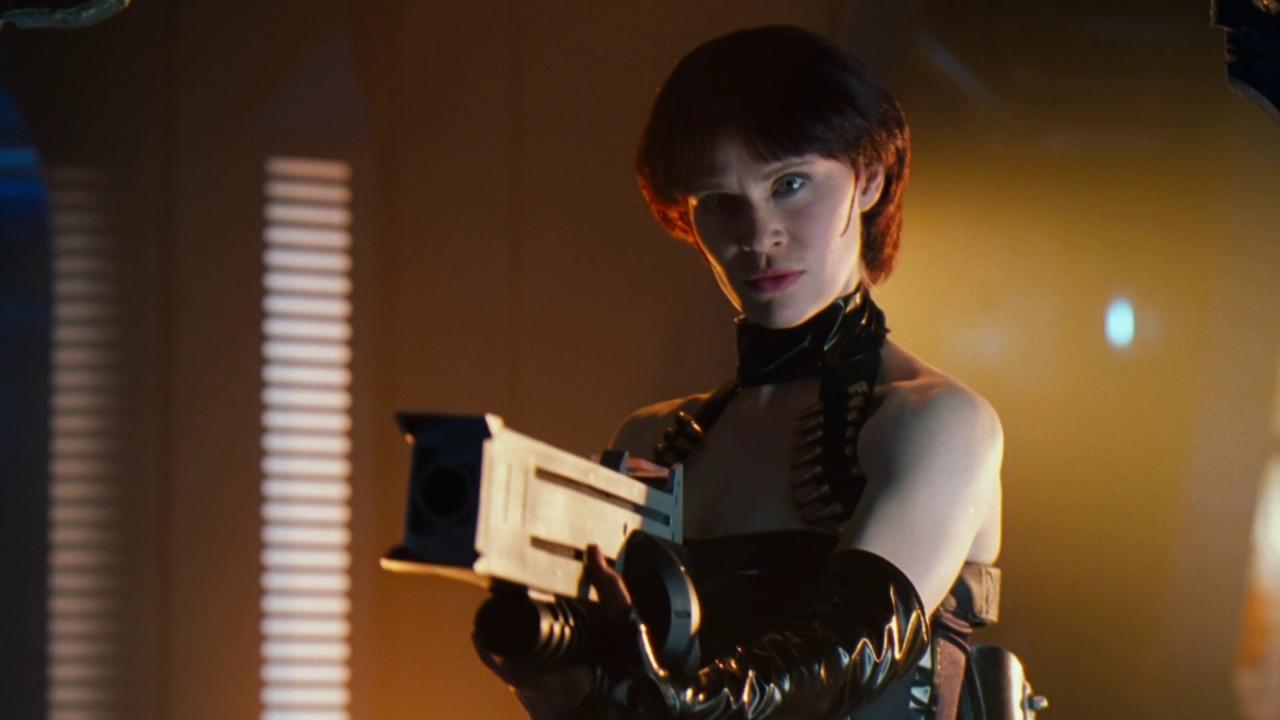
Later, Kay-EM is armed to the teeth as if The Matrix (1999) had only just been released—front-flipping, dual-wielding, side-gripping, and grinning the whole time. Perhaps in the future, bullet damage is affected by how cool you are, as these guns blow off Jason’s limbs and half his head, whereas the soldiers’ weapons had no effect. She is the best character, alongside the badass Brodie (Peter Mensah), who survives two stabbings and goes on to wrestle Jason from outer space into orbit.
Occasionally, Friday the 13th films like to pepper in an annoying older man as an easy target. Jonathan Potts has the esteemed honour of playing the Paul Reiser from Aliens. Characters Lowe and Burke are essentially the same person. Rowan gives him a speech about Jason being unkillable while Lowe actively schemes to auction him off, somehow failing to recall that their doctor is thawing out the dude with a 200-plus body count. He is rewarded with the great final words: “Guys, it’s okay! He just wanted his machete back!”
Through a critical lens, it becomes apparent how little our lead, Rowan, actually does. Doig describes her character as being “just like Ripley”, and it should be that obvious—except Jason X can’t even copy homework well. There are very few jokes about her being from the past, she has almost no advantages (since another character already knew who Jason was), and her attempt at leadership via firepower is overshadowed.
Rowan ends up as helpless as the others until the very end, when she is called “the expert on this guy”. They place Jason in a virtual-reality recreation of Camp Crystal Lake—a wonderful concept by Farmer—but the script relies on the audience to fill in the blanks. It isn’t that the story is hard to follow; the VR is established earlier, but that was for our benefit, not Rowan’s. She wouldn’t have known about it, and even if she had suggested the setting, it’s another man and Kay-EM who ask the computer for “data file Crystal Lake circa 1980”, spawning two naked women who declare: “We love premarital sex!” None of this was due to our protagonist. Nevertheless, it led to Jason smashing the two ladies together in their sleeping bags, which is very funny.
A good laugh was the alternative to a genuinely intriguing scene Farmer had originally written. “There was a part written for Betsy Palmer in the VR sequence. I had Jason kill her to show that he was not only physically different but mentally changed as well. I was told I was insane and to rewrite it.” Given how far the franchise has drifted from its humble roots, this would have been the most direct connective tissue fans had seen in years. Not since Friday the 13th Part III (1982) has Pamela Voorhees even been referenced. It’s ridiculous for New Line to suggest she’s still his constant motivator, as if his mother wanted teenage astronauts to bear responsibility for a child who drowned 500 years prior.
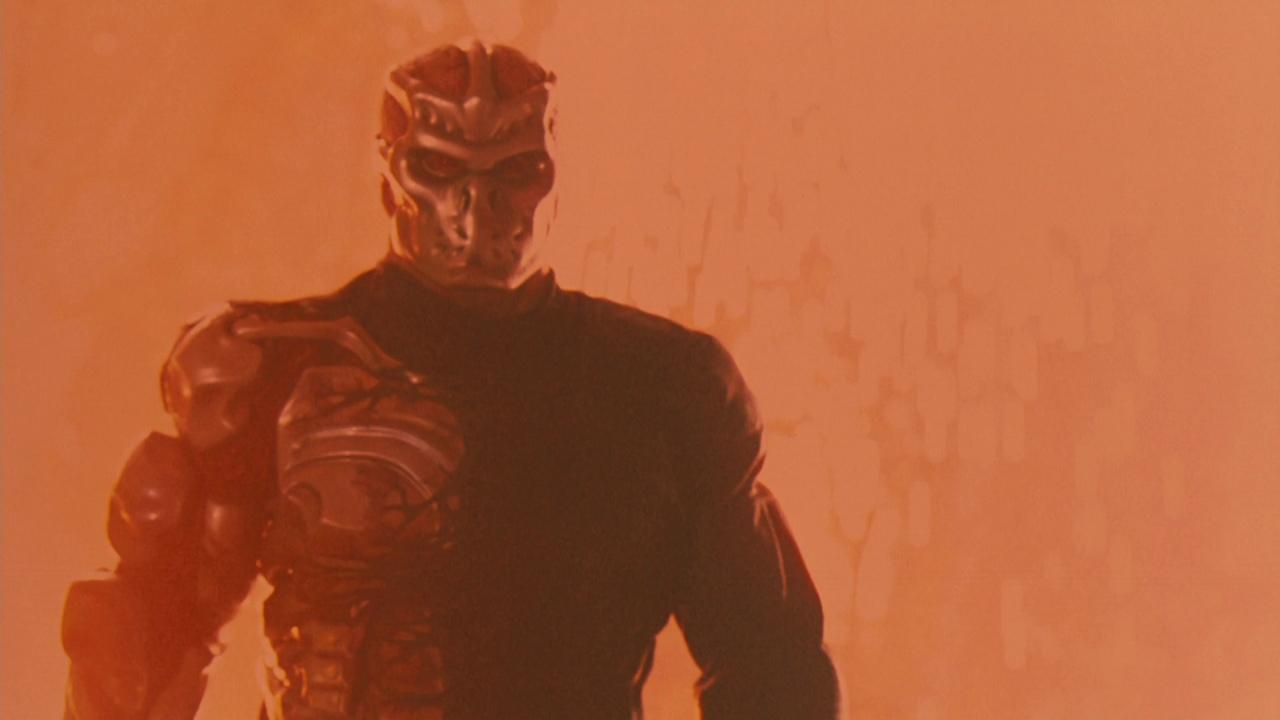
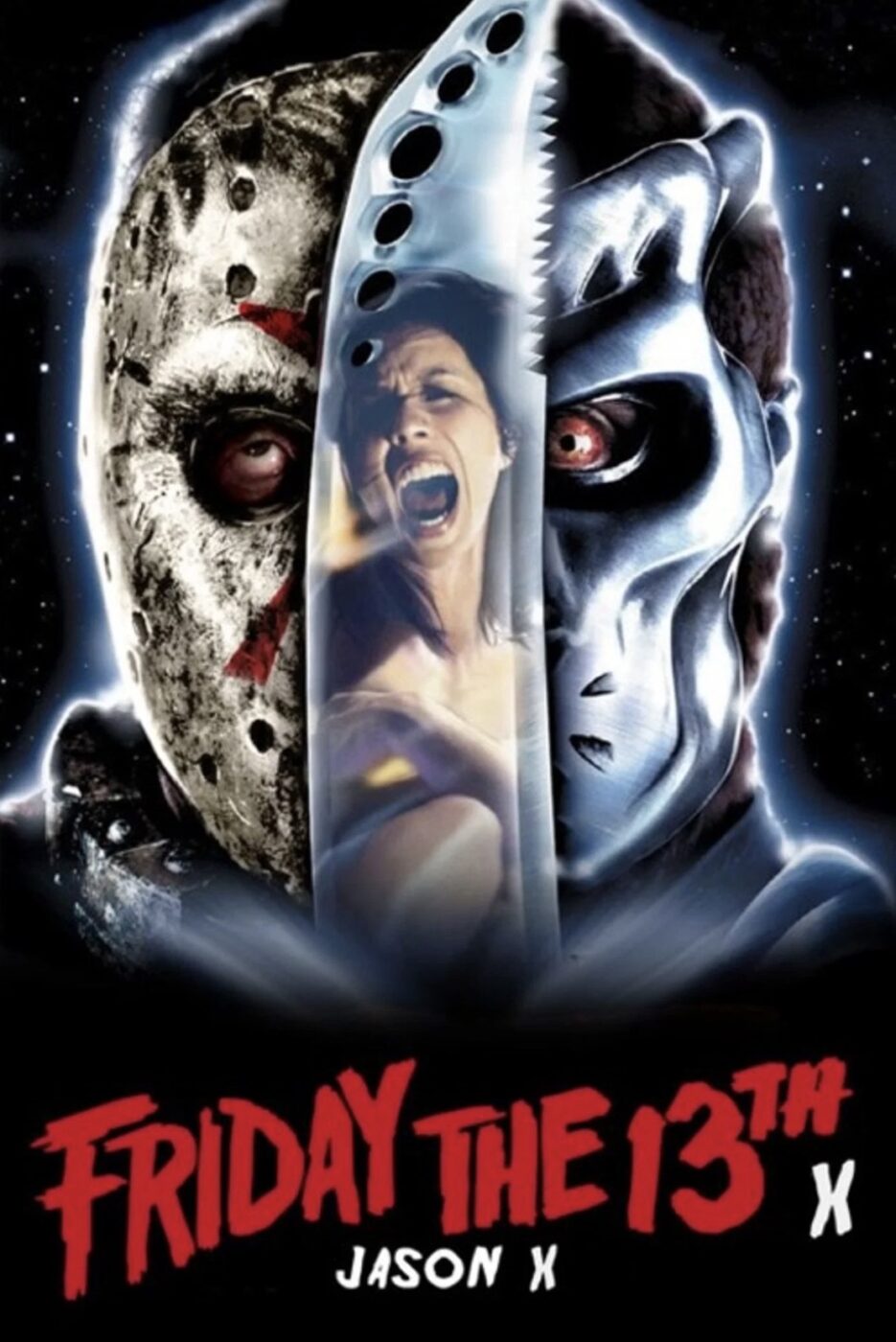
By that point, none of them stand a chance against “Uber Jason”. That was the behind-the-scenes title given to the character when “evil gets an upgrade”, as the tagline goes. With regular Jason blown to bits, the unluckiest place for his body to land is right on the device that heals people with nanomachines. I personally prefer his meaty, tumorous head from Jason Goes to Hell: The Final Friday (1993), but I understand making him look more human to contrast with his revamp. And as silly as he looks—all shiny and chrome—it’s a shame New Line felt the need to spoil this cybernetic look in all the marketing.
The last we see of Jason, he is becoming a shooting star for two young lovers camping on Earth 2. Even the planets have unoriginal sequels. His charred mask sinks full-circle back into a lake. Whether it’s a bittersweet sentiment or one last laugh, you should be leaving Jason X on a high… but then the worst end-credits song I’ve heard in a long while instantly deflates the mood.
Harry Manfredini returned to score, but after an impressive opening theme, the rest sounds noticeably cheap. Isaac called a friend for two emergency tracks—”X is the Loneliest Number” and “Jason’s Jam”—of which composer Ethan Wiley boasts: “We literally came up with the concepts in a couple of hours and recorded them over a weekend.” It shows; they are both abysmal vibe-killers. It’s a crying shame they couldn’t capitalise on the nostalgia of the trailer, which featured Drowning Pool’s “Bodies” and would have sent audiences out cheering.
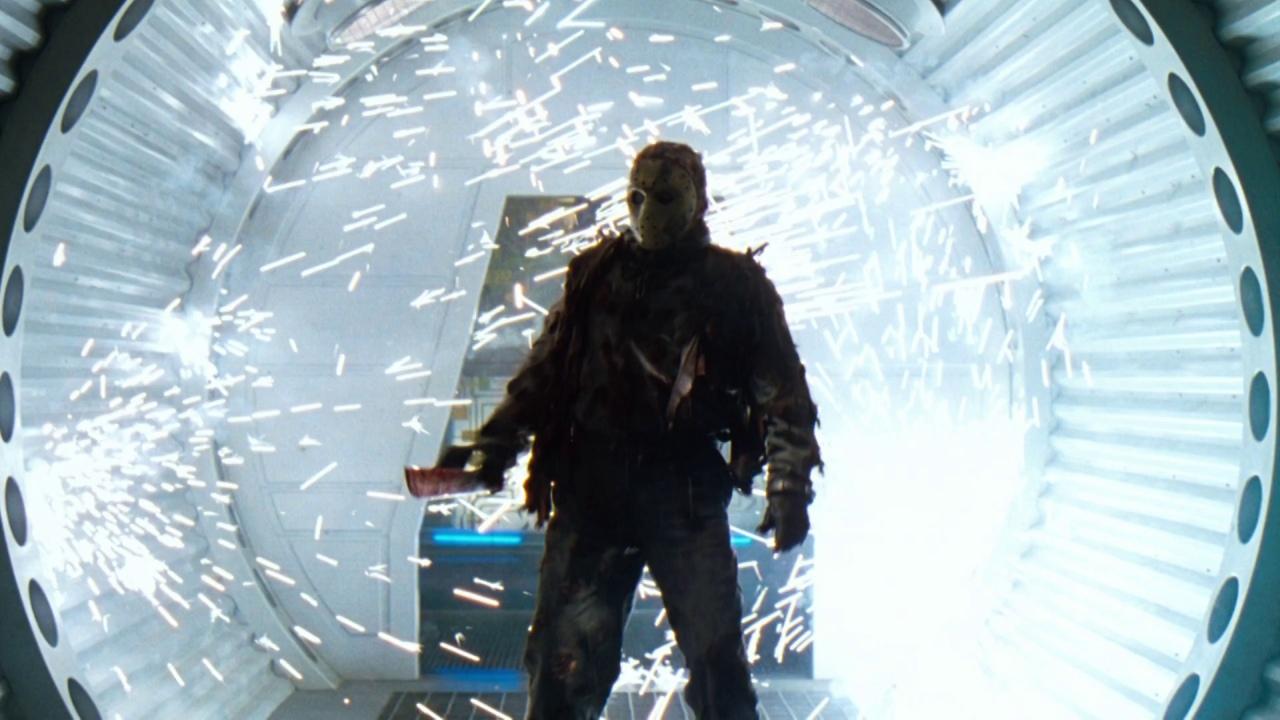
Before Jason X even premiered, an IGN preview (later backed up by an AV Club interview) revealed that Farmer was influenced by gossip that screenwriter Kevin Williamson was selling an entire Scream trilogy upfront. The untitled sequels—we’re reaching Final Fantasy X-2 territory—would not just have ventured back to Earth, but back in time for Uber Jason to face the burlap-sack, hillbilly Jason of Friday the 13th Part 2 (1982).
New Line weren’t so confident. This retrospective should have happened two years earlier, as production finished in 2000, but Jason X was dumped on the shelf. The powers that be were changing; the executives who greenlit the sequel were gone, replaced by new people who routinely scrap a predecessor’s projects to start afresh. As Farmer frames it: “New Line didn’t have any money. They had put all their eggs in The Lord of the Rings basket.”
Paramount had always maintained the Friday the 13th franchise for clockwork spurts of cash but grew tired of the reputation. New Line, with their more inventive rival A Nightmare on Elm Street, aimed for more daring ideas. Jason Xwas released to the negative reviews expected of any Friday the 13th, with a box-office failure of $17.1M. That figure was higher than the previous two entries, and it wouldn’t have been so disappointing if it had shared their safe budgets. With the brave $14M production cost, this was an egregious mistake for the company. But they always had the loyal fanbase to rely on—surely they’d arrive on opening day to spite the critics?
Unfortunately, the over-eager audience had already found Jason X on that shelf; it became one of the first films to fall victim to internet piracy. They were loyal to Jason, not the studio, so there was no point in paying for tickets if they’d already seen it for free.
The label of “cult classic” is a salve only in retrospect. Truly great films, like the works of John Carpenter, struggled to make money despite their quality. Jason X is no masterpiece, but it’s the film fans love to laugh about, and it’s far more genuinely entertaining than the Hellraiser and Leprechaun space attempts. Tongue-in-cheek worked wonders for Friday the 13th Part VI: Jason Lives (1986), but the troubled production likely prevented this from achieving the satirical heights of Wes Craven.
Years later, Isaac, Farmer, and Cunningham still offer differing perspectives. The pressure from the producer personally backing pre-production suggested he had significant creative input. “The first draft Todd turned in was really raw. It was weird, sexy… some great funny moments, but scary moments, too,” Isaac insisted, with Farmer confirming that the second draft was the one greenlit—after which there were “about 100 rewrites”. It’s fitting, given that Cunningham’s original Friday the 13th (1980) was a blatant cash-in after Halloween (1978), that Jason X now ends up alongside Carpenter’s equally tragic Ghosts of Mars (2001).
For regular cinema-goers like Ebert, that was the first and last time they had to experience Uber Jason. Yet, true to his nature, this idea couldn’t die. Avatar Press published the 2005 comic book Jason X Special as a direct sequel, followed by the 2006 mini-series Friday the 13th: Jason vs. Jason X. Black Flame published the novelisation, followed by four original sequels: The Experiment, Planet of the Beast, Death Moon, and To the Third Power.
In 2017, Friday the 13th: The Game—a multiplayer experience featuring almost every iteration of Jason—teased Jason X downloadable content. It was then that the infamous Cunningham v Victor Miller lawsuits erupted, halting all development of Friday the 13th media. Hence the 17-year drought, set to end with the upcoming TV prequel series Crystal Lake. The unreleased Uber Jason was found frozen inside the original game files and once again set (or taken for) free by the fans.
Jason X is a bad film, and it could’ve been a better one, yet what exists is wildly entertaining simply for how audacious the journey from Camp Crystal Lake has been. As JFK once said: we choose to send Jason into space and do the other things, not because they are easy, but because they are hard.
CANADA • USA | 2001 | 92 MINUTES | 1.85:1 | COLOUR | ENGLISH

director: James Isaac.
writer: Todd Farmer (based on characters created by Victor Miller).
starring: Kane Hodder, Lexa Doig, Lisa Ryder, Jonathan Potts, Chuck Campbell, Melyssa Ade, Peter Mensah, Melody Johnson, Derwin Jordan, Phillip Williams, Dov Tiefenbach, Kristi Angus, Yani Gellman, Todd Farmer & David Cronenberg.