WASTEMAN (2025)
A prisoner weeks away from release is dragged into a drug war among fellow inmates.



A prisoner weeks away from release is dragged into a drug war among fellow inmates.
In Cal McMau’s prison film Wasteman, the central performances by Tom Blyth and David Jonsson are so compelling—so impossible to look away from—that the film’s rather obvious metaphor for self-discovery is easy to overlook.
Plenty of other elements help, of course: McMau’s urgent, assertive direction; the terse script by Hunter Andrews and Eoin Doran; and Lorenzo Levrini’s drab, claustrophobic cinematography. The film also benefits from the absence of tired prison-movie tropes. But it’s the characters of Taylor (Jonsson) and Dee (Blyth) that dominate the screen, and the way their relationship develops—first predictably, then less so—that propels the narrative.
The setting is D Wing in an English prison. Taylor has been inside for 13 years, making himself useful by cutting other inmates’ hair while becoming heavily reliant on illicit prescription pills. Suddenly, he’s faced with the prospect of early release to ease overcrowding—a plausible premise given the current state of the British penal system—and could be out in weeks. “It’s really easy—all you’ve got to do is fill out the worksheet and stay out of trouble,” a prison officer tells Taylor, who looks more terrified than overjoyed. Clearly institutionalised, he seems ill-equipped to handle the outside world.

Enter a second disruption to Taylor’s circumscribed, pill-dulled life: a new cellmate named Dee. He’s more of a professional criminal than Taylor ever was; Dee is serving time for firearms offences, whereas Taylor was a small-time dealer who accidentally sold bad pills at a rave. After filling their cell with the proceeds of his black-market activities from his previous prison (soft drinks, chocolate, trainers), Dee makes no secret of his ambitions: “I’m gonna boss this place.” Specifically, he plans to challenge Gaz (Corin Silva) and Paul (Alex Hassell), D Wing’s incumbent drug lords. When another inmate advises him to “be smart”, Dee’s response is “fuck that”. Aggression is his chosen strategy.
Even so, the rivalry between Dee and his adversaries is a slow-burn affair. For a time, the film concentrates on the daily lives of Taylor and Dee and their burgeoning friendship. But when the struggle for control of the drug trade inevitably explodes into violence, Taylor is caught in the middle. The stakes are raised by a further complication: Taylor’s estranged son, whom he barely knows, but whom Dee uses as leverage.
So far, Wasteman might sound like standard genre fare—the “only-slightly-bad” protagonist clashing with “truly-bad” antagonists is a cinematic mainstay. Where McMau’s film excels is in the exceptionally strong realisation of the two leads and their respective arcs. We witness Taylor, the titular “wasteman”, discovering an inner strength that leads to a surprising finale. For Dee, the shift is less about personal growth and more about the evolving way Taylor (and the audience) perceives him.
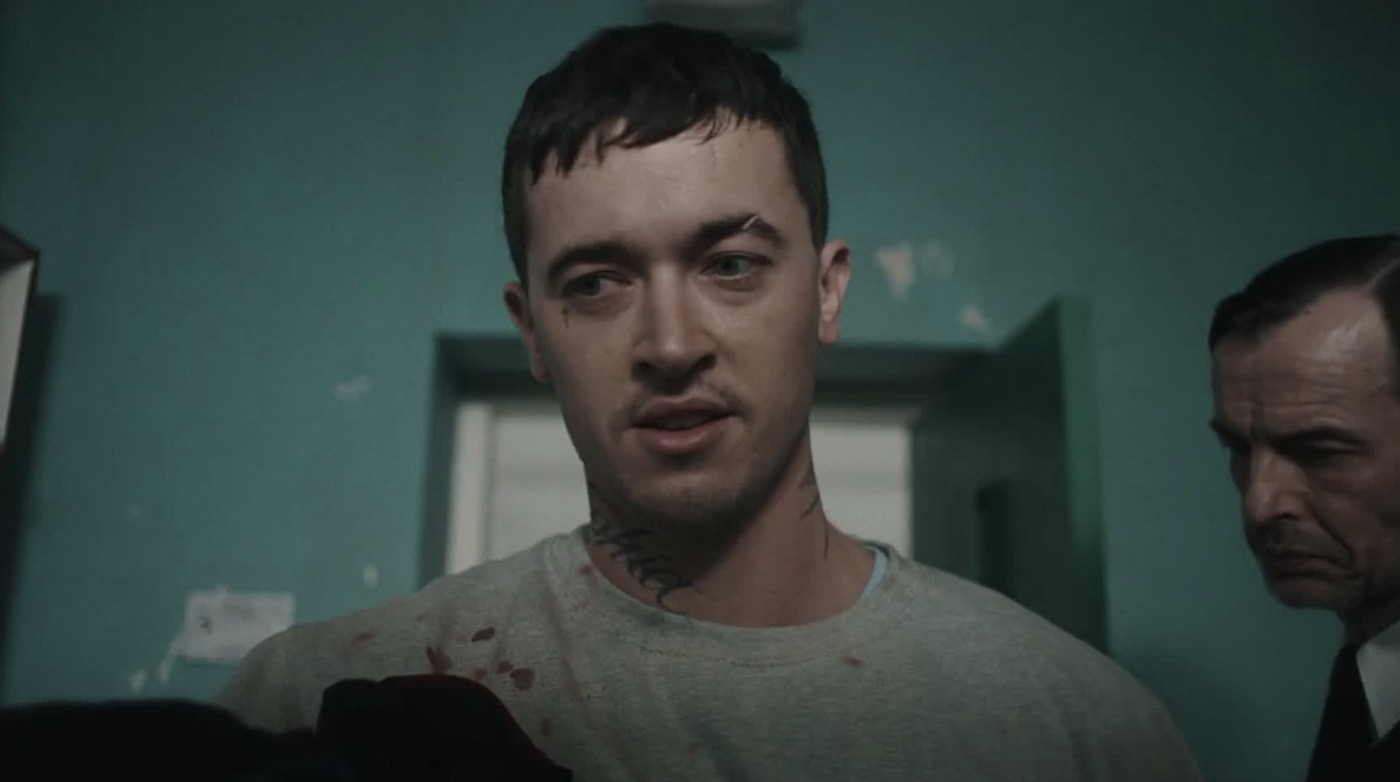
The key to Blyth’s superlative performance—which, if anything, outshines Jonsson’s—is that we can’t help but like Dee initially, even as our instincts warn us he’s dangerous. It’s a potent, complex reaction to elicit from an audience (a feat also managed by the likes of Barry Keoghan).
Jonsson, who originally auditioned for the role of Dee, is less extravagantly expressive than Blyth but inhabits his character just as fully. Taylor’s evolution from extreme passivity to taking the initiative feels entirely natural. If there’s a minor quibble, it’s that many of Jonsson’s roles—from Rye Lane (2023) to The Long Walk (2025) and the series Industry—share a similar DNA (outer humility, inner strength). This can make him feel more like a “type” than a unique individual; however, his performance here is so intense and persuasive that you won’t spare a moment worrying about it while the film is running.
The supporting cast exists largely to facilitate the central duo’s story. The writing by Andrews and Doran is similarly focused, opting for short, punchy lines. Occasional humour (“is ‘bollock’ one L or two?”) never interrupts the flow, and while certain atmospheric sequences don’t drive the plot, they certainly don’t dilute the tension. The score by Forest Swords avoids the clichéd rap/hip-hop mix one might expect from a contemporary prison film, instead utilising large instrumental sounds that never distract.
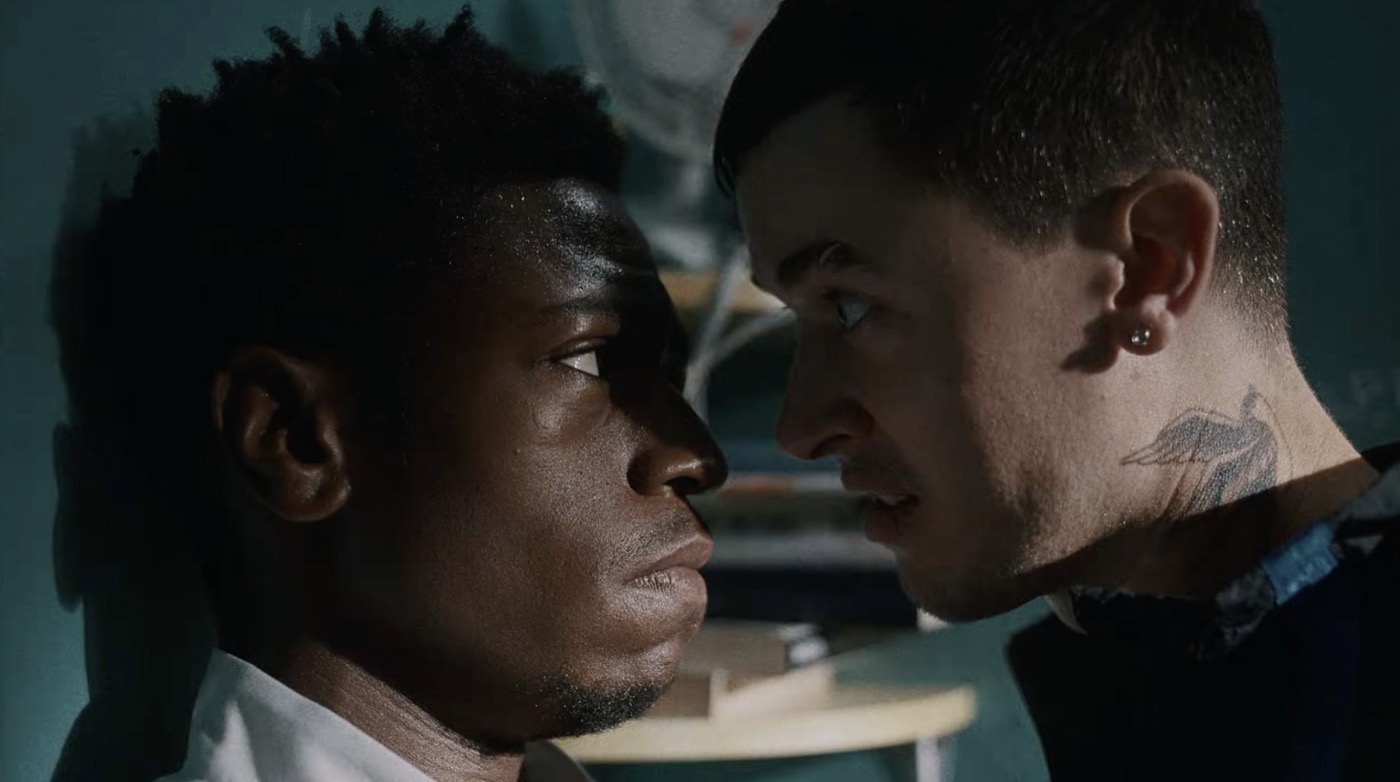
Levrini’s cinematography sticks to a muted grey-blue-green palette. The prison setting necessitates close-up shots, kept dynamic through varied angles. The sense of claustrophobia is heightened by the inclusion of footage from forbidden mobile phones—sometimes overtly identified, sometimes implied by the aspect ratio. By contrast, a bird’s-eye view of the prison—which turns out to be from a drug-smuggling drone—provides a disconcerting jolt of freedom.
Long in development, Wasteman was at one point intended for the Safdie brothers, who might have made it overly elaborate. Instead, this is a tight, relentless, and immensely assured debut for McMau and his writers (all of whom earned BAFTA nominations in the ‘Outstanding Debut’ category).
Underneath its brutally realistic surface, the film is perhaps more conventional than it appears. By making Taylor’s original offence unintentional, the filmmakers employ a common trope to ensure the audience sympathises with a convict. Nevertheless, despite a mid-film riot, it avoids the usual clichés—no escape attempts, no tearful family visits, and no sadistic guards. Indeed, one could easily imagine this story transplanted outside prison walls. Everything of note in Wasteman derives from character, and it’s the powerhouse performances of Jonsson and Blyth that transform a well-crafted genre piece into a powerful, transcendent drama.
UK | 2025 | 90 MINUTES | 1.5:1 | COLOUR | ENGLISH

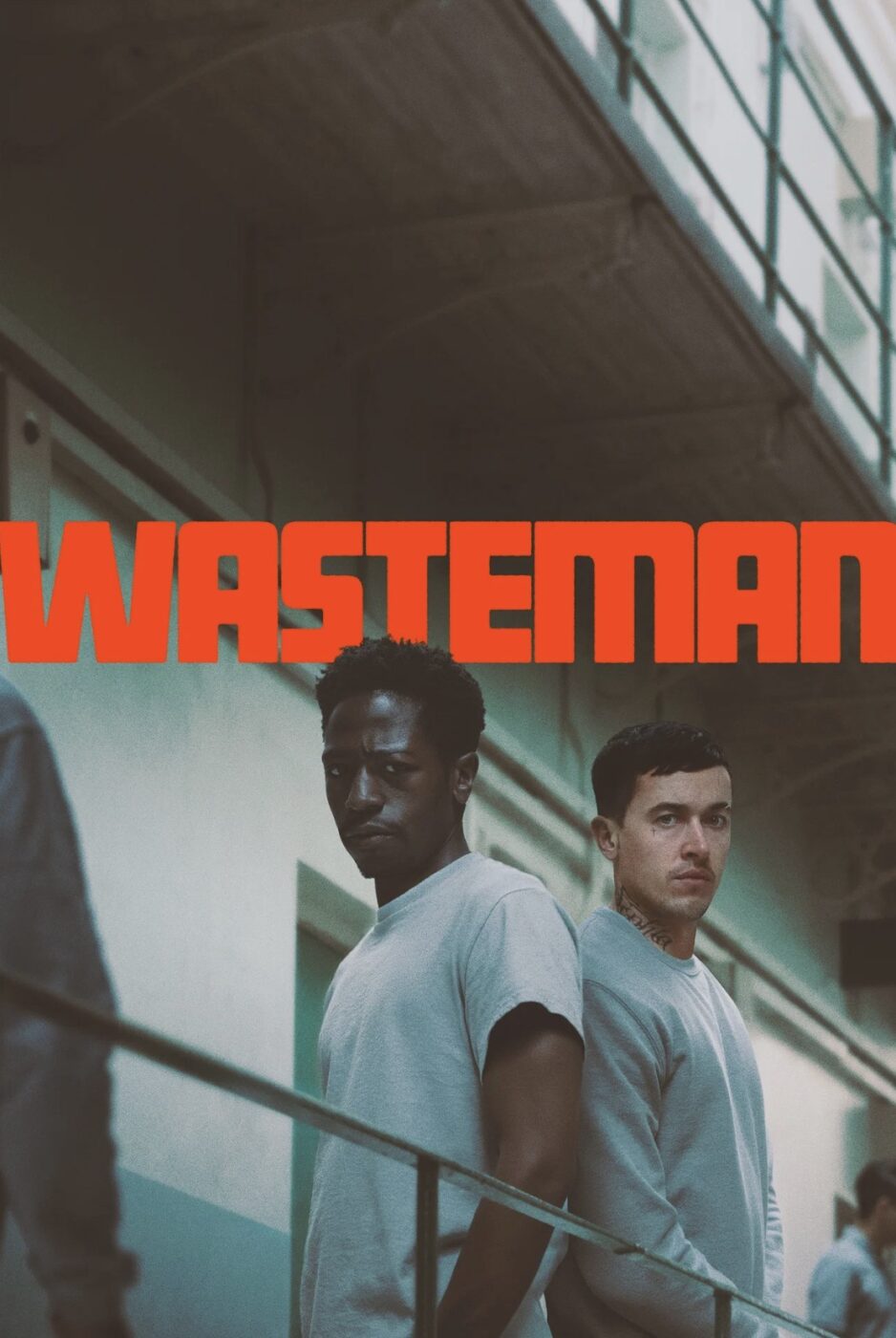
director: Cal McMau.
writers: Hunter Andrews & Eoin Doran.
starring: David Jonsson, Tom Blyth, Corin Silva & Alex Hassell.