DANGER: DIABOLIK (1968)
A master thief and his sensual lover pull off heist after heist, all while an envious coalition of cops and gangsters is gunning for them.


A master thief and his sensual lover pull off heist after heist, all while an envious coalition of cops and gangsters is gunning for them.
Mario Bava’s cult adaptation of the classic Italian comic book series is a Pop Art masterpiece. Its vivid colours truly pop in this new edition from Eureka Entertainment, which makes its UK debut on 4K Ultra HD and Blu-ray as the latest addition to the prestigious ‘Masters of Cinema’ imprint. It’s a playful socio-political satire that subverts genre expectations by presenting a criminal anti-hero as its protagonist.
The film opens with Diabolik (John Phillip Law) stealing $10M in a dockland heist, hidden under a multi-coloured cloud pumped from his smoke machine. His getaway involves a daring dive into the sea from a crane before he escapes with the cash in a speedboat. A driving Ennio Morricone score elevates the sequence, featuring startling trumpet blasts played by the maestro himself. The chase continues on land, where Diabolik’s trademark E-Type Jaguar comes under machine-gun fire from a pursuing helicopter. He sacrifices the black E-Type as a decoy, sending it over a cliff after cunningly switching to a white version driven by Eva Kant (Marisa Mell), his muse, lover, and partner in crime.
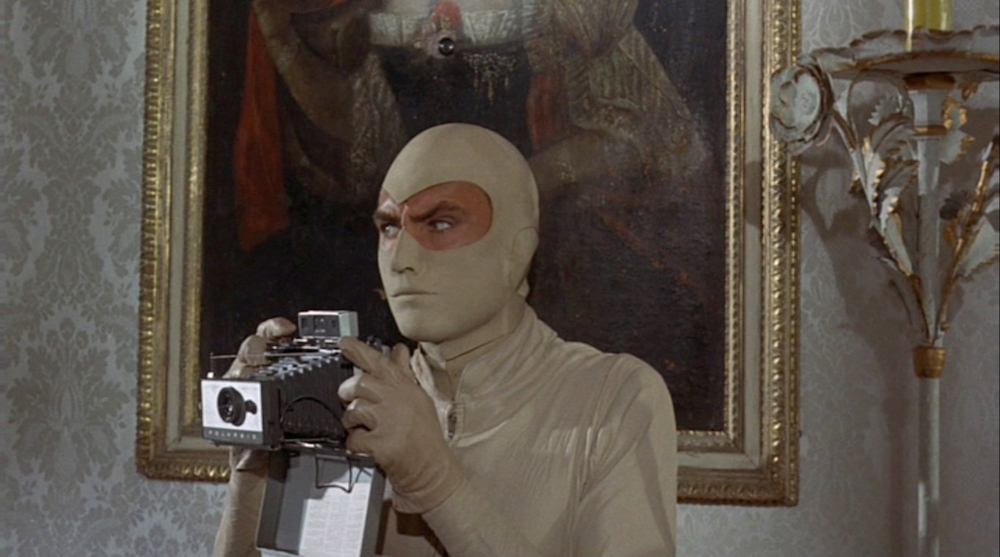
When Diabolik’s figure emerged from that colourful smog, his black skintight costume and latex face mask would’ve been instantly recognisable to the audience. He was already a sensation thanks to the hugely popular comics of the same name, which regularly outsold Batman and Superman at Italian news kiosks.
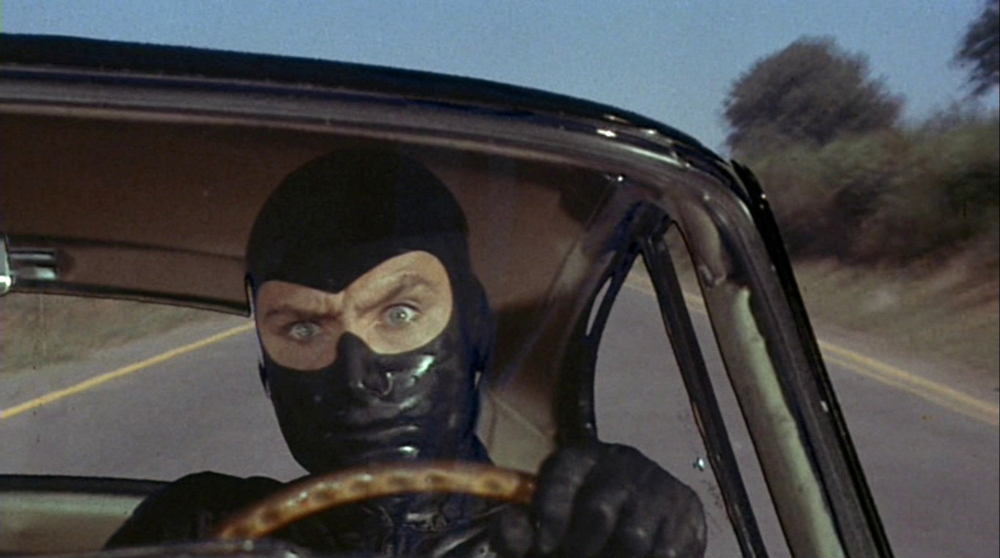
Diabolik was already an Italian icon, and this wasn’t the first attempt to bring the comics to the big screen. In 1965, the legendary producer Dino De Laurentiis acquired the rights, and Seth Holt—the director behind the Hammer Films Scream of Fear (1961) and The Nanny (1965)—took on the project. It was even cast, with Jean Sorel as Diabolik and George Raft as his adversary. However, the production collapsed shortly after filming began; while Raft had reportedly fallen ill, De Laurentiis was also said to be dissatisfied after viewing the early rushes. He retained the rights and began putting a new package together.
The Diabolik comics were created by sisters Angela and Luciana Giussani. Angela was inspired by a discarded Fantômasbook she found on a train, which suggested a portable, pocket-sized format designed for commuters—a marketing concept remarkably similar to Japanese manga. They noted that lurid mystery thrillers, known as gialli (due to their yellow-edged pages), were the commuters’ genre of choice, and so included many similar characteristics: adult themes, stylised violence, and underworld sleaze. Their protagonist wasn’t a superhero; he was an anti-hero whom the reader could still identify with and find themselves rooting for.
The first issue of Diabolik was published in 1962; within two years, it had spawned an entire subgenre. Its most notable imitator was Kriminal, another comic featuring a masked master thief as its lead. These original Italian books were known as fumetti neri (‘black comics’), named for their stark black-and-white printing and dark themes. The name was also a clever play on cronaca nera (literally ‘black news’), the term used for the sensationalist crime reporting found in Italian newspapers.
While De Laurentiis was busy brokering his new deal and searching for a director, the masked-criminal archetype was already enjoying a cinematic revival. André Hunebelle’s Fantômas trilogy (1964–67) had reinvented the genre’s progenitor, while two other fumetti neri adaptations reached the big screen: Umberto Lenzi’s Kriminal (1966) and Piero Vivarelli’s Mister-X (1967), based on a lesser-known masked rogue.
De Laurentiis eventually placed the production in the capable hands of Mario Bava. While best known for his gothic horror and seminal gialli, Bava was an incredibly prolific and diverse filmmaker; if you include his work as a cinematographer, he has around a hundred productions to his credit. In Italy, he’s just as respected for his westerns, Viking adventures, and Greek myths, making him the perfect choice to direct Danger: Diabolik.
This new treatment was adapted by Dino Maiuri, who was joined by Brian Degas and Tudor Gates. Both were already under contract with De Laurentiis Studios and were writing Barbarella (1968) at the same time. The duo had co-created the BBC series Vendetta (1966–68), which followed a vigilante taking on the Mafia, so they were on familiar ground. Degas had also written for The Saint (1965), while Gates would soon join Hammer to pen some of their “saucier” films: The Vampire Lovers (1970), Lust for a Vampire (1971), and—a personal favourite of mine—Twins of Evil (1971).
Bava, of course, also made a significant contribution to the screenplay. Unlike De Laurentiis, who wanted Diabolik to be a more likeable “gentleman thief” in the Raffles tradition, Bava insisted on remaining faithful to the character’s amoral nature.
John Phillip Law landed the lead role because he was also under contract for Barbarella, which had been delayed in pre-production, leaving him with time to fill. He conducted his character research for both roles directly from the original comics: Hawkman and Barbarella for his part as the winged Pygar, and Diabolik for his starring role. He was ideal for the part, not only due to his striking good looks but also his ability to use his eyes and eyebrows expressively—often the only parts of his face not immobilised by the mask. He used his physicality to bring a dynamic energy to the character; even when standing still, he manages to imply imminent motion.
The cinematography maintains this kinetic energy, with pans and zooms that mimic the close-ups, cutaways, and extreme angles of a comic-book frame. The screen is often deliberately divided into smaller panels by internal framing devices such as shelving, doorways, windows, and mirrors.
Within Bava’s extensive filmography, Danger: Diabolik could be viewed as an anomaly. It was a big-budget venture that became one of his greatest box-office disappointments. While it resonated with Italian audiences and enjoyed a successful theatrical release there, it wasn’t the international hit De Laurentiis had hoped for. He struggled to pique the interest of foreign distributors, and when he finally did, they opted to cut 17 minutes from the film—presumably to repackage it as a B-feature. Unsurprisingly, this drastically shortened version performed poorly in the US and the UK, where it wasn’t even released until 1969.
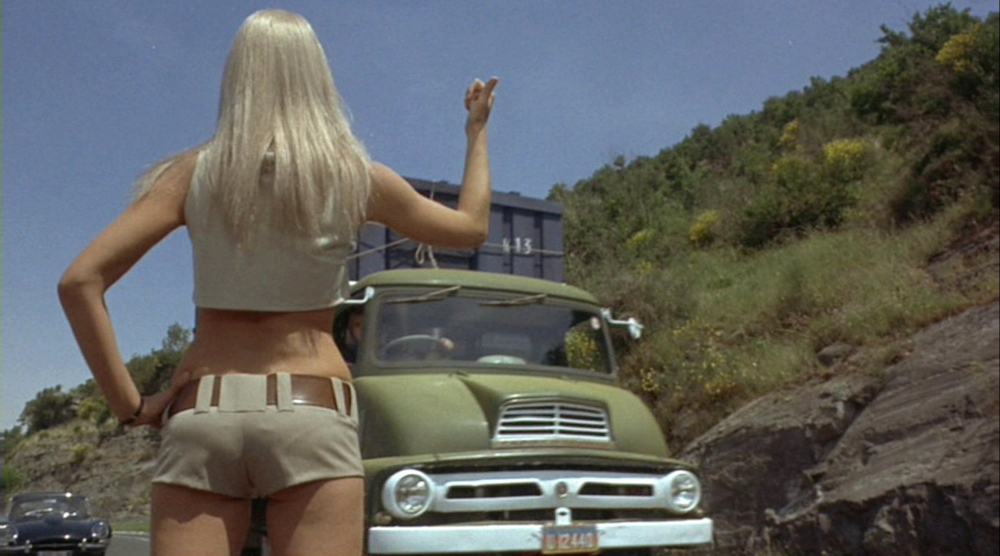
De Laurentiis would have been delighted that Bava brought the project in for less than half its allotted budget.Remarkably, this underspend isn’t apparent on screen; for the most part, the film looks spectacular. One might wonder how such vast sets were constructed so cheaply, but given Bava’s reputation, it’s no surprise they weren’t actually there at all. Following in the footsteps of his filmmaking father, he was a pioneer and master of low-cost special effects.Diabolik’s cavernous lair is a clever combination of scale models and matte paintings. Wide-angle lenses are used extensively, giving the film its distinctive visual character and making the sets appear significantly larger. In one scene, an exotic cliff-top château was actually a magazine photograph ingeniously lined up on a sheet of glass.
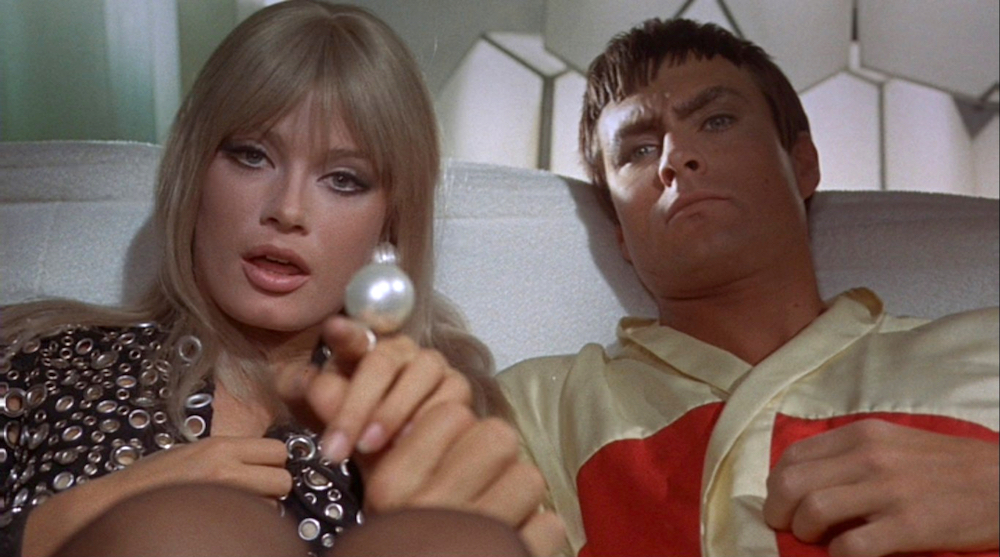
The production design remains the film’s most appealing aspect, though Law and Mell are admittedly also very easy on the eye. Bava retained the black-and-white motif of the fumetti neri for the visual identity of Diabolik and Eva—reflected in their cars, costumes, and, of course, those distinctive rubber suits. Yet, just as Bava defined the use of colour in the horror genre during cinema’s transition from a black-and-white medium, he devised a palette for Diabolik’s world that feels remarkably faithful to the source. The décor and design were entirely modern and heavily inspired by Pop Art; indeed, the film stands as a significant example of that artistic style in its own right.
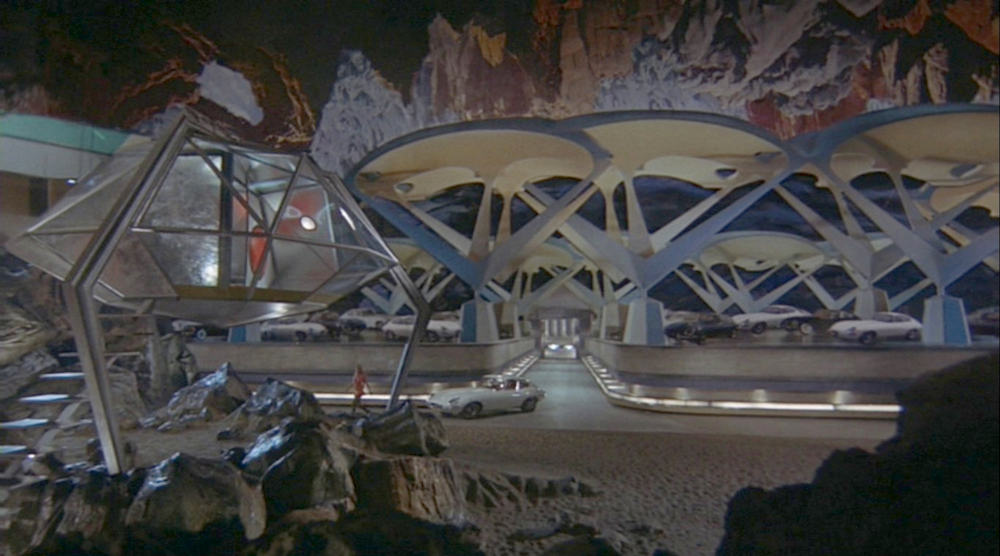
The film has often been criticised for being “style over substance”, a point I find difficult to dispute. It’s also frequently accused of being a James Bond rip-off—a claim I don’t quite understand. While one could argue that Diabolik shares traits with a Bond villain, to my mind, the film has far more in common with something Gerry Anderson might have conceived. We see the gadgets, the vast underground lair, and a section of road that elevates to reveal a secret entrance; even the protagonist operates primarily through his eyes! However, instead of International Rescue, it’s more a case of “Personal Accrue”.
As for being a Bond pastiche? Admittedly, casting Adolfo Celi as the gang boss, Valmont, is a clear nod to his role as a similar antagonist in Thunderball (1965). Beyond that, however, it appears that Diabolik had a significant influence on the modernisation of the Bond franchise in the 1970s. A plot device in Diamonds are Forever (1971), involving a corpse used to smuggle a cache of gems, is almost directly lifted from Danger: Diabolik. The similarity seems too striking to be a coincidence, particularly as the idea never appeared in Ian Fleming’s original novel. Furthermore, as the 1970s progressed, the Bond films became increasingly reliant on gadgets and adopted a far more playful sense of fun.
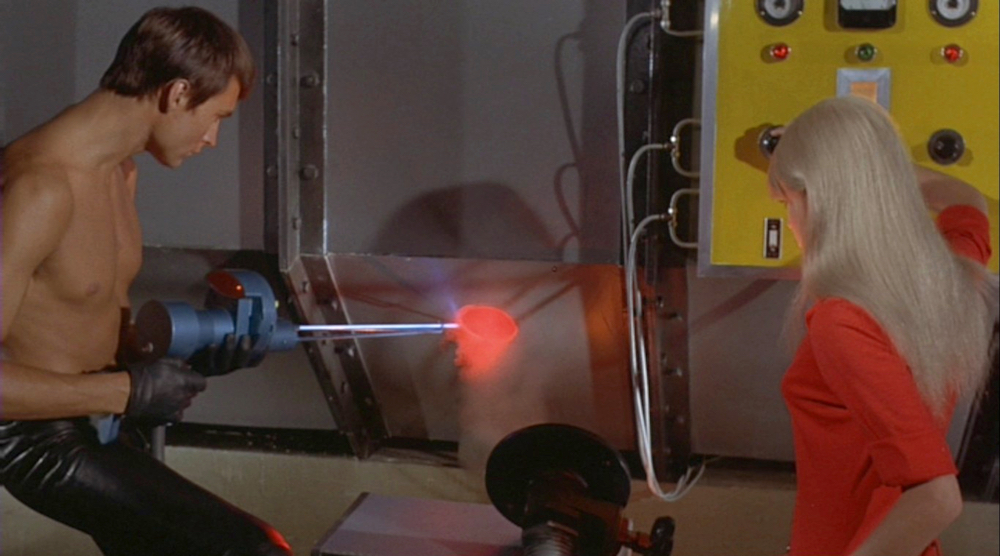
Danger: Diabolik is remarkably fun, considering its protagonist is a thief who kills without compunction—targeting police, security guards, gangsters, or anyone standing between him and his booty. Of course, his enemies think nothing of killing their nemesis; in fact, they openly relish the prospect. Diabolik is a master criminal who relies on stealth, daring, and ingenious trickery to outwit his adversaries in an endless battle of wits. Having already amassed a fortune, he lives in a high-tech, ultra-stylish underground lair decorated in the height of 1960s chic. He owns so many E-Type Jaguars that one section of his hideout resembles a luxury dealership; in one scene, there are more than a dozen on display—all in black or white, naturally.
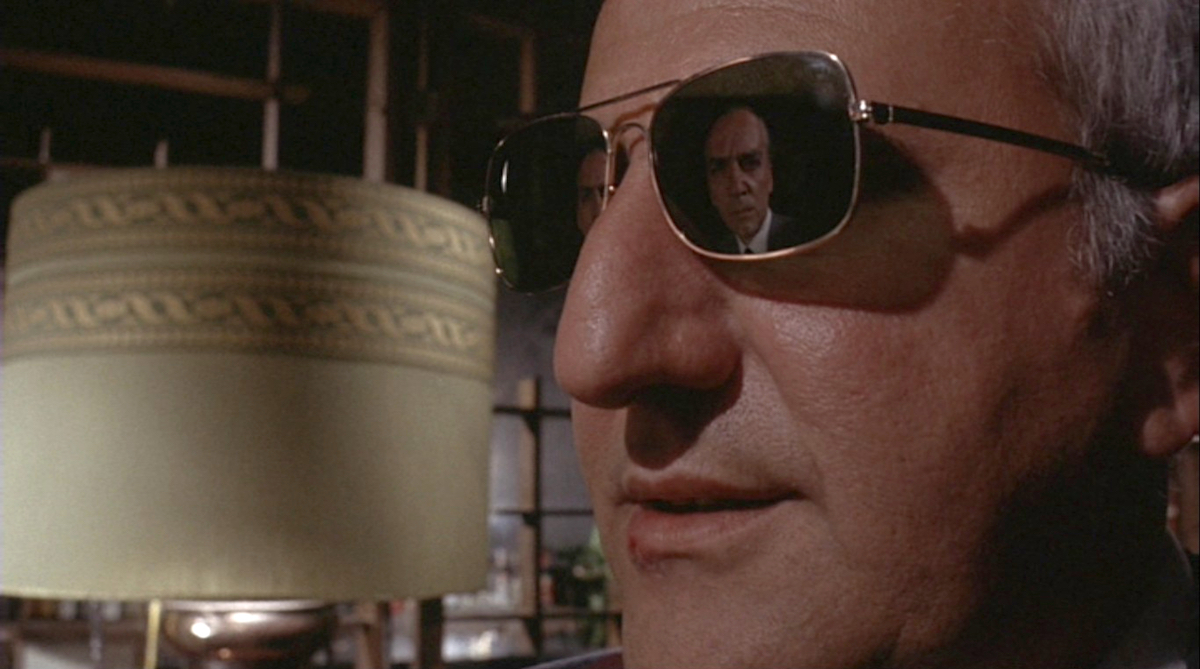
Diabolik is cold and calculating, a fact written in his eyes. He appears to place little value on the lives of others, yet he is equally willing to put his own on the line. He does, however, genuinely care for Eva; his redemption as a character stems from this love and her reciprocal devotion. Their on-screen chemistry is electric and, in his commentary for the 2005 Paramount DVD release (included with this edition), John Phillip Law admits to an off-screen romantic entanglement as well.
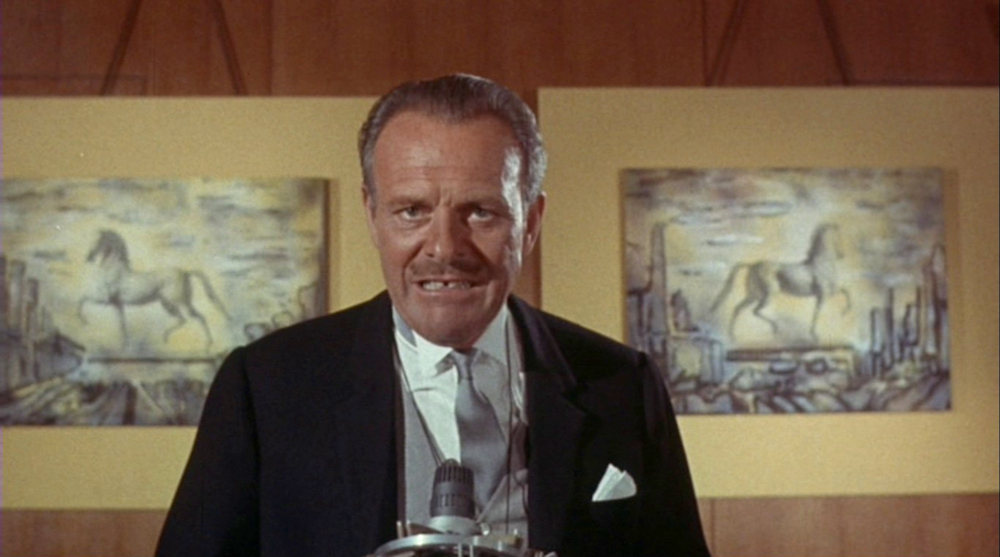
Their relationship—between a “mad genius” anti-hero and his loyal partner—strongly evokes the dynamic between Doctor Phibes and Vulnavia. Surely the Phibes films were under the Diabolik influence? The only major difference is that Phibes’s lair was decked out in Art Nouveau, while Diabolik favoured a more postmodern vibe—though both houses feature a massive organ. Fittingly, the great British character actor Terry-Thomas, who plays the Minister of Finance here, also appears in both Phibes films.
Danger: Diabolik exerts a palpable stylistic influence on many recent comic-to-screen transitions. Mark Millar—the writer behind Wanted, Kick-Ass, and Kingsman—produced a brief love letter to the film with his 2010 comic Nemesis. His anti-hero bears a striking resemblance to Diabolik, particularly when clad in a tight white bodysuit, and the series was even published with variant covers in the style of fumetti neri. Of course, this being Millar, the concept was repurposed into something altogether more violent, callous, and less likeable.
To some extent, Bava was right to retain the amoral aspects of the original character rather than toning them down as De Laurentiis suggested. While this uncompromising approach may not have appealed to American or British audiences at the time, it certainly satisfied the home crowd of fumetti fans.
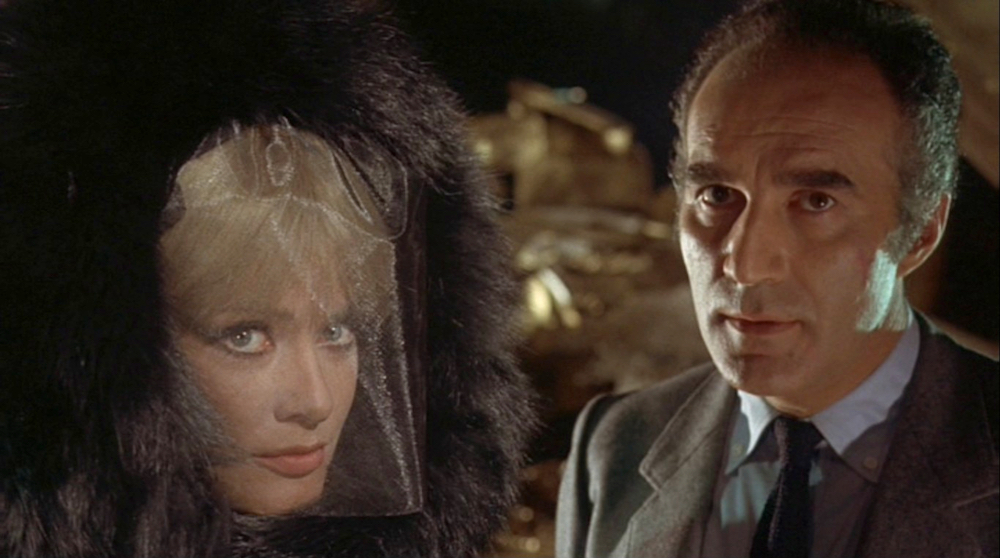
The Italian public of the era lived in the shadow of political corruption and organised crime, with the fresh memory of an elite that had led the nation into fascism. Initially, Prime Minister Benito Mussolini had aligned the country with Nazi Germany, effectively losing the war. Consequently, there was little respect for authority or the upper classes. By today’s standards, Diabolik might be considered a terrorist; back then, he was perceived more as a revolutionary. He was “sticking it” to the rich in the vein of Robin Hood—albeit while keeping the spoils for himself.
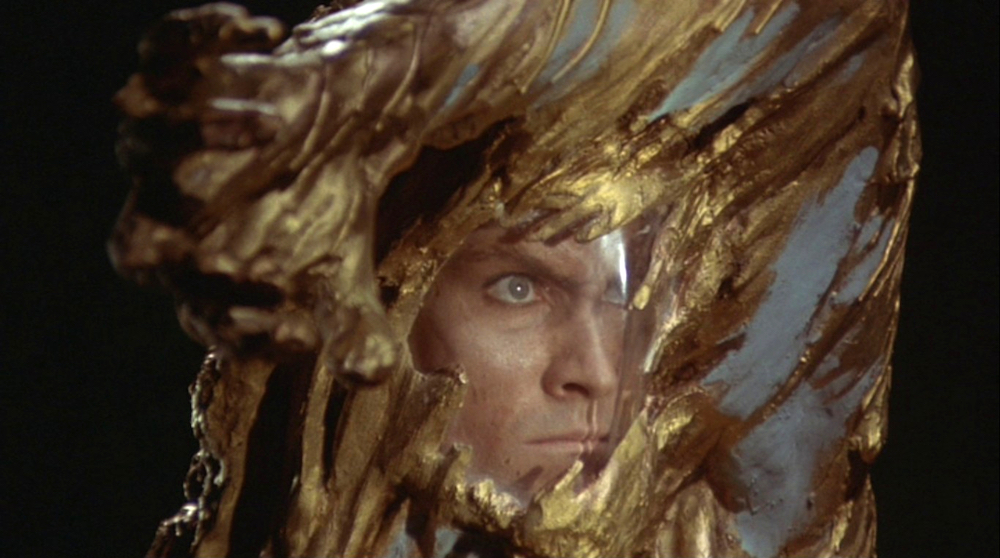
The film’s narrative reflects this anti-establishment streak. When the government reintroduces the death penalty and offers a massive reward for Diabolik’s capture, his response is to bomb the inland revenue and tax offices. This destroys the nation’s financial hub and erases the public’s tax records, triggering economic chaos. Forced to sell off gold reserves to secure foreign currency, the government organises the transport of a giant ingot—and, as one might expect, Diabolik seizes the opportunity to steal it. However, the treasure is tracked to his secret lair, and the police close in for the finale.
ITALY • FRANCE | 1968 | 105 MINUTES | 1.85:1 | COLOUR | ITALIAN

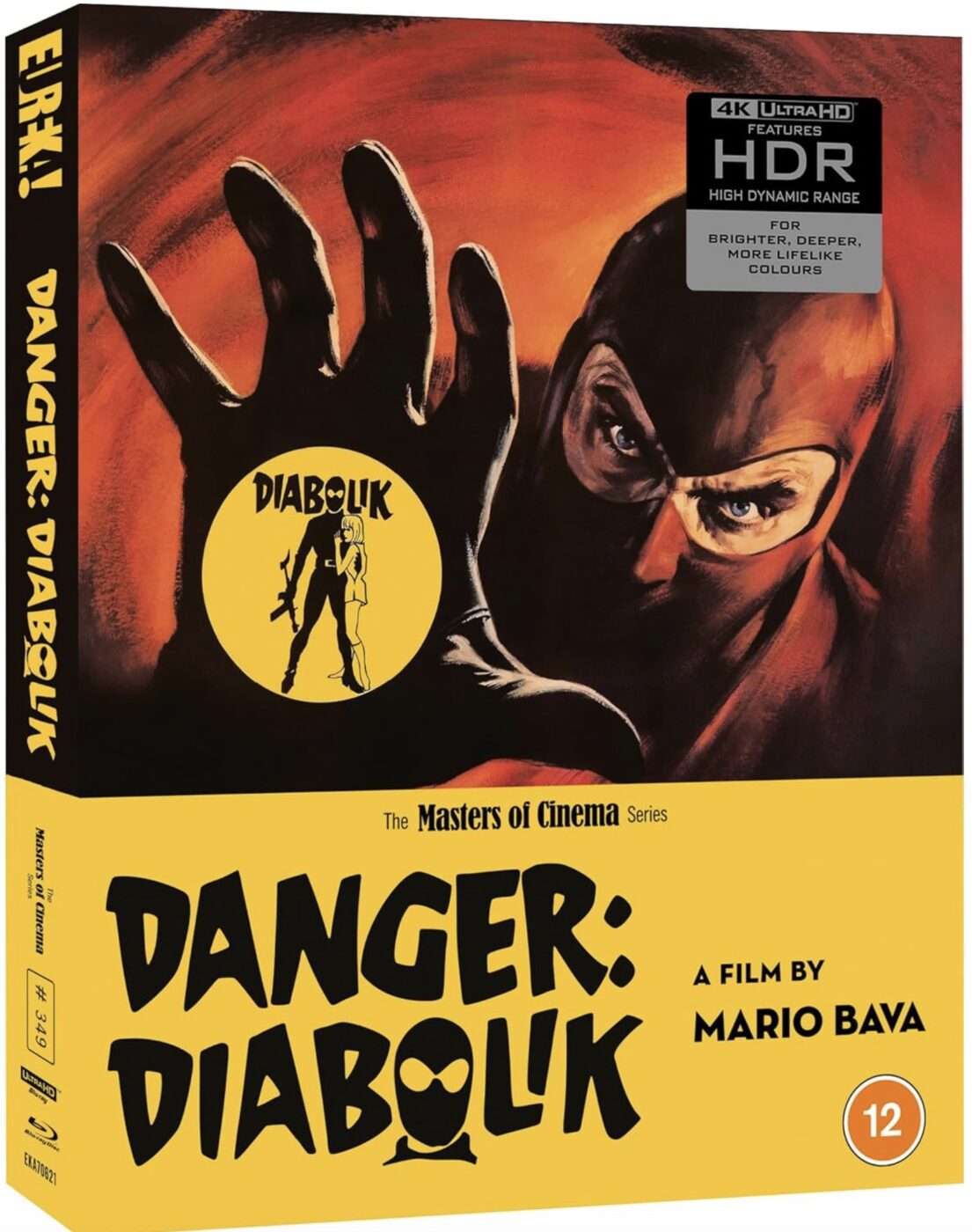

director: Mario Bava.
writers: Dino Maiuri, Brian Degas, Tudor Gates & Mario Bava (story by Angela and Luciana Giussani, Dino Maiuri & Adriano Baracco, based on ‘Diabolik’ by Angela and Luciana Giussani).
starring: John Phillip Law, Marisa Mell, Michel Piccoli, Adolfo Celi & Terry-Thomas.