THINGS TO COME (2016)



The dissolution of a middle-aged woman’s old life, and the birth of a new one, are explored with the lightness of a summer breeze in Mia Hansen-Løve’s Things to Come / L’Avenir. The French director takes a surprisingly nimble approach to this story, resisting the urge to hammer home the tragic elements of the losses in protagonist Nathalie Chazeaux’s (Isabelle Huppert) life. At the same time, the film’s gentle poetry, though enjoyable, is never magical. This comes across not so much as a failure, but as the film’s main objective. Despite the joy of freedom or the pain of the crumbling marriage, Nathalie’s life hums with the easygoing rhythm of the everyday.
Things to Come isn’t a wholly muted film, but one whose gentleness can easily be mistaken for a placid experience. It effectively captures the shocking blow of death, loss, and loneliness, depicting them in ways that seem slight in terms of outward expression. It resists the usual teary-eyed shouting and intense drama that some films exploring loss provide. Instead, it’s far more interested in how these emotions are absorbed into daily life, which presses on as normal even in the face of seismic change.
With some films, you can be so taken by their poetry that acknowledging they depict lives that simply go on feels revelatory, even if it sounds obvious. There shouldn’t be anything remotely profound about such a statement, but it can feel that way when a film taps into qualities that feel larger-than-life while still devoting itself to the way we carry on from one day to the next. It’s as if you’ve watched an entire life, or a lifetime’s worth of emotions, transmuted into film rather than the rough sketch of hyper-dramatic beats most movies embody. By watching a film take this path less travelled, you can concern yourself completely with the protagonist’s efforts to hold themselves together. This beguiling mix of mundanity, unpredictability, joy, and terror can form a full portrait of emotion cohering around a central figure.
It isn’t always easy to offer that same concern for Nathalie, who is remarkable in her capability to soldier on in the face of drastic shifts, such as the sudden dissolution of her marriage. Her husband, Heinz (André Marcon), was once someone she knew intimately. Now he’s a near-stranger, a distant figure who still looms large in her mind. He has a new lover to run to—a long-standing back-up plan that was evidently growing in importance with each passing day. Nathalie suddenly finds herself tumbling down a precipice without any warning that she was starting to slip, let alone that she was standing so far from the ground. Yet this sense of free-fall leads to very little in the way of emotional outbursts, or bursts of feeling at all.
That isn’t to say that Hansen-Løve can’t inject doses of beauty into this lightly textured drama. One brilliant instance of coincidence invokes shocked laughter from the protagonist; when you glimpse it, you’ll realise that this is really the only appropriate response to something so ridiculous, yet it’s also a perfectly normal moment. If that disconnect between rationality and emotional texture were explored further, or imbued with greater feeling, then perhaps Things to Come wouldn’t feel too understated for its own good. The film is pretty to look at and interesting enough to take up your time, but it leaves little space for resonance along the way.
There’s a mature approach taken with almost every scene, though not necessarily a sensible one. For instance, if Nathalie’s children are hardly present, or there isn’t an outlet to explore the love between them, that’s because people don’t often express loving statements to their parents on a regular basis. It may be a realistic approach, but it feels surface-level all the same. Most scenes where Nathalie offers something of herself to empathise with are during philosophy discussions. And yet, these aren’t the truest expressions of emotion in the film. Realism rears its ugly head as a snag in the story, reminding viewers that the presence of strong emotions would seem unrealistic in Nathalie’s life.
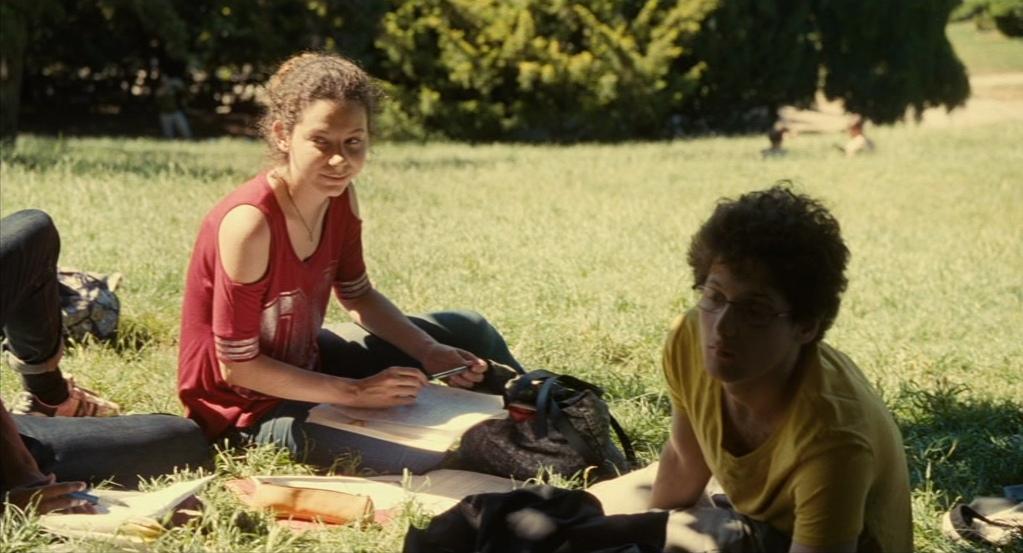
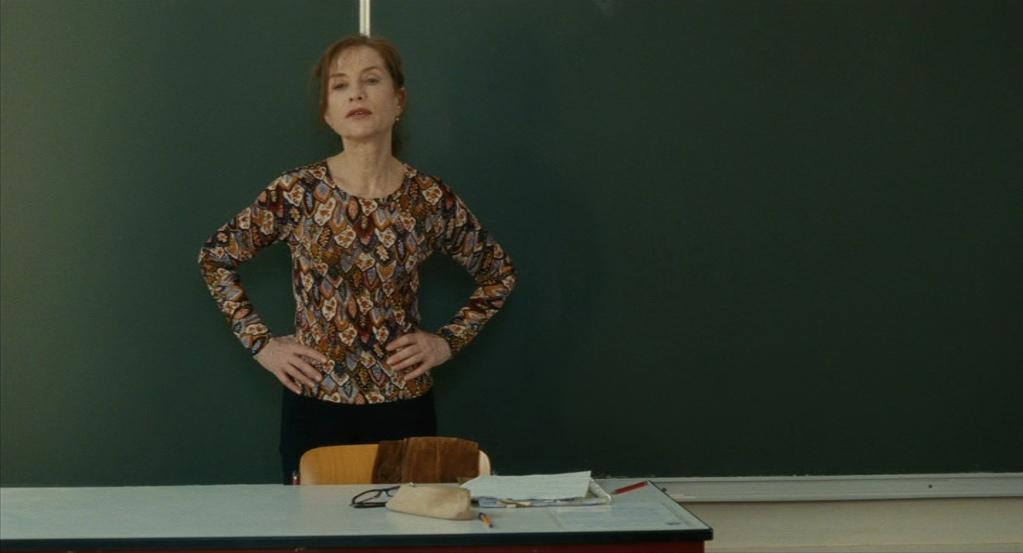
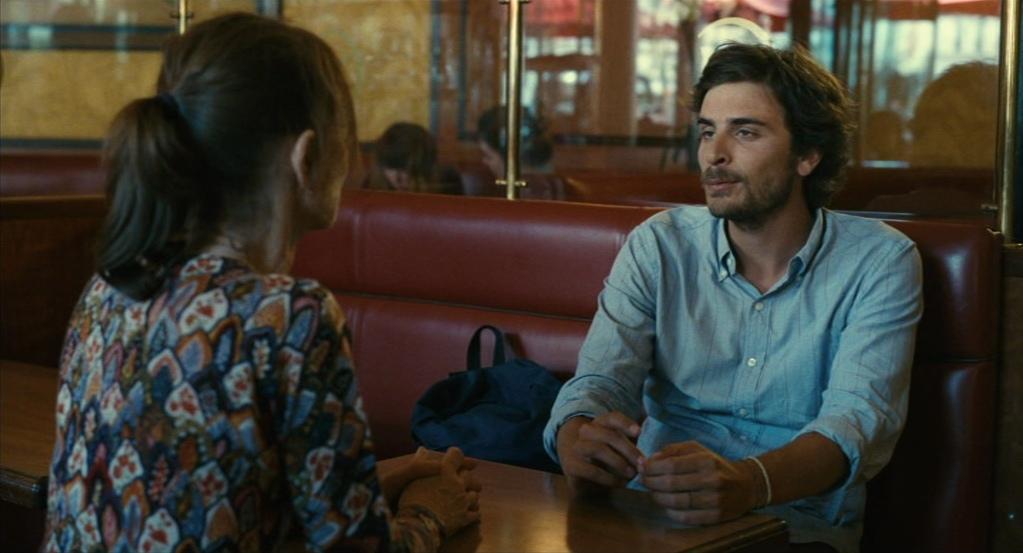
Despite being a daughter, wife, and mother, Nathalie is best described as a teacher, since that’s where her interests most keenly lie. It might not be her defining role in life, but it’s the only one where we can glimpse any passion. She loves her job and she loves philosophy, exploring how this relates to the way she navigates life with her former student and protégé, Fabien (Roman Kolinka). These ruminations are mildly interesting, but often come across as a way of intellectualising outlooks on life without doing the hard work of exploring them. The film’s dramatic content won’t look beyond the surface, while its cinematography is so committed to realism that it doesn’t strive for gorgeous visuals. Things to Come never aims to stun; it rests its tonal bedrock on near-imperceptible shifts of emotion.
Ample doses of nuance and sensitivity ensure that the film, which has the good sense not to run any longer than 100 minutes, is never boring. But the finest quality of all is easily Isabelle Huppert’s performance; the actress knocks it out of the park as she always seems to do. One of the finest performers in cinema history, Huppert embodies her characters fully, imbuing silent flickers of facial expressions with more sorrow than other talented performers could produce from scene-stealing monologues. Without her at the helm, Things to Come would be left to helplessly flip-flop well outside the realm of emotional relatability, instead of straddling its borders—not unlike the ways in which Nathalie is caught between joy and sorrow at the thought of her newfound independence.
FRANCE | 2016 | 102 MINUTES | RATIO | COLOUR | FRENCH


writer & director: Mia Hansen-Løve.
starring: Isabelle Huppert, André Marcon, Roman Kolinka, Édith Scob, Sarah Le Picard, Solal Forte, Élise Lhomeau & Lionel Dray.