WAR MACHINE (2026)
On one last gruelling mission during Army Ranger training, a combat engineer must lead his unit in a fight against a giant otherworldly killing machine.

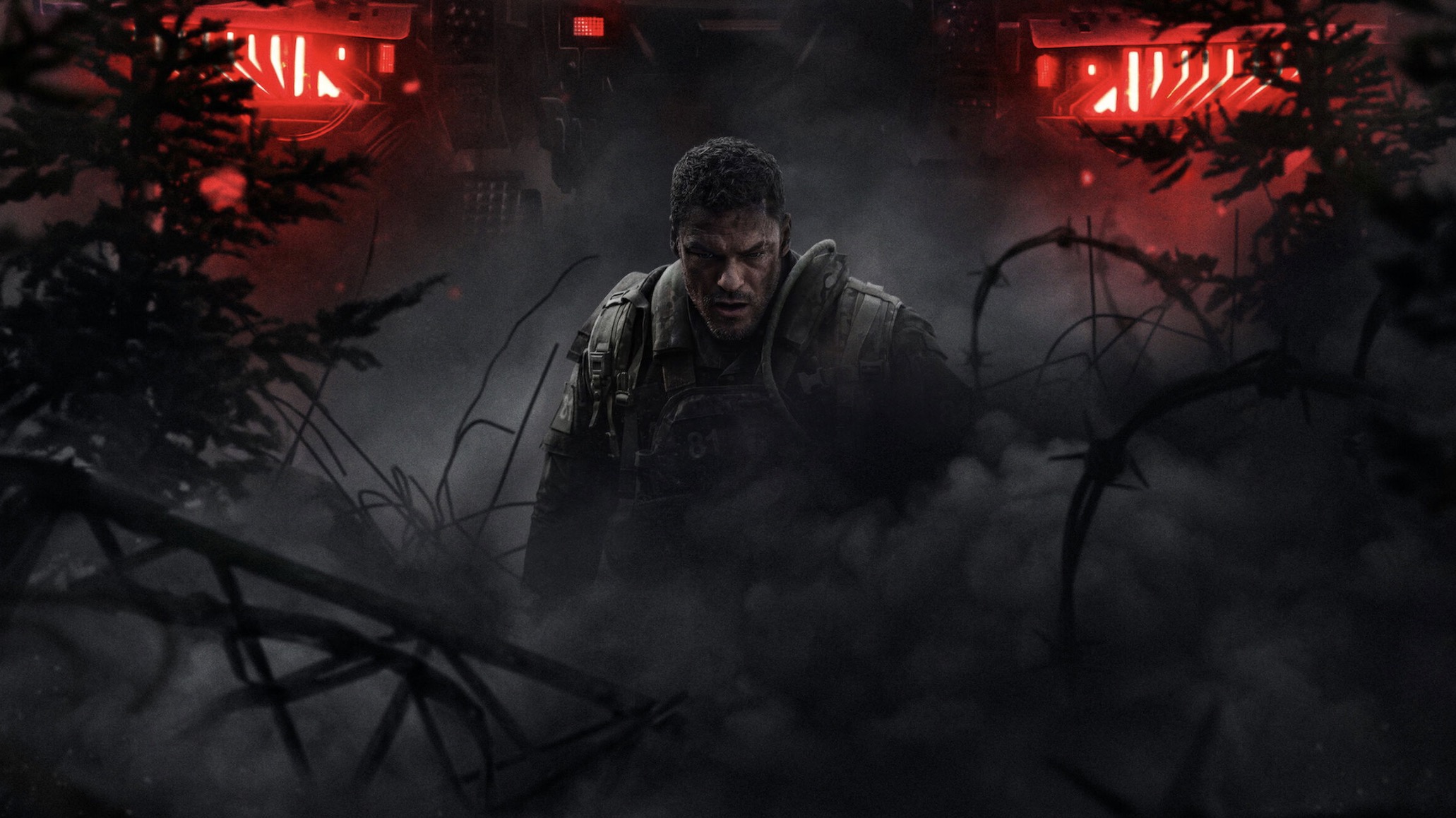

On one last gruelling mission during Army Ranger training, a combat engineer must lead his unit in a fight against a giant otherworldly killing machine.
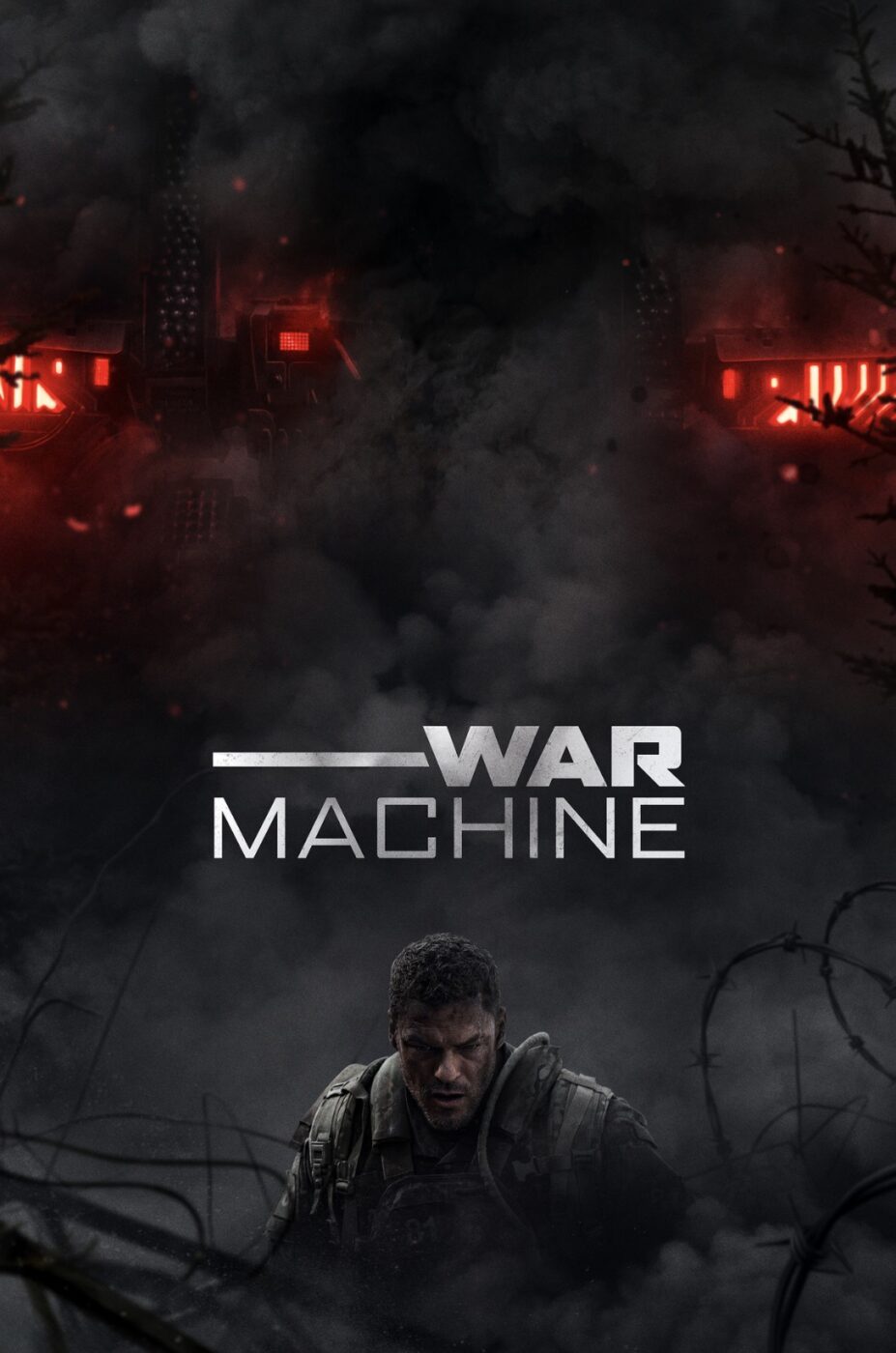
In this sci-fi actioner, we follow a talented soldier (Alan Ritchson) who joins an elite Ranger training programme following the death of his brother (Jai Courtney). What begins as an intense exercise among a group of elite soldiers quickly devolves into a fight for survival when they encounter a deadly machine with capabilities far beyond their training. If this sounds familiar, it’s because it is.
Montages make up a large portion of the opening as recruits compete for a spot in the 75th Ranger Regiment. Ritchson’s character isn’t referred to by name; like the rest of his team, he’s reduced to a number: “81”. He and his brother shared a dream of joining the Rangers, but those hopes were dashed when his brother was killed on duty in the Middle East. Now, the burden of making the cut falls solely on 81’s shoulders. These early sequences introduce our protagonist as he climbs the ranks with stoic determination, relying on natural ability rather than a need to prove himself to his superiors.
As 81 masters every aspect of training, it’s difficult to distinguish him from Alan Ritchson’s previous roles. The actor is best known for playing Jack Reacher in the successful Amazon series, and here, as in that show, his physicality takes centre stage. It’s reminiscent of how Arnold Schwarzenegger in The Terminator (1984) and Sylvester Stallone in First Blood (1982) defined the classic 1980s action hero. Ritchson looks as though he’s been tactically deployed, echoing the vibe of Schwarzenegger’s T-800, though he isn’t a cybernetic organism. Considering the film’s tone, this doesn’t overtly hurt its authenticity, even if it is a bit on the nose. With a physique that dwarfs the rest of the team—Ritchson stands at 6’3″ and weighs roughly 108kg—it’s no wonder 81 quickly becomes team leader, despite his attempts to hide his skills behind a face hardened by trauma.
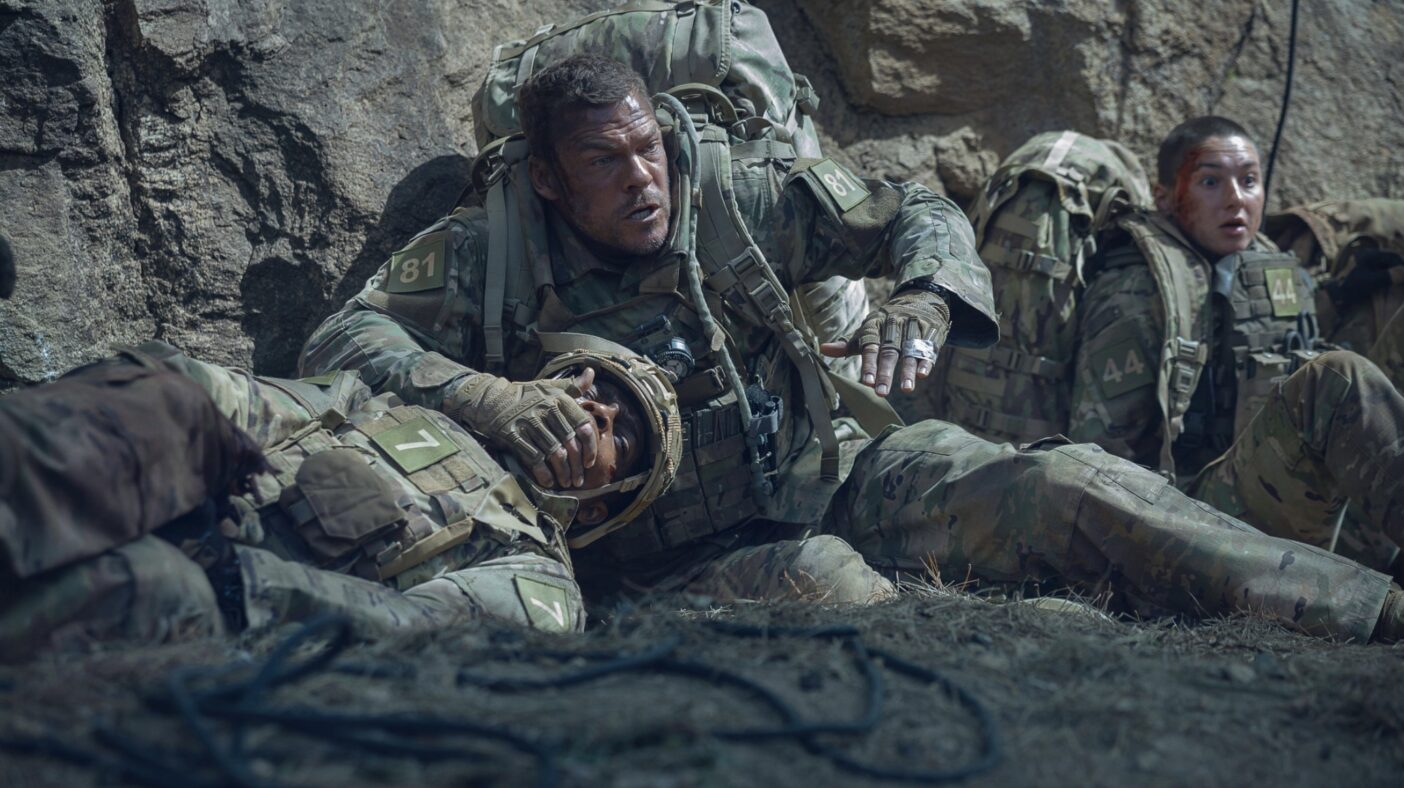
Any enjoyment to be found stems less from the acting or story and more from the fast-paced survival sequences and the obvious commentary on “Big Tech” culture. Once 81 leads his team into the wilderness and encounters the mysterious war machine, the film shifts firmly into spectacle. There’s a constant sense of danger as the machine dominates the recruits, who don’t stand a chance because they haven’t been issued live ammunition. The combat scenes are gruesome, heavily reminiscent of video game violence; limbs are torn apart by explosions and the machine’s dominance is felt to the core. The towering threat, with its heavily armoured metallic frame and glowing red energy cores, is an unconventional force that can only be defeated through strategy.
Unlike previous “soldiers in peril” films such as Predator (1987), Dog Soldiers (2002), or Lone Survivor (2013), the supporting characters in War Machine are thin. War films often introduce us to future stars—think Matt Damon in Saving Private Ryan (1998) or Johnny Depp in Platoon (1986)—but it’s unlikely these recruits will leave a lasting impression.
The plot relies heavily on familiar military tropes and predictable thriller beats. While the action is energetic, the script offers limited character development and little depth beyond the clichés, making War Machine feel formulaic despite its premise. You won’t find the twists of Edge of Tomorrow (2014) or Oblivion (2013) here. Yet, even within this conventional structure, there are moments that gesture toward bigger ideas about humanity’s survival in a tech-dominated world.
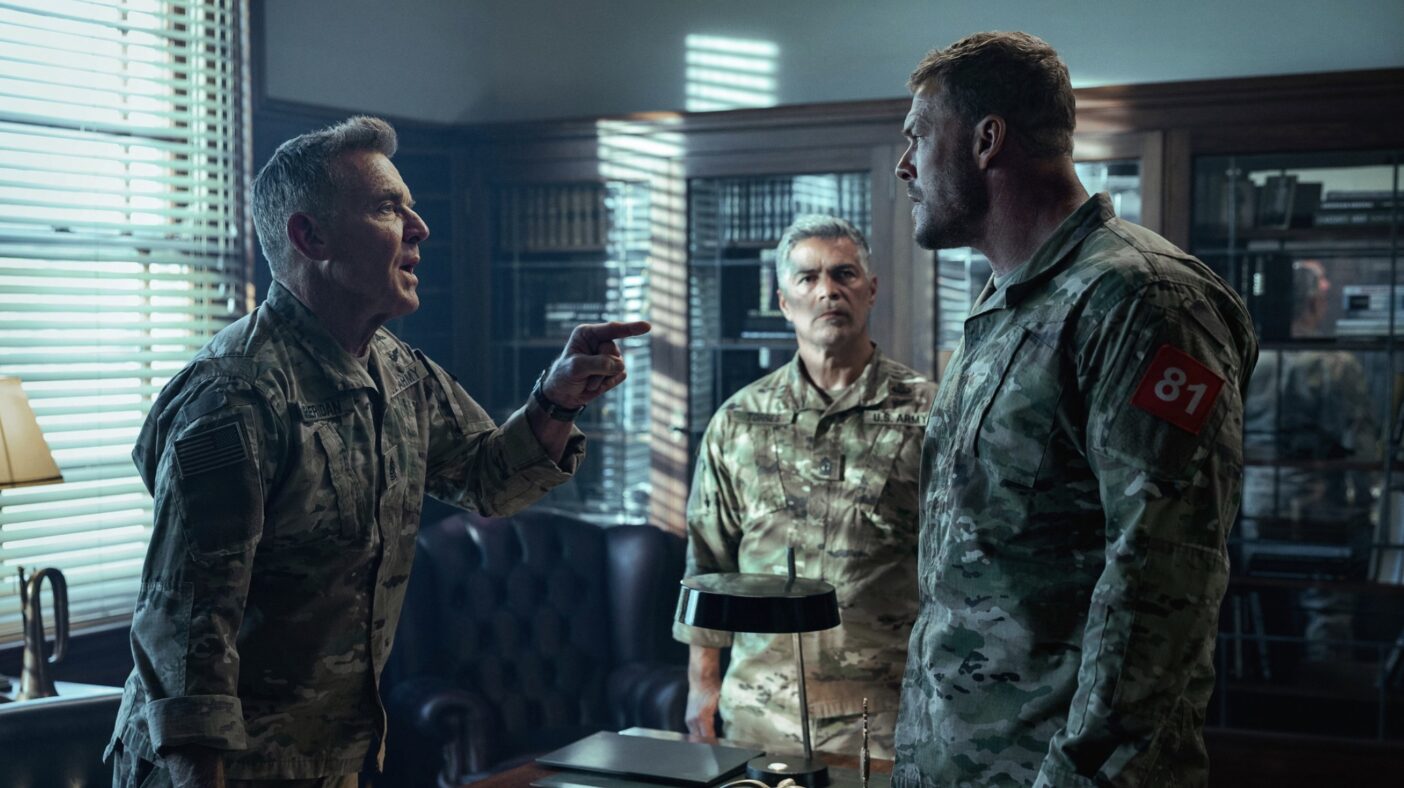
As 81 struggles with the trauma of his brother’s death, he pushes himself to the limit through self-mortification. The film’s core message arrives in an early scene with Dennis Quaid, playing army instructor Sergeant Major Sheridan. Quaid fiercely likens 81’s performance to that of a machine, implying that without discipline, 81 will become a liability. When it becomes clear the enemy machine is seemingly unkillable, the survivors must swap brute force for a better strategy to stop it from reaching the wider world.
Like many films released during the rise of A.I., War Machine attempts to confront the cultural moment head-on, framing its conflict as a test of human resilience. In this sense, the action clichés serve a purpose: they represent recognisable stories of survival against the uncontrollable. Much like James Cameron’s Terminator franchise, the machine becomes a symbol for the potential erasure of human identity. As 81 assumes the role of saviour, the message is overtly masculine and occasionally didactic, but it reflects the intent of director Patrick Hughes and co-writer James Beaufort: human courage and loyalty remain meaningful even in a world shaped by machines.
Overall, War Machine doesn’t break new ground, but it succeeds as a high-energy spectacle for those seeking explosive action and a straightforward survival narrative. Given the film’s commitment to reassuring audiences of humanity’s place in a changing landscape, sequels are likely. Hopefully, next time we’ll get something closer to Predator than a Jack Reacher origin story.
UK • AUSTRALIA • NEW ZEALAND • USA | 2026 | 107 MINUTES | 2.39:1 | COLOUR | ENGLISH

director: Partick Hughes.
writer: Patrick Hughes & James Beaufort (story by Patrick Hughes).
starring: Alan Ritchson, Stephen James, Jai Courtney, Esai Morales, Keiynan Lonsdale, Daniel Webber, Blake Richardson, Jack Patten, Jacob Hohua & Alex King.