NIGHT FALLS ON MANHATTAN (1996)
A newly elected District Attorney finds himself in the middle of a police corruption investigation that may involve his father and his partner.

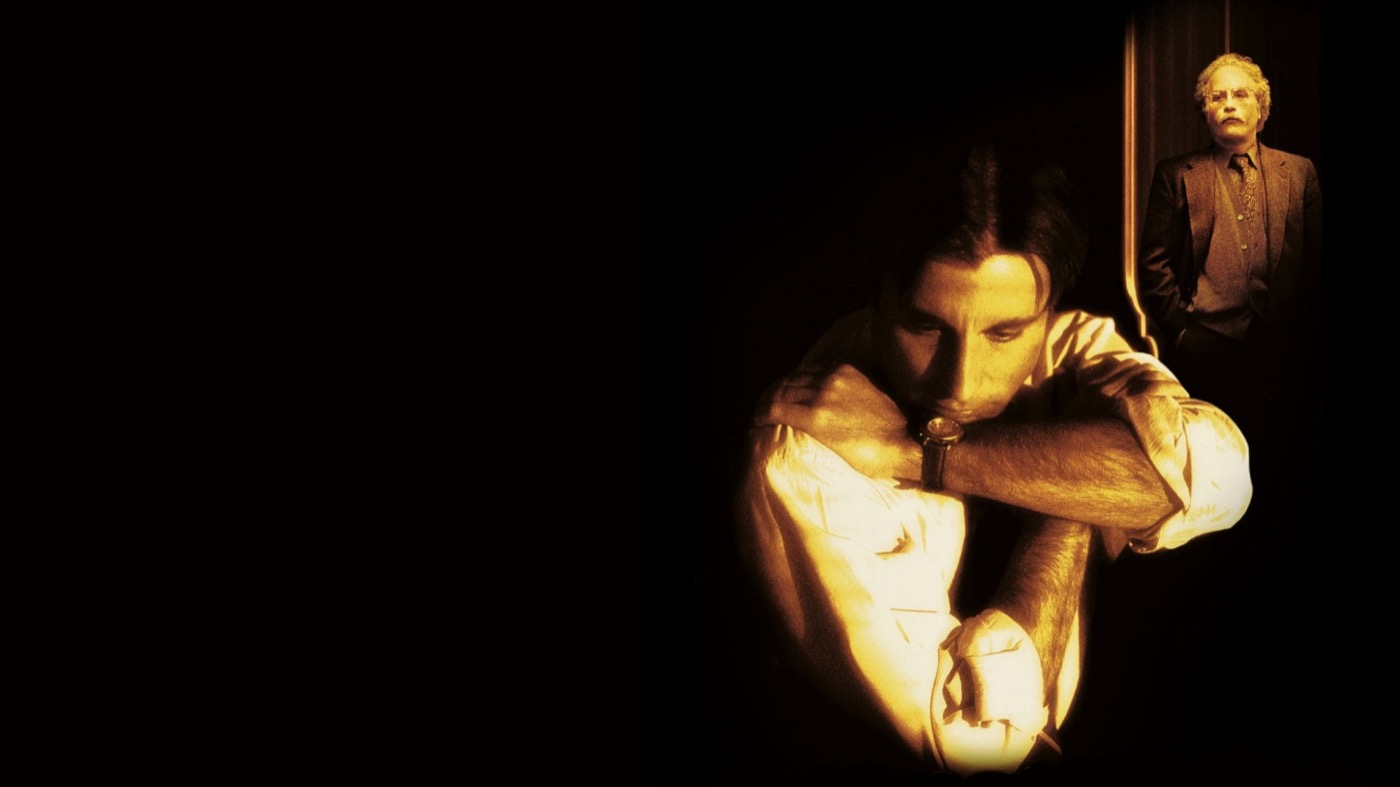

A newly elected District Attorney finds himself in the middle of a police corruption investigation that may involve his father and his partner.
More than 20 years after Serpico (1973), Sidney Lumet remained fascinated by police corruption in New York, his hometown. By the mid-1990s, he had already revisited the topic twice, in Prince of the City (1981) and Q&A (1990). However, while those three films focused primarily on the officers themselves, Lumet took a slightly different tack for Night Falls on Manhattan, making his protagonist a district attorney instead.
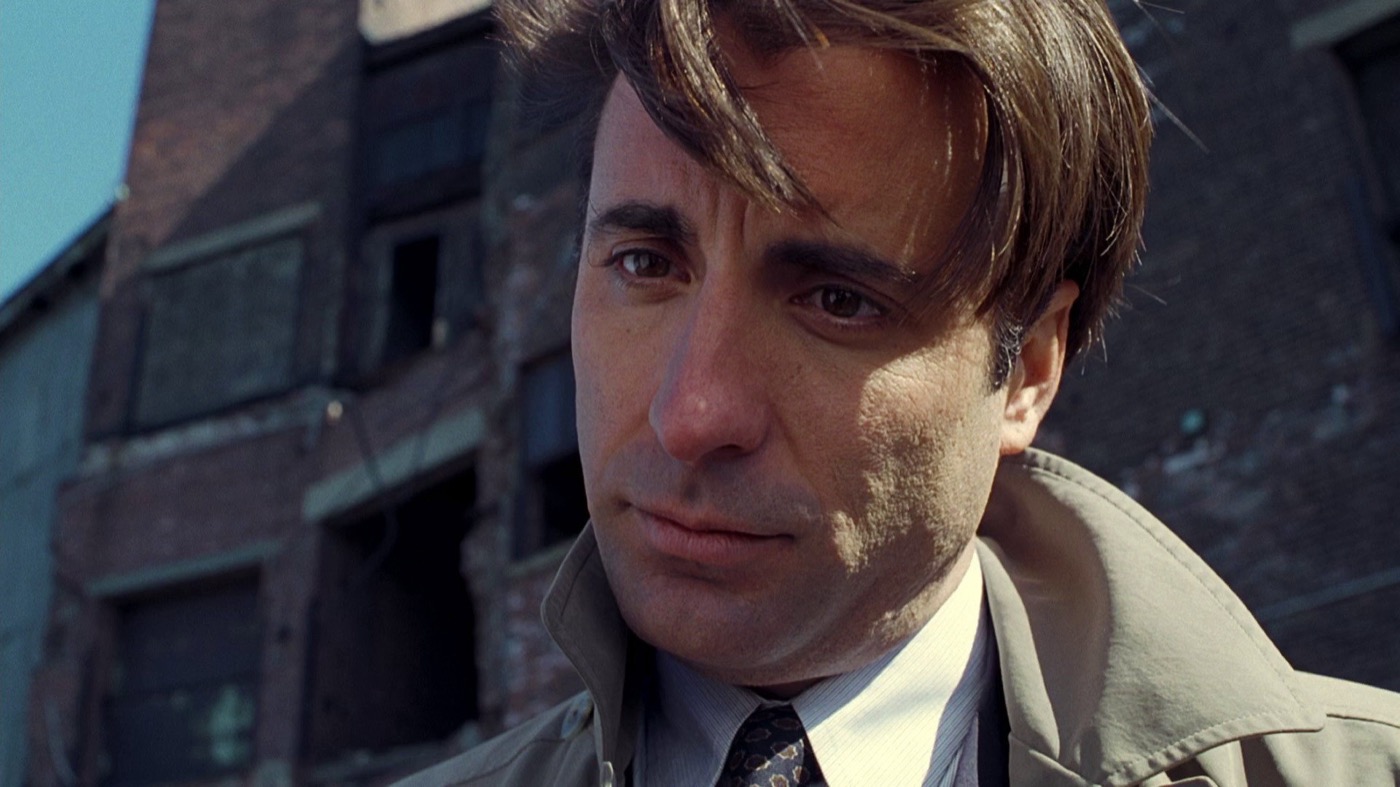
This final installment of Lumet’s corruption quartet is relatively sympathetic towards the corrupted—or at least some of them. The central dilemma for Sean Casey (Andy Garcia) is that exposing police malfeasance means letting a thoroughly nasty criminal go free. Casey begins as vehemently anti-corruption as Serpico himself, but he eventually acknowledges that a little rule-bending is unavoidable, even as he laments that “it wasn’t supposed to happen to me”. While this might not be quite what we expect from the fiercely idealistic director behind 12 Angry Men (1957), it is perhaps more realistic.
Night Falls on Manhattan is based—with substantial alterations—on a novel by Robert Daley, who also wrote the source material for Prince of the City. The storyline, however, is rooted in reality: the 1988 trial of drug dealer Larry Davis following a shootout that injured six police officers. Davis claimed self-defence, arguing that the police raid on his sister’s apartment was part of a hit. His argument succeeded, leading to an acquittal (though he ended up in prison on other charges regardless).
The film opens with a montage of young assistant district attorneys starting their first day on the job. It’s unglamorous work, far from the heroic pursuit of justice they might have envisioned. As District Attorney Morgenstern (Ron Leibman) later tells Sean: “What you’re searching for, you’re not going to find.” Soon, however, the film pivots to the thinly disguised Davis case via a raid on a Harlem apartment block, supposedly staged to capture drug lord Washington (Shiek Mahmud-Bey). Washington escapes, but after consulting his lawyer—Vigoda, a high-profile civil-rights advocate played by Richard Dreyfuss in the film’s standout performance—he surrenders to the police and pleads self-defence in court.
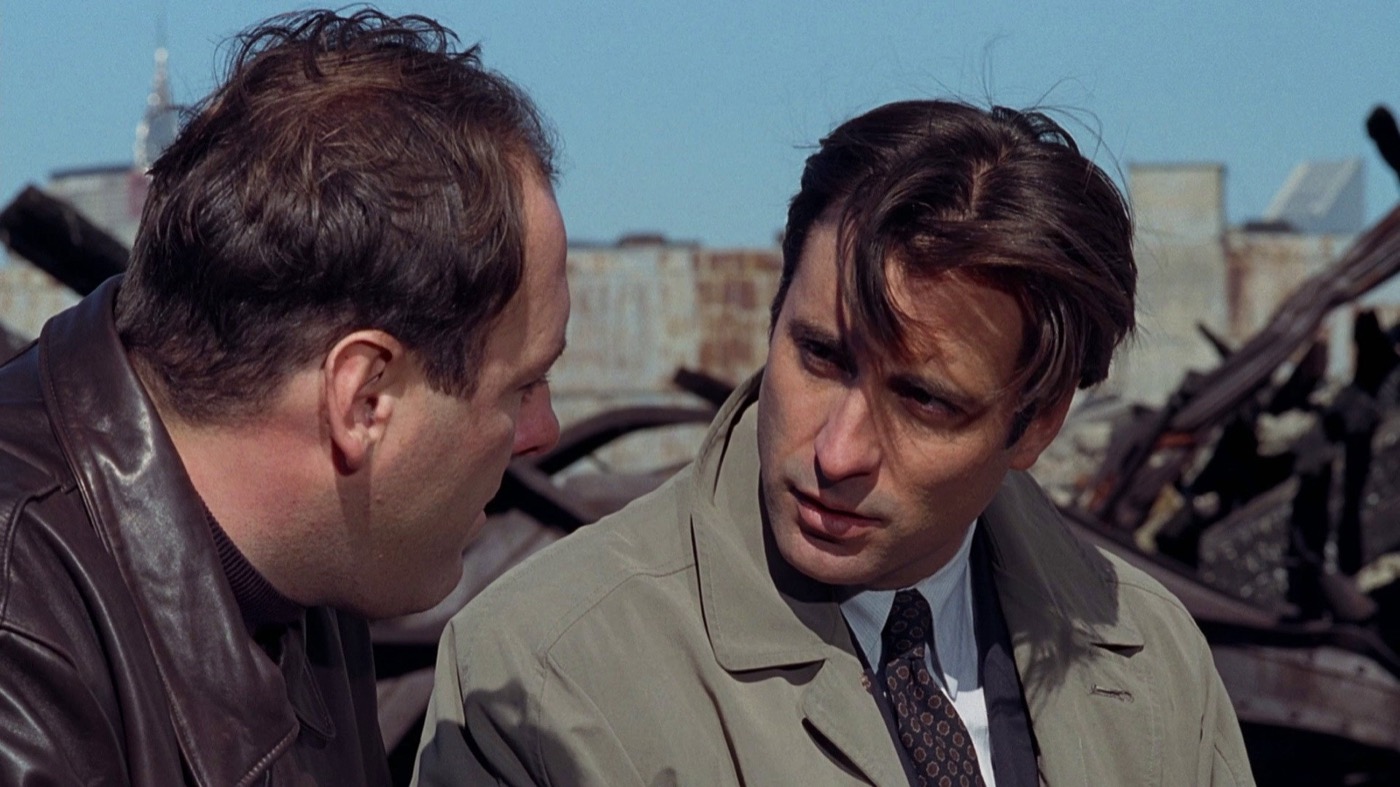
Despite his inexperience, Sean is assigned to prosecute Washington. Vigoda mounts an aggressive defence that strongly hints at police corruption, but Sean wins over the jury, securing a conviction. This victory propels Sean into the district attorney’s seat—a highly powerful political role as the city’s chief prosecutor. He immediately sets out to make his mark with an anti-corruption crusade, promising equal treatment under the law.
His lofty goals founder, however, when evidence reveals that police officers—whom Washington had previously bribed—had indeed targeted him for murder. Prosecuting these corrupt officers means Sean must acknowledge that Washington’s self-defence plea, the very one he defeated in court to secure his promotion, was justifiable.
The rest of the film follows Sean as he wrestles with this dilemma and copes with revelations about his father (Ian Holm) and family friend Allegretto (James Gandolfini), both fellow officers. He eventually collaborates with Vigoda to find a solution and begins a relationship with one of Vigoda’s staffers, Peggy (Lena Olin).
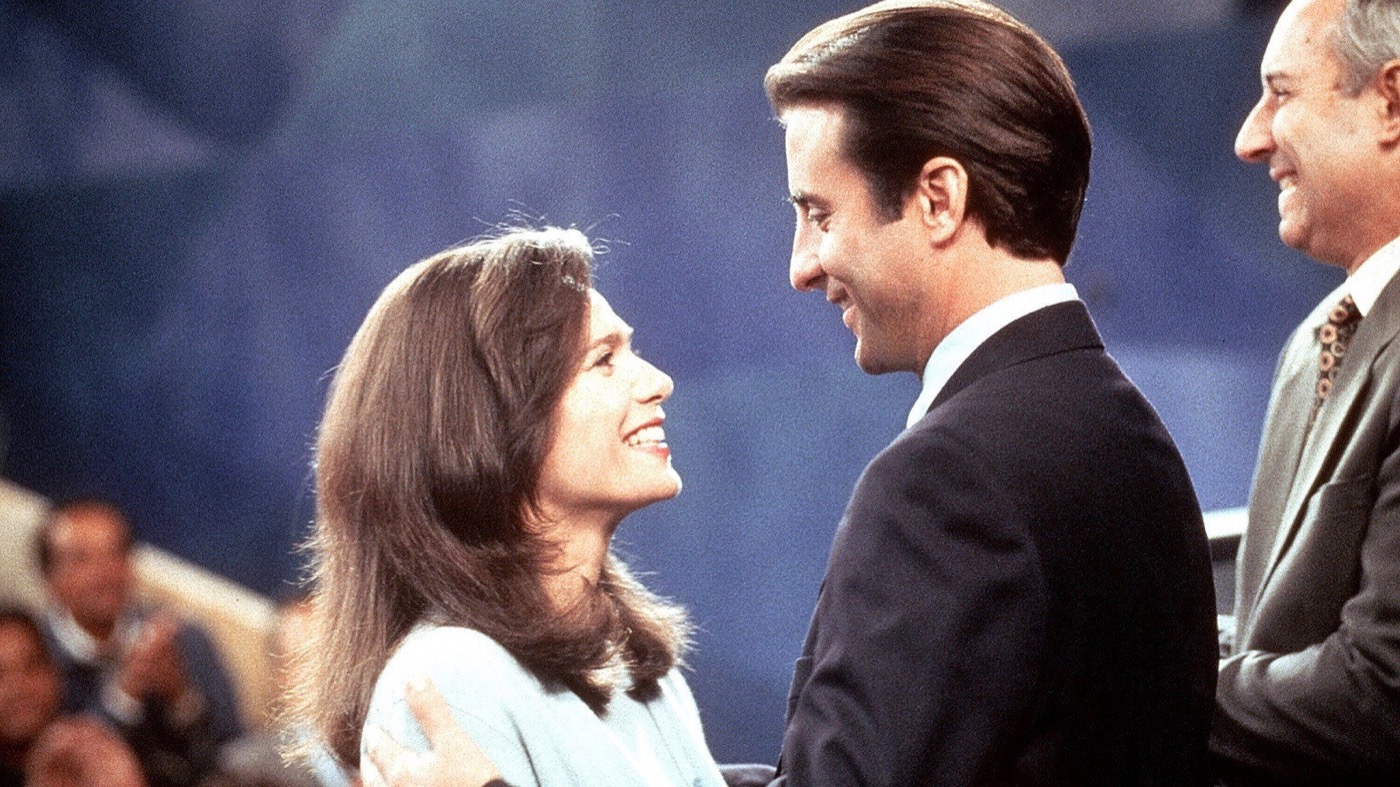
Lumet couldn’t decide how to end the movie, even after shooting had begun. He eventually brought in playwright Jon Robin Baitz, who was making his feature-film writing debut, to help resolve the climax. The resulting conclusion brings the narrative full circle: Sean, now in charge, addresses a fresh intake of assistant district attorneys, explicitly stating the themes that have driven the preceding two hours.
While Garcia capably carries the weight of the film, Dreyfuss delivers the finest performance. He plays an intriguing, intelligent, and likeable ex-radical whose natural instinct is to oppose authority, yet who harbours no love for the drug trade after losing his teenage daughter to an overdose. His seniority allows Lumet to position him as a counterweight to Sean. “I never thought I was perfect,” Dreyfuss’s character notes, calling Sean “a romantic”—an ironic inversion of expectations given their relative ages.
The supporting cast also features notable turns from Colm Feore, as a supercilious member of the DA’s team, and Holm as Sean’s father, a man who has already learned the painful necessity of breaking minor rules to preserve major ones.At times, Holm conveys a sense of barely controlled outrage. Leibman is wildly over-the-top in his early scenes as Sean’s predecessor, but it effectively contrasts the two men, even if it’s unclear whether Lumet intended the performance to be humorous. More problematic is Gandolfini, whom Lumet admired. The actor’s child-like quality—and his tendency to appear to smile even whilst crying—suited the boastful, insecure Tony Soprano perfectly, but it doesn’t quite fit here.
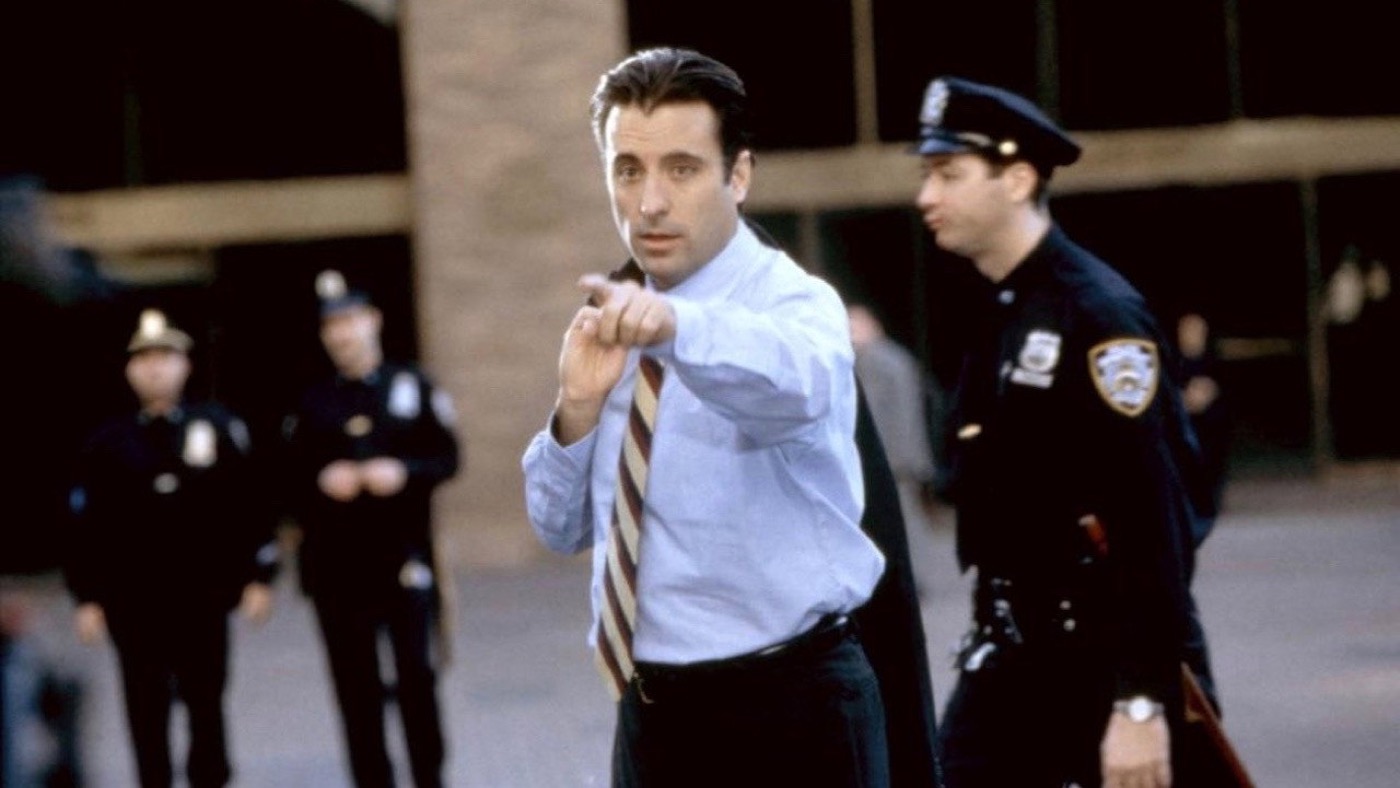
Meanwhile, Mark Isham contributes a rich, contemplative, and unobtrusive jazz-influenced score. His work replaced an earlier, likely more assertive, score by Wynton Marsalis. The graphic design of the opening titles, created by Jakob Trollbäck, is exceptionally distinctive.
Shot with assurance by cinematographer David Watkin and edited by Sam O’Steen, Night Falls on Manhattan moves at a brisk pace. The visual storytelling is economical without feeling rushed. It feels authentic without straying into excessive grit, wasting little time on atmospheric filler or side plots; we get only the highlights, exemplified by the spare brevity of the opening statements in Washington’s trial.
It functions as a film noir to an extent, but it treats its moral ambiguities matter-of-factly and ultimately lands on an optimistic note. Sean remains within the legal system, accepting that his initial ideals were naive, yet remaining determined to do good. The message may lack subtlety, but the characters are far more intriguingly complex than those in standard genre fare. Lumet sustains a balanced, non-judgmental interest in them—and their ethical dilemmas—from start to finish.
USA | 1996 | 113 MINUTES | 1.85:1 | COLOUR | ENGLISH


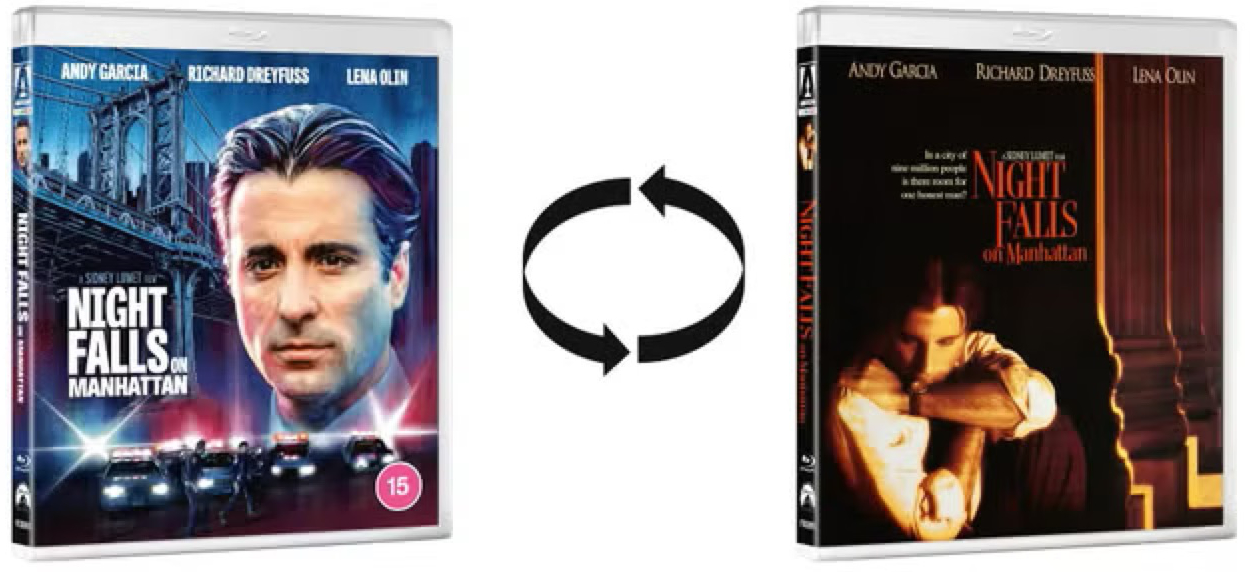

director: Sidney Lumet.
writer: Sidney Lumet (based on the novel ‘Tainted Evidence’ by Robert Daley).
starring: Andy Garcia, Richard Dreyfuss, Lena Olin, Ian Holm & James Gandolfini.