A KNIGHT’S TALE (2001)
After his master dies, a peasant squire, fuelled by his desire for food and glory, creates a new identity for himself as a knight.

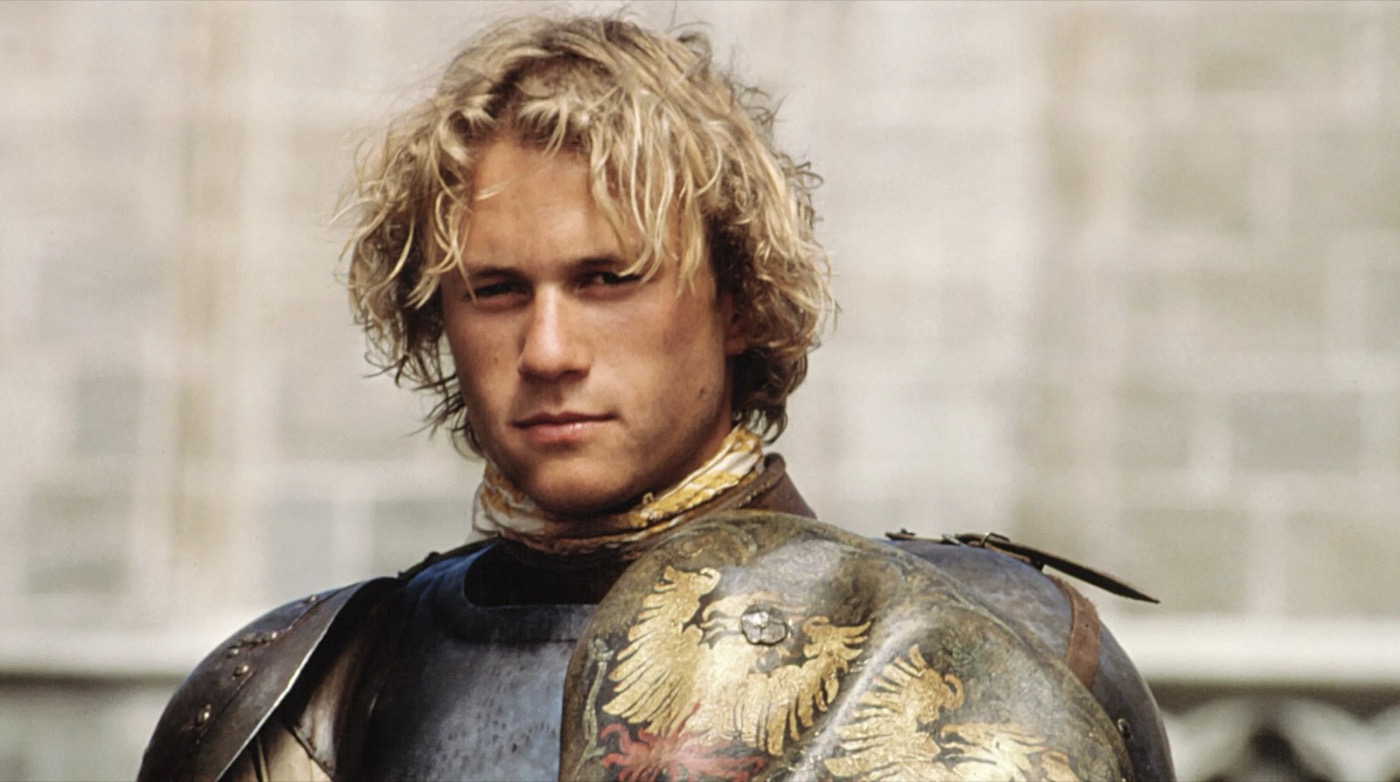

After his master dies, a peasant squire, fuelled by his desire for food and glory, creates a new identity for himself as a knight.
It’s difficult to imagine anyone watching Brian Helgeland’s A Knight’s Tale and not being thoroughly entertained. The only fair criticism would be that it gives audiences exactly what they want within a fairly traditional narrative structure. Yet, 25 years later, it still feels fresh and is neither a generic costume drama nor a standard sports movie. Despite being unjustly summed up by some as “Rocky on horseback”, it’s differentiated by a precise script crammed with snappy dialogue, plus fleshed-out characters right down to the colourful supporting roles. It’s spectacular, thrilling, witty,romantic, and possibly the best example of deliberately deployed anachronism on film.
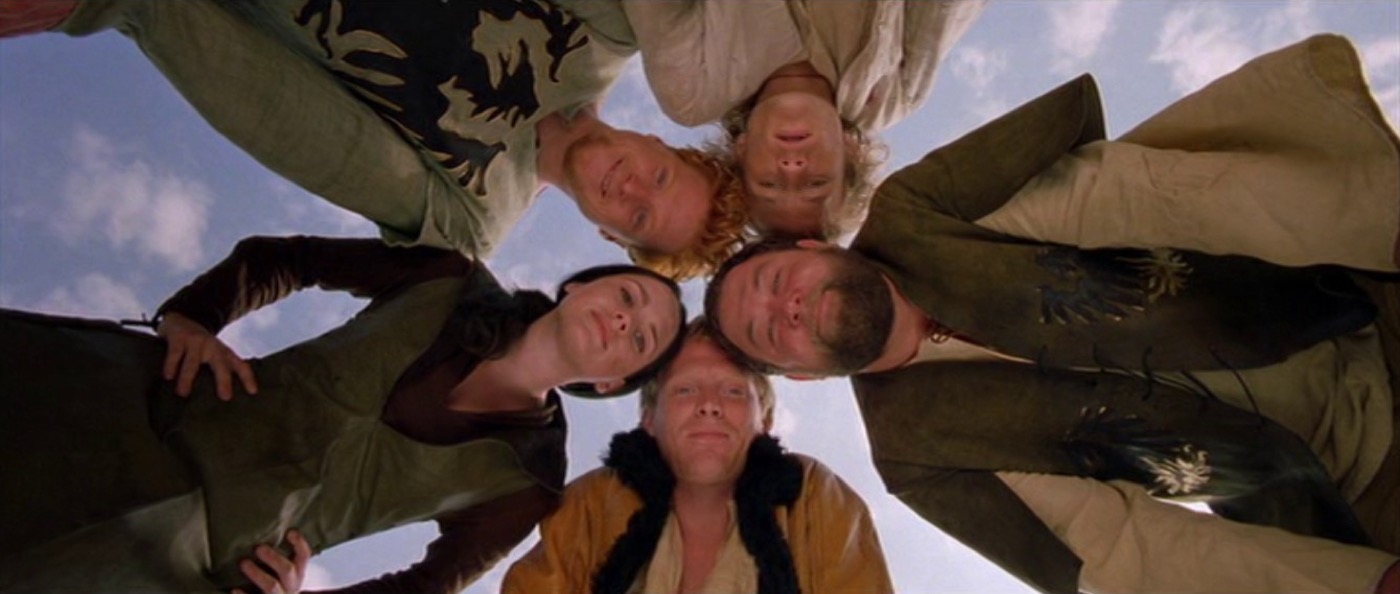
When Sir Ector (Nick Brimble) dies, securing food is first and foremost on the minds of his three squires: William (Heath Ledger), Roland (Mark Addy), and Wat (Alan Tudyk). Depending on a win at the next tournament, William argues he’s trained with Sir Ector long enough to compete in his place. It might be a flawed plan, but his friends reluctantly go along with it.
They arrive at the tournament field to the rousing stomp of Queen’s “We Will Rock You,” which seems to blare straight out of the fanfare trumpets. Straight away, we know we’re in the hands of a bold director who isn’t afraid to have fun. Of course, using mainstream pop-rock so prominently goes some way towards evoking how exciting a popular event with jousting and sword fights would’ve felt to a medieval audience. Helgeland curates a classic rock soundtrack throughout. In response to critics stating the obvious, he pointed out that Carter Burwell’s equally rousing orchestral score is just as anachronistic; neither rock bands nor orchestras existed in the 14th century.
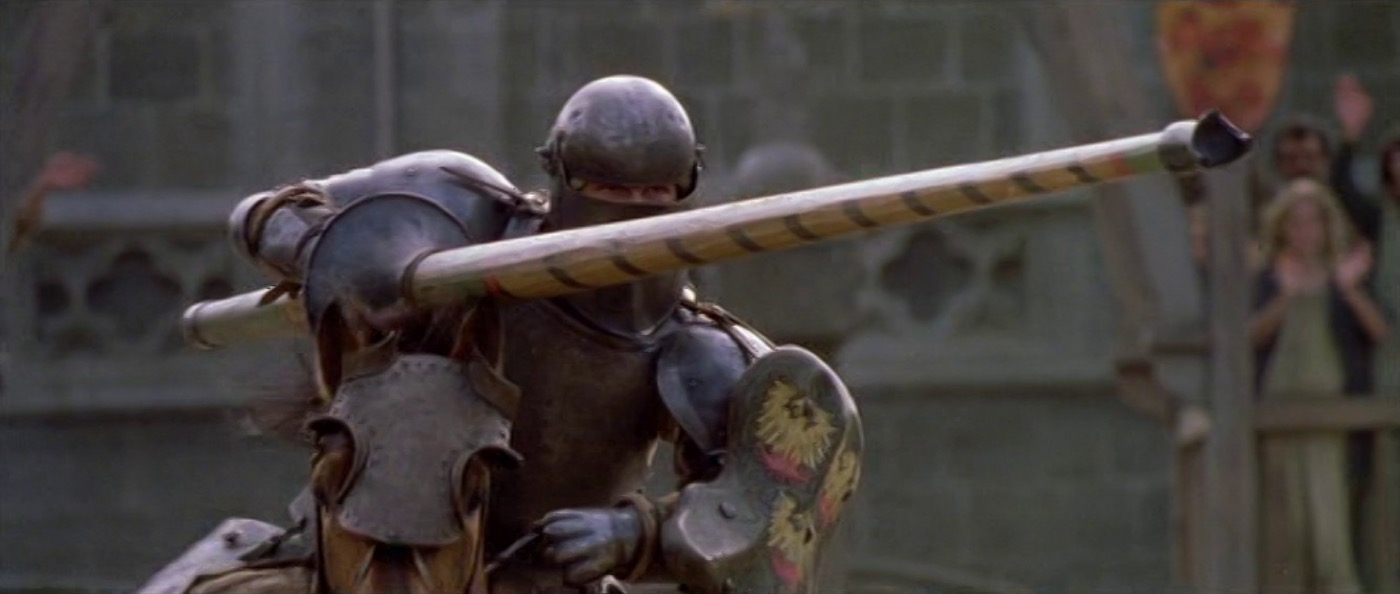
William manages to win the joust, but the trio of squires hadn’t thought that far ahead. He’s expected to remove his helmet to receive the prize from the attending Lord, but his obvious youth will betray his assumed identity. Luckily, he’s taken a blow to the head that’s bent his helmet so out of shape it can’t be removed—or so he conveniently claims.They soon realise this will be a recurring problem.
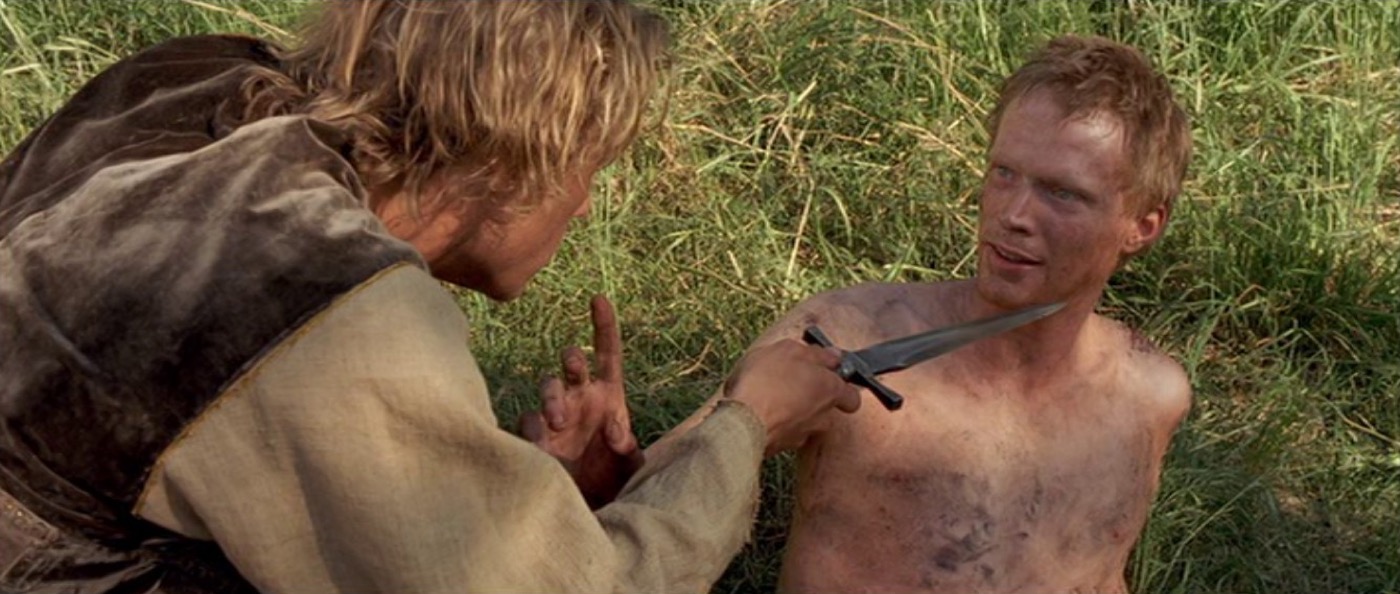
However, on their way to the next tournament, they meet a naked man trudging along the same road. He introduces himself as Geoffrey Chaucer (Paul Bettany), a down-on-his-luck writer who literally gambled away the shirt off his back, along with everything else he owned. William, Roland, and Wat haven’t a clue what a writer is, but they quickly realise a man with such a gambling habit is a liability. They only agree to feed and clothe him when he explains he can forge a Patent of Nobility—the document that will create a new identity for William, enabling him to enter tournaments without having to pass as Sir Ector.
As with the timeslip soundtrack, the vocabulary is modern throughout, sprinkled with a few antiquated colloquialisms for fun, such as Wat threatening to give Geoffrey a “fonging”. A mention of the Battle of Poitiers places the action in the mid- to late-1350s, when the English nobility would’ve spoken French or Latin and commoners spoke Middle English. Geoffrey Chaucer was hailed as the first writer to use Middle English prose as a literary form, as well as being the first to write down some 1,000 words that became part of the English language.
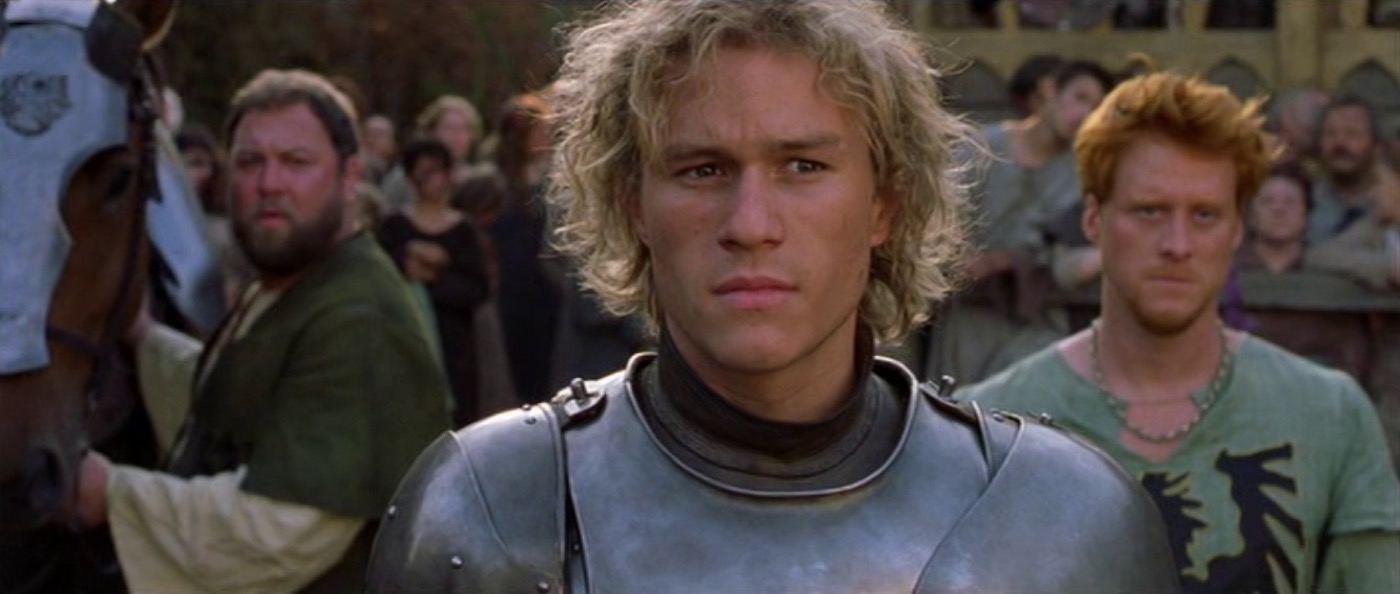
Chaucer’s life is fairly well documented, except for the time he spent travelling in Europe across France and Flanders.It was this mysterious chapter of his life that inspired Helgeland’s script. Scholars enjoy debating his motivations and whereabouts, but who really knows what Chaucer got up to? Perhaps he accompanied an aspiring knight and his entourage to a series of tournaments leading up to the championship in London?
Helgeland started out as a writer, earning his first credit on A Nightmare on Elm Street 4: The Dream Master (1988). He made his directorial debut with his own script for A Slight Case of Murder (1996), an episode for Season 7 of television series Tales from the Crypt (1989-1996). The episode starred Christopher Cazenove, who appears here as William’s father in an emotionally charged supporting role that provides a couple of supremely poignant moments.
Casting directors may have noticed Heath Ledger when he played high-school bad boy Scott Irwin in 10 episodes of the Australian soap Home and Away. Shortly after, he landed the lead as Conor, a Celtic chieftain resisting Roman rule in Roar (1997)—a short-lived television series created by Shaun Cassidy and set in 5th-century Ireland.Ledger’s first big-screen lead was in the teen romcom 10 Things I Hate About You (1999), but A Knight’s Tale is widely considered his breakthrough.
The same goes for Paul Bettany, who makes a memorable entrance by spending a good chunk of his screen time stark naked. He does so with astonishing confidence to great comedic effect, embellished by the understated reactions of his castmates. Even when fully clothed, his young Chaucer remains one of his most accomplished roles. Today, he’s better known for his various incarnations as Marvel’s Vision.
The bulk of the visual effects for A Knight’s Tale was provided by The Mill, which had just completed work on Ridley Scott’s Gladiator (2000) and would soon become famous for its excellent work on the BBC’s Doctor Who reboot. The VFX crew included supervisor Paul Whybrow, who was working on Harry Potter and the Philosopher’s Stone (2001) around the same time—the first of five Harry Potter films he’d contribute to. Joining him was Gary Cohen, fresh from The Young Indiana Jones Chronicles franchise and likely drawing on his experience of period-set action from First Knight (1995).
The set-piece jousts are handled brilliantly by second-unit director Allan Graf alongside a talented, fearless stunt team. Dynamic, high-impact action is captured with inventive crane shots and inspired Steadicam work. Operators were suspended on wires and flown along the barriers between two charging horses, placing the viewer right in the action as lances shatter into an explosion of shards on impact (they were actually made of balsa wood filled with linguine). Spaghetti Western–style close-ups were inserted, not only for dramatic effect, but to keep track of who’s who when only eyes are visible through the visor slits.
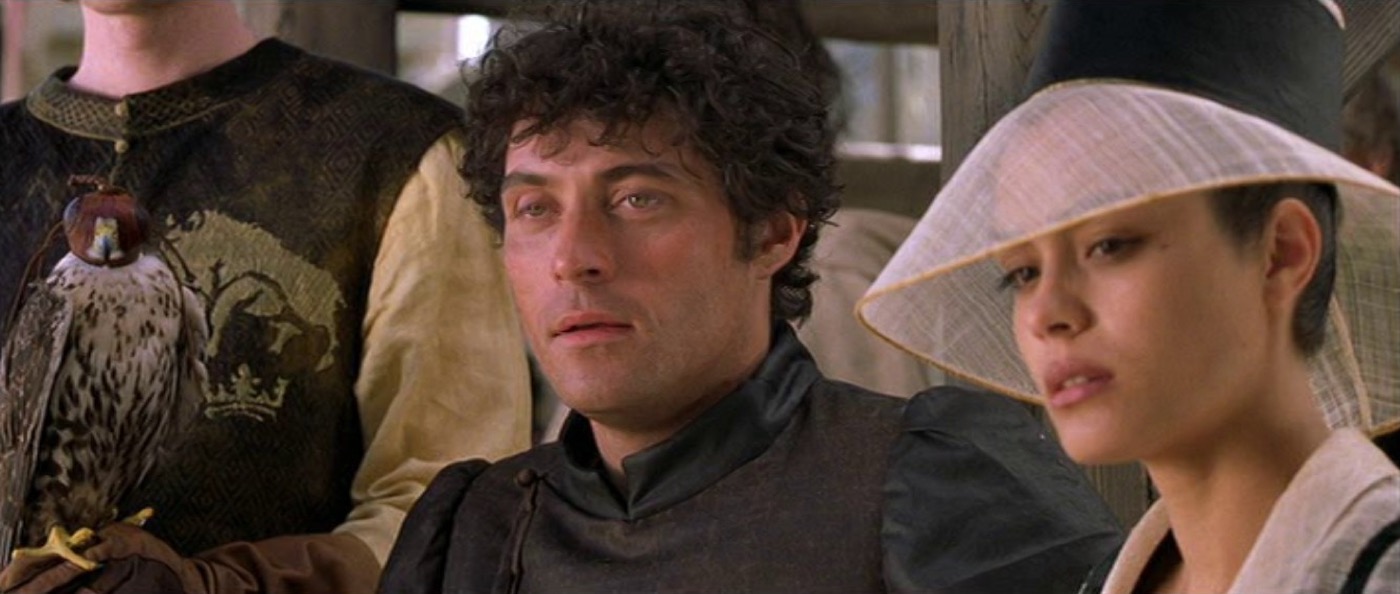
The film’s $65M budget certainly shows on screen, but its main appeal lies in the considerable charm of the principal cast, most of whom were relatively unknown at the time. It marked the feature debut for female lead Shannyn Sossamon, who lights up the screen as the feisty Jocelyn. She catches the eye of both William and his arrogantly obnoxious rival, Count Adhemar (Rufus Sewell). Her chic fashion sense wouldn’t look out of place at a modern society event, signalling immediately that she’s stylish, wealthy, a little avant-garde, and well out of William’s league.
Rufus Sewell had been busy with supporting roles since his debut in Twenty-One (1991) opposite Patsy Kensit, but he first caught wide attention as the paranoid protagonist in the sci-fi noir classic Dark City (1998). Here, he demonstrates great versatility as a deliciously despicable old-school villain who manages to be arch without devolving into a caricature.
Then there’s Kate (Laura Fraser), a farrier—a scenario that isn’t as unlikely as one might assume. Membership of medieval blacksmiths’ guilds was posthumously transferred to widows, allowing them to continue running the forge to provide for their families. However, they weren’t permitted to make armour, making it doubly rebellious when she offers to design and forge a new suit of plate mail for William.
It’s refreshing for a female character to be so narratively essential without serving as a love interest for the male leads.She joins William’s crew and holds her own alongside Roland and Wat as an equal. Crucially, she has a better grasp of courtly etiquette and teaches William to dance so he can accept Jocelyn’s invitation to a celebratory banquet. The evening goes smoothly until Adhemar tries to humiliate William by asking him to demonstrate a dance from his homeland. The scheme backfires when Jocelyn steps in; together, they innovate new moves and rock the dance floor to David Bowie’s “Golden Years” in the film’s most memorable scene.
While anachronisms run riot, many period details are painstakingly accurate and beautifully rendered through clever miniatures and digital composites. The depiction of Old London Bridge, lined with the houses of the wealthy, is impressive. With no surviving 14th-century illustrations, it required artistic licence, yet the attention to detail extends far beyond a brief shot—right down to the heads of executed criminals displayed on pikes over the gatehouse. Another blink-and-you’ll-miss-it detail is the steeple of Old St Paul’s Cathedral, glimpsed alongside the Tower of London beyond the tournament grounds where the high-stakes finale between William and Count Adhemar plays out.
A Knight’s Tale made a splash at the box office on its opening weekend, finishing second only to The Mummy Returns (2001), and went on to earn a respectable $117.5M. It has since attained cult status, with many citing it as a favourite comfort watch. Perhaps it owes its lasting appeal to sharp humour as much as exhilarating action. It never pretends to be anything other than joyous entertainment delivered with heart and a knowing wink. With an excellent ensemble delivering benchmark performances and a simple story told exceptionally well, it feels timeless—refreshingly inventive yet familiar, comfortingly classic, and gleefully postmodern.
USA | 2001 | 132 MINUTES | 2.35:1 | COLOUR | ENGLISH • FRENCH • LATIN

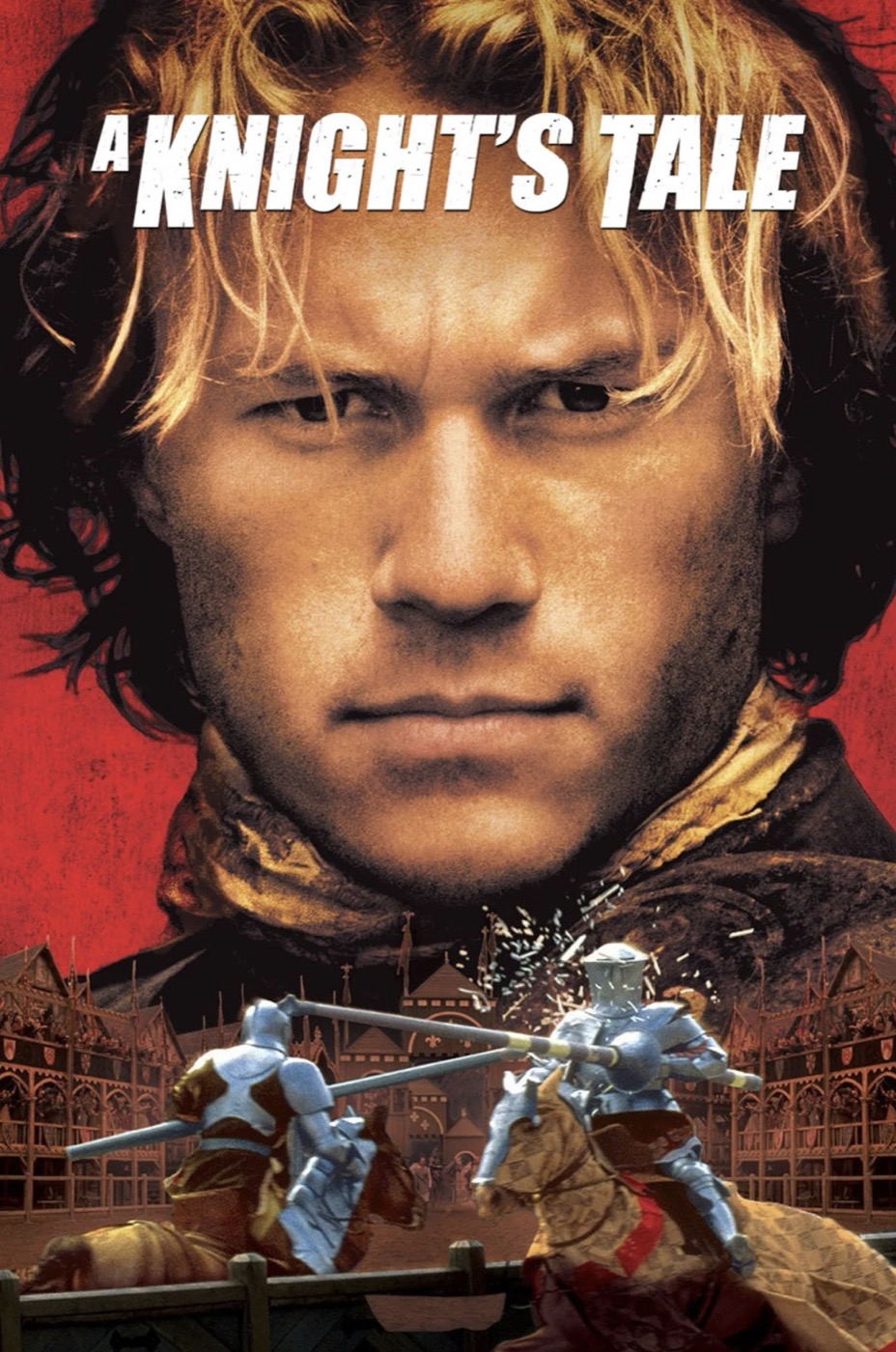
director: Brian Helgeland.
writer: Brian Helgeland (based on ‘The Knight’s Tale’ by Geoffrey Chaucer).
starring: Heath Ledger, Paul Bettany, Rufus Sewell, Mark Addy, Alan Tudyk, Shannyn Sossamon, Laura Fraser & Christopher Cazenove.