THE BRIDE! (2026)
In 1930s Chicago, Frankenstein's monster asks Dr Euphronius to help create a companion. They give life to a murdered woman as the Bride, sparking romance, police interest, and radical social change.


In 1930s Chicago, Frankenstein's monster asks Dr Euphronius to help create a companion. They give life to a murdered woman as the Bride, sparking romance, police interest, and radical social change.
Director Maggie Gyllenhaal’s previous feature, The Lost Daughter (2021), was a textbook example of how to make a debut. The psychological drama’s screenplay was written by Gyllenhaal herself; based on a popular novel, it featured a small but excellent roster of acting talent. In short, it was an intimate story, told effectively and efficiently.
For her second film, The Bride!, Gyllenhaal has clearly chosen a different path. Her reimagining of James Whale’s The Bride of Frankenstein (1935) aims for something far bigger and stranger. The film is ambitious in scale and tone, mixing horror, comedy, music, and social commentary. While these ideas occasionally work well, the final result often feels messy and unfocused.
The film begins with the ghost of Mary Shelley addressing the camera from the afterlife, explaining that her famous Frankenstein tale was by no means the whole story. Apparently, there is much more to tell, and she decides the best way to continue is to possess a 1930s Chicago sex worker named Ida (Jessie Buckley). Being possessed is bound to cause problems, but for Ida, the timing is particularly poor; she starts screaming outrageous accusations in a crowded nightclub, including the dodgy dealings of a mob boss named Lupino, who’s standing only a few feet away. It’s a bad move. His henchmen catch up with her and, well, let’s just say things don’t end well.
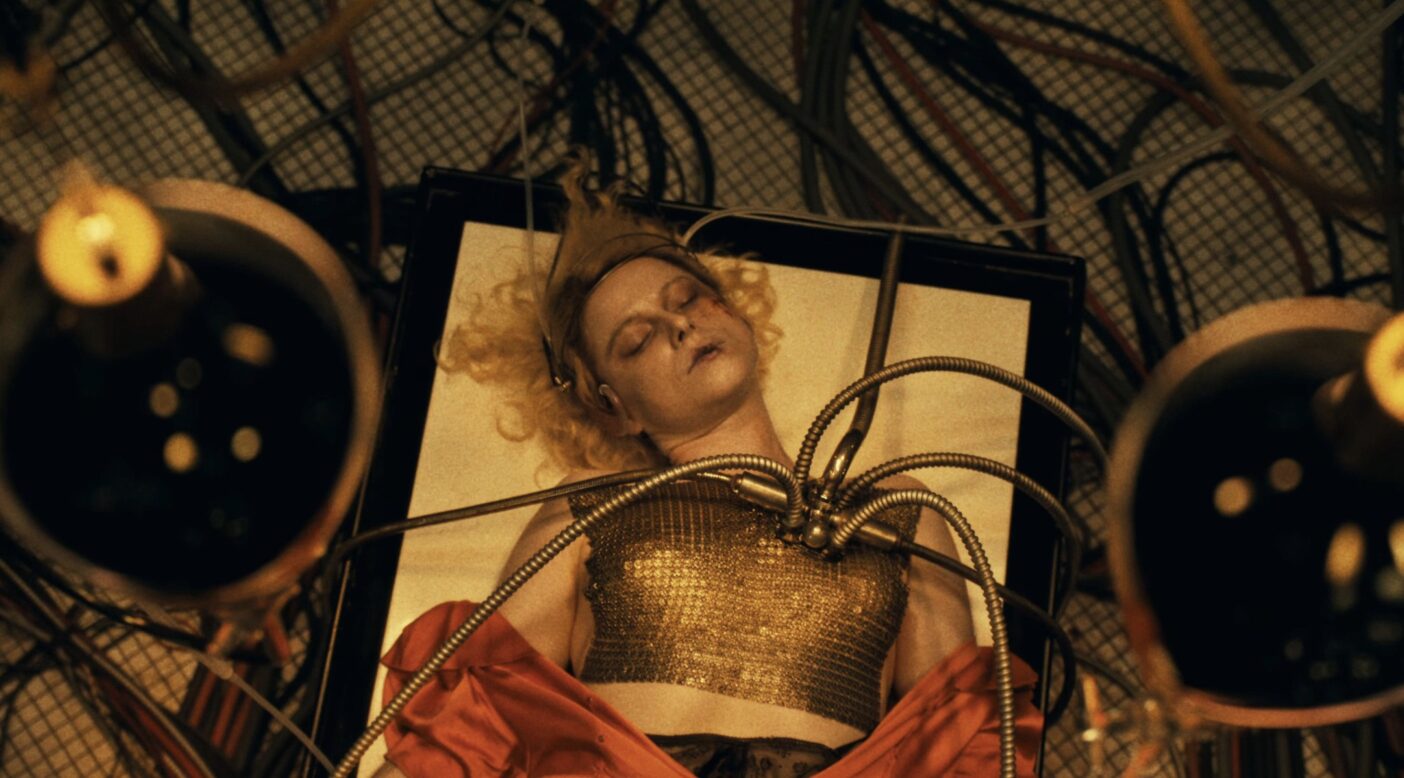
The story then shifts to Frankenstein’s monster (Christian Bale), who wanders the city searching for companionship. He eventually approaches Dr Cornelia Euphronious (Annette Bening), a scientist with the knowledge to reanimate the dead. At first, Euphronious refuses, but after much pleading she reluctantly agrees, and—you guessed it—Ida’s corpse is the one pulled from the grave.
Before you can say ‘It’s alive!’, Ida is given a new lease of life, after which she and ‘Frank’ (a name bestowed by Euphronious) head out to explore the city lights. Initially, things go well; the odd couple enjoy the musical delights of a nightclub, but violence and murder soon ensue. The pair are forced on the run, hunted by Detective Jake Wiles (Peter Sarsgaard) and his assistant Myrna Malloy (Penélope Cruz).
If this sounds utterly chaotic, you’d be right—and that would be fine if the script were solid and concise. Instead, we get a mishmash of ideas, themes, and altogether too much plot. There are grand song-and-dance numbers, corrupt police, ‘mad’ science, and Bonnie and Clyde-style antics. As if this muddled excess weren’t enough, the film also attempts to present itself as a modern, punk-rock feminist reinterpretation of the Frankenstein story.
On paper, there’s nothing wrong with this conceit. Unfortunately, the script often delivers its themes with a heavy hand. During the climax, Ida repeatedly shouts ‘me too!’ while confronting her pursuers. The reference to the #MeToo movement is clear, but it feels clumsy rather than meaningful. Perhaps a lack of subtlety was intended, but this attempt to highlight female autonomy and the fight against the patriarchy is poorly handled. Consequently, you stop caring.
To make matters worse, the film is tonally inconsistent. One moment offers a zany rendition of “Puttin’ on the Ritz” (not nearly as funny as Mel Brooks’ Young Frankenstein); the next features thugs meeting an extremely violent end following an attempted rape.
Even though Gyllenhaal is credited as both writer and director, she shouldn’t take all the blame. According to reports, she delivered a cut of the film early in 2025 to studio executives Pam Abdy and Michael De Luca. They were reportedly unhappy, leading to major reshoots costing around $20M. When a production undergoes such significant late changes, the results are rarely smooth. While it’s impossible to know exactly what was altered, the film feels as though certain story beats have been truncated; the lasting impression is of two slightly different movies fighting for control of the screen.
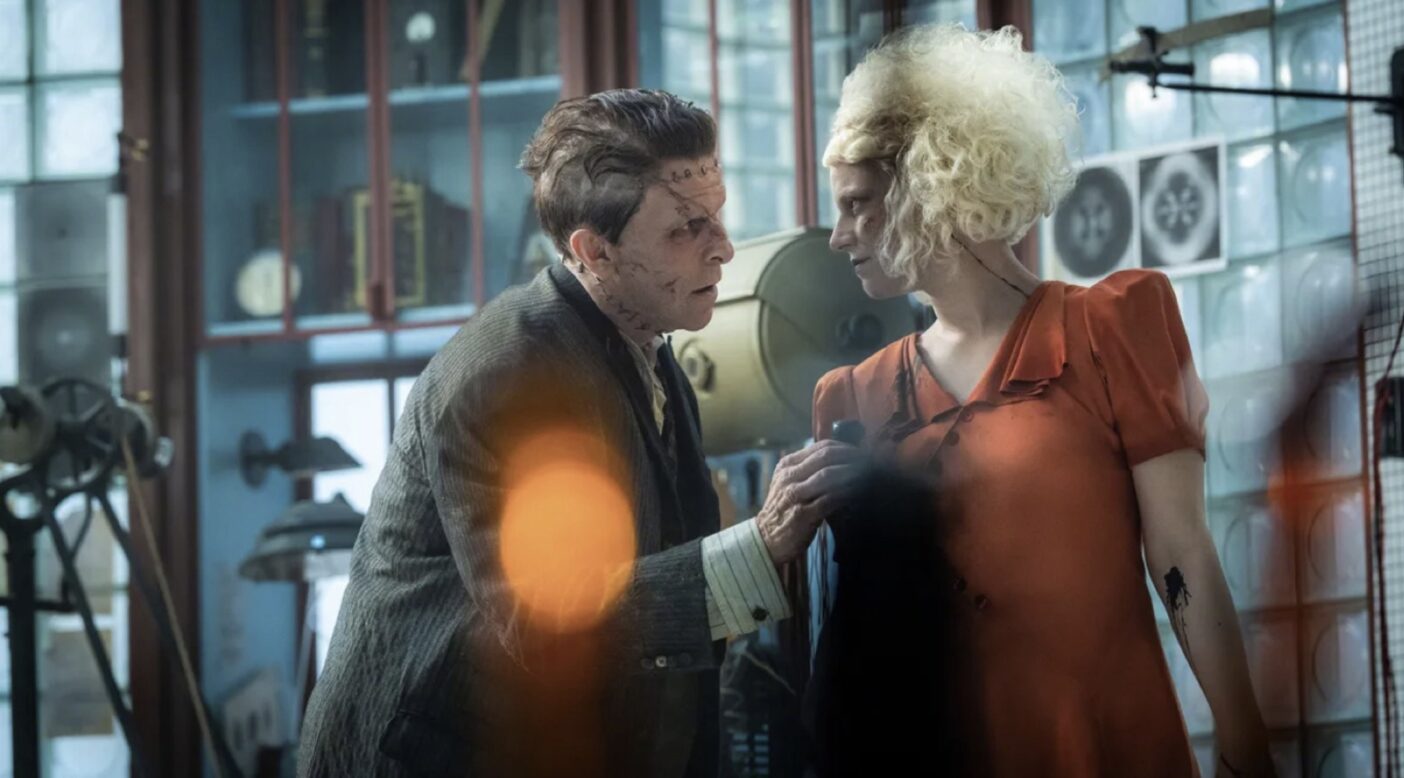
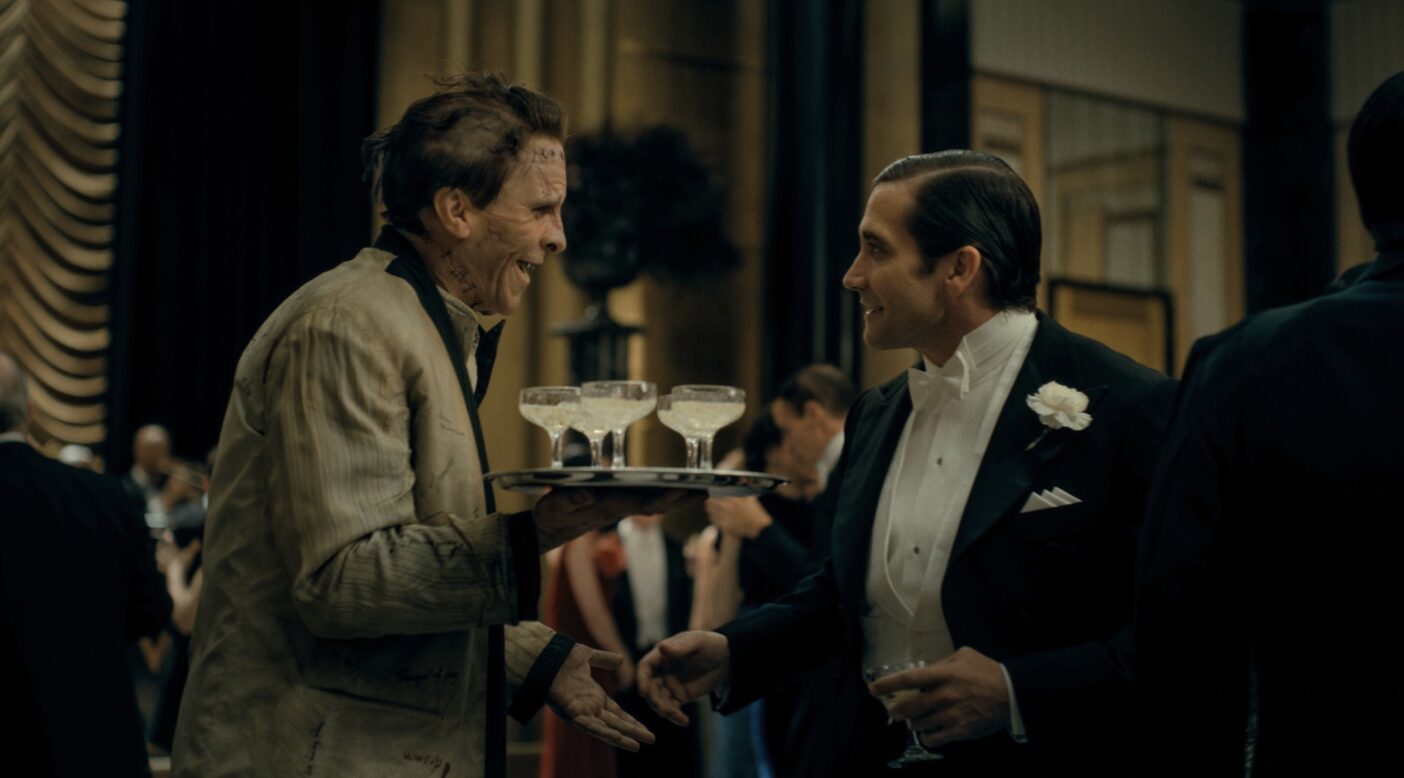
Despite these issues, the film boasts strong technical merits. Lawrence Sher’s cinematography is a highlight, using dark, atmospheric lighting that recalls classic monster movies. Rain-slicked streets glow under neon, laboratories are filled with eerie shadows, and the nightclub scenes capture the energy of 1930s Chicago. Even when the story struggles, the visuals remain outstanding. The soundtrack is also effective, with Icelandic composer Hildur Guðnadóttir mixing dramatic orchestral pieces with jazz influences that perfectly suit the setting.
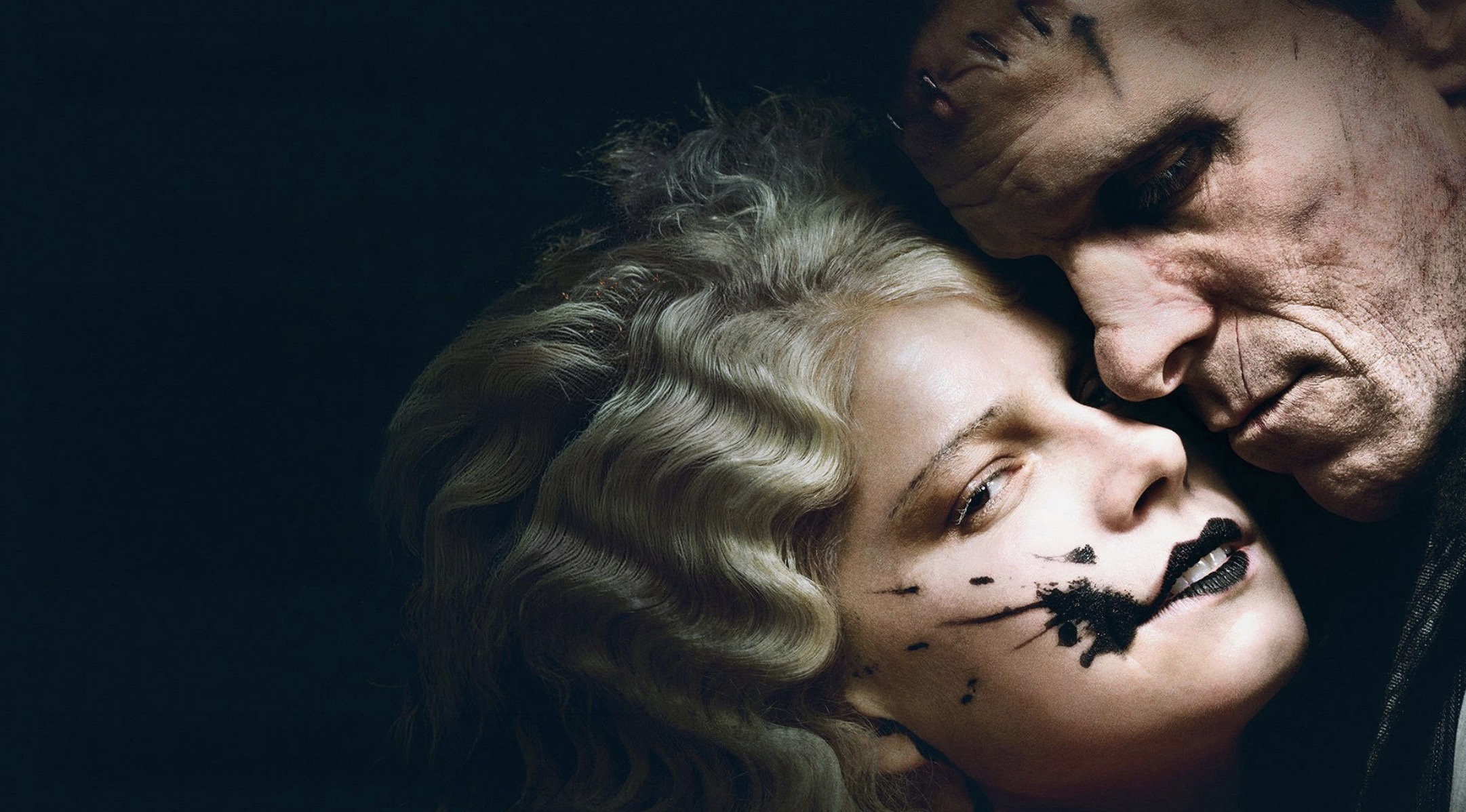
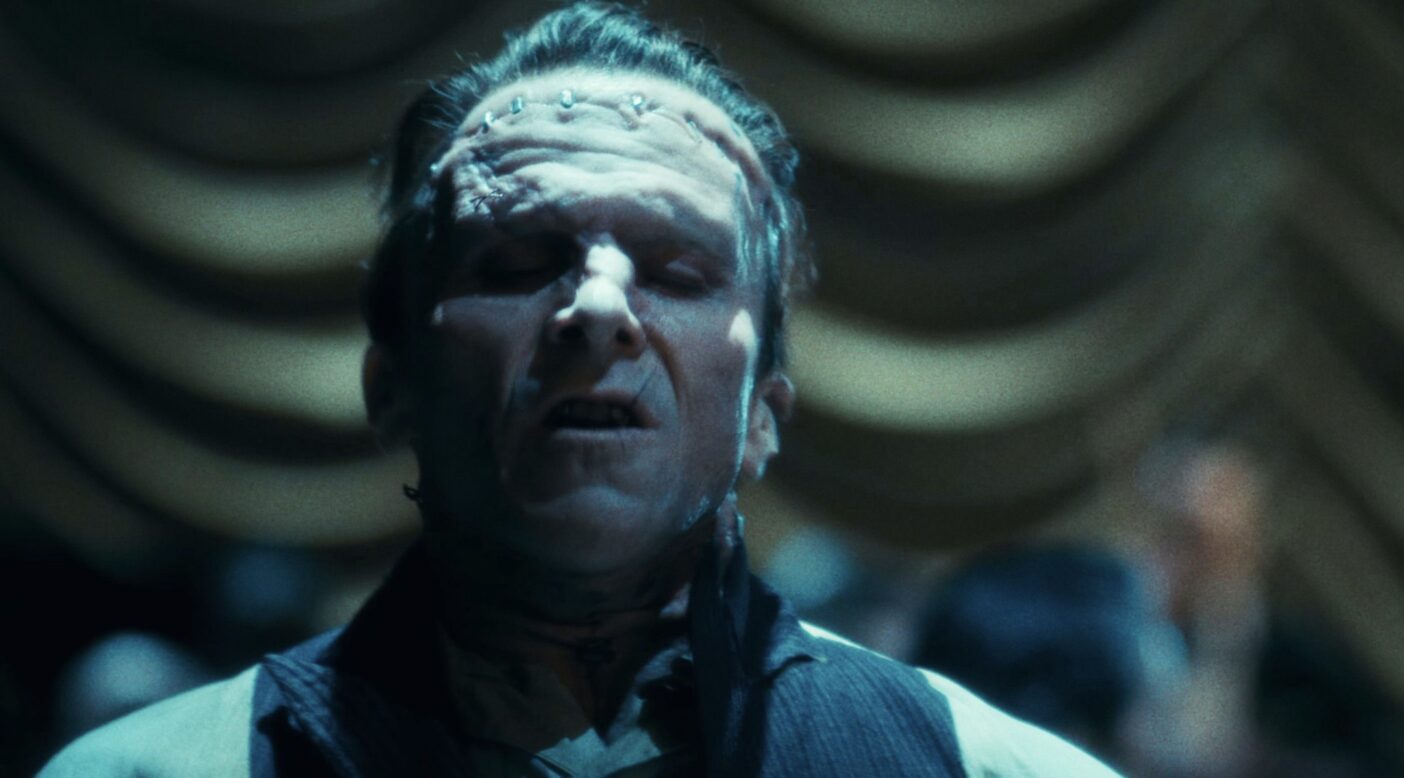
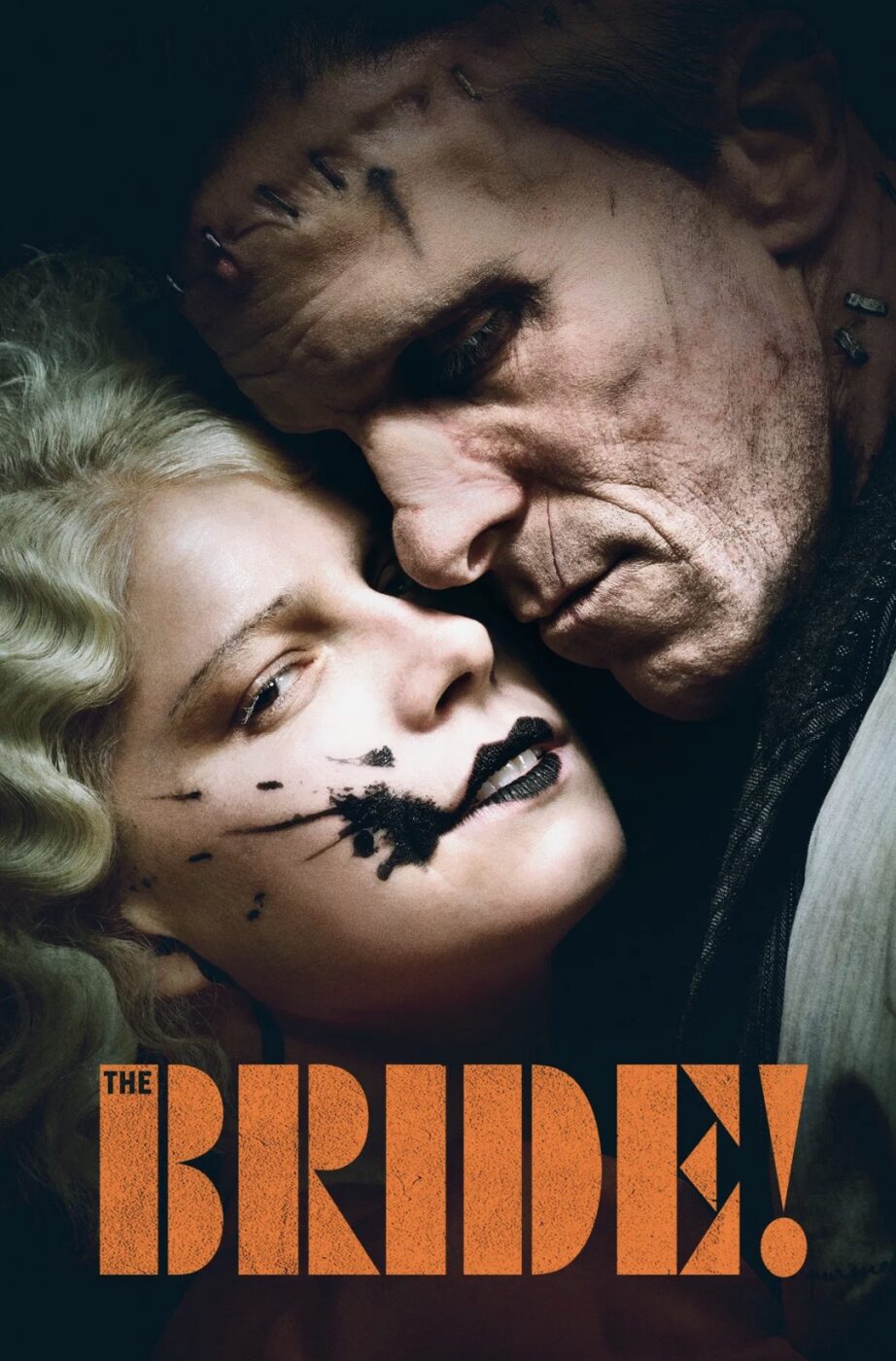
The costumes, makeup, and prosthetics—principally by Sandy Powell and Nadia Stacey—are equally impressive. Frank’s design, all stitches and scars, makes the character believable while allowing Christian Bale to emote. The Bride’s appearance is similarly memorable; her wild hair, pale skin, and tattoo-like black smudges stretching from her lips to her cheek give her an unsettling, striking look. If I were a betting man, I’d wager this iconic aesthetic will be a favourite at Halloween parties this year.
Performance-wise, the film benefits from a strong central cast. Christian Bale gives Frank surprising depth, presenting him as a lonely figure searching for connection rather than a simple monster. His physicality captures the creature’s strength, but he also brings a curiosity and sadness that makes the character sympathetic.
As good as Bale is, Jessie Buckley is the film’s true standout. Her interpretation of Ida—and later the Bride—is energetic, unpredictable, and captivating. Buckley moves effortlessly between humour, anger, and vulnerability. She fully commits to the strange tone, whether dancing or confronting violent men. Even when the story falters, her performance keeps the audience engaged; it is easily the film’s strongest element.
Sadly, two characters feel redundant. Detective Jake Wiles and Myrna Malloy are introduced as the primary antagonists, yet despite their screen time, they add very little to the story. Peter Sarsgaard and Penélope Cruz give decent performances, but the characters are unnecessary. The film would likely work just as well—if not better—had they been removed entirely.
Technical flaws aside, there is something admirable about the project’s ambition. Gyllenhaal clearly wanted to create something unusual: a monster movie mixed with a musical, a crime caper, and social commentary. Few filmmakers would attempt such a blend. While the experiment doesn’t fully succeed, it remains interesting to watch.
In the end, The Bride! is a film of big ideas and uneven execution. Its visuals, music, and performances—especially Buckley’s—are highlights. It’s just a shame that a convoluted script, shifting tone, and studio interference prevent it from reaching its full potential.
USA | 2026 | 126 MINUTES | 2.39:1 | COLOUR • BLACK & WHITE | ENGLISH

director: Maggie Gyllenhaal.
writer: Maggie Gyllenhaal (based on ‘Frankenstein; or, The Modern Prometheus’ by Mary Shelley).
starring: Jessie Buckley, Christian Bale, Peter Sarsgaard, Annette Bening, Jake Gyllenhaal & Penélope Cruz.