THE KISS (1981)
A man sees his life turned upside down, after being photographed compassionately kissing a dying man who has been struck by a bus.

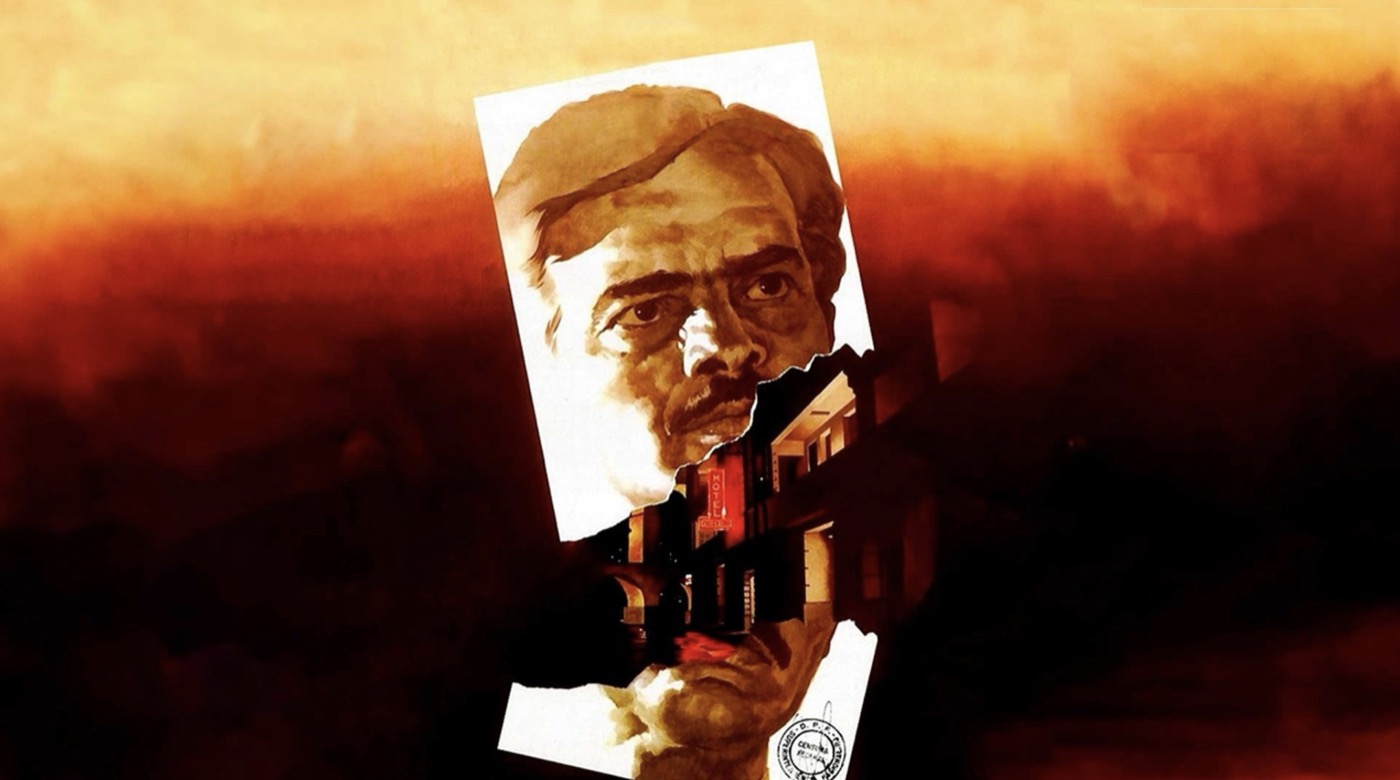

A man sees his life turned upside down, after being photographed compassionately kissing a dying man who has been struck by a bus.
A male passerby comes across a dying stranger who has just been struck by a bus, and who asks to be kissed one last time before he dies. Complying with this request, the compassionate man finds himself endlessly harassed by a self-serving, bitter and hypocritical society. Bruno Barreto’s The Kiss / O beijo no asfalto might have a ridiculous premise, coming across as a paranoid straight man’s—or closeted gay man’s—greatest fear taking root, but it is rarely played for laughs in this cruel Brazilian satire. Adapted from Nelson Rodrigues’ play of the same name and co-written by him alongside Doc Comparato, The Kiss follows a clerk, Arandir (Ney Latorraca), whose life is torn apart by an earnest gesture that he never feels any need to apologise for, despite the absurd extrapolations made from it.
Arandir isn’t dumb, but he’s a simple man with no expectation of surprise in his life. Adored by his wife Selmina (Christian Torloni) and sister-in-law Dália (Lídia Brondi), Arandir’s biggest problem before the movie’s central fiasco is his hateful father-in-law Aprígio (Tarcísio Meira). The film’s central kiss gives rise to absurd lies told by Aprígio,opportunistic photographer Amado Pinheiro (Daniel Filho) and corrupt police chief Cunha (Oswaldo Loureiro), as well as other strangers fabricating falsehoods to avoid harassment from gossiping neighbours or abuse from these blaspheming tyrants.
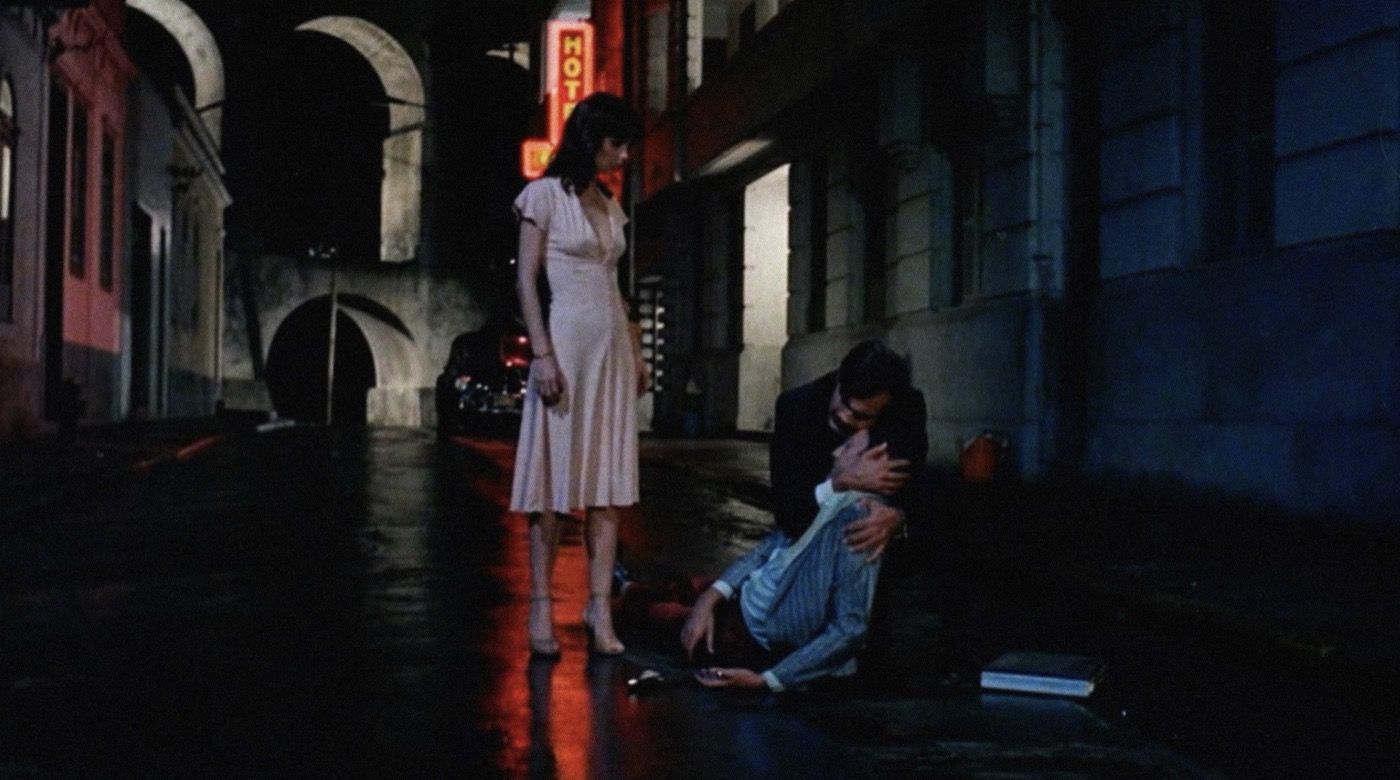
It doesn’t take long to recognise that Arandir is an everyman, a sympathetic figure whose only interest is in securing a fruitful life for himself and his beloved Selmina. He doesn’t pity himself openly, but wears that dejectedness in his slumped shoulders and helpless expression. His tenderness towards his wife and the dying man is exactly what makes it so difficult for him to stomach the weight of the rumours running rampant about his sexuality. This accusation attracts the scrutiny and harassment of law enforcement even though no charges are levelled at him. If there were charges,there’d be a chance of having them struck down. Instead, Arandir is doomed—condemned by strangers and acquaintances alike, slandered in the press and routinely harassed by Cunha.
The Kiss hinges on such an amusing premise that, even within this bitter tale, there is room for laughter. However, it’s quickly replaced by anger and sorrow once it becomes clear just how damning this rumour is. With a lean runtime that doesn’t waste a single moment, The Kiss is a tightly paced film that transforms an amusing premise into a story capable of eliciting fury at its injustices.
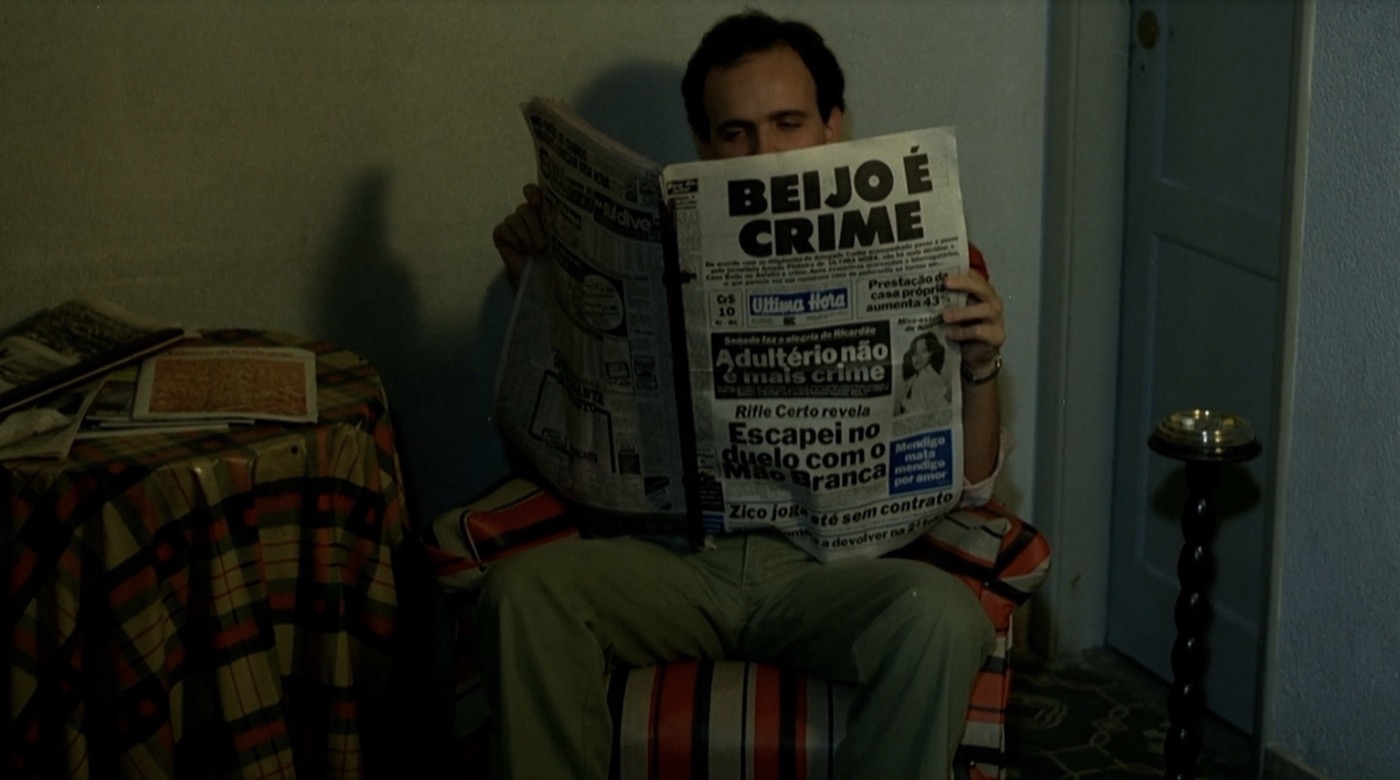
Whether the principal fault of these many fallible characters is their lack of defiance, incapacity for pity, groupthink or outright sadism, most of them are defined by their smallness. They allow their opinions and memories to be altered,often through a gradual process that breaks down their resolve. If they have any willpower left, the implied threat of being on the wrong side of the law is enough to crush it. With no true friends around him, and a society willing to throw its fellow man under the bus—often for no good reason—it’s no wonder that a simple everyman like Arandir can’t even put up a fight.
The rank hypocrisy of Arandir’s downfall is brilliantly skewered, whether through the film’s hilariously scummy reporter, tyrannical police chief or the passersby interviewed on this fiery scandal. Even the motel where Arandir stays to protect his loved ones is frequented by men and women looking for a bit of fun, where extramarital sex runs rampant. It’s entirely possible that gay or lesbian couples make use of this service, but of course, that doesn’t matter.Nothing matters, since a man can have his life destroyed irrevocably for arbitrary reasons. You can shake your bony fist at the proceedings or tremble with righteous indignation, but that does nothing to stop society’s casual steamrolling of figures like Arandir. His punishment is brutal and swift, though each step through this tragic downfall is so anger-inducing that it feels longer than it really is.
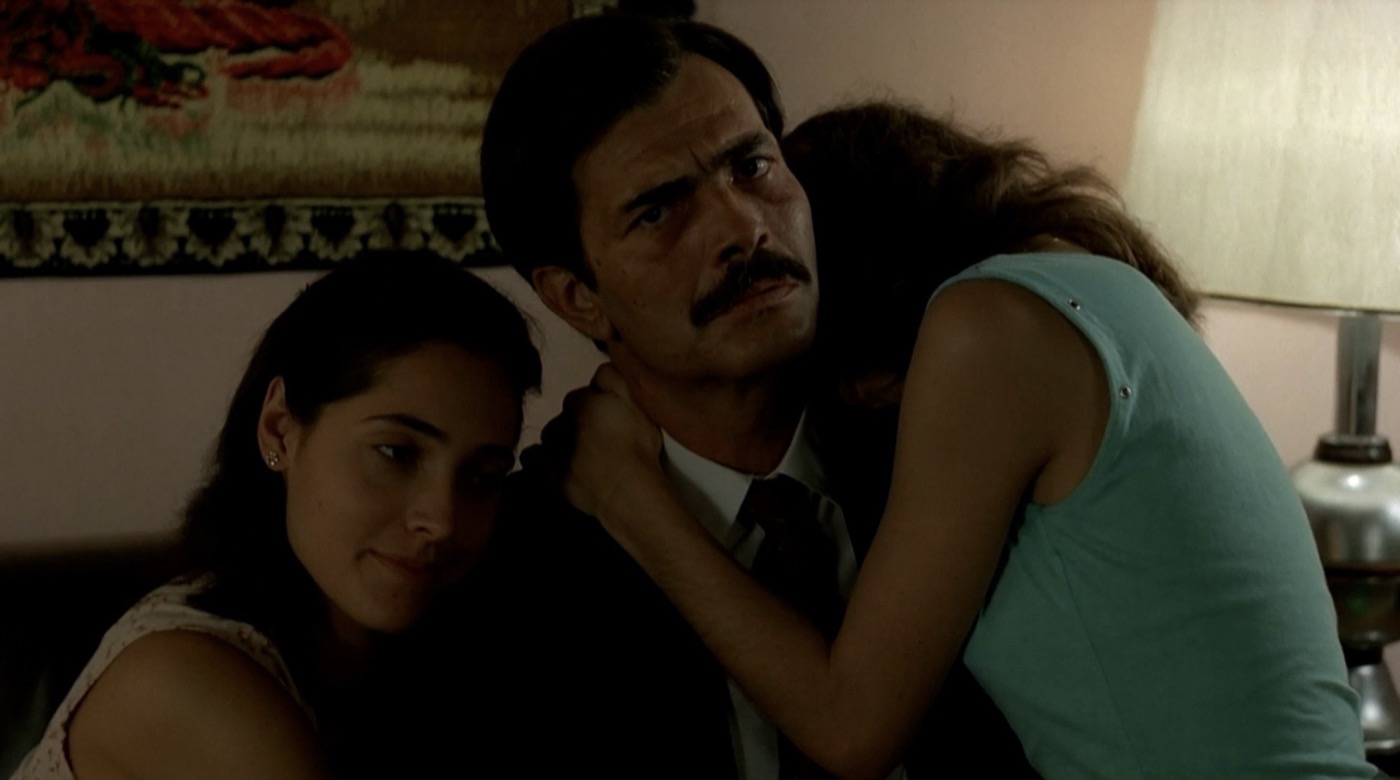
The only thing missing from The Kiss is a final act. It’s admirable that Rodrigues is committed to making this premise feel as realistic as possible, which only further underscores the absurdity at its heart. But to truly light a flame under viewers, it’s necessary to make them hate this world and almost everyone in it, and that opportunity goes unsung here.For instance, Arandir is harassed and harangued, but he’s unaware of the ways in which Selmina must also suffer the repercussions of the controversy. Their separation from one another in these crucial moments is tragic in its own right,but it’d be more damning to have them see each other again and suffer more because of it.
As it is, this protagonist is put through the wringer. There are further depths to his despair that could’ve been plumbed, yet were ignored in favour of a trim runtime. The Kiss is engrossing throughout; there needn’t have been any caution over it running on for too long.
BRAZIL | 1981 | 80 MINUTES | 1.85:1 | COLOUR | PORTUGUESE

director: Bruno Barreto.
writers: Nelson Rodrigues & Doc Comparato.
starring: Ney Latorraca, Tarcísio Meira, Christiane Torloni, Lídia Brondi, Thelma Reston, Flávio São Thiago, Nelson Caruso & Renato Coutinho.