MIDNIGHT IN PARIS (2011)
While on a trip to Paris with his fiancée's family, a nostalgic screenwriter finds himself mysteriously going back to the 1920s every day at midnight.

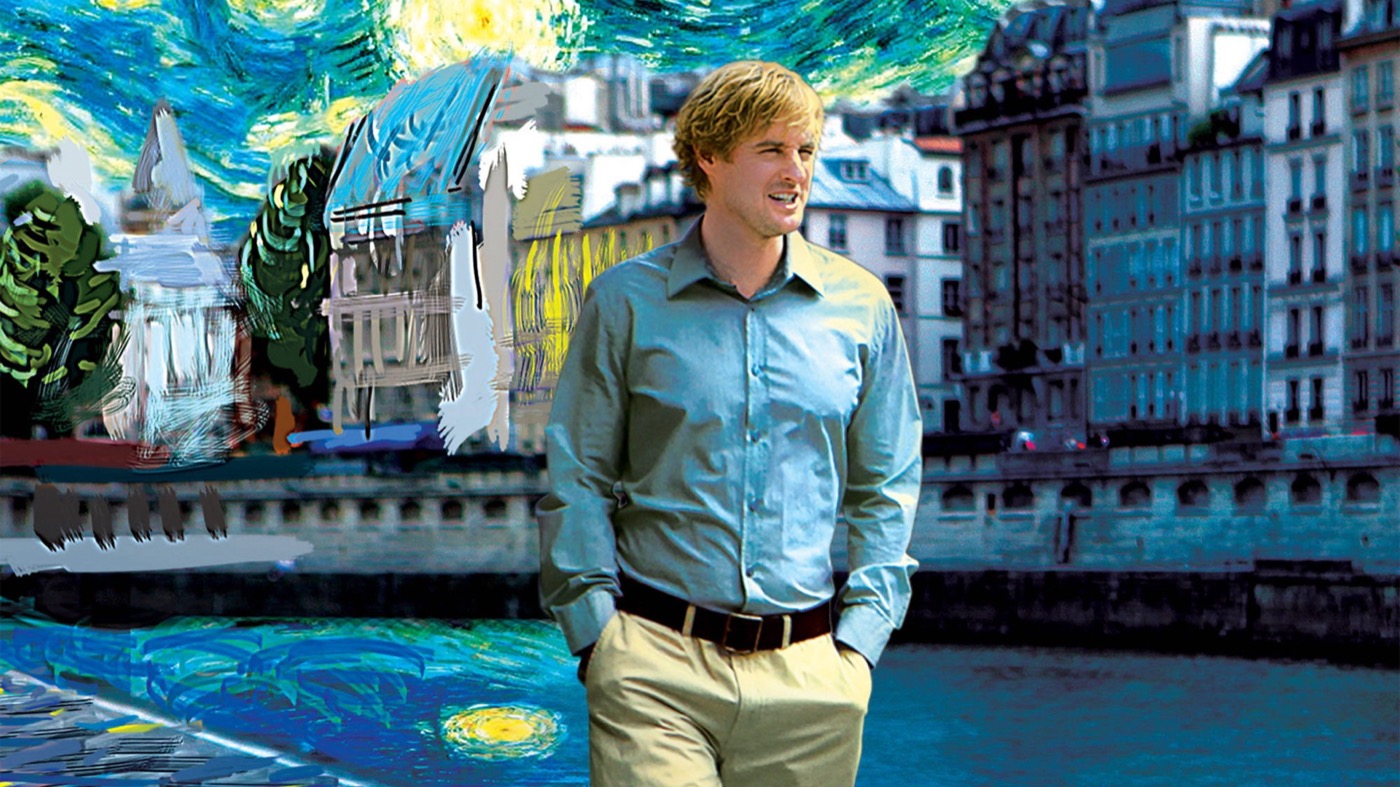

While on a trip to Paris with his fiancée's family, a nostalgic screenwriter finds himself mysteriously going back to the 1920s every day at midnight.
Decades after he first expressed his love for New York City—a love cemented across so many of his films—Woody Allen transmuted that same woozy, romantic wistfulness towards Paris. The writer-director’s 21st-century work has been largely derided, with only a handful of films rising above middling reviews. Midnight in Paris is one of those rare late-stage successes, earning critical acclaim and securing box-office gold. It’s easy to see why from the opening minutes; the picturesque montage depicts this marvellous city so charmingly that it’s enough to make one swoon.
This intoxicating romanticism has infected the protagonist, Gil Pender (Owen Wilson), who both is and isn’t a typical Allen lead. Given the character’s career and life regrets, it’s easy to imagine the writer-director in the role himself. In fact, it isn’t always easy to distinguish Gil from other Allen protagonists, especially considering his writing profession and tendency to overthink. But having Wilson in the lead doesn’t just make sense logistically (Allen would’ve been far too old to portray this period in his character’s life); it makes the entire film. There’s a lightness, an underappreciated grace, to Wilson’s mannerisms. Not only is it his shining quality, it’s a trait he shares with the film itself.
As Gil, Wilson lacks pretentiousness even when despondently bemoaning his cushy life. He could’ve been a novelist constantly trying to improve his craft (without seeking fame or fortune, of course), but instead, he’s a big-shot Hollywood screenwriter. It’s a phenomenal problem to have. Equally distressing is his marriage to the stunning Inez (Rachel McAdams), who doesn’t understand him whatsoever. In one amusing scene, Gil realises the main thing they share is a tepid interest in Indian food—well, not all Indian food, he’s quick to note. But some kinds. The bread, for one thing. Well, maybe just the bread.
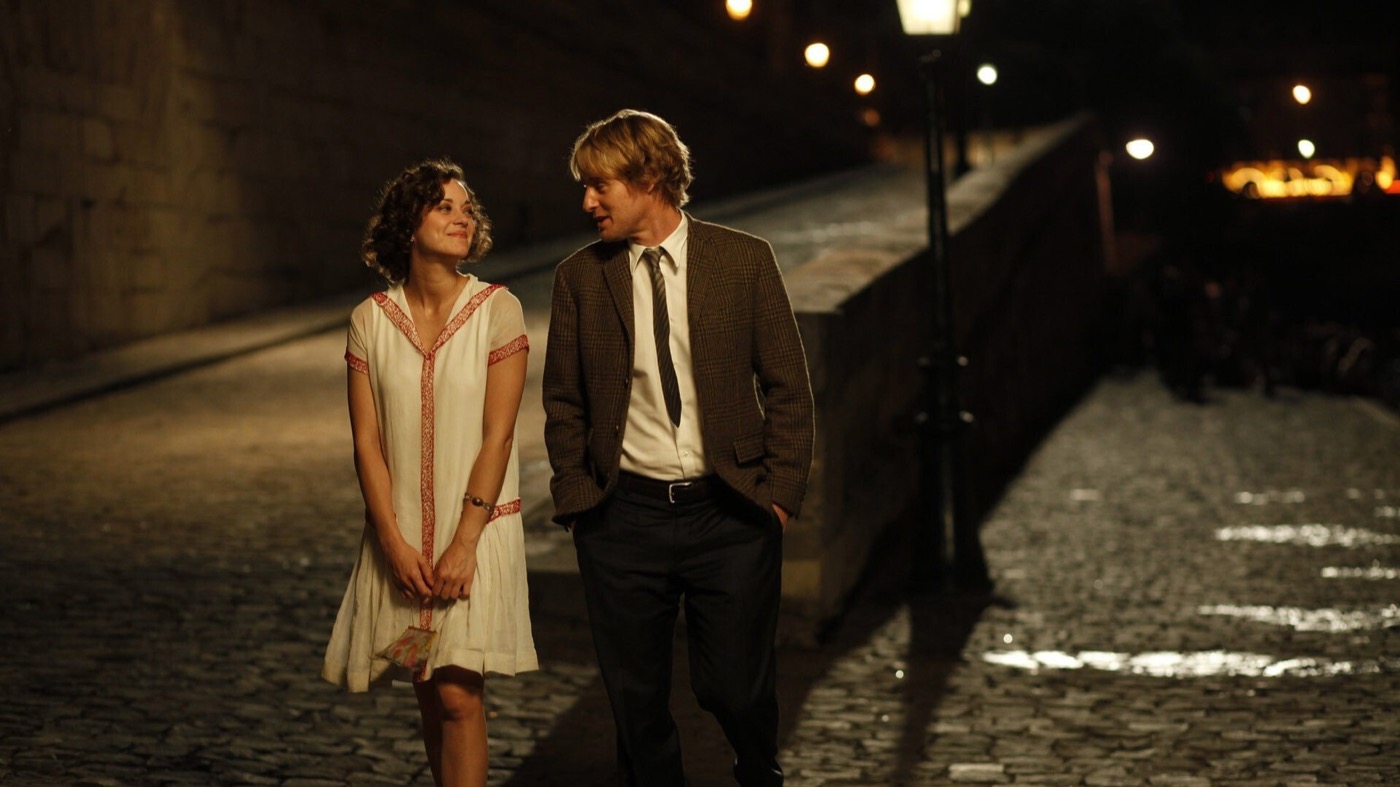
He relates this depressing reality to Adriana (Marion Cotillard), a mistress of Pablo Picasso who, in this film, is the inspiration for the painter’s 1928 work The Bather / La Baigneuse. Adriana is a work of fiction, but she’s very real to Gil, as are all his artistic icons. Each appears to him at night, when he suddenly finds himself submerged in 1920s Paris. Allen doesn’t impose strict, or even specific, rules as to how Gil crosses through time; it’s not as if he wanders through a specific alleyway and emerges in a different era.
To trigger this nightly time travel, the protagonist simply embarks on a late-night walk, revelling in the glory of a city that cries out to his soul—a solitary tune no one else in the present day appreciates. On his travels, he encounters such artistic powerhouses as Ernest Hemingway (Corey Stoll), Picasso (Marcial Di Fonzo Bo), F. Scott Fitzgerald (Tom Hiddleston), Gertrude Stein (Kathy Bates), and Salvador Dalí (Adrien Brody). But each morning, he’s re-immersed in a present for which he has no affection.
A prolific screenwriting career and a stunningly gorgeous fiancée are Gil’s greatest woes. By all rights, we should hate this man. And yet, Wilson is so easygoing that he adds a surprising degree of charm to this neurotic, introspective protagonist. Allen also keenly understands the synergy between Gil’s dialogue and Wilson’s portrayal—which included the sage choice of changing Gil from an East Coast intellectual to a more salt-of-the-earth Californian. Gil might know all the major movers and shakers of the 1920s, but he’s hardly snobbish.
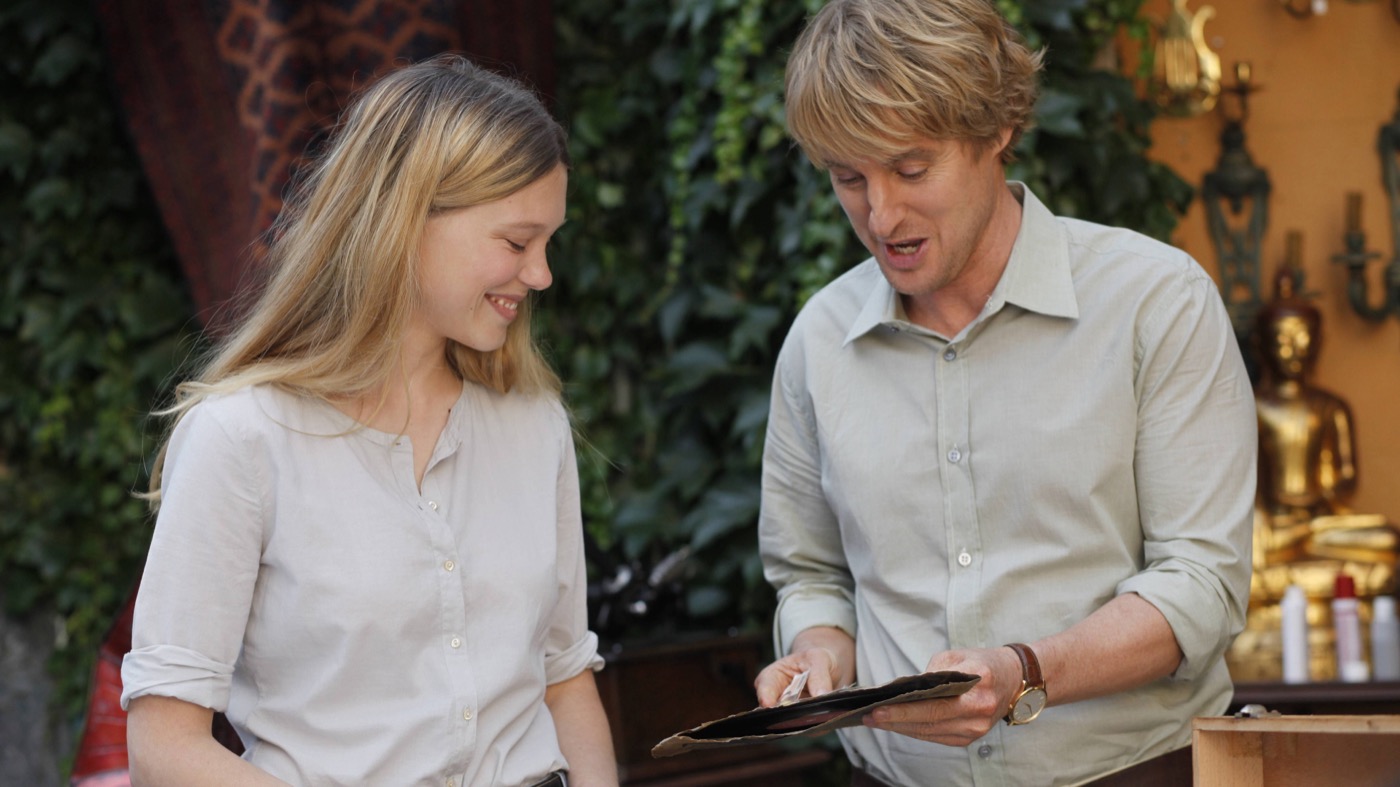
When he struggles to hide how little he cares for the company of Inez’s friends, preferring to wander Parisian streets and reflect on his life, it takes very little to sympathise with him. This is especially true given that his ideas of a day well-spent (and his late-night visions) remain unappreciated by those around him. Gil’s in-laws are as insufferably materialistic and vapid as their daughter, while Inez’s pretentious friend, Paul (Michael Sheen), has all the hallmarks of a self-absorbed pseudo-intellectual.
Paul monologues at length about art and culture, yet it’s all just information in the end. There’s no longing there, whereas for Gil, it’s all about longing. No woman could ever compare to the sultry romanticism of the past for this weary protagonist, who feels beleaguered by the modern world. Of course, these rather one-note—not to mention overplayed—notions become tiring. Allen has made these ideas a core part of his artistic output, so it’s impossible not to notice how much he’s riffing on dependable motifs from previous films. This lends a caricatural quality to the characters, from Paul’s condescension to Gil’s self-centred musings and Inez’s dismissiveness.
While everyone in Gil’s vicinity is callous to the point of extremity, he is helpless to combat their negativity. His mild-mannered pleas to take a walk on the wild side are destined to fall on deaf ears. It makes sense, after all, given that he feels cosmically doomed to live in a timeline that won’t cohere around his sensibilities.
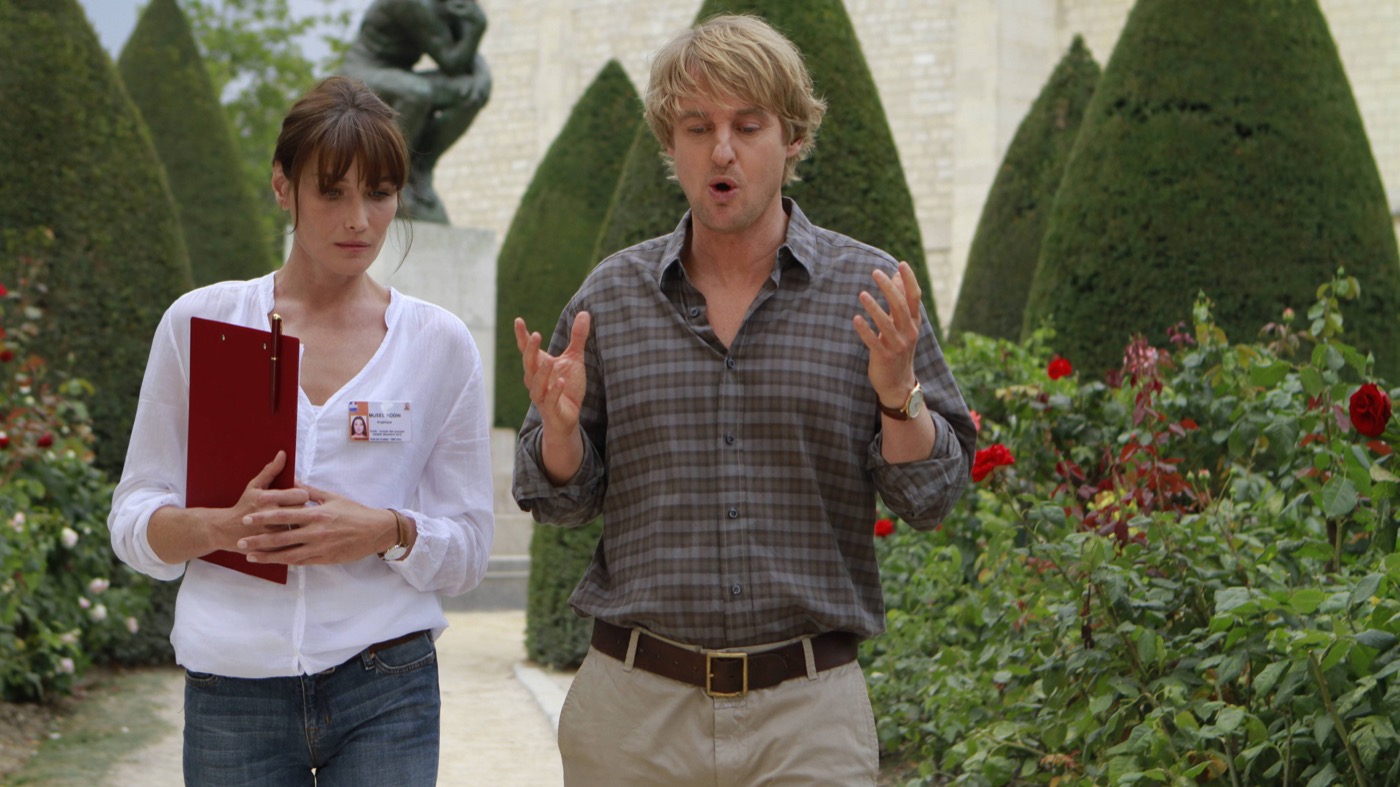
And yet, despite the sorrow endemic to the film’s core, there is a remarkable grace with which Allen and Wilson glide through this narrative. Not only is the pace appreciably rapid, but it knows when to hold on a good joke, letting awkwardness diffuse like a bad smell slowly emanating through a small space. Once Gil tastes the 1920s, he is reinvigorated; not even Paul and Inez’s condescension can dim his optimism. Wilson comes alive in these scenes; he’s at his best when enamoured by the world around him. It’s like watching a child set loose in an otherwise empty toy store, where every object is loot for the taking.
A typical Allen protagonist would’ve made this film unbearable by constantly whining and wallowing in self-pity. Gil isn’t resigned to his fate; he just wants to be left alone to muse on the beauty of Paris and how different his life would’ve been if he had lived here. Even if the screenplay sidelines its characters into one-note clichés, Wilson’s wide-eyed wonder is as charming as the colourful artists he encounters.
There is magic in this world, vibrant enough that one doesn’t feel the need to question its parameters, and fragile enough that it could disappear at any moment. In that delicate balance, the city and its characters come alive. It’s a feeling stronger than any relationship or moment of drama. It outshines the characters and their dilemmas, and though that dampens the storytelling pay-offs, it allows the film to move with a nimble grace that only Allen’s screenwriting chops could’ve achieved. Though he doesn’t act in this film, his helpless romanticism is as keenly felt here as it was decades ago.
FRANCE • SPAIN • USA | 2011 | 94 MINUTES | 1.85:1 | COLOUR | ENGLISH • FRENCH • SPANISH • GERMAN

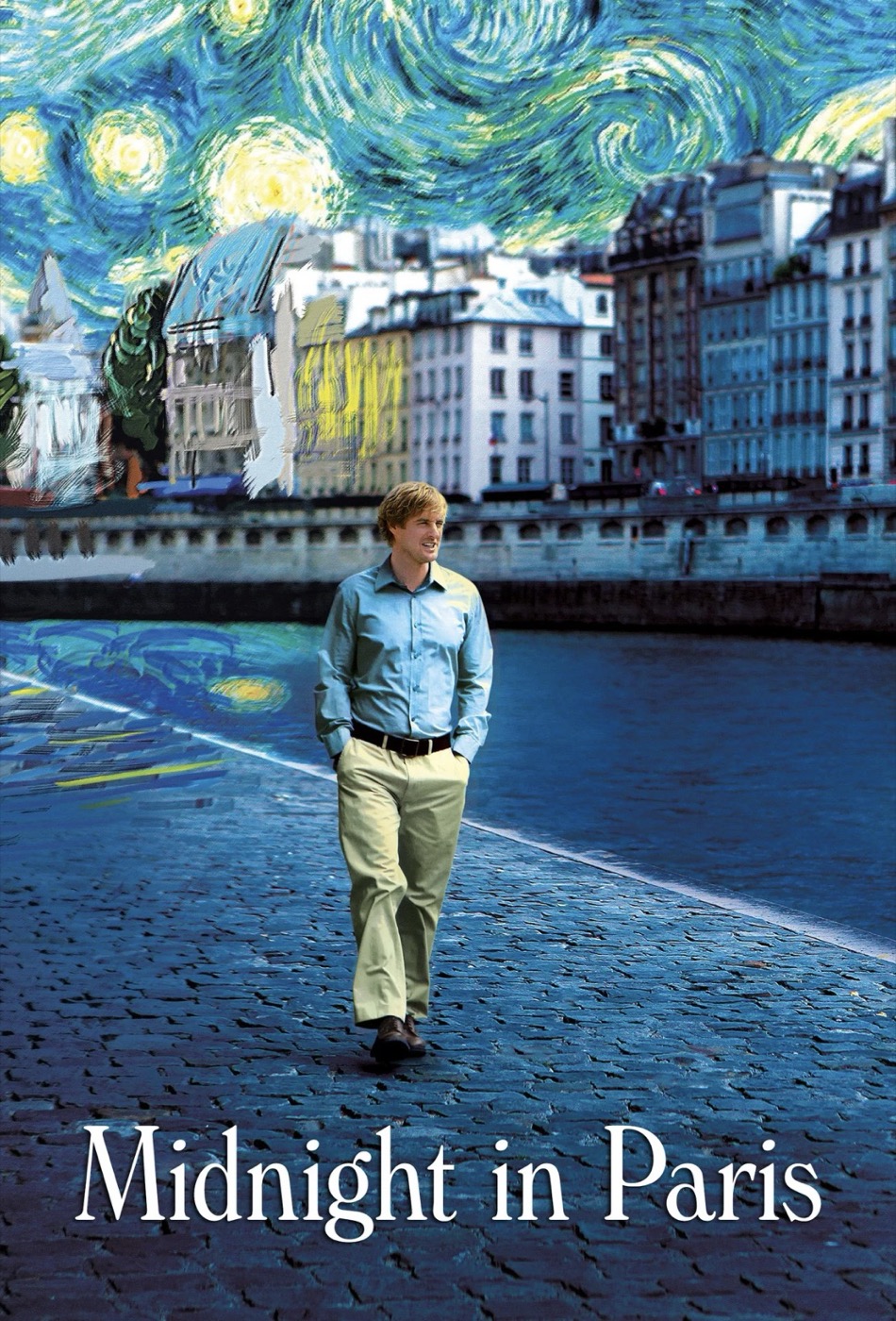
writer & director: Woody Allen.
starring: Owen Wilson, Rachel McAdams, Marion Cotillard, Michael Sheen, Tom Hiddleston, Alison Pill, Corey Stoll, Adrien Brody & Kathy Bates.