HARD BOILED (1992)
A tough-as-nails cop teams up with an undercover agent to shut down a sinister mobster and his crew.

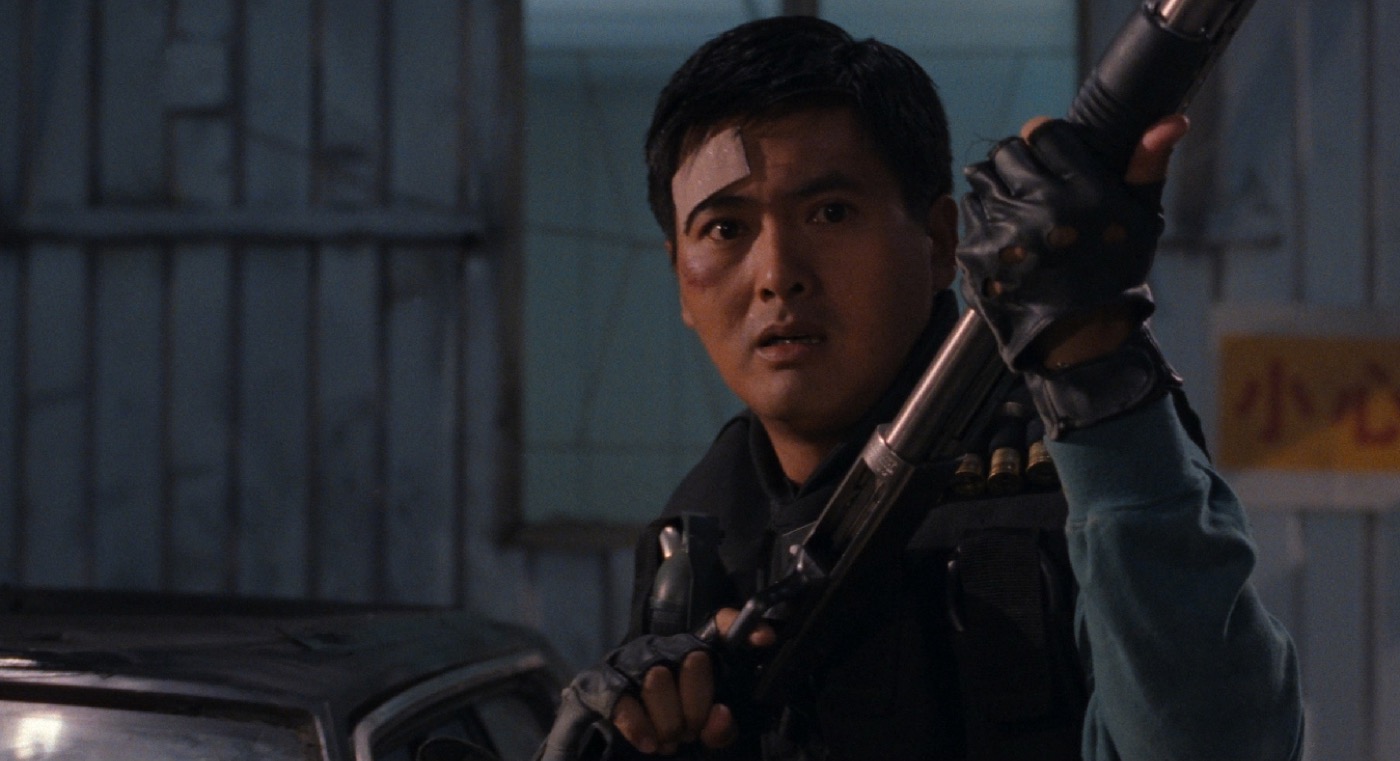

A tough-as-nails cop teams up with an undercover agent to shut down a sinister mobster and his crew.
Arguably John Woo’s finest film, and certainly a pinnacle of Hong Kong’s ‘Heroic Bloodshed’ genre, Hard Boiled / 辣手神探 is best remembered for its explosive action, astonishing practical stunts, and precision choreography. Its centrepiece is an extended hospital battle in which Chow Yun-fat fights off hordes of armed assailants while rescuing a baby from the inferno. On its initial release, the film garnered instant cult status and mainstream success, allowing its director to transition to Hollywood with comparative ease. It’s a film rich in narrative detail, possessing far more emotional depth than typically expected from an action movie of its era. Naturally, fans will covet this new limited edition 4K Ultra HD and Blu-ray from Arrow Video; it’s a film that bears repeat viewing, has never looked better, and is accompanied by an overwhelming array of brand-new bonus material.
The Hong Kong Police Special Duties Unit, nicknamed ‘The Flying Tigers’, was a small division of specially trained operatives formed as a counter-terrorist unit following a passenger jet hijacking in 1971. However, rather than international terrorists, they found themselves dealing with local armed gangs and warring Triads as violent crime proliferated throughout the 1980s. This surge was sparked by the Sino-British Joint Declaration, signed in 1984, which outlined the handover of Hong Kong from British governance to Chinese rule by 1997.
The socio-political landscape was dramatically disrupted by this tumultuous period of uncertainty. Fearing an end to their way of life, desperate criminal gangs made a final grab for power and wealth. Well-armed and organised Triads saw an opportunity to exploit the situation, controlling casinos and restructuring Hong Kong’s underworld before China assumed draconian control. This volatile situation was exacerbated by an influx of illegal military-grade weaponry; robberies, murders, and street battles between criminals and police filled the newspapers. This was the backdrop against which Hard Boiled was created, referenced by the montage of headlines behind the opening credits.
Plain-clothes cops Tequila Yuen (Chow Yun-fat) and Benny Mak (Bowie Lam) are in a traditional Hong Kong tea house observing gun-smugglers brokering a deal. Every patron seems to have brought a caged songbird, and Tequila uses the tiny mirror in one of the cages to keep watch inconspicuously. His keen eye notes a rival gang behaving suspiciously moments before chaos erupts. Many of the birdcages are smashed open to reveal guns concealed in false bases. It’s a John Woo trademark to open a movie with the kind of adrenaline-pumping mayhem other films would reserve for the finale, and Hard Boiled is the finest example. The prolonged shootout is choreographed with balletic precision, resulting in an impressive body count that includes Tequila’s partner, Benny.
The scene was filmed not on a soundstage but on location at the historic Wan Loy Teahouse, one of Hong Kong’s most recognisable dim sum joints. It was a genuine tradition to bring songbirds to such venues so they might sing to one another; apparently, there was an agreement that the owner of the bird with the prettiest song would not have to pay. It’s a fitting metaphor, perhaps, as birdsong is often a territorial proclamation.
The high-impact opening documents an endangered cultural aspect of old Hong Kong. However, by the time the crew finished smashing through walls and blowing things up, the historic hangout was totally wrecked. Despite the complexity of the action, the scene had to be shot sequentially—as things could not be ‘undestroyed’—and was only possible because the Wan Loy had recently closed and was awaiting demolition. Much of old Hong Kong was being cleared to make way for the new. It was truly the end of an era, and Hard Boiled would be the last film Woo made there.
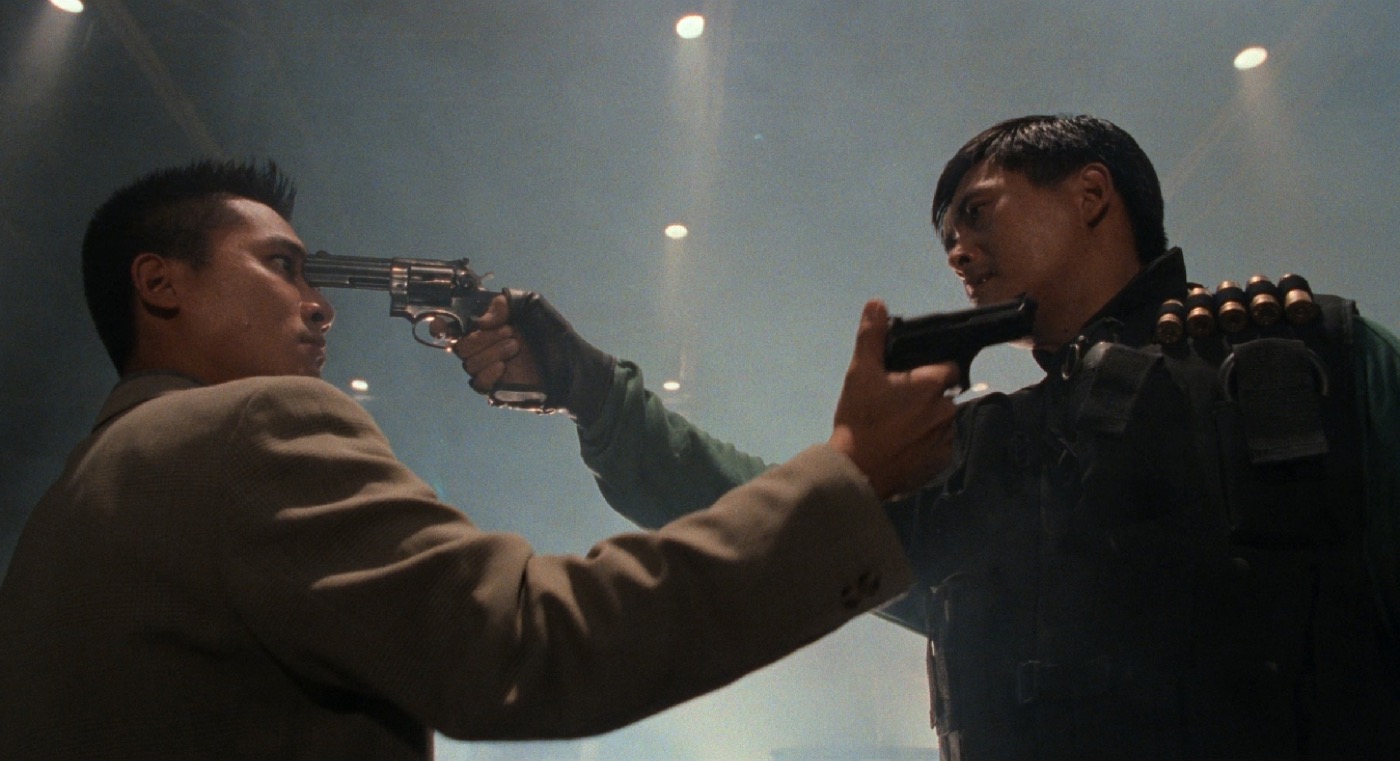
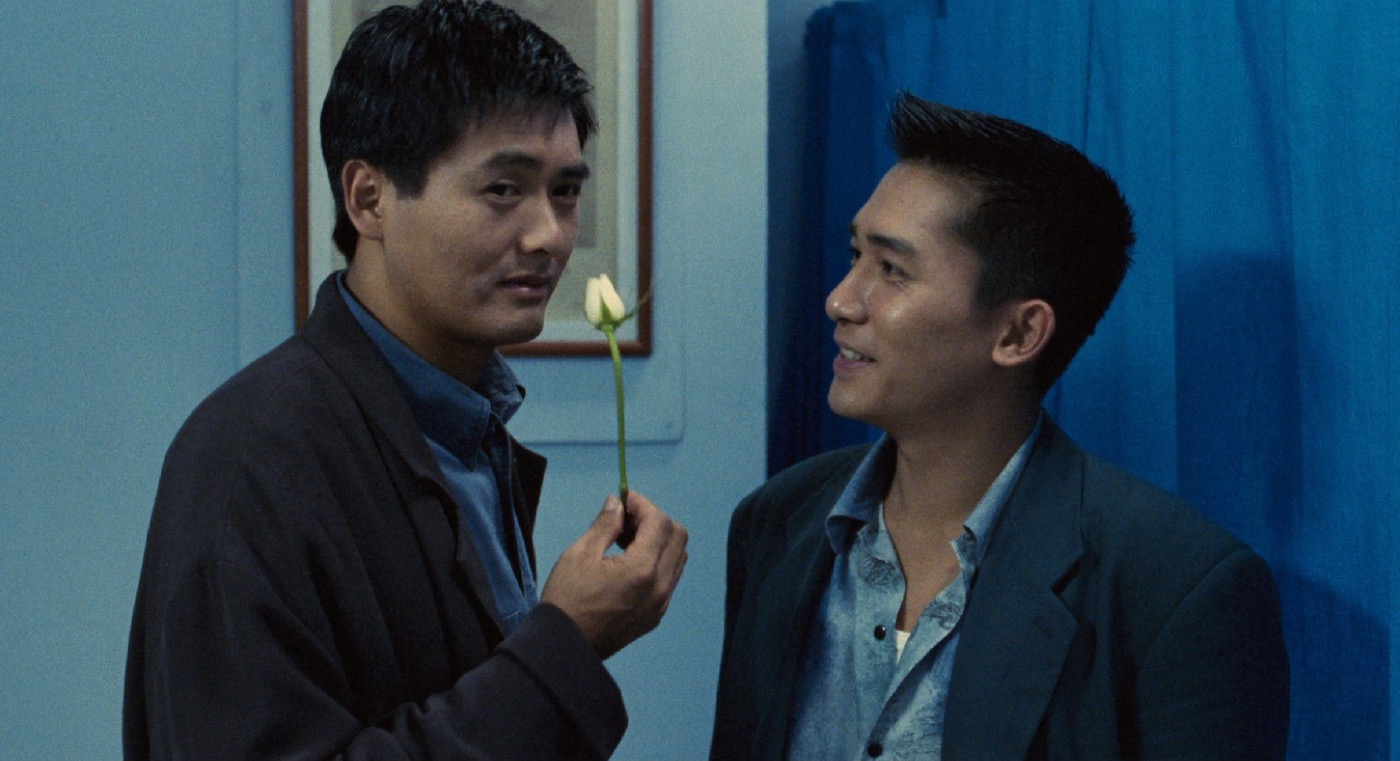
In the aftermath of the battle, we learn that some of those gunned down were undercover agents. This hints at the truth behind Alan (Tony Leung Chiu-wai), a trusted soldier for old-school gang boss Uncle Hoi (Hoi-San Kwan). In a classic Woo-style confrontation, Tequila and Alan end up holding guns to each other’s heads. Alan chooses not to fire, even though he knows his adversary’s gun is empty. We find ourselves on similar terrain to that explored in Ringo Lam’s seminal City on Fire (1987), also starring Chow Yun-fat.
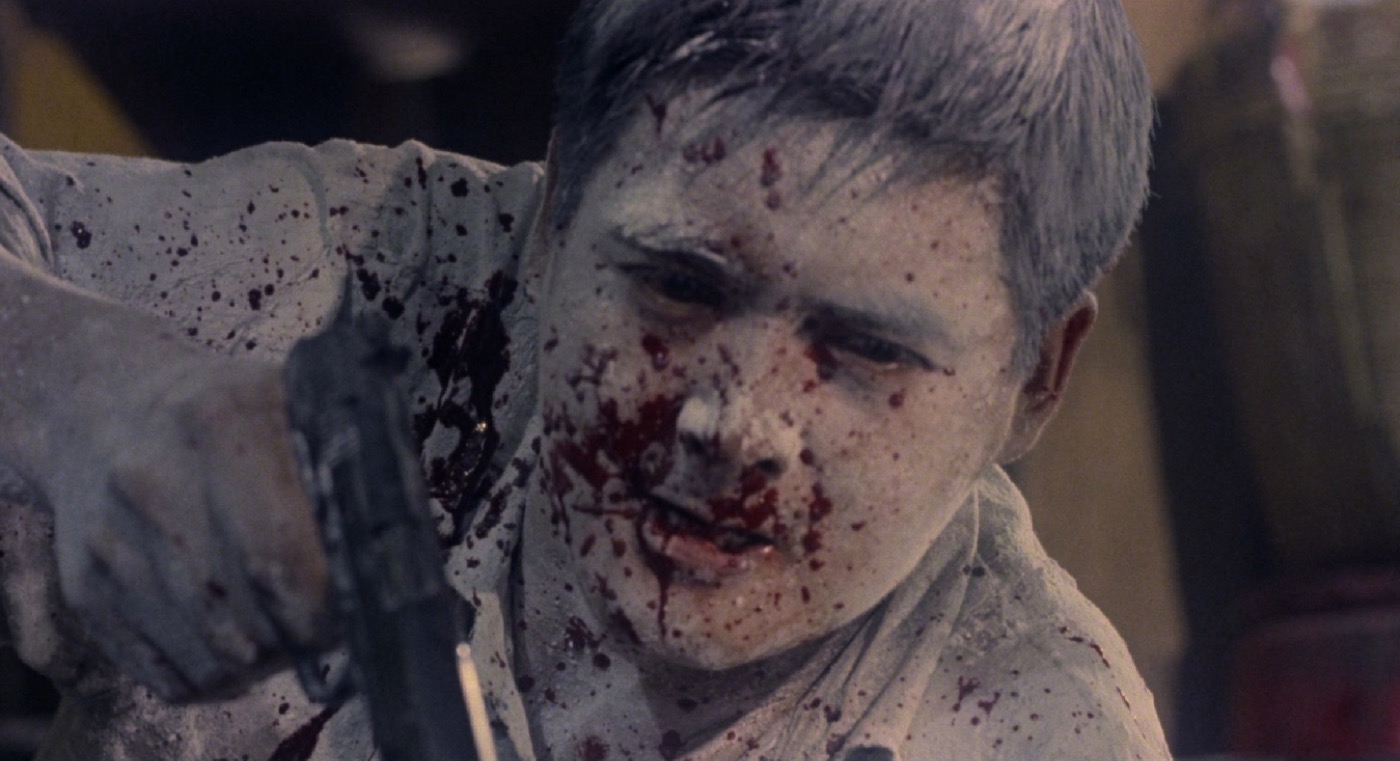
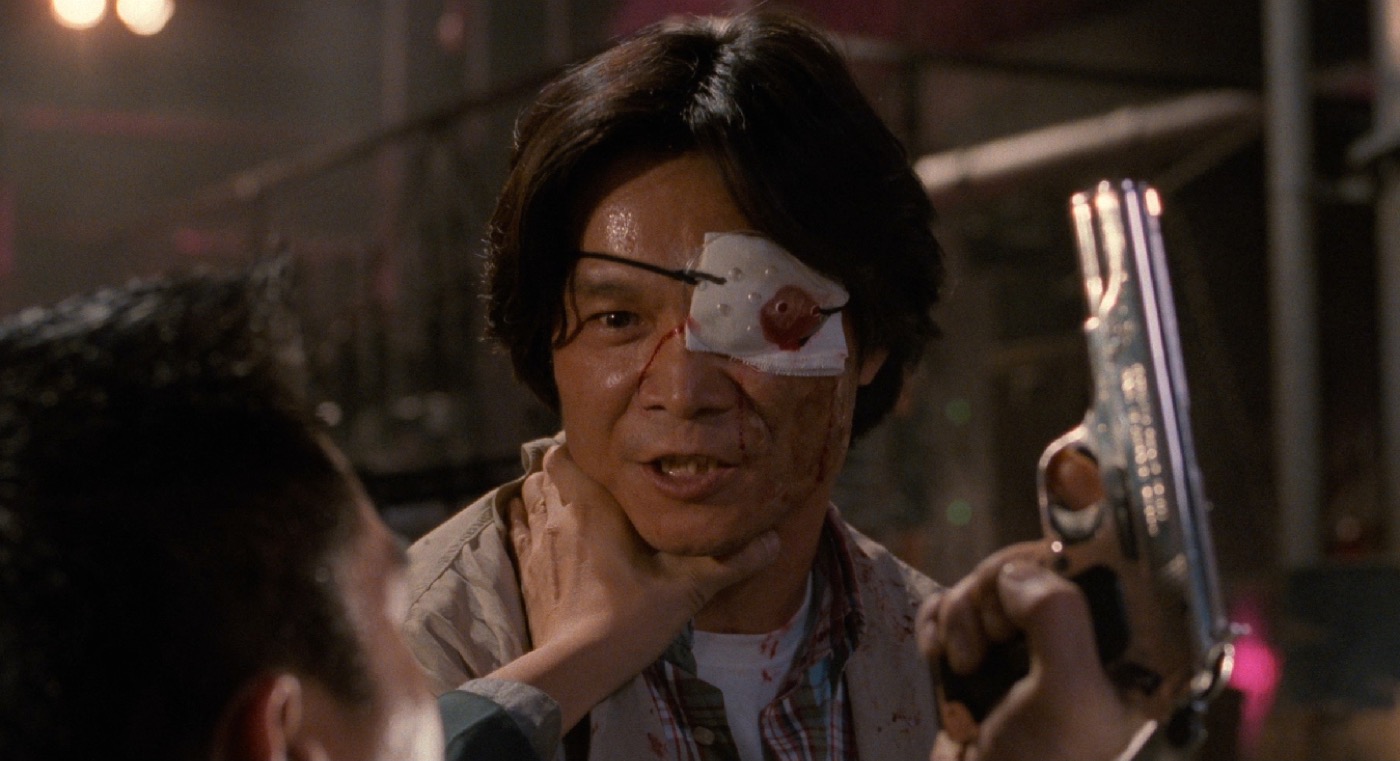
Alan has started to believe his own cover; he has faked fealty to Uncle Hoi for so long that it has begun to feel real. While in danger of losing his identity, his loyalties are strained further when a rival gang, headed by the unscrupulous Johnny Wong (Anthony Chau-Sang Wong), recruits Alan and tests him by ordering Uncle Hoi’s execution. This is the catalyst for another explosive sequence involving motorcycles, machine guns, and grenades. We also see Wong’s toughest henchman, ‘Mad Dog’ (Phillip Chung-Fung Kwok), in action. Initially appearing as a relentless, indestructible ‘terminator’, he later reveals more human dimensions. Kwok also served as the film’s stunt coordinator, supervising stunts for later hits like Tomorrow Never Dies (1997).
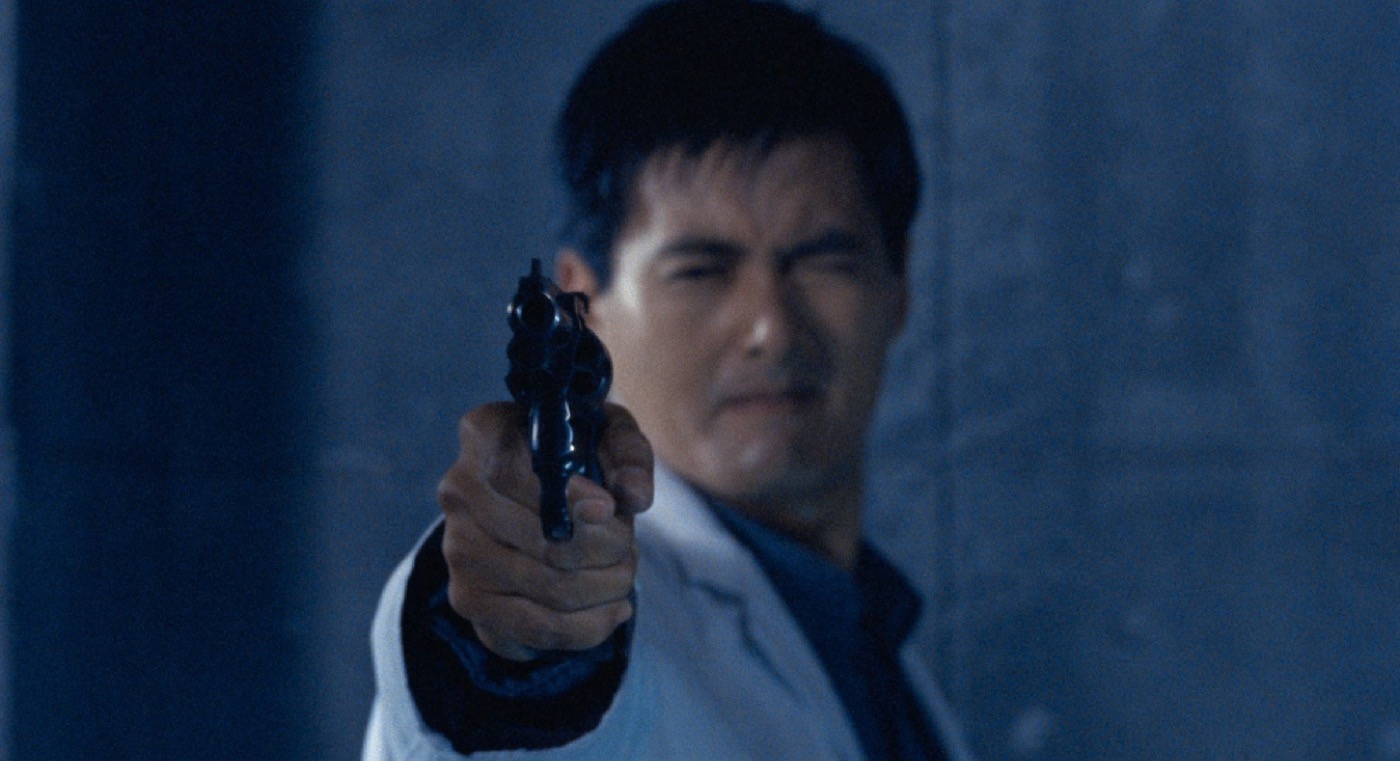
The image of a hero running headlong into conflict with a gun in each hand is embedded in Woo’s iconography. He traces the origin of this recurring image, and his unique brand of tragi-poetic heroism, back to his first viewing of Butch Cassidy and the Sundance Kid (1969). That Western left its mark on him; he was particularly struck by the morally ambiguous nature of the protagonists—two outlaws with an unspoken yet deeply emotional bond charging into a hail of bullets. Perhaps he rejected the inevitable conclusion and imagined how that scene might have played out beyond the abrupt freeze-frame ending.
At that time, Woo already had his foot in the door of the Hong Kong movie industry as a script supervisor. He soon joined the legendary Shaw Brothers as an assistant director to Chang Cheh on The Water Margin (1971). The influential Cheh, responsible for The One-Armed Swordsman (1967), would mentor Woo through several martial arts titles in the early-1970s.
When Woo felt ready to direct, he was signed by Golden Harvest for his feature debut, The Young Dragons (1973), with Jackie Chan as stunt choreographer. However, the movie was unable to secure distribution due to its excessive violence and had to be recut before its release in Taiwan; it didn’t hit Hong Kong screens until 1975 after further edits.
John Woo spent the next decade as a jobbing director working across several genres, mainly the action and comedy staples of Hong Kong cinema. It’s generally accepted that he consolidated the ‘Heroic Bloodshed’ genre with A Better Tomorrow (1986)—an exploration of doomed nobility—and The Killer (1989), a pessimistic yet visually stunning ‘bullet-ballet’. The style found its ultimate expression in Hard Boiled, which elevates the crime drama to mythic realms akin to classic wuxia while retaining a grounded emotional sincerity.
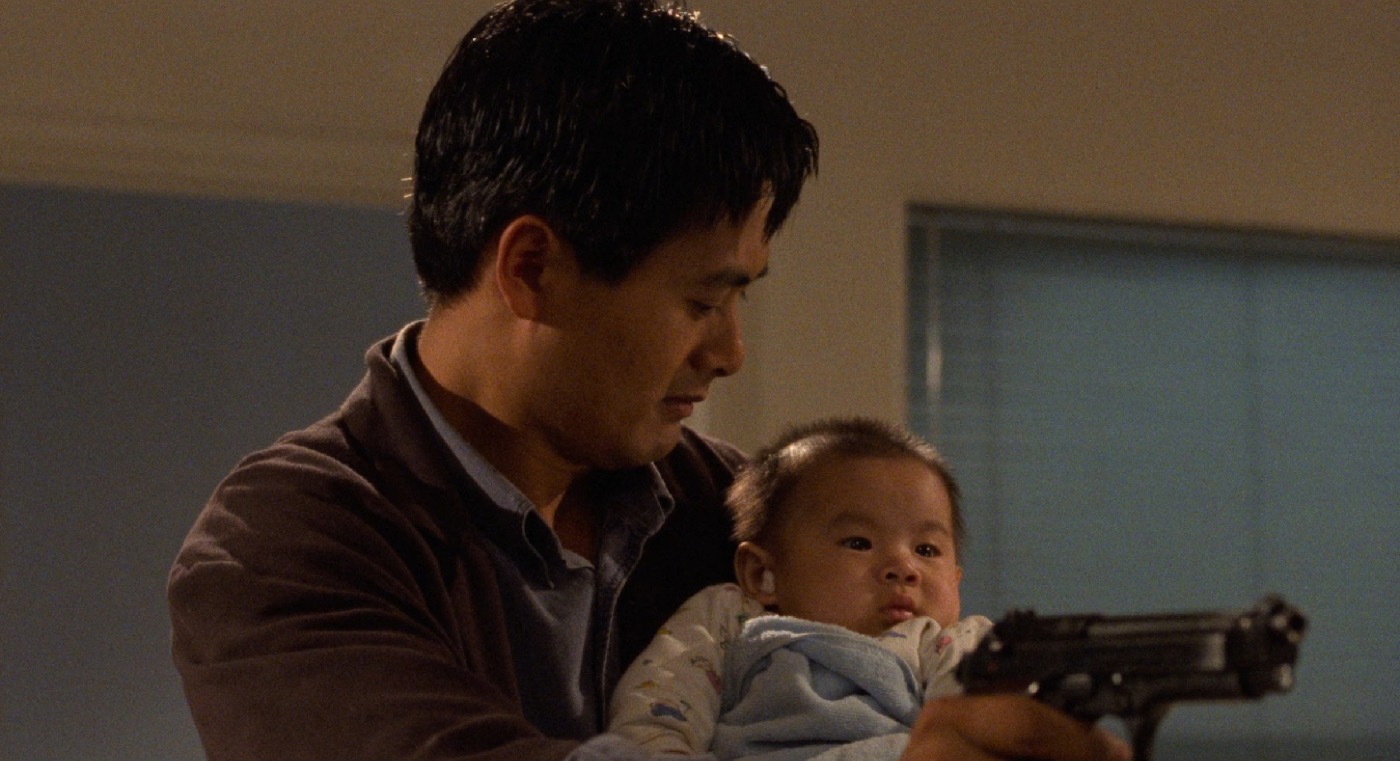
He combined the masculine heroics of Chang Cheh, the daring stunts of Jackie Chan, and the outlaw bond of Butch and Sundance with a love of Jean-Pierre Melville’s cool French Noir, exemplified by Le Samouraï (1967). He admits that the climatic heist in Le Cercle Rouge (1970) influenced the scene in Hard Boiled where Tequila and Alan break into the arms smugglers’ ‘impenetrable’ secret vault. The iconic hospital scene, where Tequila protects a baby rescued from the maternity ward, is one of the great action sequences in cinematic history. Although it lasts nearly an hour, it never feels tedious.
Symbolically, the contained environment of the hospital—built inside a disused Coca-Cola factory—is a country at war. All strata of society are represented, and, as in war, it isn’t only the combatants who are at risk. Civilians and those who care for them are caught in the crossfire as collateral. Tequila cannot save everyone, but he decides he will save one last baby or die trying. Metaphorically, he isn’t just saving a life, but hope for the future itself.
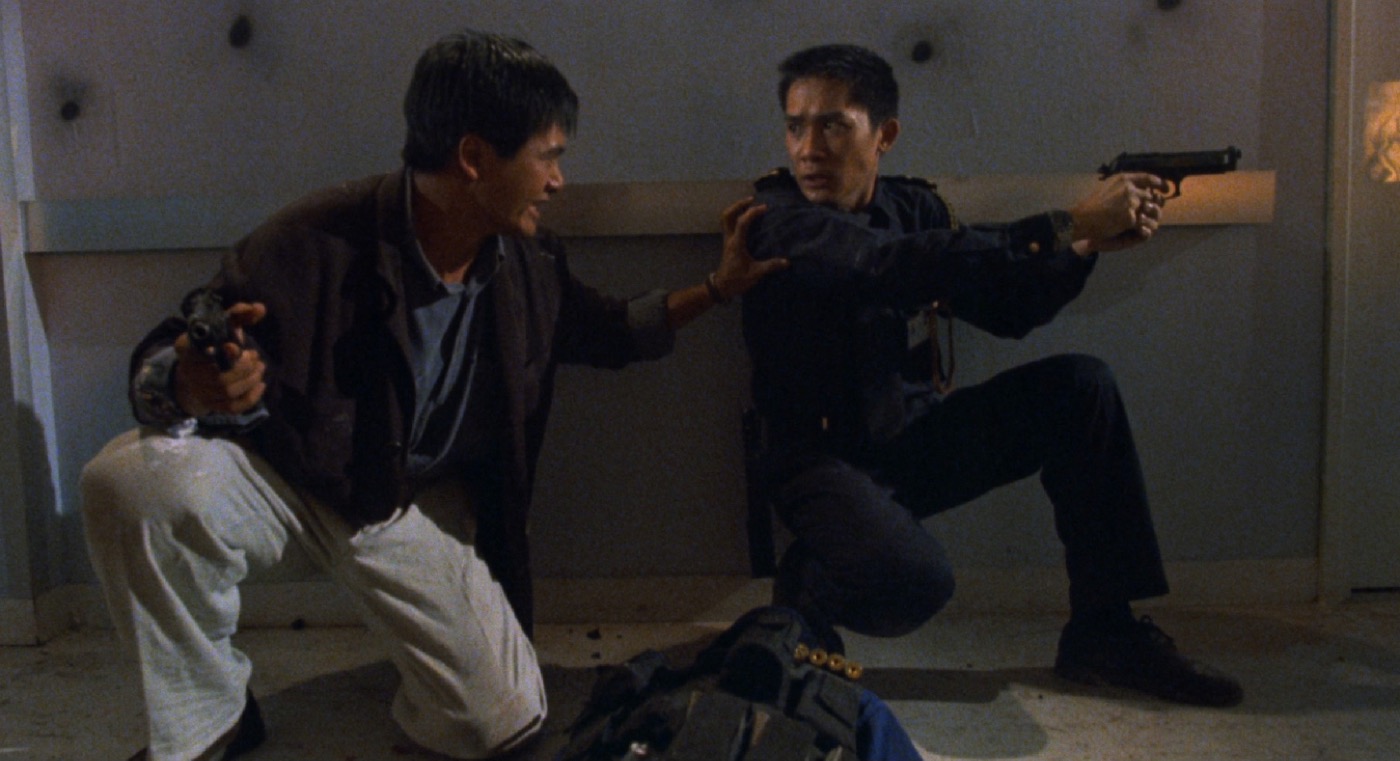
What sets John Woo apart is that he utilises action as his primary mode of storytelling. Whereas most films use narrative as connective tissue between set-pieces, Woo uses action to drive the plot and develop characters. Dialogue is kept to a minimum because vital gestures, moral choices, and decisive actions combine to reveal character through physicality. For the most part, expository dialogue becomes redundant as the viewer is no longer merely watching action, but actively interpreting a volatile narrative.
Hard Boiled remains Woo’s most technically dazzling film, considering the conditions in which it was made. The rapid turnover in Hong Kong’s film industry meant most movies began shooting while the script was still being written. Tragically, scriptwriter Barry Wong died unexpectedly during production with only half the story complete, leaving Woo to improvise the rest. Everyone rose to the challenge, and Woo clearly works well under pressure. Given the constraints of time and budget—both of which ran out before filming ended—and the necessity for all stunts to be performed for real without digital effects, the final result is nothing short of a work of genius.
John Woo recently remade The Killer (2024) for the English-language market with a reshuffled cast and a new gender dynamic. While a reboot of Hard Boiled might seem superfluous, in the hands of its original creator—and given a similar narrative shake-up—I’d certainly be there for it.
HONG KONG | 1992 | 128 MINUTES | 1.85:1 | COLOUR | CANTONESE • ENGLISH

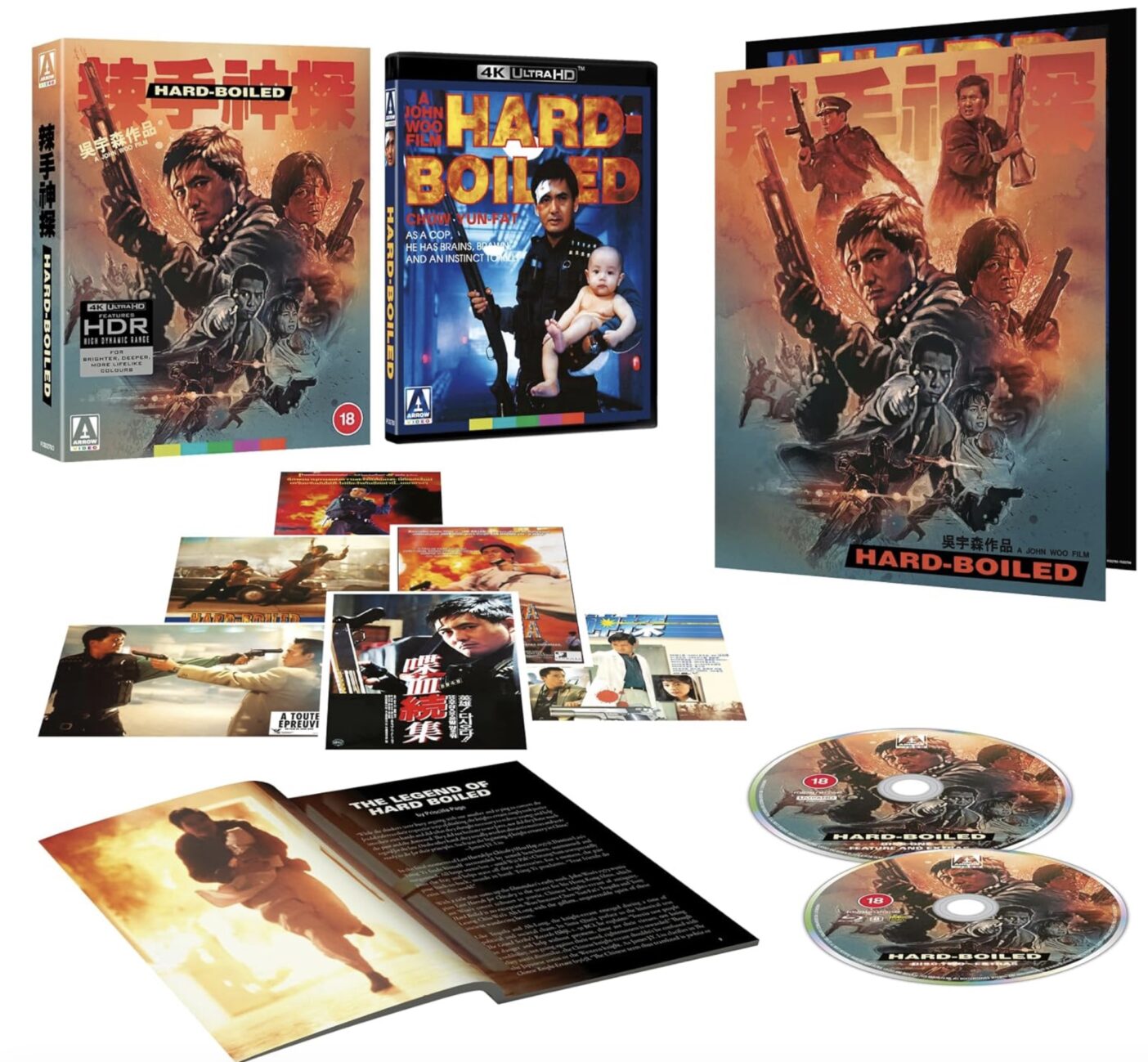
Bonus discs were not available at time of review.

director: John Woo.
writers: Gordon Chan & Barry Wong (story by John Woo).
starring: Chow Yun-fat, Tony Leung, Teresa Mo, Philip Chan, Philip Kwok & Anthony Wong.