☆☆☆☆☆ ★★★★★

Cruel Tale of Bushido / 武士道残酷物語—also known as Bushido, Samurai Saga—is cited as director Tadashi Imai’s masterpiece, melding elements of the contemporary melodrama for which he was best known with the jidaigeki period drama. It is considered a landmark film, not only for winning the Golden Bear at the 1963 Berlin Film Festival, but for its unflinching demythologisation of the titular samurai code and its introduction of the first clearly gay character in mainstream Japanese cinema. Restored by Toei Studios from a 4K scan and making its Blu-ray debut as the latest title in Eureka Entertainment’s ‘Masters of Cinema’ imprint, it’s a film that should be on the radar of anyone with a serious interest in Japan’s post-war cinema—though it may well confound one’s expectations.

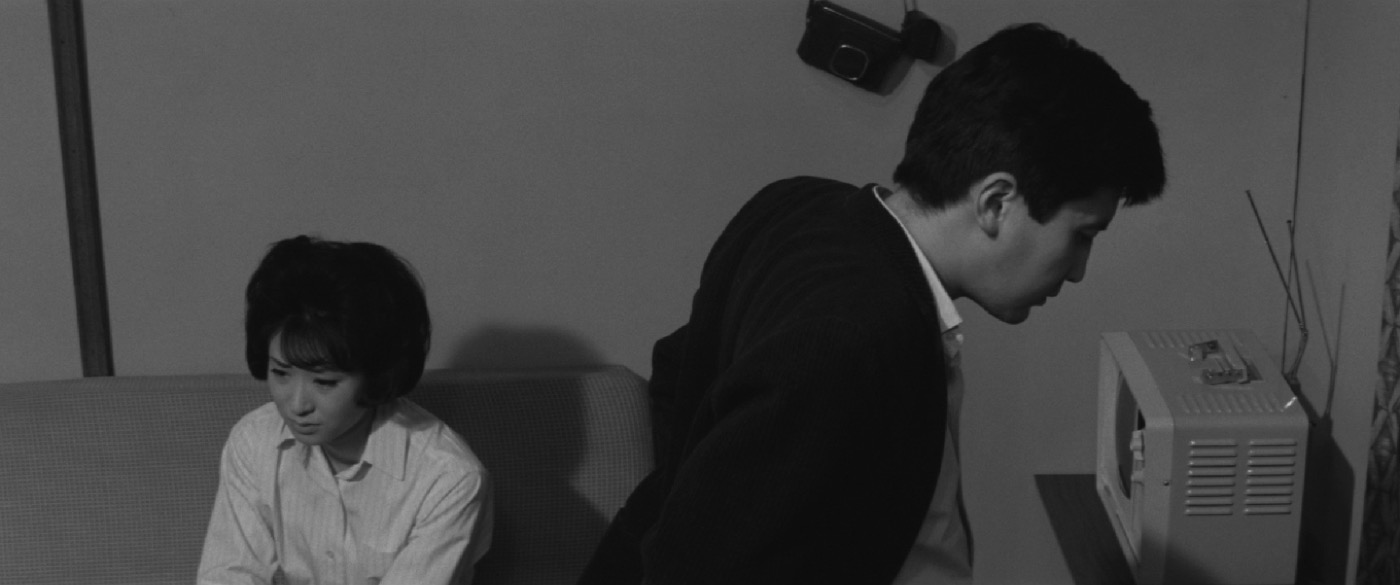
The title promises a story of samurai conflict set against the historical backdrop of feudal Japan, which it certainly delivers. However, the opening segment is set in the 1960s. Susumu Iikura (Kinnosuke Nakamura) rushes to Iwata hospital, where his fiancée, Kyoko (Yoshiko Mita), has been admitted following a suicide attempt. As her life hangs in the balance, a distraught Susumu feels responsible and tries to understand what pushed her to such desperation. Memories of his mother’s funeral surface as he recalls finding her collection of diaries documenting the lives of his ancestors. These records date back more than three and a half centuries to the aftermath of the Battle of Sekigahara—a pivotal event that re-established samurai rule under the Tokugawa Shogunate.

From the outset, we are guided by an unreliable narrator. Susumu admits the surviving documentation is incomplete and that he has had to fill the gaps by imagining events implied by brief, cryptic journal entries. The records were already mediated by those who wrote them; now, he relies on his own memory as he retells the biographies of seven generations of Iikura men. As an added layer of detachment, we are watching a fictionalised account created decades later for the screen.

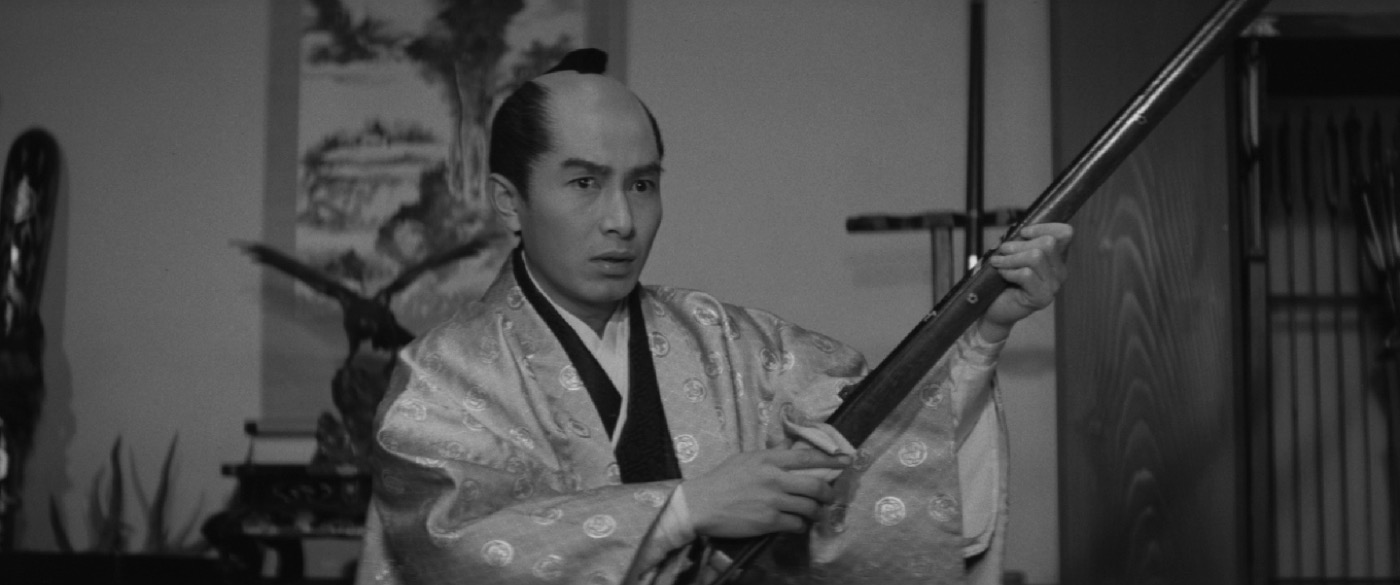
Much of the film’s appeal lies in these period vignettes, which act like a succession of display cases. However, this ‘exhibition’ is more akin to a waxworks chamber of horrors than a respectable museum. Alongside the meticulous mise-en-scène and sumptuous costumes, the main attraction is seeing Kinnosuke Nakamura play multiple roles across various ages. This was surely a challenge a great actor would relish—reminiscent of Alec Guinness in the Ealing Comedy classic Kind Hearts and Coronets (1949), though without a hint of humour.

At the time, Nakamura was also starring in Tomu Uchida’s Miyamoto Musashi series (1961–65), where he faced a similar challenge as his character aged from adolescence to maturity. An experienced actor trained in the kabuki tradition with over 70 screen appearances, he carries the film with a versatile set of performances. If anything, the characters here are more nuanced than his often brash portrayal of Musashi.

The Musashi films were also critical of the stoic samurai stereotype. Nakamura had already completed the first two parts of that five-part epic, which incidentally shared the same cinematographer, Makoto Tsuboi. For Cruel Tale of Bushido, Tsuboi reverts to black and white, keeping the visuals dark to match the themes. Although the naturalistic lighting achieves a velvety, almost painterly richness, so much of the action occurs at night that the murk occasionally becomes monotonous.

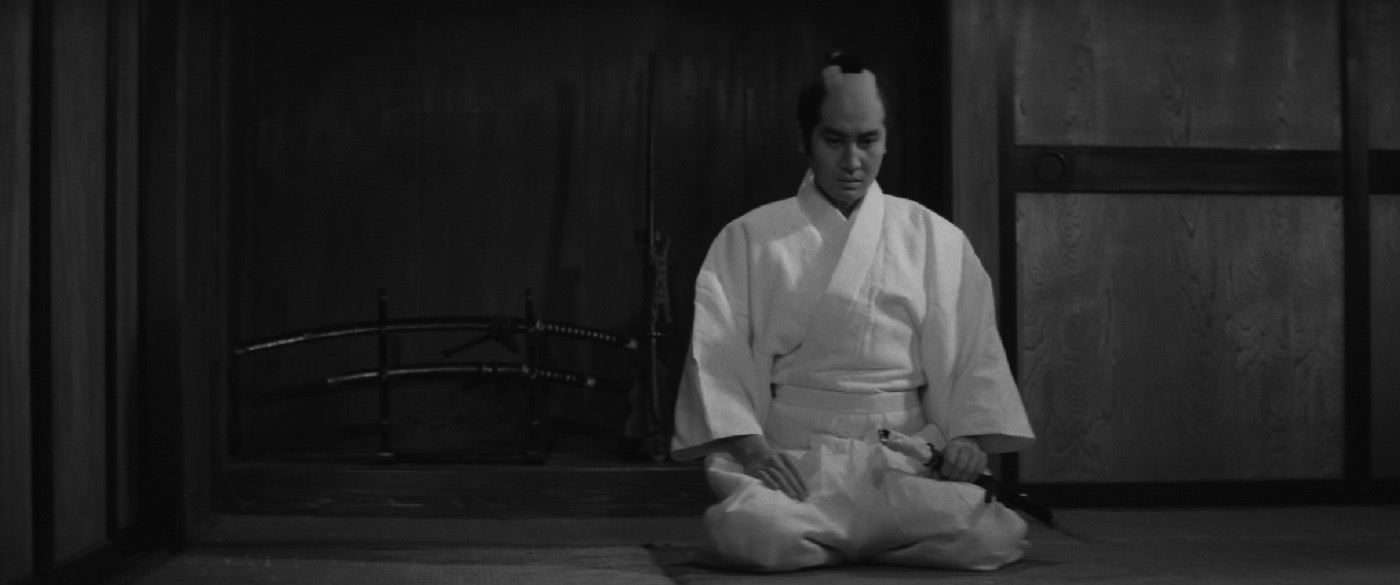
The first historical vignette takes us back to 1610. Jirozaemon Iikura (Nakamura), who fought on the losing side at Sekigahara, has spent a decade as an impoverished, wandering ronin. He is finally reinstated as a samurai in the service of the Yazaki fiefdom, but little is known of his service until the Shimabara-Amakusa Rebellion—an uprising of persecuted Christians that ended in a massacre at the hands of the Tokugawa shogunate. In the final battle at Hara Castle, Lord Hori makes tactical errors, and Jirozaemon takes responsibility by committing seppuku. His motives remain obscure; it’s unclear whether he died to save his lord’s standing or because he knew an ‘honourable’ death would ensure his son, Sajiemon, was well treated.

Sajiemon Iikura (Nakamura) rises through the ranks to become a samurai. When his master, Shibiku-Shosuke Hori (Eijirô Tôno), dies, Sajiemon also commits seppuku to prove his loyalty. It seems, in this world, seppuku is a suicide for every occasion.

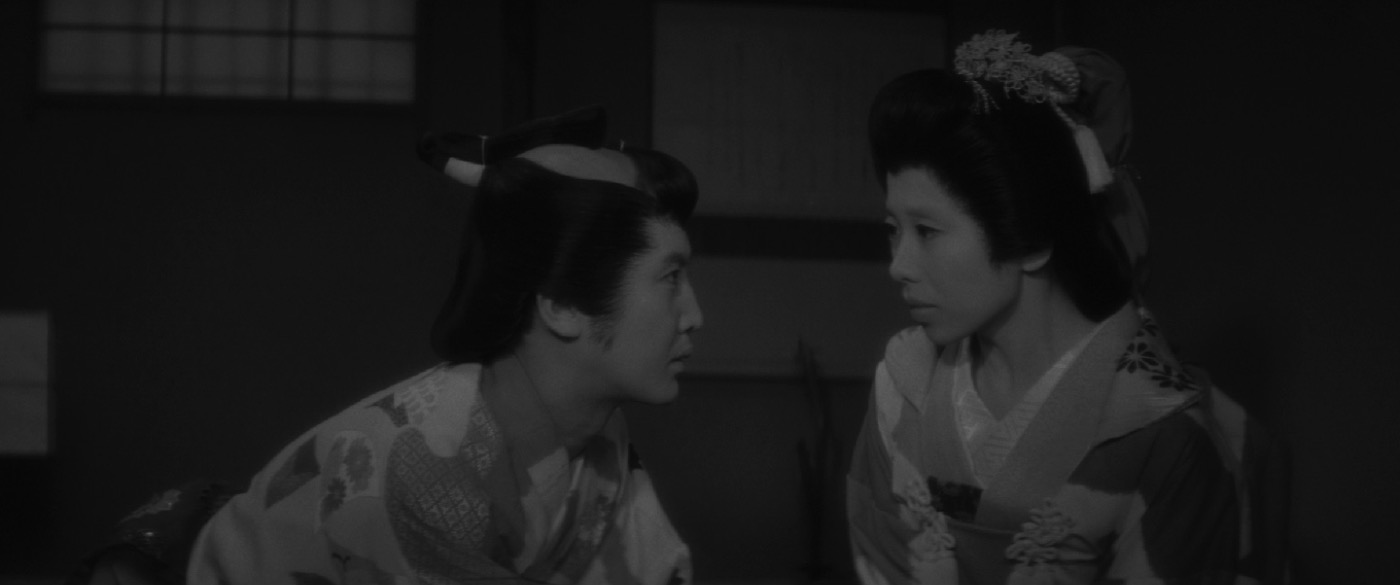
The next segment is set during the Genroku period in Edo (modern-day Tokyo). Kyutaro Iikura (Nakamura) is a scholar who catches the eye of Lord Munemasa Tanba-no-kami (Masayuki Mori). He is offered a position as a page, and though dedicated to his studies, he cannot refuse a Lord. He soon realises his role includes ‘bedroom duties’. Sadly, while this is a significant screen representation of homosexuality, it isn’t a positive one. The Lord is a sadistic deviant who marks his lovers with bite marks and inflicts psychological cruelty. It serves as a stark illustration of how restrictive the bushido code was: a superior’s whims had to be endured, and even an individual’s body became the property of others.

Kyutaro endures such suffering that he elicits the sympathy of Lady Hagi (Kyôko Kishida), one of the Lord’s neglected concubines. They embark on a risky affair with terrible consequences, but not before Kyutaro becomes a father. This is an intense segment; the characters are emotionally complex and portrayed by a superb cast. Imai steers the film toward horror here, using expressive camera motion and sharp Z-axis angles.

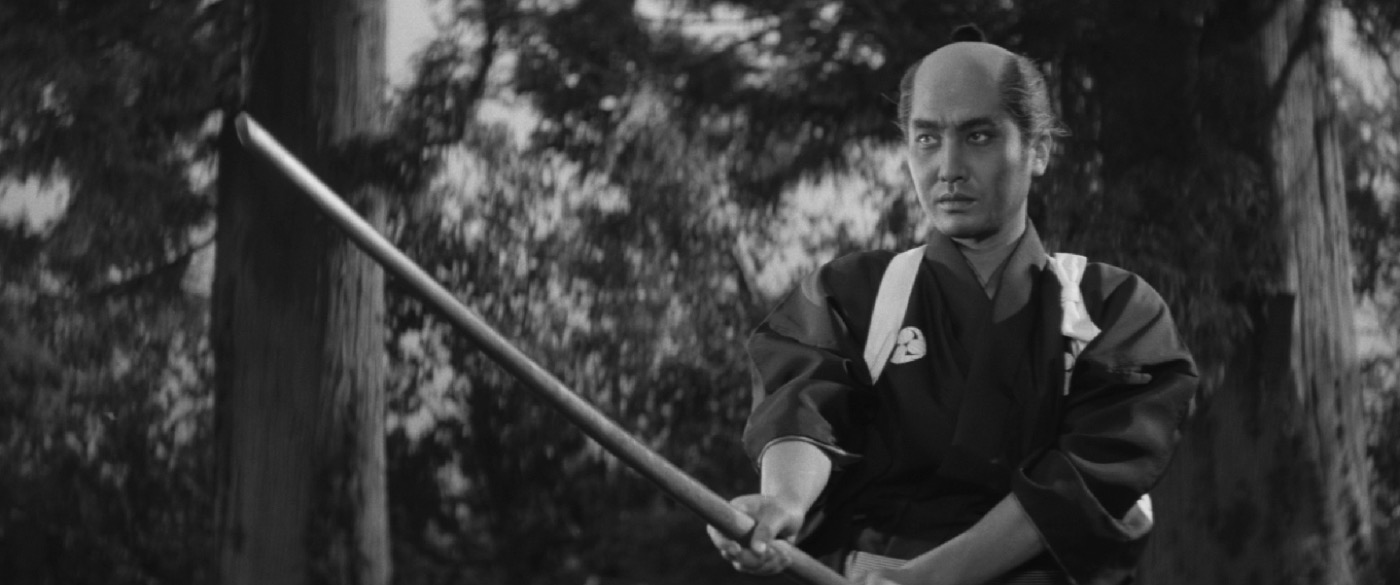
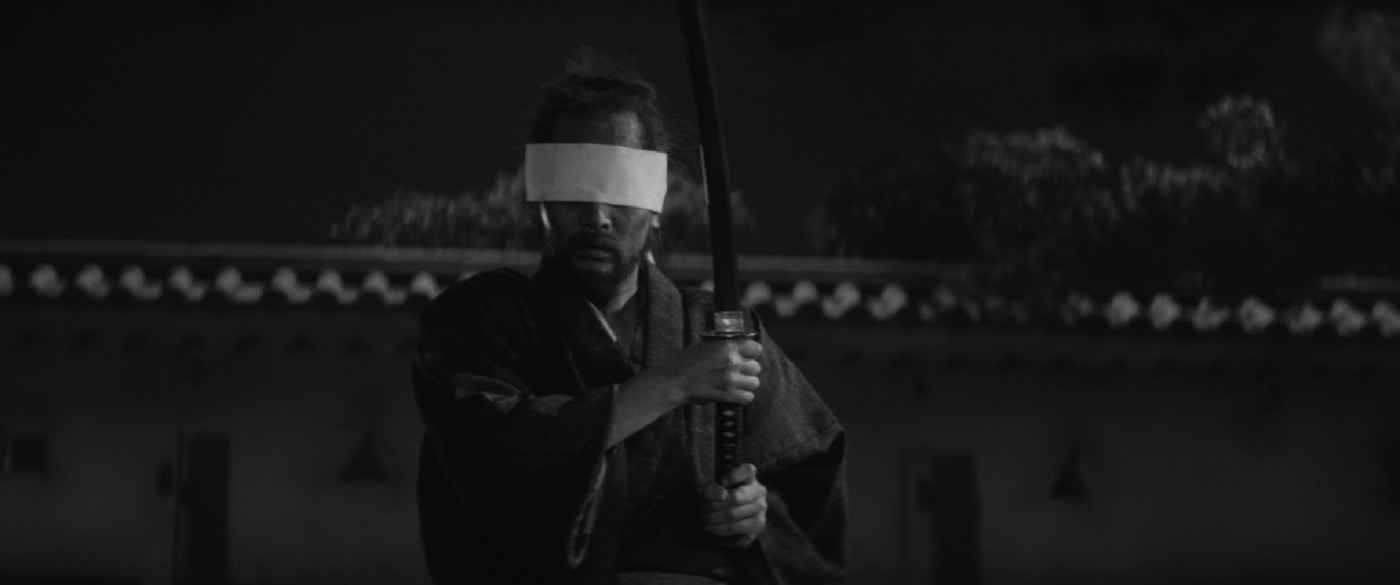
The following segment begins in 1783 during the Tenmei period, as the nation suffers famine following the Mount Asama eruption. Shuzo Iikura (Nakamura) is a formidable samurai who has mastered the ‘dark sword’ technique. For a moment, the movie resembles a traditional chanbara, complete with sword tournaments and political machinations. Shuzo even enjoys a brief, happy home life. Predictably, things turn darker when Shuzo is ordered to send his young daughter, Sato (Kikko Matsuoka), as a bribe to a local Lord, and later to relinquish his wife, Maki (Ineko Arima), at a superior’s request. The situation builds to a soul-crushing crescendo as Imai embraces the gothic horror tropes explored in Tai Katô’s The Tale of Oiwa’s Ghost (1961).

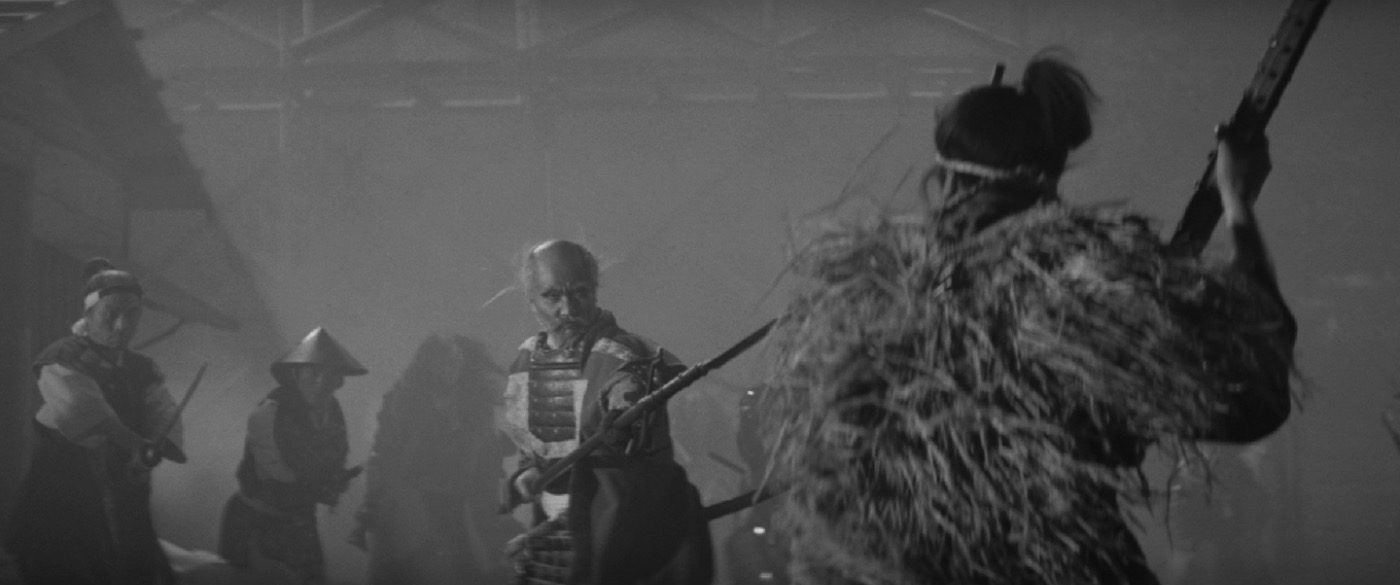
Though a work of fiction, the film uses historical touchstones to lend authenticity. A prominent, if disjointed, scene depicts the assassination of Tanuma Okimoto by Sano Masakoto. While these characters don’t appear elsewhere, the event pins the narrative to 24 March 1784. Tanuma was an unpopular, allegedly corrupt official, and his assassin was condemned to—predictably—commit seppuku. However, because rice prices dropped following the death, Sano was honoured as a catalyst for change. Imai inserts this aside as a symbol of the power of individual action, contrasting it with the Iikura ancestors who, despite having swords in hand and evil superiors within reach, chose to turn the blades upon themselves.

We then jump forward a century to the Meiji Era, where Shingo Iikura (Nakamura) cares for the senile Viscount Takafumi Hori (Yoshi Katō). Shingo feels bound to serve the last Lord of the Yazaki Fiefdom, even though samurai rule has crumbled. Despite the Viscount’s depravity, Shingo caters to his every whim, believing this loyalty gives his life meaning. This chapter borders on satire; the behaviour of everyone involved seems ludicrous, driven by the appetites of a dying madman.

The final, short vignette brings us into living memory. This is the story of Susumu’s older brother, Osamu (Nakamura), a kamikaze pilot. Imai draws a direct line from the birth of bushido to the blind obedience of modern youth commanded to commit a contemporary equivalent of seppuku. It is an unbroken lineage of trauma from Sekigahara to World War II.

What, then, will Susumu learn? The Iikura line suffers the worst of every era, making for relentlessly bleak viewing. Yet, it’s worth watching to the end for a faint glimmer of hope. Each ancestor managed to sire offspring before their tragic demise; otherwise, Susumu wouldn’t be here to be horrified by his heritage. The film reminds us that anyone who can use the phrase “post-war” is exceptionally lucky. We are encouraged to examine our current cultures for the social structures that prefigure conflict.

Any system where a stratum of society holds absolute power without accountability will eventually fail. When a social dynamic benefits an elite few at the expense of the many, the imbalance eventually drives rebellion. A game of Jenga can only last so long.

The film’s contrived, episodic narrative remains of great interest in the context of Japan’s post-war identity. This perspective makes sense given Tadashi Imai’s history. His early films were propaganda for the Imperial regime—there was no viable alternative for filmmakers at the time. After the war, Imai became an active political voice and a member of the Communist Party. He pivoted to relevant melodramas that can be categorised as Social—perhaps even Socialist—Realism.

Although the US occupation ended in 1951, American influence lasted until 1972. During this time, making chanbarafilms was problematic due to censorship of anything that glorified Imperialist ideology. In its highly selective historical narrative, Cruel Tale of Bushido certainly cannot be accused of celebrating the samurai code.

JAPAN | 1963 | 122 MINUTES | 2.35:1 | BLACK & WHITE | JAPANESE

frame rated divider eureka
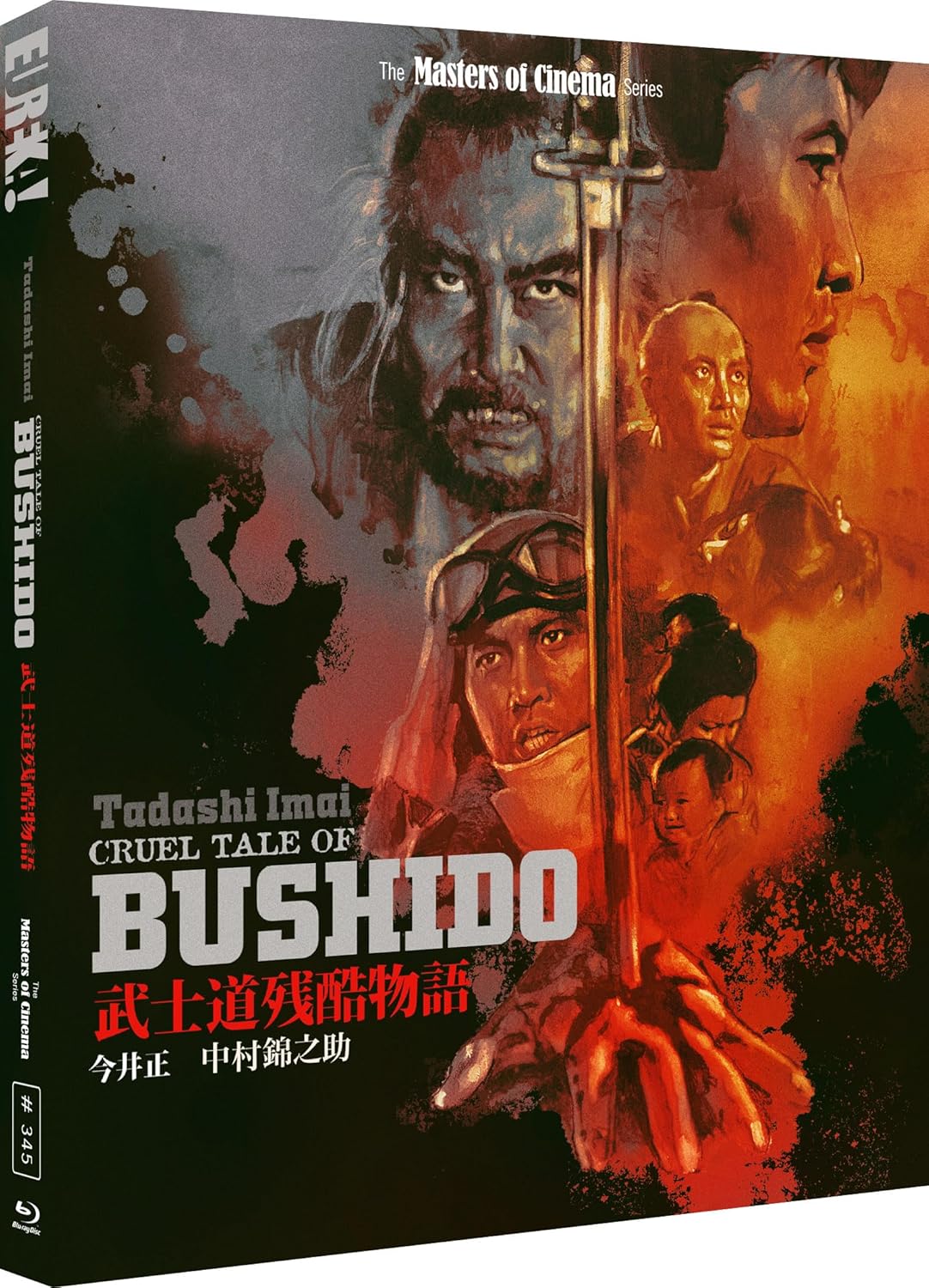
Click image to buy through our Amazon affiliate link

Limited Edition Blu-ray Special Features:

  • Limited Edition O-card slipcase featuring new artwork by Tony Stella [2000 copies].
  • Limited Edition collector’s booklet featuring new writing by Japanese cinema expert Hayley Scanlon [2000 copies] Not available at time of review.
  • 1080p HD presentation from a 4K restoration by Toei. Much of the action is set at night, and the naturalistic lighting keeps the palette somewhat muted. As with many restorations, highlights appear to have been softened by an overall grey filter; while this compromises contrast, it lends mid-range textures a velvety richness. Conversely, increasing the contrast might have cheapened the image and sacrificed that naturalism. It’s a delicate balance that suits high-end AV set-ups; if you turn the lights down low, a dark beauty emerges. There is plenty of detail in the shimmering fabrics, skin and hair textures, wisps of breath on the cold air, and the subtle flicker of lamplight playing across faces in the quiet nights.
  • Original Japanese mono audio. Clear with no noticeable noise.
  • Optional DTS-HD MA 5,1 audio
  • Optional English subtitles, newly revised for this release
  • Seven Kinds Of Samurai: Tadashi Imai’s Cruel Tale—NEW 16-minute video essay on Cruel Tale of Bushido and Japanese history by Jonathan Clements, author of A Brief History of Japan. He begins by explaining the disjointed assassination scene in the halls of Edo Castle, placing it against a historical backdrop of riots and general unrest as Japan suffered famine and disease during a period of rapid change. He then situates the film within the context of Japanese identity as the nation prepared for the 1964 Tokyo Olympics, describing a ‘purge of the old’ where the past was viewed as poison and a technology-driven future was the antidote. He provides a thorough overview of Tadashi Imai’s career and key works, comparing them with Nagisa Ōshima’s Cruel Story of Youth (1963) and Tai Katô’s Cruel Story of the Shogunate’s Downfall (1964), before finally analysing the overlap between cultural tradition and constructed national identity.
  • Tony Rayns on Cruel Tale of Bushido—NEW 21-minute interview. He discusses the film as being part of a broader trend in 1960s Japanese cinema of presenting historical epics that were critical of samurai and the bushido code. Then shares an overview of Imai’s career in the context of the competing studios attempting to produce movies that addressed the nation’s past, often through metaphor, citing Godzilla (1954) and the films of Akira Kurosawa as prime examples. He goes on to compare the films of Tadashi Imai with those of Kenji Mizoguchi such as Ugetsu (1953), written by Yoshikata Yoda who also contributed to Cruel Tale of Bushido. After comparing corporate culture with the feudal system, he looks as the career of Kinnosuke Nakamura.
  • Trailer.

Cast & Crew

director: Tadashi Imai.
writers: Norio Nanjo, Naoyuki Suzuki & Yoshikata Yoda.
starring: Kinnosuke Nakamura, Eijirô Tôno, Kyôko Kishida, Masayuki Mori, Shinjirô Ebara, Yoshiko Mita, Ineko Arima & Isao Kimura.

All visual media incorporated herein is utilised pursuant to the Fair Use doctrine under 17 U.S.C. § 107 (United States) and the Fair Dealing exceptions under the Copyright, Designs and Patents Act 1988 (United Kingdom). This content is curated strictly for the purposes of transformative criticism, scholarly commentary, and educational review.