3:10 TO YUMA (1957)
A small-time rancher is hired to put notorious captured outlaw leader Ben Wade on the 3:10 train to Yuma, but Wade's gang tries to free him.

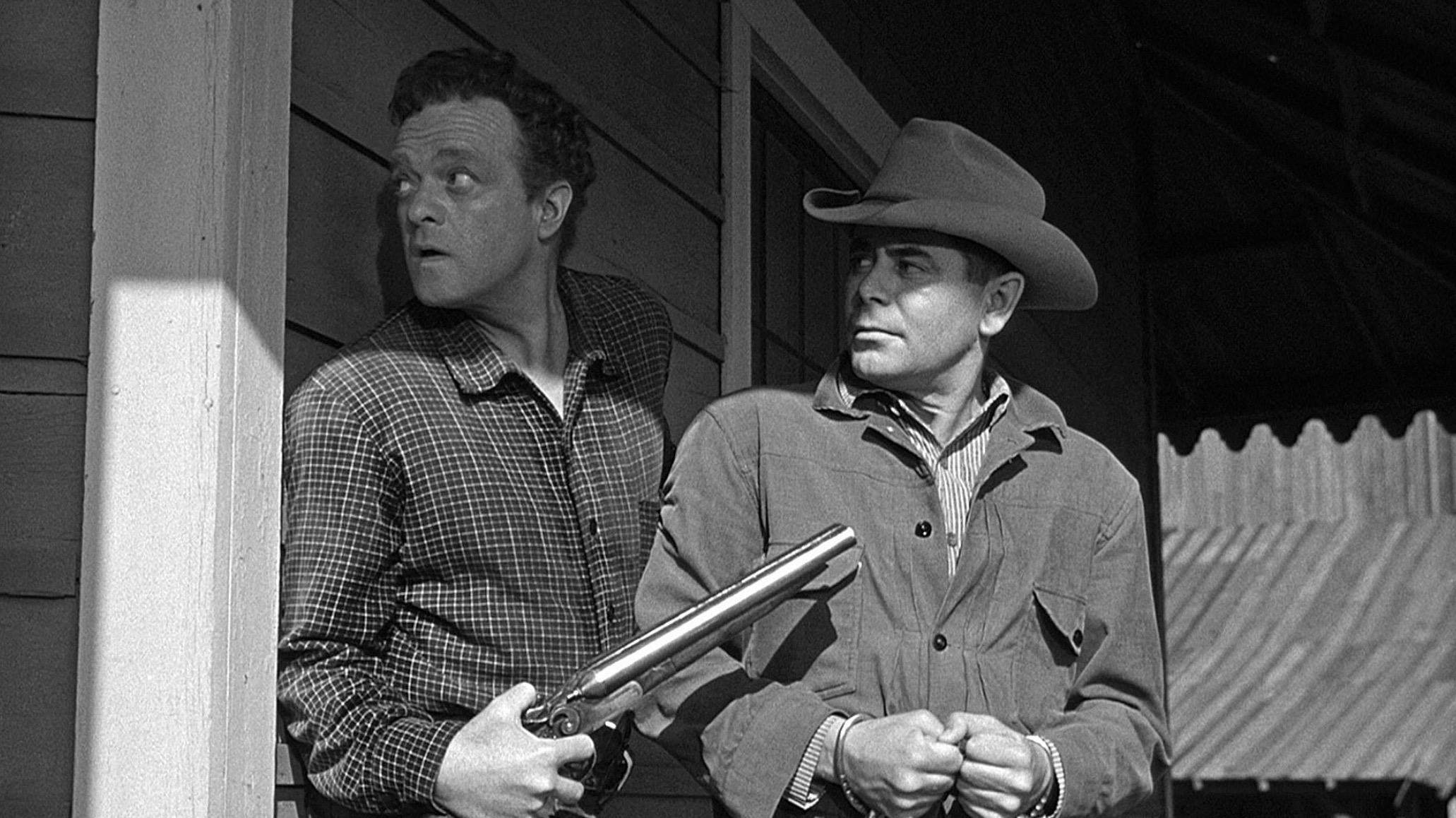

A small-time rancher is hired to put notorious captured outlaw leader Ben Wade on the 3:10 train to Yuma, but Wade's gang tries to free him.
When 3:10 to Yuma was released in 1957, the American Western was at the apex of its popularity—a cultural juggernaut so enmeshed in the American national identity that it seemed as if it might never end. Despite this, one would be forgiven for coming away from the film sensing, if not an ending, then a quiet decline; a dwindling supply of optimism and resolve against an unknowable, unforgiving terrain and the agents of death that stalk it.
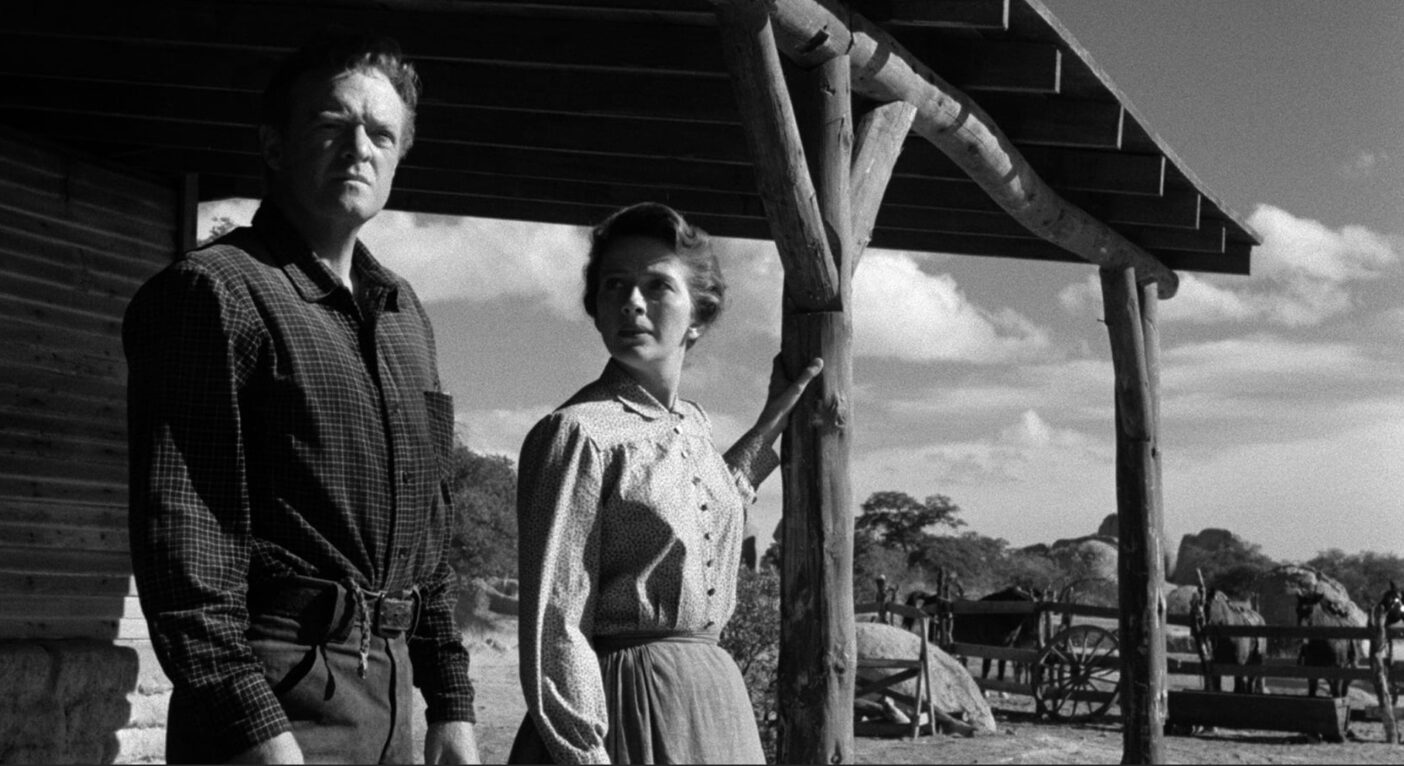
Directed by Delmer Daves, a prolific journeyman who specialised in Westerns and noirs, and adapted from a short story penned by a young Elmore Leonard, 3:10 to Yuma showcases a downbeat and spartan version of the West, where there is plenty of space and not much to fill it with. The Arizonan plains are captured in crisp monochrome, horizons stretching to vanishing points, the 19th-century coming to a close with no salvation descending from the mountains.
Desperate living is spun here into a punchy and deft genre film, hewing closer to Samuel Fuller and Sam Peckinpah than John Ford. Our heroes aren’t looking to save the town or build railroads; they’re digging around in the dust for payouts, loans, bribes, and ransoms—whatever will keep a roof over their heads, a bottle of whisky in their pockets, and water on their crops.
The film’s titular theme song—a ghostly ballad of gunslingers and whistling trains sung in loping cowboy tones by Frankie Laine—features flamenco guitars, crying choirs, and more than a little legend-making: “There’s a rumour that when you take the 3:10 to Yuma, you can see the ghosts of outlaws go riding by,” go the lyrics. It’s a tall tale, something sung around a campfire to convince us that life, despite its toughness and apparent lack of mercy, still retains magic and allure.
Men become giants and legends, reprinted in cheap paperbacks and rendered crudely in rudimentary illustrations. Their names travel further than their horses ever will. That Leonard’s original story first appeared in a pulp publication called Dime Western Magazine seems essential to understanding what Daves attempts here: he takes what could easily be discarded as junk and mines it for every drop of humanity, whilst retaining its lean, action-oriented framework. The result is a film as emotionally involving as it is thrilling.
The Arizona territory is experiencing a drought. A rancher named Dan Evans (Van Heflin), well into middle age and more than halfway over the hill, faces an uncertain future without rain; his crops won’t grow, his children will go hungry, and Dan and his wife Alice (Leora Dana) may lose their meagre homestead. Water costs money—more than they have—and Dan’s only option is to ride into the nearby town of Bisbee to seek a loan.
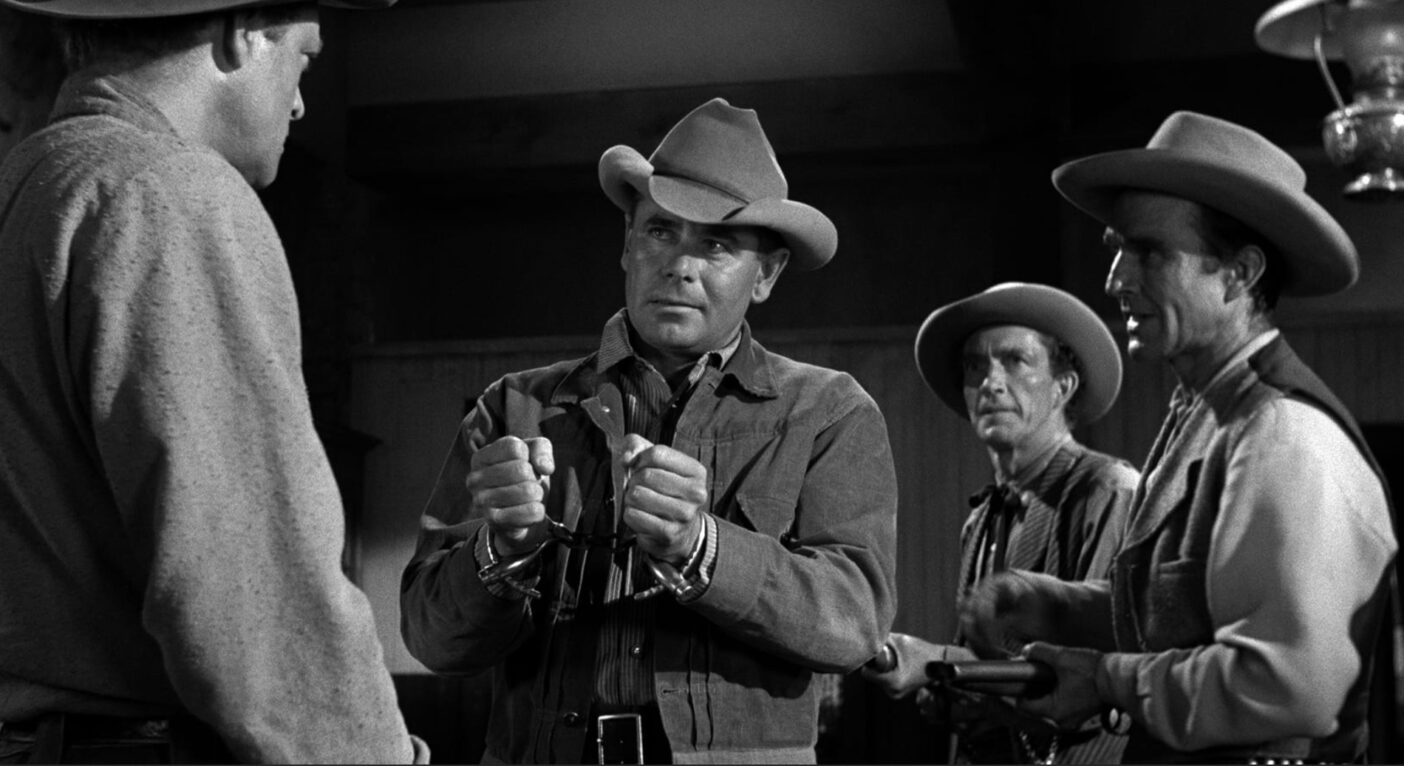
Whether Dan’s luck is particularly good or bad is debatable. In Bisbee, he learns that legendary outlaw Ben Wade (Glenn Ford), the mastermind of an earlier stagecoach robbery that opens the film and leaves two people dead, has been arrested. The Marshal of Bisbee (Ford Rainey) proclaims that he will pay two men to escort Wade 40 miles north to Contention City, a ghost town that was once home to a booming mining industry.
The Marshal knows Wade’s gang will be looking to snatch their leader, and whoever volunteers to take custody of him will be taking their life into their own hands. Perhaps the pointed words of Dan’s son, Matthew, have haunted him since the day they witnessed the hold-up: “Ain’t you gonna do something, Pa?” He didn’t then, but he can now.
Dan is joined by the only other person who would volunteer for such a precarious job for a paltry $200: the town drunk, Alex (Henry Jones). Once in Contention City, the men must keep Wade in one piece until 3:10, when a train will arrive to spirit him 300 miles away to Yuma to face trial.
Dan has no way of knowing if he’ll return, but working for the money is preferable to begging for it. Moreover, Wade took Dan’s cattle in the robbery and emasculated him in front of his children—is there any humiliation more stinging in a Western than a blow to one’s manhood? Van Heflin carries a weary but hard-fought humanity; he is the definition of an unlikely hero.
He is not Gary Cooper in High Noon (1952). He looks perpetually downtrodden—the kind of man who’d be blown away by Wyatt Earp in the first 10 minutes of another Western, only to be avenged by his sons. There are echoes of Dan in Clint Eastwood’s Will Munny, the bedraggled ex-gunslinger in Unforgiven (1992), limping out of retirement for a final score. But Dan does not suggest a bloody past; on his face is nothing but decades of hard work and austere living.
In keeping with its pulp source material, the real movie-star prowess and true seduction come from Wade, whom Glenn Ford plays with effortless confidence and affability. We wonder why he is talking so softly and behaving so reasonably (occasional killings aside). It could be that he has no emotional ties to his life as an outlaw—that it’s just a career like any other. Or, it could be that this is a man who understands how to lead a gang, and thus how to control people.
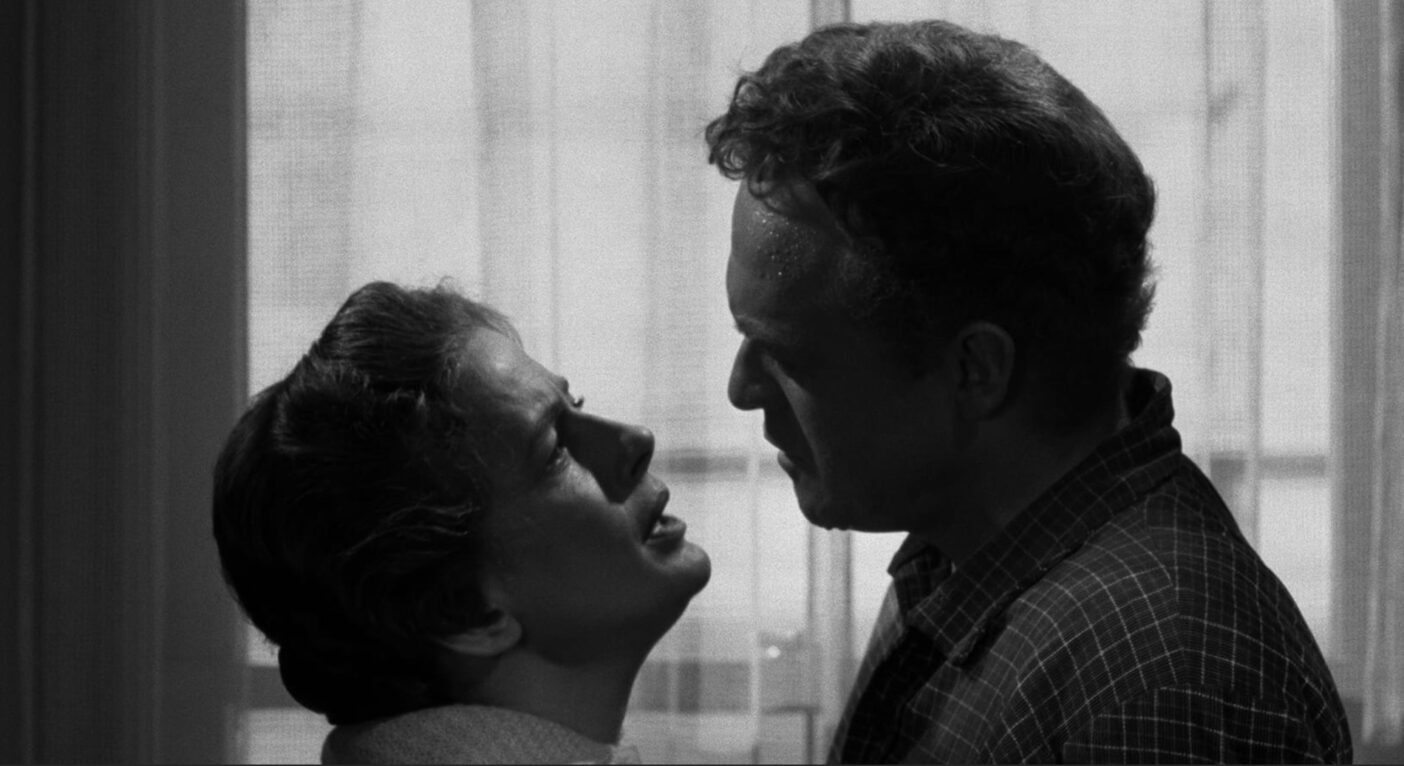
In some of the film’s most riveting scenes, we find a shackled Wade face-to-face with Dan in a hotel room. The narrative’s built-in tension begins to tighten, and the ticking clock takes on a funereal quality; we are always conscious of impending death.
Wade leans back on the bed drawing on a cigarette, the hard shadows of the midday sun painting his face like a femme fatale in a neo-noir. He is hard to resist. Wade talks about Dan’s wife and children casually, like a colleague striking up small talk. They are colleagues, in a sense: both men carry guns and take from the land what they can to survive. Wade is smart enough to know this, but perhaps not smart enough to know how to exploit it.
Wade’s offers of a team-up and a lucrative payoff fail. The sweat on Dan’s brow may suggest a man grappling with a decision that would change—or even end—his life. Wade, sweatless and calm, watching like a panther from the shadows, presents the sort of moral dilemma that is the backbone of most pulp fiction, from old Westerns to The Twilight Zone (1959-1964). It is the Faustian bargain that plagues the desperate.
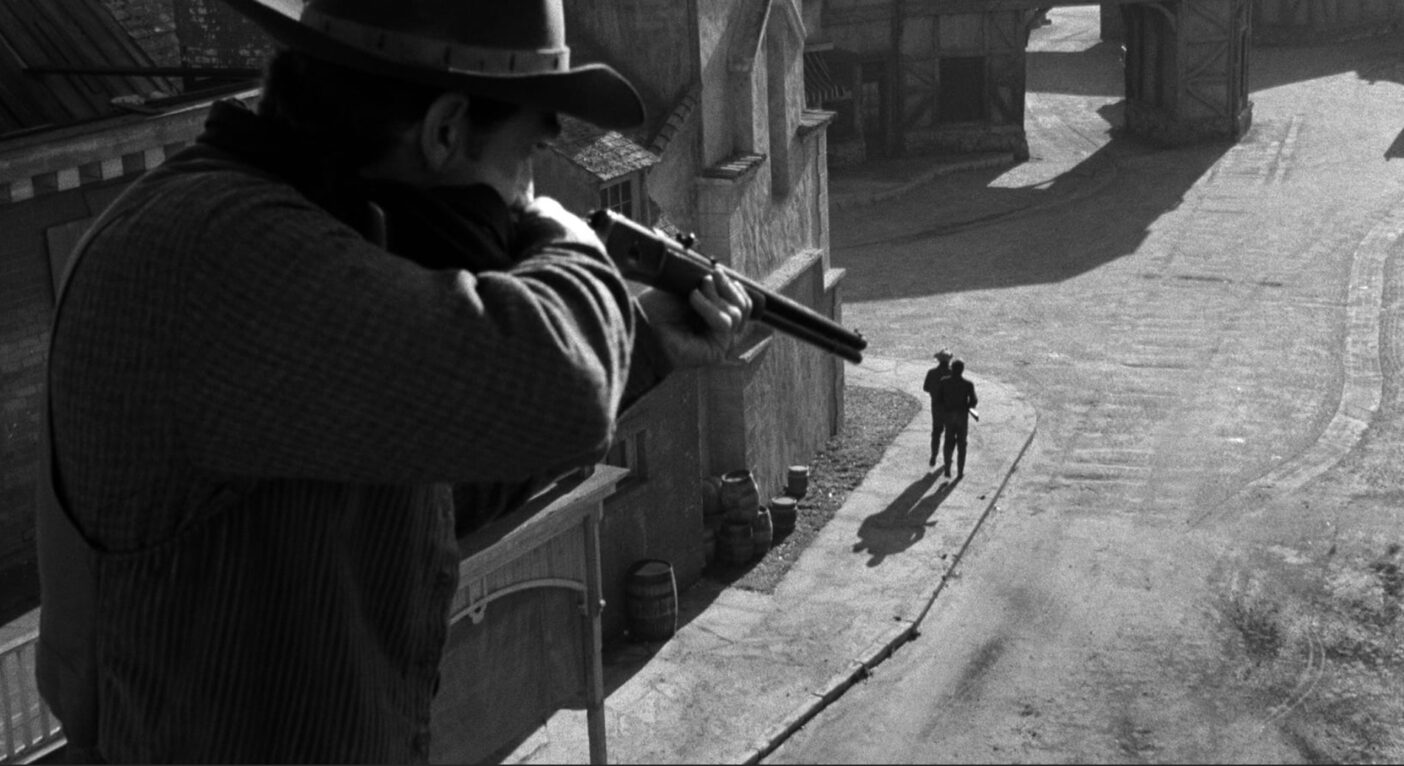
But the honeymoon is quickly over. Once his offer is rebuffed, Wade is just another opportunist outlaw again, grabbing for Dan’s shotgun. The steady pulse of the clock is accompanied by a funeral procession outside, the dusty streets of Contention City rumbling to the synchronised steps of mourners in black, led by a young Apache child solemnly banging a drum. A woman wails as her mourning hat billows in the warm desert winds.
A young singer, Emmy (Felicia Farr), has moved here for the humidity but doesn’t sing anymore. “Who’s there to sing for?” she asks. This is a film about a mission and the inherent excitement of danger, but there is something elegiac beyond its plotting. The Wild West, the mythic dream of America’s past, ended. Perhaps Leonard and Daves could sense something ending, too: how much longer could the Western remain culturally dominant?
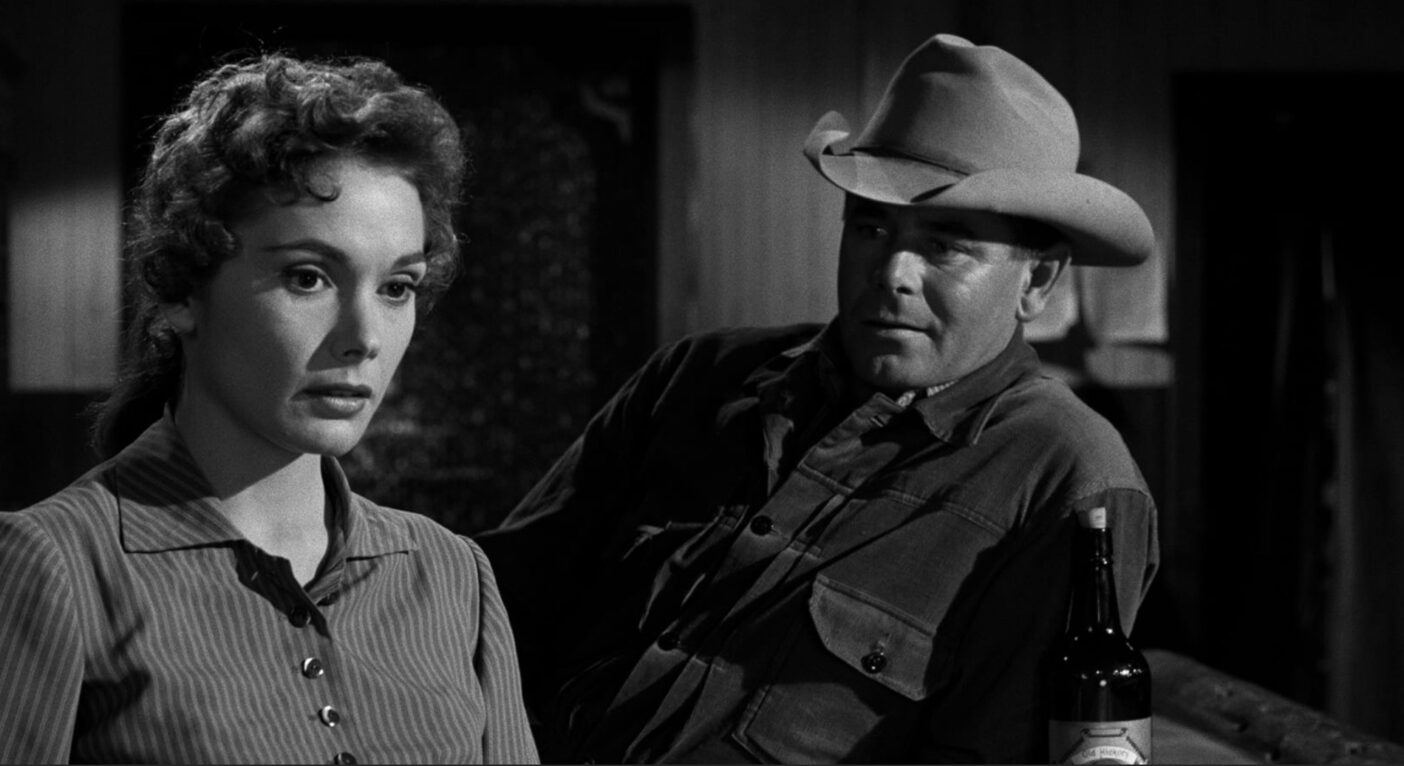
Even outside of the film’s styling, there is a sense of a bruised world asking itself serious questions after the destruction of World War II. The great drought suggests retribution: a land scorched and death singed into the earth, depicted here just over a decade after the atomic bombs were dropped on Hiroshima and Nagasaki.
The Cold War, a decade old in 1957, threatened a future in which homelands would resemble scorched earth, with survivors wandering the wastelands wondering how God could have forsaken them. Like Wade’s offers, nuclear war could only promise mutually assured destruction. There is a mood of final days, of trying to harvest seeds sown in blood.
It is the contrast between brutality and moments of divine beauty that makes 3:10 to Yuma exceptionally moving. “All this will be green again in six months,” Dan attempts to reassure Alice. “Maybe you and me won’t be so tired all the time. In six months we’ll be happy, won’t we?”
For all the funeral marches, tolling bells, and makeshift gravestones, this is an incredible picture of endurance. The quiet grandeur of Daves’ film, more internal than external, spills out in final images as moving as anything in the genre. Here, ultimately, we find a divine expression after 90 minutes of struggle: the rain finally falls freely upon barren land, as the 3:10 to Yuma rattles off toward the endless horizon.
USA | 1957 | 92 MINUTES | 1.85:1 | BLACK & WHITE | ENGLISH

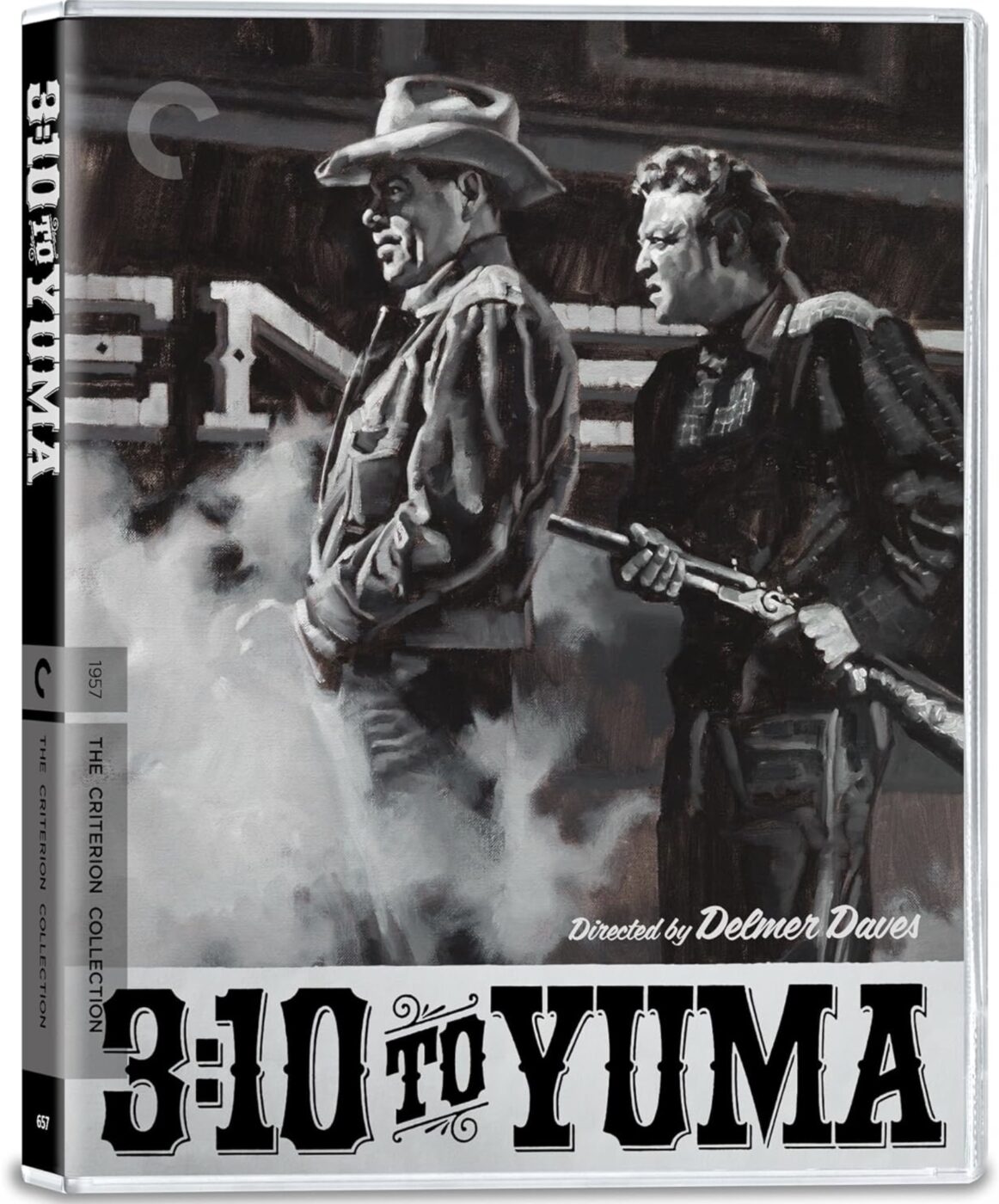
Criterion’s new 4K restoration of the film looks absolutely stunning. The cinematography is exceptionally crisp and faithfully presented here, particularly during the action sequences where Director of Photography Charles Lawton Jr employs a noticeably high shutter speed.
The image itself is sharp, and the excellent production design—from the outlaws’ torn breeches to the decaying wood—looks suitably musty. It’s an incredibly atmospheric presentation. Shot in black and white, the film makes the most of light and shadow; in this transfer, the blacks are deep and rich while the highlights are perfectly balanced.
The monaural soundtrack is strong. While the sound design is proficient without being showy, what matters most is that everything sounds clear and sharp—and the title song sounds incredible.

director: Delmer Daves.
writer: Halsted Welles (based on the 1953 short story ‘Three-Ten to Yuma’ by Elmore Leonard).
starring: Glenn Ford, Van Heflin, Felicia Farr, Leora Dana, Henry Jones, Richard Jaeckel, Robert Emhardt & Sheridan Comerate.