DEAD MAN’S WIRE (2025)
In 1977, a man entered the office of the manager of a mortgage company, and took him hostage with a sawed-off shotgun wired with a "dead man's wire" from the trigger to his own neck.

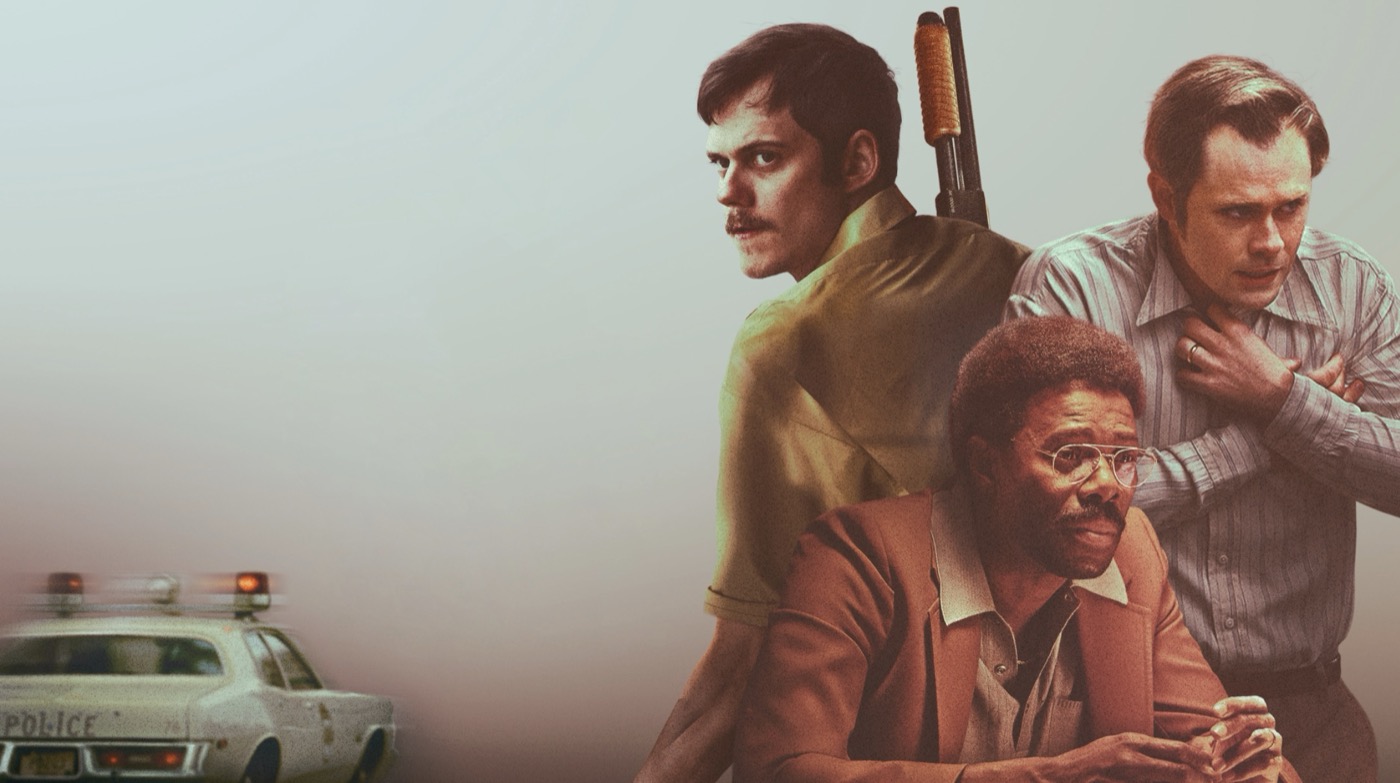

In 1977, a man entered the office of the manager of a mortgage company, and took him hostage with a sawed-off shotgun wired with a "dead man's wire" from the trigger to his own neck.
American director Gus Van Sant is one of the few filmmakers to have achieved success in both the indie arthouse circuit and mainstream cinema. Two examples from his filmography that perfectly demonstrate this duality are My Own Private Idaho (1991) and Good Will Hunting (1997).
These two films couldn’t be more different: one is a surreal tale of male prostitutes, loosely based on Shakespeare’s Henry IV, while the other follows a troubled maths prodigy discovered while working as a janitor at MIT. What they do share, however—as with most of Van Sant’s work—are themes of fractured lives, trauma, and unusual friendships, often laced with dark humour. His latest film, Dead Man’s Wire, shares this creative DNA, though it feels more restrained than his earlier work.
The film tells the real-life story of Tony Kiritsis (Bill Skarsgård), who, on 8 February 1977, entered the Meridian Mortgage Company in Indianapolis and took manager Richard Hall (Dacre Montgomery) hostage. He fastened a so-called “dead man’s wire” around Hall’s neck—a rigged device connected to a shotgun that would fire if anyone intervened. This sparked a 63-hour standoff that captivated the city and became one of the first domestic hostage situations broadcast live on national television.
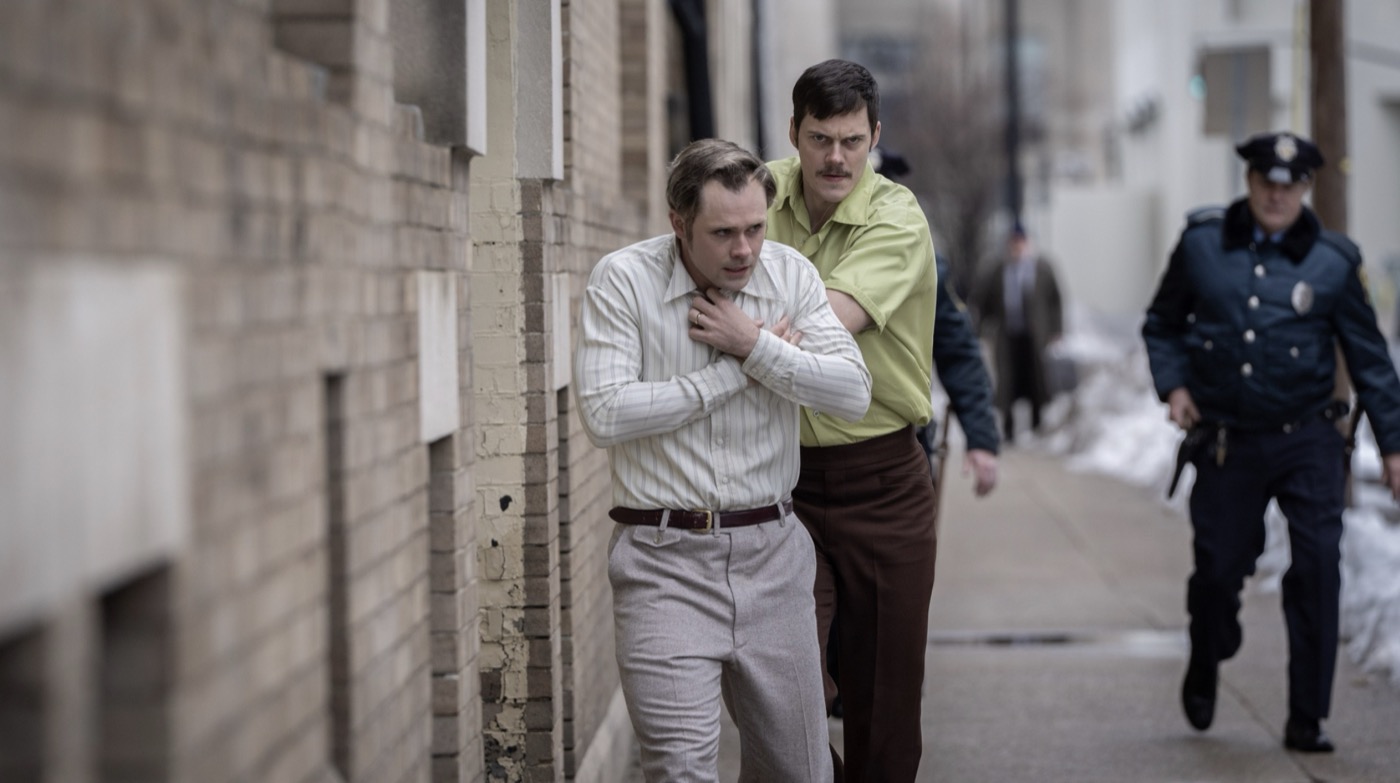
Tony’s motivation stems from his belief that he’d been wronged financially. After falling heavily into debt while purchasing land he intended to develop into a shopping mall, he became convinced that Hall and his wealthy father (Al Pacino) were manipulating events to seize the land for themselves.
From the outset, Van Sant portrays his protagonist as somewhat inept: in the opening minutes, he accidentally snaps his car’s ignition key in two. Despite the cool ’70s music playing on the radio, hosted by local DJ Fred Temple (Colman Domingo), Kiritsis is visibly stressed as he approaches the mortgage firm, his jittery manner betraying a fragile mental state. And yet, he retains a “lovable loser” quality—polite and friendly, sometimes excessively so.
Skarsgård sustains this dorky charm throughout, balancing it with flashes of unhinged menace. He can be genuinely intimidating, but there are also moments of laugh-out-loud humour. One standout scene occurs when a priest tries to calm him by quoting Psalm 51: “Purify me with your spirit, and I will be cleansed. Wash me, and I will be whiter than snow.” Kiritsis’s blunt reply—“Why don’t you wash my ass, Father?”—lands perfectly.
Dacre Montgomery also delivers a strong performance. As the son of an affluent businessman suddenly thrust into a terrifying ordeal, his portrayal is quietly understated. The look of hopelessness on his face when his father refuses to apologise is one of the film’s most effective moments: subtle yet entirely believable.
As the standoff continues, the strained relationship between the two men evolves into an uneasy friendship. In one memorable scene, Kiritsis shares his love of music—particularly tracks played on Temple’s show—even breaking into a few dance moves. These character-driven moments are among the film’s strongest.
Rather than focusing solely on the mechanics of the hostage situation, the script highlights the burgeoning media frenzy. Myha’la (Bodies Bodies Bodies) plays ambitious journalist Linda Page, bringing a sharp energy to the role. This emphasis on live coverage injects momentum into the narrative, creating a sense that events are unfolding in real time.
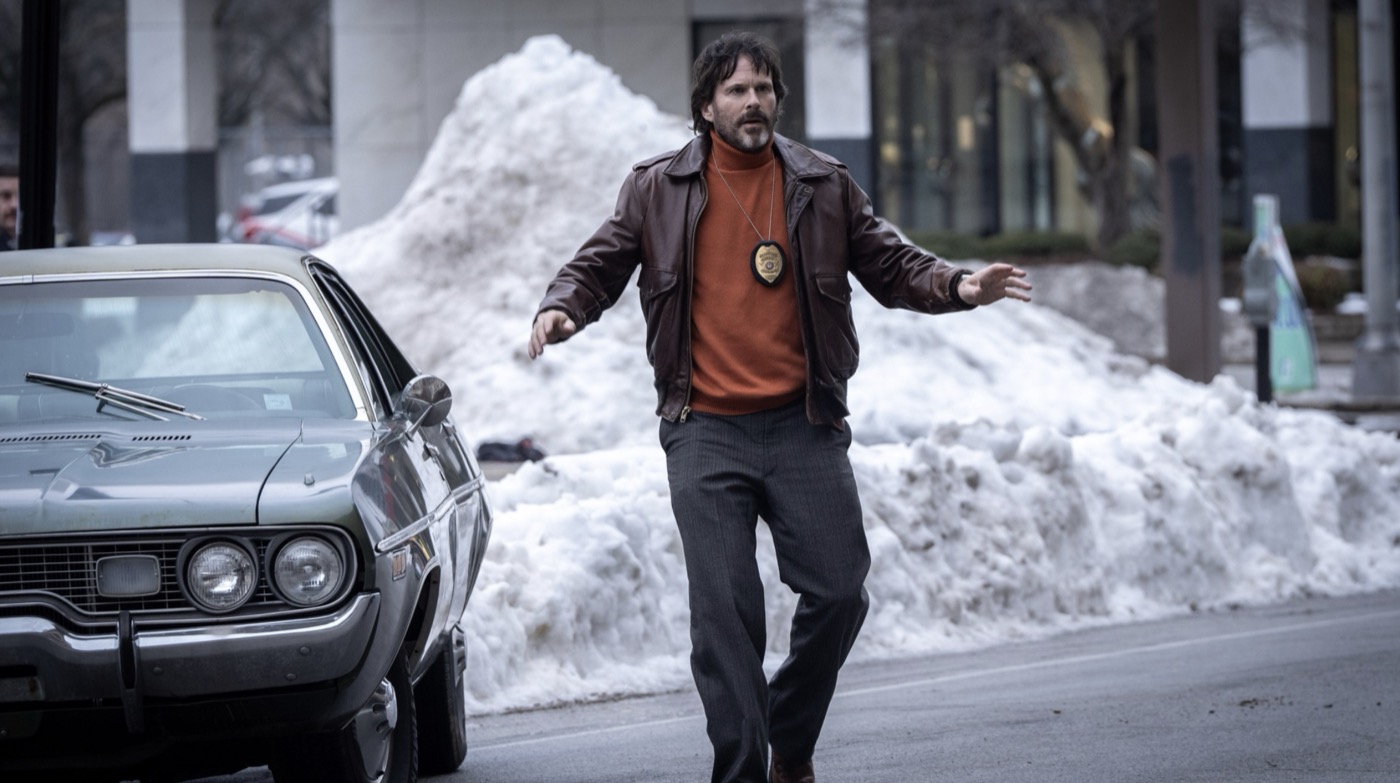
There are clear echoes of Sidney Lumet’s Dog Day Afternoon (1975), particularly in how a tense personal conflict evolves into public theatre. Compared to Van Sant’s earlier work, the direction here is more restrained, avoiding stylistic excess in favour of a naturalistic, almost documentary-like approach. Occasional black-and-white cuts and freeze-frames appear, but they’re used sparingly.
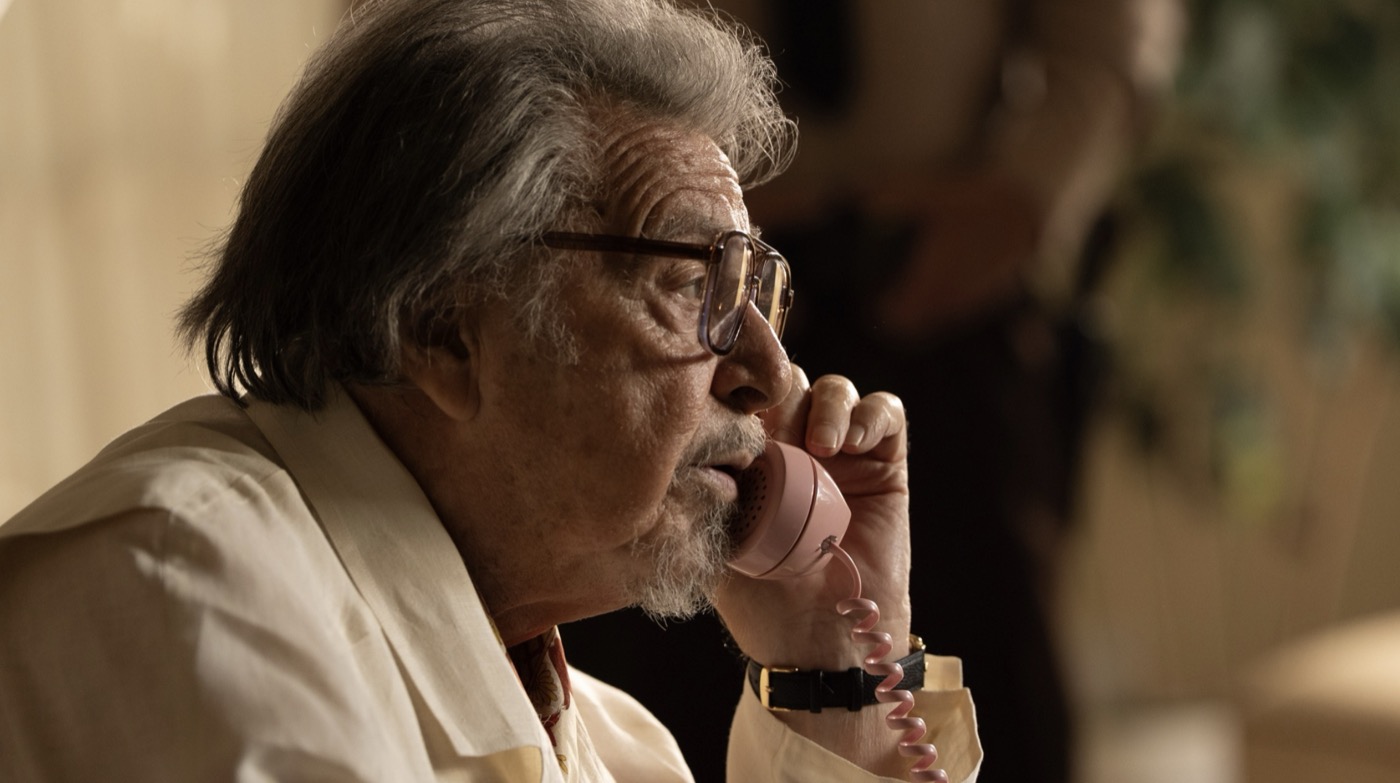
Alongside the leads, Pacino and Domingo leave a strong impression despite limited screen time. Pacino’s portrayal of the wealthy father exudes sleazy self-importance, particularly in scenes where he lounges in Malibu, seemingly indifferent to his son’s peril. Domingo’s charismatic DJ Temple is reminiscent of Samuel L. Jackson’s role in Do the Right Thing (1989). However, his role expands when Kiritsis calls the show, positioning Temple as an unexpected mediator.
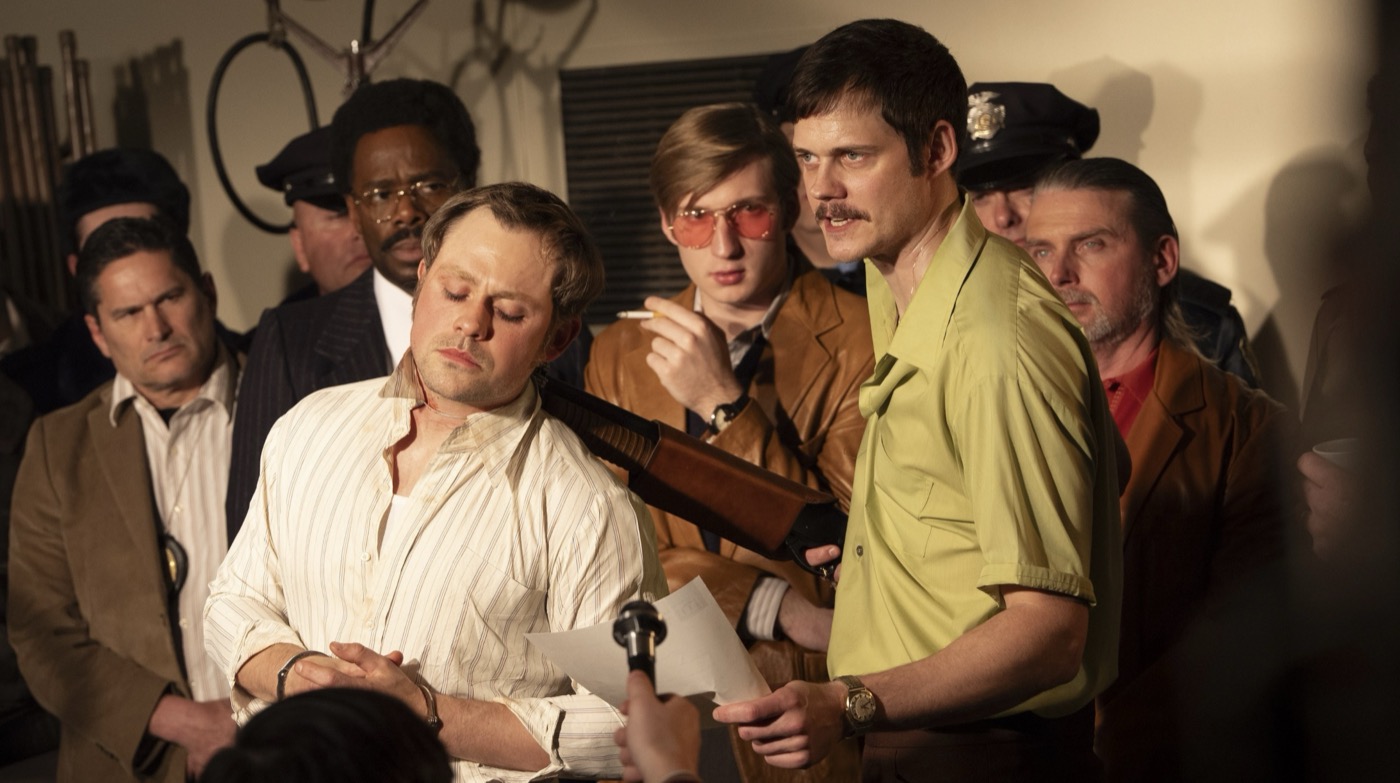
Beyond the performances, the period design is excellent. Costumes, interiors, and overall visual detail feel authentic without drawing undue attention. A gritty, slightly drab aesthetic reinforces the realism, from claustrophobic office spaces to dated analogue technology, grounding the film in a specific moment in time.
However, the film isn’t without its flaws. The pacing is uneven: some sequences are gripping, while others feel unnecessary. More significantly, the script falls short in its exploration of Kiritsis’s character. Despite Skarsgård’s compelling performance, the film offers only a surface-level understanding of his motivations. We get a sense of his desperation, but not enough depth to fully connect with him emotionally.
Ultimately, Dead Man’s Wire is a solid yet somewhat slight film. Strong performances and convincing period detail elevate the material, and while the influence of Dog Day Afternoon is evident, it still manages to carve out its own identity. It falls just short of its full potential, but with a tighter script, it could’ve packed a far more powerful punch.
USA | 2025 | 106 MINUTES | 1.85:1 | COLOUR | ENGLISH

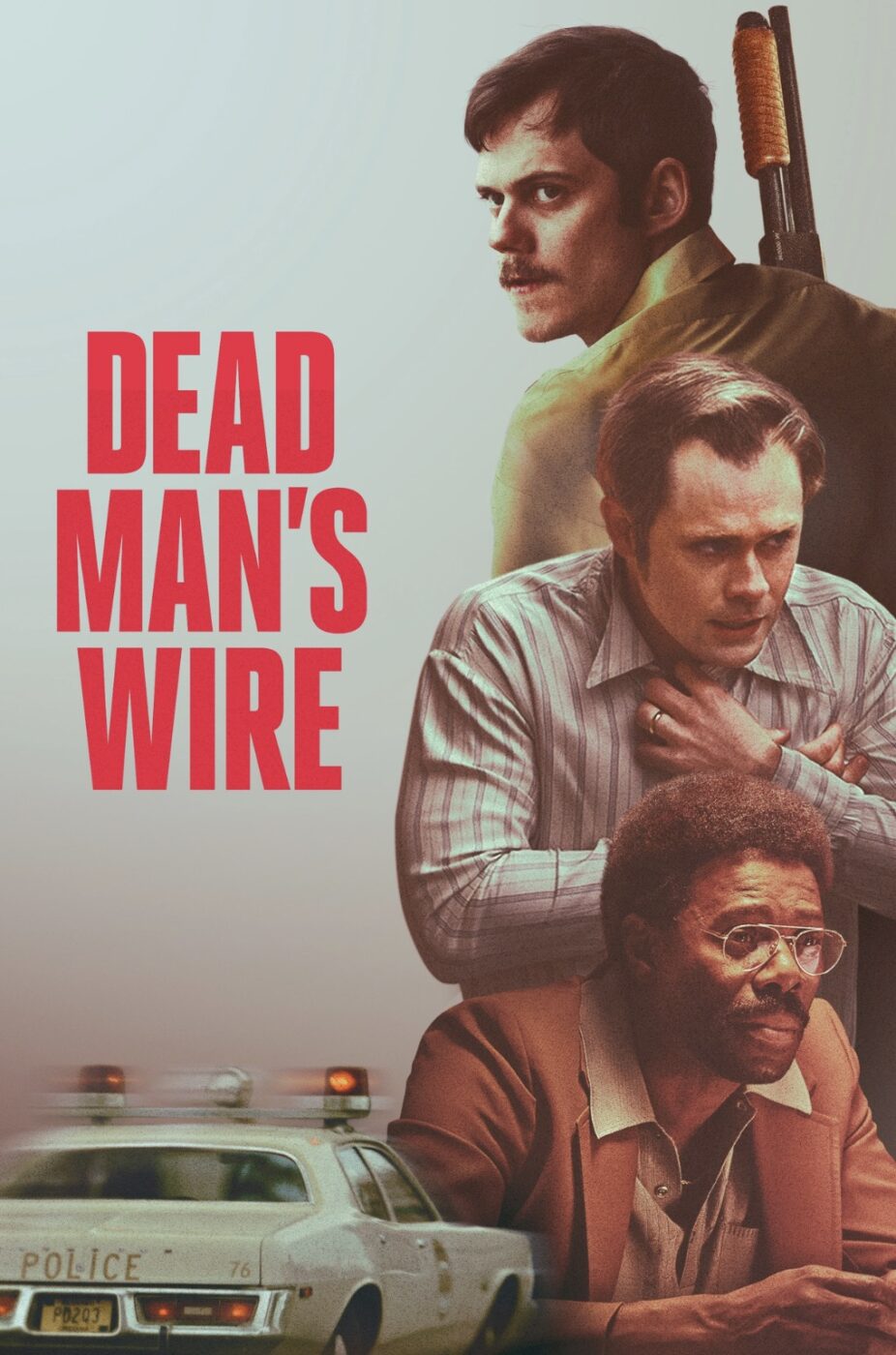
director: Gus Van Sant.
writer: Austin Kolodney.
starring: Bill Skarsgård, Dacre Montgomery, Cary Elwes, Myha’la, Colman Domingo & Al Pacino.