REPRISE (2006)
Fuelled by literary aspirations and youthful exuberance, two competitive friends endure the pangs of love, depression, and burgeoning careers.



Fuelled by literary aspirations and youthful exuberance, two competitive friends endure the pangs of love, depression, and burgeoning careers.
Only upon a recent rewatch of Joachim Trier’s Reprise did it become clear how haunting his films are. Anyone, whether they love or hate his impressionistic slice-of-life cinema, can pick up on the sorrow coursing through them. Yet in every movie, an ethereal quality attaches to the loss that time inflicts on our lives.
One of Trier’s first short films, Procter (2002), follows a man who finds a tape of a suicide and attempts to dissect what led to it. In his English-language debut, Louder Than Bombs (2015)—about a middle-aged man and his two sons coping with the death of their photojournalist mother—the youngest child briefly imagines she is holding him in bed, the big spoon to his little spoon. When he wakes up alone, he instinctively turns around, confronting an empty bedroom and the fresh realisation that she can never return. The terrible beauty of the past clings tightly to one’s soul in the present, dragging it into the pit of one’s stomach, where all other terrible beauties lie.
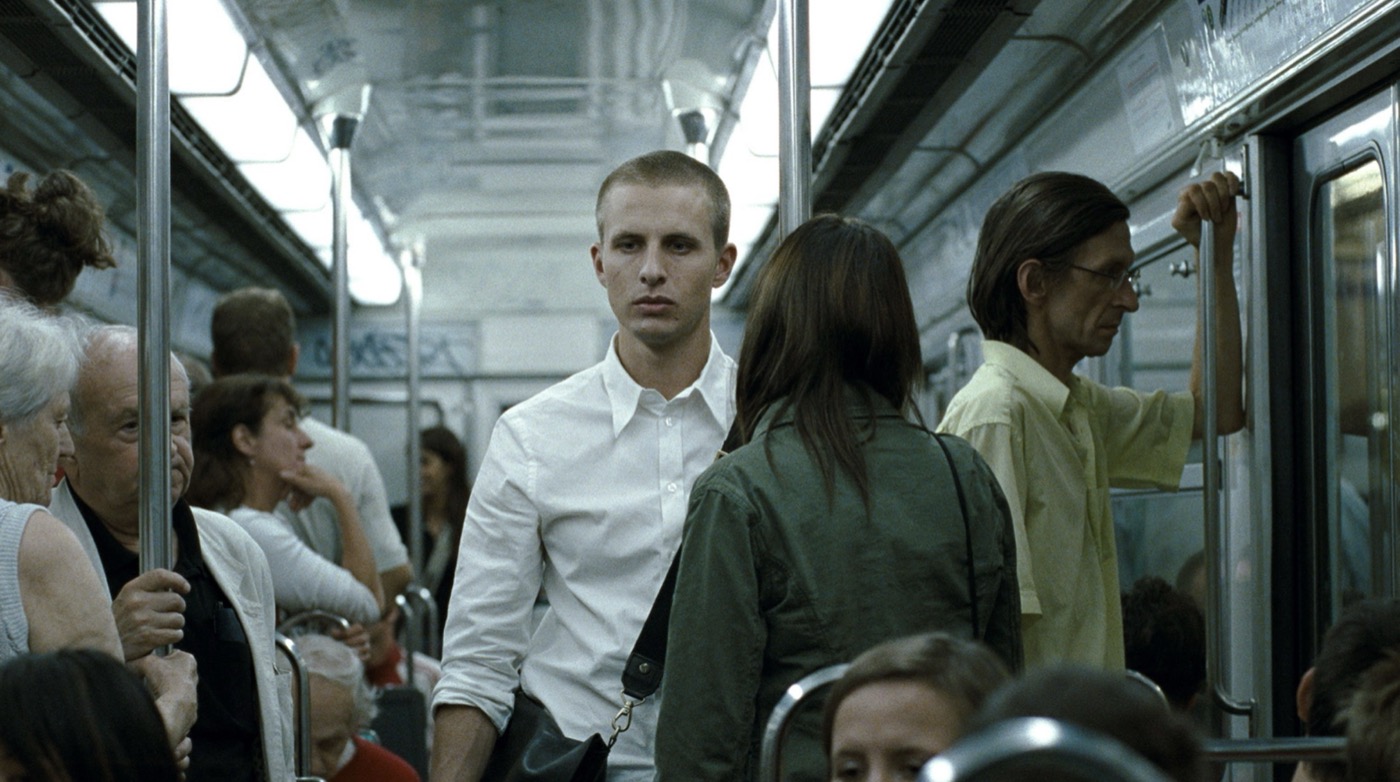
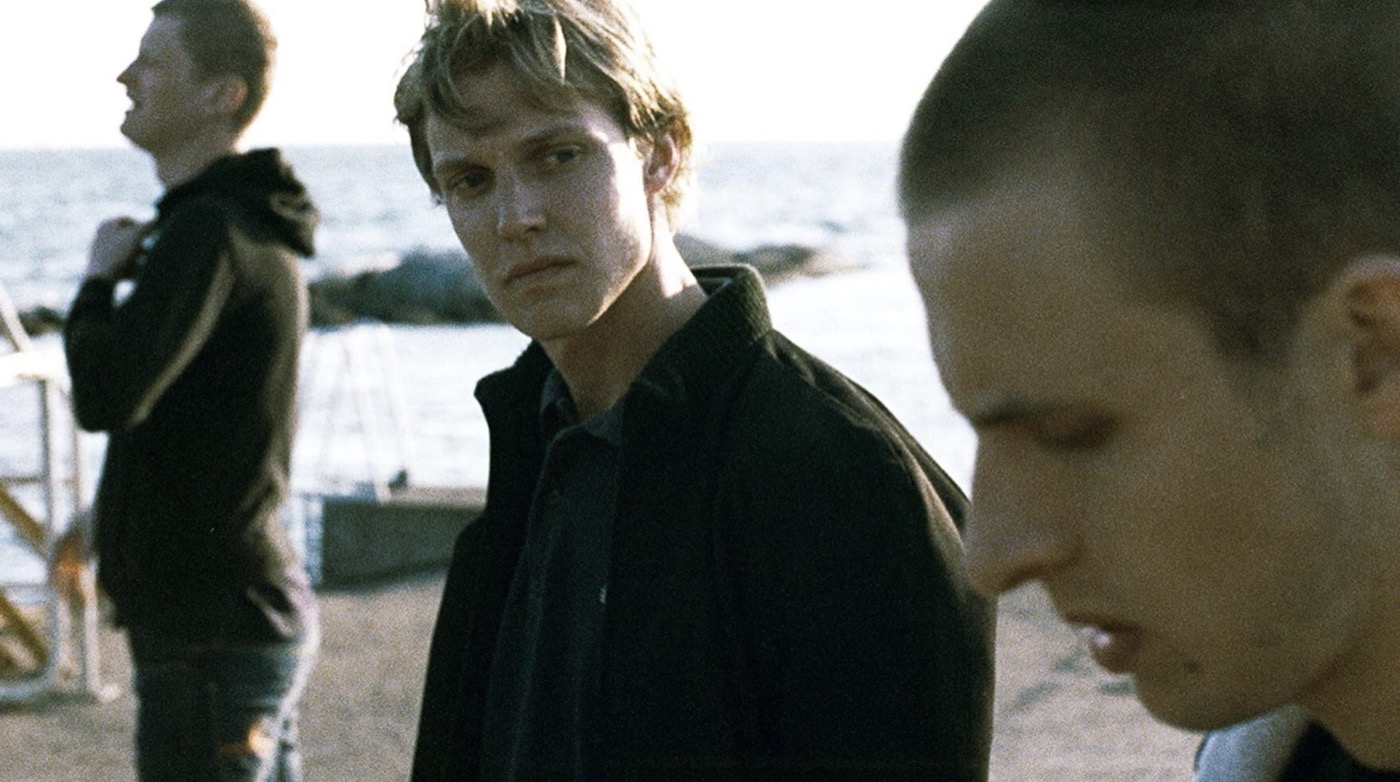
The same holds true for the Norwegian director’s debut feature, Reprise, which follows two close friends, Erik (Espen Klouman Høiner) and Philip (Anders Danielsen Lie), aspiring novelists and immature young men. Early in the film’s chronology—even if it feels like a late stage in their friendship—Erik, Philip, and their mutual friends stand around a body of water. It is a familiar spot, though all joy has been sapped from it, as the group is accompanying Philip on his release from a psychiatric hospital. His admission was triggered by spiralling psychosis, spurred on by his feelings for his then-girlfriend, Kari (Viktoria Winge), whom he has not seen for months on psychiatric advice. Unable to cope with reality, he attempted suicide—a reality none of his friends can, or will, directly confront.
That air of unease is dispelled in an instant when Philip drags a friend forward and pushes him into the water before plunging gladly into its cold depths. Just as he touches the surface, we are transported two seconds back into the past, where a forlorn and hollow Philip watches his friends from a distance, unwilling to take the leap and act on this brief fantasy. The terrible beauty of what could have been haunts him as much as what was. It is a small moment, but one that effortlessly evokes tonal whiplash. The speed with which this realization is conveyed matches the swift turn of events in the dream world.
In an instant, the potential memory is lost forever, along with many of the group’s foundational bonds. These young men are ruthless and dismissive towards absent friends, yet delusional enough to think the same negative comments are not made about them when out of earshot. Their connection is strong, but its roots are so entrenched in the past that bitterness often seems its defining characteristic. Trier mourns these losses as much as his characters do—perhaps even more so, given he has built a prolific career from this swelling of bittersweet emotion.
Compared with his other, typically more measured films, Reprise is infused with the punk-rock energy of youth and rebellion. Erik and Philip are well aware they have their whole lives ahead of them, bringing a free-spirited vitality to their days. The film’s visual style eager matches these energetic young souls, using quick cuts, flashbacks spliced into present-day moments, and music that stops abruptly to signal the end of one thought and the start of another.
The result is a tad overstuffed, though Trier accomplishes his goals so masterfully that even his zanier stylistic choices feel somewhat measured. These sequences and scene transitions rarely intrude on the film’s core strength: its raw intimacy.
Despite the characters’ youth, they cannot escape the past’s constant conversation with the present, unearthing both joyous and painful memories. Both are equally unwelcome. Remembering sorrow is painful, but so is looking back on a simpler, beautiful time only to realise it can never be retrieved. Philip’s suicide attempt ushers in a new era for himself and Erik, which the rest of their friend group—who are rather difficult to differentiate at points—seems incapable of confronting. When Erik does, he does so silently; his indecision and refusal to take a stand prove to be his greatest weaknesses. As he learns, life can swing at you like a wrecking ball, with little thought for what becomes of you in its wake.
Even if these young men have time on their side, that does not stem the tide of the past, which threatens to sweep through their lives and crush their egos. These are fragile, even pathetic, characters whose nonsensical attitude towards women shows they have not yet grown out of boyhood. Yet that gives their antics a boyish charm, even if Reprise truly shines in its tragic elements.

Another central component of Trier’s filmography is his focus on creatives—specifically, their single-mindedness and its effect on others. Erik and Philip are living in a fantasy world when the film begins, submitting manuscripts and imagining their entire lives unfolding from this creative pursuit. They do not dream of wealth, but of the freedom to ruin their lives without external interference.
The freedom to be fatalistic is what they crave, as it is as closely tied to their self-importance as their writing. Indeed, both spring from the same source: one that positions them as the main characters of their own stories, in worlds where others exist merely as props. Their creative impulse emboldens their self-absorption.
Even if rooted in poor mental health, it is no accident that Philip views Kari as a higher power—a pure entity onto whom he can project a love that threatens to destroy him. Erik is a dreadful boyfriend, constantly wasting his partner Lillian’s (Silje Hagen) time while telling his friends he will eventually dump her to pursue his true purpose.
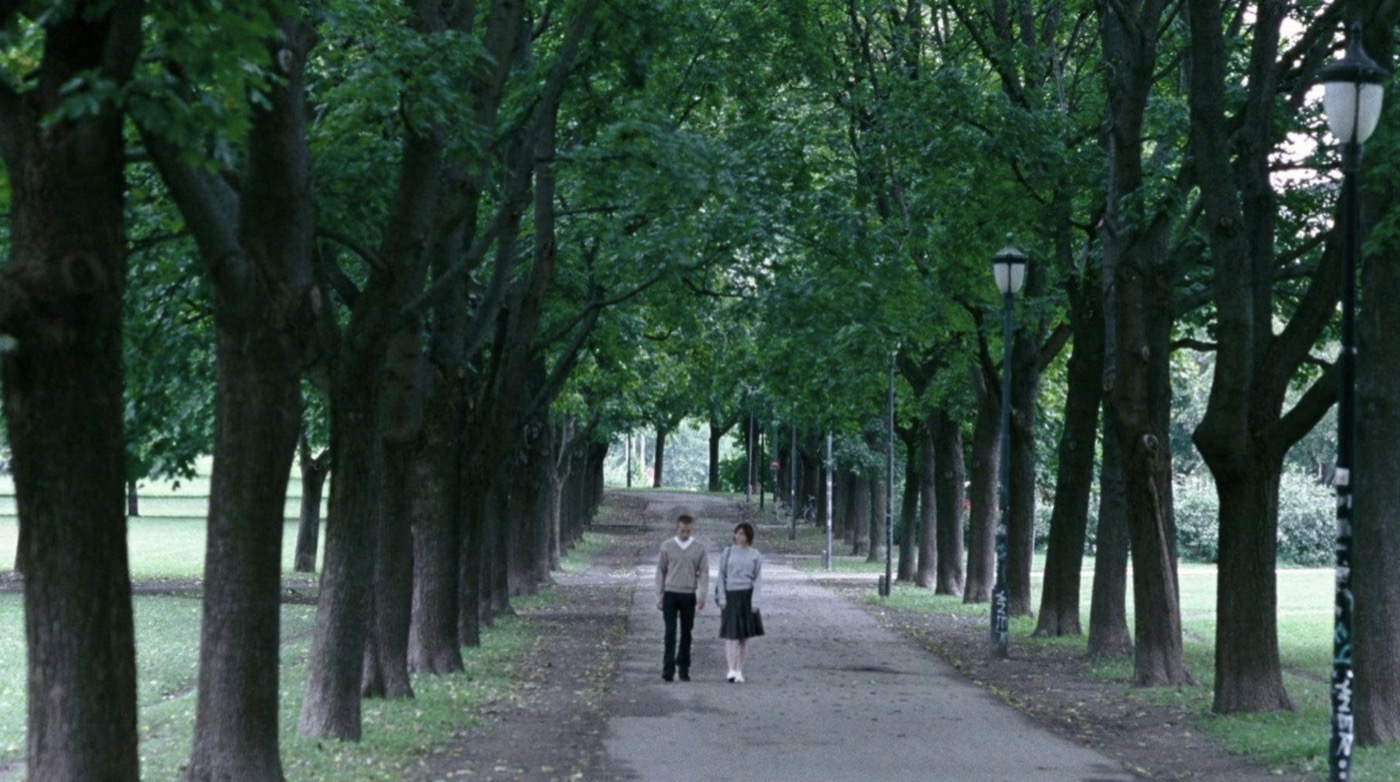
And what might that be? To be a tortured artist. He does not want life to throw curveballs at him; he wants to pitch them himself, conjuring these painful feelings from the same internal well that feeds his creativity. It is an ache that cries out for expression—the same one lurking within Philip when he thinks of Kari. Throughout Reprise, these central figures stumble forward blindly, without any real sense of what they want. It is all boyhood fantasy and starry-eyed visions of self-concocted despair. When Trier subjects these immature souls to life’s real burdens, it’s both profoundly cruel and the best thing that could happen to them.
Reprise is tough but tender. You know to dismiss these characters’ worldviews, but never their pain; that part of the equation is always too raw to ignore. Even a rough-around-the-edges debut from Trier is more measured, assured, and accomplished than what most filmmakers could hope to achieve. The film strives to be clever, but saves itself from pretension by rooting its critiques in characters the writer-director clearly cares for.
It would be surprising if Trier had not once been desperate to become an artistic genius and martyr to his own success; he recreates this persona so effortlessly that he seemed destined to make this film. He is the kind of writer-director—though he shares a screenwriting credit on almost every film, including this one, with Eskil Vogt—whose work appears easy to replicate on the surface, yet flows with more beauty, poise, and sympathy than almost anyone else can muster. Trier would go on to perfect these qualities throughout his ‘Oslo trilogy’ (including 2011’s Oslo, August 31st and 2021’s The Worst Person in the World), with Reprise proving an audacious and deeply sensitive first step in his career-long meditations on flawed characters and the loss that eclipses them.
NORWAY | 2006 | 105 MINUTES | 1.85:1 | COLOUR | NORWEGIAN


director: Joachim Trier.
writers: Joachim Trier & Eskil Vogt.
starring: Anders Danielsen Lie, Espen Klouman Høiner, Viktoria Winge, Odd-Magnus Williamson, Pål Stokka, Christian Rubeck, Henrik Elvestad & Sigmund Sæverud.