BURNT OFFERINGS (1976)
A family moves into a large old mansion in the countryside which seems to have a mysterious and sinister power over its new residents.

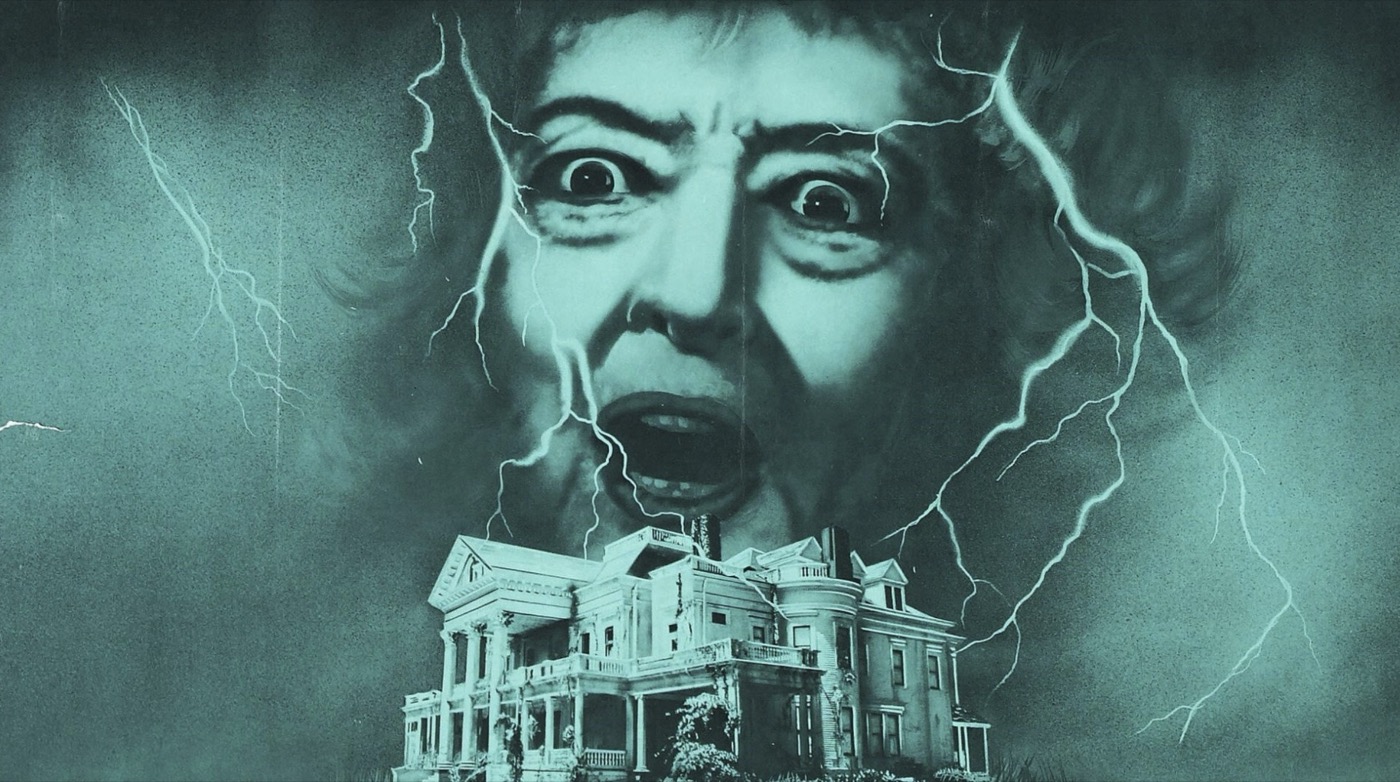

A family moves into a large old mansion in the countryside which seems to have a mysterious and sinister power over its new residents.
‘Burnt Offerings has no peer. Better than Rosemary’s Baby, The Other, and The Exorcist.’
That is how The Hartford Courant lauded the 1973 novel by Robert Marasco. 50 years on from its film adaptation, at least two of those other titles have become the definitive terrifying tykes in all fiction. More frightening tales like Phantasm (1979) and So I Married an Axe Murderer (1993) were shot at the Dunsmuir House and have overshadowed this quaint 1976 horror. The Allardyce house of Burnt Offerings could have stood proud, were it not for the encroaching skyscrapers of the haunted house genre.
However, it is hardly a fair contest against successors that have almost certainly cannibalised past haunted houses to build their own. Stephen King praised Marasco for his “near brilliance” and has called Burnt Offerings one of his favourite horror films. Both his 1977 novel and 1980 adaptation of The Shining follow a typical family: a tightly wound alcoholic dad, a devoted housewife, and their relentlessly tormented young boy. That is this story—and they make the same mistake of staying in a spacious, spooky holiday home.
The Overlook Hotel is yet another “hungry house”—a sub-genre dubbed by modern critic Brandon Stanwyck. The Allardyce home is very much an active character, psychically abusing its tragic tenants to grow fat off their suffering. There is little motivation beyond basic sustenance. Suitably creepy residents Arnold (Burgess Meredith) and Roz Allardyce (Eileen Heckart) aid the house. Who owns whom is left open to debate.
They succeed in luring in another meal, despite laying it on thick. Between statements like “the house takes care of itself” and “it’s practically immortal”, the dialogue moves past foreshadowing into obvious warnings that fall on deaf ears. Their behaviour is equally alarming: Arnold tittering at an adorable 12-year-old Davey (Lee H. Montgomery) scraping his knee is sinister enough, but Roz excitedly emphasising that “children are good for the place” is downright unnerving.
Screenwriter William F. Nolan veers too heavily into literalising the metaphor. Arnold tells a one-off character—purely for the audience’s benefit—to observe how a dead plant has grown back right after the first bloodshed. Moments later, patriarch Ben (Oliver Reed) catches his thumb on a champagne screw and the pantry light relights. In case that was not clear enough, Bob Cobert’s eerie score acts as the musical translation of “get it?”. Those who have read the Book of Leviticus will understand from the cutesy title alone that it is a winking nod to a “gift offered to God”.
Director Dan Curtis never relies on venturing into the dark for cheap scares, which would have been easy for the man famous for Dark Shadows (1966–1971). Curtis produced and directed numerous works for television; Burnt Offerings was the third of only four films he made for theatrical release. A number of critics felt his cinematic scope was rather pedestrian, but those were contemporary opinions. Anyone tired of the underlit, muted palettes of modern horror will find an invigorating reprieve in these lush 1970s visuals.
His familiarity with shooting for television never harms the quality of Jacques R. Marquette’s cinematography. Starting in beaming sunlight, the film presents horror as something that can exist and thrive in the day alongside us. Numerous pool scenes make the most of natural lighting to heightened effect—the shimmer of that dazzling blue water could not possibly hide disturbing secrets underneath.
A fascinating aside: Variety reported in 1969 that Burnt Offerings would be directed by Bob Fosse, based on an original screenplay that Marasco subsequently novelised. It would certainly have been something for the legendary director to release this between his Oscar-pleasers Sweet Charity (1969) and Cabaret (1972).
But would it have been better? If Curtis was itching to try something outside of Dark Shadows, he proved far too comfortable repeating himself. The nagging issue with Burnt Offerings is that, for as much as it gets right, it achieves those eerie successes early on and stops there. The film is fond of revisiting its weaker notes too, making for an aggravating experience. The audience starts to feel like the ghosts who have always been there at the Overlook Hotel.
There should be genuine familial warmth before the horror, and it exists here in broad strokes. As with Jack Nicholson and Shelley Duvall, you can tell right from the start why Oliver Reed and Karen Black were cast. Their family dysfunctions might be genuine actor quirks rather than intentional choices—or, as modern critic Lisa Marie Bowman put it, they are “a family so obnoxious that their own house tries to kill them”.
Mother Marian (Black) admires “the memories of a lifetime”, but all the portraits of past tenants feel more like a trophy collection. That is creepy enough, but she then spends what feels like fifteen minutes staring at these photos. That is when she is not tending to the greenhouse (warranting “such waste!” twice in the first five minutes) or walking up and down the attic stairs to tend to the off-screen, ailing Mrs Allardyce. Black faces a tough job, spending a sizeable number of scenes alone as the house isolates Marian. Curtis knew she was capable after directing her in Trilogy of Terror (1975), but while he afforded her four distinct roles in that project, her one-note house obsession here wears thin.
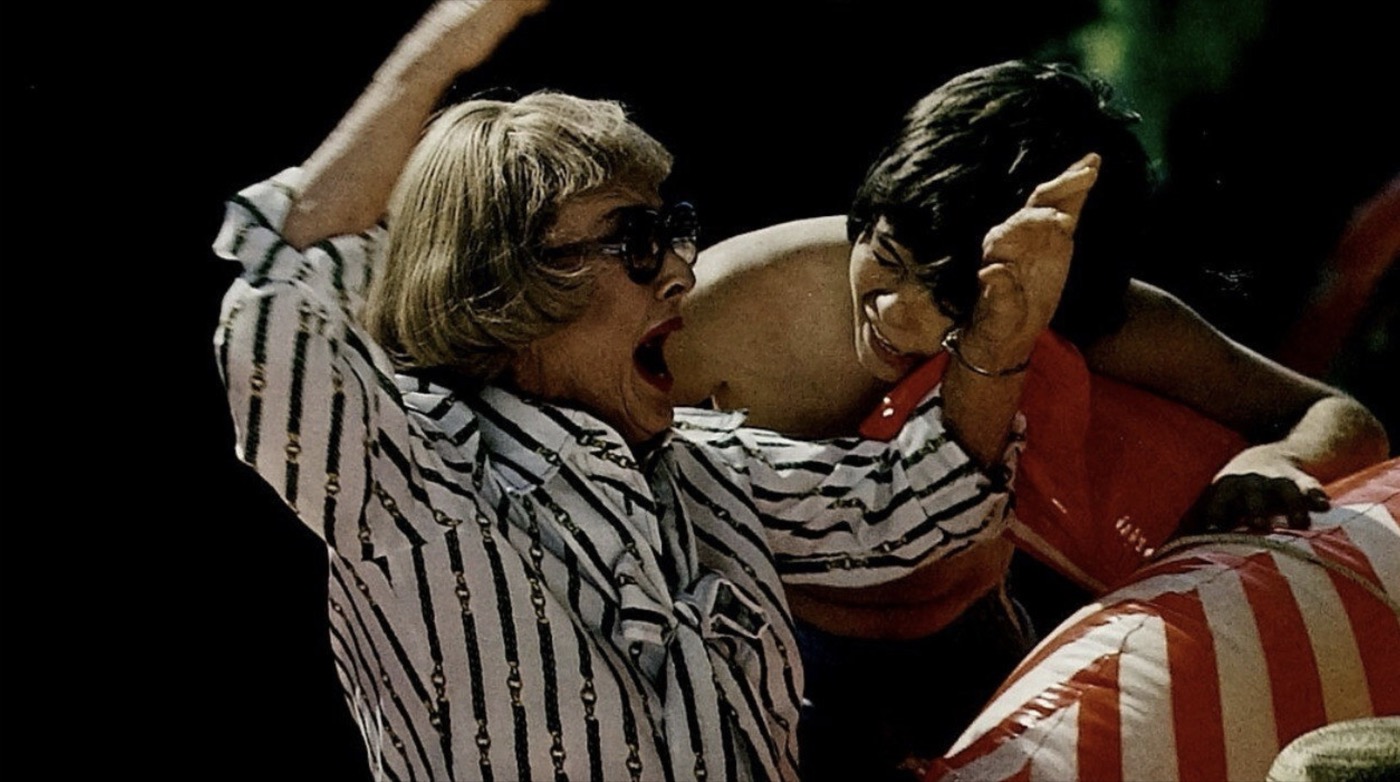
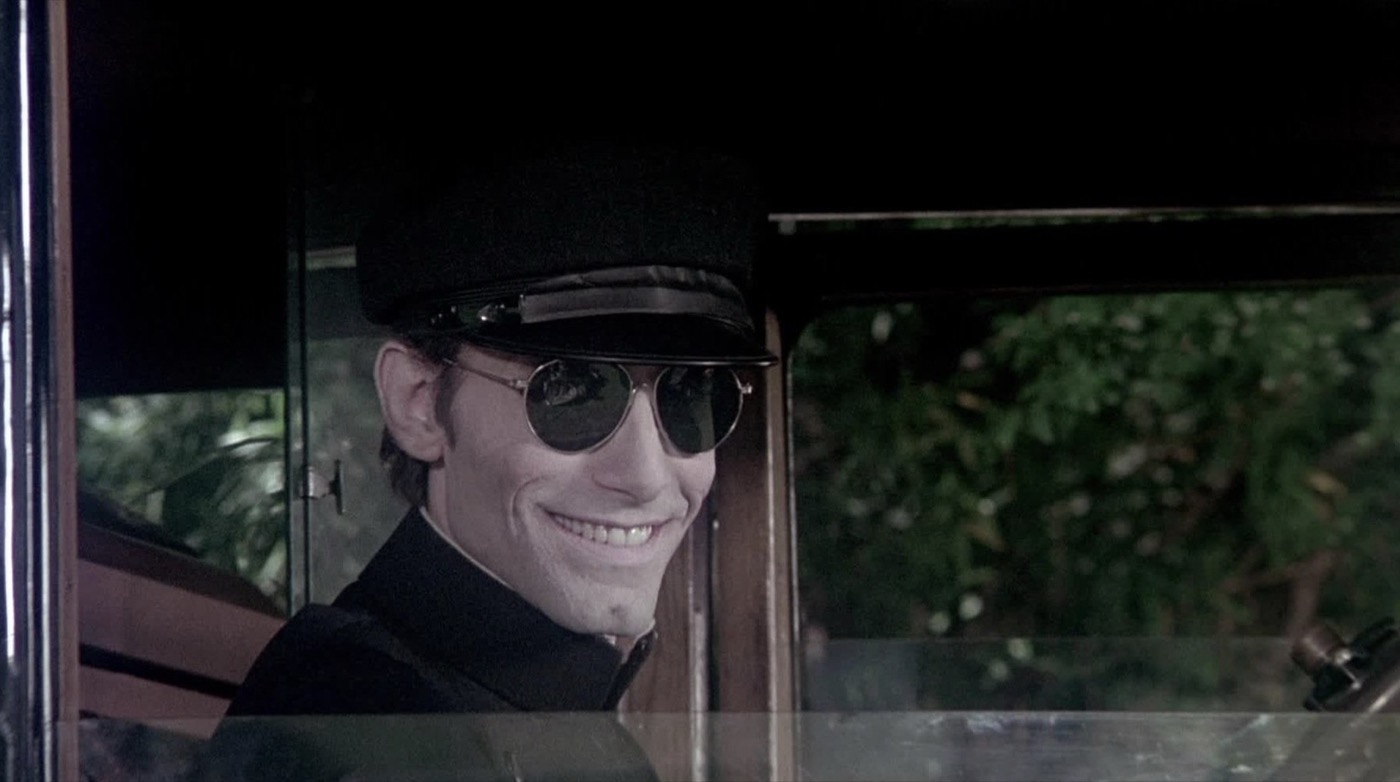
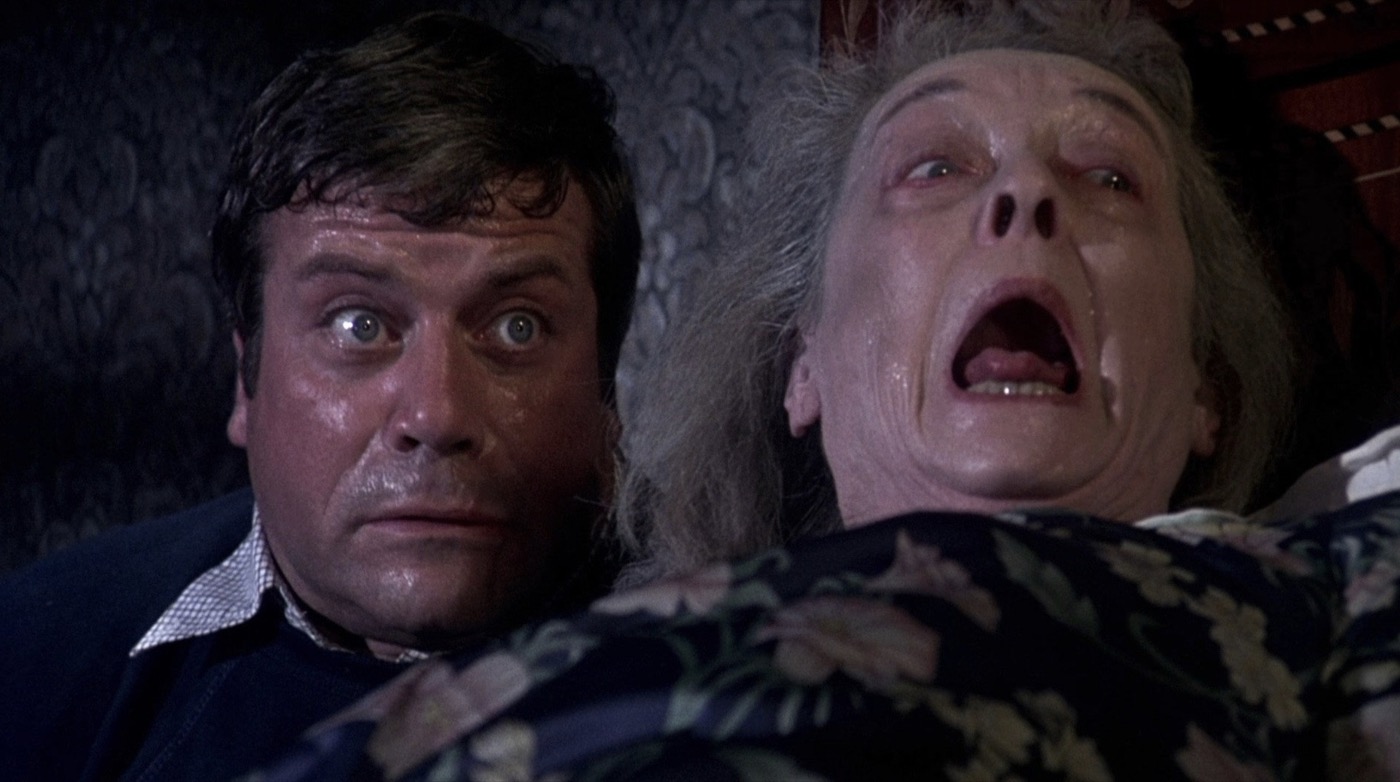
Ben is the man in charge, initially resisting the siren call because he thinks the arrangement is too good to be true. Paying $900 for a summer holiday home that requires cleaning, maintenance, and feeding an infirm elder is hardly a bargain. Reed suffers from the same problem as Nicholson: he seems on edge before anything supernatural even happens. This dad is one step away from a blistering rage in every family scene. His nightmare of a smiling chauffeur (Anthony James) sends Reed into an eye-bulging, cheek-wobbling panic, transforming him into the house’s biggest threat through his scenery-chewing performance. The story even attempts to restrain him in a catatonic state, which lasts all of two minutes before Reed gurns his way out of his chair.
Ben is not an addict like Jack Torrance, though Nicholson could easily have been playing Reed. Arguably more memorable than the film itself was its promotional tour. Appearing on The Tonight Show, Reed—already notorious for his volatile behaviour—clashed with Shelley Winters. Growing agitated by her interruptions, he shouted at her to shut up before unleashing a fiery rant against women’s liberation. This earned him a free drink, courtesy of Winters pouring it over his head. Co-star Bette Davis never resorted to that, though she certainly hated “that man”, as she exclusively referred to him. “Possibly one of the most loathsome human beings I have ever had the misfortune of meeting,” Davis said of the actor, who bellowed Irish folk songs and rode the food trolley down their hotel corridors.
All this is to say that Reed and Davis do share a camaraderie on screen that belies their off-screen squabbling. The moments between Marian and Aunt Elizabeth are sweet, serving as a nice supporting role for Davis in one of her increasingly frequent “elderly coot” appearances.
“A talented cast was sacrificed to this slop. And the movie even has Artistic Pretensions! The photography is consciously arty, and the dialog is fiercely elliptic, and the filmmakers didn’t even have the courage to approach their material as the silly trash it is.” —Roger Ebert, critic.
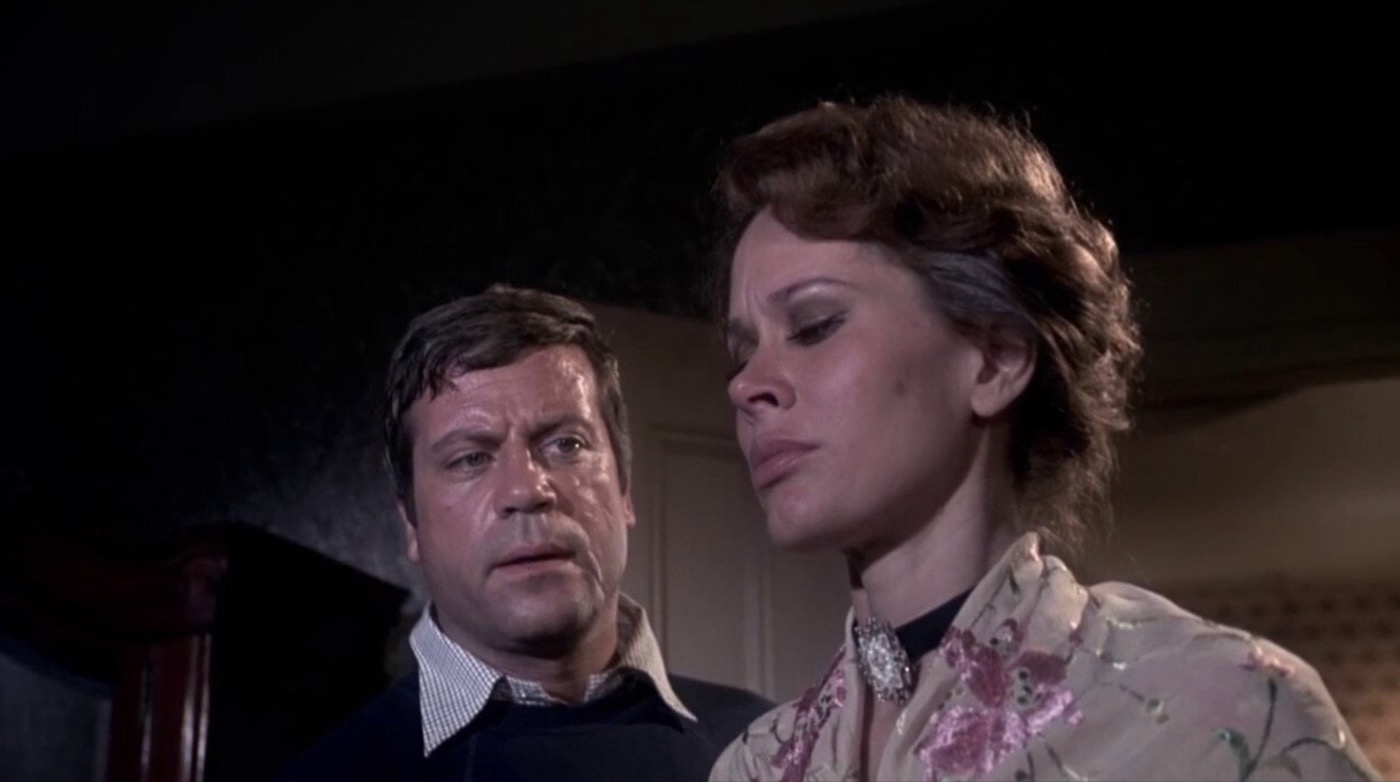
In another comparison to The Shining, both the daily maintenance of the hotel and a bad case of writer’s block distract Jack Torrance from the issue of ghosts. Nobody in the Allardyce house, however, has much else to do other than notice its strange occurrences. No subtlety is afforded to an attentive audience. When it takes so many incidents for this family to finally take action, it feels as though Curtis is hitting us over the head.
A strong moment in the shift from happy family to horror victims occurs during a pool scene with Ben and Davey splashing about. Reed’s reddening, contorted grimace as he holds his son under water for a moment too long is uncomfortable in its unrestrained intensity. One might wonder how the film could possibly recover after a child has to draw blood by striking his own father. Yet, it simply fades to night, and everyone goes to sleep. At the very least, Ben wakes in a cold sweat, muttering, “I wanted to hurt him, do you understand that? I wanted to hurt him!”
Surely things cannot return to normality after a ghoulish pallbearer launches coffins at elderly ladies? Yet the house inexplicably allows them to leave for a standard funeral. Later, Ben drags his child through a storm, repeatedly ramming their car into a downed tree—only for a doctor to make a house call on Davey, who is sound asleep once again! Not knowing when a film will end is not inherently bad, but the sheer frequency with which this story resets grows maddening. Davey nearly drowning a second time reverts Marian into a perfectly panicked mother and snaps Ben out of his two-minute catatonia. If this device is meant to create the illusion that the family can overcome the supernatural threat, the resolution feels entirely unearned.
While I rather enjoyed the downbeat ending on a first viewing, it now causes frustration. These constant resets render our leads foolish. Under no circumstances would Ben ever allow his wife back into the house after finally breaking her obsession. Her blasé decision to re-enter one last time ought to be a glaring red flag. Ben forgets that he himself suspected something was amiss with the old woman upstairs, yet both wind up visiting her anyway. The violent finale is so bombastic and mean-spirited that it feels like a precursor to the “Dead Teenager” slasher sub-genre, where one actively roots for these idiots to die after returning to danger so many times.
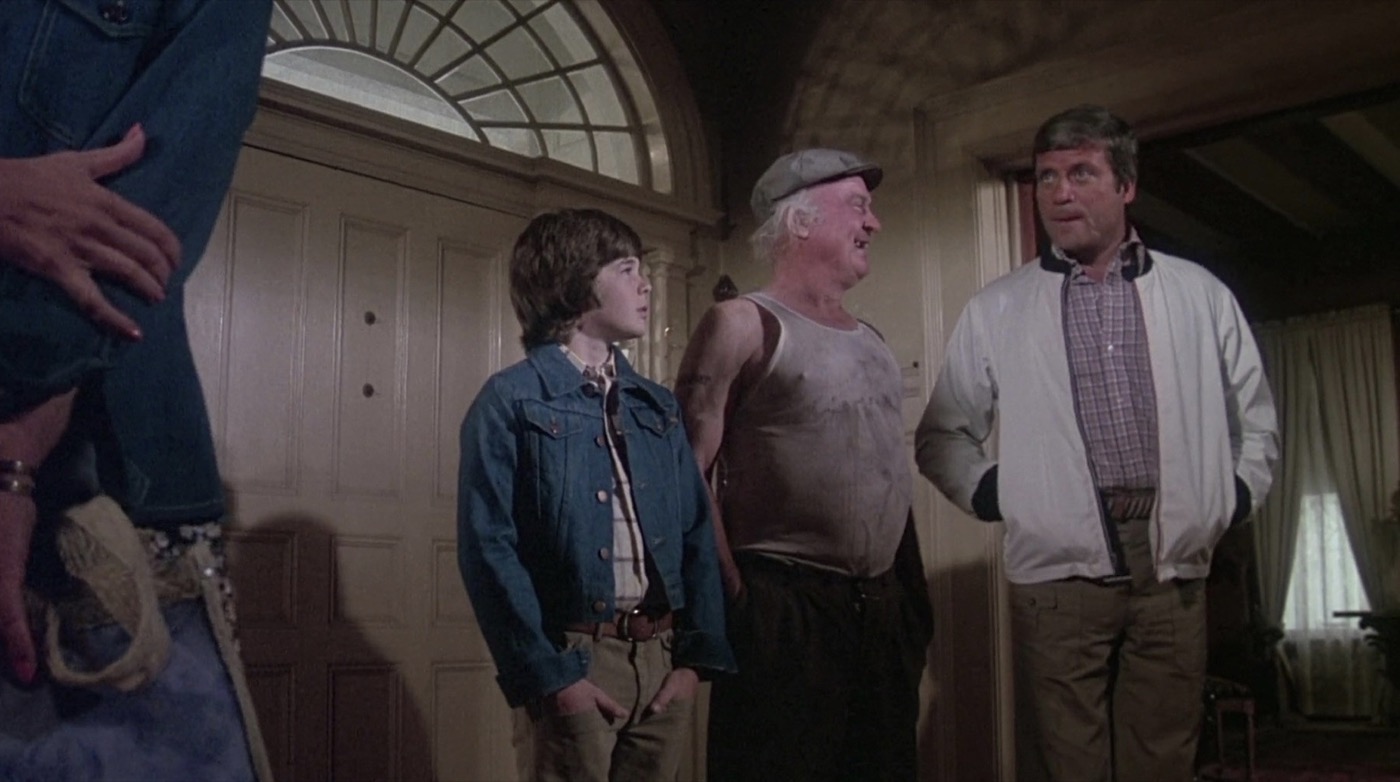
Writing for Horror Obsessive, the critic known as ‘S’ highlights the then-shocking nastiness: “Davey doesn’t need to be manipulated because he’s already entirely under his parents’ control”. Despite Ben harbouring childhood trauma, there is no such psychological depth given to his boy; the house simply tortures Davey with gas leaks and falling chimneys.”He’s ripe for the taking, the low-hanging fruit of the family. This is why ‘children are good for the place’—they’re simply the easiest to harm.” The boy eventually becomes annoying due to a complete lack of personality. Davey is little more than a cheap plot device and an obstacle for the parents to wrangle with, in stark contrast to Danny (Danny Lloyd), who possesses the titular “shining”.
Nevertheless, the film’s societal anxieties reach beyond the nuclear family. More classic haunted house stories feature unlucky protagonists inheriting property from deceased relatives. The Torrances and the Rolfs, by contrast, are both seeking a temporary getaway from the mundanity of working-class life. One advantage Burnt Offerings holds over The Shining is that while the Torrances never aspired to be hoteliers, the Allardyce estate offers the Rolfs an escapist fantasy of wealthy living. The Rolfs could never afford a place like this ordinarily, precisely because they are decent, ordinary people. The false promise that blood, sweat, and tears can earn a place to call one’s own merely serves up the lower-middle class for the Allardyces to profit from. In the end, perhaps the latest Mrs Allardyce is sitting pretty up in that attic, with the house so lovingly restored. She paid a little more than $900 to keep it—and even then, only until the next unfortunate family arrives.
Burnt Offerings never quite restored itself to full cinematic glory. Opening to a limited theatrical release, United Artists expanded its run two months later, reaching number one at the US box office over its opening weekend. Yet that triumph owed more to a quiet release schedule than genuine popularity, as the film earned only $1.56M against a $2M budget. Today, the Dunsmuir House stands exactly as it did 50 years ago—now a designated landmark on the US National Register of Historic Places. It has achieved immortality without needing to feed on the weddings, receptions, corporate gatherings, and historical reenactments hosted there. One wonders how many of those guests know that this forgotten horror film was once shot within those very walls.
USA • ITALY | 1976 | 116 MINUTES | 1.85:1 | COLOUR | ENGLISH

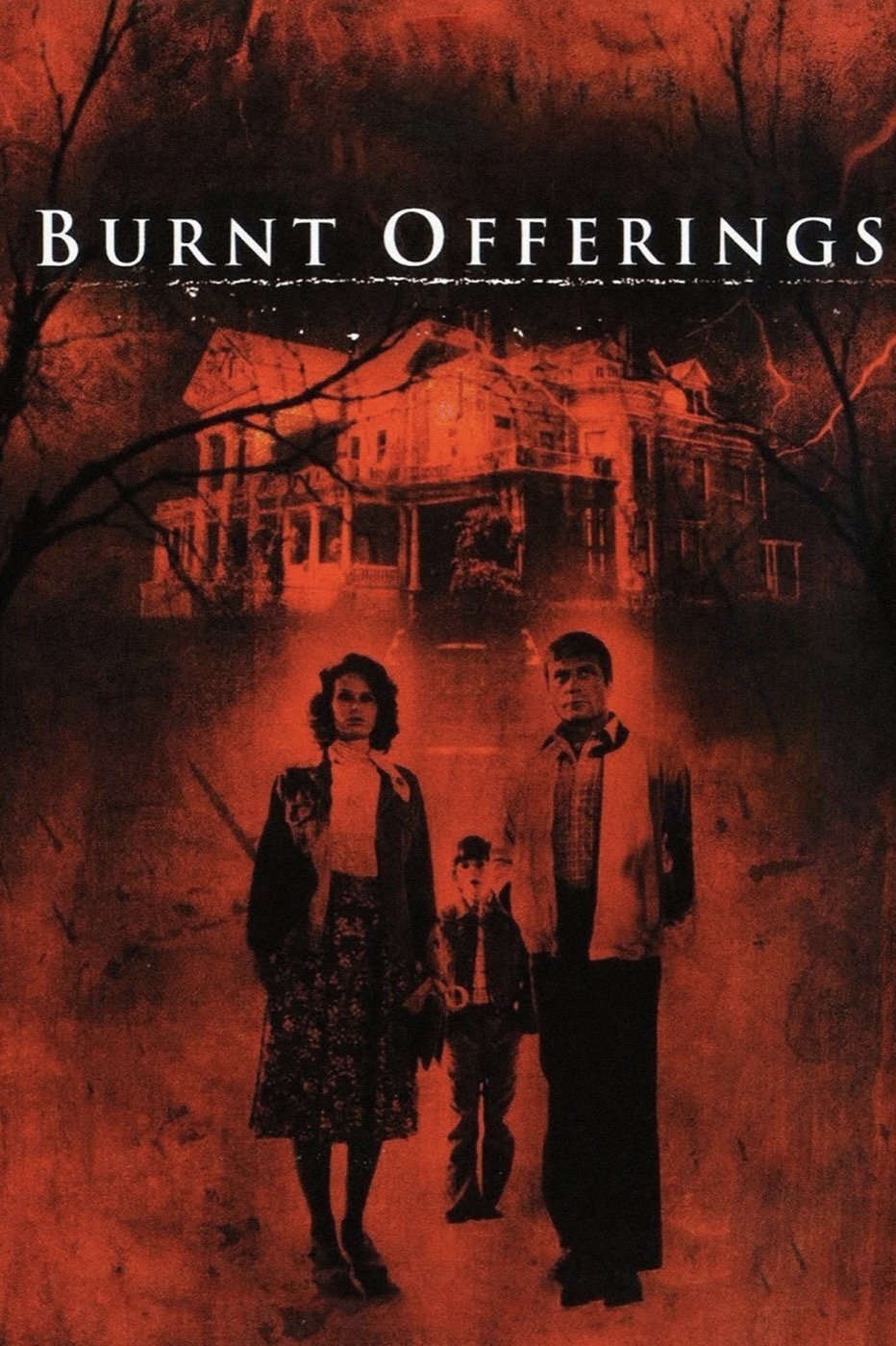
director: Dan Curtis.
writers: Dan Curtis & William F. Nolan (based on the 1973 novel by Robert Marasco).
starring: Karen Black, Oliver Reed, Lee H. Montgomery, Bette Davis, Burgess Meredith, Eileen Hackert, Dub Taylor, Anthony James & Jim Myers.