RISE OF THE PLANET OF THE APES (2011)
A substance designed to help the brain repair itself gives advanced intelligence to a chimpanzee who leads an ape uprising.


A substance designed to help the brain repair itself gives advanced intelligence to a chimpanzee who leads an ape uprising.
The most important thing Caesar (Andy Serkis) learns from Will Rodman (James Franco) isn’t language. It’s disobedience. Will teaches the young chimpanzee to communicate, solve problems and control his impulses. Yet Caesar’s deeper education comes through observation. He watches Will refuse almost every limit placed before him: biological decline, corporate procedure, scientific caution, legal authority and, eventually, Caesar’s own autonomy. Will believes superior knowledge gives him the right to intervene—and Caesar absorbs the lesson perfectly.
That’s the structure beneath Rise of the Planet of the Apes, Rupert Wyatt’s effective revival of a franchise that had already survived numerous sequels, television spin-offs and an unsuccessful remake. It’s usually described as an origin story or liberation narrative, but revolt is merely the visible result. The film is really about a failed education—what humans transmit before they’ve learnt to govern themselves.
Will develops the experimental ALZ-112 while trying to reverse the Alzheimer’s disease consuming his father, Charles Rodman (John Lithgow). The premise creates an elegant exchange: as Charles loses memory, language and autonomy, Caesar acquires them. One mind disappears just as another comes into being. Will observes both processes scientifically, yet struggles to recognise their ethical implications.
That blindness shapes his relationship with Caesar. He treats him like a son inside the house, but outside Caesar must wear a leash. During an outing, Caesar sees a dog restrained by its owner and looks down at his own collar. Will tells him he isn’t a pet, but the physical evidence suggests otherwise. His affection is genuine; the problem is that love and possession have become inseparable.
Caesar can be a child at home and an animal in public. The arrangement survives only as long as he accepts both roles.
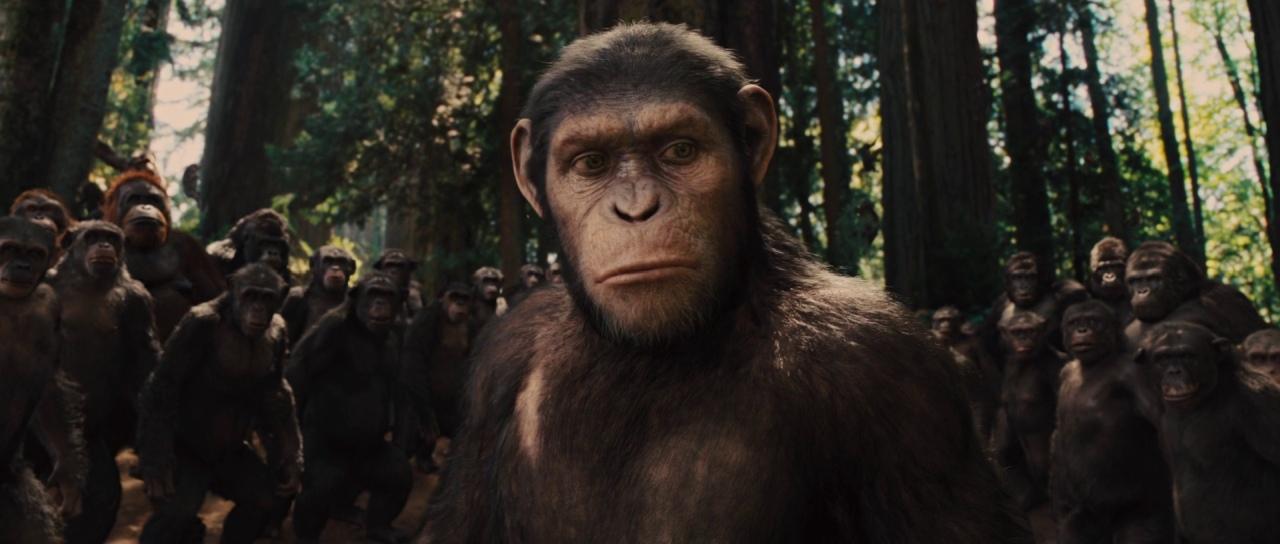
This fracture is central to Andy Serkis’s performance. Working alongside Weta Digital’s animators and visual-effects artists, Serkis builds Caesar’s interior life through posture, hesitation and observation: the tentative movements of an infant, the upright confidence learnt from humans, the lowered body of an animal ordered into submission, and eventually the controlled stillness of a leader.
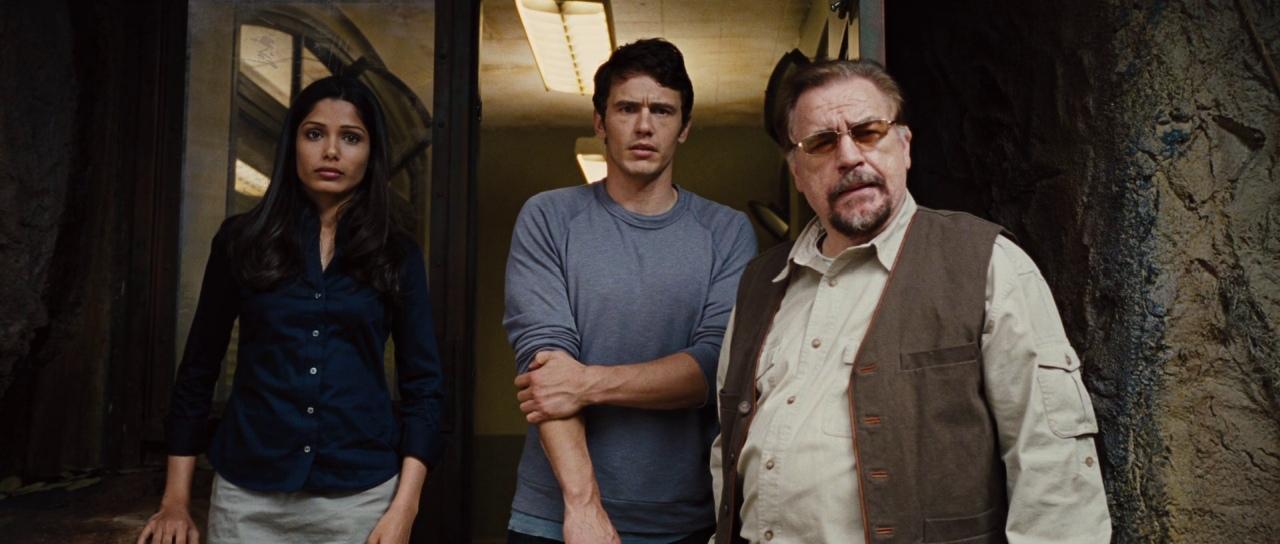
The screenplay is less precise about the scale of Caesar’s intelligence. As a child, he can already sign, play chess, interpret complex relationships and read human behaviour with extraordinary sophistication. He appears close to, or beyond, an exceptionally gifted human before his later exposure to ALZ-113. That second enhancement ought to create a mind almost impossible for those around him to anticipate. Instead, the film expresses super-intelligence through familiar tropes: calculation, strategic ability, authority and speech.
Caesar becomes more powerful, but no more conceptually alien.
The film never quite makes enhanced intelligence a stable condition. It treats speech as intelligence made audible, even though understanding language and physically producing human words are entirely separate capacities. Later, newly enhanced apes smash through upper-floor windows rather than search for safer exits. Visually, the sequence works: shattered glass, falling bodies and sudden movement give the escape a liberating energy. Logically, it asks us to suspend the very intelligence the film has just granted them.
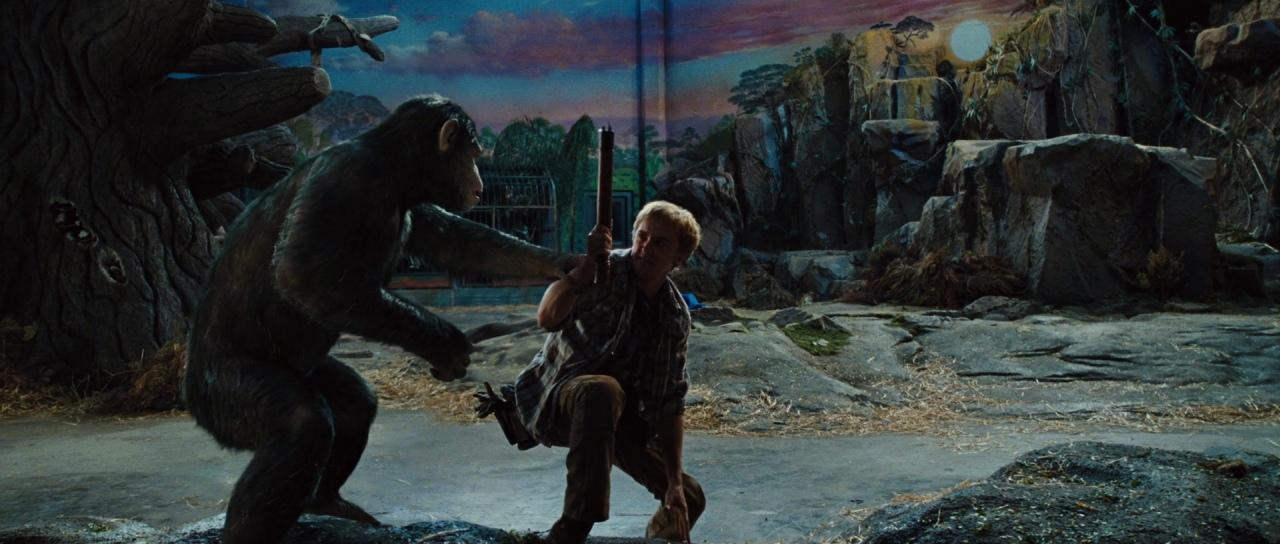
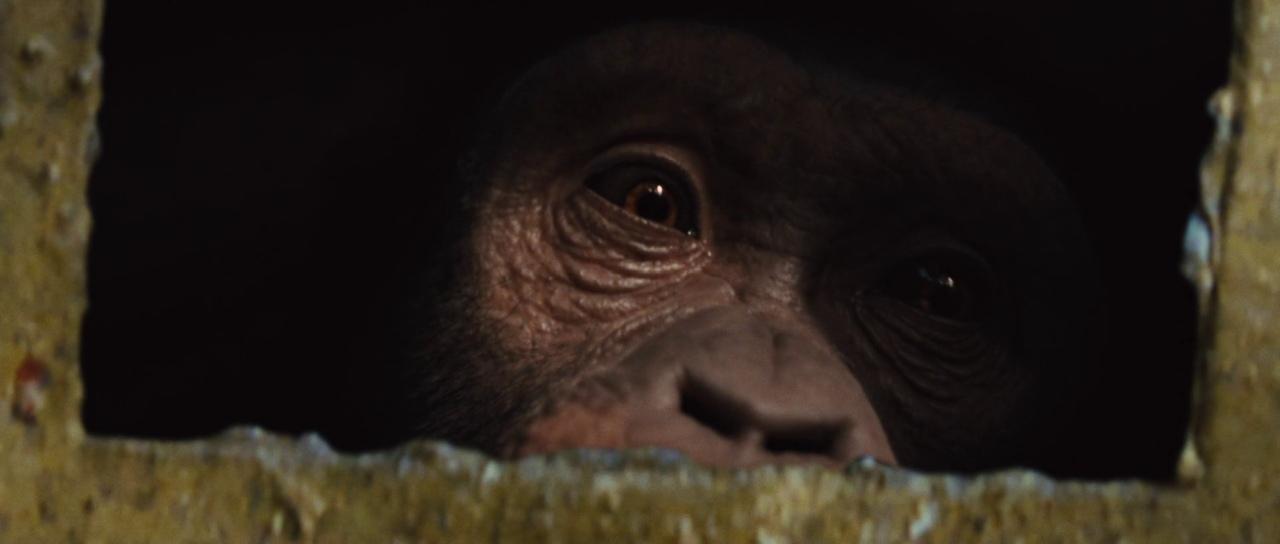
These inconsistencies rarely spoil the immediate experience because Wyatt steadily shifts our identification from Will to Caesar. Early scenes treat Caesar as the result of an experiment and the object of Will’s affection. Gradually, the film studies spaces from Caesar’s perspective: the attic window through which he observes the outside world, the glass separating animals from humans, and the primate shelter where he must decipher an unfamiliar social order.
The shelter doesn’t reconnect Caesar with a natural community. The other apes don’t share his upbringing or intelligence, responding to him only through intimidation and hierarchy. He doesn’t simply discover ‘his own kind’. He must construct a group from individuals who initially recognise nothing but force and rank.
This is where the film becomes more troubling than its language of emancipation suggests. Caesar doesn’t use his intelligence to invent a new social structure. He enters an existing hierarchy and learns to control it.
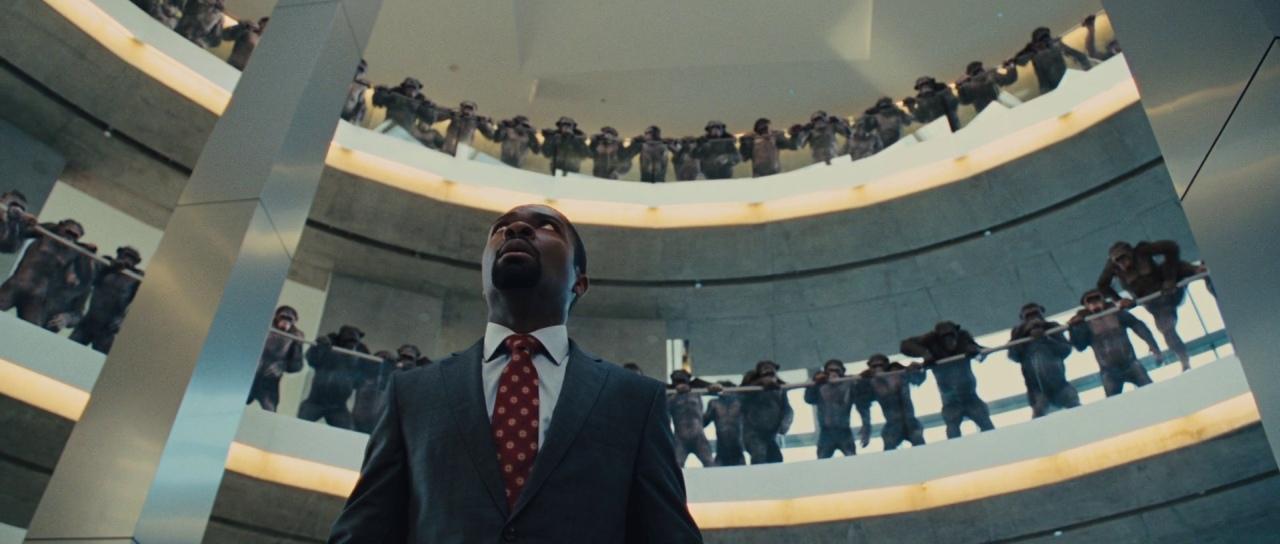
Rocket rules through brute strength. Caesar wins Maurice’s trust, outmanoeuvres his rival, forms alliances and gains control of the resource capable of transforming the entire group. Intelligence becomes more than a gift to be shared: it’s the means through which Caesar reorganises the other apes around his leadership. Their transformation doesn’t abolish his authority; it confirms it.
The film condemns humans for subordinating creatures considered less intelligent while legitimising Caesar through his own cognitive superiority. The revolution changes the ruler, but not the structure of rule.
Caesar turns shared captivity into a collective identity, gives that identity an external opponent and becomes the figure through whom the group begins to understand itself as a people. What develops resembles a species nationalism, built on biological similarity, common suffering, territory and opposition to humanity.
That doesn’t make Caesar equivalent to his oppressors. Humans imprison, experiment upon, humiliate and kill animals that initially pose no threat to them. Caesar’s resistance stems from captivity, and his purpose is freedom rather than domination for its own sake.
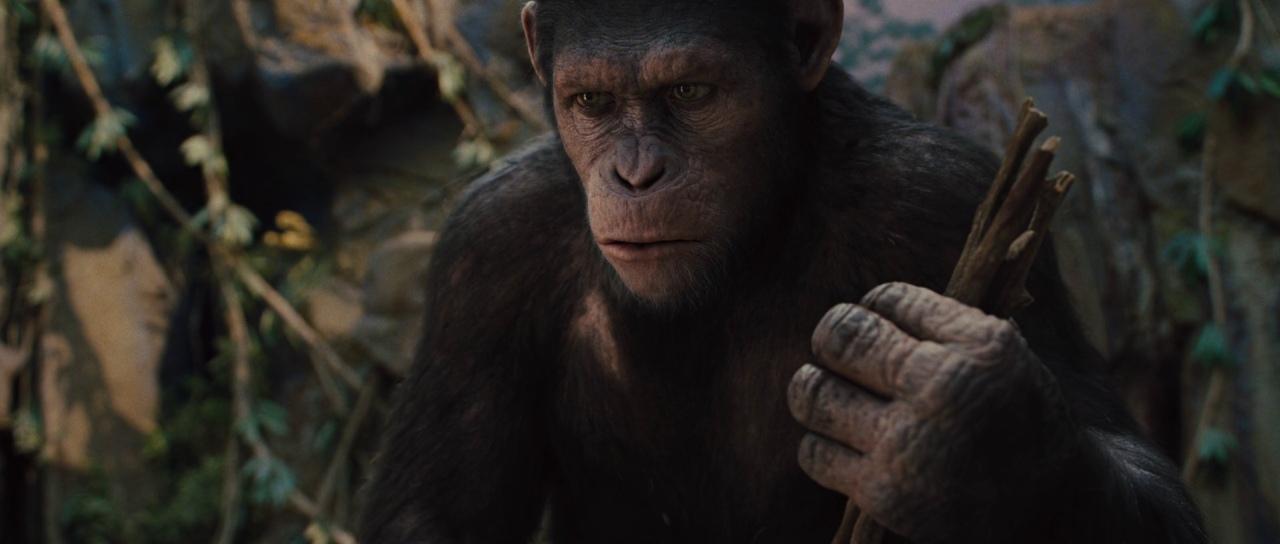
Yet even Caesar’s moral superiority is partly manufactured by the film. The apes’ physical power is toned down whenever realistic violence would compromise the exhilaration of their rebellion. At close range, their attacks would cause catastrophic injuries; instead, human bodies survive because the uprising must remain legible as liberation rather than slaughter.
The filmmakers manipulate our allegiance by controlling who is allowed to die. Civilians are largely spared, while lethal violence falls on abusers or armed figures already attacking the apes. Human deaths register as punishment, accident or self-defence rather than the indiscriminate consequence of revolt, while the apes’ own losses are framed as sacrifice. The audience gets the emotional force of an insurrection without confronting the casualties that such physical power would realistically produce.
Caesar becomes the authority who resolves this tension. The other apes possess the force, but he decides when and how it may be used. His intelligence doesn’t dismantle hierarchy. It legitimises a new one through strategy, discipline and a moral restraint the film has carefully engineered.
In this respect, Caesar isn’t Will’s opposite. He carries Will’s method to its logical conclusion.
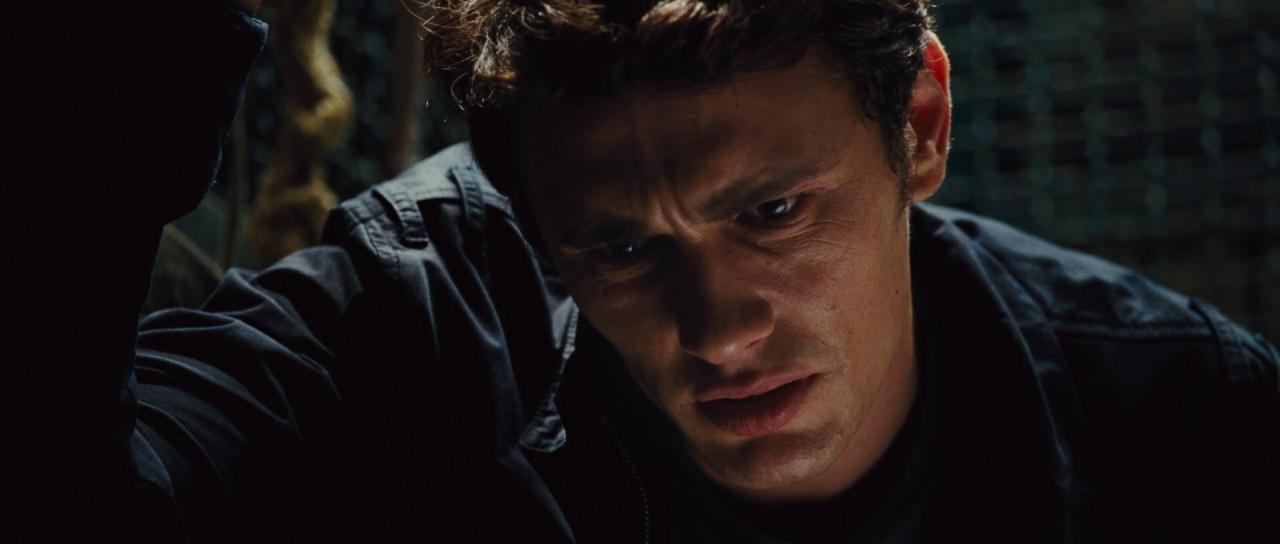
Will administers an unapproved treatment to his father, continues abandoned research in private and repeatedly attempts to determine Caesar’s future. His motives are understandable, but his method remains consistent: personal conviction becomes authority over another life.
He teaches Caesar freedom while deciding where he lives. He teaches restraint while demonstrating that rules may be broken whenever they obstruct an urgent desire. He regards himself as Caesar’s father while resisting the child’s right to separate.
The Alzheimer’s narrative therefore becomes more than emotional motivation for the experiment. Will tries to preserve memory while failing to consider what memory transmits. He can restore cognitive function, but he can’t transform the habits passed from one generation to another. His scientific achievement continually outruns his ethical education.
The human characters surrounding this relationship are far more schematic. Caroline Aranha (Freida Pinto) functions largely as Will’s conscience. Dodge Landon (Tom Felton) is sadism without complication, while Steven Jacobs (David Oyelowo) embodies corporate greed so completely that institutional irresponsibility is concentrated in a convenient antagonist.
That simplification is clearest in the laboratory accident. During the ALZ-113 test, Franklin (Tyler Labine) has his respirator displaced and is visibly exposed to the aerosol. He says he’s fine, and the laboratory effectively accepts his self-assessment. There’s no credible quarantine, medical escalation or institutional response. Corporate suppression, personal concealment or a failed assessment could have made the breakdown plausible. Instead, the catastrophe begins because people trained to recognise the danger briefly act as if they can’t.
None of these problems prevents Rise of the Planet of the Apes from being a highly effective piece of popular cinema. Wyatt makes our identification with Caesar so complete that the emotional logic of his liberation often outruns the weaknesses of the premise. The shelter scenes have the clarity and tension of a prison drama, while Serkis gives Caesar the physical continuity that the screenplay’s treatment of intelligence sometimes lacks.
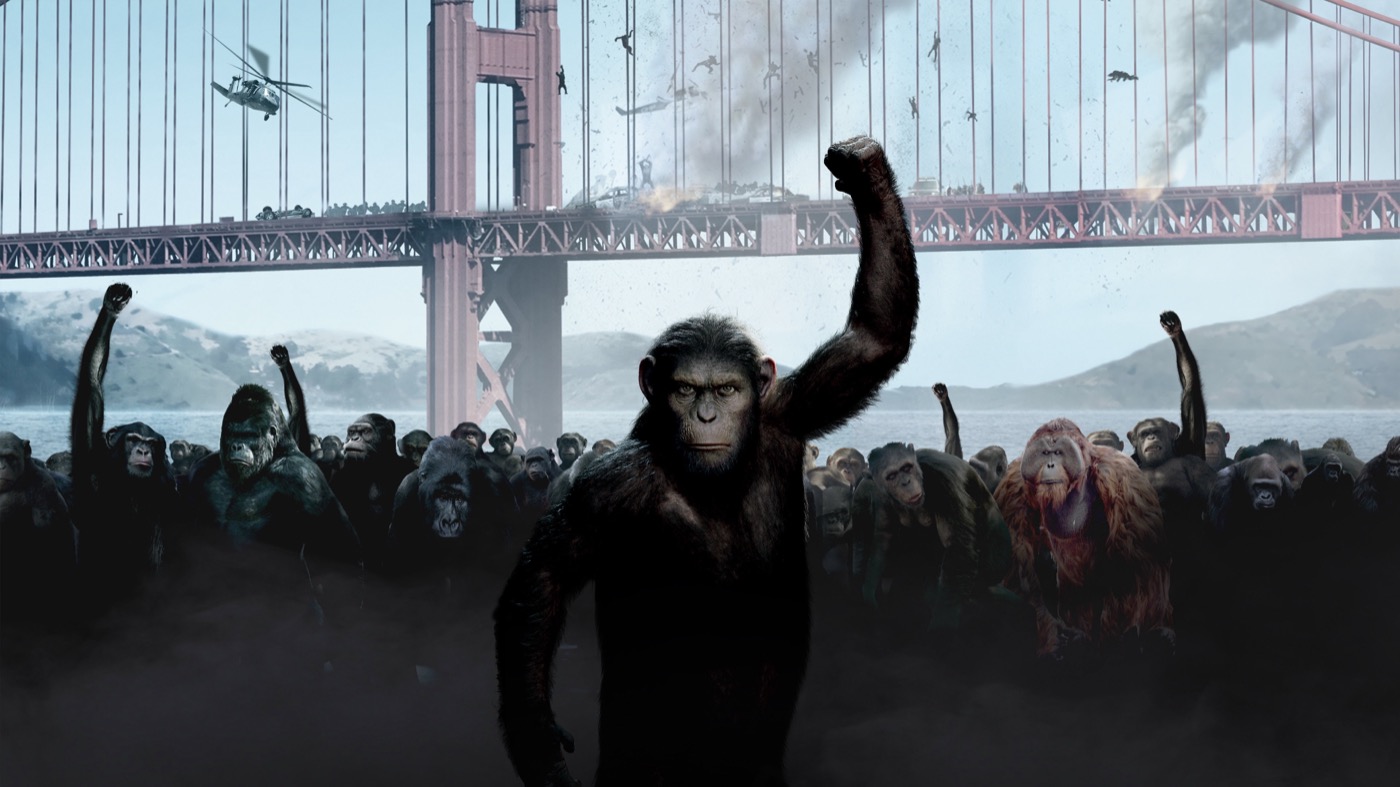
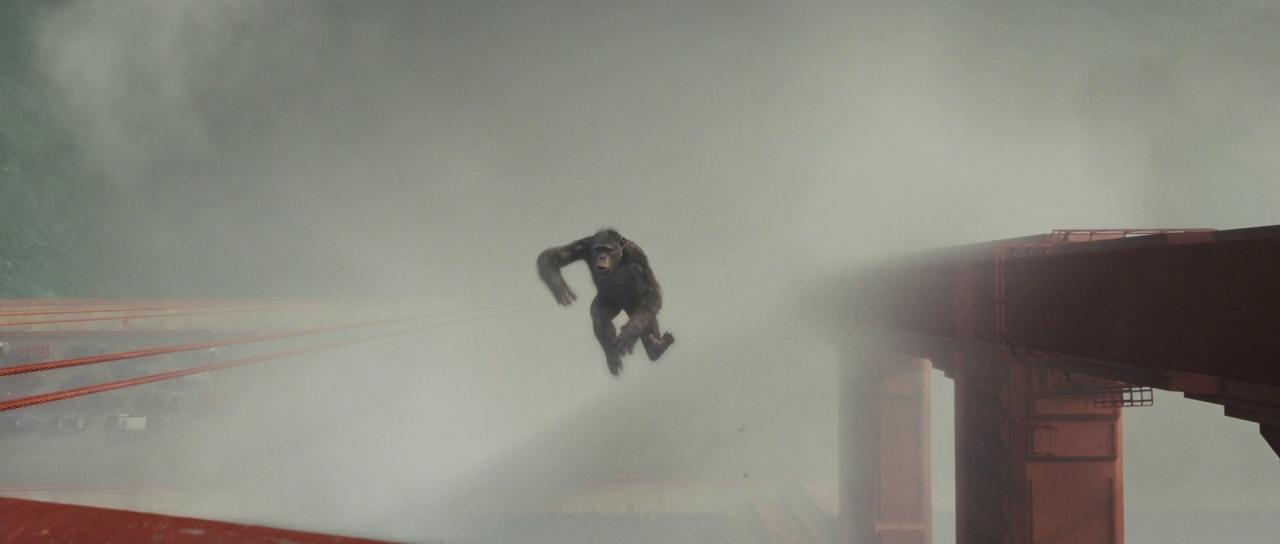
The large-scale action also remains unusually lucid. On the Golden Gate Bridge, geography, fog, machinery and the different physical abilities of the apes all become part of the strategy. The spectacle grows from Caesar’s developing authority instead of merely interrupting the story to display it.
We understand his loneliness, recognise the injustice of his captivity and experience the revolt from his side. The film makes us want him to win, and that emotional achievement shouldn’t be underestimated.
Yet the uprising achieves less than it first appears to. Caesar escapes human authority without escaping the political forms humanity has taught him: hierarchy, obedience, territory, leadership and collective identity organised against an enemy. Greater intelligence allows him to recognise captivity and resist it, but not to imagine an entirely different way of living together.
The drug gives Caesar a superior mind. Humans give him a politics. Neither produces a genuinely new stage of evolution.
USA • UK • CANADA | 2011 | 105 MINUTES | 2.39:1 | COLOUR | ENGLISH

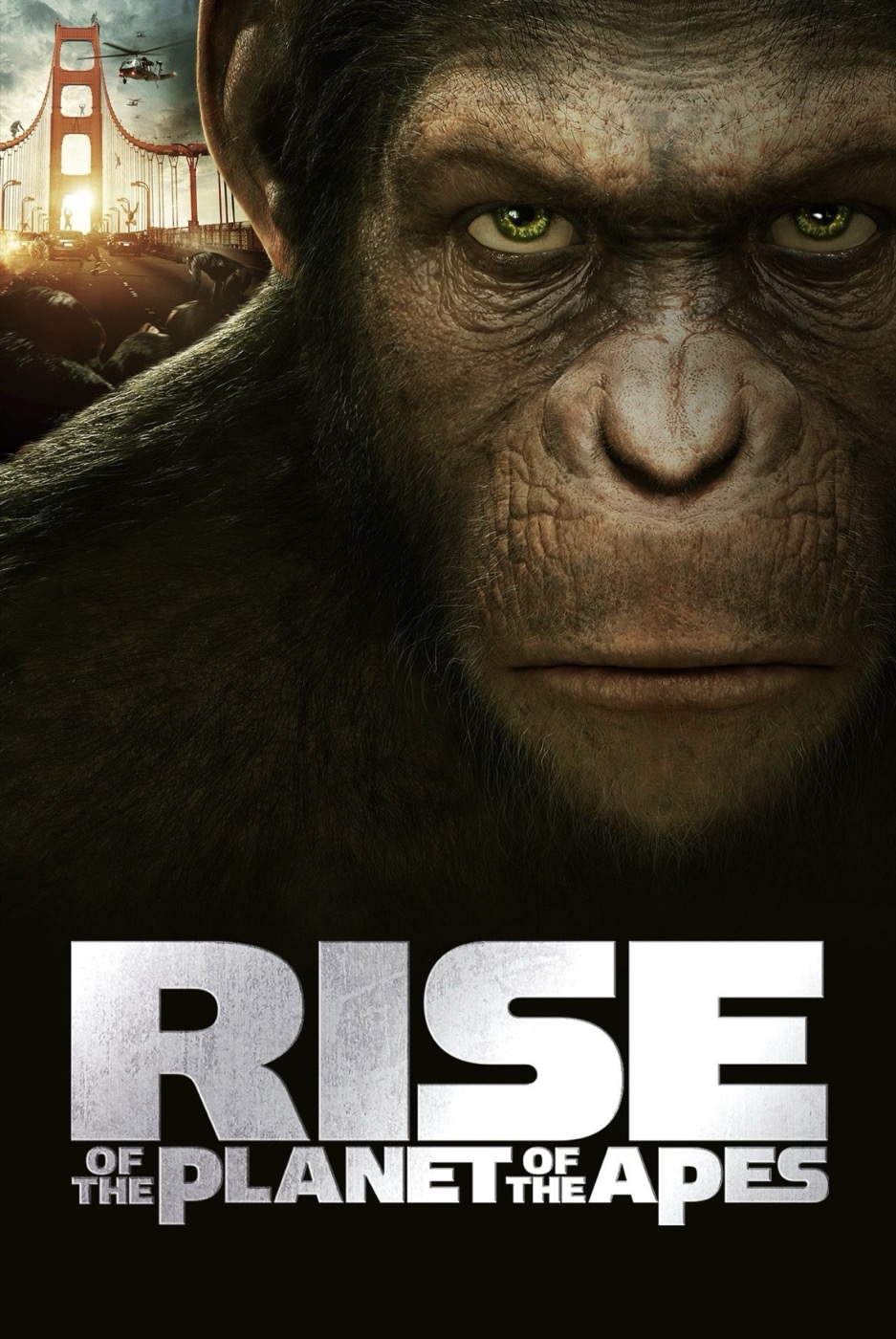
director: Rupert Wyatt.
writers: Rick Jaffa & Amanda Silver (based on the premise from ‘Planet of the Apes’ by Pierre Boulle).
starring: James Franco, Andy Serkis, Freida Pinto, John Lithgow, Brian Cox, Tom Felton, David Oyelowo, Tyler Labine & David Hewlett.