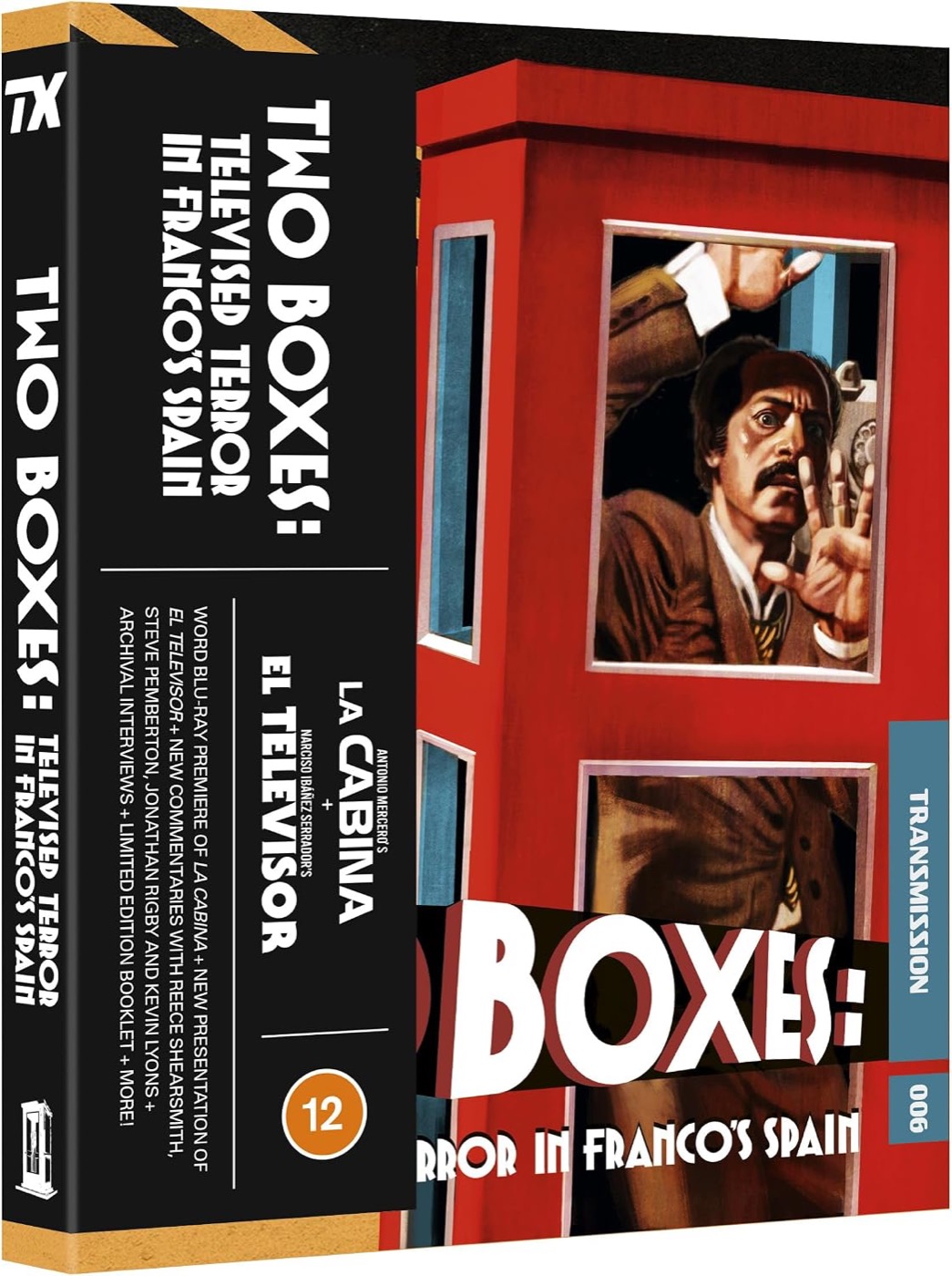
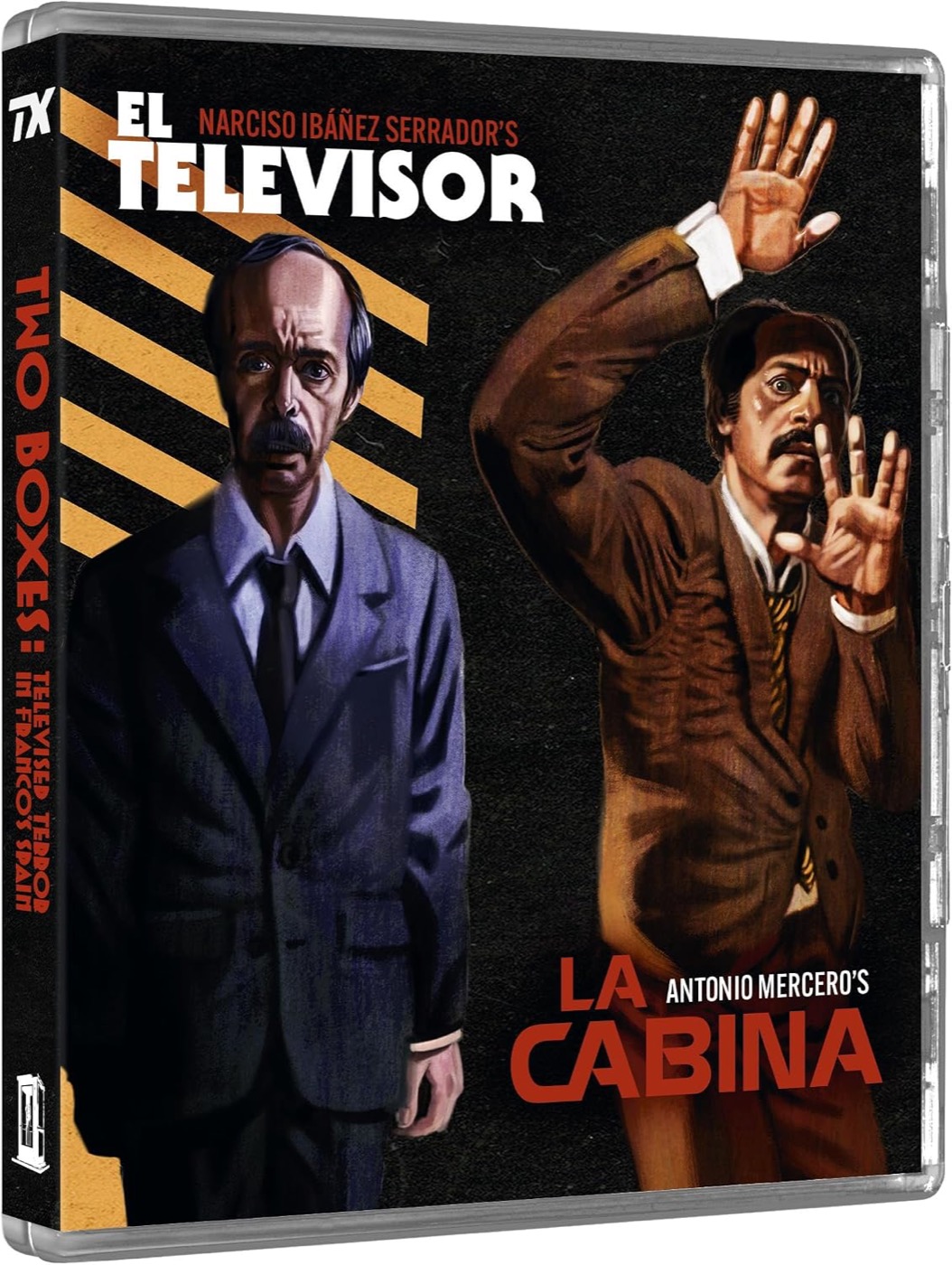
‘Two Boxes: Televised Terror in Franco’s Spain’ – La Cabina (1972) • El Televisor (1974)
After a man enters to make a phone call, he finds himself unable to leave… and a man becomes obsessed with his new TV.


After a man enters to make a phone call, he finds himself unable to leave… and a man becomes obsessed with his new TV.
These two short yet powerful films, La Cabina (1972) and El Televisor (1974), will be etched in the memories of anyone who saw them during their formative years. Occasional repeats on British television in the late 1970s and 1980s would’ve reinforced that lasting impression, but most viewers will only recall their disquieting dénouements—and probably confuse them with Roald Dahl’s Tales of the Unexpected (1979–1988). This limited edition from Radiance, presenting HD transfers of both films on Blu-ray for the first time, offers a welcome chance to revisit these two minor classics. Along with the accompanying bonus features, they’ll also appeal to a fresh audience of horror aficionados and anyone interested in the evolution of genre television, particularly within the context of their production in Franco’s Spain.
Despite strict censorship under the Franco regime and moral oversight by the Catholic Church, the horror genre—which had effectively been banned in Spain—suddenly boomed in the late 1960s and through much of the 1970s. The hit television series Historias para no dormir / Stories to Keep You Awake (1966–68), created by Narciso ‘Chicho’ Ibáñez Serrador (El Televisor), was primarily responsible for this sudden acceptance. This was consolidated by the same director’s feature debut, La residencia / The House That Screamed (1969). Indeed, the state relaxed its censorship considerably once it realised horror films could be made quickly and cheaply, bringing in foreign revenue.
Filmmakers still had to carefully avoid content that seemed critical of the church or state. Films couldn’t portray Franco’s Spain negatively, but metaphors framed within fantasy slipped past the censors. The repression of sexuality under Catholic control could be explored through metaphorical monsters like vampires and werewolves. State censors tended to be lenient towards films dealing with mystery, imagination, and the supernatural—provided the story was set in another time and place without directly referencing Spain, its contemporary society, or, above all, its government.
Both films presented here are very much of their time, exploring the fear of modernity and consumerism in the rapidly changing socio-economic environment of 1970s Spain. Yet they also tackle timeless themes, bringing parenting—specifically fatherhood—to the fore, alongside the disruption of identity caused by constructed representations and other propaganda disseminated across new media.
A man tries to use a new payphone but finds himself helplessly trapped when its door refused to open.
Antonio Mercero was already becoming a household name in Spain for his work on Crónicas de un pueblo / Chronicles of a Village (1971–74), a popular television series initially commissioned as a pro-Franco propaganda vehicle to promote post-war charters setting out citizens’ rights alongside their legal limitations. However, with Mercero at the directorial helm, it became a neo-realist soap woven with a subtle strand of satire and gentle comedy amidst life in a fictionalised Spanish village.
This was his first time directing for the small screen and he was a surprising choice, given that he’d already fallen foul of political censorship, which had shut down what would’ve been his debut feature. In the early 1960s, after a handful of well-received shorts, he’d begun developing Está lloviendo y te quiero / It’s Raining and I Love You, a generational saga exploring Basque regional identity and post-war tensions within Spain. Deemed contrary to Franco’s directives, no producer would back the project, making it impossible to finance. Instead, Se necesita chico / Boy Needed (1963)—about the often amusing misadventures of a delivery boy—became his feature debut.
In its first year, Crónicas de un pueblo won three broadcasting awards for Radiotelevisión Española (RTVE). The Spanish public broadcaster was actively seeking to expand its export market and asked Mercero to create something suitable as an entry for international competitions. Mercero knew he needed a simple yet strong premise that could be realised effectively on a respectable budget for a one-off television production. To make that budget stretch even further, he opted for the short film format—already proven popular after the runaway success of Historias para no dormir. For the story, he called upon José Luis Garci, who would go on to become one of Spain’s most respected writer-directors and, a decade later, helm the first Spanish movie to win the Academy Award for ‘Best Foreign Language Film’ with Volver a empezar / Starting Over (1982).
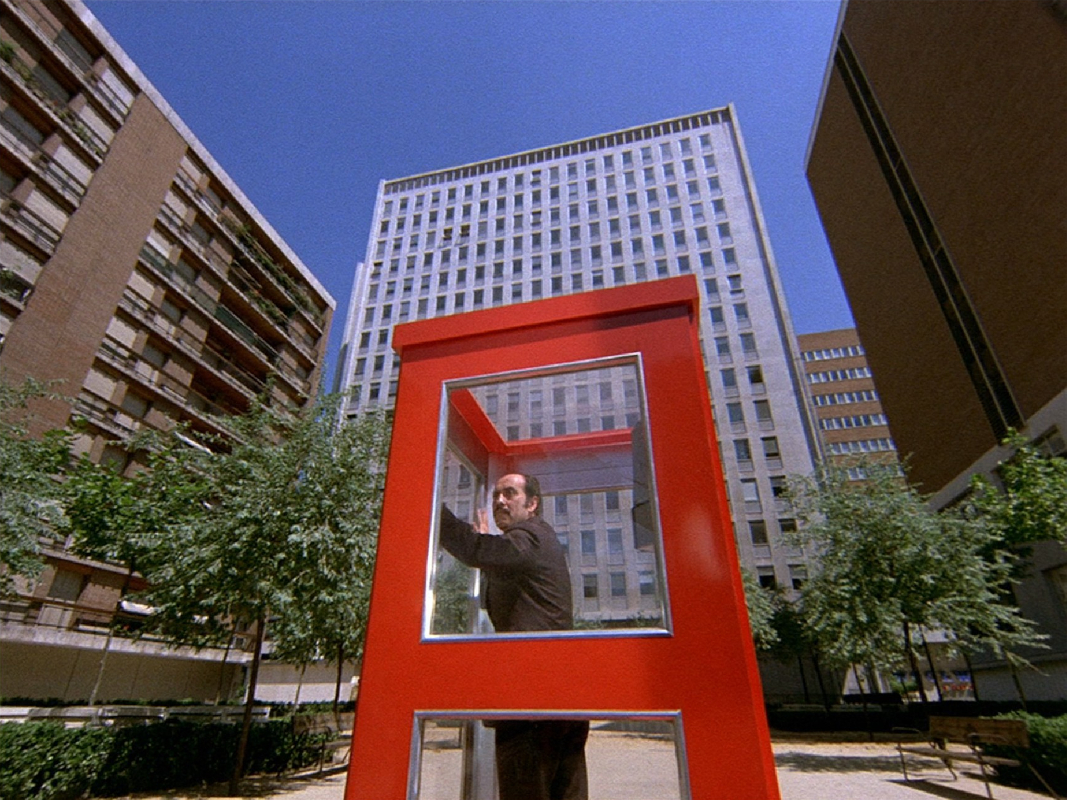
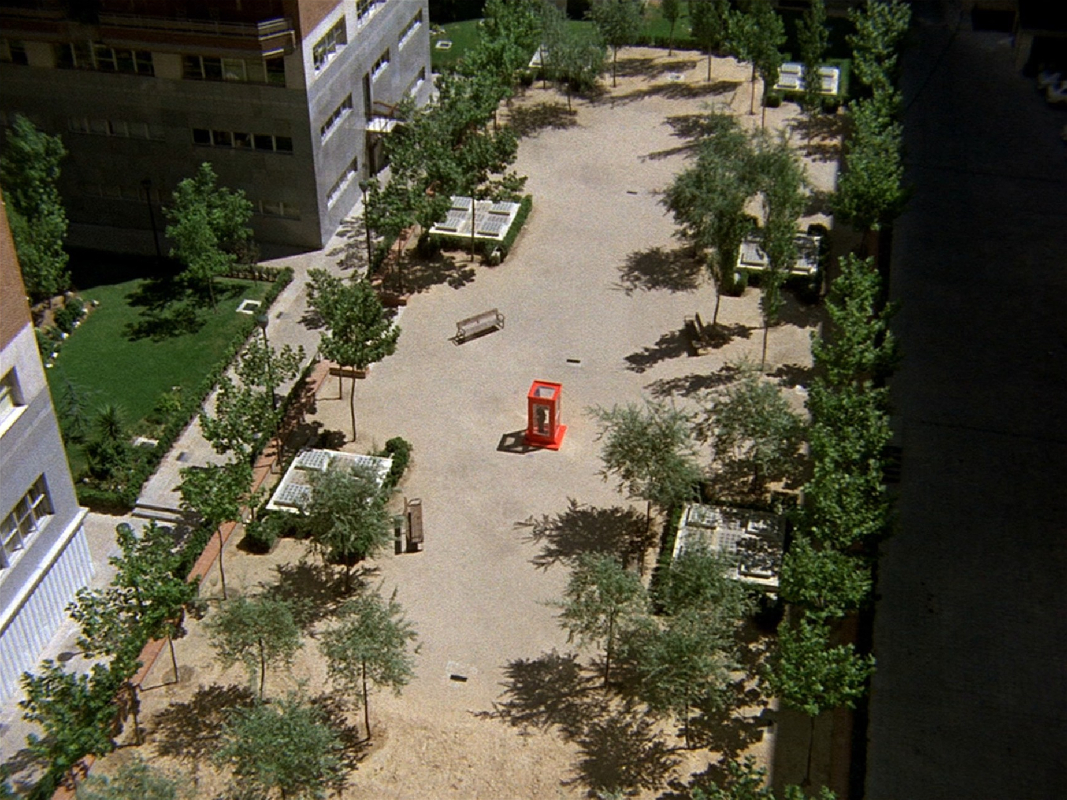
The result of this collaboration was La Cabina—a simple idea stretched to a chilling conclusion and executed with style and confidence. During the opening scene, a municipal truck delivers a new telephone box, and a crew of four men in anonymous overalls place it in the middle of a square, overlooked by residential high-rises. They do not connect any cables, and in their haste to leave, the truck door swings open while in motion—a significant detail easily dismissed on first viewing that prompts us to consider what doors may suggest. For example, a vehicle represents freedom and its doors are a safety feature, whereas a prison and its doors carry entirely different implications.
It’s overflowing with symbolism, which adds value to subsequent viewings. But what is Mercero trying to say here? Some of the metaphors are deliberately ambiguous, offering more than one interpretation. Operating under the scrutiny of Francoist censorship meant there couldn’t be any overt criticism of the regime. Yet to an outsider, a story about a man being ‘disappeared’ carries far more chilling socio-political connotations.
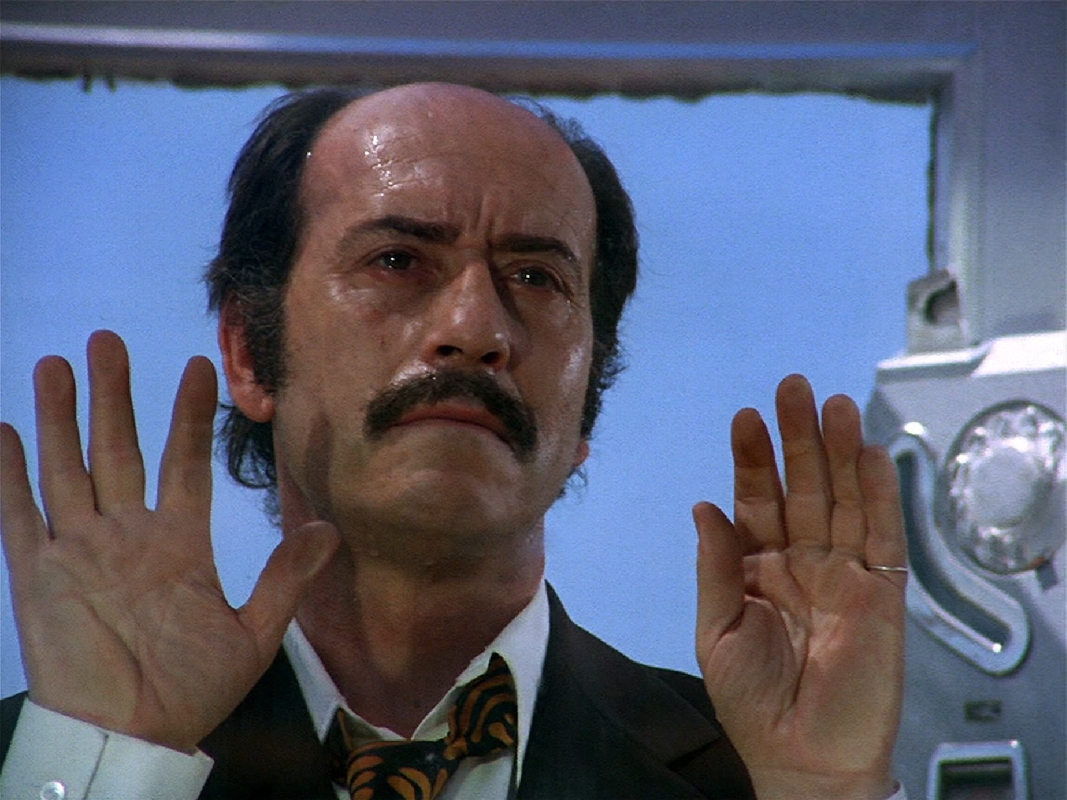
The ‘everyman’ in question (José Luis López Vázquez) is walking his young son to catch the school bus. The boy bounces his football, which ends up in the telephone booth standing with its door invitingly ajar. Excellent foley work indicates it’s a new ball—possibly a gift from his father, who urges him to stop playing with it and hurry for the bus. However, after waving him off, the father can no more resist the shiny new ‘toy’ in the middle of the square than his son could, and decides to try out the payphone. He’s disappointed to find it doesn’t function, and confounded when he cannot reopen the door.
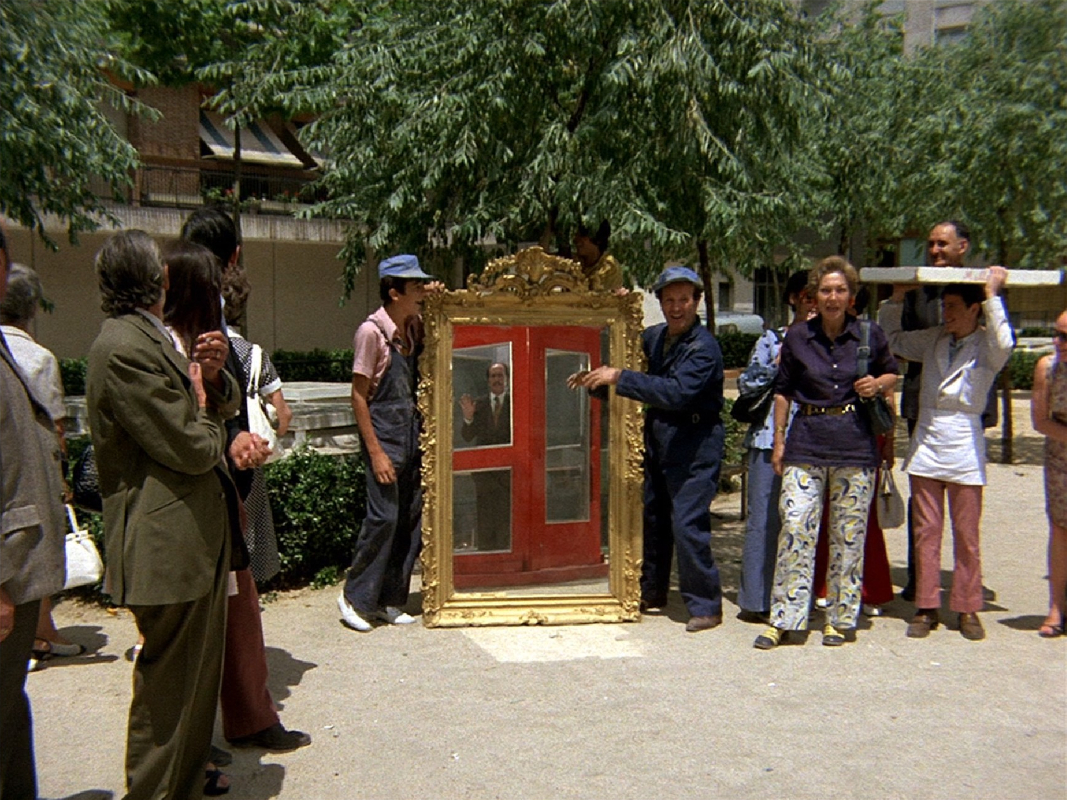
The first act plays out like a comedy in the style of Jacques Tati or Mr. Bean (1990-95), as a crowd of onlookers gathers. Some draw up chairs to knit, enjoying the entertainment as a succession of people try to help—first suggesting he call for assistance on the phone, before others search for a hidden latch or access to the hinges. Brute strength merely breaks off the handle, and the trapped man’s embarrassment begins to take on an edge of desperation. Comedy overstays its welcome, transitioning through satire towards psychological horror. Meaningful compositions frame the booth against an equally modernist tower block—a stack of austere boxes containing occupants who are effectively trapped for life by their socio-economic position. This suggests an existential reading of the narrative, reinforced by further visual references to people in boxes: cars, buses, caravans, and even a glass-sided coffin at a funeral.
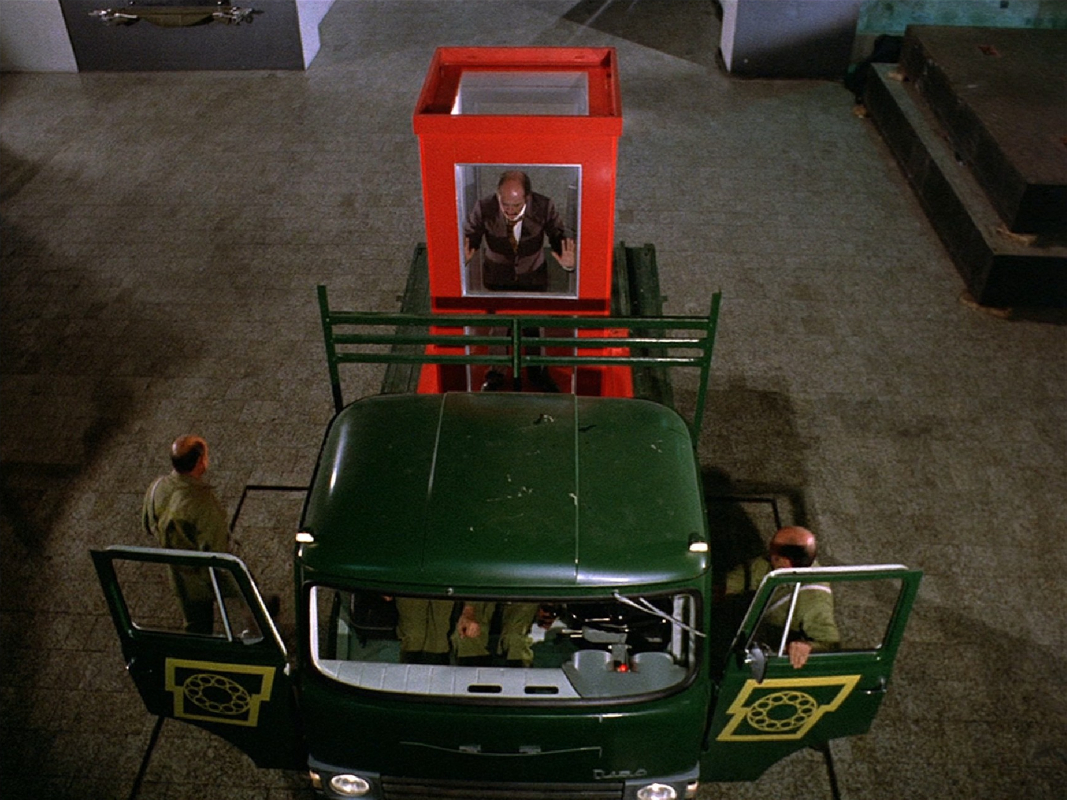
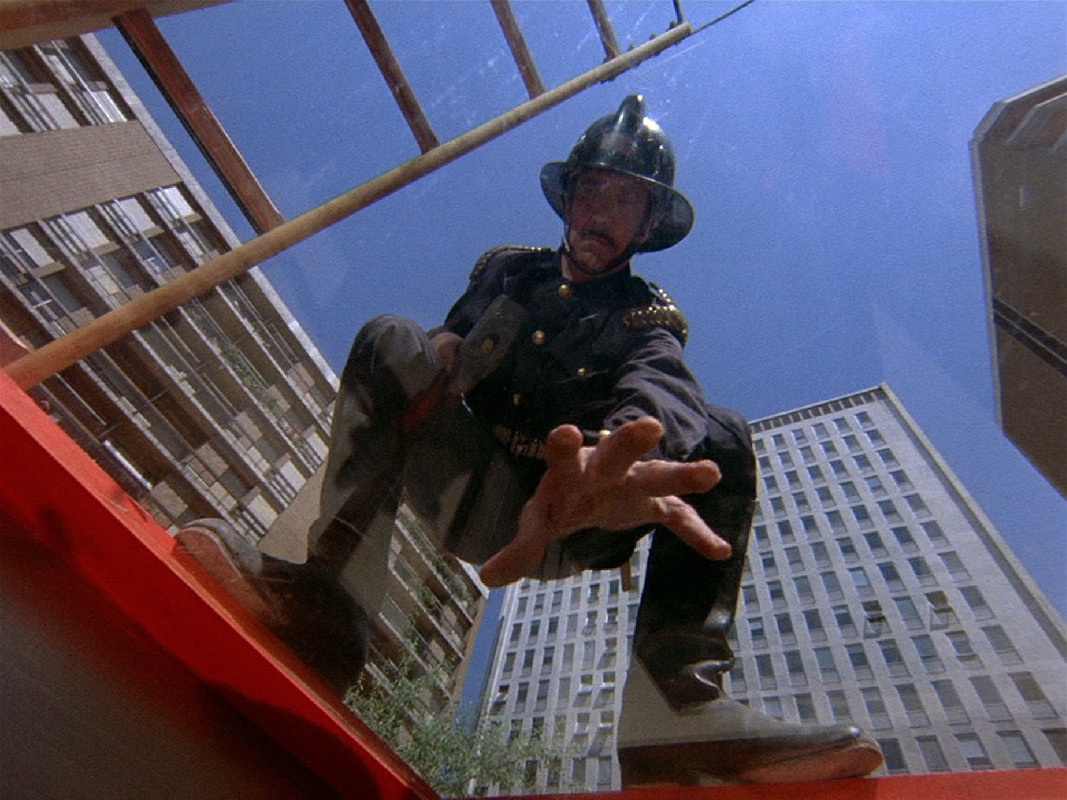
After attempts to free the man escalate towards the absurd and his predicament is no longer at all funny, the same crew that delivered the box arrives. With the distraught captive inside, the four anonymous men load it onto the back of the lorry. The crowd disperses, assuming the booth is being taken to a depot where engineers will easily open it. Then things take a truly sinister turn…
José Luis López Vázquez was midway through a long and prolific career, having already made more than 130 screen appearances. Unsurprisingly, he delivers an emotive physical performance almost entirely bereft of dialogue, essentially turning this into a one-man show. His reputation for comedy would’ve primed contemporary Spanish audiences’ expectations, only to effectively confound them.
Although the telephone box is largely obsolete today, the phobia the film evokes still rings true. Today, we may feel trapped by the allure of our inescapable communications technology, perpetually glued to smartphones that pervade so many aspects of modern life. Rather than being bodily trapped and taken away, it is our digital selves—online identities, social media profiles, data, and avatars—that are contained in boxes, vulnerable to being stolen or disappeared by shady organisations in league with big tech and corrupt governments.
As intended, La Cabina was entered into several domestic and international festivals. It won the silver medal at Spain’s Fotogramas awards and caused controversy at the Monte Carlo Television Festival when it was awarded the ‘Critics’ Award’ in protest after the official jury passed it over, likely for political reasons. Most notably, it became the only Spanish television production to win an International Emmy Award for ‘Fiction’.
SPAIN | 1972 | 35 MINUTES | 1.33:1 | COLOUR | SPANISH
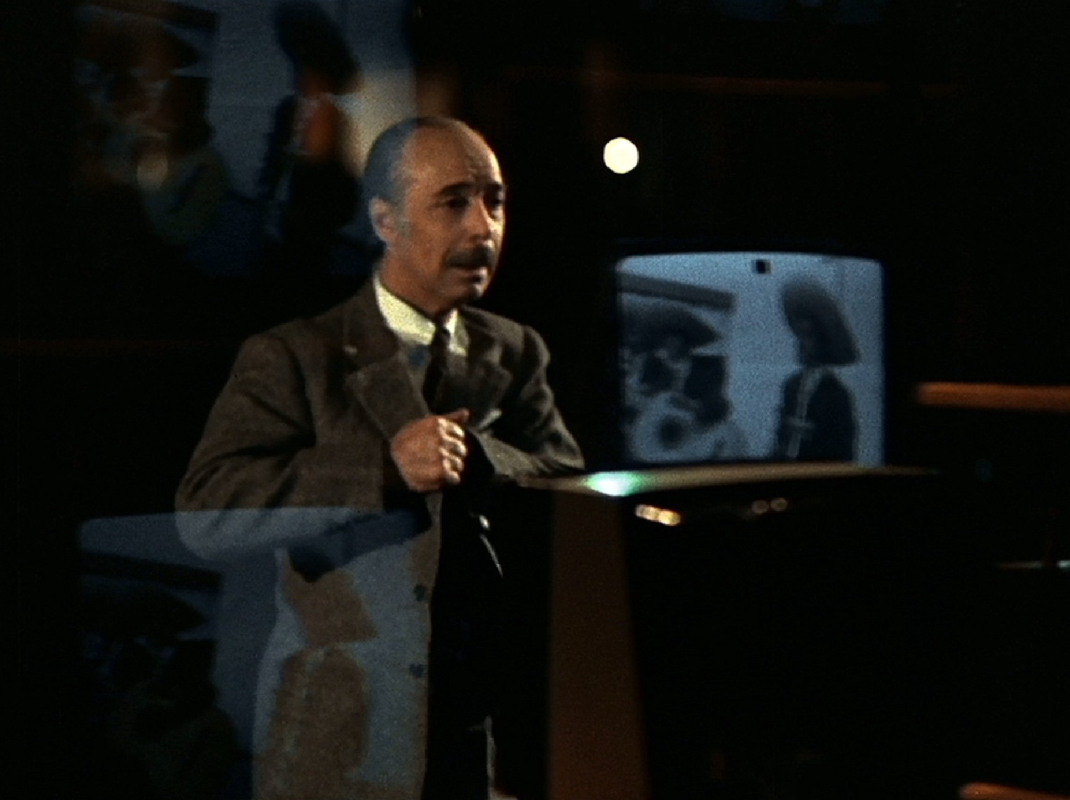
A hard-working family man becomes obsessed with his new television set and slowly descends into madness.
Following the huge success of Un, dos, tres… responder otra vez / One, Two, Three…, a game show devised and directed by Narciso Ibáñez Serrador, he was briefly promoted to Director of Programmes for Spain’s state broadcaster (Televisión Española / RTVE) in 1974. However, he balked at the avalanche of administrative duties that swamped him and swiftly resigned to return to more creative, if less lucrative, roles within the industry. It was around this time that he wrote El Televisor (The Television), intending it to be the pilot for a reboot of Historias para no dormir (Stories to Keep You Awake)—the anthology series that had reshaped Spain’s horror genre and heralded the 1970s boom. Until that show’s success, horror had been frowned upon by the Franco regime, but Serrador cleverly navigated strict censorship rules by eschewing violence and gore in favour of suspense and psychological dread, much in the vein of Alfred Hitchcock Presents (1955–1965), The Twilight Zone (1959–1964), and Roald Dahl’s ‘Way Out (1961).
With El Televisor, Serrador manages to effectively critique the medium using the medium itself. Behind the opening credits, we see rooftops bristling with aerials and hear snippets of contemporary news, dramas, sports commentaries, Anthony Isaac’s iconic theme to The Onedin Line (1971–1980), and John Parker’s music for the US cop series Cannon (1971–76). Then the narrator (Serrador himself) introduces Enrique (Narciso Ibáñez Menta), telling us he is a man who takes comfort in punctuality, honesty, and family love. He sets off early in the morning and returns home late in the evening, hardly seeing the family he works such long hours to provide for. While he briefly pauses at a shopfront on his way to the office to ogle the object of his desires—a television set—we cut to his wife Susana (María Fernanda D’Ocón) showing a friend (Julia Trujillo) around their modest flat in an anonymous tower block. Her friend is curious about a room with an armchair positioned facing a blank wall… it’s waiting for the day they can afford a TV.
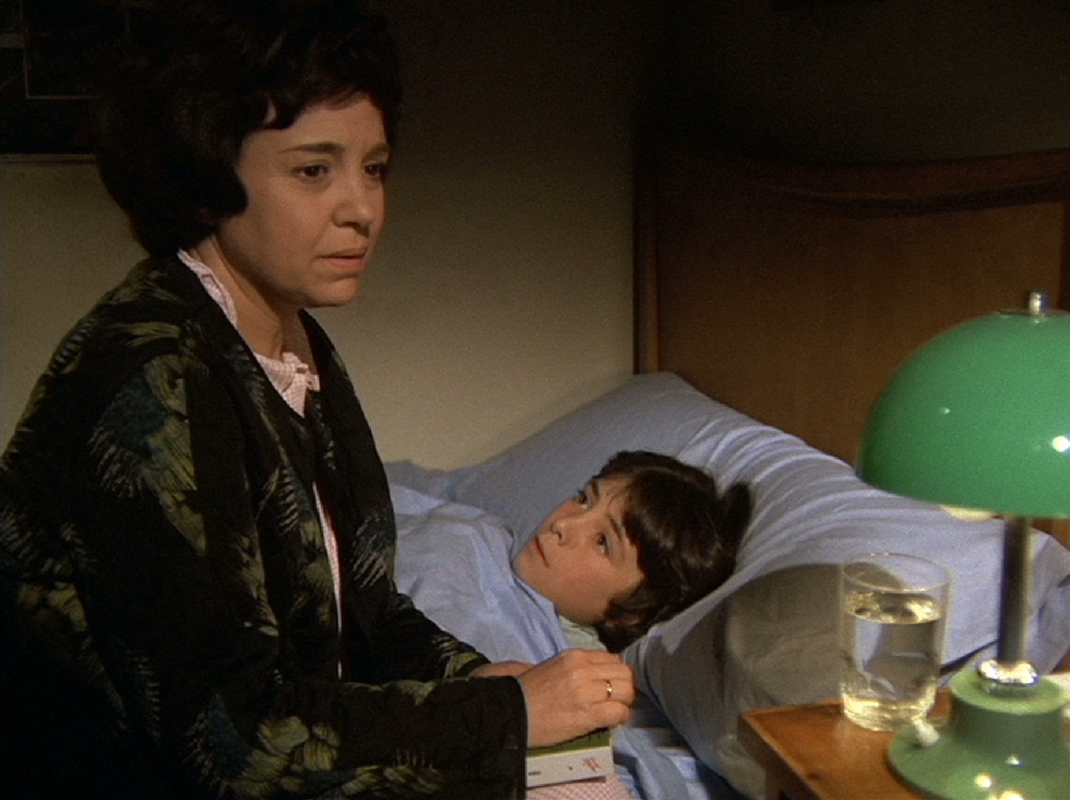
At the kitchen table—which has thus far been the heart of the home and the locus of family interaction—Enrique quizzes Susana about what she might need. An electric toaster? A holiday? If there’s nothing she or their two children require, he has saved enough to purchase a television—a colour television. It’s a rather sweet two-hander: Menta and D’Ocón are entirely believable as a long-married couple living contentedly in that humble setting. Their performances remain superbly grounded throughout, even as they grow more intense when Enrique changes… or, rather, is changed by the unprecedented onslaught of media about to flood his innocent mind.
When the television arrives, it quickly alters the family dynamic. Initially, Enrique waxes lyrical about what he sees: the concerts, the arts programming, and the theatrical pomp of Sunday Mass. Soon, however, he resents interruptions of any kind and begins neglecting his family, food, and sleep. His delight is then tainted by news broadcasts showing victims of napalm, the corpses of Palestinian guerrillas, and bombs in the Middle East…
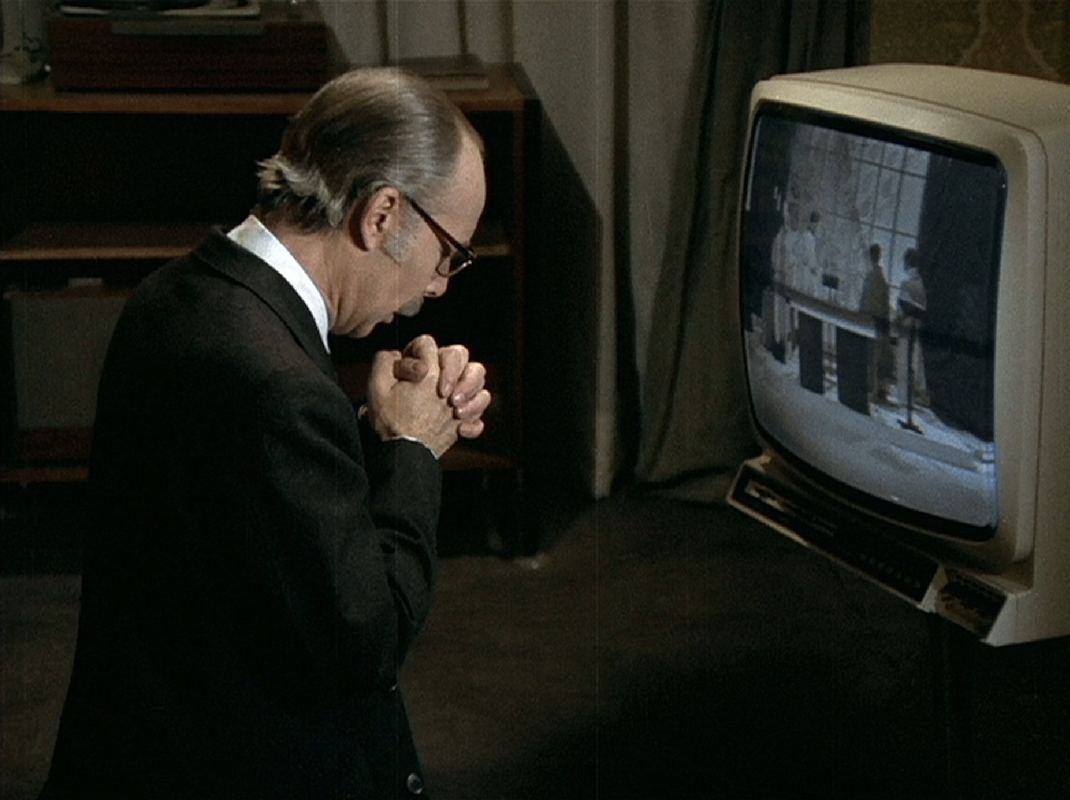
Though made over half a century ago, aspects of the film feel chillingly topical today; Enrique’s channel-hopping obsession is what we now call doomscrolling, and it severely impacts his mental health.
He begins behaving like the men in television adverts, demanding that Susana wait on him and asserting dominance over his son, Quique (José Miguel Aguado), and daughter, Julita (Kiti Mánver). Slacking off at work, he stops going to bed, instead drifting in and out of sleep in front of the telly. He begins to confuse broadcasts, dreams, and reality, becoming increasingly paranoid that fictional characters may breach the screen and enter his world—or that his world is merging with the broadcast landscape and losing its solidity. Is it all in his mind? The boundary between his corporeal self and the fictional characters blurs; the screen is no longer a convincing barrier. Perhaps he’s no more substantial than the figures conjured by the cathode-ray tube? We are left watching an early precursor to Wes Craven’s Shocker (1989) or John Carpenter’s In the Mouth of Madness (1994). To quote Enrique: “No, if I tell you, I’ll spoil it for you.”
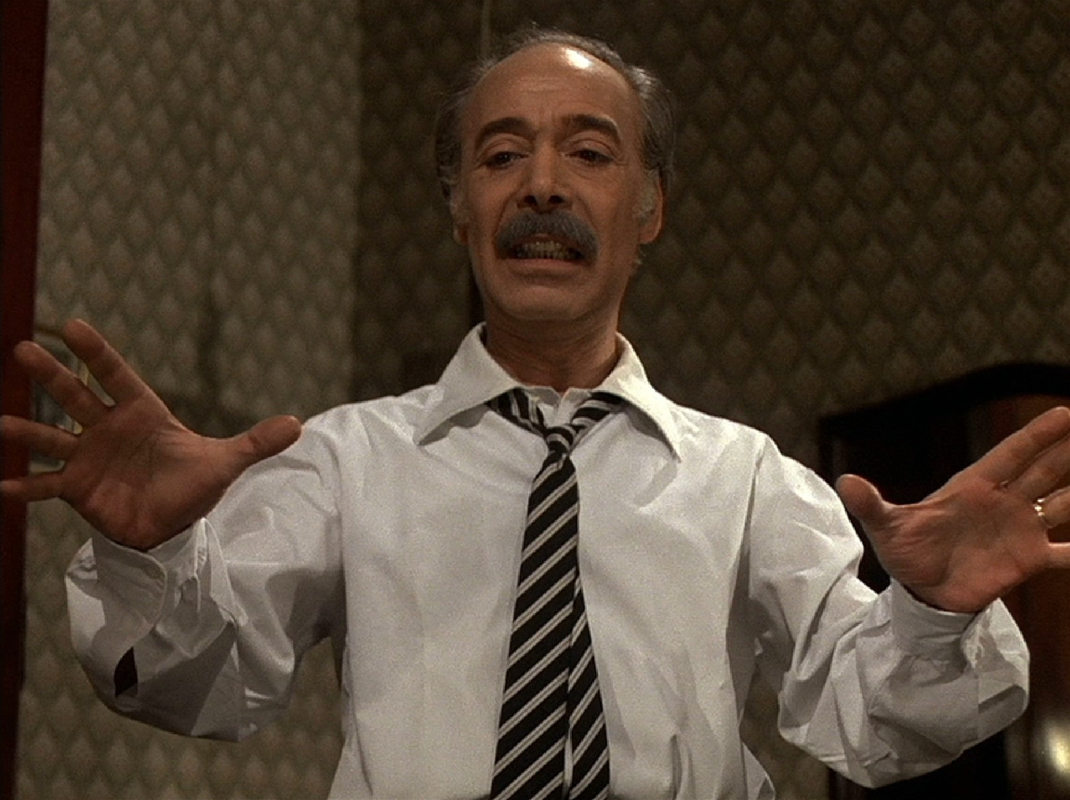
It’s worth watching for Narciso Ibáñez Menta’s central performance alone. Moving from a subtle, nuanced character study of a kindly, mediocre man through paranoia to full-blown mania, he never misses a beat. Even when his behaviour becomes increasingly monstrous, he still imbues Enrique with engaging pathos. Menta was a long-time collaborator with Chicho Ibáñez Serrador, his son. They had acted alongside each other in the notable Edgar Allan Poe portmanteau film Masterworks of Terror / Obras maestras del terror (1960), which they made while living in Argentina.
While his father became known as a versatile screen presence, Serrador distinguished himself as a scriptwriter and director when he developed the follow-up series Masterpieces of Terror (1960–62). He moved to Spain soon after, where he continued to write and direct for stage and screen, ultimately developing the game-changing series Historias para no dormir. The episode El asfalto / The Asphalt, based on a story by Carlos Buiza, won the Golden Nymph for ‘Best Screenplay’ at the 1967 Monte Carlo Television Festival—the first international award for both the director and RTVE.
SPAIN | 1974 | 68 MINUTES | 1.33:1 | COLOUR | SPANISH




directors: Antonio Mercero (La cabina) • Narcisco Ibáñez Serrandor (El televisor)
writers: Antonio Mercero & José Luis Garci (La cabina) • Narciso Ibáñez Serrador & Joaquín Amichatis (El televisor)
starring: José Luis López Vázquez (La cabina) • Narciso Ibáñez Menta, María Fernanda D’Ocón, Kiti Mánver, José Miguel Aguado, Rafael Navarro, Sergio Doré (El televisor).