I LOVE BOOSTERS (2026)
A group of shoplifters take aim at a cutthroat fashion maven by stealing her clothes and reselling them at a lower price, what they call "fashion-forward philanthropy."

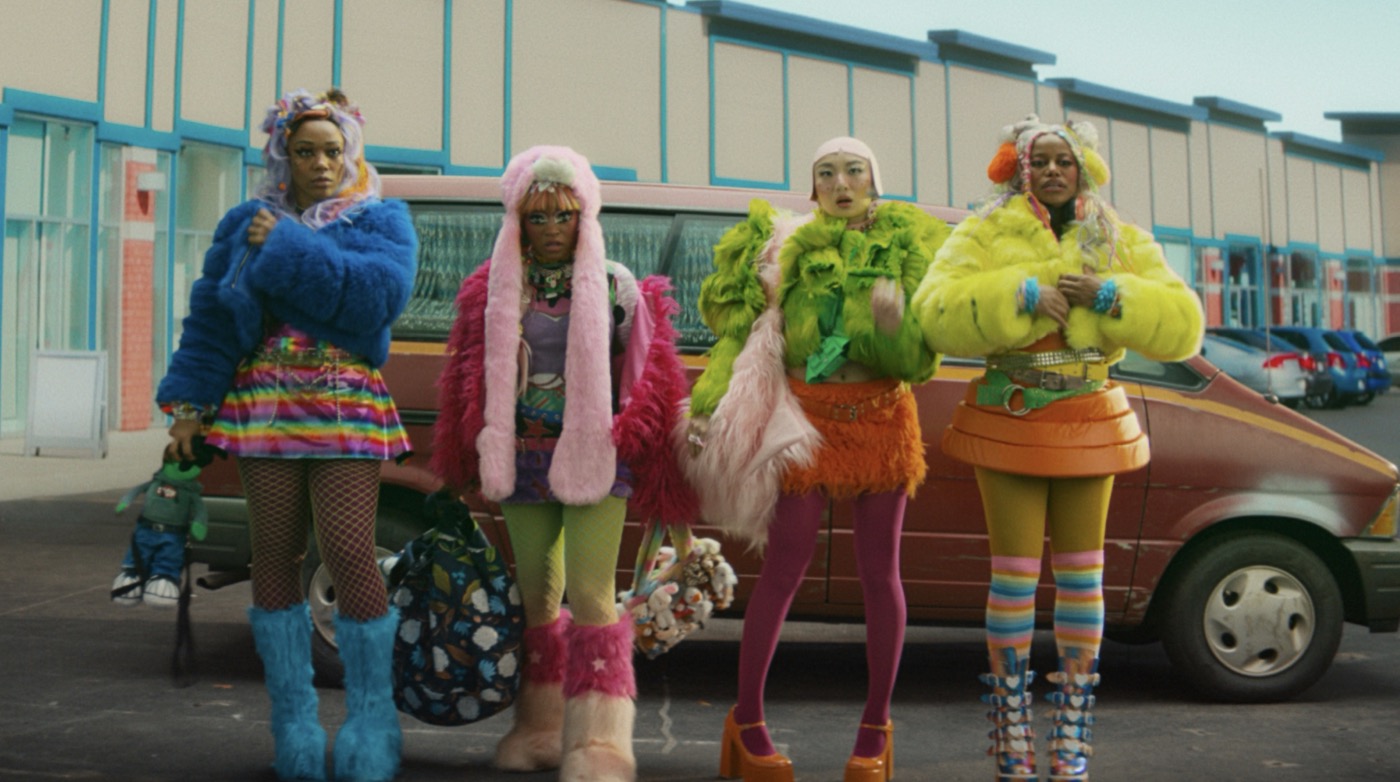

A group of shoplifters take aim at a cutthroat fashion maven by stealing her clothes and reselling them at a lower price, what they call "fashion-forward philanthropy."
There’s a tendency among critics and audiences alike to romanticise cinema that disrupts conventions. Whether it’s dismantling narrative structure, production design, or tonal consistency, contemporary filmmakers are often celebrated for abandoning standards in pursuit of something singular. Boots Riley belongs to that increasingly endangered category of directors who appear completely unaware of the existence of cinematic rulebooks. His work unfolds like an exhilarating stream of unchecked imagination, where every absurd visual flourish and politically charged idea is allowed to coexist without restraint.
Those sensibilities defined Sorry to Bother You (2018) as one of the most audacious directorial debuts of the last decade. Its combination of surrealist comedy and incisive political commentary announced Riley as a genuinely distinctive voice capable of balancing biting satire with narrative anarchy. After parlaying that same artistic ethos into Amazon Prime’s mythical coming-of-age odyssey, I’m a Virgo (2023), he returns with his eagerly anticipated sophomore effort. Fully embracing the bizarre rhythms and absurdist indulgences that have come to define his work so far, I Love Boosters is a righteous middle finger to consumer capitalism, fashionably dressed as a maniacal comedy.
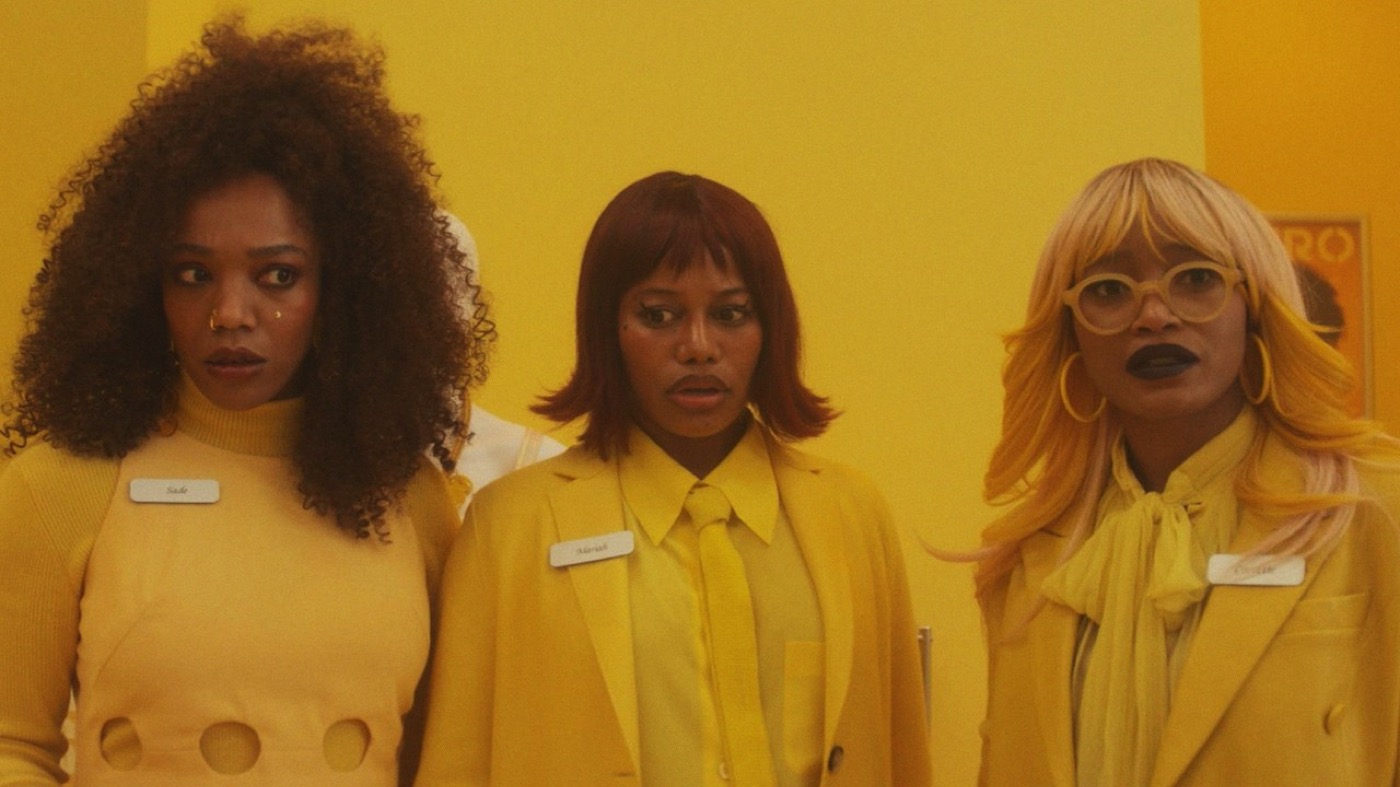
Set in a surreal dystopian version of California, the film follows Corvette (Keke Palmer), an aspiring fashion designer living in an abandoned apartment above a fried chicken restaurant. She survives by leading a shoplifting collective known as the Velvet Gang. Joined by the charismatic Mariah (Taylour Paige) and skeptical Sadé (Naomi Ackie), the group steals large quantities of luxury clothing and resells the merchandise at discounted prices. Corvette idolises Christie Smith (Demi Moore), the grotesquely wealthy head of fashion conglomerate Metro Designers. As the fashion mogul prepares to launch a new clothing line, Corvette discovers that one of her own original designs has appeared in Metro Designers stores. The discovery sends the trio on a mission to dismantle Christie’s empire. However, what begins as an act of retaliation soon pulls the Velvet Gang into a labyrinth of ludicrous conspiracies and a volatile rebellion that exposes the widening divide between commercialism and labour.
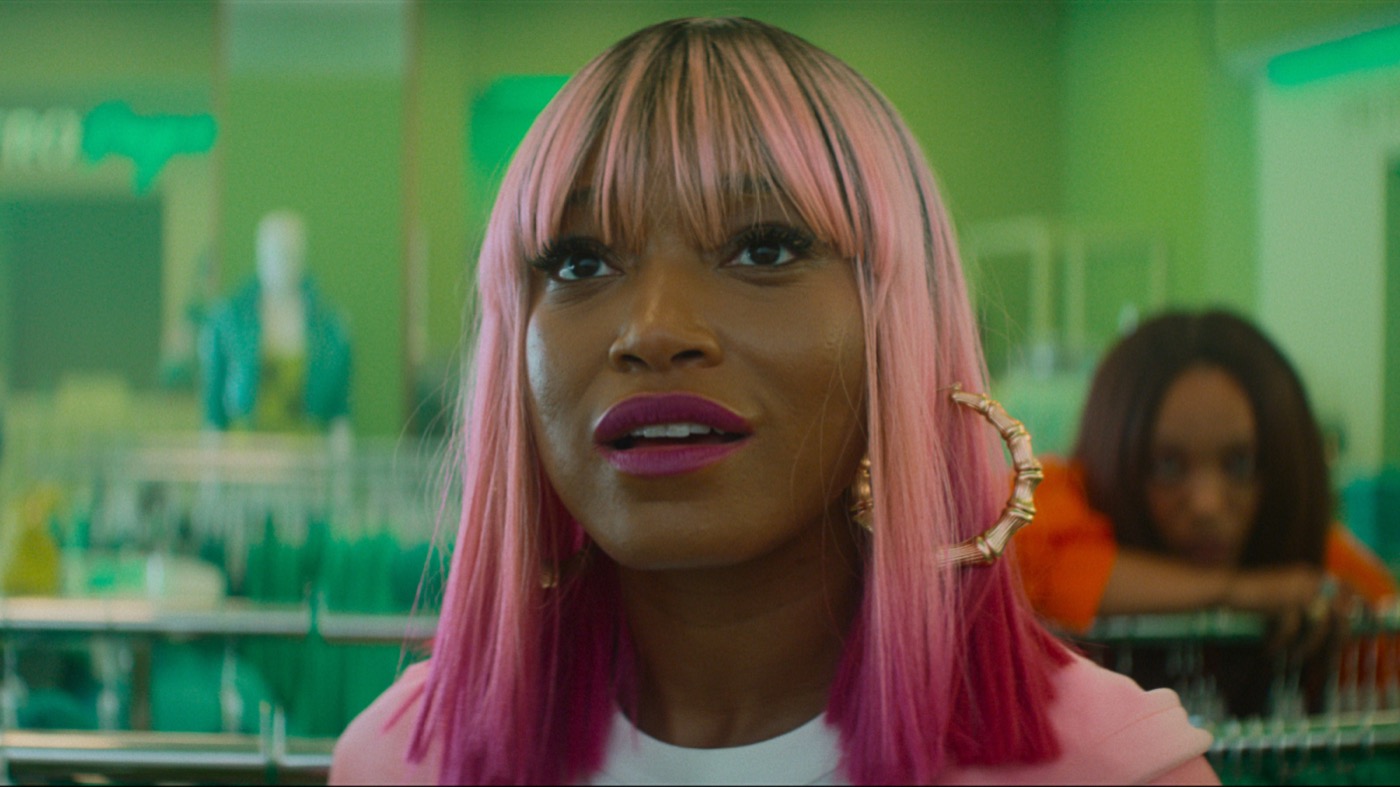
After establishing herself as one of Hollywood’s most intriguing screen presences in Jordan Peele’s Nope (2022) and Lawrence Lamont’s One of Them Days (2025), Keke Palmer once again showcases her natural charisma and personality as Corvette. The actress has always demonstrated impeccable comic timing, but that quality is weaponised here to tremendous effect. Whether she’s delivering political monologues that spiral into delirious absurdity or desperately outrunning a gigantic boulder of debt, she knows exactly when to heighten the chaos and when to underplay it.
While employing pitch-perfect comedic timing, Palmer also understands the emotional architecture beneath the chaos. Corvette’s sharp tongue and rebellious spirit conceal a woman hopelessly intoxicated by the very capitalist machinery she claims to despise. Palmer quietly reveals that dichotomy with every prolonged glance as she attempts to dismantle a broken industry from within. In the hands of a lesser talent, the character might have become a mere collection of eccentricities, but Palmer makes her feel alarmingly recognisable.
Although Palmer takes the lead, she’s supported by a powerhouse ensemble. Taylour Paige (Beverly Hills Cop: Axel F) is endlessly entertaining as the irrepressibly charismatic Mariah, imbuing her character with a nervous volatility and an extraordinary physical presence perfectly attuned to the anarchic comic rhythms. In contrast, Naomi Ackie (Blink Twice) delivers perhaps the most emotionally grounded performance as the pragmatic Sadé. Ackie imbues her character with intensity and determination, counterbalancing the heightened absurdity without ever losing sight of the underlying realities of systemic exploitation.
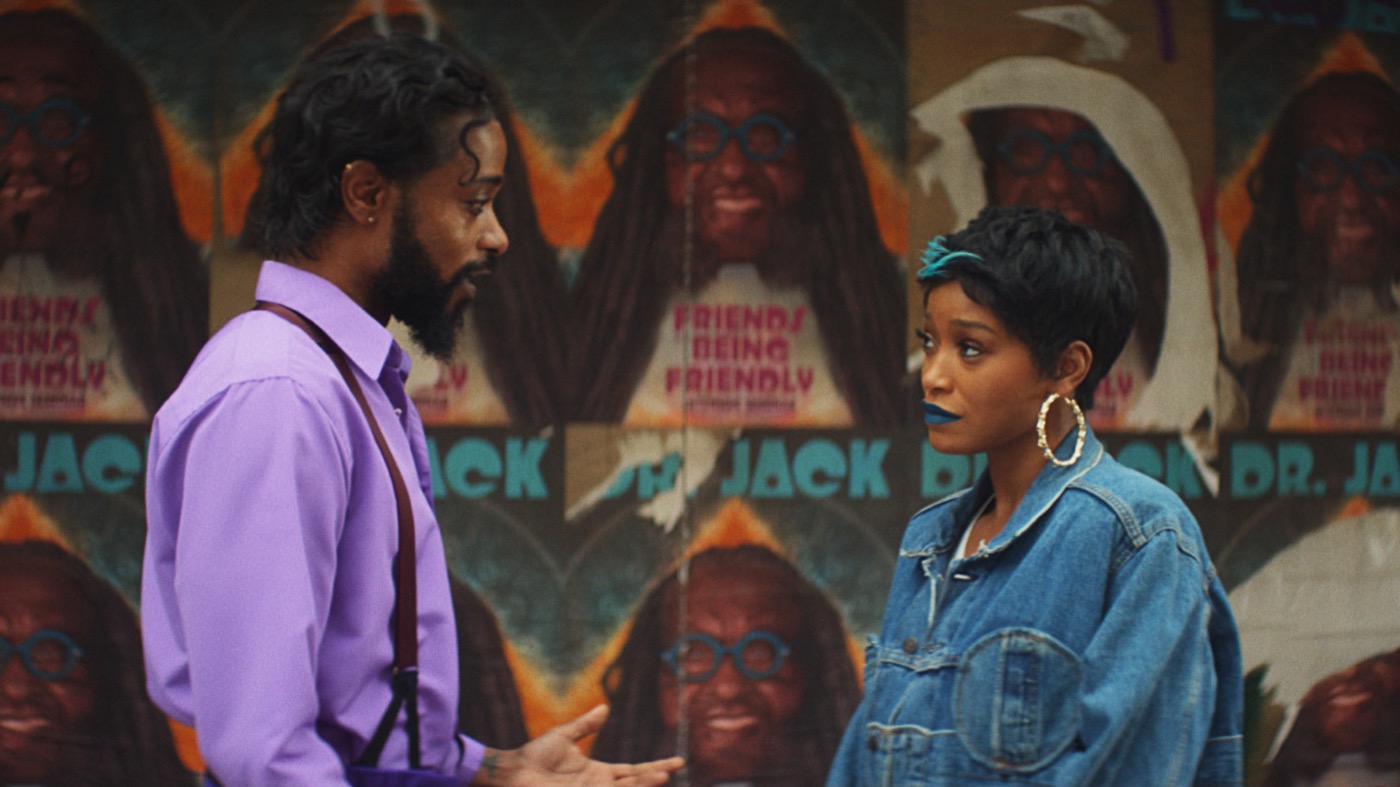
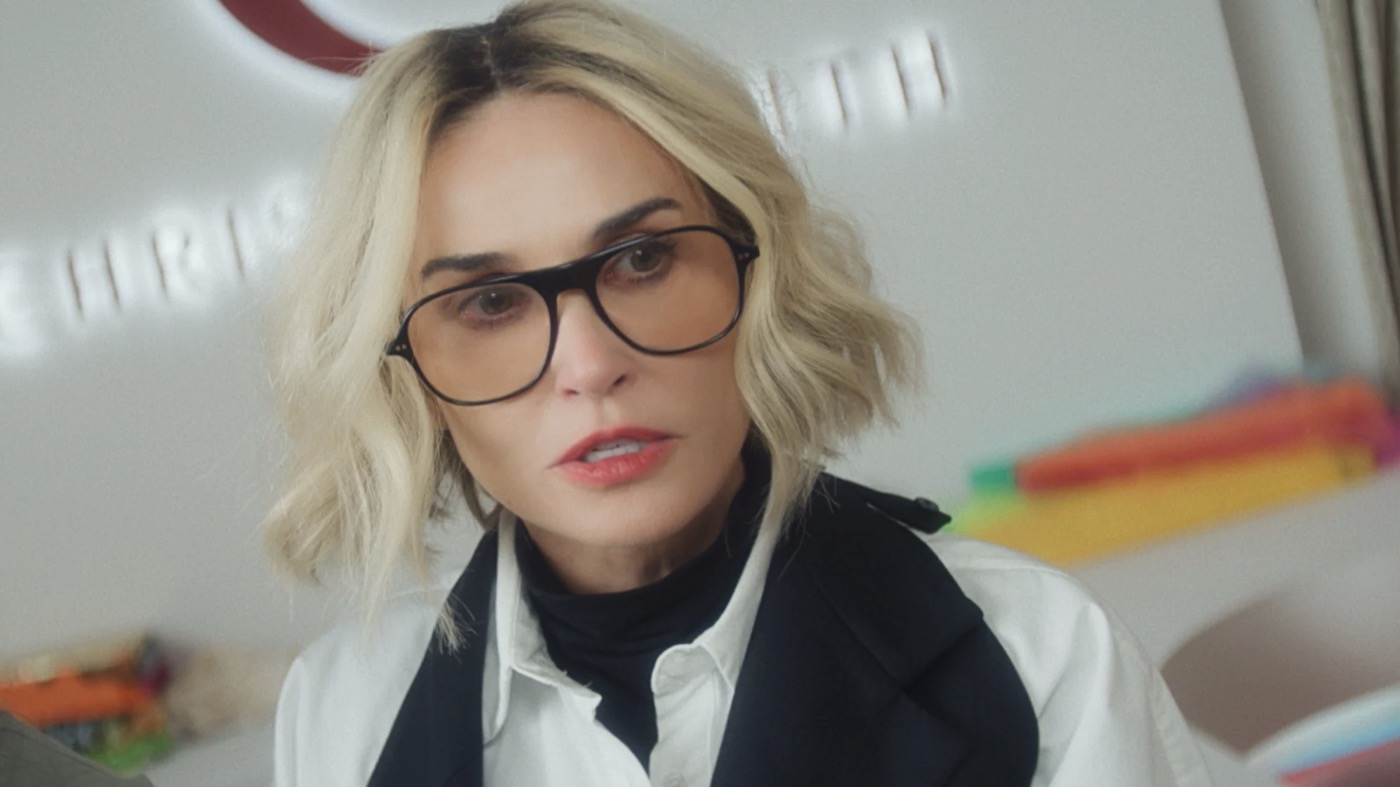
Together, Palmer, Paige, and Ackie form a compelling trio, and their natural dynamic is constantly electrifying. Additionally, Demi Moore (The Substance) delivers a gloriously monstrous turn as the tyrannical fashion mogul, Christie Smith. Transforming her character into a hilarious, caustic depiction of the predatory elite, she devours every scene while espousing outrageous rhetoric about luxury branding and aspirational consumerism.
If Sorry to Bother You represented Riley at his most incisive and controlled, then his latest effort finds him operating in his most anarchic register. I Love Boosters is the cinematic equivalent of taking every absurd idea, political provocation, and visual gag that crossed his mind and launching them at the screen with maximalist abandon. It simmers with observations surrounding inequality and success, but presents as a slapstick comedy lifted straight from the pages of an upside-down Dr Seuss book. It’s simultaneously invigorating and exhausting, constantly introducing novel concepts and inspired images that impress by their sheer audacity.
One memorable moment sees Mariah change the colour of her skin by holding her breath, allowing her to navigate luxury boutiques without raising suspicion among their prejudiced staff. Elsewhere, employees prepare for their insanely short lunch breaks by positioning themselves on starter blocks before sprinting towards sustenance, literally transforming the basic necessity of eating into a competitive event. The world Riley crafts is cartoonish to the point of delirium, but every surreal flourish and amusing detail gestures towards his main concern.
Across his career in television, film, and music, Riley has remained deeply committed to dissecting capitalism and exposing the machinations that exploit labourers and marginalised communities. Yet, beneath his scathing criticism, the filmmaker has always offered his audience a sense of optimism and encouragement to fight against these oppressive social constructs. A defining through line of his entire oeuvre is that meaningful change emerges not through individualism, but through solidarity and organised action.
I Love Boosters is perhaps Riley’s clearest articulation of this philosophy, speaking to the power of unionisation as both a labour strategy and a communal consciousness. Jianhu (Poppy Liu) and Violeta (Eiza González) embody these principles most directly. Jianhu campaigns for compensation and humane working conditions within a Chinese sweatshop, whereas Violeta intends to organise a union to protect the rights of her fellow retail workers. Indeed, the Marxist undercurrents of Violeta’s monologues land with the subtlety of a particular massage chair violently pummelling Corvette’s face. However, underneath the abrasive humour and overt political rhetoric is a network of nuanced opinions and concepts concerning labour that demand attention.
Where I Love Boosters truly shines is in its understanding that survival in contemporary society has become deeply aestheticised. Debt has an identity, burnout has a uniform, and class anxiety often arrives disguised in designer labels purchased on borrowed money. Riley exposes how capitalism systematically commodifies identity itself, transforming appearance into both aspiration and social currency. For the Velvet Gang, stealing clothes isn’t an act of vanity or rebellion; it’s an attempt to reclaim access to beauty and self-expression in a world where luxury has become a mechanism of exclusion.
The filmmaker understands that fashion has long functioned as a language for marginalised communities. It’s an assertion of identity, dignity, and visibility within a system designed to reduce people to labour and consumption. A pair of platform boots or an oversized faux-fur coat can carry the same symbolic weight as a protest sign, particularly for those whom capitalism acknowledges primarily as consumers rather than individuals.
Riley’s inspired political provocations find a wonderful visual accomplice in the art department’s deliberately vibrant visual language. Almost every element of Christopher Glass’s (The Jungle Book) extravagant production design and Shirley Kurata’s (Everything Everywhere All at Once) dazzling costume design feels meticulously engineered to reinforce the filmmaker’s dissection of capitalism. Take Christie’s luxurious skyscraper apartment, tilted at a disorienting 45-degree angle with beguiling decadence. Only she has the ability to navigate the unstable terrain because equality has become so imbalanced that everyone around her stumbles until they fall. Similarly, each of Metro Designers’ clothing lines is saturated in vibrant monochromatic colours that frequently change. It functions as a reflection of consumer culture’s dependence on manufactured urgency and resembles algorithmically engineered trend cycles designed to condition customers to consume out of fear of missing out.
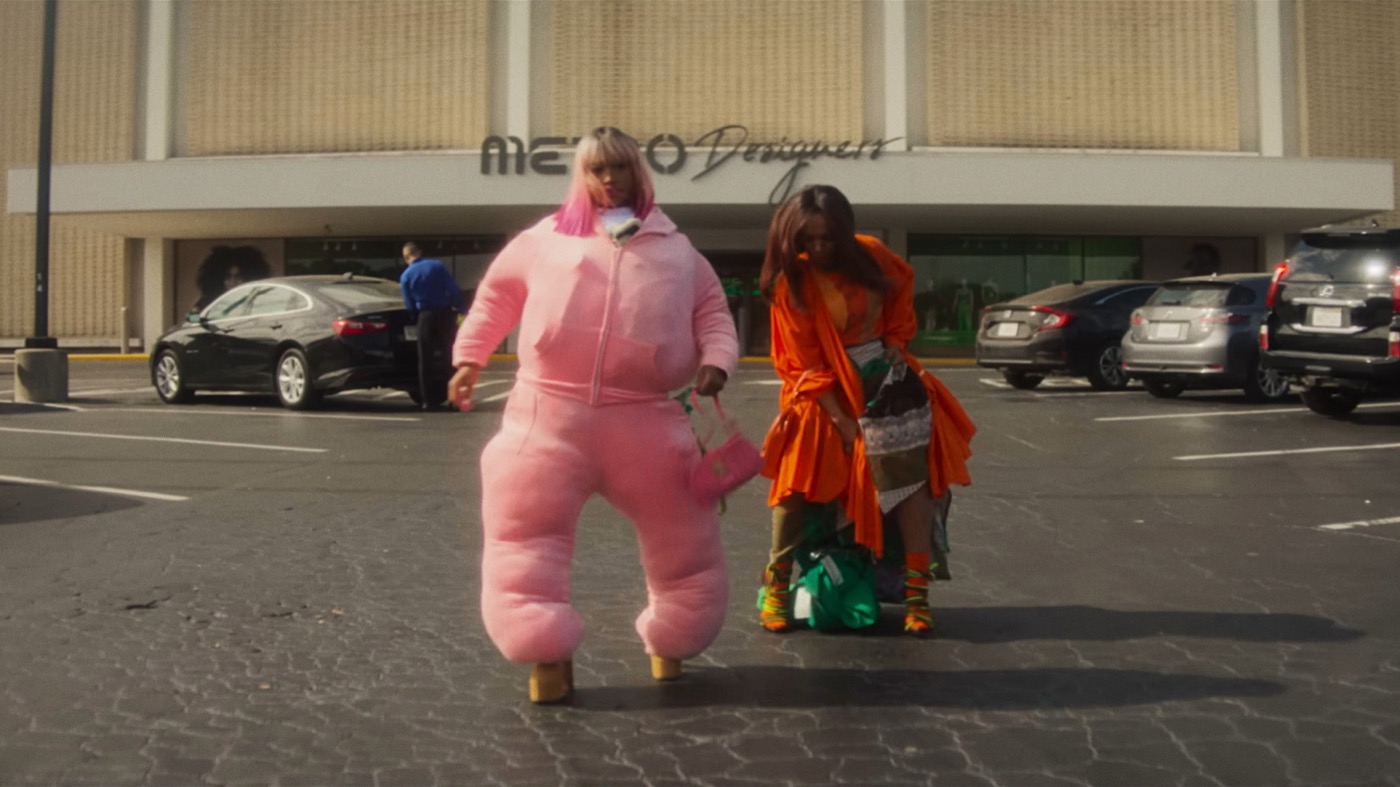
As deliriously inventive as Riley is in visualising his capitalist dystopia, his eccentricities ultimately compromise the end product. The image of Mariah and Sadé leaving a store, cloaked in so many clothes that they may as well have donned fat suits, perfectly encapsulates the bursting narrative. The filmmaker ventures into so many outlandish and conceptually overstuffed detours that he often seems to be struggling to maintain coherence beneath the weight of his own ambition.
Once Corvette’s shoplifting escapades lead to the introduction of a Chinese factory worker spearheading a labour rebellion against Smith’s exploitative manufacturing practices, the screenplay collapses into an unwieldy collage of conspiracy theories, teleportation devices, and a recurring subplot involving a demonic libertine who devours women’s souls. There’s also a compelling conflict between Corvette and Sadé that’s helical, yet barely allowed to breathe. It’s a thread that could have deepened their friendship while interrogating the uneasy contradiction between anti-capitalist ideals and the necessity of financial survival. Yet, there’s a sense that Riley’s stream of ideas takes priority over character dynamics, leaving these moments feeling frustratingly underdeveloped.
Despite its convoluted ambitions, I Love Boosters is bursting with an unpredictable energy that makes it consistently entertaining. Those willing to surrender to these flippant digressions may find Boots Riley’s sophomore effort exhilarating. It simultaneously stands as a daring and flamboyant addition to Hollywood’s increasingly homogenised creative landscape, while also functioning as an earnest rallying call for equality and social justice within the fashion industry.
USA | 2026 | 105 MINUTES | 2:39:1 | COLOUR | ENGLISH • MANDARIN

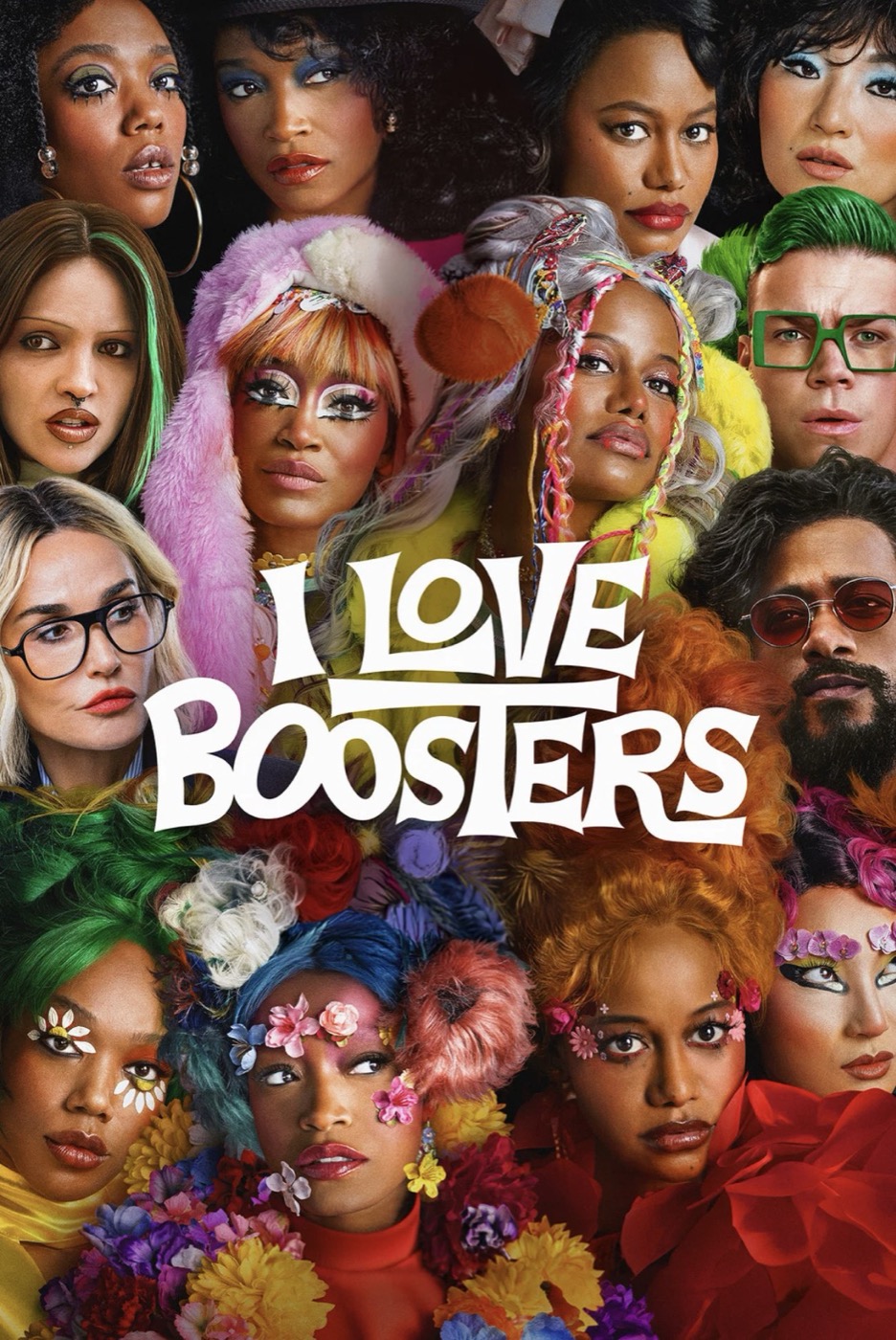
writer & director: Boots Riley.
starring: Keke Palmer, Taylour Paige, Naomi Ackie, Demi Moore, Poppy Liu, Eliza González, LaKeith Stanfield & Don Cheadle.