OMAHA (2025)
A father conceals the truth about his family's seemingly spontaneous cross-country road trip.


A father conceals the truth about his family's seemingly spontaneous cross-country road trip.
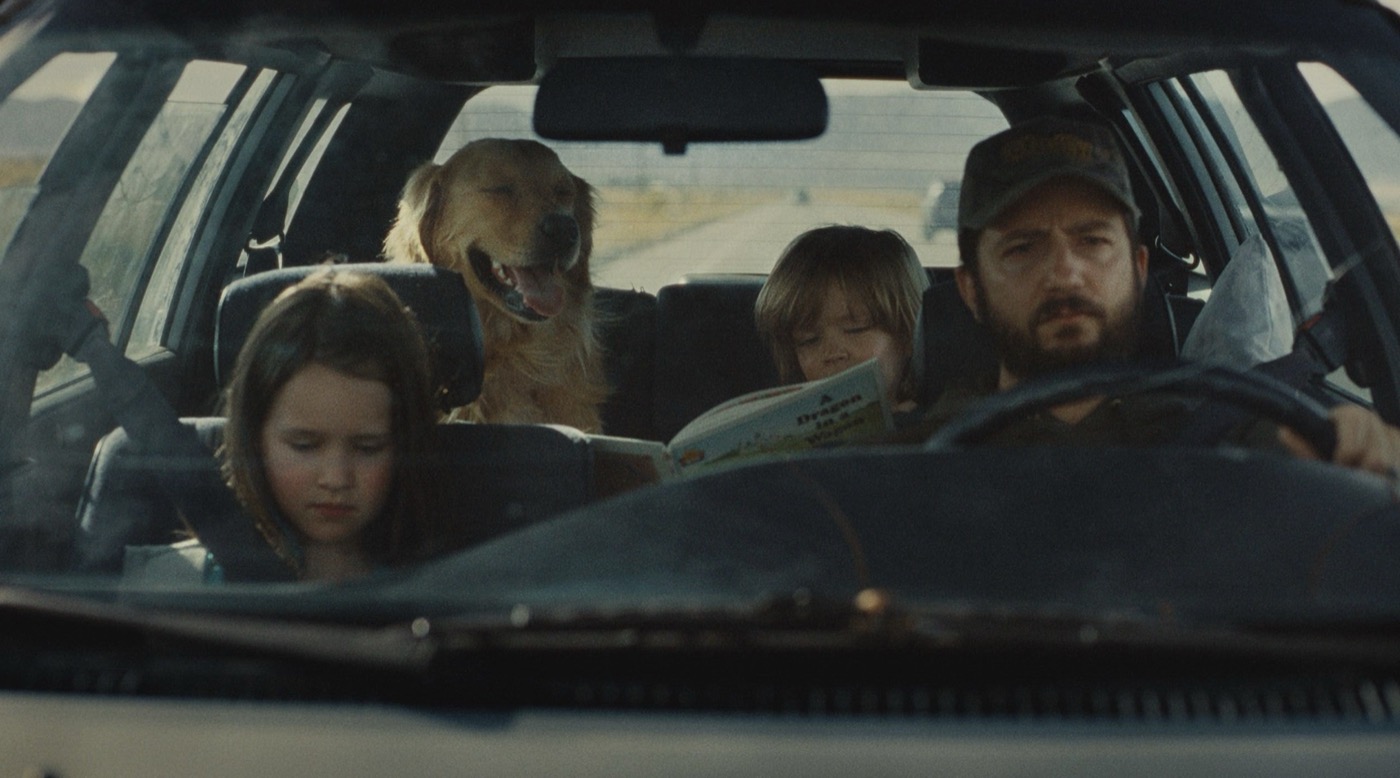
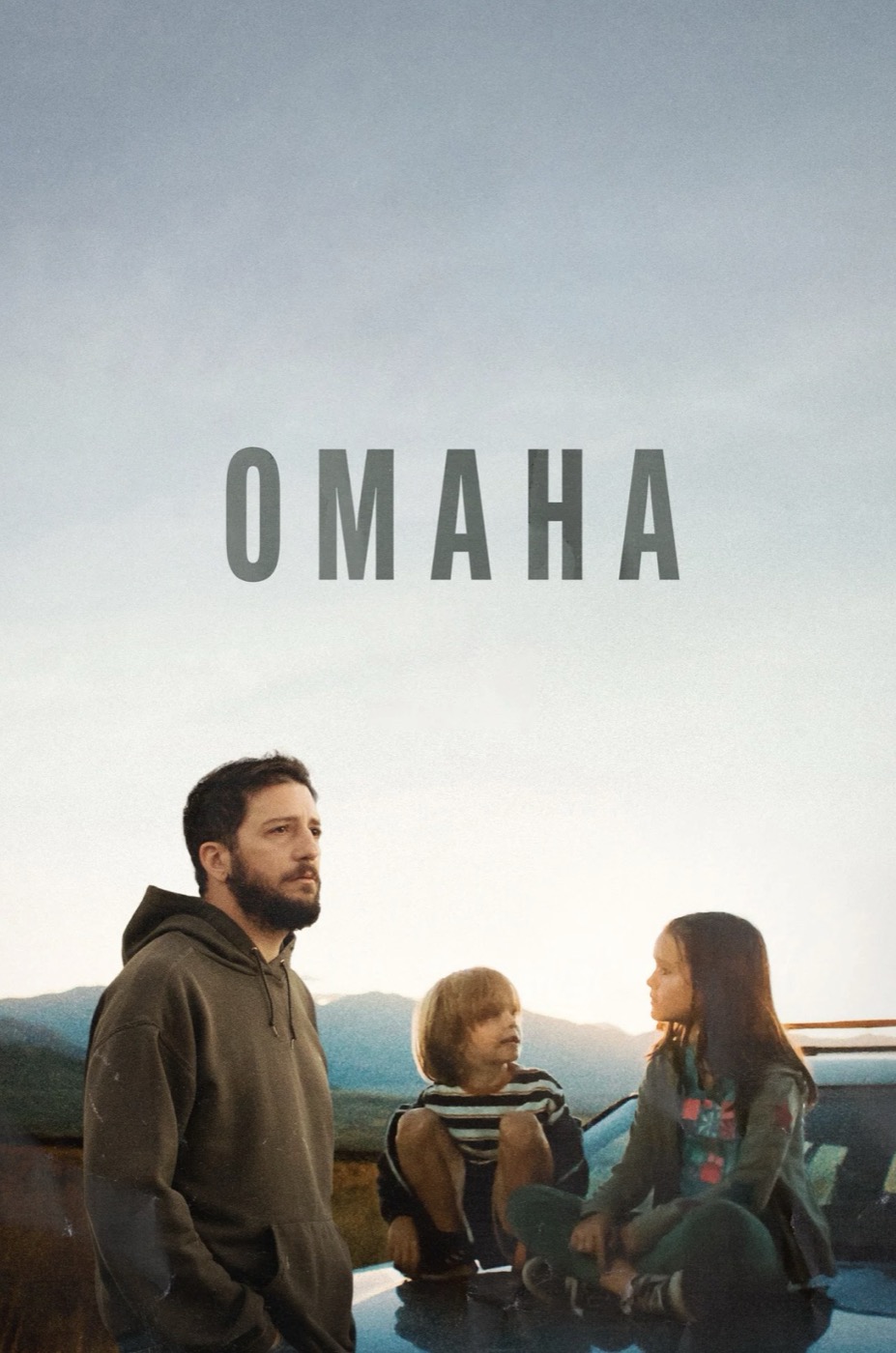
One early summer morning, a young widower (John Magaro) rushes his children out of the house for a spontaneous road trip. “Pretend there’s a fire,” he tells Ella (Molly Belle Wright). “What would you grab first?” “A picture of Mom,” she replies.
As he piles Ella, her younger brother Charlie (Wyatt Solis), and their dog Rex into the car, the local sheriff places a foreclosure notice on their home. The engine fails to start, forcing him and Ella to push the vehicle down the street to jump-start it—a moment echoing the Hoovers in Little Miss Sunshine (2006). Their destination is Nebraska, though their father won’t say why. Omaha, which debuted at the 2025 Sundance Film Festival and has now entered wide release, chronicles this cross-country journey of a family navigating grief and an uncertain future.
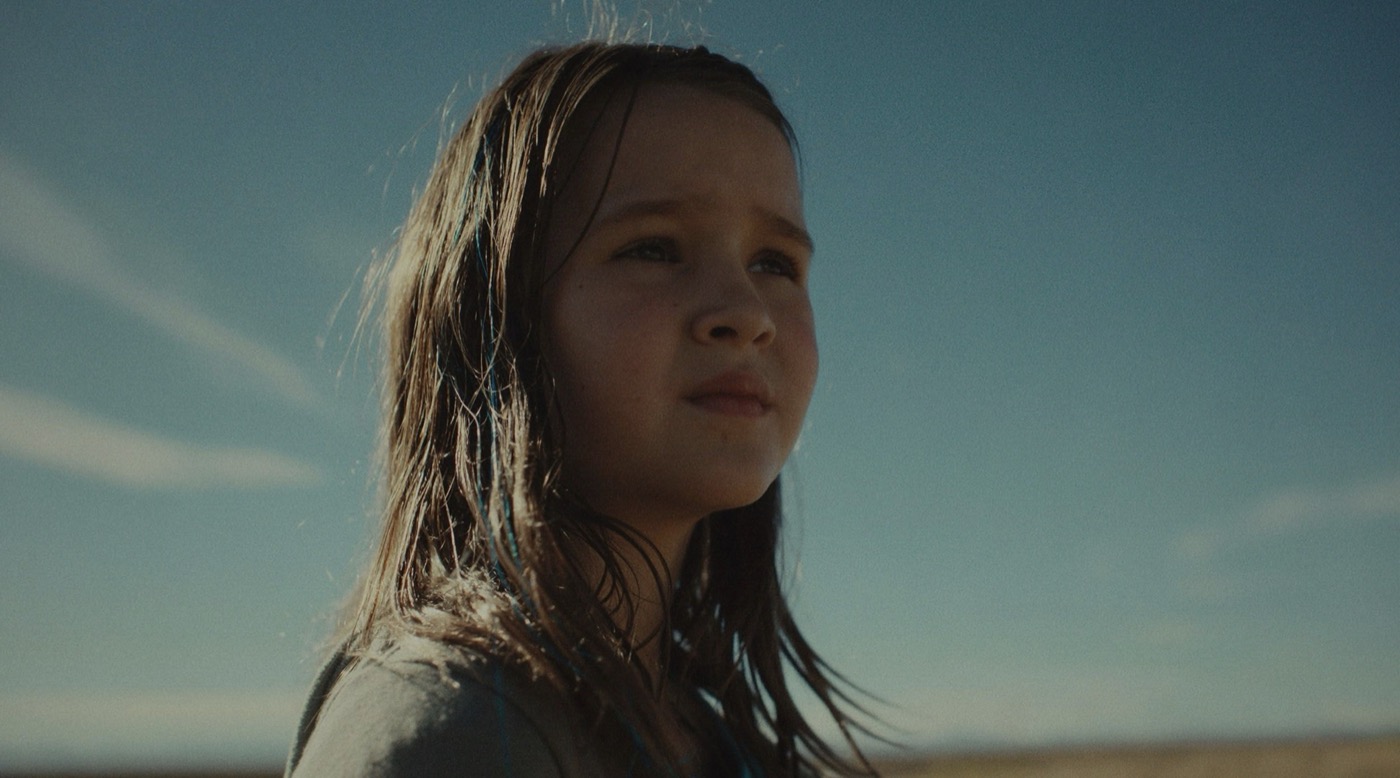
Cole Webley makes his directorial debut from a script by Robert Machoian, who first conceived the project in 2008. While Omaha bears all the hallmarks of an indie production, Webley appears remarkably assured behind the camera. He allows the cast full control, letting the lens linger as they process the emotions and choices that propel the film’s minimalist plot.
In an uncharacteristic leading role, John Magaro (Past Lives) commands the screen with a vulnerable portrayal of a grieving father. From the opening scene, he’s tender and loving, yet a persistent darkness hangs over him. When his daughter catches him speaking to his late wife, we see a man truly lost. His fits of anger and aloofness frequently clash with his paternal instincts; Magaro navigates these conflicting temperaments with ease, adding a heavy emotional toll to the journey. His performance fuels the tension surrounding the trip’s mysterious conclusion.
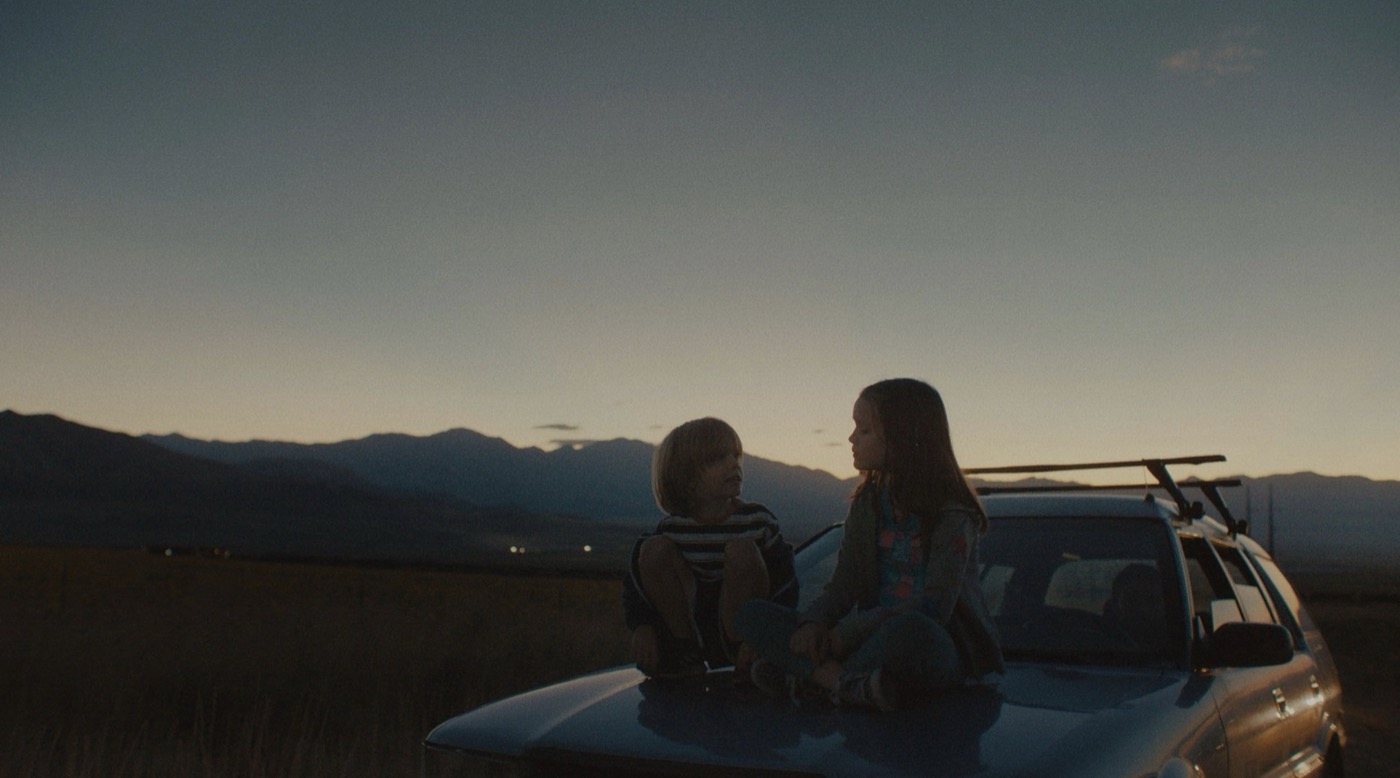
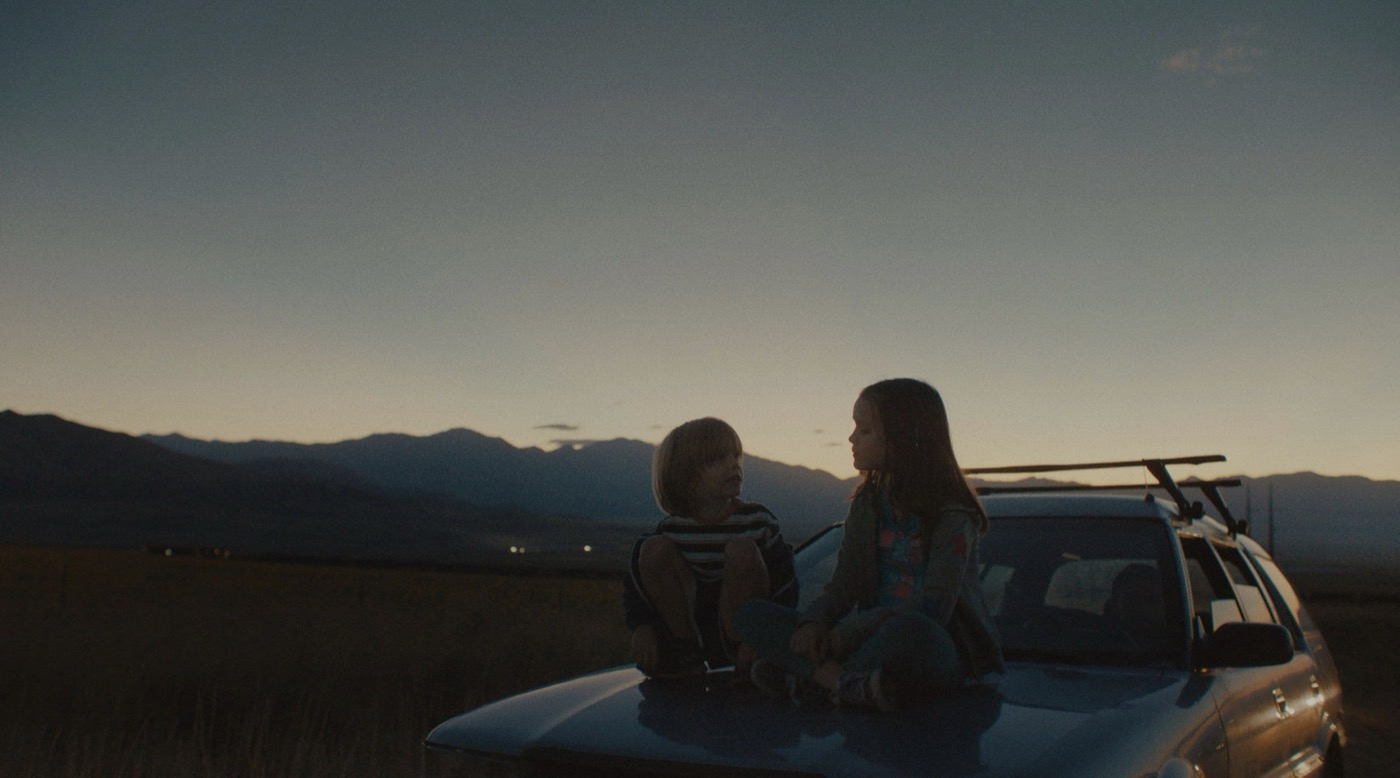
Yet, despite Magaro’s excellence, the film belongs to Molly Belle Wright. Omaha is most memorable as Ella’s coming-of-age story—the tale of a nine-year-old forced to grow up far too soon. Her first words upon waking are, “How’s Charlie?” In the wake of her mother’s death, Ella has been thrust into the role of caretaker, not because her father is absent, but because she recognises the maternal void her brother needs filled. Her scepticism regarding her father’s plans informs her every move; she longs to be “in the know” and adopts adult responsibilities, such as paying at the petrol station or buying her brother an ice cream sundae.
Belle Wright’s performance is reminiscent of Frankie Corio in Aftersun (2022), portraying a child enjoying a holiday while quietly weighing the profound sadness consuming her father. Both young actresses possess a gravitas beyond their years, portraying characters unable to enjoy childhood without the weight of the world’s sorrows. It’s heartbreaking to watch Ella, particularly in those rare moments when she can finally stop being a guardian and just be a child.
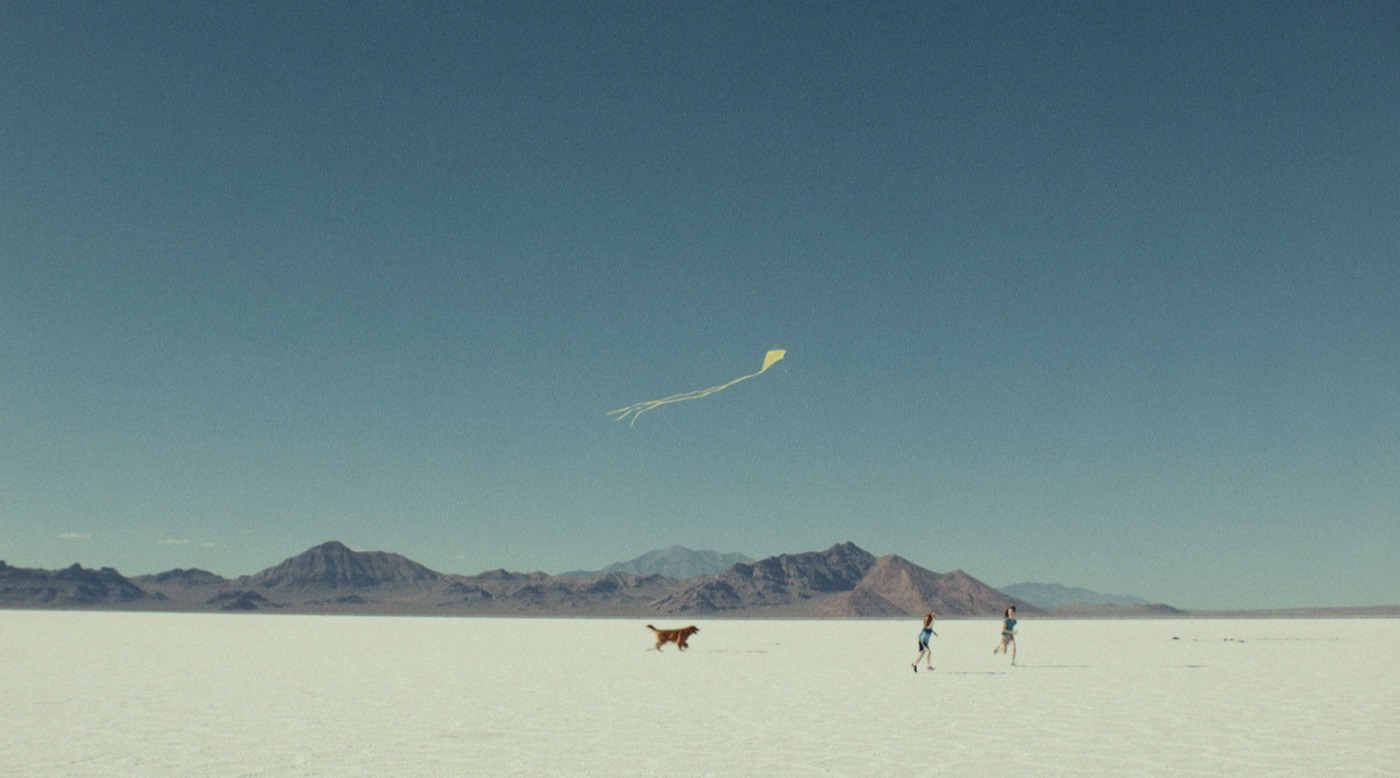
In one powerful scene at the Utah Salt Flats, Ella and Charlie take Rex to fly a kite across the plains while their father weeps in the car. The camera follows the children as they run with glee, leaving the pain behind. It’s a delightful, blissful sequence that begins with echoes of Nicolas Roeg’s Walkabout (1971), before morphing into something more joyful—akin to an examination of life in a Terrence Malick film.
One of Omaha’s greatest strengths is how it toys with audience expectations. A heavy tension permeates every scene; we suspect where the story is headed but dread arriving. Webley uses this to his advantage, ensuring that even the most mundane moments—the children playing in a motel pool, climbing in a McDonald’s play area, or seeing a lion at the Omaha zoo—carry significant weight. These vignettes provide a charming contrast to the film’s otherwise uneasy atmosphere.
Despite an 84-minute runtime, the pace occasionally flags. While Machoian’s screenplay cleverly uses unspoken tension to drive the narrative, the constant atmospheric shots can feel tedious, occasionally leaning more towards documentary than drama. It’s a credit to the actors that they sustain interest despite a lack of traditional plot engines.
In contrast to the slow-burn journey, Omaha ends abruptly. After providing such a raw, intimate look at the family, the film whisks us away from the characters with startling speed, leaving the viewer satisfied by the journey but perhaps conflicted by the conclusion.
However, the film’s biggest surprise is saved for the final frames. A postscript regarding Nebraska law reveals the story’s real-world inspiration. Withholding this context until the end allows the film to maintain its ambiguity while ultimately honouring those affected. Omaha thus emerges as more than just a moving portrait of grief; it’s a hidden slice of an obscure period in the American Midwest.
USA | 2025 | 84 MINUTES | 1.78:1 | COLOUR | ENGLISH

director: Cole Webley.
writer: Robert Machoian.
starring: John Magaro, Molly Belle Wright, Wyatt Solis, Christina Cooper & Talia Balsam.