ATTACK THE BLOCK (2011)
A teen gang in South London defend their block from an alien invasion.

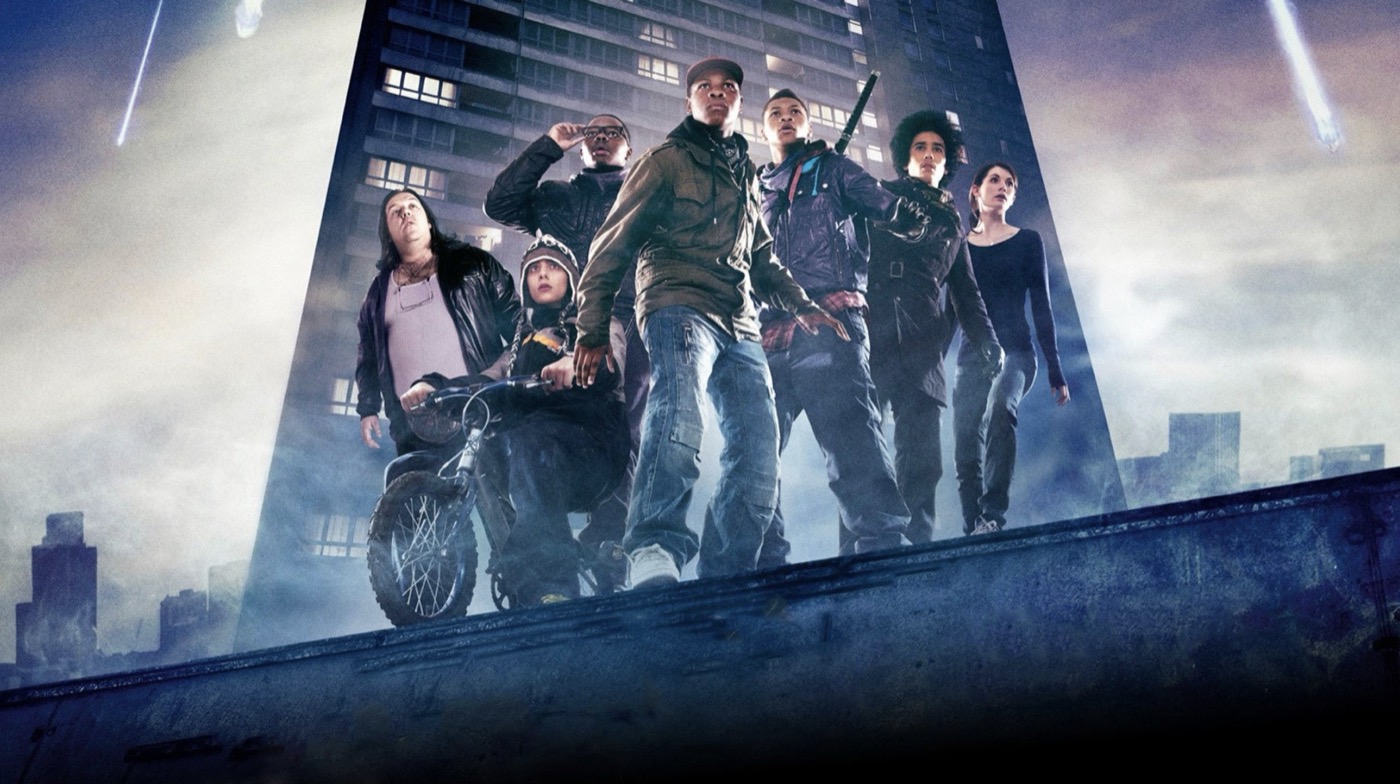

A teen gang in South London defend their block from an alien invasion.
Attack the Block is so much more than the teen horror sci-fi comedy thriller it pretends to be. It works brilliantly across all those genres while merging the personal with the political—all without spoiling a rollicking good adventure. Keeping a story both emotive and entertaining while tackling serious issues like prejudice and injustice is a skilled balancing act, but it’s something good genre cinema has facilitated for half a century.
Prior to making his feature debut with Attack the Block, writer-director Joe Cornish was best known as half of the comedy duo Adam and Joe. He’s since written and directed The Kid Who Would Be King (2019) and contributed to screenplays for high-profile films like The Adventures of Tintin (2011) and Ant-Man (2015). More recently, he oversaw the short-lived Netflix adaptation of Lockwood & Co. (2023), based on Jonathan Stroud’s popular novels.
Recently, Cornish’s name has been linked to the prospect of a Disney-free Doctor Who reboot. While likely a fan-generated rumour, it’s one I’m happy to perpetuate given the film’s resounding resonance—not least because it gave Jodie Whittaker an early career lead. There’s another connection in Nick Frost, one of many cast and crew members who cut their teeth on British TV comedies like Spaced (1999–2001). This background perhaps explains why the humour works so well without detracting from the drama.
Cornish’s central strength is his ability to convey character while driving a narrative, grounding both in authentic real-world experiences, no matter how fantastical the story. The idea for Attack the Block grew from his own experience of being mugged; he realised the young perpetrator was just as scared as he was. Viewing them both as victims of circumstance, he felt a certain empathy, wondering what would happen if something unexpected—like an alien spaceship crashing—interrupted that moment. Would they recognise their common humanity and stand together? That initial concept survives more or less intact.
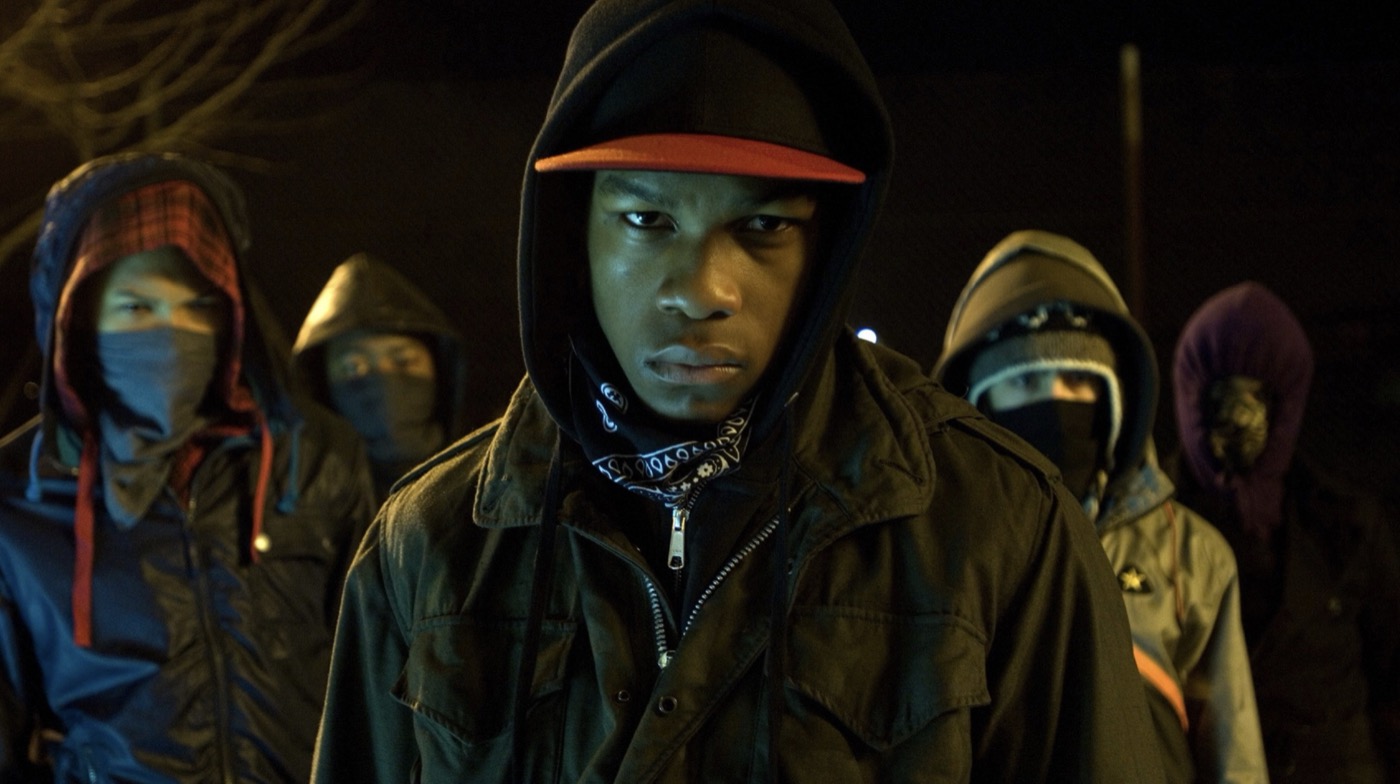
While walking home from her nursing shift, Sam (Jodie Whittaker) is accosted by a group of five ‘hoodies’ led by Moses (John Boyega in his feature debut). Midway through the mugging, a meteorite strikes a nearby car. Rather than succumbing to awe, Moses seizes the opportunity to search the wreckage for valuables. This allows Sam to escape as a strange creature leaps from the car, attacks Moses, and flees. He leads his crew in pursuit, eventually cornering and killing it in a disused shed. Realising the creature is something ‘super-strange’, they believe it might have rarity value—though they’ve no idea what it is, or what a dead one is worth.
They take the creature to Ron’s (Nick Frost) cannabis farm, which occupies an upper floor of their imposing tower block. Ron agrees to stash it, but while there, Moses is recruited as a drug mule by Hi-Hatz (Jumayn Hunter), the boss of the gang that rules the block. With slick efficiency, Cornish evokes Moses’s world, its power dynamics, and its physical environment. Of course, the creature in the car was merely the vanguard; the ensuing alien attack disrupts everything.
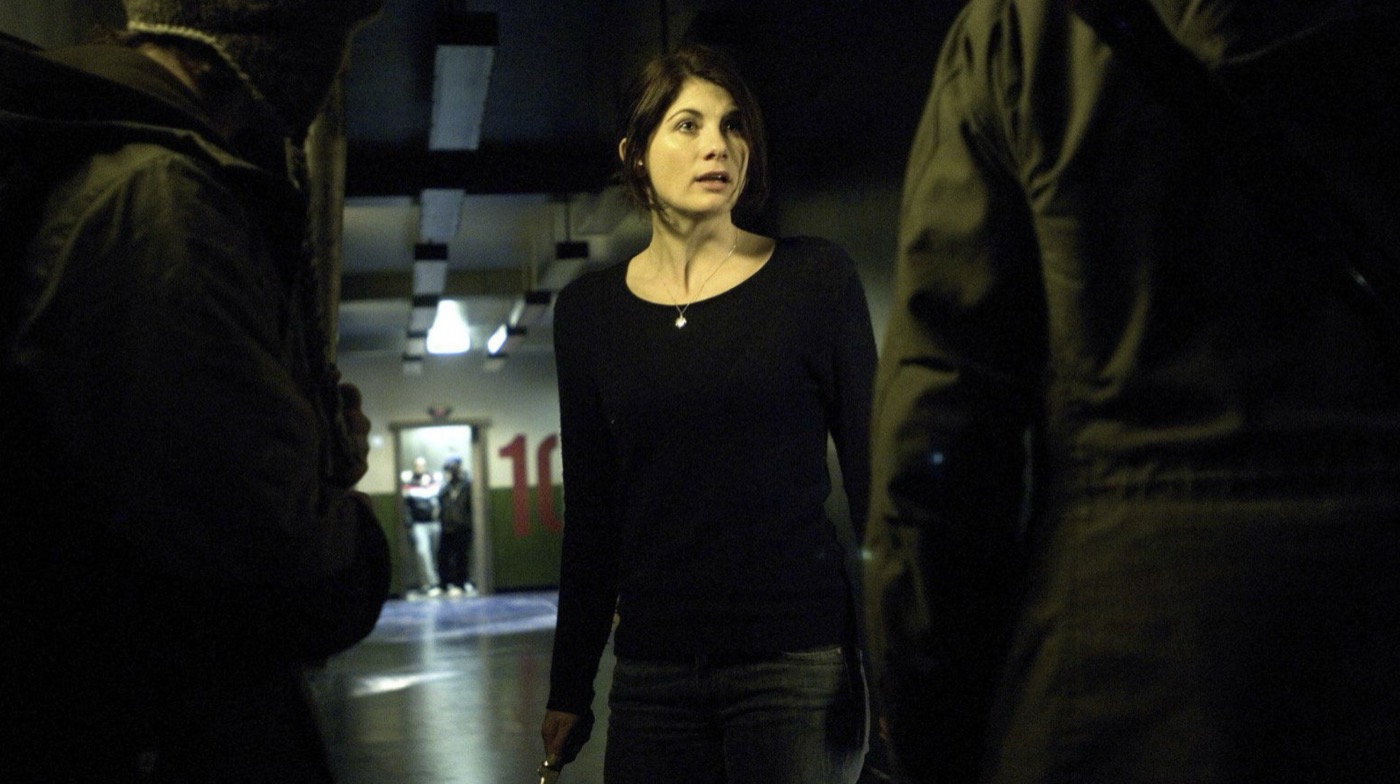
Because it’s Bonfire Night, the arrival of the aliens in a meteor shower goes largely unnoticed. There’s a palpable influence from The Day of the Triffids, a debt acknowledged by naming the central high-rise Wyndham Tower. There’s also a Wells Court, a nod to the progenitor of the alien invasion genre. Keen-eyed viewers will enjoy spotting several other references in the estate signage.
While I didn’t spot a ‘Kneale Square’, there’s a touch of The Quatermass Xperiment (1955) in the way the alien threat develops in an unremarkable urban setting. In this case, it’s the largely abandoned Heygate Estate, filmed just as the last residents were moved out prior to its controversial redevelopment. In this way, the film commemorates a vanished architectural icon (or eyesore, depending on your view) of 1970s London.
The block and its surroundings are the whole world for most who live there. It has its limitations, but it’s where they’ve grown up and built a community. Their experience of the wider world comes through screens, so anything extraordinary feels alien. Conversely, when they venture outside the estate, they are often viewed as ‘aliens’ themselves. There are shades of Ridley Scott’s Alien (1979) here, with predatory beasts lurking in austere corridors and flickering shadows. The block itself becomes a character in its own right, much like a haunted house in the Gothic tradition or the Nostromo spaceship, gluing the narrative together.
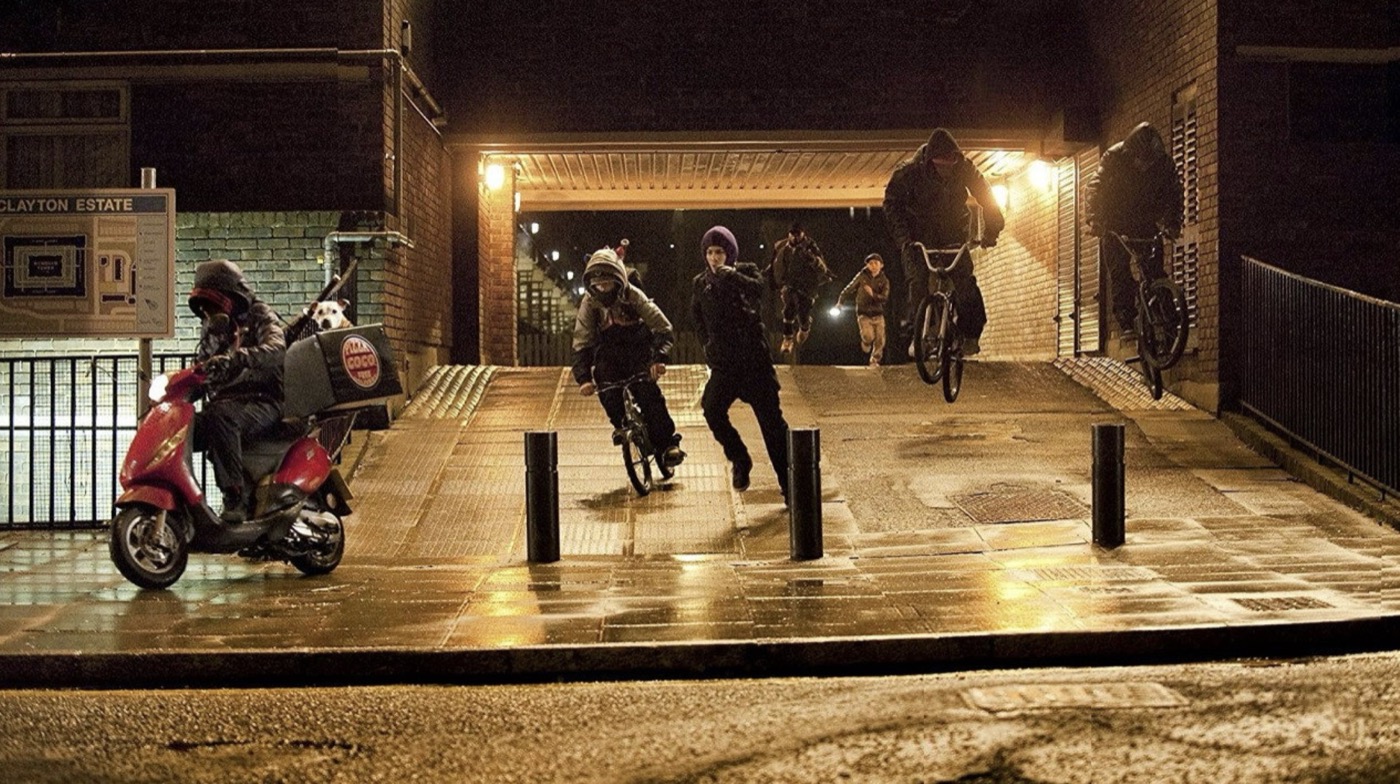
Core themes of race, class, and unity reinforce the scaffolding. Attack the Block is a prime example of how genre cinema can tell socially relevant stories by blending commentary with the sci-fi thriller format. On one level, it’s a coming-of-age drama. Much like folk tales dealing with rites of passage, the script employs archetypal motifs delivered in a contemporary format. These conventions are established and then subverted to explore identity.
The characters fulfil mythic roles as outlined in Vladimir Propp’s Morphology of the Folktale, published in 1928. . The aliens serve as the primary ‘villains’, representing an external threat. They are mysterious, terrifying, and almost invincible. Their design—a simian-canine fusion with a matte-black silhouette and glowing fangs—was developed with Terry Notary who, having worked on Avatar (2009), was more used to motion capture but enjoyed the physicality of performing with a prosthetic suit. Their arrival disrupts normality and to find a solution Moses must enter Ron’s weed farm, a liminal space where worlds overlap, where the conscious meets the subconscious and the privileged middle class mix with the underdogs. It fulfils the role of the fairy tale forest.
Moses is our ‘hero’, embarking on a quest to protect his block. Though initially portrayed as a criminal, he’s revealed to be brave, determined, and resourceful. The image of a Black hero clinging to a Union Flag snagged on the broken windows of a devastated block remains a defining image of 21st-century British cinema.

Conversely, gang leader Hi-Hatz is the ‘false hero’. Initially appearing dominant and charismatic, his selfish motivations are revealed when he exploits others for personal gain. He is a failed leader, echoing the oppressive governments that crumble in the face of rapid change. Sam acts as the ‘donor’, providing medical assistance and acting as a moral compass, while Brewis (Luke Treadaway), a middle-class ‘white boy’, serves as the ‘dispatcher’. His scientific knowledge identifies the aliens’ vulnerability, driving character choices and encouraging the hero to take decisive, high-stakes action.
Ethnicity also informs character responses. In terms of racism and class prejudice, the boys are often referred to as ‘Black’ and ‘hoodies’ in a way that suggests they’re viewed as threatening or criminal simply because of their appearance.
The theme of cross-cultural relationships is dissected through the lens of Sam and the Black youngsters. At first, there’s inevitable mistrust and tension, but they eventually accept her as part of their group and she proves herself a valuable ally. There’s an overarching exploration of complex identities and the importance of combining individual strengths to create unity in the face of adversity. I like to imagine this is an unofficial Doctor Who story where Sam isn’t a nurse, but the Doctor operating undercover. She does exactly what the Thirteenth Doctor does: improves those around her and encourages them to do the right thing for the greater good, even at mortal risk to themselves.
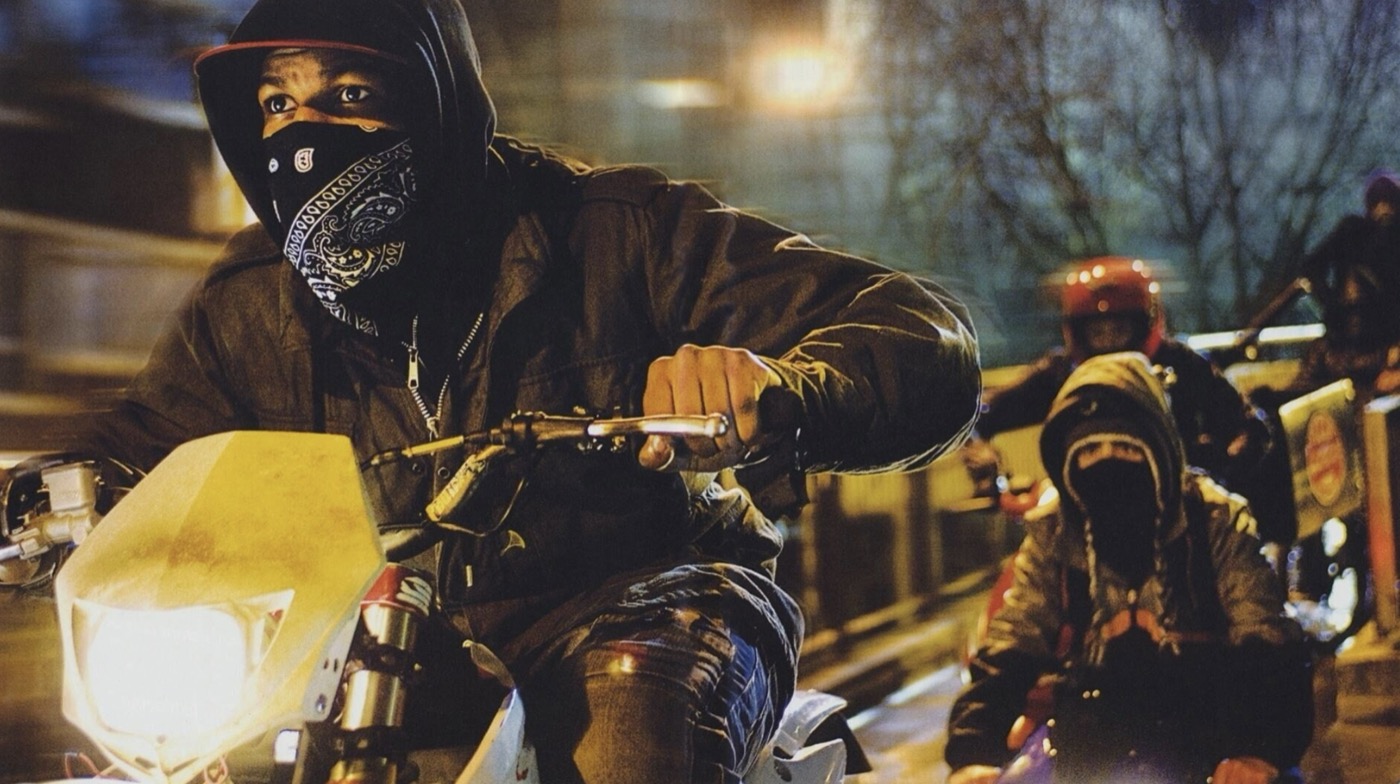
Throughout, character choice is deployed as a powerful storytelling tool that reflects the backgrounds of the young protagonists. Moses is a gang member whose kudos relies on being perceived as daring—which is why he leads the mugging of Sam in the opening scenes. At that point, his identity is tied to the approval of his clique for a sense of belonging in a precarious life. However, his need to step up and protect his turf eventually shifts into a desire to value and protect the people who create that sense of place. His attitude subtly alters, becoming inclusive rather than separatist. These choices lead him into conflict with the aliens and the gang hierarchy, eventually forcing him to confront his own core values.
Concentrating on young characters allows for greater potential to show growth. Joe Cornish believed he could write youth because he’d been one himself. Beyond drawing from his own experiences, he continually sought input from his excellent young cast to keep the characters authentic and grounded. He also visited local youth clubs near the film’s setting, asking real teens how they’d react to his scripted situations. He even lifted some of their comments as direct quotes for the dialogue.
The director has also discussed the ‘emotional authenticity’ he hoped to capture so characters feel like real people with complex motivations that the audience can relate to. Although dialogue is vital, he reiterates that film is a visual medium and that the images should tell the story just as much as the script. Thomas Townend’s cinematography ensures Attack the Block looks superb, using a variety of visual textures such as low light pierced by firework flashes and glowing smoke.
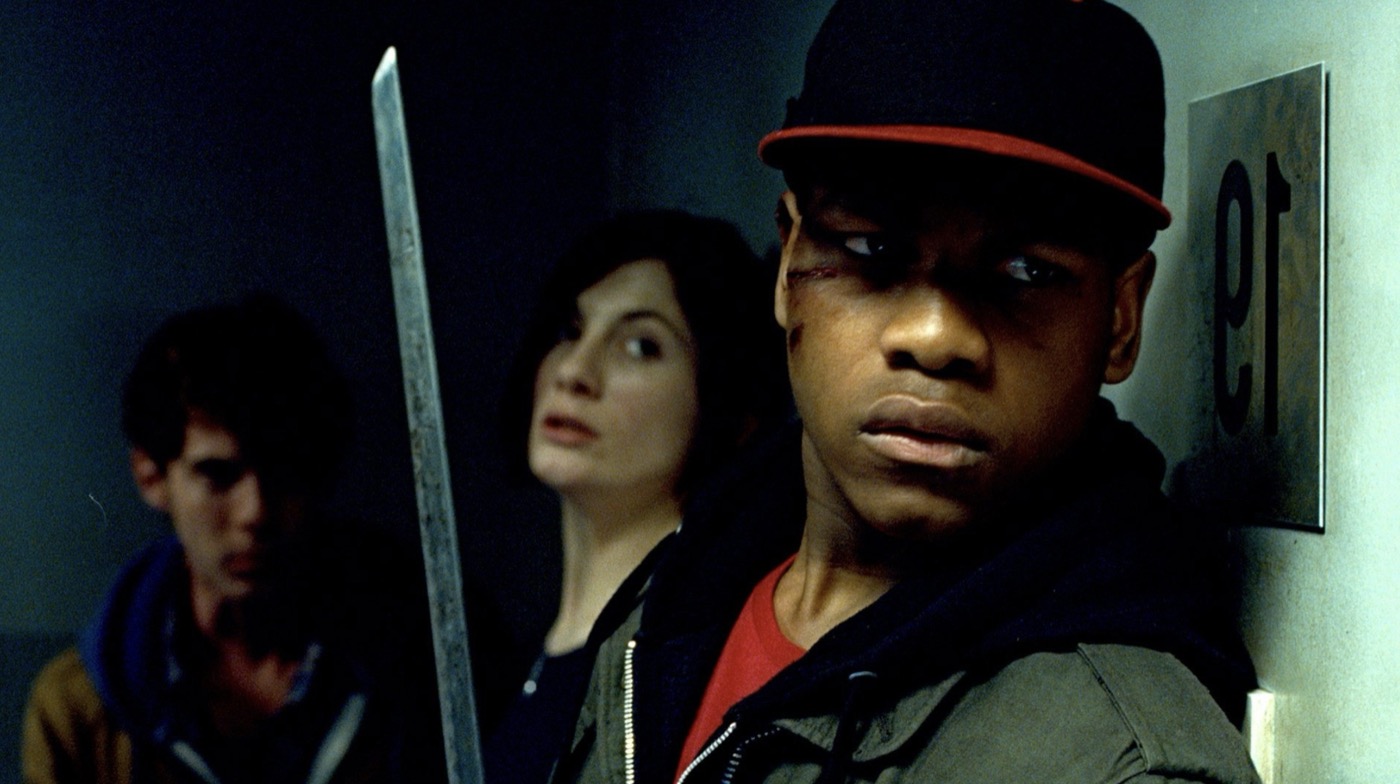
The somewhat unpredictable character arcs also direct the flow of events, with each main character undergoing a transformation as they learn to work together. Dialogue plays an important part here; the language used changes according to shifts in relationships. For example, the threatening terminology and Americanised slang used by the boys is dropped as they get to know Sam, eventually becoming more casual and friendly. She’s no longer an outsider.
The production design team, headed by Marcus Rowland, ensures the mise-en-scène delivers an unspoken narrative. The interiors of the flats quickly establish the characters’ backgrounds and familial relations. The shots of their bedrooms allow these personal spaces to act as portraits of their interests—which, especially in Moses’s case, are highly contradictory to their public image. When Sam sees inside Moses’s home, she assumes he has a younger brother and is surprised to learn he lives alone and is just 15 years old.
We see the young characters’ homes when they briefly return to collect weapons. The fact that they all own machetes, baseball bats, and samurai swords is an economical way of using objects as narrative devices. We instantly understand that these teenagers lead lives where possessing offensive weapons has been normalised. By this time, we know them better and understand they aren’t ‘bad’ people, but are dealing with harsh social conditions. We might ask why it’s necessary for children to defend themselves with deadly weapons; this could be understood as a metaphor for a community structure under attack from government policies, such as social housing issues and the controversial Heygate redevelopment plans.
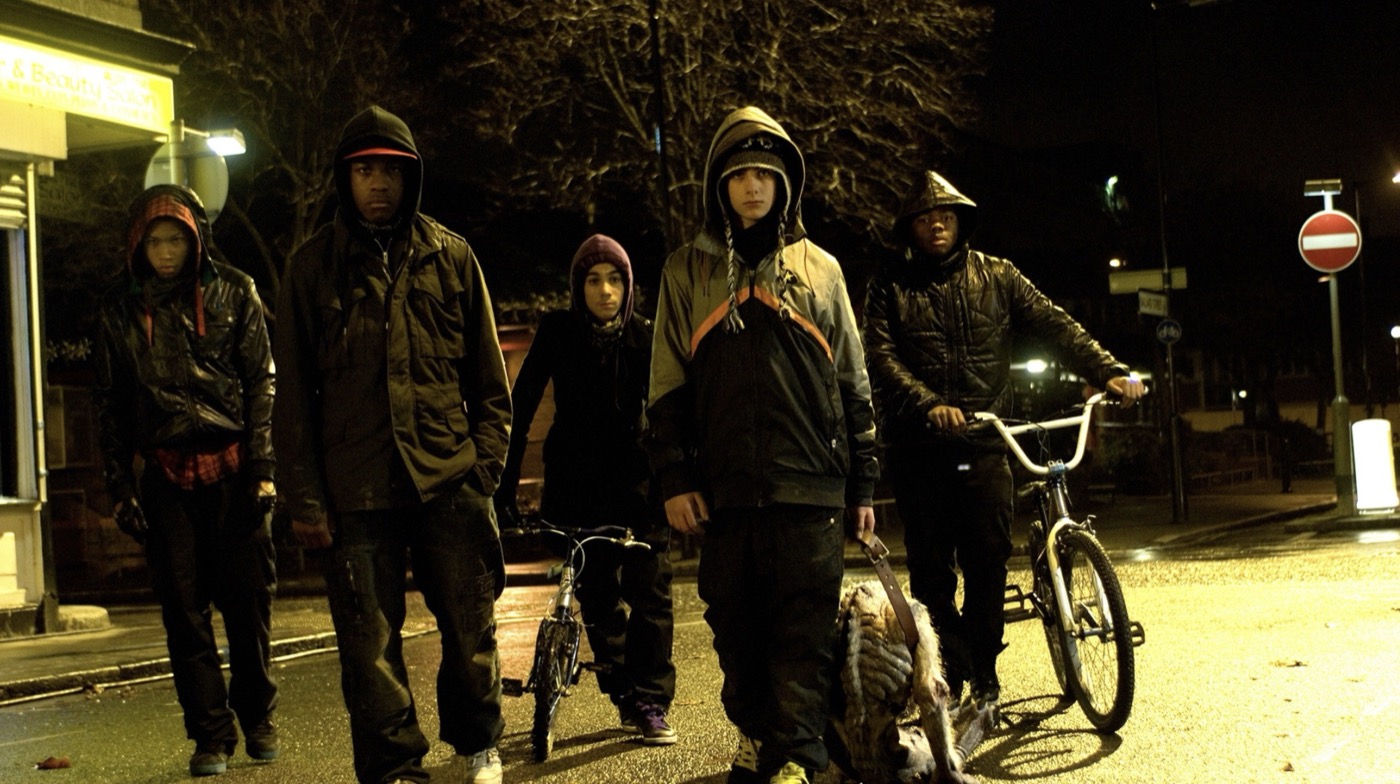
Interestingly, the aliens are presented as ‘The Other’—the same way the underprivileged, predominantly Black community is often perceived by wider society. Just as certain groups are labelled as ‘The Other’ to portray them as a threat, the film uses the aliens to mirror this marginalisation.
Through dialogue, comedy, and action, Cornish explores race, class, and social inequality in contemporary urban society. By presenting a group of young, working-class characters as heroes, he challenges traditional assumptions about who gets to be a protagonist, using a familiar alien invasion plot as a metaphor for the challenges faced by marginalised communities in real life.
Moses is initially presented as a tough, streetwise kid who mugs a woman in the opening scene. However, as the story unfolds, we learn he’s a complex and sympathetic figure struggling to find a purpose in a world that’s given him few opportunities. Similarly, Sam initially sees the boys as a threat but eventually comes to understand their perspective. Even the drug grower, Ron, is portrayed as a sympathetic character who is manipulated by the gang leader, Hi-Hatz.
The initial theatrical run was a box office disaster, recouping only about a tenth of its $10M-plus budget. This was largely because its well-observed rendering of British social sub-strata was simply too ‘alien’ for the US market. Its character turnarounds subverted expectations, presenting an initially unsympathetic group that we slowly grow to care about. It has since garnered critical acclaim and a cult following. A sequel is currently in development, helmed by Joe Cornish with John Boyega returning as the grown-up Moses. Attack the Block isn’t only hugely entertaining; it sympathetically confronts real-world issues in a well-executed genre piece that remains relevant 15 years after the block was attacked… and then demolished.
UK • FRANCE | 2011 | 88 MINUTES | 2.35:1 | COLOUR | ENGLISH

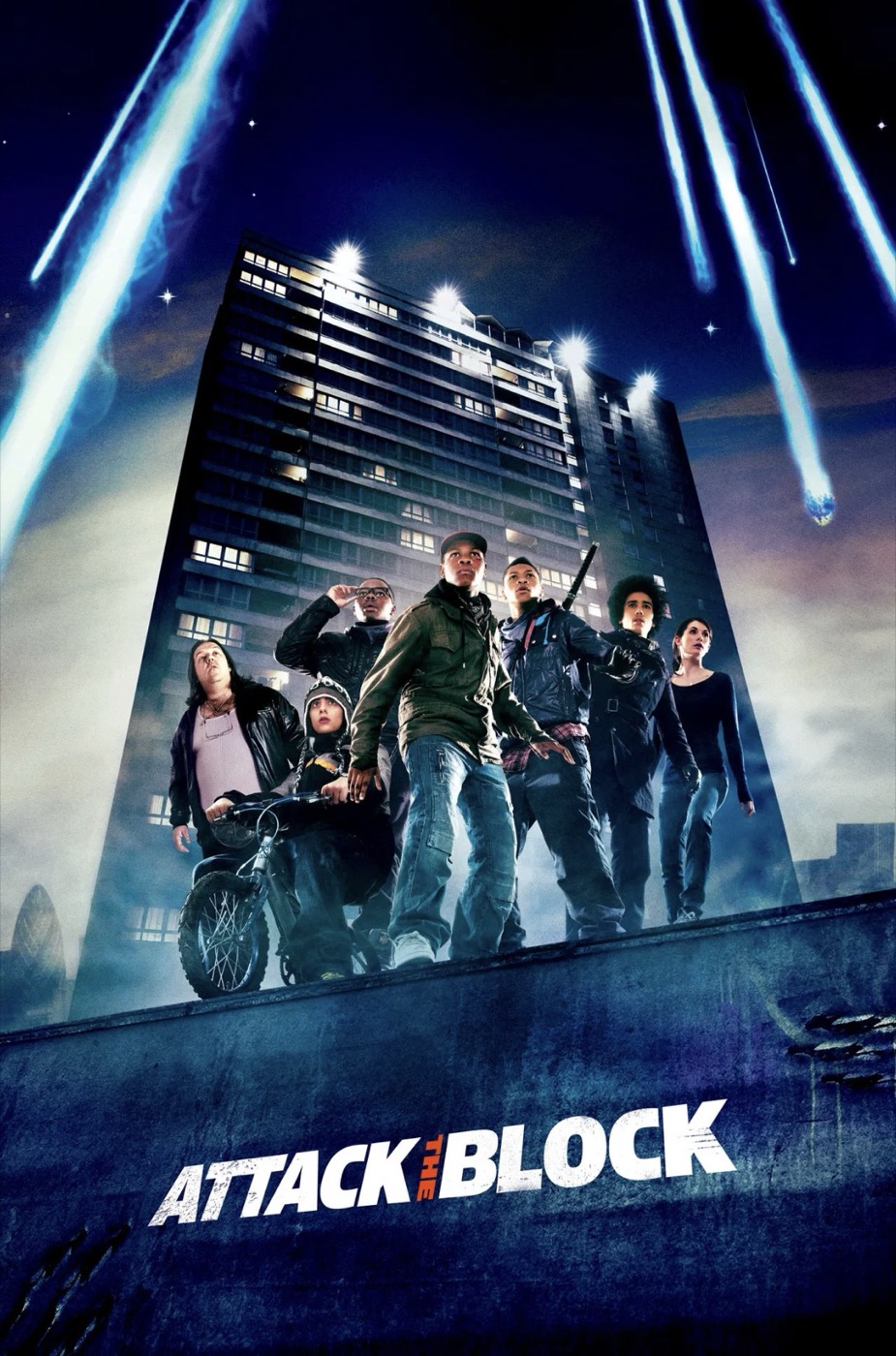
writer & director: Joe Cornish.
starring: John Boyega, Jodie Whittaker, Alex Esmail, Franz Drameh, Leeon Jones, Simon Howard, Luke Treadaway, Jumayn Hunter & Nick Frost.