JAMES AND THE GIANT PEACH (1996)
An orphan who lives with his two cruel aunts befriends anthropomorphic bugs who live inside a giant peach, and they embark on a journey to New York City.

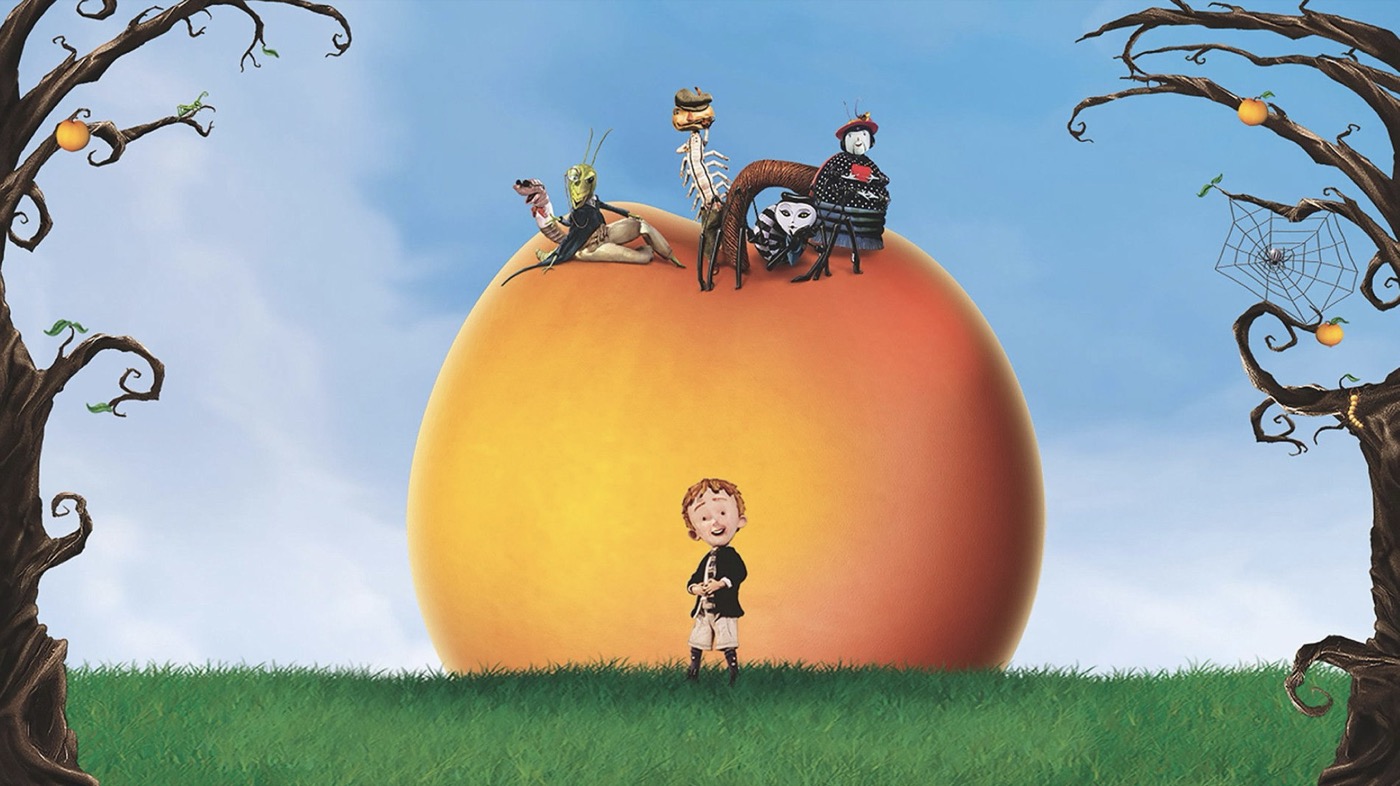

An orphan who lives with his two cruel aunts befriends anthropomorphic bugs who live inside a giant peach, and they embark on a journey to New York City.
James and the Giant Peach, adapted from Roald Dahl’s 1961 children’s book, was Henry Selick’s follow-up to The Nightmare Before Christmas (1993)—one of the greatest stop-motion films and directorial debuts of all time. Selick’s magnum opus was a gothic fantasy that plumbed the tragic depths and deft comedy of Jack Skellington’s inner turmoil as a King of Halloween Town who wished to be known for tenderness rather than terror. The stop-motion animation was gorgeous, the songs were either deeply moving or hilarious, and the voice acting remains some of the best in the medium. Its lean runtime and note-perfect storytelling make it a joy to revisit.
Holding James and the Giant Peach to that same standard would be an unfair burden for any film. However, this surreal fantasy is so often pulled towards madcap antics—and away from anything that feels real or earnest—that there’s no real point of comparison. Like a poor Terry Gilliam film, there’s no resonance to ground this leering spectacle; the action scenes go on for so long, and spiral so quickly into further chases or fights, that the experience is rather headache-inducing. One of the few similarities this film shares with Selick’s predecessor is a brief runtime—a fact that becomes glaringly obvious when one reckons with how little James’ (Paul Terry) life is actually developed.
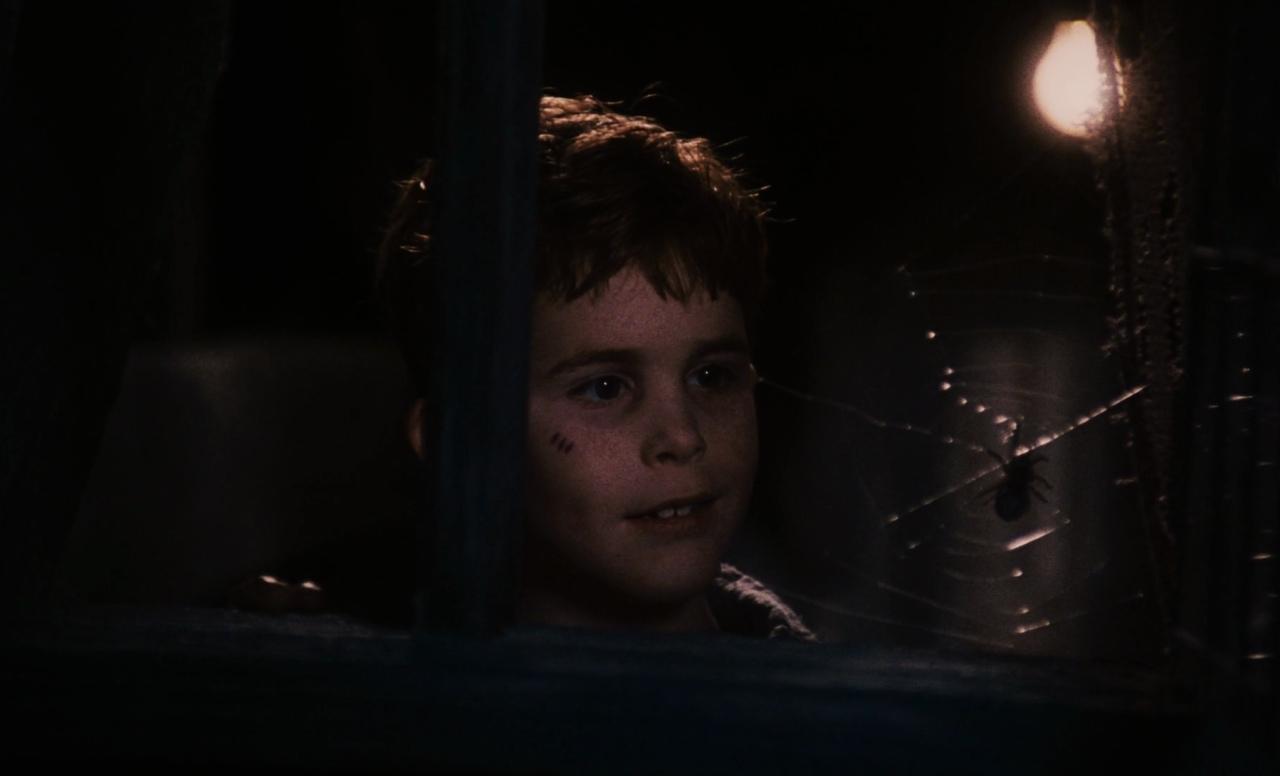
At first, he’s like any other happy child: wide-eyed, full of wonder, and told by his parents that they’re moving to New York City. All he knows of the city is a brochure and a distant view of its crowded skyscrapers, but that’s enough to cobble together a fantasy as real to him as anything else in his life. When his parents are killed off-screen by a flying bull, this dream world becomes a lifeline—a mental escape from the clutches of his evil aunts, Sponge (Miriam Margolyes) and Spiker (Joanna Lumley). All of this is portrayed within three minutes, which isn’t nearly enough time to care about the characters.
The fact that the plot is kick-started by a fantastical beast is so ridiculous as an introduction to the film’s tragic backdrop that I can’t quite reconcile it. Its bluntness isn’t intentionally funny, yet it would be only slightly less shocking to learn the protagonist’s parents died because seagulls dropped rocks on them. It’s the kind of absurd scenario that repels emotional investment.
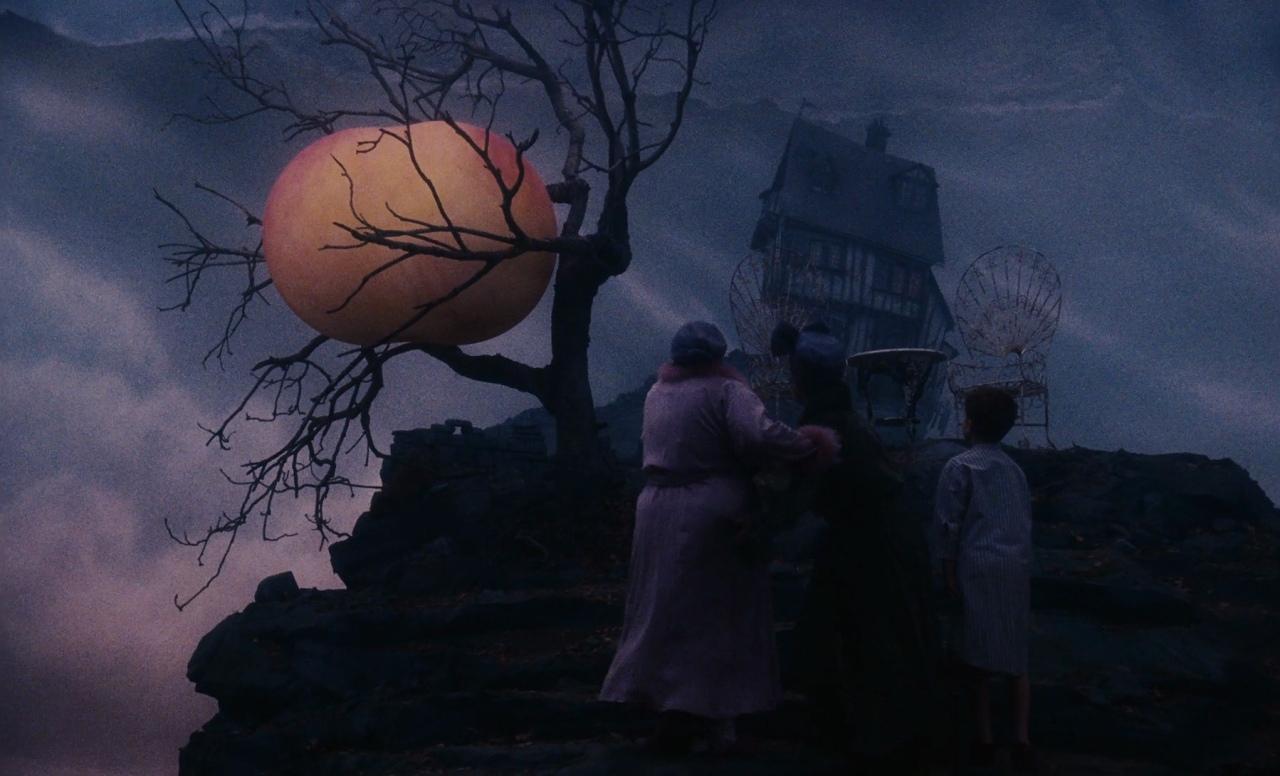
Just as in The Nightmare Before Christmas, loneliness is explored through song. James sings his heart out about the dream worlds he envisions, which seem both impossibly close and yet out of reach. Terry, who wasn’t even ten years old when cast in the lead, doesn’t overdramatise his performance. There’s genuine personality in his singing; he acutely portrays the feeble, tremulous emotions of a young boy dreaming of a better life. Accessing that life is another thing entirely, especially with his tyrannical aunts in sight. Margolyes and Lumley are wonderfully melodramatic, leering at James with sadistic glee. You embody his perspective fully in these scenes; you can almost feel these skin-crawling tyrants bearing down on you. But the strongest dramatic beats go unsaid, leaving a void where the loss of James’ parents should be. None of Terry’s acting can compensate for an underdeveloped protagonist.
Once the film pivots to stop-motion, the quality shifts, resulting in a far uglier aesthetic than The Nightmare Before Christmas. Selick’s latest film, Wendell & Wild (2022), mightn’t have been memorable, but its slick animation was still a joy to behold. Whether it’s regurgitating recycled imagery or appearing dated in a way that his debut never did, James and the Giant Peach is, improbably, unpleasant to look at. The action is a swirling mess of dreamscapes with nothing to cohere them into a narrative or make them soar as imagery. It is weirdness for the sake of weirdness, where chase scenes have little to ground them except a repetitive soundtrack.
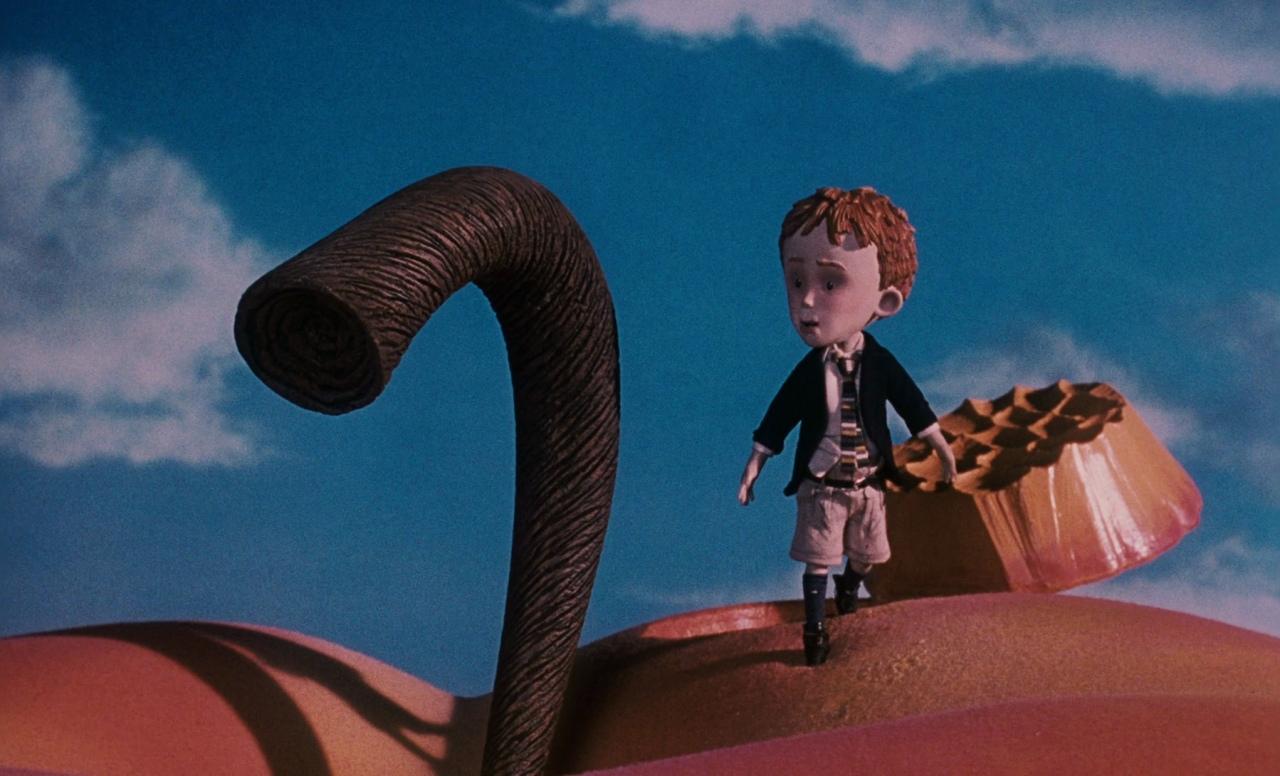
Randy Newman, a Disney regular, composed two excellent motifs for the film—recalling wistful sorrow and thrilling terror—and then repeated them ad nauseam. The same applies to the action scenes. The film may technically be “brisk” given its short runtime, but it feels double its 79-minute length because spectacle consistently gets in the way of character.
Even if the film never quite clicks, individual elements demonstrate the dedication involved in enlivening the material. Newman’s score might lack the grand aspirations that make you root for James, but its beauty still shines through the repetition. The voice acting is fantastic, from Terry’s lead performance to the over-the-top expressiveness of the supporting cast. Susan Sarandon is particularly strong as Miss Spider, James’ trusted ally, while Margolyes is as excellent as Mrs Glowworm as she is when playing one of the tyrannical guardians.
Ultimately, however, even these insects feel like hollow echoes of The Nightmare Before Christmas. Both films take traditionally “ugly” imagery and imbue it with warmth through humour and music. By giving these creatures a home in an otherwise unforgiving world, Selick and his collaborators have previously told entertaining stories that let children know there is room for everyone. But this time, the experience rings hollow—a combination of borrowed motifs, a repetitive score, and spectacle operating where resonance and wonder should lie.
UK • USA | 1996 | 79 MINUTES | 1.85:1 | COLOUR | ENGLISH

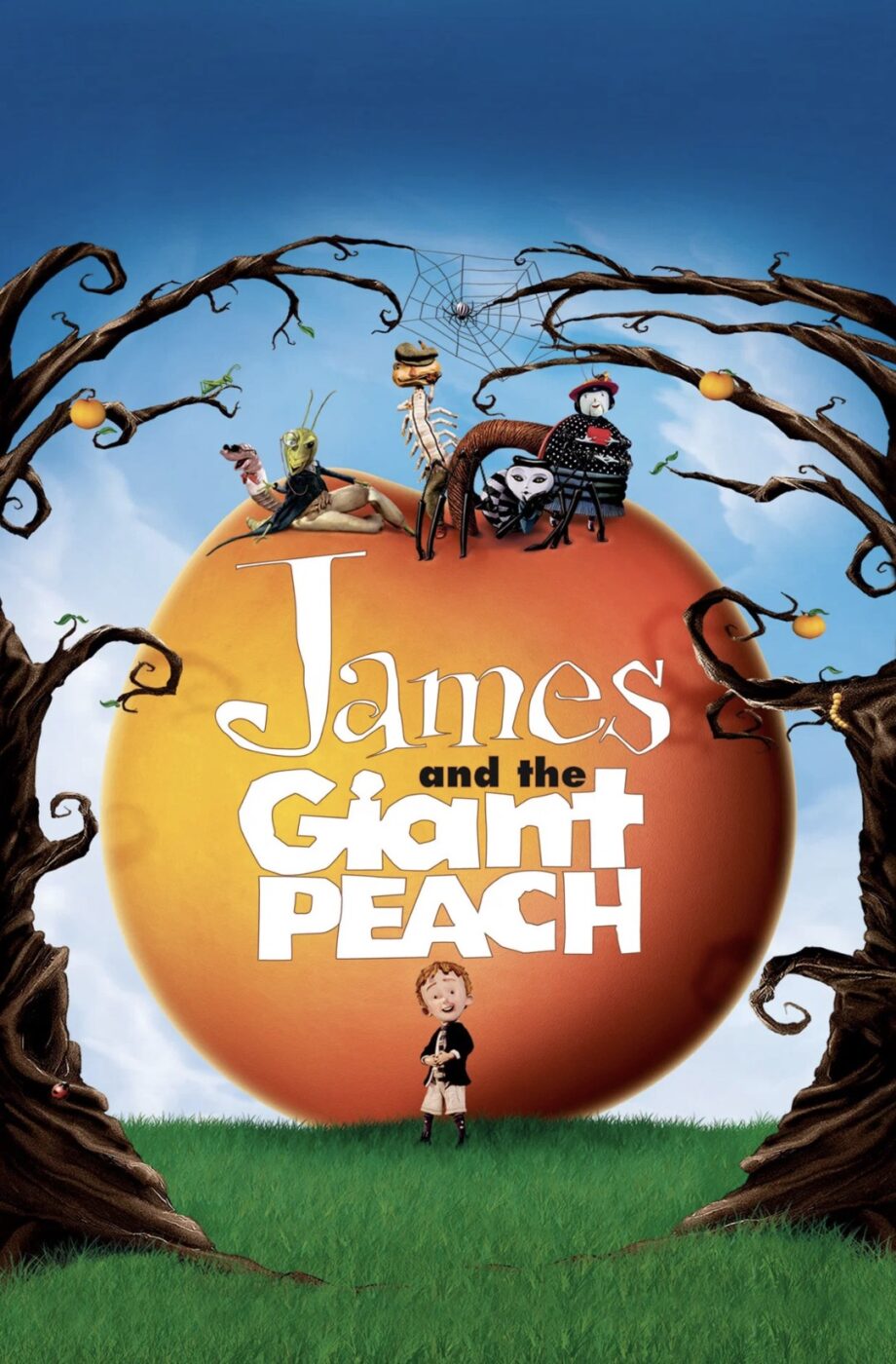
director: Henry Selick.
writers: Karey Kirkpatrick, Jonathan Roberts & Steve Bloom (based on the book by Roald Dahl).
starring & voices: Paul Terry, Miriam Margolyes, Joanna Lumley, Simon Callow, Richard Dreyfuss, Jane Leeves, Susan Sarandon & David Thewlis.