THE LIVES OF OTHERS (2006)
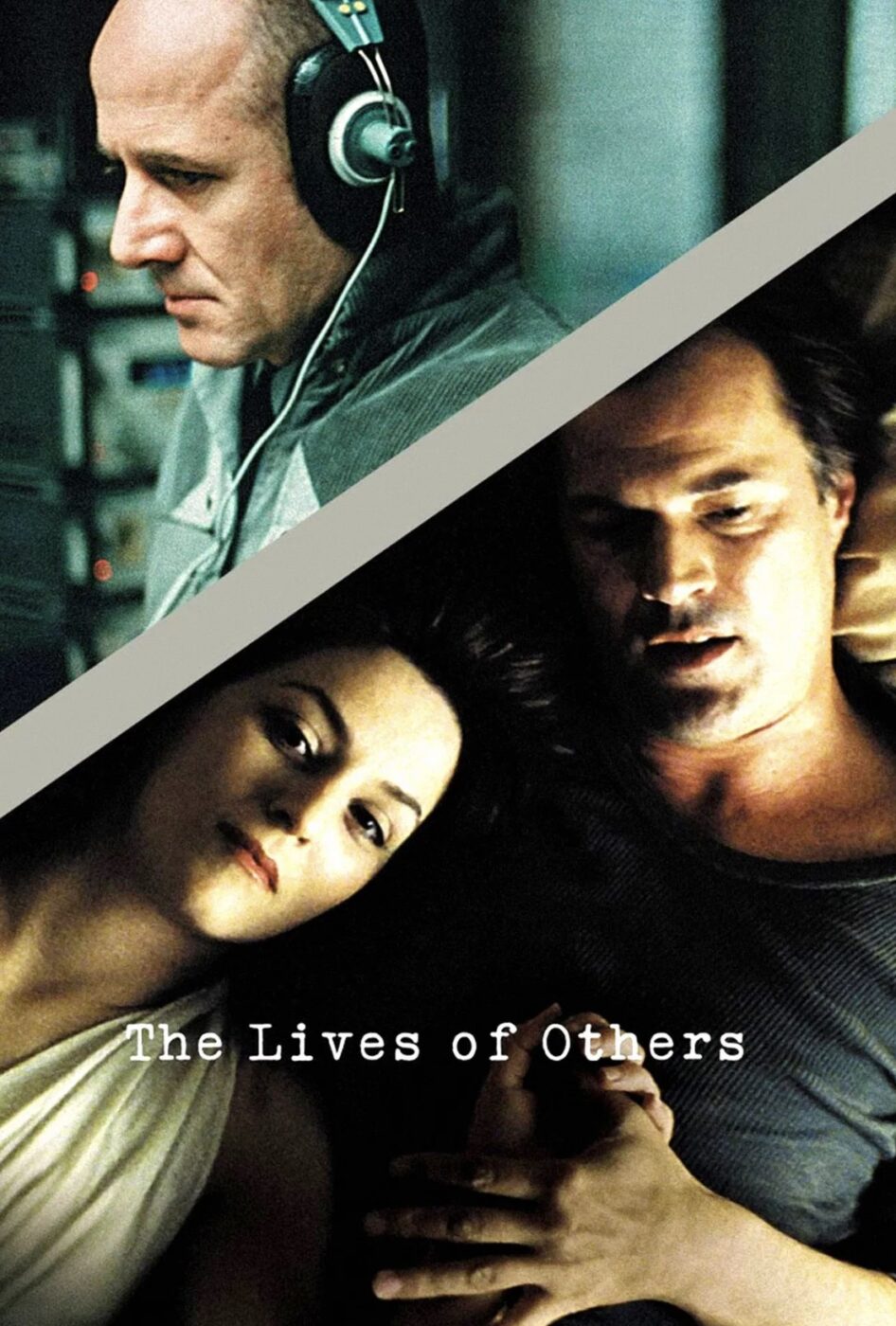
In 1984 East Berlin, an agent of the secret police conducting surveillance on a writer and his lover finds himself becoming increasingly absorbed by their lives.



In 1984 East Berlin, an agent of the secret police conducting surveillance on a writer and his lover finds himself becoming increasingly absorbed by their lives.
It’s always remarkable when a director makes a debut as confident as those usually reserved for the most seasoned filmmakers. Even more impressively, Florian Henckel von Donnersmarck’s feature debut, The Lives of Others / Das Leben der Anderen, was a resounding hit with critics and audiences alike. After winning the Academy Award for ‘Best International Feature Film’, it secured the No.48 spot on The New York Times’ list of the best movies of the 21st-century. Its enduring legacy is due in no small part to the late, great Ulrich Mühe, who passed away in 2007, living just long enough to witness the acclaim garnered by the film and his leading performance.
As Hauptmann Gerd Wiesler, a captain in East Germany’s secret police in 1984, Mühe is a revelation. He portrays a tortured soul who has become a mirror image of his profession: cold, impersonal, and unable to appreciate beauty. Art is meaningless to Wiesler; while attending a play by the acclaimed pro-communist playwright Georg Dreyman, he spends his time monitoring the author rather than the stage. This protagonist has no known family or friends. The closest he gets to intimacy is a brief encounter with a prostitute, which ends before any emotional connection can form. He asks her to stay, but duty calls; she leaves for another appointment while he marinates in his isolation.
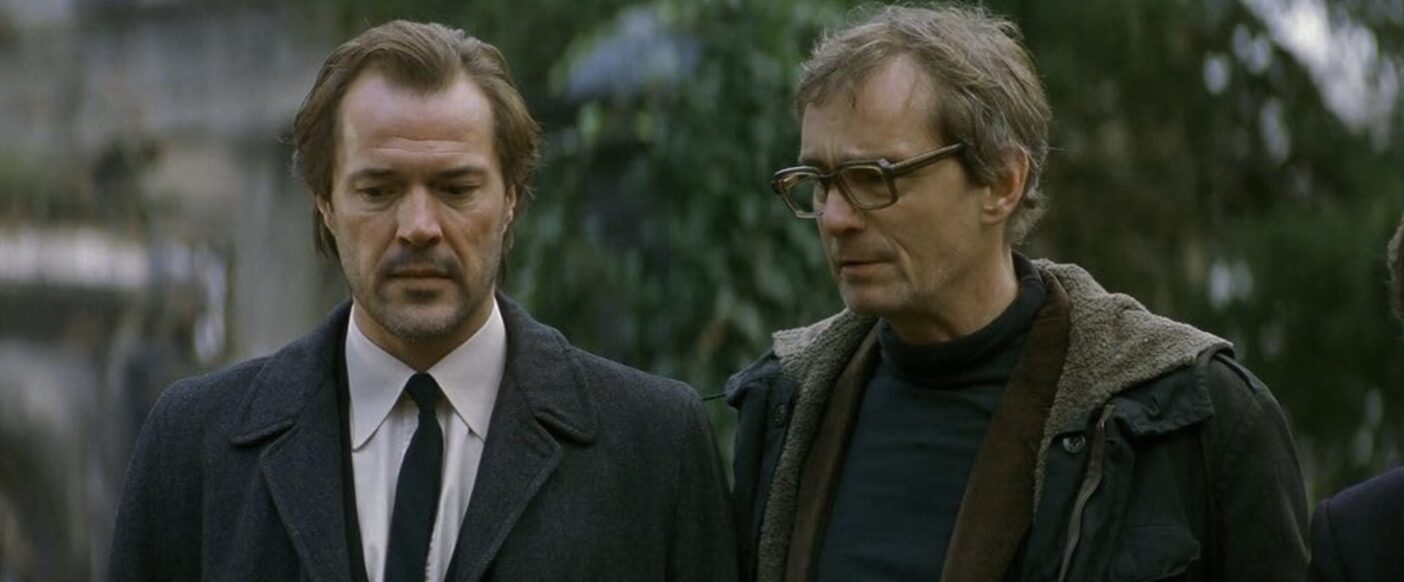
Dreyman and his actress girlfriend, Christa-Maria Sieland (Martina Gedeck), are not an inherently awe-inspiring couple. When their apartment is bugged and Wiesler is appointed to oversee the surveillance, he isn’t won over by their brilliance or erudition. Their conversations are generally inconsequential, important only to themselves. Even their dinner parties offer little of interest, revolving around familiar topics: art and its repression within the one-party state.
The film’s sensitivity develops at the intersection of art’s transcendent power and the brutality of the institutions seeking to quell it. It isn’t that Georg and Christa-Maria risk immediate execution if he writes a subversive play or if she refuses an affair with the dictatorial minister Bruno Hempf (Thomas Thieme). They might not even be imprisoned for long. However, their passion and creative purpose would be severed forever. Stifling conditions often stir creativity, compelling Georg to rebel and binding him in a trap designed to fail. Watching the system’s casual cruelty brush against the hopeful, almost naive compulsion of art—acting as both self-expression and political advocacy—is engrossing.
Wiesler provides the ugly face of the regime as he whittles away his existence eavesdropping, but Hempf is the true tyrant. He triggers the plot by suggesting the bugging of the apartment to gain leverage over Christa-Maria. This way, any conversation subverting the regime’s norms can be used to coerce her into satisfying his lust.
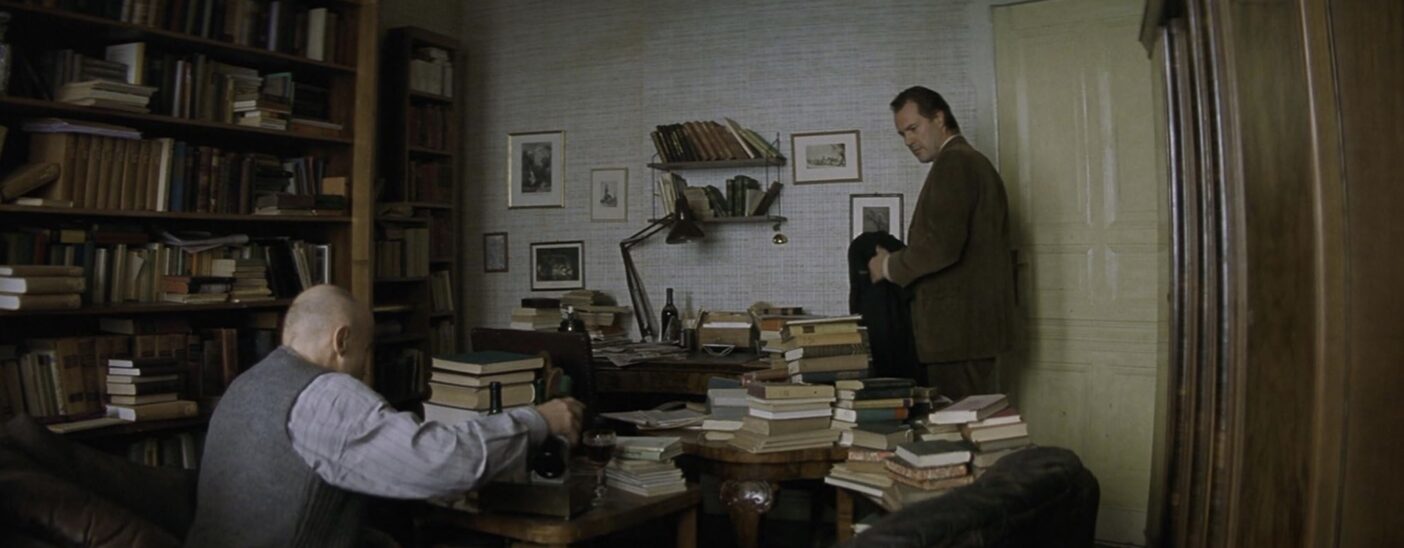
Though Wiesler is never as stomach-turning as this senior official, both men have wasted their lives in devotion to the GDR’s secret police; their existences expose the state’s underlying moral rot. There is no end to their gluttony for persecution. Regardless of how many men, women, or children are investigated, there is always a demand for more heads on the chopping block.
Composers Gabriel Yared and Stéphane Moucha effectively pair beauty and sorrow, motifs that are constantly intertwined in The Lives of Others. Together, they produced a gorgeous, under-appreciated soundtrack that maintains emotional intimacy even as it swells triumphantly. Like the film itself, the music emboldens the couple’s struggles. Although Georg and Christa-Maria aren’t given immense depth, they become unwitting champions of the human spirit for both the audience and Wiesler. Viewers and the protagonist are bound by the voyeuristic thrill and horror of listening to a couple’s private moments, gaining an insight that becomes impossible to ignore. One can only shut out the heart for so long, a reality Wiesler is eventually forced to reckon with.
It is easy to forget how intimate this film is, despite a lofty thematic battleground between individual freedom and collectivism that recalls the grand epics once common in Hollywood. Such films hardly exist now; low-budget filmmaking has been forced to hoist this mantle—a near-impossible task. Just as Brady Corbet managed to craft the 3.5-hour epic The Brutalist (2025) on a $10M budget, Donnersmarck delivered a minor miracle by producing The Lives of Others for just $2M.
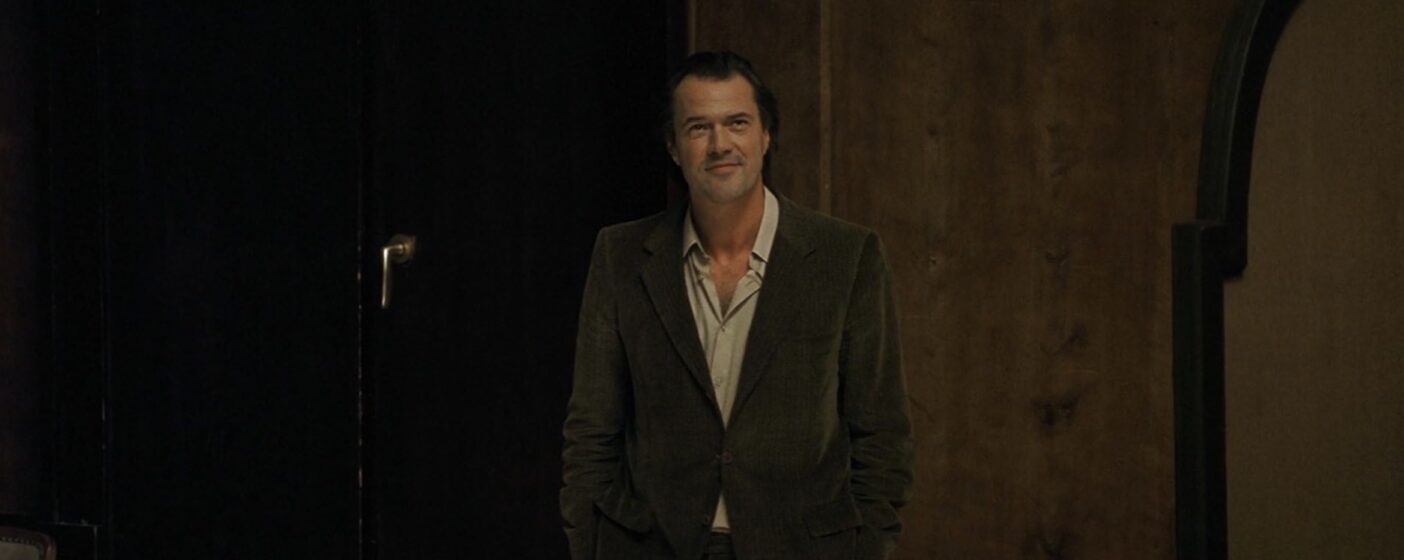
The film never feels budget-constrained. Instead, its scant locations sharpen the focus, trapping the weight of the world within the vibrant, tortured space of a few rooms Just as Donnersmarck injects beauty into Wiesler’s life through this couple, he creates stakes that feel tremendously high, recognising how tenuous love and art can be under the thumb of authoritarianism. This makes them more precious—a fact the film never forgets, from its moving performances to its rousing storyline.
The only slight drawback lies in how specific each character is. Everything about Wiesler conforms to his profession: his speech, his appearance, and even his posture. He is a slightly caricatured figure gradually re-learning how to be human, a concept made compelling when he is moved by the words of Bertolt Brecht. Brecht used surrealism not as an escape, but to make viewers question their reality. Wiesler is the “injection of surrealism” in this harrowing tale.
However, the notion of making the familiar appear strange doesn’t always square with the film’s historical backdrop, where tropes are sometimes wielded with little regard for how “alien” they are. Wiesler is a worker, not a malevolent force raised in a lab. At what point does a human become so radicalised that they forget they are more than a cog in a machine? The Lives of Others is perhaps too focused on its romantic notions of the human spirit to fully tackle that cold reality.
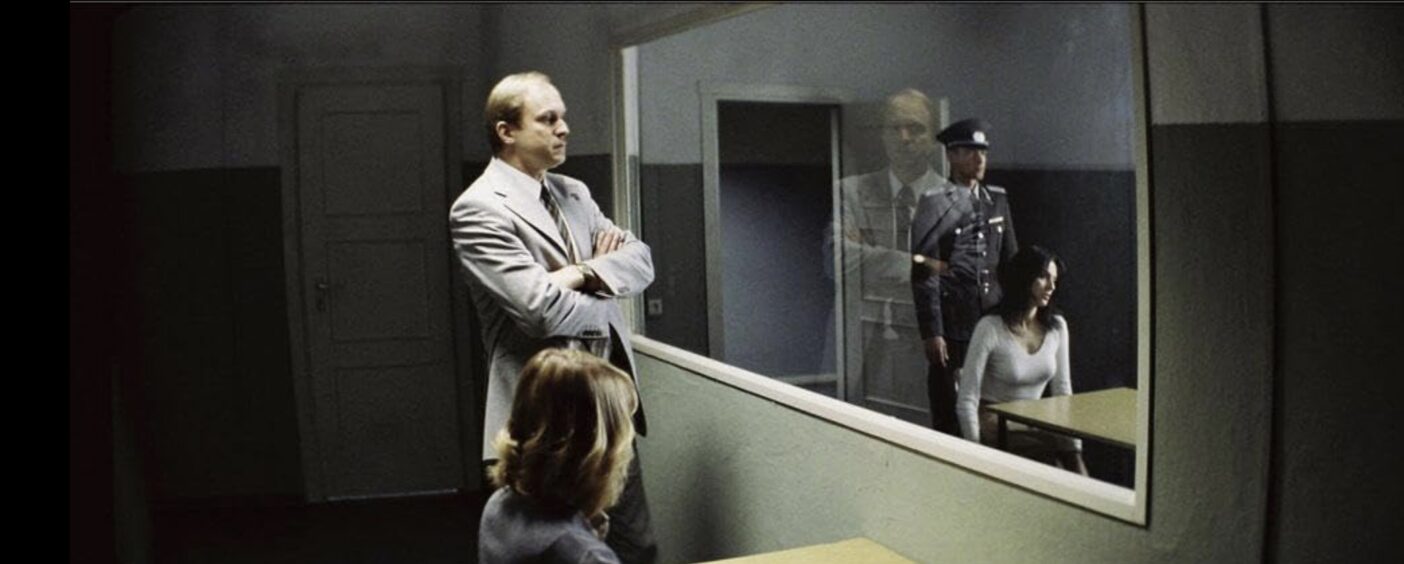
Brecht, who used art for social change and didn’t shy away from didacticism, might have approved of the rousing speech Christa-Maria delivers when Georg questions her involvement with Hempf. She argues that while she shares a bed with the man, Georg does the same by yielding to the government. She lays this out like an expert debater rather than a conflicted girlfriend. Her response is too perfect, both in its timing and how succinctly it hammers home the themes. Such didacticism doesn’t quite suit a film whose lifeblood is the richness of the human spirit arising from unlikely places. It occasionally makes the drama feel stilted.
That said, as a tribute to the victims of oppression, The Lives of Others is frequently stirring, with a spectacular final 20 minutes that deftly navigates several time jumps. Bittersweet but never sappy, it is as much a reinterpretation of the Hollywood epic as it is a rejection of one. In hindsight, it was destined to occupy that rare space where films appeal to critics and the public in equal measure, making a strong case for its status as a 21st-century classic.
GERMANY • FRANCE | 2006 | 137 MINUTES | 2.39:1 | COLOUR | GERMAN

writer & director: Florian Henckel don Donnersmarck.
starring: Ulrich Mühe, Sebastian Koch, Martina Gedeck, Ulrich Tukur, Thomas Thieme, Hans-Uwe Bauer, Volkmar Kleinert, Matthias Brenner & Herbert Knaup.