VOLVER (2006)
After her death, a mother returns to her home town in order to fix the situations she couldn't resolve during her life.



After her death, a mother returns to her home town in order to fix the situations she couldn't resolve during her life.
Ghosts are crawling out of the woodwork in Pedro Almodóvar’s Volver. In typical Almodóvar fashion, his characters are quick to accept this fantastical occurrence. They might offer a few words of incredulity regarding the fact that Irene Trujillo (Carmen Maura), the deceased mother of protagonist Raimunda (Penélope Cruz), is roaming the Earth again; however, these are frivolous, fleeting notions—a mainstay of the Spanish director’s films and his humour. In his world, the most disturbing experiences feel even more deranged when soap opera-esque characters figuratively slap their cheeks and remark on developments with giddy shock.
Reanimation is a relatively tame taboo for Almodóvar. But for Raimunda, who despises her mother, it’s a truly abhorrent development. Besides, if Volver ever suggested it might be more measured than the zany antics and perverse behaviour of the director’s early films, the spectre of sexual, incestuous violence soon dispels the illusion. When Raimunda’s daughter, Paula (Yohana Cobo), is assaulted by her father, Paco (Antonio de la Torre), Paula stabs him to death. The protagonist keeps the murder a secret, discarding Paco’s body in a freezer and continuing her life as if nothing happened.
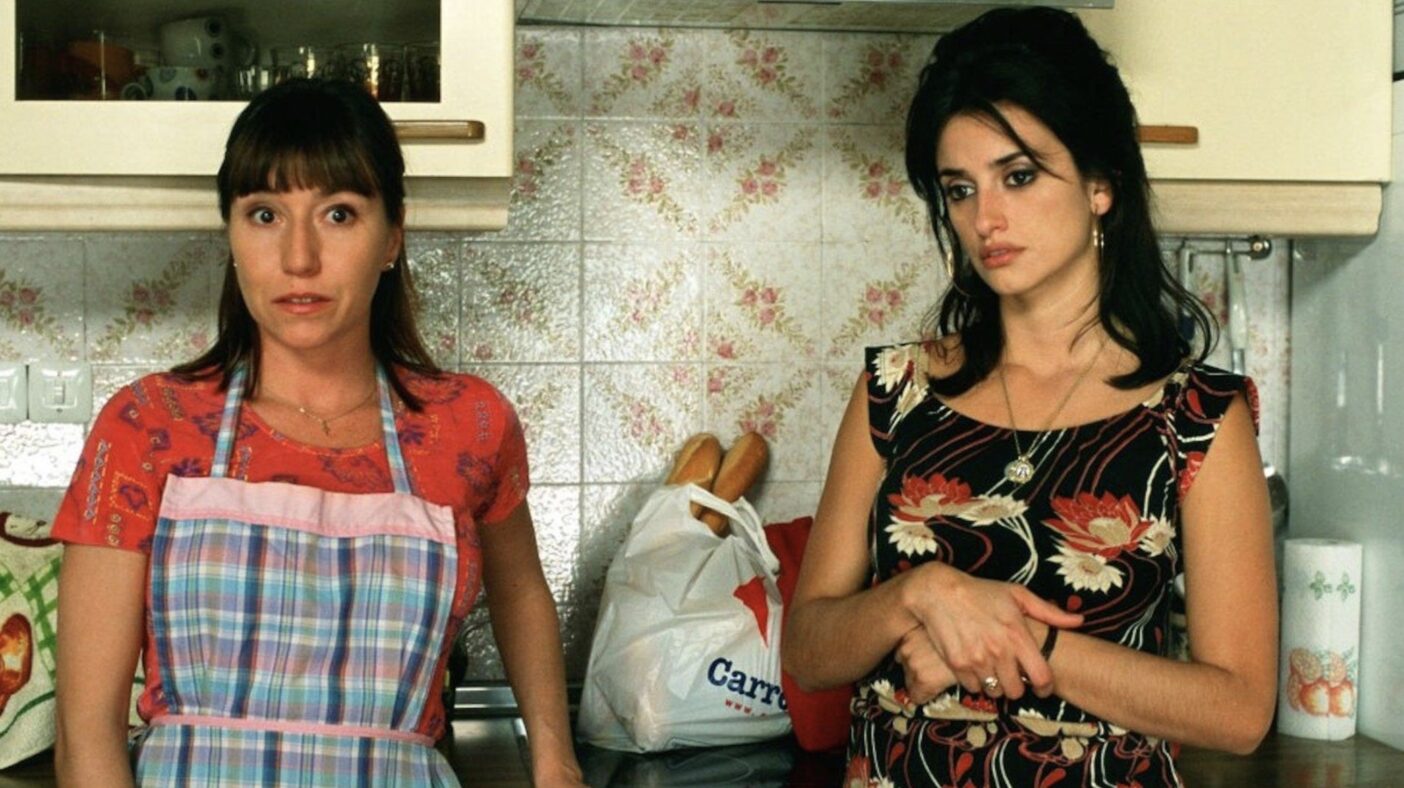
But secrets, like the reanimated presence of Irene, have a way of lingering. Death surrounds these characters, regardless of whether it’s impending, which only makes life’s vibrancy more urgent. Nestled here, amongst his colourful visual aesthetic and flair for theatrics, is the Spanish director’s definitive hallmark: a passionate embrace of life’s aching desire.
The 2000s were arguably the most successful decade of Almodóvar’s career—a period where critical acclaim, international recognition, and box office appeal converged more neatly than at any other point. Gradually, his daring attitude whittled down its brittle edges until he found himself looking back on the past through wistful, mournful notes. Volver sits in that indefinable middle period between both sensibilities, caught up in the urgency of life and the inevitability of death; the surging thrills of the present, and the ways the past lingers almost unbearably.
The director’s trademark soap opera elements remain, especially before the film’s inciting incident, where weightless scenes are filled with the “dead space” of domestic conversation. Almodóvar loves his characters—particularly the women—but there’s a surface layer of silliness poking fun at their high-strung ways that must be waded through to glimpse his affection. Sometimes this quality is a film’s bread and butter, as in the zany comedy Women on the Verge of a Nervous Breakdown (1988); on other occasions, it gradually reveals deeper bonds. Volver, falling into the latter category, is rarely funny, even if the premise is frivolous. It knows its characters are ridiculous, but it won’t mine that emotion to its logical endpoint lest it contradict the tender bonds of womanhood that bind the film into a cohesive whole.

Volver doesn’t have one central storyline, unfolding instead like a collection of short stories revolving around Raimunda and her kin. It’s her sister, Soledad (Lola Dueñas), who first discovers their reanimated mother, keeping Irene a secret due to the one-sided antipathy between mother and daughter. The buried secrets of the past have taken root in the present, usually precipitated by monstrous men wreaking havoc on the women they should have cherished. Simply listing the horrendous actions in the film would imply a bitter viewing experience—which I shall avoid here to spare prospective viewers.
Yet Volver, despite repeatedly showcasing the brutality of gendered violence, is never hateful. It’s a passionate film, but that’s a given for a man who has helmed melodramas for decades. Arriving at that career midpoint between diving head-first into the present and reflecting on the past, Almodóvar shoves plenty of taboos into the mix, but the most memorable sections are the intimate moments between family members.
That might seem a strange statement for a film featuring incestuous abuse, but Almodóvar has a knack for incorporating cruelty with shrewdness. Sometimes he deploys it for comedic shock; other times it’s tragic and sincere—an approach that has paid dividends throughout his filmography.

Volver shares its title with a 1934 tango by Carlos Gardel, sung here by Estrella Morente and lip-synced by Cruz. It’s chock-full of hope and pain, while the lyrics anchor the film as a trepidatious examination of the past. When viewed as the director’s first steps toward mournful reflection, this 2006 feature is a sobering yet joyous reclamation of lingering sorrow. Each performer knows exactly which film they’re in, balancing warmth and frivolity.
However, while Almodóvar’s passion is easy to appreciate, repeat viewings are rarely kind. The technique remains admirable, though the bold colour palette—especially the frequent use of reds—is often more impressive than the wider cinematography. Emotionally, his films exist in a heightened world that uses verve to mask narrative contrivances. There’s no denying the intensity of his passion, but its placement can feel thoughtless. Almodóvar always works to garner a strong response, but there’s often little care as to how to make that work within a cohesive narrative. It isn’t the zigzagging plot I refer to, but rather the emotional core, where intensity is deployed with little justification. Only in the most moving scenes does it merit such blistering passion; there, Volver truly shines. Straining against a dark bedrock of trauma, the film proves as crude as it is invigorating.
SPAIN • UK | 2006 | 121 MINUTES | 2.35:1 | COLOUR | SPANISH


writer & director: Pedro Almodóvar.
starring: Penélope Cruz, Carmen Maura, Yohana Cobo, Blanca Portillo, Lola Dueñas, Chus Lampreave, Antonio de la Torre & María Isabel Díaz.