THE MESSENGER: THE STORY OF JOAN OF ARC (1999)
The Maid of Orléans goes wild in 15th-century France.


The Maid of Orléans goes wild in 15th-century France.
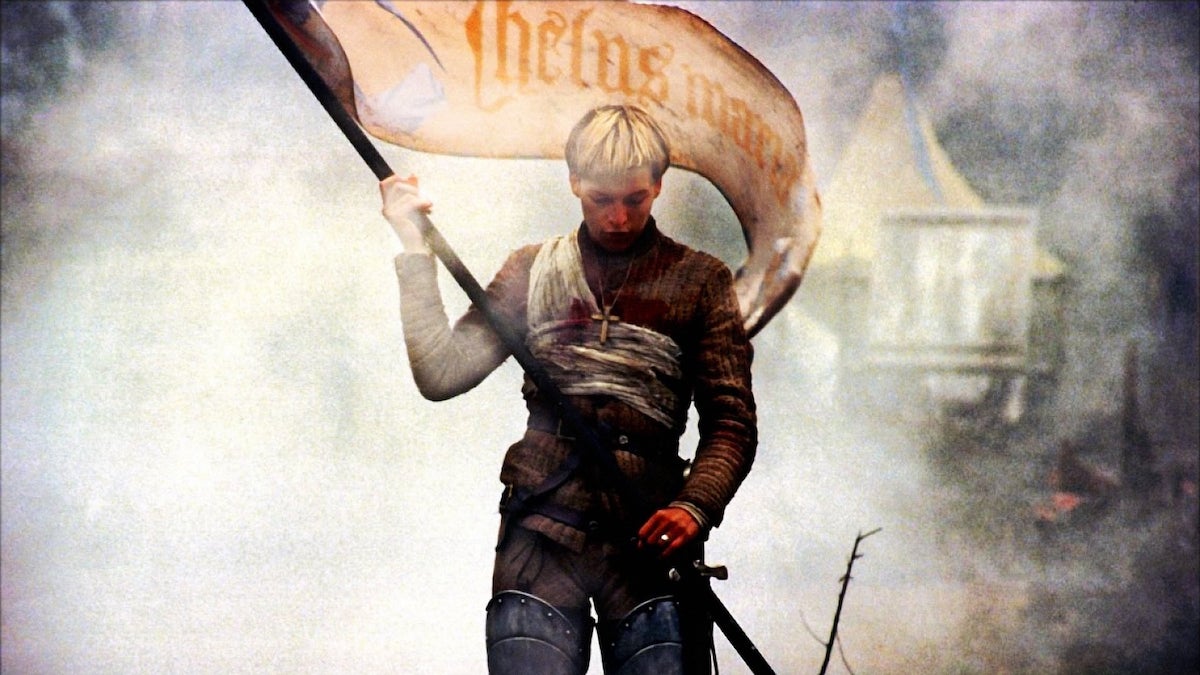
Luc Besson, perhaps the most Hollywood of French directors, stamps The Messenger: The Story of Joan of Arc with all his signatures – there’s the strong woman at the film’s centre (of course), her struggle against oppression, lots of weapons, and the emphasis on appearance and sensation above language and subtlety that characterised the cinéma du look movement of which Besson was a prominent member.
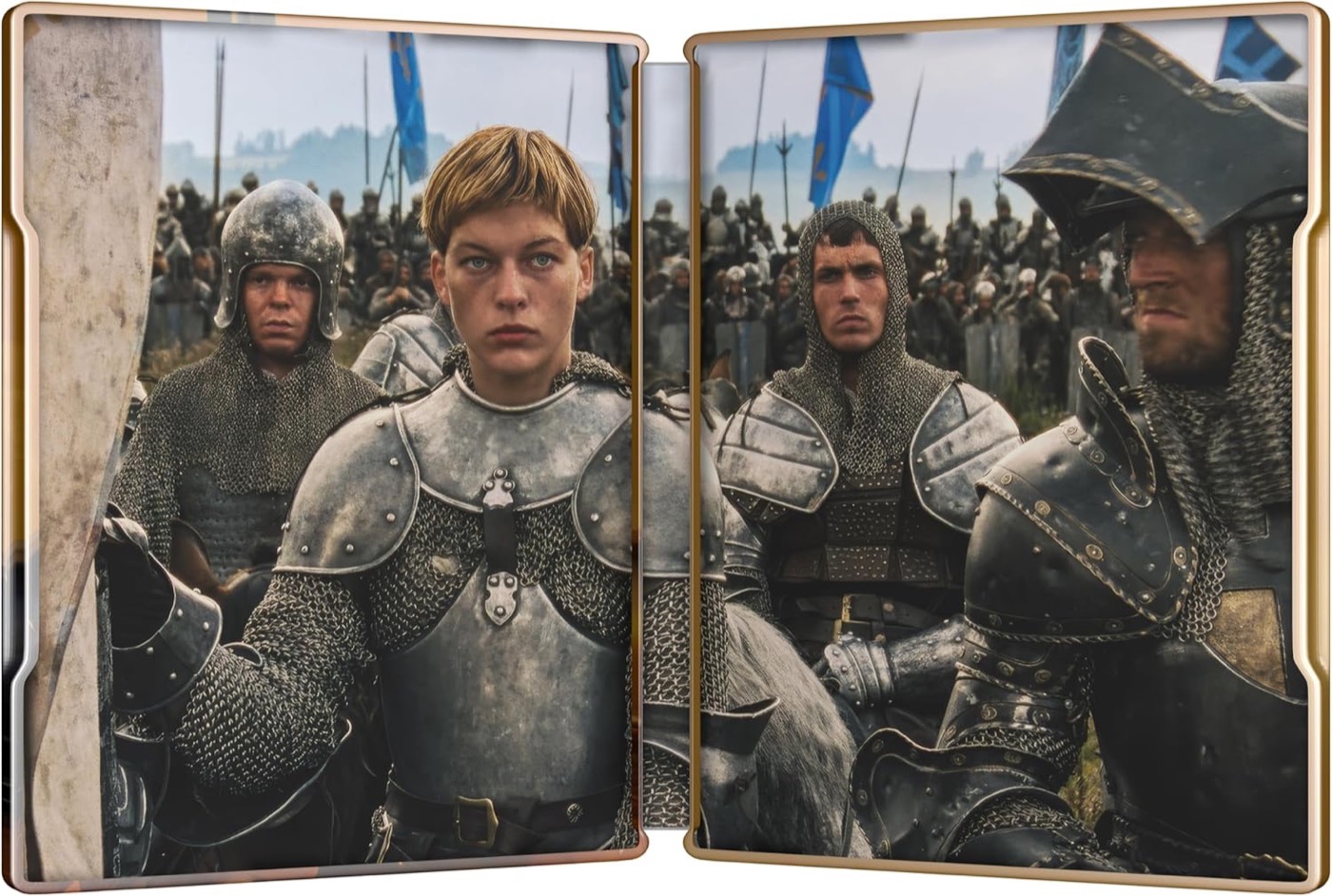
StudioCanal’s delicious 4K restoration (branded as simply Joan of Arc) certainly serves that aspect of the movie very well: if it’s Besson visuals you’re after, this is the next best thing to being in the cinema (though it really is the kind of movie that demands as big a screen as possible). The question is whether Besson’s style suits the story he is telling. Of course there is nothing inherently impossible about an action-led Joan of Arc, “assaying the fine line between spirituality and kicking ass” as IndieWire put it, but it’s so at odds with the conventional image of the Maid of Orléans that it runs the risk of feeling absurd, as if the character has landed in the wrong film.
A careful hand might be able to avoid that, but Besson and co-writer Andrew Birkin don’t always seem sure how to make the tale and the style fit together. Besson is a visual storyteller, all about movement, strongly influenced by comics. And like a comic, The Messenger shows you one thing then, quickly, another: many edits feel as if they’ve been made a few frames sooner than most movies would dare. This can work superbly in action sequences, but it also leaves very little time for thoughtful nuance, and as a result the sequences where Besson and Birkin do try for more depth – notably, a long dialogue near the very end between Joan and her conscience (played by Dustin Hoffman in an Obi-Wan Kenobi outfit) – give the impression of coming from a different film, as indeed does the bizarrely James Bondish effect of the song accompanying the end credits.
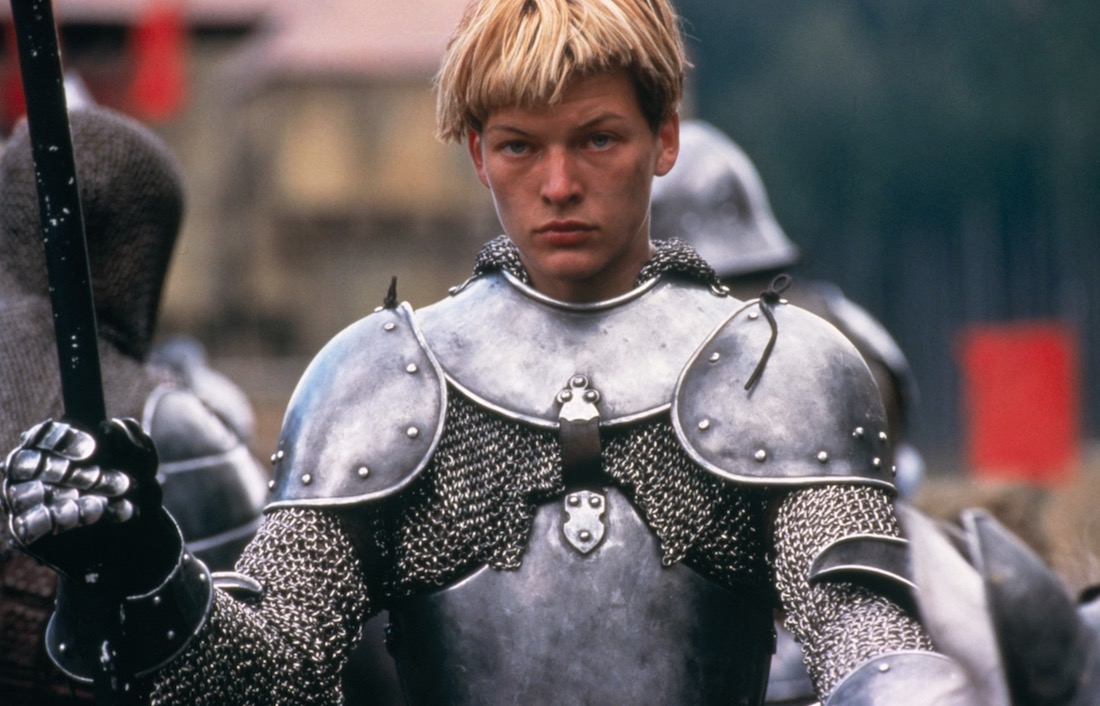
The Messenger opens in an old-fashioned manner, with a map of 15th-century France and rather long explanatory titles, but these seem to be primarily a means of getting exposition out of the way. The movie soon becomes a very modern and action-driven take on the story of Joan (Milla Jovovich), the peasant girl who believes God has charged her with liberating France from the English, and is before long leading the French army in doing just that, propelling them victoriously forward through her charisma and conviction more than any military sense.
She is, of course, a case where the popular folklore is now far more powerful than the historical reality. So it’s unsurprising that The Messenger is not entirely accurate in all the incidents it portrays. Still, the facts it presents are close enough to the true story, and though there are a few briefly bewildering narrative jumps, it’s usually easy enough to follow. (The film had its origins in an aborted Kathryn Bigelow project – how different that would have been from Besson’s.)
Yet in style it’s about as unconcerned with historical authenticity as you can get, a larger-than-life fantasy. Early on there’s a decided atmosphere of myth – a burning village foreshadows Joan’s eventual fate as if it’s preordained, Joan inexplicably finds a gleaming sword in a field, Joan faces wolves in the forest – and throughout there are scenes explicitly depicting her visions. These are largely demolished in the Hoffman conscience sequence (“you didn’t see what was, Jeanne, you saw what you wanted to see”), but by then it’s far too late in the movie to counteract the extreme unrealism of the first two hours, and it’s difficult to know what the point of this whole section is.
It might seem like Besson and Birkin have been hyping Joan up only in order to then knock her down, but perhaps they’re doing the opposite: emphasising how a young, powerless, and possibly mentally ill woman achieved all these things without the help of miracles? Indeed, The Messenger’s message is a bit obscure, if tantalising, not only here but at other times too. For example, there’s briefly a suggestion that Joan is the champion of ordinary folk, yet her political awareness seems minimal. It’s almost as if Besson and Birkin are casting around for a meaning for their Joan, and can’t decide what it should be.
The result, in any case, is a jarring shift in tone when Hoffman appears, and one that smacks slightly of desperation: having been unable to get any of these ideas into the busy main part of the film, Besson and Birkin now tack them on as a kind of contemplative appendix.
Jovovich, in the title role, does the best she can with a character who is ever-present in the movie yet only given a rather narrow range of things to do (look nervous, look divinely inspired, argue with men, lead men into battle). A former model – and in 1999 also Besson’s wife – who had achieved real stardom with her part in his Fifth Element two years earlier, she was nominated for a Golden Raspberry worst actress award for her Messenger performance. But though she can overdo emotions at times, really she’s not that bad at all: she manages to convey Joan’s vulnerability as well as her strength, giving us a young woman who is confident but at the same time wide-eyed, filled with a passion but too immature to know quite what it is, determined but lacking self-control, throwing herself into war yet obsessed with mass and confession.
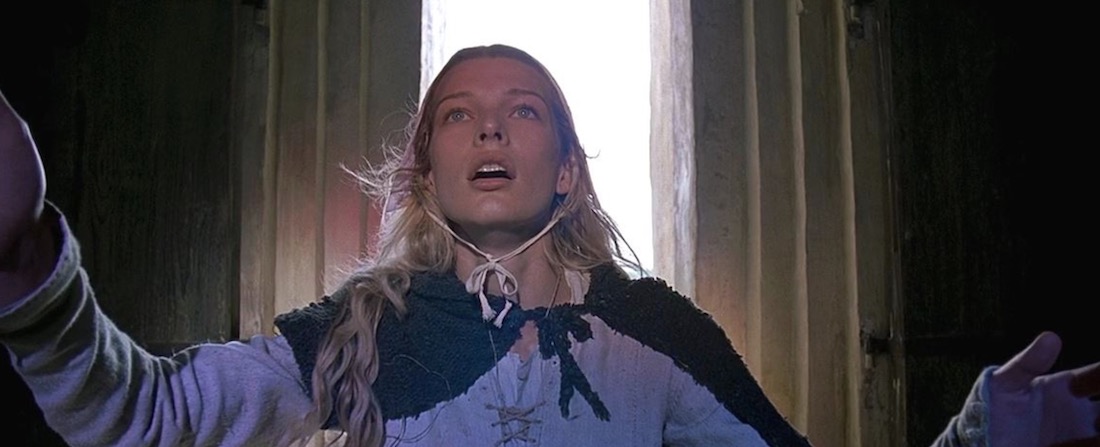
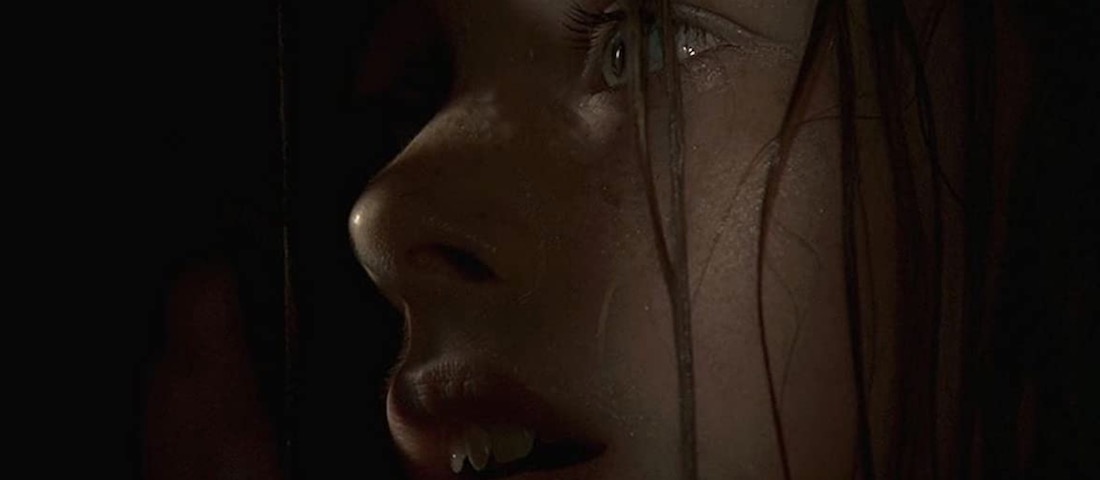
“I am the drum on which God is beating out his message,” Joan is reputed to have said. The line is used in the movie – and the musical metaphor is the right one, because this Joan is all about single-minded insistence. God has sent her to lead the French against the English, and they will win, and that’s it. She’s so intense, so angry, and there’s a great brief shot of her riding into battle where she’s wild-eyed, screaming…yes, crazy. (In reality it appears Joan of Arc was probably not quite as dysfunctionally fanatical as the movie presents her, though she could be abrupt.)
Elsewhere in the cast are lots of grotesque medieval faces, often shot from below to exaggerate their strangeness, and a few well-known names. John Malkovich can never, of course, get away from being John Malkovich, yet as the French king Charles VII he at least gives his role some depth; Charles is intelligent, but undecided about Joan, and we are not sure if he is sly or simply weak. Timothy West is credible as Pierre Cauchon, a bishop who urges Joan to recant her supposed heresies so she won’t be burned at the stake.
Less satisfactory is Desmond Harrington’s wooden Jean d’Aulon, a young courtier with whom Joan has a very unconvincing friendship-perhaps-verging-on-romance. The screenwriter Birkin, meanwhile, also appears as John Talbot, an English commander. Many of the other men (in a movie which, Joan apart, is dominated by men) are rather interchangeable and even indistinguishable, but Vincent Cassel – a fine performer in both French and Hollywood film from Mesrine and La Haine to Ocean’s Twelve – is striking as the nobleman Gilles de Rais (who was revealed years after Joan’s death as a sadistic serial killer of children, and executed, though The Messenger doesn’t get into that).
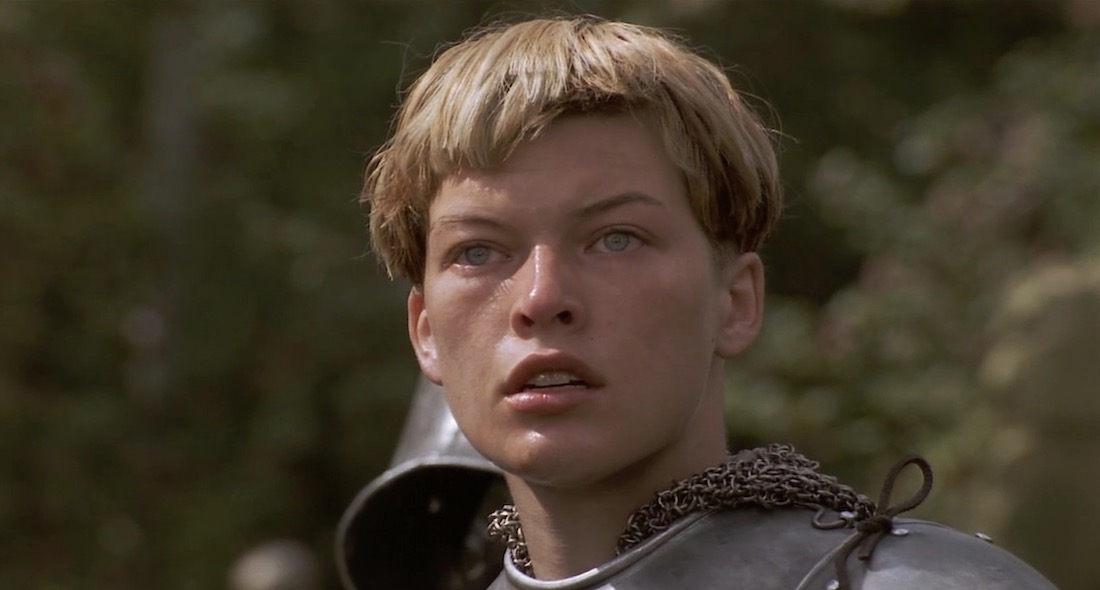
The biggest problem with The Messenger, however, is its flatness. Not that it’s flat in the sense of being boring second-to-second – Besson’s often hyperactive directorial style ensures that – but in the sense that it almost entirely lacks dramatic depth and texture, ups and downs. Just as unimaginative comic panels might, it generally shows you one person or incident at a time, all equally weighted; there are longer scenes, for example when Joan must prove her divine inspiration to the court by picking the king out of a crowd, but still there is little rhythm to them, no heightening and release of tension.
This is the case, amazingly, even with the final passage leading up to Joan’s execution (which, supposedly, US preview audiences thought was too depressing a finale; it’s not clear what they wanted instead). What could have been a tragic climax, or at least the sublime transfiguration of Joan into sainthood and legend, is almost an anticlimax. And it’s difficult to escape the conclusion that Besson’s direction, more than anything, is to blame: throughout The Messenger he’s given us ample instantaneous excitement, but at the expense of any long-term investment in what happens to the character. The payoffs (shock, satisfaction, awe) from any scene – from any moment, really – are so quick that there is no time for suspense or curiosity to develop.
The Messenger was not a great box office success, and certainly not a critical one. The Guardian found it “a crass and interminable movie that miraculously transforms one of the most remarkable women of the 15th century into an irritating brat”, while The New York Times observed that “The Hundred Years War feels twice that long”. Besson didn’t direct for six years afterwards; he did later have a substantial hit in Lucy (2014) as well as some success with Anna (2019), Dogman (2023) and Dracula (2025), but his career has never really recovered its pre-Messenger momentum.
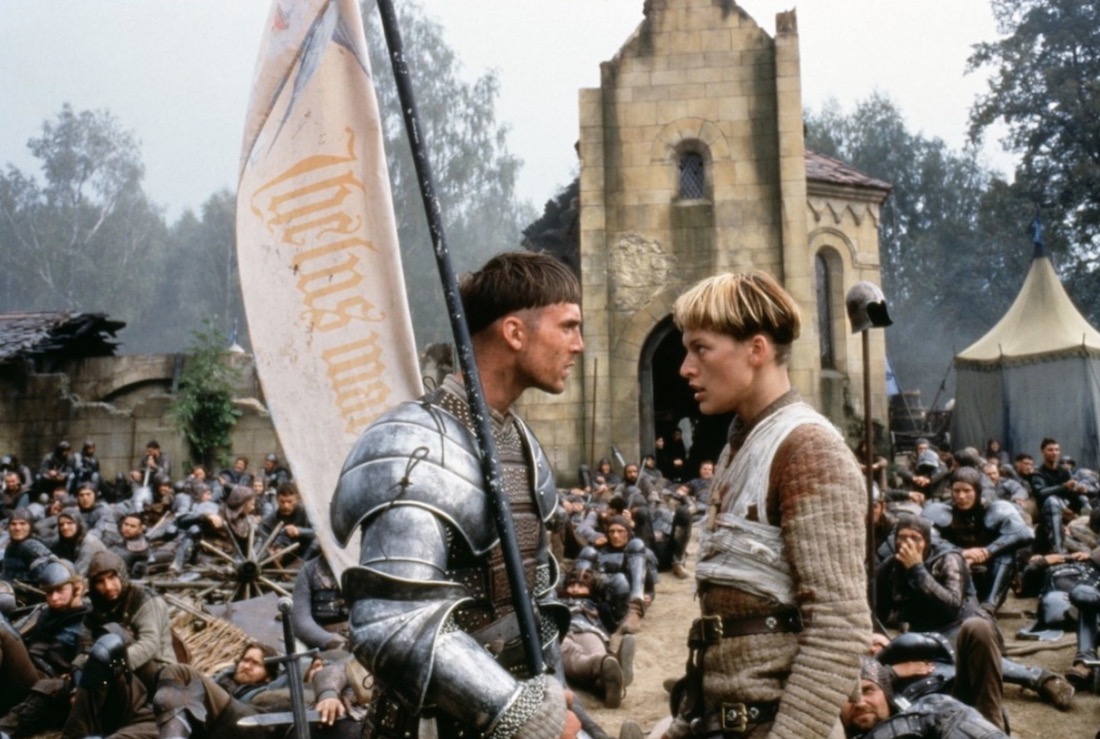
Joan of Arc, meanwhile, continues to grace the screen with regularity; there have been at least six movies about her since Besson’s, most recently Bruno Dumont’s two films from 2017 and 2019. The most famous versions of her story remain earlier ones, though, notably Carl Dreyer’s The Passion of Joan of Arc (1928), Victor Fleming’s Joan of Arc (1948), and Otto Preminger’s Saint Joan (1957) – and it’s unlikely that The Messenger will join them.
For fans of Besson or for that matter fans of Saint Joan, it’s at least an interesting curiosity, and it can’t be denied that it is ambitious and original in many respects. But it suffers from fundamental problems in not really engaging with the character, or the remarkable phenomenon of an obscure young woman suddenly elevated to leadership in a man’s world. It might depict them, on a superficial and literal level, but that is all that it does: show us stuff that, despite its frenetic activity, never comes believably and humanly alive.
FRANCE • CZECH REPUBLIC • USA | 1999 | 158 MINUTES | 2.39:1 • 2.35:1 | COLOUR | ENGLISH • LATIN

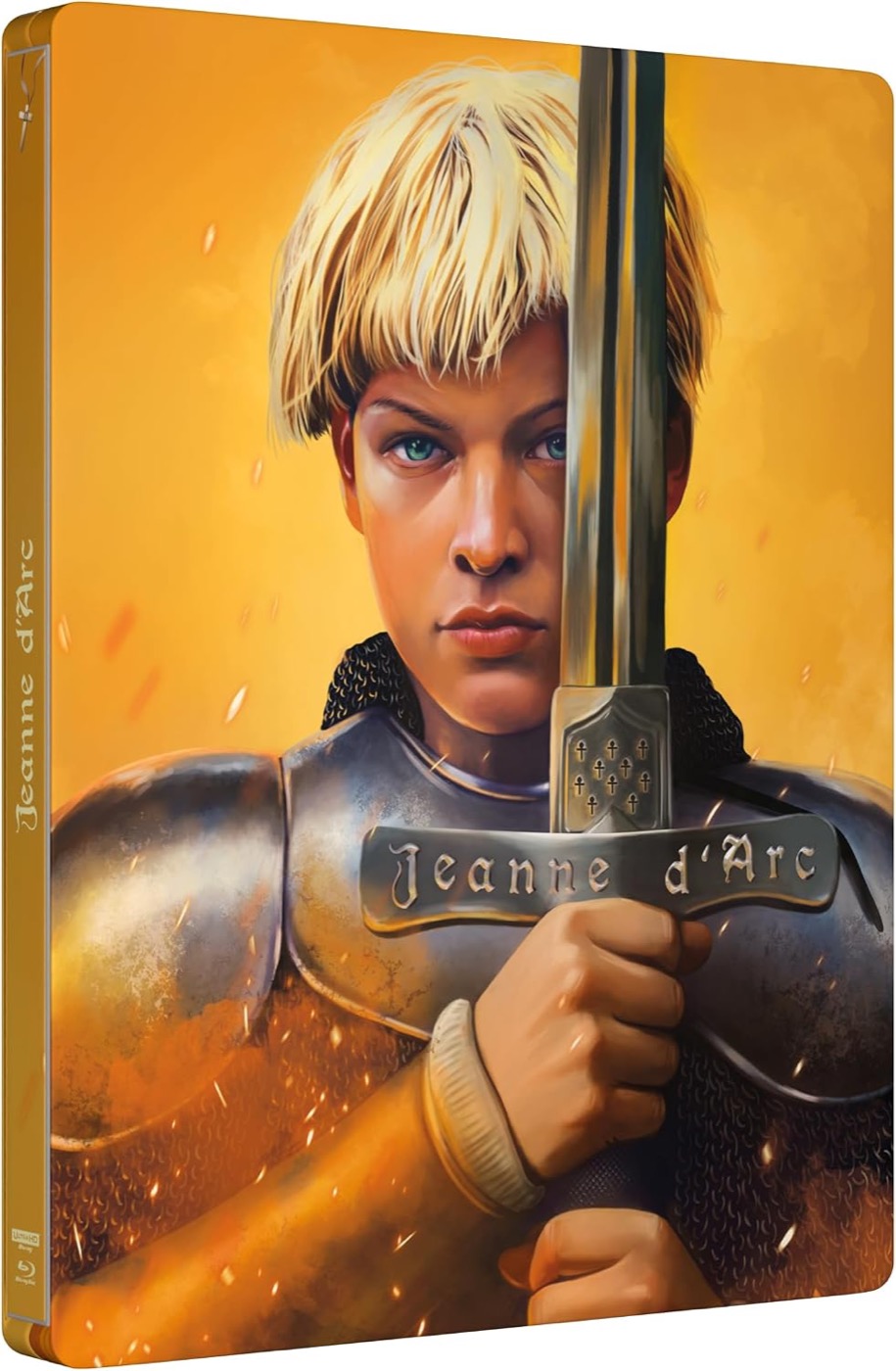

director: Luc Besson.
writers: Luc Besson & Andrew Birkin.
starring: Milla Jovovich, John Malkovich, Faye Dunaway, Dustin Hoffman, Pascal Greggory, Vincent Cassel, Tchéky Karyo, Richard Ridings, Desmond Harrington & Timothy West.