SNAKES ON A PLANE (2006)
An FBI agent takes on a plane full of deadly venomous snakes, deliberately released to kill a witness being flown from Honolulu to Los Angeles to testify against a mob boss.

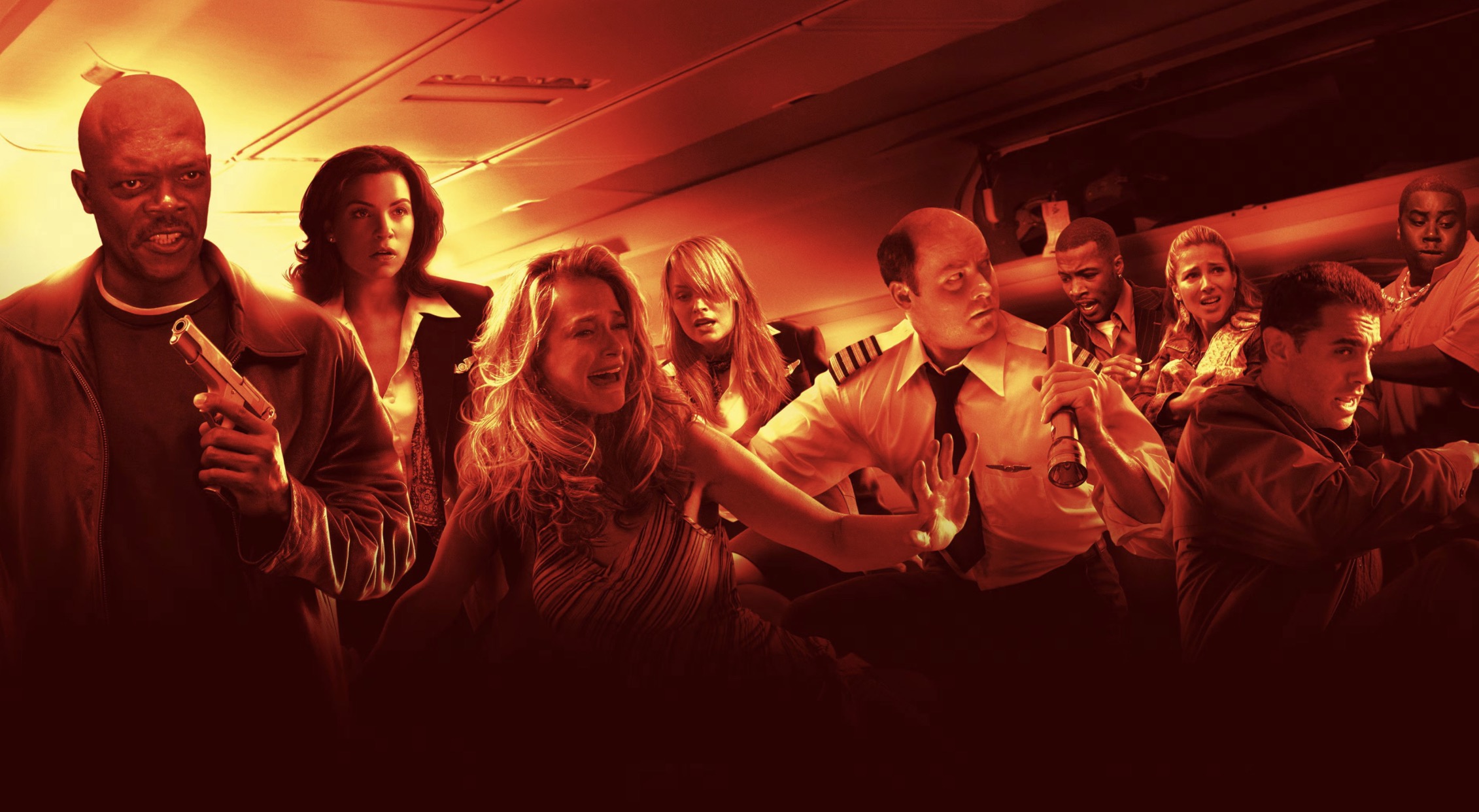

An FBI agent takes on a plane full of deadly venomous snakes, deliberately released to kill a witness being flown from Honolulu to Los Angeles to testify against a mob boss.
The production saga behind Snakes on a Plane and its unlikely role in reshaping Hollywood’s approach to promotion has long been a case study for marketing departments. The absurd concept was initially conceived by David Dalessandro in 1992 after he drew inspiration from a magazine article about snakes climbing onto planes during World War II.
Combining that imagery with the escalating terror of James Cameron’s Aliens (1986), he was convinced the premise had genuine cinematic potential. However, despite his best efforts, Dalessandro’s original screenplay was reportedly rejected by more than thirty studios. The material subsequently languished in development purgatory for over a decade before undergoing substantial revisions by Sebastian Gutierrez (Gothika) and newcomer John Heffernan. Momentum finally began to build when New Line Cinema decided to bite, appointing David R. Ellis (Final Destination 2) to helm the project.
When Snakes on a Plane slithered into cinemas during the summer of 2006, it arrived with an unusual amount of expectation. It wasn’t the carefully cultivated anticipation afforded to the previous year’s most popular franchise entry, Star Wars: Episode III—Revenge of the Sith (2005). Instead, it was an excitement born from the internet’s burgeoning fan culture. New Line Cinema’s creature feature unapologetically announced itself in advance with the unambiguous promise that there would be snakes, and they would be on a plane.
With perhaps the most guileless and serendipitous title ever devised, the project quickly metastasised into an internet phenomenon. It amassed an unprecedented amount of attention, spawning hundreds of fan websites, message board threads, and retouched publicity stills. Recognising the cultural moment it had inadvertently created, New Line Cinema leaned into the hysteria rather than resisting it. The studio ordered several reshoots and shifted away from the innocuous crowd-pleaser originally titled Pacific Air Flight 121. What emerged was an audacious thriller infused with absurd horror and coated with an unmistakable veneer of camp.
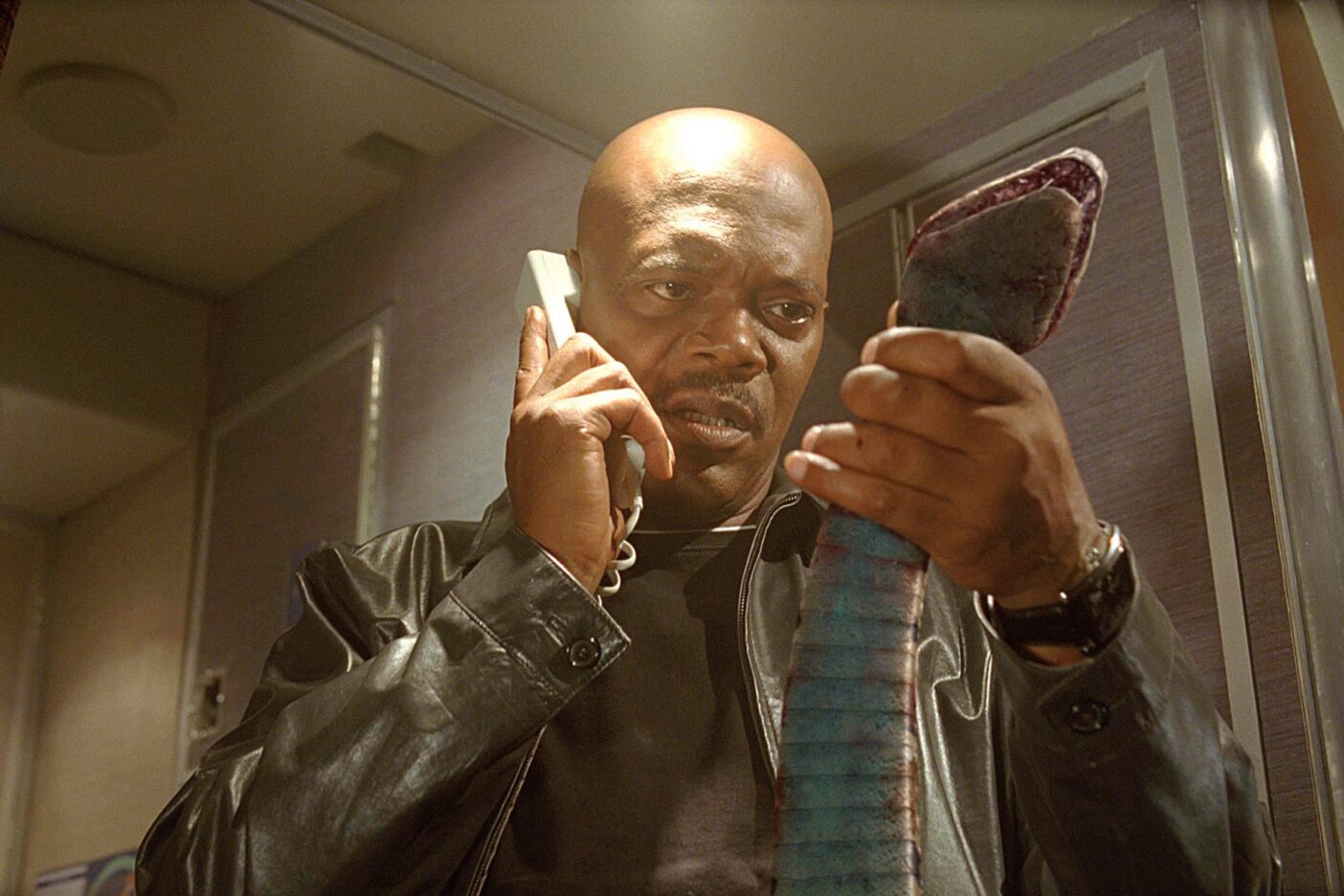
The plot kicks off after Sean Jones (Nathan Phillips) inadvertently witnesses Eddie Kim (Byron Lawson) carry out a brutal murder in Hawaii. Once the FBI places Jones in protective custody under the supervision of Neville Flynn (Samuel L. Jackson), the veteran agent convinces the reluctant witness to testify against Kim across the country in Los Angeles. Despite the mobster’s reputation for retaliation, the Bureau chooses to transport Flynn and Jones on a commercial airliner.
However, unbeknownst to the passengers and crew, Kim has engineered an elaborate contingency plan to down the plane before it reaches its destination. He’s covertly smuggled a crate containing hundreds of venomous snakes into the aircraft’s cargo hold, all chemically stimulated by a synthetic pheromone to heighten their aggression. Once the plane reaches cruising altitude and the crate opens, the reptiles infiltrate the cabin through air vents, overhead compartments, and bathroom fixtures. As the serpents strike indiscriminately and casualties mount, the flight descends into pandemonium. With the crew struggling to maintain control, Flynn is forced to coordinate a desperate bid to protect Jones and the remaining passengers as the compromised flight races toward its destination.
Matching the outlandish premise and equally absurd execution is Samuel L. Jackson’s characteristically intense performance. As federal agent Neville Flynn, he’s a hardened lawman tasked with protecting a witness on a flight overrun with venomous snakes. It’s a character that could’ve easily devolved into a broad caricature in the hands of a less capable performer.
However, Jackson navigates it with complete seriousness, embracing the film’s exploitation roots without ever undercutting the stakes of his character’s mission. The actor imbues Flynn with a potent combination of his signature charisma and unflappable resolve, making the character feel credible even as the narrative unfolds into an unrelenting spectacle. Even when the outrageous dialogue balances on the precipice of parody, he delivers his lines with unwavering conviction. Although Snakes on a Plane may revel in excess, Jackson’s performance demonstrates that even the most preposterous material benefits from an actor who treats it with absolute sincerity.
What distinguishes Snakes on a Plane from countless exploitation contemporaries is how much it understands its own absurdity. It isn’t courting the approval of highbrow cinephiles; it’s an engineered camp thriller tailored for an audience fluent in irony. Its title alone promises silliness, and any pretence that the screenplay treats the concept sincerely quickly dissipates once the passengers are introduced. Aboard the treacherous flight are a resourceful flight attendant (Julianna Margulies), an incredibly anxious aerophobe (Tygh Runyman), a germaphobic rapper (Flex Alexander), and his bodyguard (Kenan Thompson).
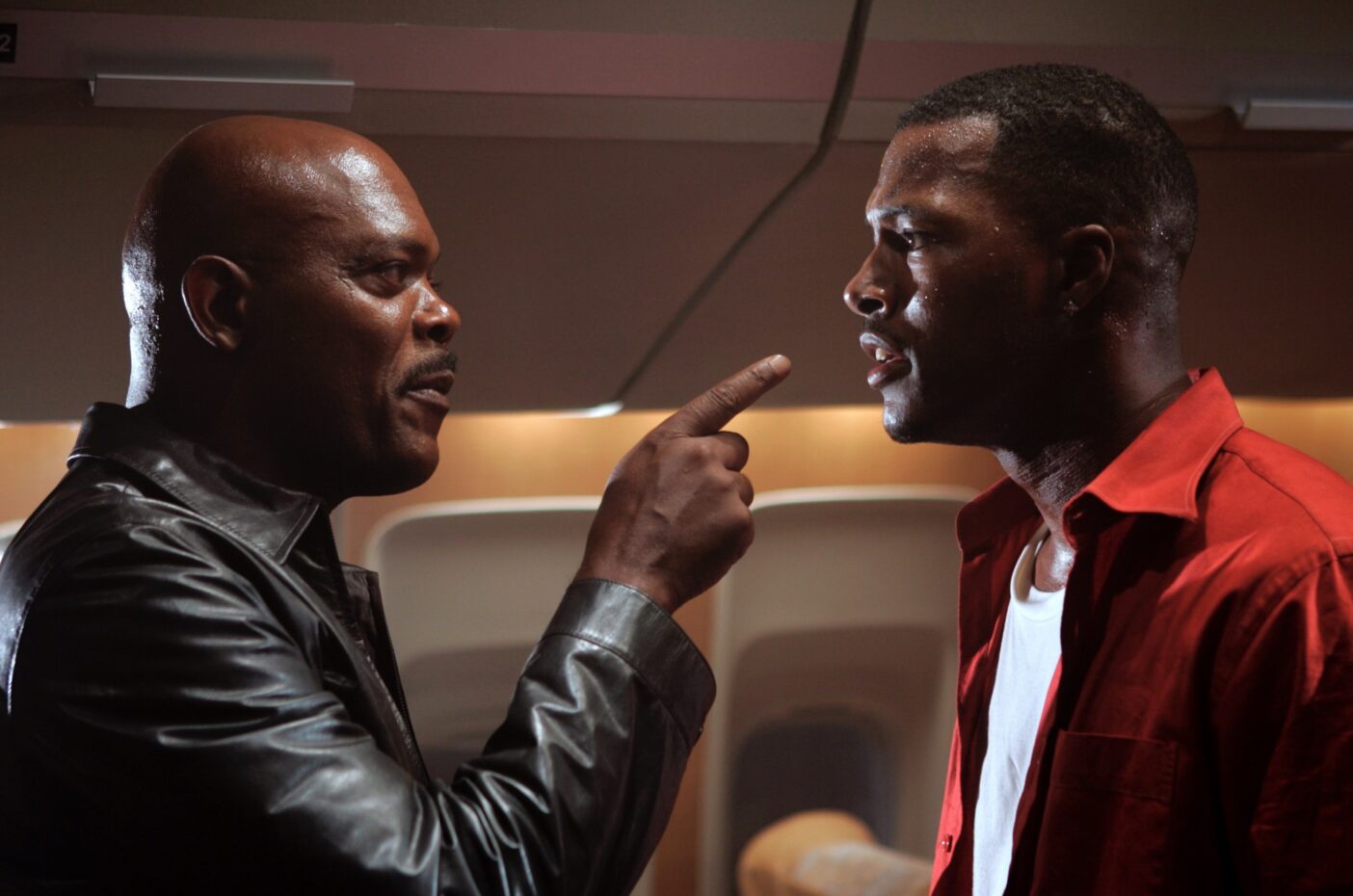
Elsewhere in the cabin sit a curmudgeonly British businessman (Gerard Plunkett), an affluent socialite (Rachel Blanchard) clutching her lapdog, and an imperilled single mother (Elsa Pataky). While each passenger is afforded a perfunctory backstory, any meaningful character development is jettisoned for instant calamity. In a more earnest disaster flick, these thinly sketched archetypes would be a serious weakness. Yet, most of the pleasure here derives from watching these formulaic figures react to increasingly implausible scenarios with a forked tongue planted firmly in cheek.
Although the film unapologetically embraces its camp sensibilities, the late David R. Ellis’s command of tension is one of its most underappreciated strengths. As demonstrated in Final Destination 2 (2003) and Cellular (2004), the director was a skilled genre craftsman. His experience orchestrating chaos enables him to construct suspenseful moments that feel surprisingly credible. He displays a keen attentiveness to human behaviour under pressure, using this insight to ground the spectacle in recognisable psychological responses. Once the passengers realise the magnitude of the threat, the claustrophobic environment of the aircraft cabin becomes an effective crucible for situational horror. As fear ripples through the confined space, bodies collide in narrow aisles and unsuspecting passengers are trampled. Much like the infamous highway premonition in Final Destination 2, Ellis builds tension by layering familiar anxieties until they become almost tactile.
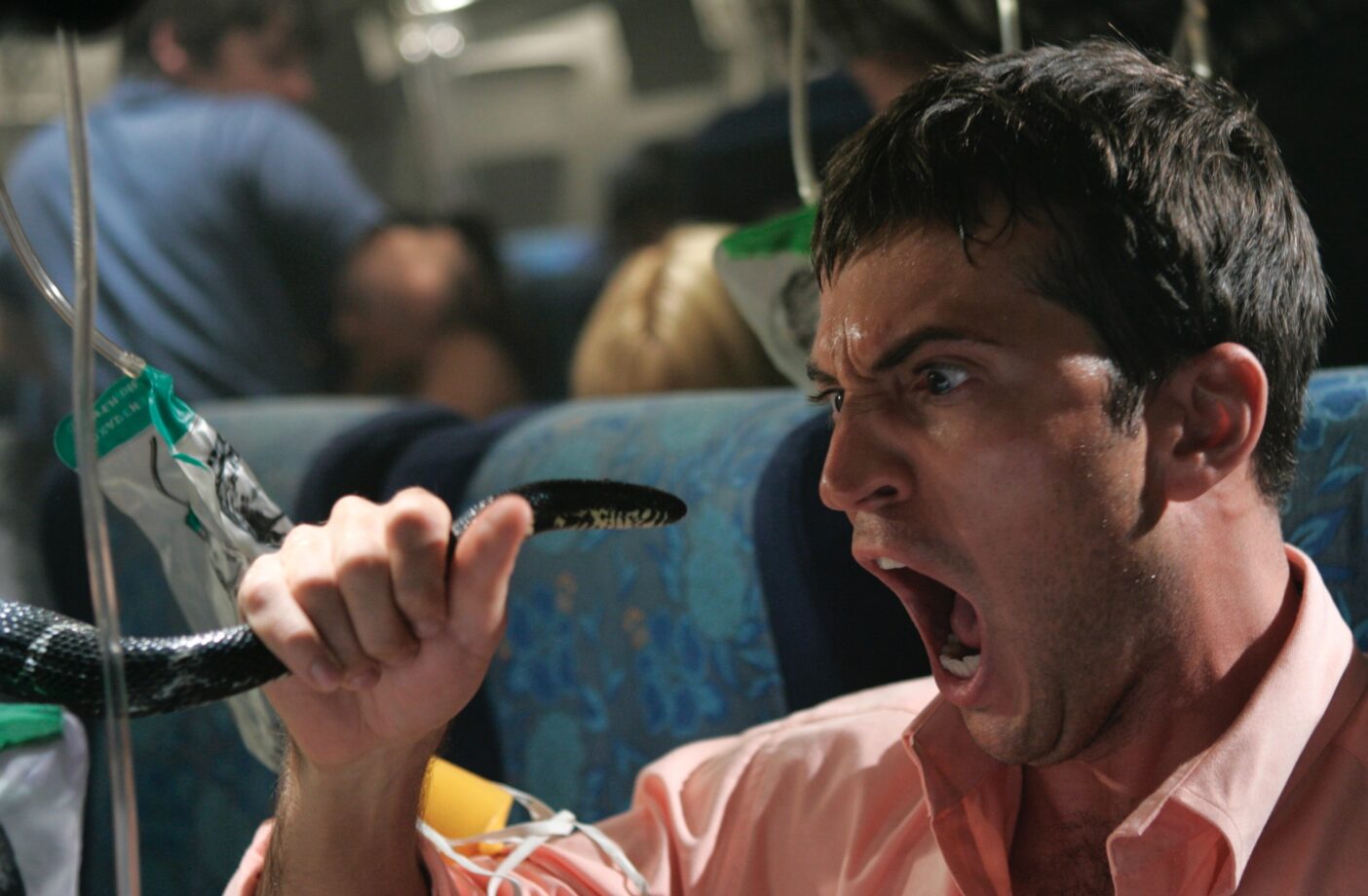
The sequences involving the titular serpents rampaging through the cabin also produce some enjoyable moments that effectively escalate the horror. Brought to life through an interplay of animatronics and digital effects, the snake attacks are creatively gory and executed with precision. A yapping Chihuahua is swiftly dispatched by a viper, while another unfortunate passenger is consumed whole by an enormous Burmese python. A particular gruesome highlight unfolds in the aircraft restroom, where a lecherous couple attempts to join the “Mile High Club”, only to be abruptly ambushed by a vicious copperhead. Admittedly, the exaggerated violence is highly improbable, and the early-2000s digital effects oscillate between serviceable and conspicuously artificial. However, Ellis’s assured hand ensures the horror retains a jagged edge that rarely allows the 100-minute runtime to stagnate.
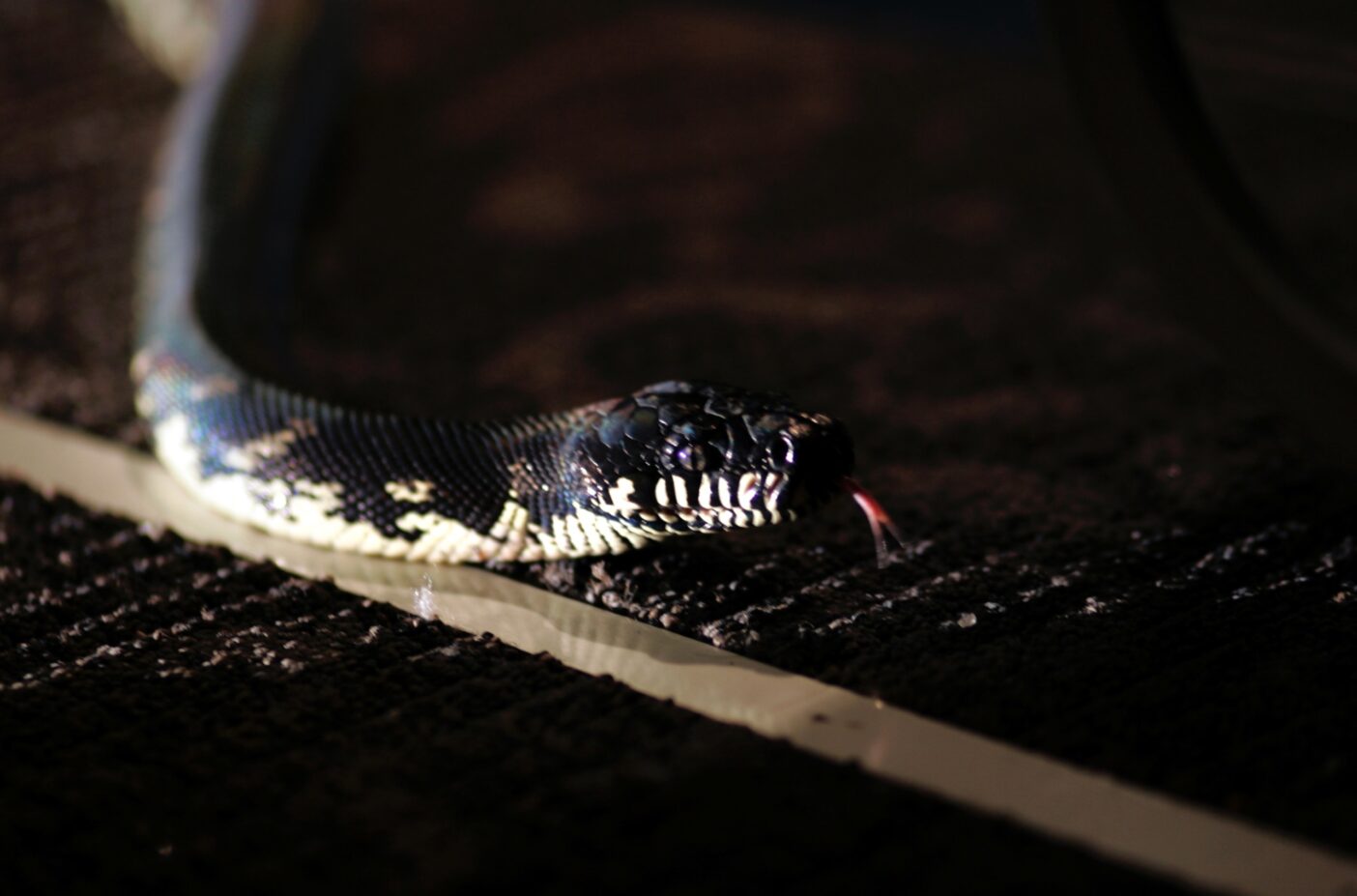
The sheer amount of explicit content was largely the result of those mandated reshoots, conceived as a last-minute strategy to capitalise on the project’s online notoriety. While the increased profanity and violence helped cement Snakes on a Plane as a contemporary cult classic, the strategy carried unintended consequences. The subsequent change in age certification narrowed its potential audience and undermined the mass appeal the alterations were intended to secure. Rather than translating online enthusiasm into box office dominance, the film earned a modest $62M against its $33M budget. While not an outright financial failure, its performance was a disappointment considering the extraordinary publicity it enjoyed. Regardless, Jackson remained a staunch defender of the project, famously stating: “No movie shall triumph over Snakes on a Plane, unless I happen to feel like making a movie called ‘More Motherfucking Snakes on More Motherfucking Planes’.”
With the benefit of hindsight, the legacy of Snakes on a Plane is less a commercial triumph than a cautionary tale regarding Hollywood’s relationship with outspoken fans. By prioritising online enthusiasm over directorial intent, studio executives allowed the audience to override artistic creativity. This set a troubling precedent that continues to reverberate through the industry. J.J. Abrams heavily altered the narrative of Star Wars: The Rise of Skywalker (2019) to appease a vocal segment of the fanbase, while Zack Snyder’s Justice League (2021) exists largely because of a highly organised online campaign. Unfortunately, it underscores the persistent misconception that passionate fandoms provide clear roadmaps for successful narratives. While enthusiastic audiences are skilled at expressing dissatisfaction, they are often less equipped to handle the structural demands of effective storytelling.
Overall, Snakes on a Plane is a wildly entertaining ride that delivers exactly what its title promises. David R. Ellis approached the material with a clear understanding that it was an unapologetically camp creature feature. While the artificial visual effects occasionally betray the film’s limitations, those willing to surrender to its outlandish premise will be rewarded. It’s a shame it never achieved the cultural heights its fervent fanbase anticipated, yet its conscious embrace of spectacle and excess has ensured its position as a cult artefact nearly two decades after its release.
USA • GERMANY • CANADA | 2006 | 105 MINUTES | 2:39:1 | COLOUR | ENGLISH


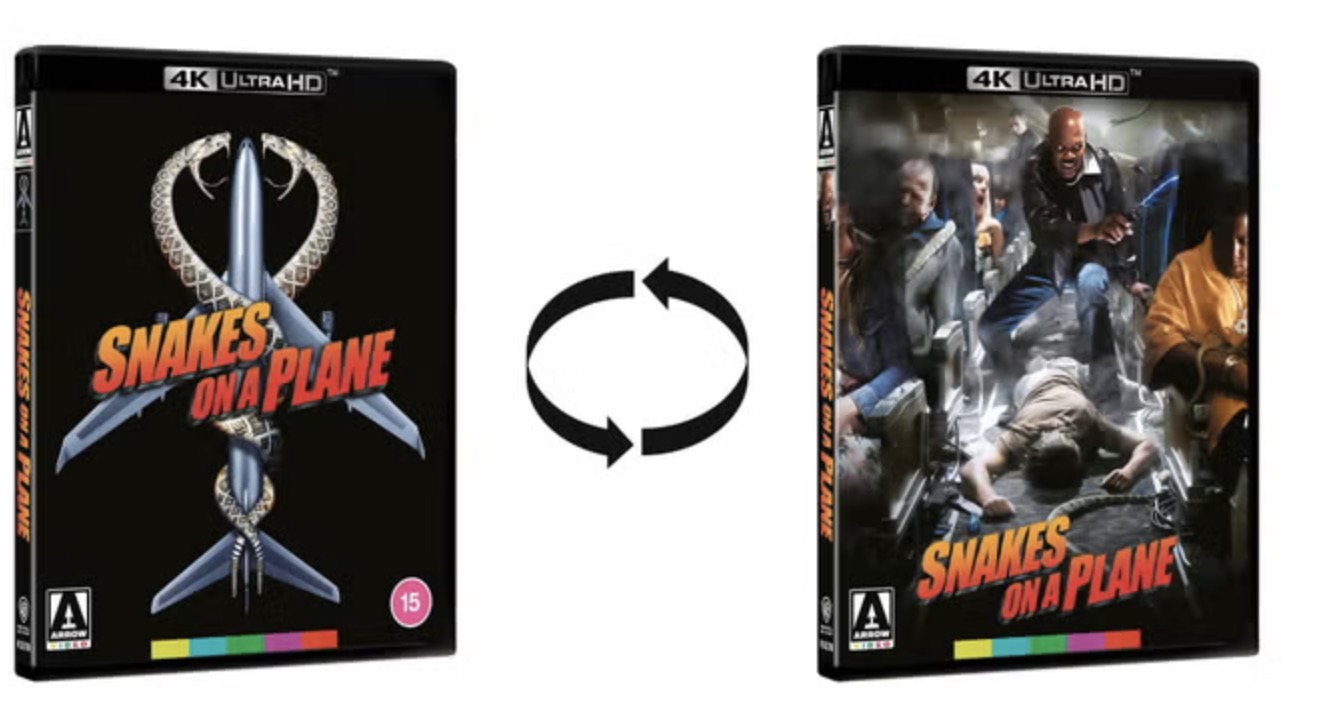
Slithering into the UK for the first time, Snakes on a Plane has received a pleasing 4K restoration courtesy of Arrow Video. Sourced from the original 2K digital intermediate data, the 2160p Ultra HD transfer is presented in its original aspect ratio of 2.39:1.
The most notable improvement in this UHD transfer is the enhanced richness of the colour palette, thanks to Dolby Vision. The high dynamic range provides a spectacular boost to the visual experience during the opening sequences. Working with intense Hawaiian scenery, primaries are nicely amplified without becoming overblown. The crystalline blues of the Pacific and the piercing clarity of the skies are rendered phenomenally, while environmental greens burst with vitality and the sunset’s graduated oranges glow with striking luminosity.
Within the oppressive confines of the aircraft cabin, Dolby Vision continues to impress by offering additional vibrancy to various highlights and nuances of colour. The stylised “Snake Vision” sequences benefit from intensified secondary hues, offering a visually compelling experience. Black levels remain satisfyingly deep and stable, preserving an unobtrusive veneer of grain from start to finish. Flesh tones also maintain a naturalistic appearance throughout.
Beyond the colour palette, the image boasts commendable sharpness and a level of clarity that allows fine details to emerge. Viewers will appreciate the transfer’s ability to clearly showcase intricate clothing patterns, textural weaves, and facial blemishes. Unfortunately, this heightened resolution comes with a caveat: the improved fidelity that flatters physical elements also exposes the artificiality of certain digital effects. Nowhere is this more apparent than with the titular serpents. Practical snakes appear appropriately vibrant, their scales convincingly textured and kissed with a natural sheen; however, their digital counterparts look noticeably fake during tight compositions.
Arrow Video presents this 4K Ultra HD transfer with a single English DTS-HD 5.1 Master Audio track, accompanied by optional English subtitles.
Although this release doesn’t feature a next-gen Dolby Atmos upgrade, the DTS-HD 5.1 Master Audio compensates with excellent fidelity and dynamism. Dialogue is clear and sensibly anchored to the front channels, wisely leaving the surrounds to handle atmospherics. Gunfire detonates with satisfying sharpness, panicked screams ricochet through the rear channels, and the snakes announce themselves with an almost gleeful hiss from every corner of the soundstage. The mix excels during airborne turmoil, where bouts of turbulence provide a healthy amount of bass. One particular sequence during the climax delivers genuinely impressive surround activity that sweeps across the entire soundstage. Overall, the DTS-HD 5.1 Master Audio is a monstrous track with an all-encompassing sound field that provides a terrific sense of immersion.

director: David R. Ellis.
writers: John Heffernan & Sebastian Gutierrez (based on a story by David Dalessandro & John Heffernan).
starring: Samuel L. Jackson, Julianna Margulies, Nathan Phillips, Bobby Cannavale, David Koechner, Rachel Blanchard, Flex Anderson, Kenan Thompson, Bruce James & Sunny Mabrey.