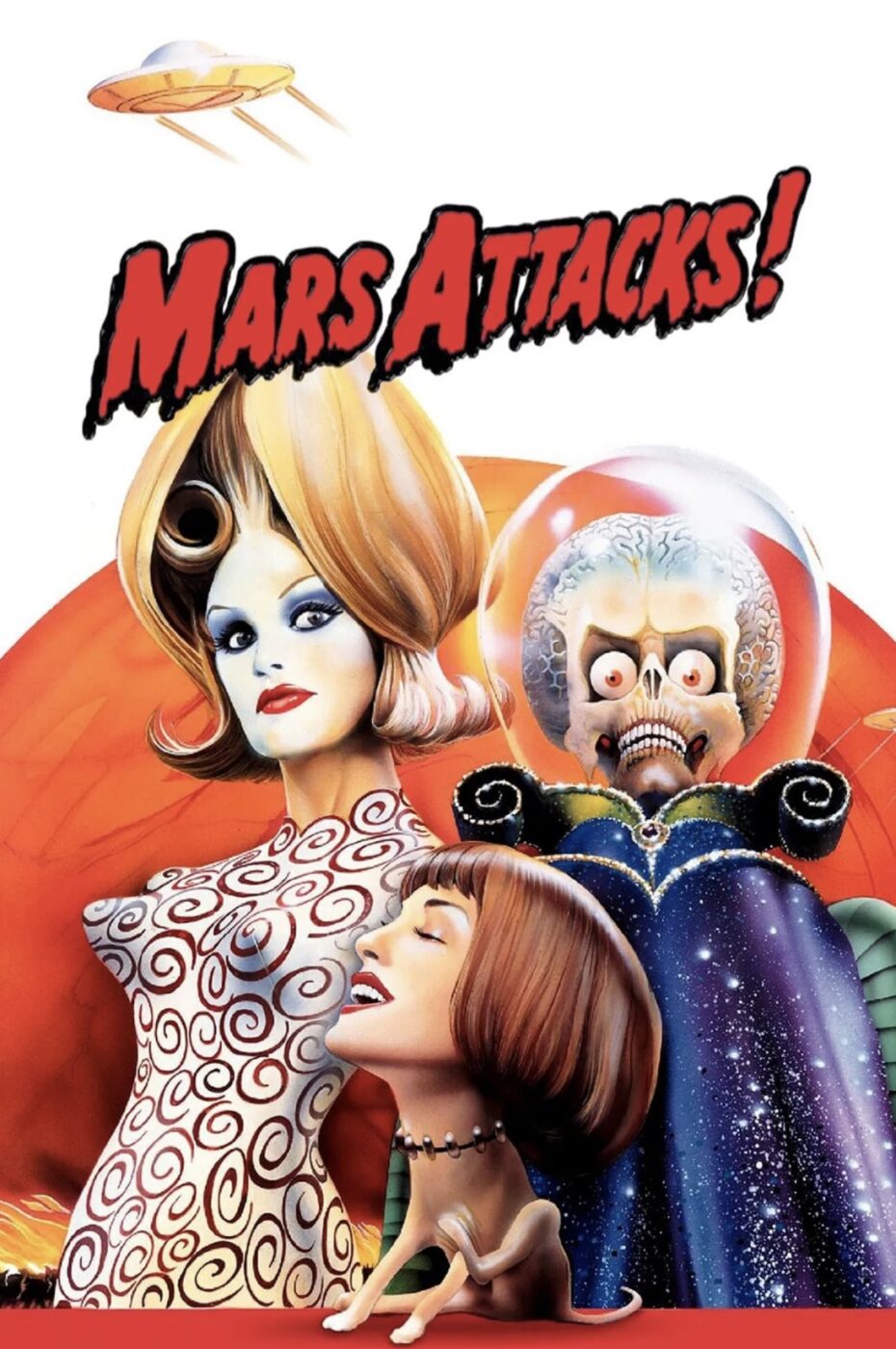
MARS ATTACKS! (1996)
Earth is invaded by Martians with unbeatable weapons and a cruel sense of humour.


Earth is invaded by Martians with unbeatable weapons and a cruel sense of humour.
Following his meteoric rise during the late-1980s and early-1990s, Tim Burton emerged as one of the most recognisable filmmakers in contemporary cinema. From the macabre suburban fantasia of Beetlejuice (1988) to the dark superhero operatics of Batman Returns (1992), his work became synonymous with melancholic protagonists, highly stylised production design, and a distinct blend of morbidity and childlike wonder.
However, Mars Attacks! occupies a curious, somewhat anomalous position within his oeuvre. While it retains many of the auteur’s signature idiosyncrasies, it abandons the aesthetic that defined his earlier work. The cruelty is more indiscriminate, the satire sharper, and the narrative far more fragmented than the streamlined frameworks that typically anchor his storytelling. Rather than a Gothic fairytale, it’s an exercise in pop-cultural pastiche, blending mid-century paranoia, science-fiction iconography, and gleeful nihilism. Yet, long before Burton’s extraterrestrial spectacle reached the screen, it originated as a series of trading cards.
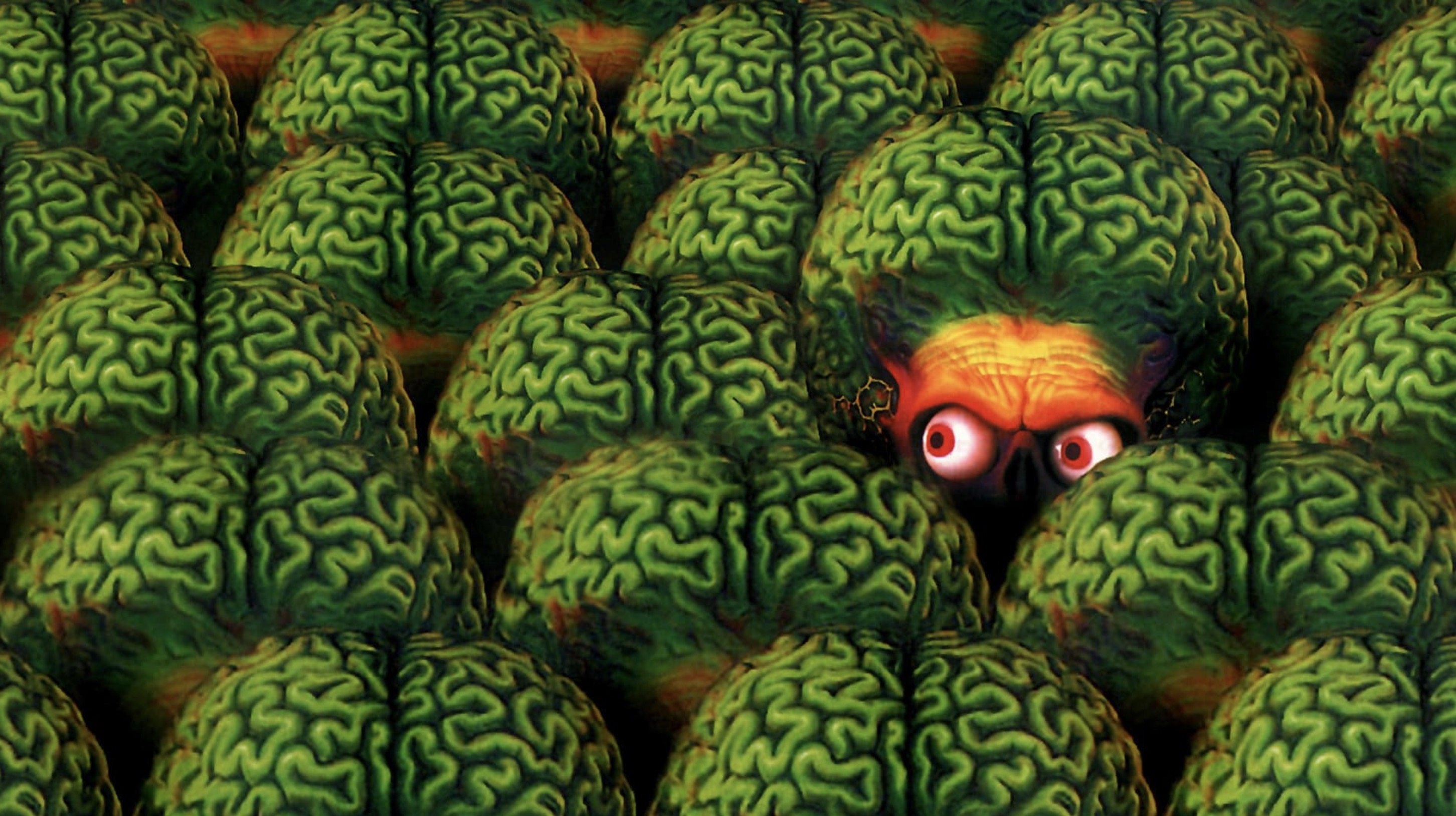
Released in 1962 by The Topps Company, the original cards emerged at the height of Cold War paranoia, when America’s fascination with alien invasions often reflected deeper geopolitical fears. Topps sought to harness this cultural undercurrent, producing a collection inspired by the pulp sensibilities of 1950s cinema and the graphic excess of EC horror comics. Targeting teenagers already devouring monster mags, the series formed a serialised narrative centred on an invasion of Earth. The lurid illustrations by Wally Wood and Norman Saunders depicted grotesque Martians with bulbous brains and skeletal frames, gleefully destroying American landmarks and disintegrating civilians in shocking detail. Although the cards were a hit with children, the violent imagery incited moral outrage. Amid growing concerns about juvenile delinquency, Topps was compelled to halt production and withdraw them from circulation.
When the notorious series resurfaced as cult collectables during the 1980s, Alex Cox (Repo Man) briefly pursued an adaptation. Despite the British filmmaker’s enthusiasm, he eventually withdrew after failing to secure financing. The concept was revived several years later when Jonathan Gems was commissioned to develop a screenplay. Having crossed paths with Burton on Batman (1989), he approached the director with the idea of adapting both Mars Attacks! and its spiritual successor, Dinosaurs Attack!
Burton was interested in producing something reminiscent of the low-budget “schlock” that captivated him as a child, and Gems’s camp theatricality aligned with his sensibilities. Unfortunately, the pair realised that a dinosaur adaptation would invite unfavourable comparisons to Steven Spielberg’s behemoth Jurassic Park (1993). However, Burton recognised that a satirical alien invasion could work if structured like an Irwin Allen disaster flick. Though Warner Bros. remained dubious, Burton convinced the studio to purchase the rights. Fresh from finishing his biographical comedy Ed Wood (1994), the filmmaker saw Mars Attacks! as the perfect opportunity to pay homage to Edward D. Wood Jr.’s cult classic Plan 9 From Outer Space (1959).
After satellites detect a fleet of Martian spacecraft suspended above the world’s major cities, humanity awaits the response of President James Dale (Jack Nicholson). In an emergency briefing, Dale receives cautious assurance from Professor Donald Kessler (Pierce Brosnan) that there’s no conclusive evidence the extraterrestrials are hostile. This measured optimism is forcefully opposed by General Decker (Rod Steiger), who wants an immediate military response. Dale rejects the violent approach, publicly extending an invitation of peaceful coexistence. As the visitors prepare to land in the Nevada desert, the encounter is staged as a global media spectacle. Initially, the Martians appear peaceful, with their ambassador announcing they “come in peace”. However, they quickly begin annihilating civilians with advanced technology. As panic spreads and military strategists prepare for nuclear retaliation, Dale persists in believing the violence stems from a simple misunderstanding.
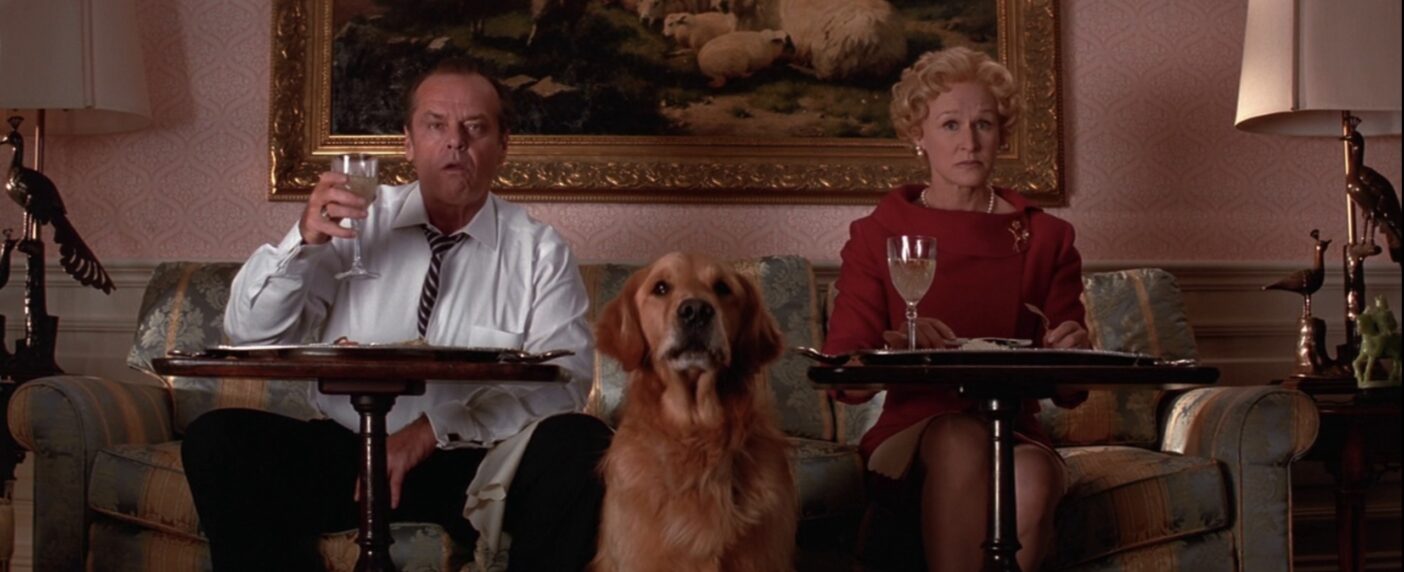
Much of the film’s joy derives from Jack Nicholson’s dual performance. Upon reading the screenplay and embracing its irreverent tone, the actor reportedly asked to play every character. Burton eventually agreed to cast him as both the vacuously confident President Dale and the ostentatious entrepreneur Art Land. His turn as Land, a Las Vegas property developer, allows Nicholson to luxuriate in comic excess; with a lacquered grin and salesman’s bravado, he embodies the delirious optimism of a man who sees planetary annihilation as a branding opportunity.
As President Dale, however, Nicholson weaponises his signature narcissism to satirise the theatre of political leadership. Operating as a deft synthesis of Ronald Reagan’s unyielding optimism and Peter Sellers’ fastidious restraint in Dr. Strangelove (1964), he maintains a cadence that suggests the invasion is merely a minor diplomatic hiccup. The comedy emerges from the dramatic irony of a man clinging to leadership while catastrophe unfolds. It’s a delicate combination of deadpan delivery and outlandish humour that would’ve been fatal if overplayed.
The wider gallery of eccentric personalities is a true constellation of stars. Glenn Close embraces the absurdity as First Lady Marsha Dale, obsessed with Nancy Reagan’s homeware, while Pierce Brosnan repurposes his suave authority for comedic effect. Meanwhile, Sarah Jessica Parker delivers a deliberately exaggerated turn as daytime host Nathalie Lake. Michael J. Fox brings his trademark freneticism to the opportunistic newscaster Jason Stone. Counterbalancing this parade of caricatures, Pam Grier and the late Jim Brown imbue the proceedings with unexpected emotional weight as two parents navigating the onslaught. Grier provides a grounded warmth as Louise, while Brown lends his character, Byron Williams, a quiet poignancy that feels refreshing amidst the cartoonish hysteria. Together, these two stalwarts of blaxploitation cinema share an endearing chemistry that stands in stark contrast to the surrounding madness.
Several younger performers also make their mark. As the President’s daughter, Tiffy, Natalie Portman provides a deadpan detachment that highlights the incompetence of the adults. Lukas Haas assumes Burton’s recognisable archetype as Richie Norris, the neglected teenager who finds solace in his bond with his grandmother (Sylvia Sidney). Finally, Jack Black appears as the preposterously patriotic soldier Billy Glenn Norris, demonstrating his ability to inject chaotic energy into even minor roles. Admittedly, Gems’ screenplay occasionally threatens to collapse under the sheer weight of its marquee names. With unconnected stories darting between Washington elites and Midwestern trailer parks, emotional investment can be elusive. However, the sprawling ensemble functions as a joke in itself; each grand character introduction is merely a preamble to annihilation. The Martians’ indiscriminate slaughter mirrors Burton’s own view that celebrity, authority, and intellect possess no immunity in the face of cosmic destruction.
Though often celebrated for distorting landscapes through a phantasmagorical lens, Mars Attacks! is less expressionistic than Burton’s other works. Instead, he resurrects the naïve futurism of the atomic age. Wynn Thomas’s marvellous production design unapologetically embraces a stylised artificiality, with the chrome surfaces of the flying saucers evoking the streamlined modernism of The Island Earth (1955). Danny Elfman’s playfully eccentric score acts like a radioactive tractor beam, pulling the film back to the 1950s. Drawing inspiration from Bernard Herrmann’s work on The Day the Earth Stood Still (1951), the wavering tonalities of the Theremin work wonderfully with the retro verisimilitude.
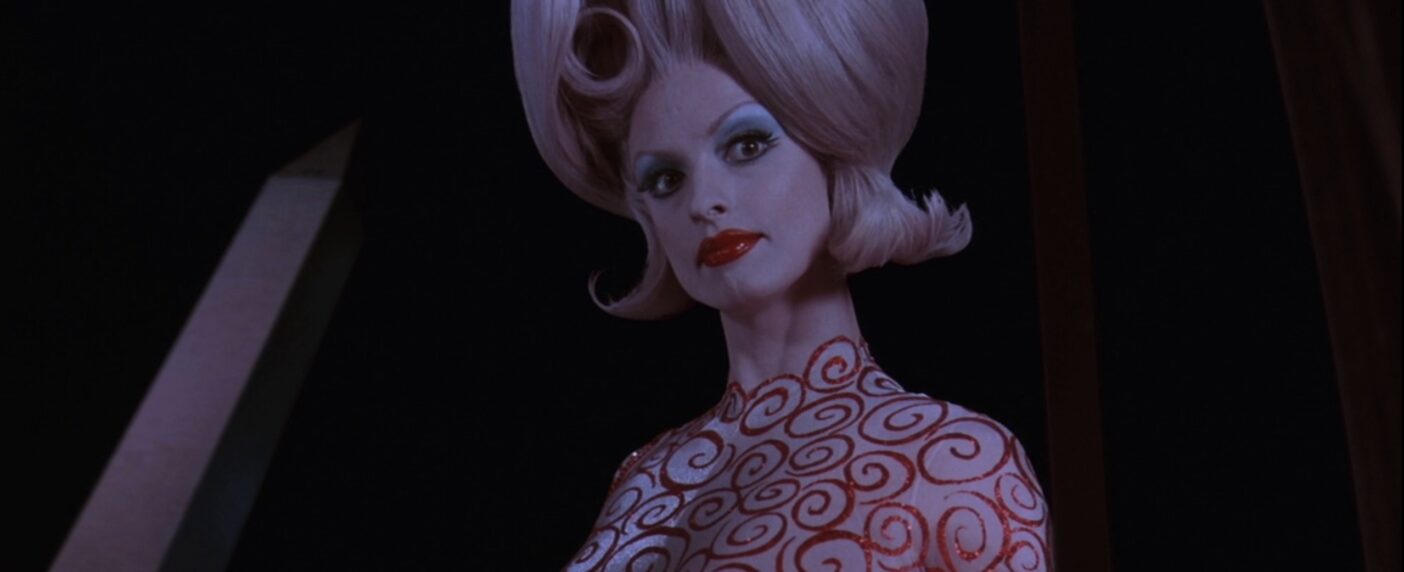
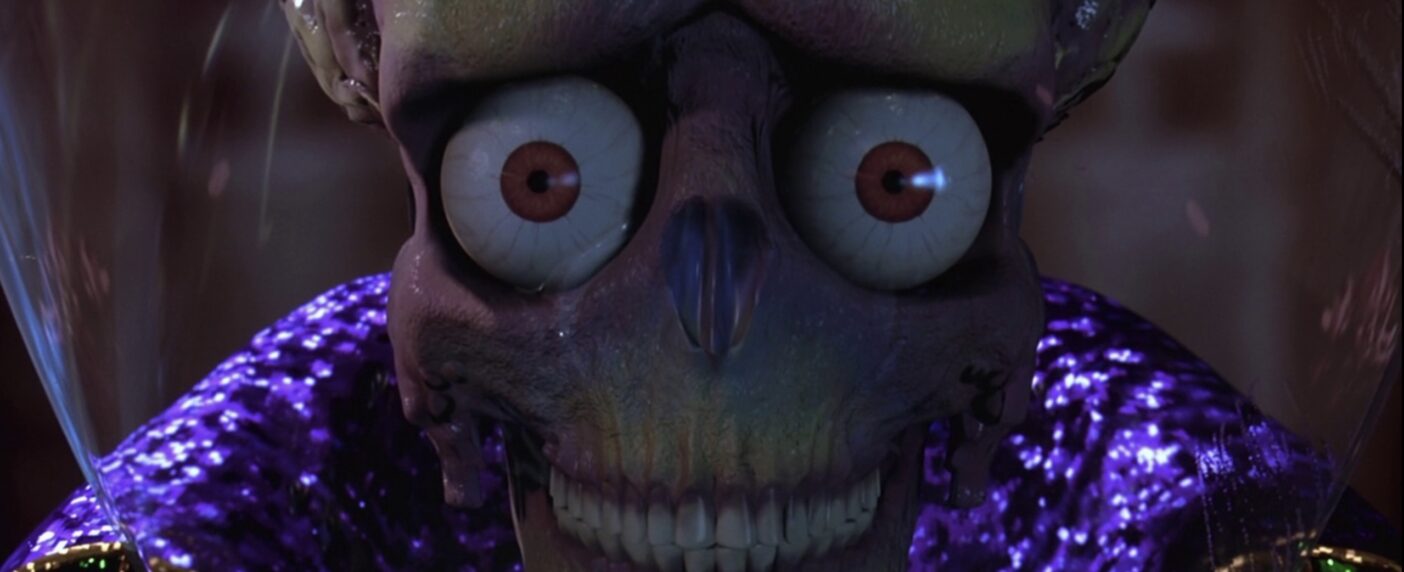
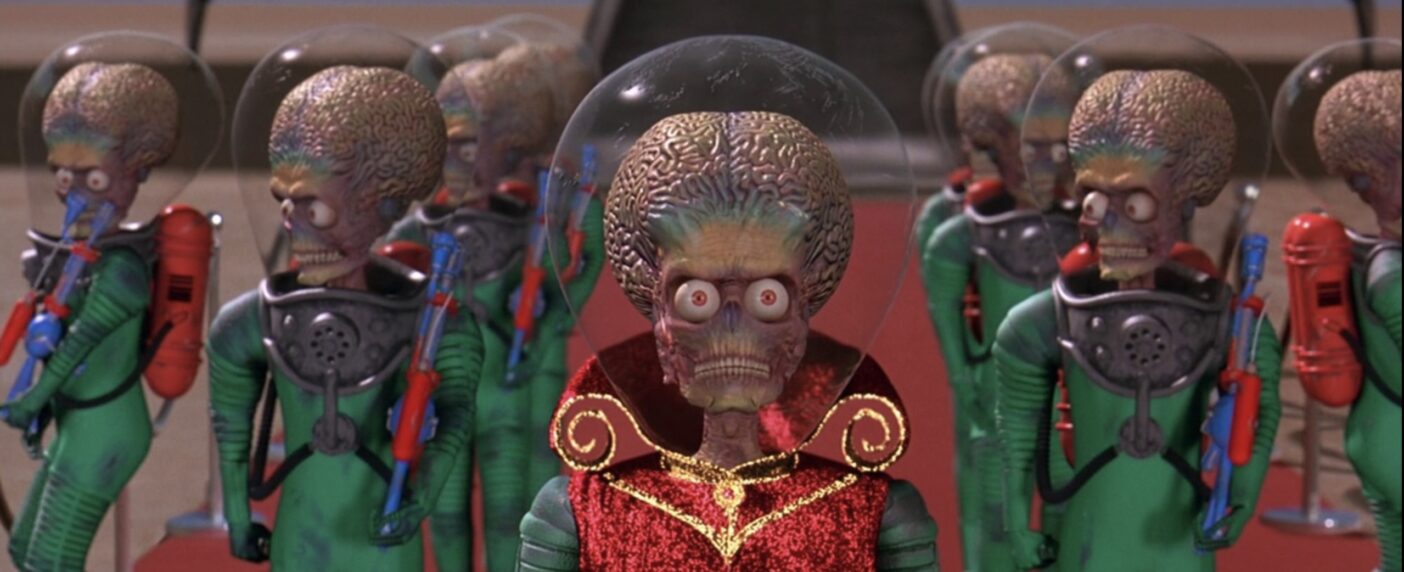
The Martians are the undisputed stars of the show. Inspired by the original trading cards, Burton’s creations retain an exaggerated anatomy—dimunitive skulls and hypertrophic brains perched precariously on fragile bodies. They’re simultaneously absurd and threatening. Much like the mischievous Mogwais in Gremlins (1984), this brigade of miscreants makes for terrific villains. Essentially juvenile delinquents equipped with apocalyptic technology, they ridicule and annihilate humanity with petulant delight. Between acts of devastation, they languish in their interstellar underwear, leaf through Playboy, and pose for photographs beside the smouldering ruins of Earth’s monuments.
Burton originally intended to animate the Martians using stop-motion as a homage to Ray Harryhausen. However, when Henry Selick couldn’t commit due to James and the Giant Peach (1996), Burton was persuaded to use computer animation. While he may have wanted the stop-motion look, the digital effects provide a similar, fantastical quality. Despite the limitations of 1990s CGI, the Martians’ artificiality enhances their otherworldliness. Their overwrought movements and elasticated limbs lend them a manic energy that practical animation might have constrained.
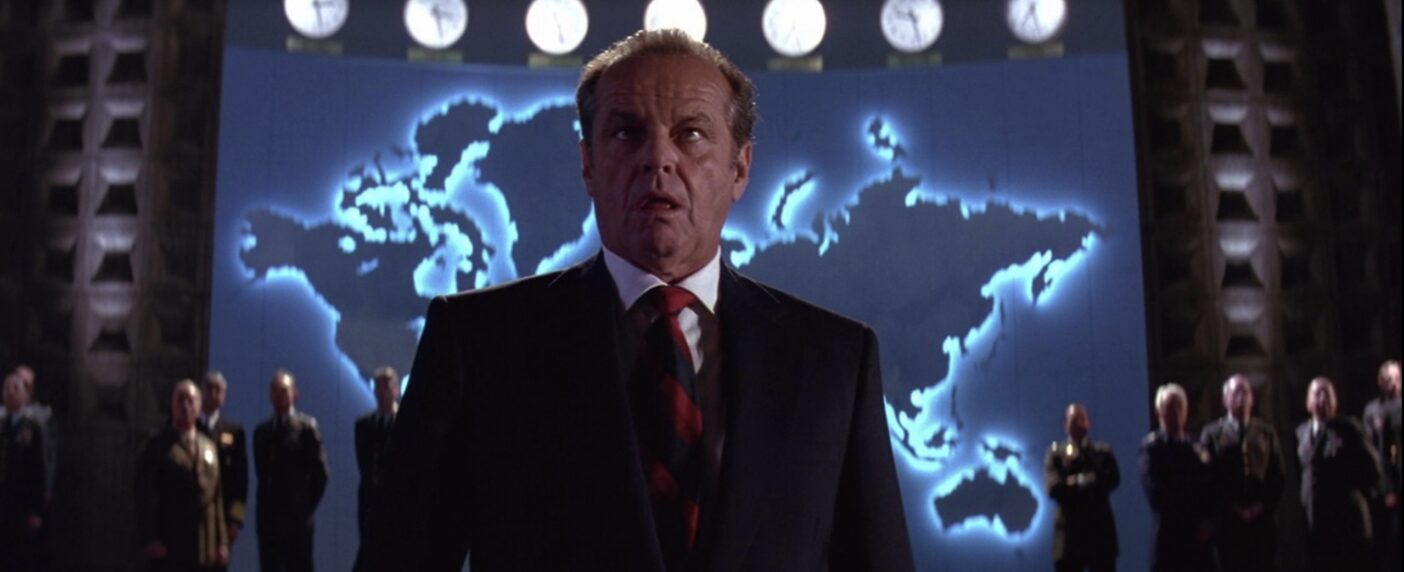
Beyond the shrieking aliens and colourful destruction, Burton crafts a pointed satire about human behaviour under pressure. Mars Attacks! isn’t intrinsically prescient, but its humour has gained layers over the decades. Viewed today—particularly in a post-pandemic landscape—it feels like an accurate projection of how humanity might respond to such a crisis. Every public figure possesses the narcissistic impulse to reframe the encounter around their own desires. President Dale is concerned with his image; Professor Kessler insists the Martians can be reasoned with despite the mounting bodies. Even Art Land tries to monetise the catastrophe. Burton isn’t entirely nihilistic, though; he weaves a thread of subversive optimism through the carnage. Salvation belongs to those without delusions of grandeur, and heroism emerges through small acts of decency. What once seemed like anarchic parody now registers as uncomfortably familiar.
Unfortunately, the film represented the first commercial disappointment of Burton’s career. Following an aggressive marketing campaign, audiences expected a whimsical spectacle. Instead, they encountered a cynical satire where world leaders are vaporised for a laugh. This jaundiced worldview alienated many, and the film grossed only $37M domestically. International audiences were more receptive, raising the total to $101M against an $80M budget. Timing also played a part; arriving the same year as Independence Day (1996), audiences were primed for rousing patriotism, not nihilistic absurdity.
Nearly three decades on, Mars Attacks! remains a curious anomaly. Rather than the gothic romanticism of Edward Scissorhands (1990), it withholds the emotional sincerity that typically underlines Burton’s work. Instead, it’s a gleefully destructive homage steeped in irreverent humour. While some fans might dislike the abrasive tone, the filmmaker’s unrestrained imagination and meticulous design sustain a perverse fascination. Crucially, the film has undergone a significant cultural reappraisal. Freed from the expectations of 1996, it reads less as a career detour and more as a daring, pointed critique of political pomposity and collective hysteria.
USA | 1996 | 106 MINUTES | 2:35:1 | COLOUR | ENGLISH • FRENCH

director: Tim Burton.
writer: Jonathan Gems (based on the ‘Mars Attacks’ trading cards by Topps).
starring: Jack Nicholson, Glenn Close, Pierce Brosnan, Sarah Jessica Parker, Annette Bening, Danny DeVito, Martin Short, Michael J. Fox, Natalie Portman, Rod Steiger, Pam Grier, Jim Brown, Sylvia Sidney, Paul Winfield, Jack Black, Lisa Marie, Lukas Haas & Tom Jones.