BLACK SUNDAY (1977)
When a Black September terrorist group begins a plot to carry out a massive attack in the US, an Israeli commando works with the FBI to identify the target and conspirators, and prevent the plan from succeeding.


When a Black September terrorist group begins a plot to carry out a massive attack in the US, an Israeli commando works with the FBI to identify the target and conspirators, and prevent the plan from succeeding.
While watching John Frankenheimer’s Black Sunday, the oft-used saying “they don’t make them like this anymore” popped into my head. In my experience, that phrase can be a double-edged sword, but to be clear: in this context, it sits firmly at the positive end of the spectrum.
As the film is nearly 50 years old, I expect some haven’t even heard of it. I was only aware of the movie because the source novel was written by Thomas Harris—the author behind The Silence of the Lambs. I recall reading it years ago on the strength of his later success. I enjoyed the book but never got round to watching the film until now, likely because it hasn’t been easy to find, or perhaps because I’d simply been distracted by more recent releases. That was my mistake.
In the 1970s, Hollywood focused heavily on tough, gritty thrillers that reflected America’s growing paranoia and distrust of authority. Between the JFK assassination, Civil Rights-era violence, the Vietnam War, and the Watergate scandal, it’s easy to see why the nation felt jittery. This era of upheaval birthed a host of cracking movies: All the President’s Men (1976), The Conversation (1974), The Parallax View (1974), Three Days of the Condor (1975), and Marathon Man (1976). Black Sunday shares that same creative DNA.
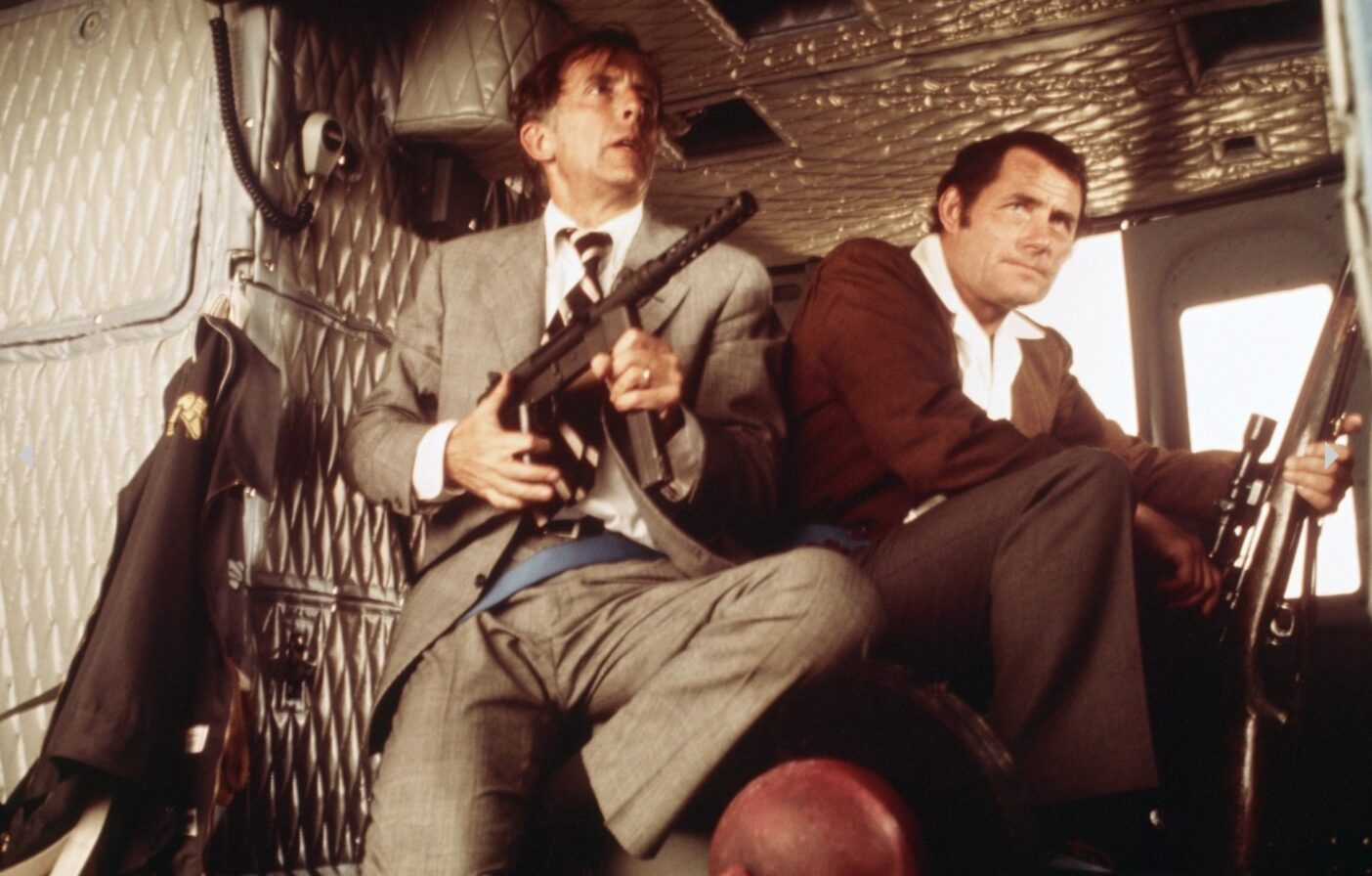
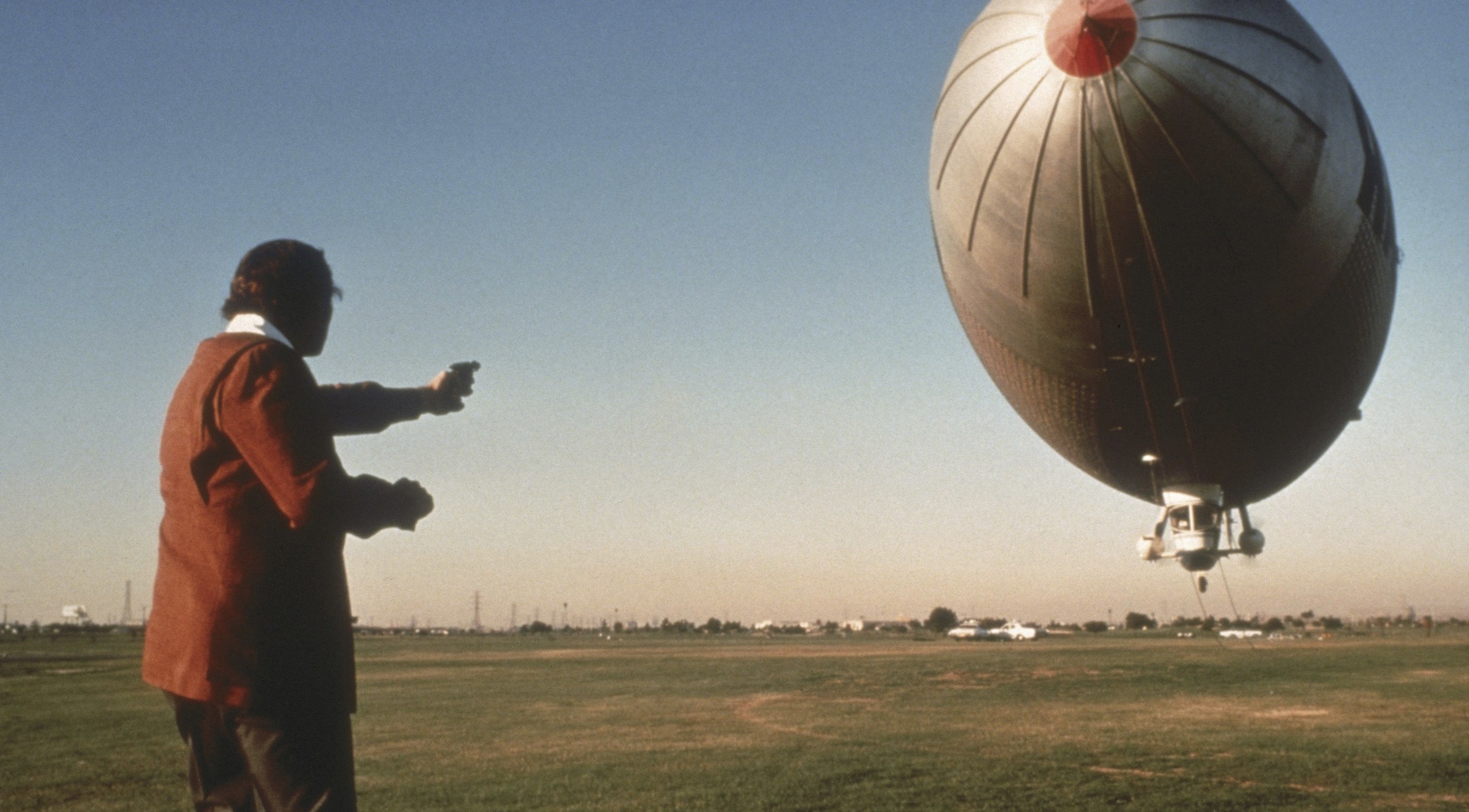
The plot concerns the Palestinian terrorist organisation Black September, based on the real-life militant group responsible for the horrific 1972 Munich Olympics massacre. In this fictional scenario, they plot to attack the Super Bowl in Miami by detonating the famous Goodyear blimp over the stadium, showering the crowd with thousands of lethal metal darts.
It was a stroke of genius for Harris to include Black September; it made the story topical and added immediate dramatic weight. He further grounded the film in history by drawing on the fallout of Southeast Asia. Michael Lander (Bruce Dern), a disgruntled former Navy pilot and POW, is the terrorists’ pilot. Attempting to thwart the attack is a group of Israeli intelligence officers led by Major David Kabakov (Robert Shaw).
The film kicks off in Beirut with a Mossad raid on a Black September safe house. Before the bullets fly, we’re given vital exposition regarding Lander via a Vietcong propaganda clip. In it, he’s clearly forced to lie, claiming he was treated well and expressing regret for his bombing raids. One operative, Dahlia Iyad (Marthe Keller), explains that Lander is the perfect recruit because he hates the country that court-martialled him following accusations of collaboration.
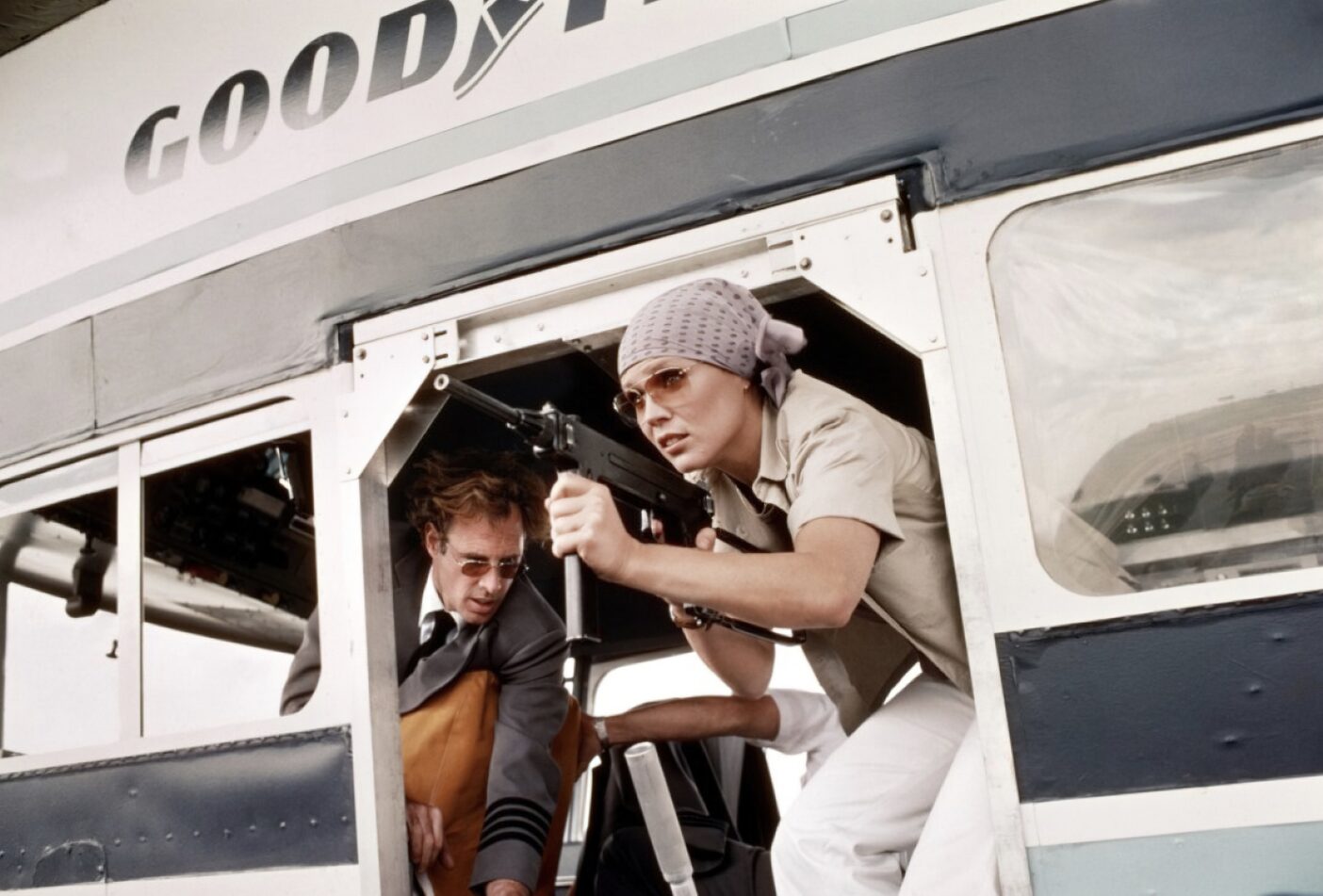
During the raid, Kabakov surprises Iyad in the shower. Because she’s unarmed, he hesitates and turns away; in the ensuing chaos, she escapes. Kabakov later discovers a recorded political statement she prepared, which reveals the motive—but not the details—of the upcoming attack. Will Kabakov and his fellow agents uncover the plot in time?
This setup is expertly executed. Beyond the explosions and gunfire, it establishes the principal characters and highlights Kabakov’s “act of mercy” as a pivotal mistake—one that later leads to a colleague’s murder and turns his mission into a personal quest for redemption.
Shaw’s performance is typically first-rate. Eschewing over-the-top histrionics, he plays his character’s internal burden with quiet, subtle control. Marthe Keller is equally strong as the ruthless Iyad, imbuing the role with a calm, intelligent presence. By exploring her tragic backstory, the film avoids two-dimensional “good versus evil” tropes, highlighting the complexities of the Israeli-Palestinian conflict.
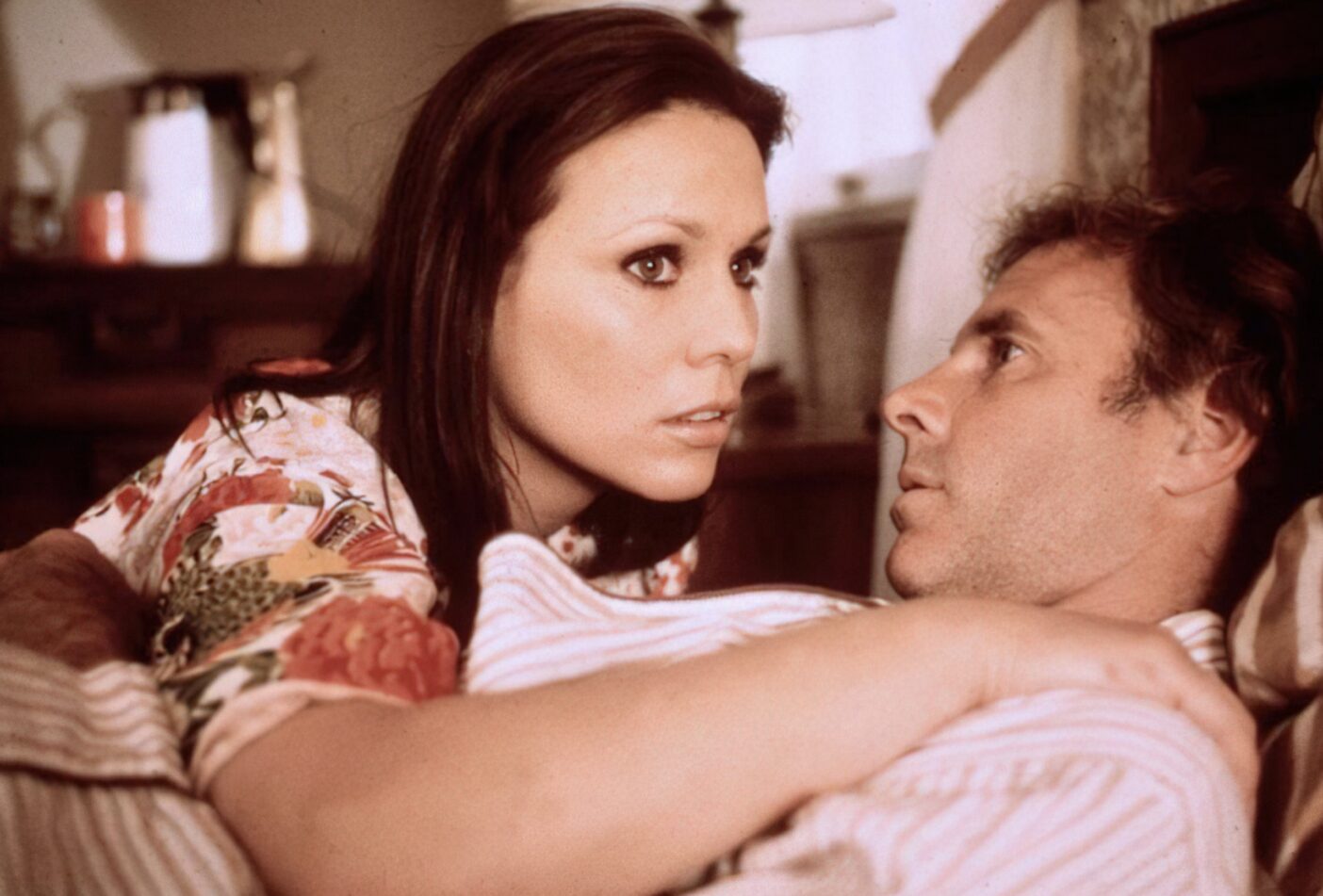
However, for my money, the real star is Bruce Dern. Having trained at the Actors Studio under Elia Kazan and Lee Strasberg, Dern is hypnotic. His Lander is both terrifying and sympathetic—a man whose trauma and bitterness have clouded his judgment. In a chilling sequence where he tests the dart weapon on an unwitting victim, he laughs and jokes with the man before firing. Dern’s acting is a masterclass in nuance and restraint.
Director John Frankenheimer also deserves immense credit. While some might find the pacing slow by modern standards, here it allows the characters to be fully fleshed out as the nail-biting conclusion nears. Frankenheimer’s military background in a photography unit served him well; after assisting Sidney Lumet, he found success with Birdman of Alcatraz (1962) and The Manchurian Candidate (1962).
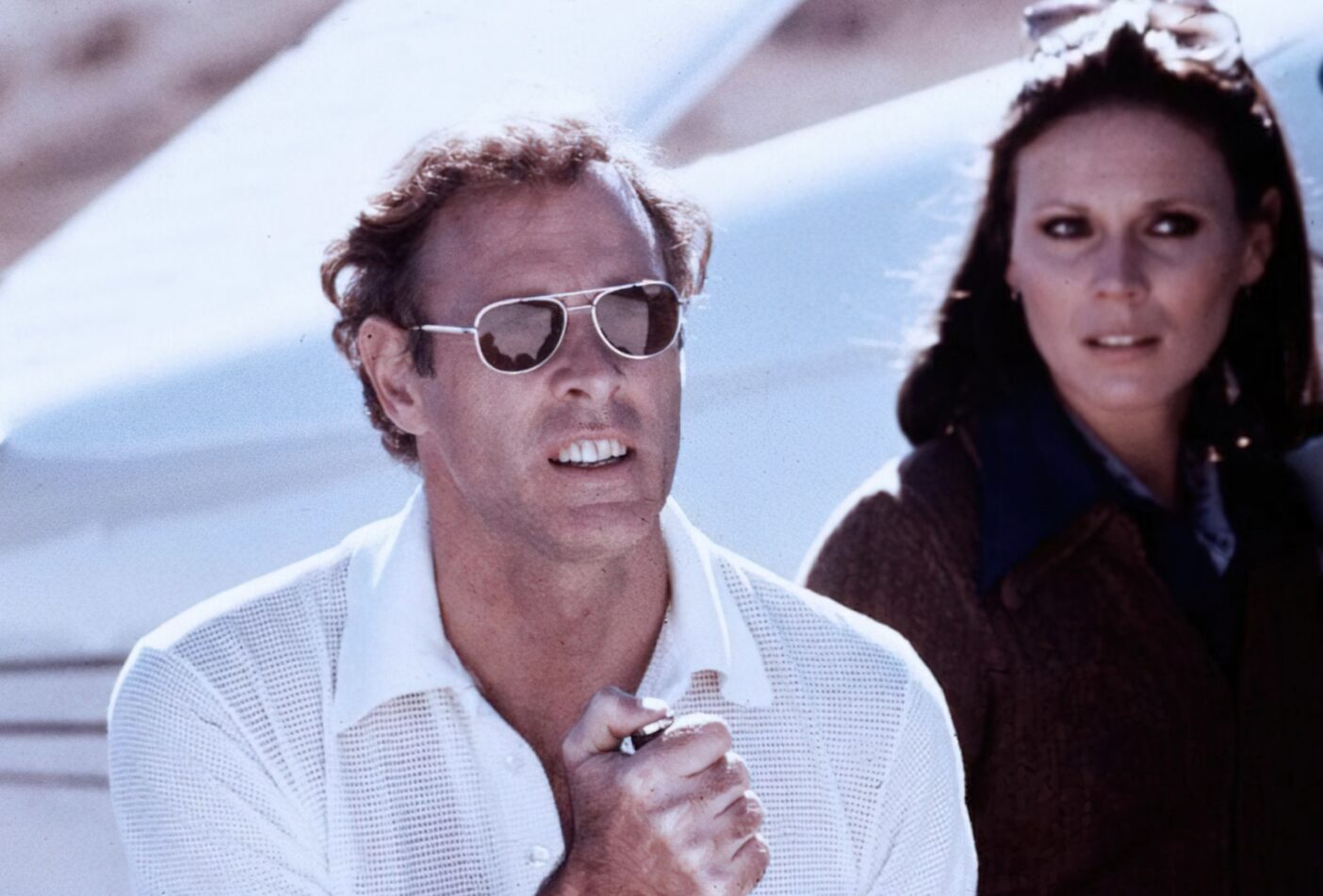
In Black Sunday, he handles the Super Bowl sequences with impressive realism, filming at an actual game with real crowds. Aside from the direction, cinematographer John A. Alonzo (Chinatown) provides a naturalistic look through handheld camerawork. The aerial photography is particularly excellent, especially the tense finale featuring Kabakov dangling from the airship.
One standout shot towards the end—a sophisticated track and zoom—perfectly captures the scale of the threat, moving from a close-up of Iyad’s car to a wide shot of the massive stadium. This is bolstered by a pulsating, suspenseful score from the legendary John Williams.
Sadly, Black Sunday wasn’t a box office hit, earning only $15.8M against an $8M budget—partly because a similar film, Two-Minute Warning, had been released months earlier. Nevertheless, reviews were largely favourable. While Vincent Canby of The New York Times felt the logistics overshadowed the character motivations, there was almost unanimous praise for the acting and direction.
USA | 1977 | 143 MINUTES | 2.35:1 | COLOUR | ENGLISH

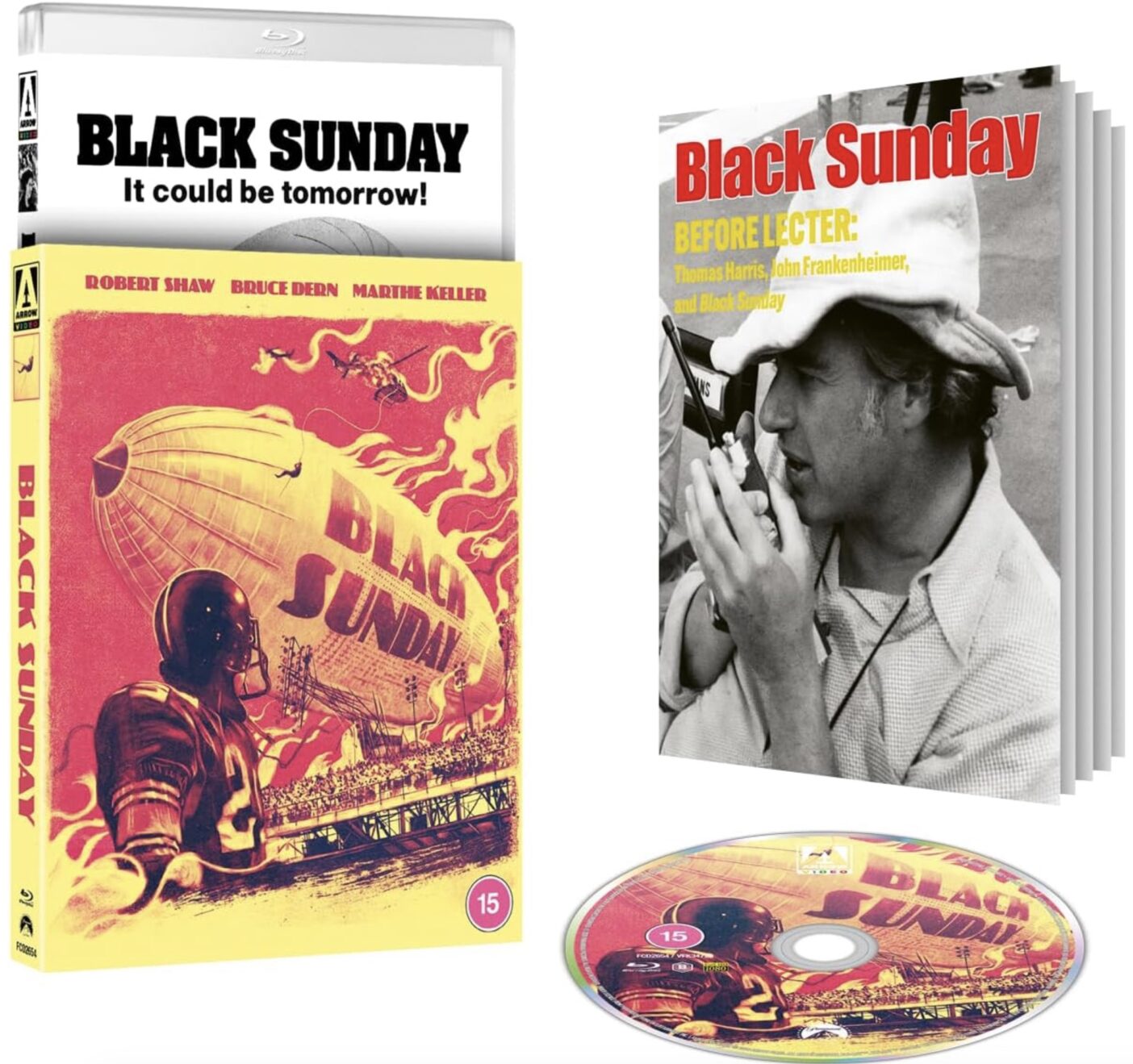
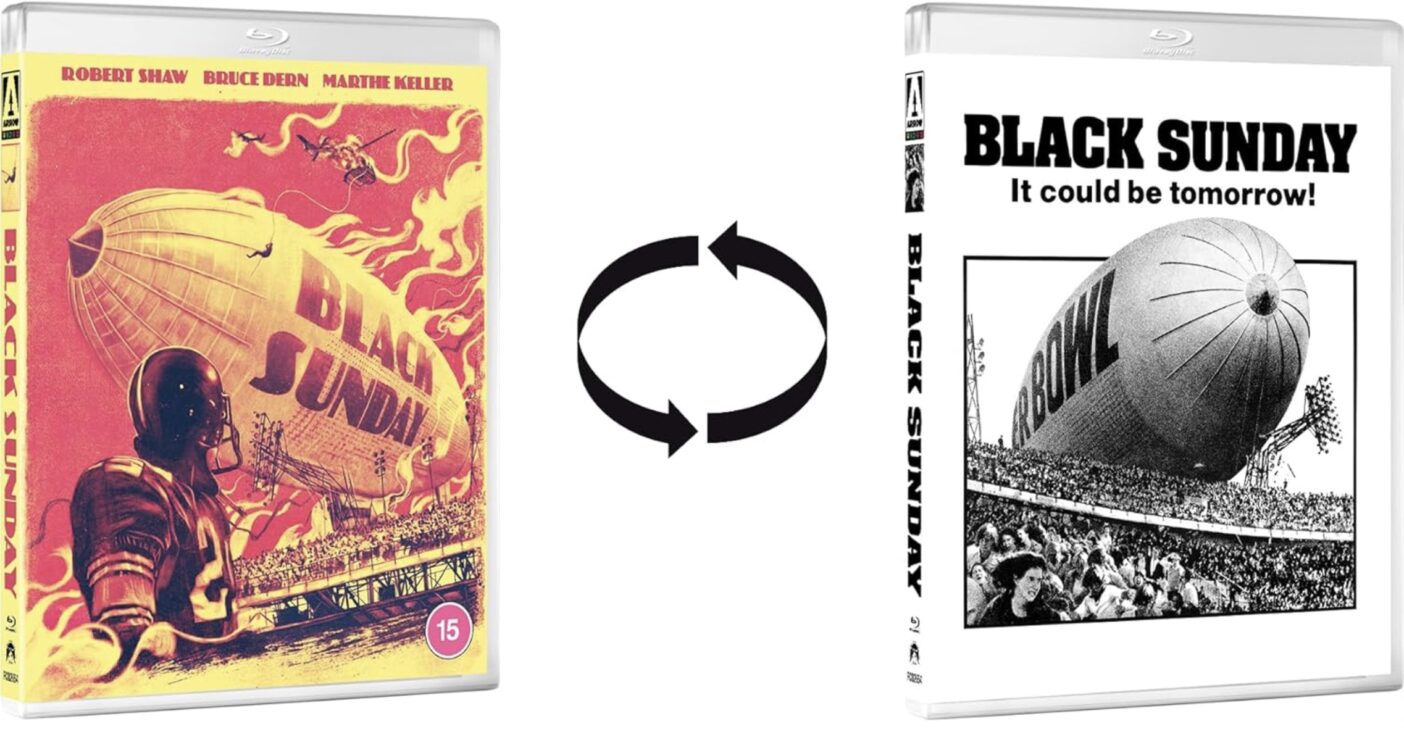
Arrow Video has once again excelled with this beautifully presented Blu-ray release. The reversible sleeve not only looks fantastic featuring the original poster design, but also offers a cool 1970s retro-style cover by artist Peter Strain. Complementing the artwork is a 16-page booklet containing an insightful essay on the film by writer Barry Forshaw.
The high-definition (1080p) transfer is crisp and sharp. Varying light levels throughout the movie are handled perfectly, with no visible pixelation or blur; the film likely looks much as it did during its original theatrical run.
Regarding audio, viewers can choose between the original restored lossless mono, or the restored lossless 5.1 and 2.0 stereo options. Whichever you pick, the sound quality is impressive, remaining free of hiss or distortion even at high volumes.

director: John Frankenheimer.
writers: Ernest Lehman, Kenneth Ross & Ivan Moffat (based on the novel by Thomas Harris).
starring: Robert Shaw, Bruce Dern, Marthe Keller, Fritz Weaver & Bekim Fehmiu.