A TIME TO KILL (1996)
A young Mississippi lawyer defends a black man who killed the two white men that raped his preteen daughter.

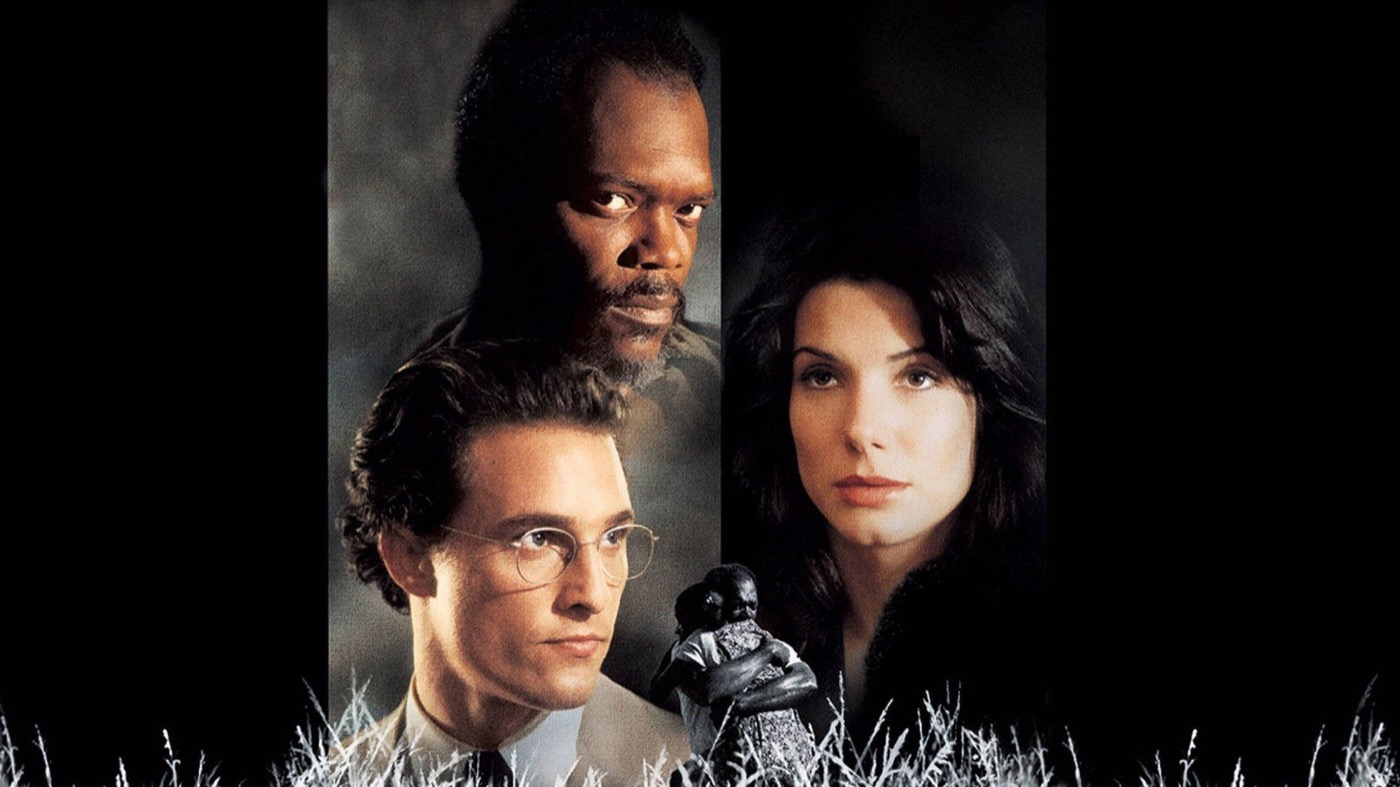

A young Mississippi lawyer defends a black man who killed the two white men that raped his preteen daughter.
A Time to Kill begins with a crime whose perpetrator is never in doubt. Carl Lee Hailey (Samuel L. Jackson) kills the two white men who brutally assaulted his 10-year-old daughter, Tonya. He does it deliberately, publicly, and with enough preparation to leave little uncertainty about the facts.
The film’s real problem isn’t discovering what happened; it’s deciding what those facts mean—and whether twelve people can judge them independently of race.
That distinction gives Joel Schumacher’s adaptation of John Grisham’s first novel more complexity than its reputation for broad moralising might suggest. Jake Brigance (Matthew McConaughey), the young white lawyer who agrees to defend Carl Lee, isn’t simply an enlightened liberal confronting a racist Southern community. He understands his client’s act more intimately than he’d like to admit. He’s a father himself, and he believes in capital punishment in extreme cases. Looking at his own daughter, he can recognise the desire to see Tonya’s attackers dead. Yet professionally, he must prevent the state from killing a man who has himself committed two premeditated killings.
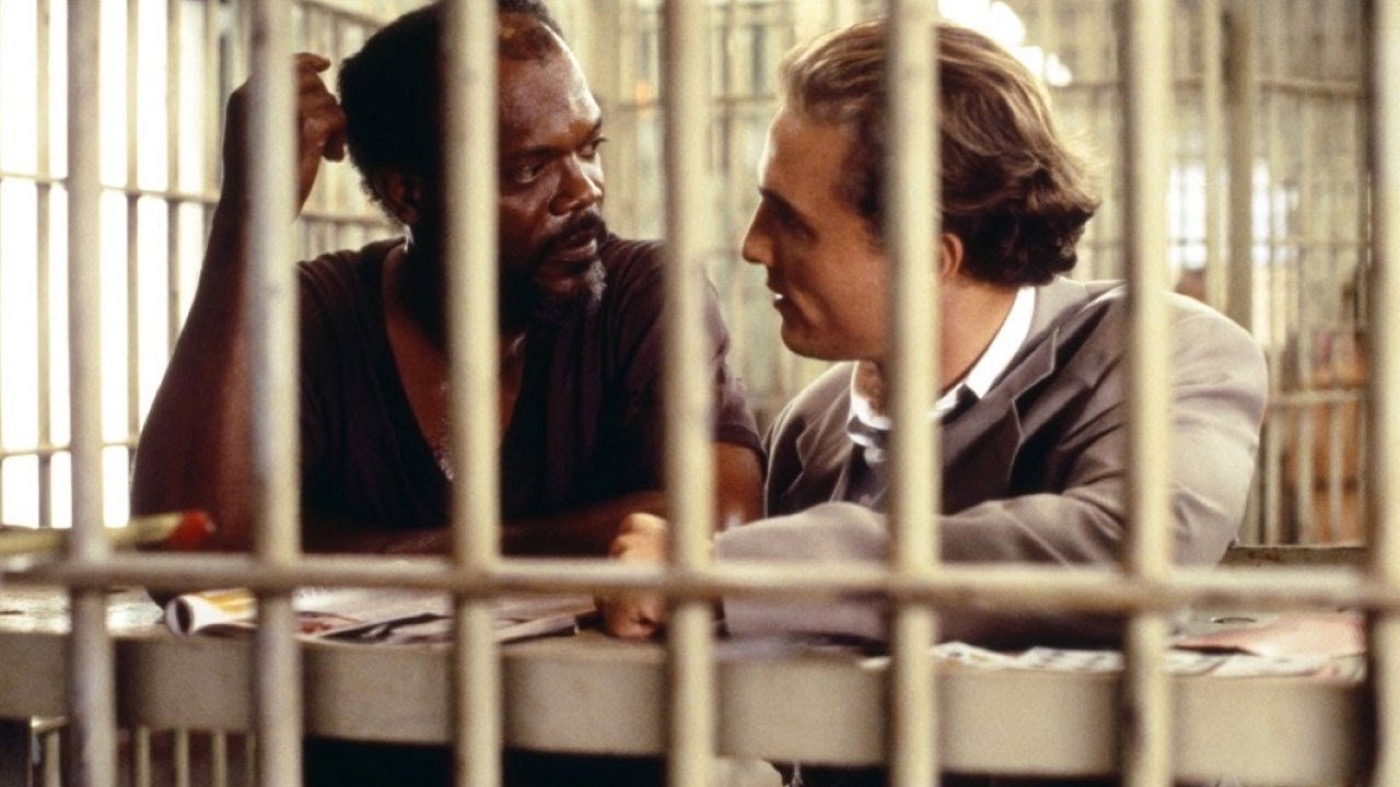
That contradiction matters because it stops Jake from becoming merely the film’s moral spokesman. He knows what the law requires, but he can’t keep his own instincts out of the case. The question beneath the legal strategy is brutally simple: had it been his daughter, could he honestly claim he’d have felt any differently from Carl Lee?
Akiva Goldsman’s screenplay is considerably better than the bluntness of some of its dialogue can initially make it appear. Grisham’s novel is expansive—crowded with local politics, racial tensions, family life, legal manoeuvring, and secondary plots. Goldsman compresses that material into a clearer dramatic structure, but crucially he doesn’t remove the contradictions that keep it alive.
The defence has a legal strategy built around temporary insanity, yet the film steadily reveals that legal classification alone can’t resolve the case. Everyone already knows what Carl Lee did. The battle concerns the meaning attached to the act, the man who committed it, and the bodies through which the crime is imagined.
Goldsman understands that the facts themselves cannot change; what can change is the way they’re perceived.
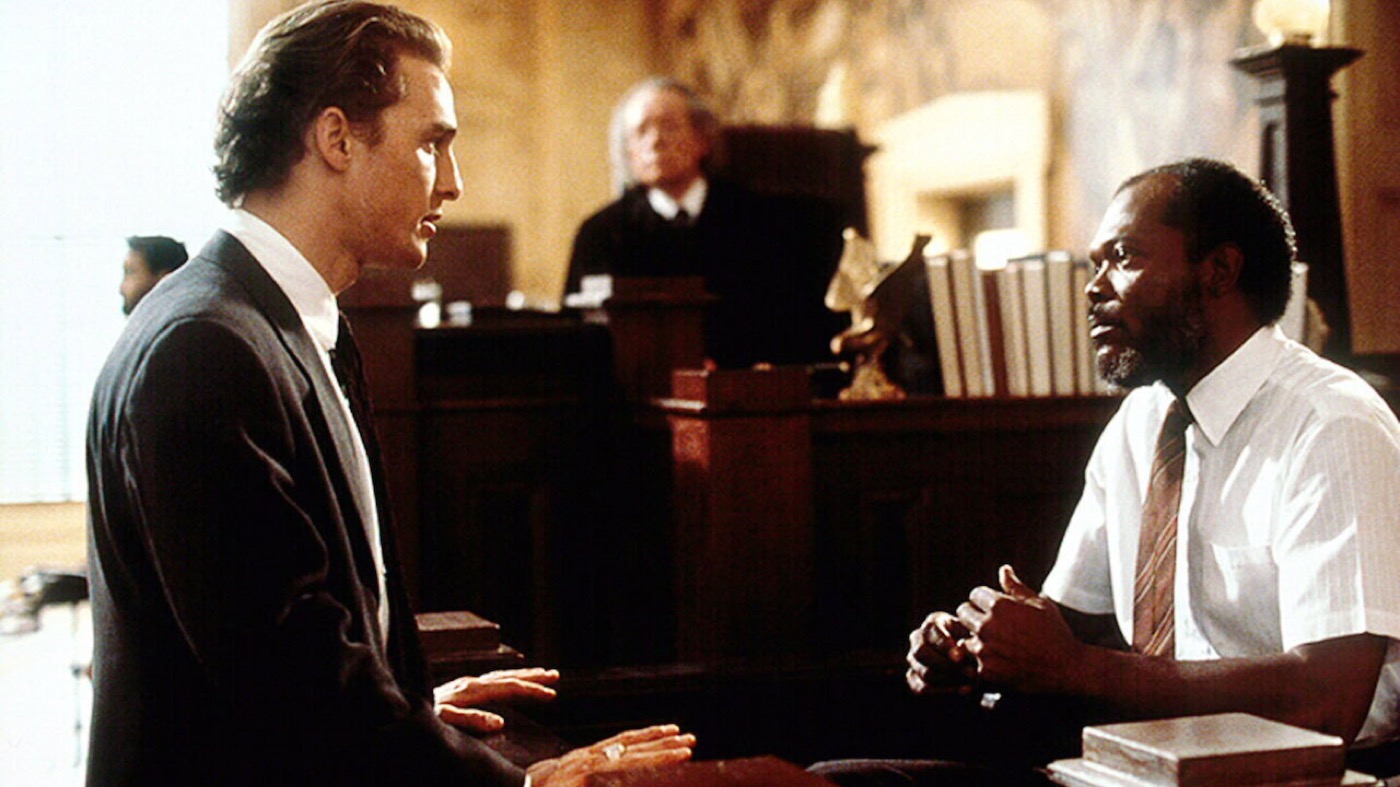
That makes A Time to Kill specifically American in ways that extend beyond its Mississippi setting. A jury trial, capital punishment, racial history, and the fantasy of personal justice aren’t separate themes here—they occupy the same dramatic system. To European eyes, parts of the trial can appear unusually dependent on rhetoric and persuasion. But that’s precisely the terrain the film wants to occupy: not simply whether an event occurred, but what story twelve citizens will construct around an event whose essential facts are already established.
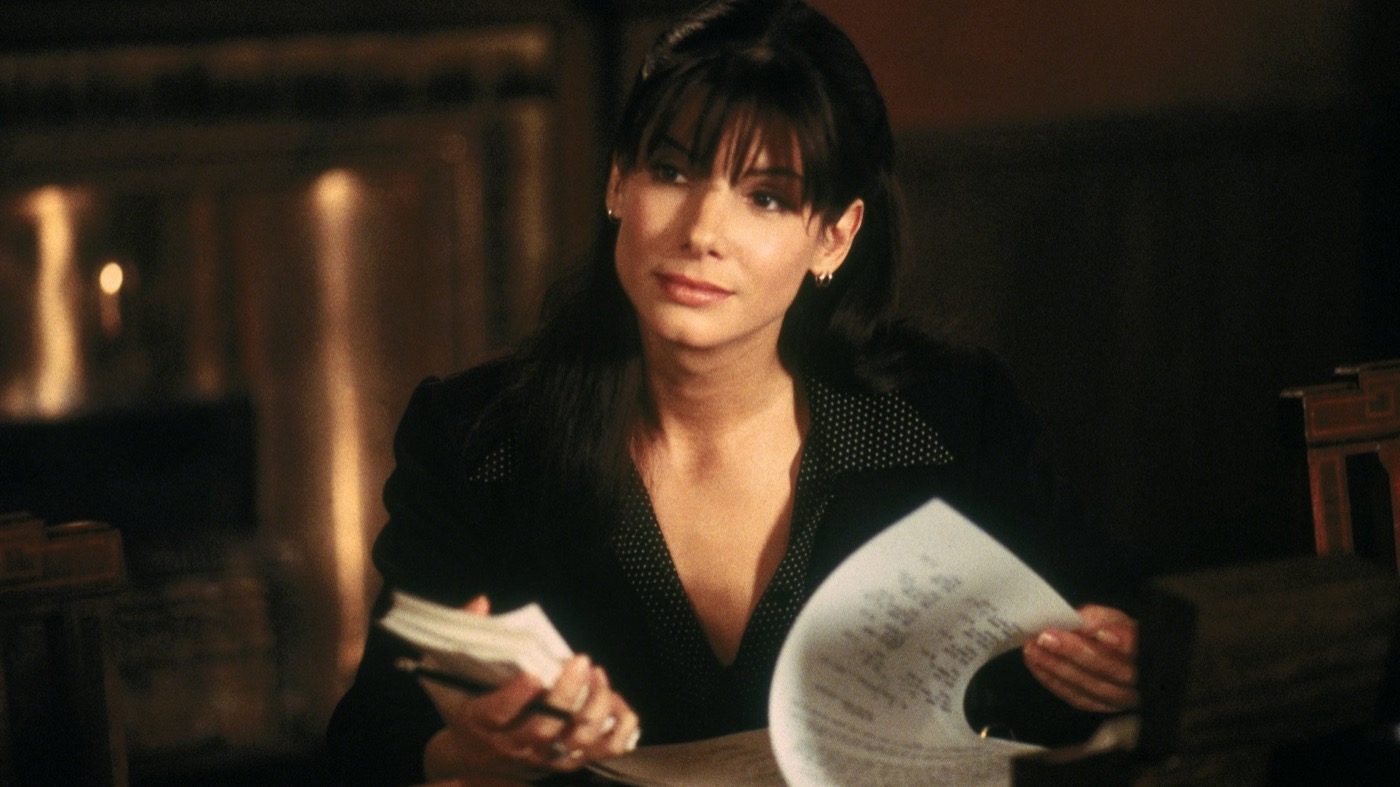
Ellen Roark (Sandra Bullock) enters that system as more than the brilliant young legal assistant the genre requires. She creates an ethical friction Jake can’t easily absorb. He has an opinion about execution; she’s watched a man die.
Schumacher makes that distinction physical. During their argument about capital punishment, Bullock’s face is held in a tight, slightly unbalanced close-up, with another body blurred in the foreground. The composition doesn’t merely isolate her for emphasis—it compresses the space around her as an abstract political disagreement becomes bodily knowledge. Jake can defend a position, but Ellen can describe what the state actually does to a condemned body.
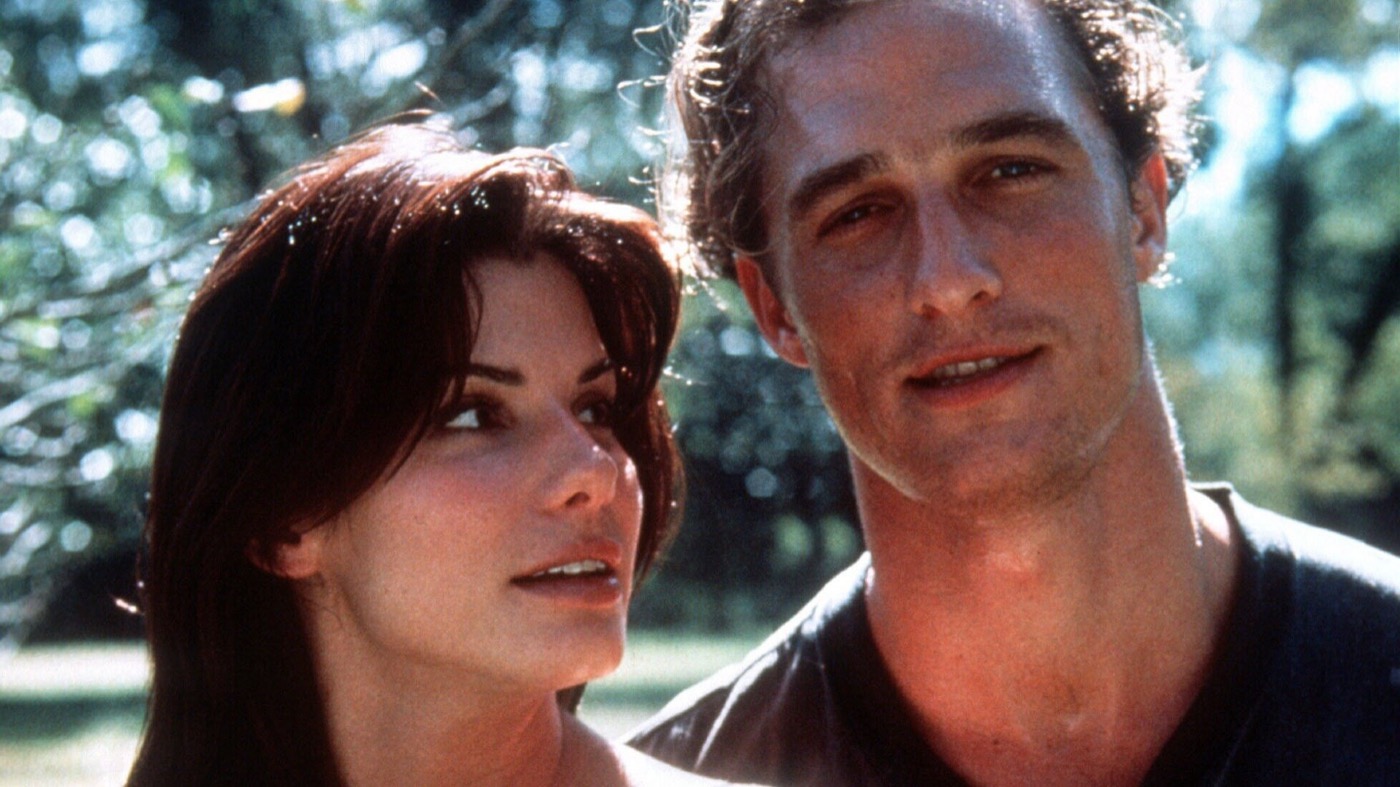
Bullock is unusually good throughout at turning thought into physical presence. She shifts her weight, inclines her body, enters spaces decisively, and watches people from oblique angles. Her intelligence isn’t communicated only through dialogue; it’s kinetic. Ashley Judd’s Carla, by contrast, belongs to the established geometry of Jake’s life: marriage, home, family, and continuity. The difference isn’t that one woman is alive and the other merely functional, but that the film gives them different forms of presence. Carla occupies a world already built; Ellen arrives and disturbs its balance.
McConaughey, still near the beginning of his career, proves remarkably capable of carrying such a large film. His looks and confidence are part of the casting, but so are his youth and vulnerability. Jake needs to appear persuasive enough for people to follow him while still seeming slightly overmatched by a case that expands beyond legal procedure into racial violence, political spectacle, and personal danger. McConaughey allows ambition, fear, vanity, and genuine moral discomfort to coexist without reducing him either to a saint or an opportunist.
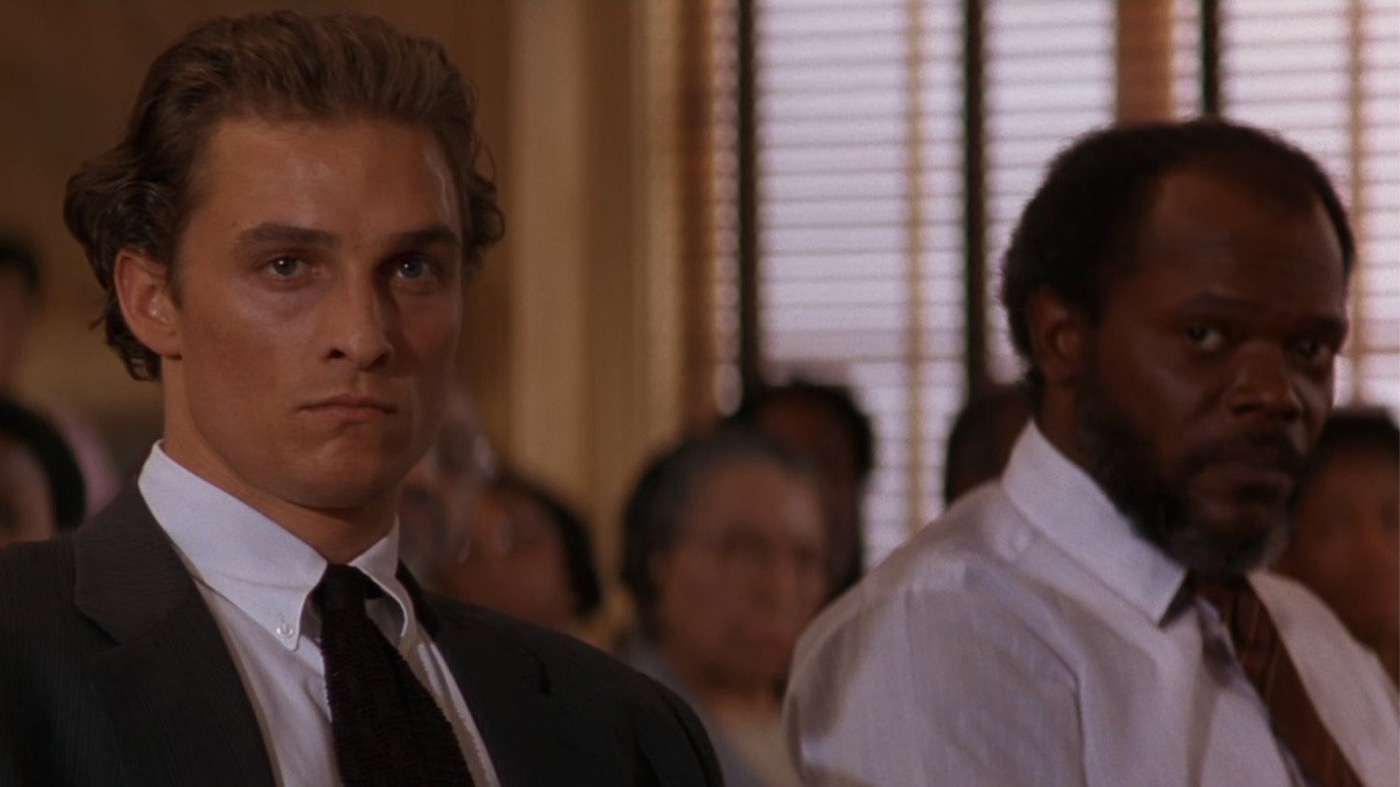
Jackson has the more difficult task. Carl Lee must remain the moral centre of the story without becoming an uncomplicated victim. The film never asks us to forget what he’s done. Jackson therefore works largely through containment. His eyes carry grief, rage, certainty, and stubbornness, often without the explosive theatricality that would later become one of his trademarks. Carl Lee is a father, a killer, a member of a community, and a man who doesn’t need to pretend he regrets every part of his decision.
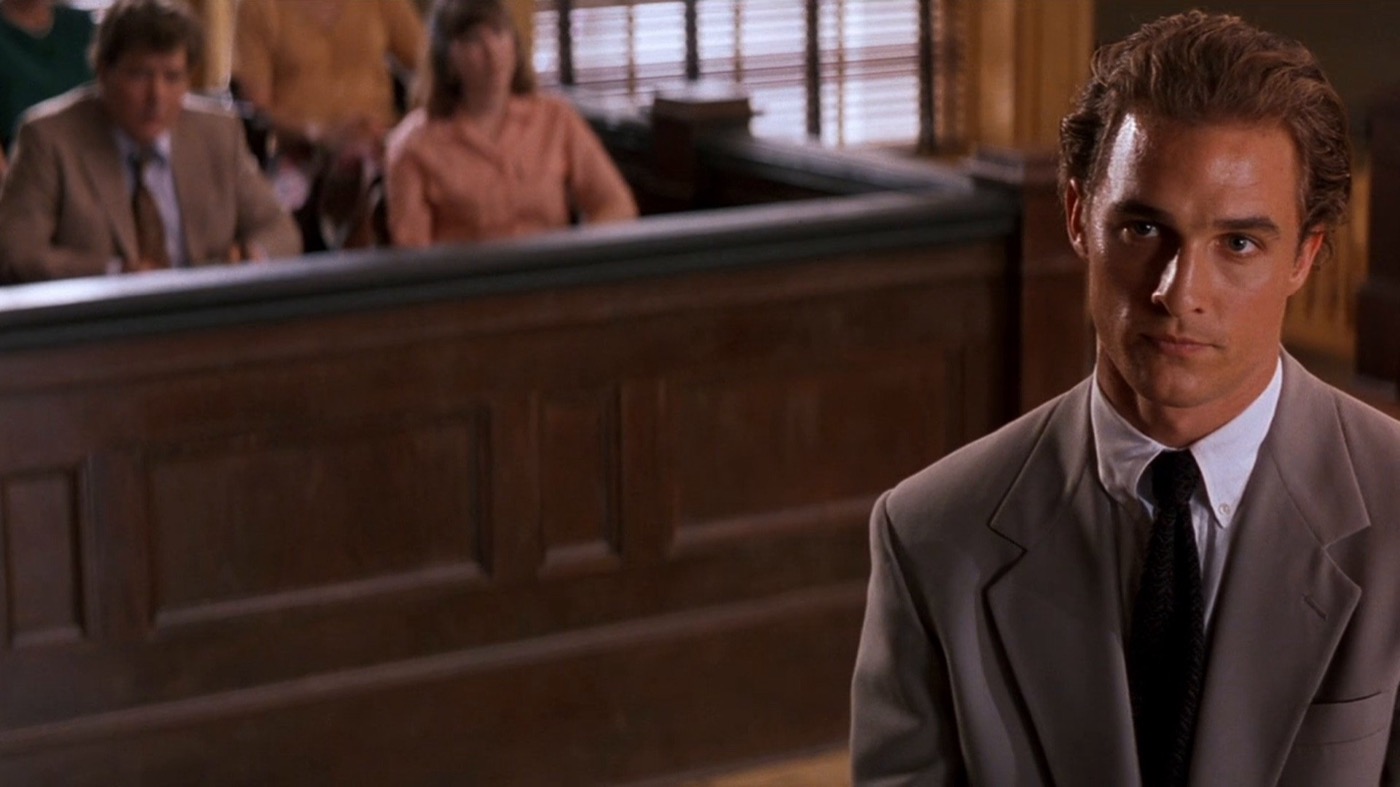
That refusal is important. It keeps the film from becoming entirely comfortable.
Schumacher, meanwhile, deserves more credit than the familiar description of him as an efficient studio director allows. A Time to Kill is unusually mobile for a courtroom drama. Much of its long running time is spent outside the courtroom: in homes, offices, cars, hospital rooms, streets, and public spaces increasingly consumed by the social consequences of the trial.
The courtroom is less the film’s permanent location than its gravitational centre. Pressure is created elsewhere and converted there into argument. Schumacher’s use of the wide frame is particularly effective in making that pressure visible. In one high-angle view of the courthouse grounds, the Black crowd and the Ku Klux Klan become opposing masses below, turning racial conflict into spatial organisation. The trial may be attempting to contain the conflict through law, but the division has already occupied the city around it.
The same wide format can produce the opposite effect when Schumacher pushes towards faces. A frame capable of organising crowds, bodies, and lateral movement can suddenly become oppressive when filled by a close-up. The shift from social space to individual pressure is one of the film’s quieter formal strengths.
The opening assault also shows more control than the film’s reputation for emotional excess might suggest. Schumacher doesn’t reproduce the full accumulation of brutality found in Grisham’s novel. He fragments the attack, using partial views, movement, and aftermath rather than exhaustive display. The purpose is unquestionably emotional—everything that follows depends on the audience understanding Carl Lee’s rage—but emotional persuasion isn’t the same thing as formal carelessness.
That persuasion is also where the film’s weaknesses begin. A Time to Kill is a heavily engineered narrative, and occasionally the engineering becomes visible. Certain secondary threads are compressed almost beyond clarity, particularly the connections between the Ku Klux Klan, law enforcement, and an informant whose function is considerably clearer in the novel. The film eventually resolves those lines, but some of the causal links are thinner than the rest of Goldsman’s adaptation.
The legal construction exposes a deeper tension. Temporary insanity provides the formal mechanism through which Jake can argue the case, but the drama’s real interest lies elsewhere. It’s less interested in proving that Carl Lee didn’t understand what he was doing than in asking whether understanding why he did it alters the judgement placed upon him.
That distinction gives the film much of its power, but it also creates a strain between legal precision and emotional logic. At times, the courtroom machinery has to bend towards the moral question the film is actually asking.
The strain isn’t necessarily a failure; it may be the price of the form the film has chosen. Structurally, A Time to Kill is closer to the logic of the feuilleton than to an austere prestige drama. A private wound expands into a family crisis, racial conflict, political mobilisation, and public violence before all of those pressures are drawn back towards the trial. The film doesn’t hide its villains, minimise its emotions, or apologise for wanting an audience to become involved.
Its achievement lies in how much material remains legible without becoming entirely simple. Goldsman compresses without emptying the contradictions. Schumacher gives those contradictions bodies, movement, and space. The actors prevent narrative functions from hardening into abstractions. Even when the film pushes too firmly towards the emotional response it wants, its machinery is rarely arbitrary: almost every strand is drawn towards the same moral pressure point.
That isn’t merely efficient studio filmmaking. It’s one of the things popular cinema can do at its best: take a difficult moral structure and make it immediately graspable without completely resolving what makes it difficult. A Time to Kill is direct, melodramatic, and openly persuasive. None of those qualities makes it artistically lesser.
Its clarity isn’t the absence of complexity. It’s what the film has built out of it.
USA | 1996 | 149 MINUTES | 2.39:1 | COLOUR | ENGLISH

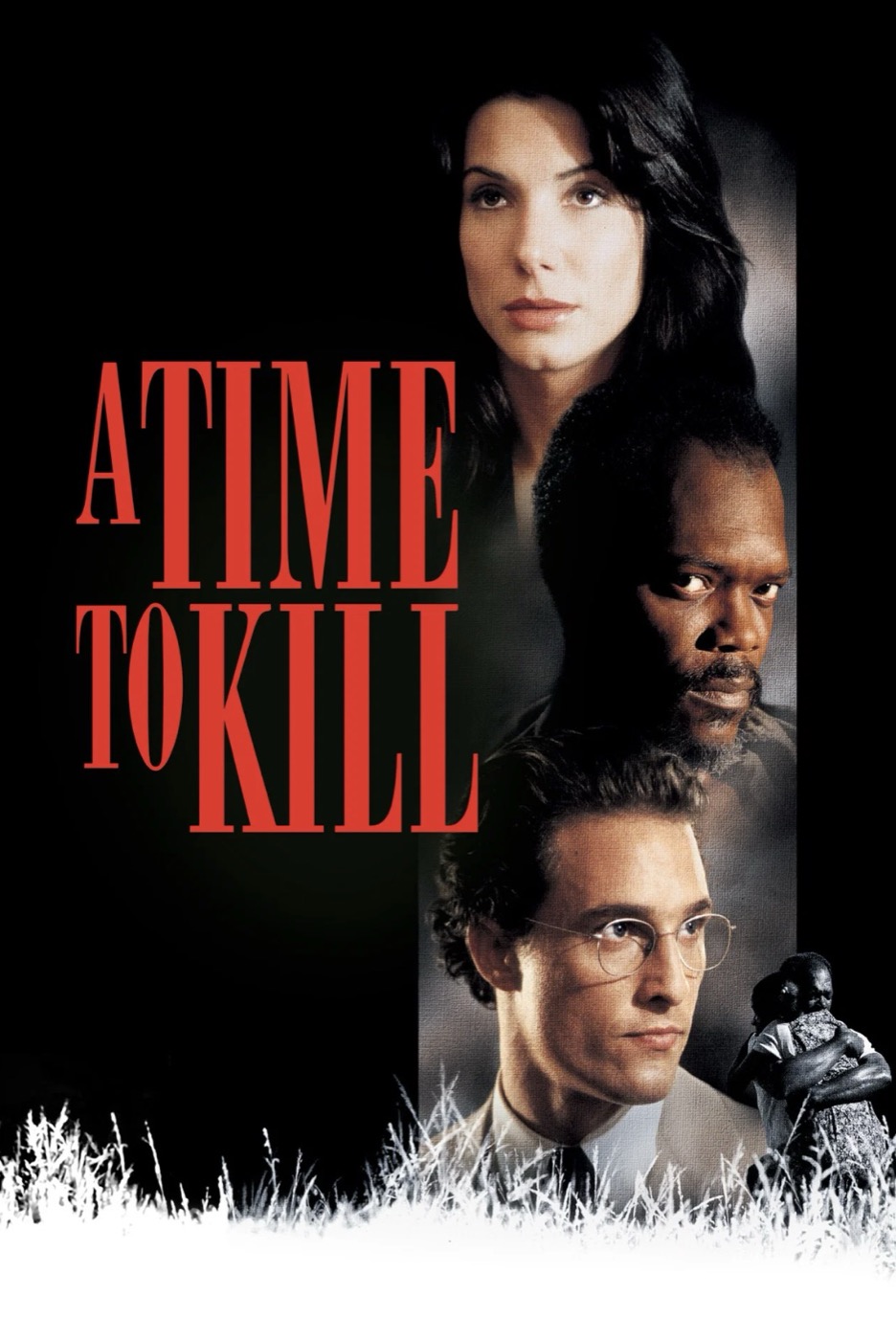
director: Joel Schumacher.
writer: Akiva Goldsman (based on the 1989 novel by John Grisham).
starring: Matthew McConaughey, Sandra Bullock, Samuel L. Jackson, Kevin Spacey, Oliver Platt, Ashley Judd, Charles S. Dutton, Patrick McGoohan, Donald Sutherland & Kiefer Sutherland.