UNDERTONE (2026)
The host of a popular paranormal podcast becomes haunted by terrifying recordings mysteriously sent her way.

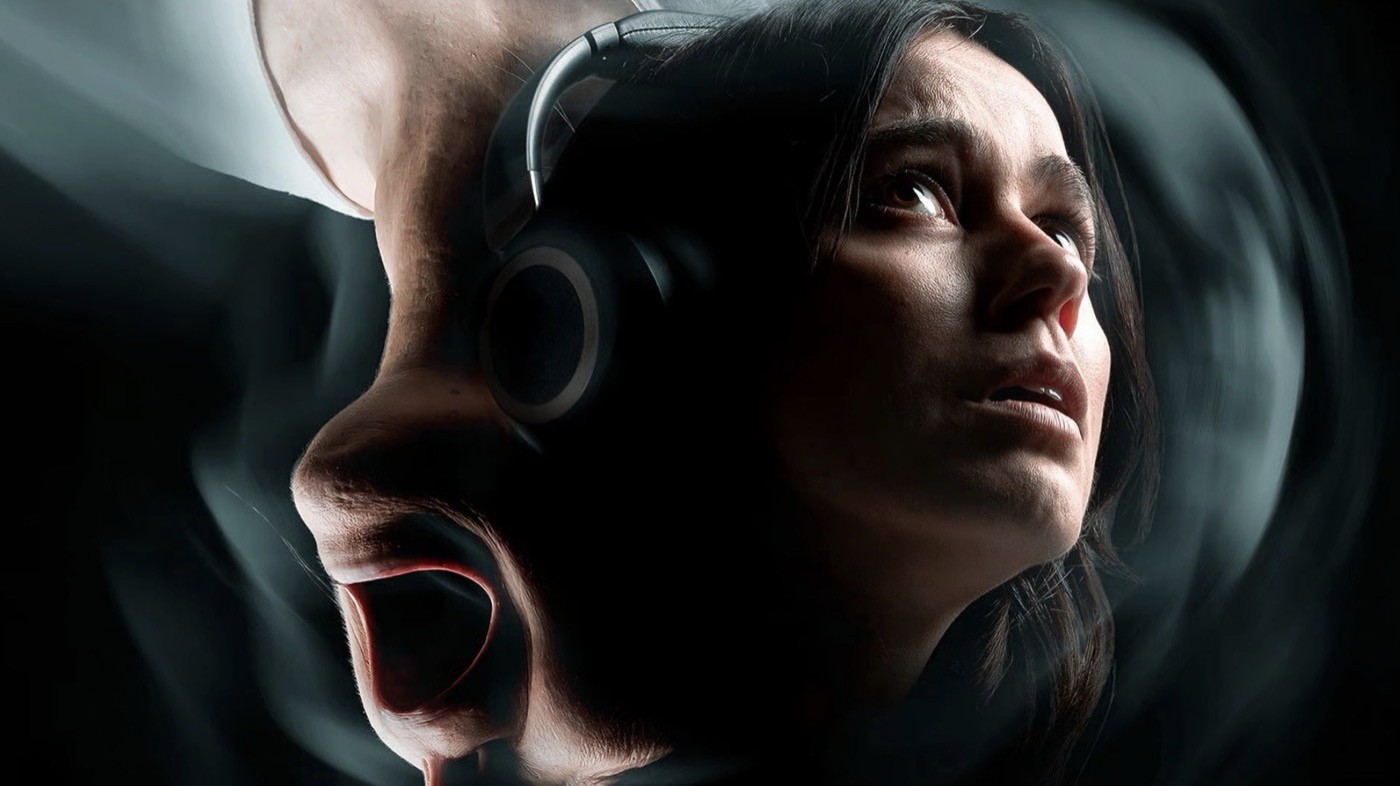

The host of a popular paranormal podcast becomes haunted by terrifying recordings mysteriously sent her way.
Though found-footage horror is frequently criticised as an inferior sub-genre, it has long captured the terror of technology’s expanding omnipresence. The Blair Witch Project (1999) famously emerged as handheld camcorders became domestic staples, transforming personal documentation into something ominous. Conversely, Paranormal Activity (2007) leant into the ubiquity of smart-home surveillance, illustrating how constant monitoring can render even the most familiar spaces unsettling.
As digital culture matured, the sub-genre evolved, offering filmmakers a flexible framework for experimenting with “cursed media”. Subsequent entries such as Unfriended (2014) and Host (2020) furthered this evolution, excavating horror from social media and our dependence on connectivity. It is within this lineage that Ian Tuason’s directorial debut emerges. Drawing upon found-footage conventions, Undertone reframes the form through an auditory lens to discover the disquieting potential of sound.
After returning to her childhood home, Evy (Nina Kiri) takes on the solemn responsibility of caring for her terminally ill mother (Michèle Duquet). Her days are shaped by the exhausting rhythms of palliative care; the emotional weight is slowly defining her life. Evy’s only escape is recording her popular podcast alongside her enthusiastic co-host, Justin (Kris Holden-Ried). The series centres on investigating supernatural phenomena, typically examining “haunted” recordings sent in by listeners. Evy prides herself on debunking each claim through rational analysis, whereas Justin is an unequivocal believer.
For their latest episode, Justin has received mysterious audio files purportedly sent by a young couple expecting their first child. Jessa (Keana Lyn Bastidas) has started speaking in her sleep, and Mike (Jeff Yung) has been documenting the increasingly strange nocturnal conversations. What begins as harmless somniloquy soon escalates. As Evy attempts to decipher the ominous patterns within the audio, a sinister presence begins bleeding into her fragile reality.
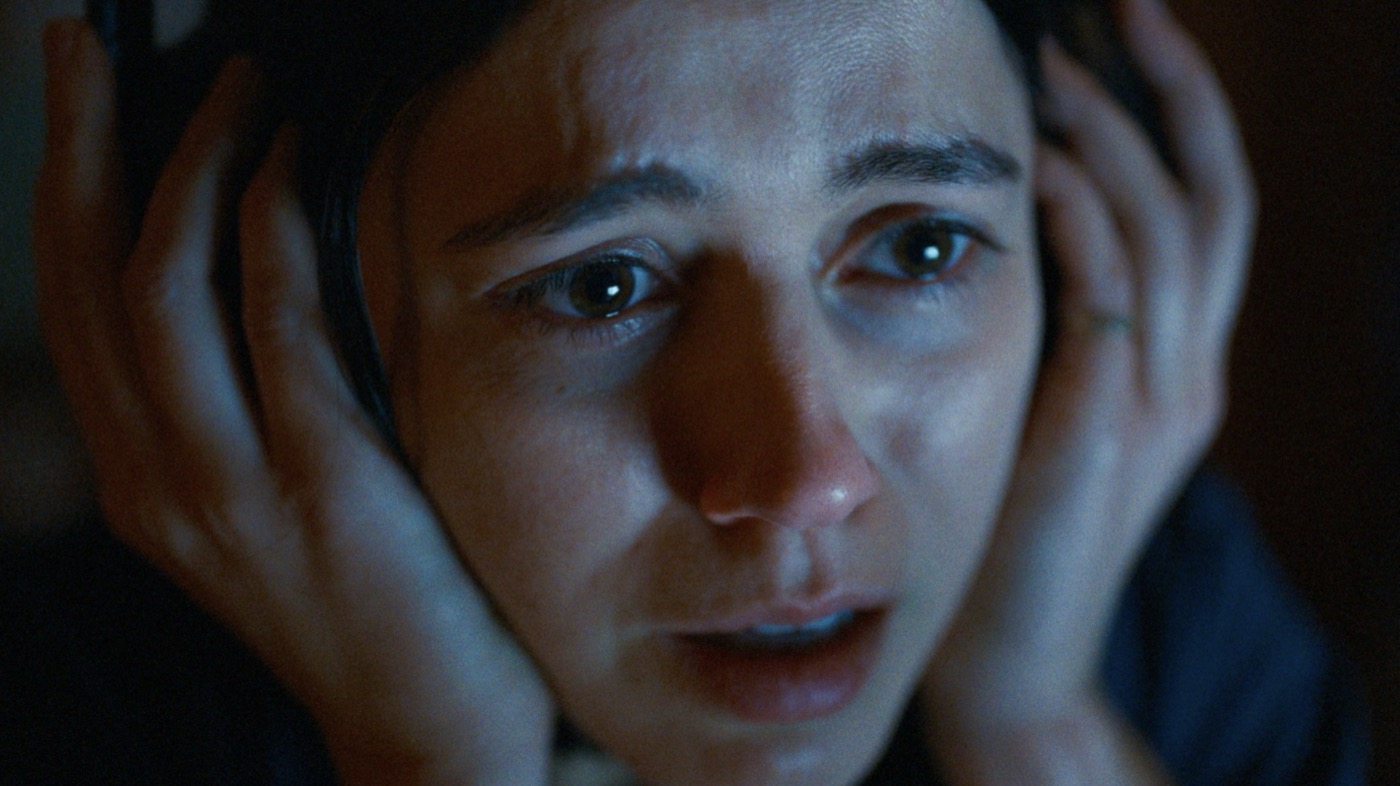
Following her recognition in The Handmaid’s Tale, Nina Kiri continues to showcase her talent for conveying psychological distress through restraint rather than melodrama. She anchors the film with a performance of remarkable control, convincingly portraying the complexities of navigating grief and mounting paranoia. She initially plays Evy as an emotionally guarded woman equipped with a pragmatic resistance to the supernatural. However, as she’s drawn deeper into the recordings, that composure begins to erode. The creeping disquiet behind her eyes subtly exposes her psychological unravelling. Her face is extraordinarily expressive; she allows the faintest gestures to communicate her descent. Whether it’s a slight misalignment of a lingering gaze or a hesitant response to her co-host, she communicates the quiet desperation of a woman consumed by the unresolved weight of her mother’s decline.
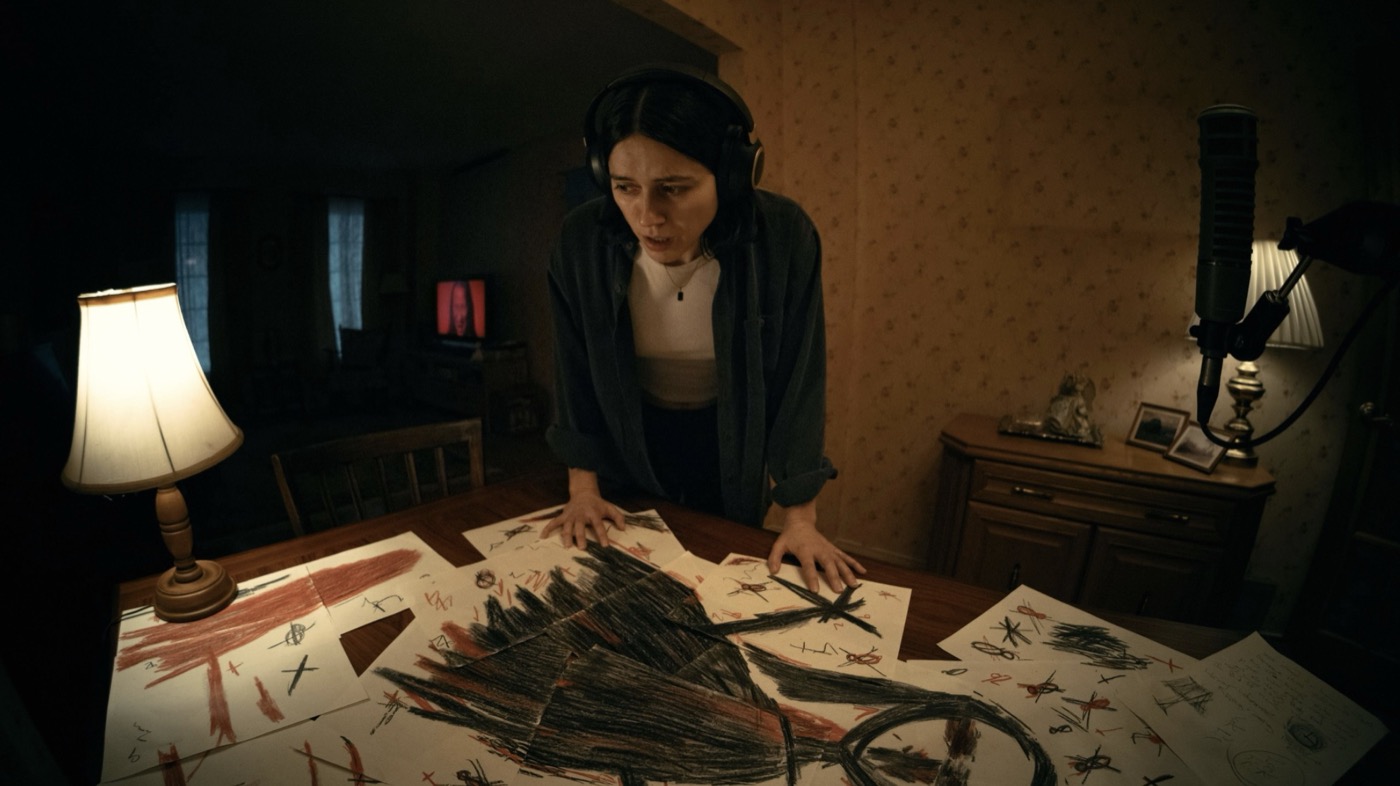
Following the lineage of many A24 productions, Tuason’s feature debut accomplishes ample scares with few resources. Produced on a reported shoestring budget of $500,000, the writer-director extracts remarkable tension from a sparse ensemble and a single location. From its opening moments, Undertone is draped in an inescapable pall. Evy’s childhood home—once a place of warmth—has curdled into something oppressive. The religious iconography crowding the walls feels almost accusatory, reinforcing the unspoken tension between Evy and her mother. Even if she won’t admit it on air, their relationship is shaped by a clash between Evy’s spiritual uncertainty and her mother’s unwavering judgement. She retreats into her podcast to avoid confrontation, but the house resists her. Each time she returns to her workstation, the unease feels more inescapable. The delicate floral wallpaper appears diseased; a faded “Last Supper” print looms with quiet accusation. The unbearable weight of remorse and the looming inevitability of death colours the 90-minute runtime—and Tuason offers the audience no escape.
Leaning towards arthouse vagary rather than mainstream thrills, Undertone never outright terrifies its audience. Yet, Tuason possesses an intrinsic ability to excavate terror from unassuming imagery. Much like Robert Eggers (Nosferatu) or Osgood Perkins (Longlegs), he is among the few contemporary horror filmmakers whose minimalism creates a truly disquieting atmosphere. This pairs wonderfully with Graham Beasley’s cinematography, which transforms mundane motifs into something unsettling. In sequences where Evy listens intently to audio files or observes her mother’s religious paraphernalia, Beasley positions his subject at the extreme margins of the frame. This negative space is weaponised to great effect, functioning like a psychological trap designed to misdirect the audience and provoke the imagination to populate the darkness. The true horror remains in the indistinguishable silhouettes in darkened hallways, materialising just enough to capture the eye before vanishing. It’s relentlessly foreboding.
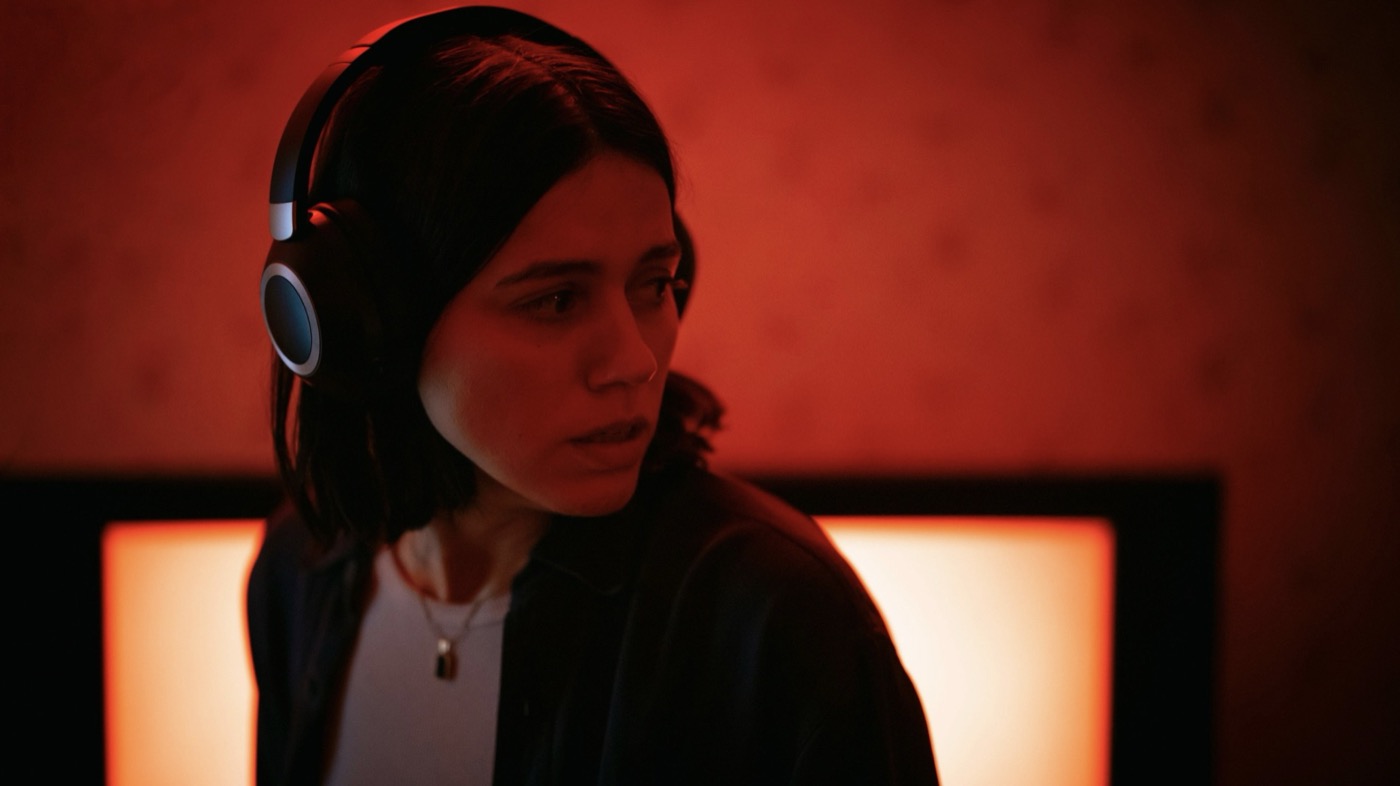
The conceit of cursed recordings will inevitably invite comparisons to Ringu (1998), but where Undertone distinguishes itself is in its incredible sound design. Tuason originally found his footing in virtual reality horror, and that experience proves invaluable. Rather than relying on visual spectacle, the director shifts the anxiety into the auditory realm. Aided by David Gertsman’s meticulous work, the smallest sonic details serve as the engine of terror. When Evy slips on her noise-cancelling headphones and the ambient room tone collapses into silence, the audience is fully immersed in her sensory headspace. Sequences of her searching for abnormalities—replaying nursery rhymes at unsettling speeds and studying looping spectrograms—become unexpectedly hypnotic. What initially seems like a gimmick encourages the audience to listen as attentively as Evy.
The effect is overstimulating in the best sense and deserves to be experienced through Dane Kelly’s Dolby Atmos mix. The precise spatialisation allows individual elements to be positioned around the soundstage, mimicking diegetic origins with greater fidelity than a conventional system. Tuason doesn’t deploy the technology for realism; he weaponises it for something more sinister. As the narrative progresses, the boundary between recorded sound and reality merges. The fading breath of Evy’s mother becomes distorted and her own footsteps echo unnaturally, suggesting these intrusions could be supernatural or merely the projections of a fracturing mind. The menacing whispers that emerge omnidirectionally and the demonic voices pulsating with low-frequency energy create a unique sonic architecture that reverberates deep within the bones.
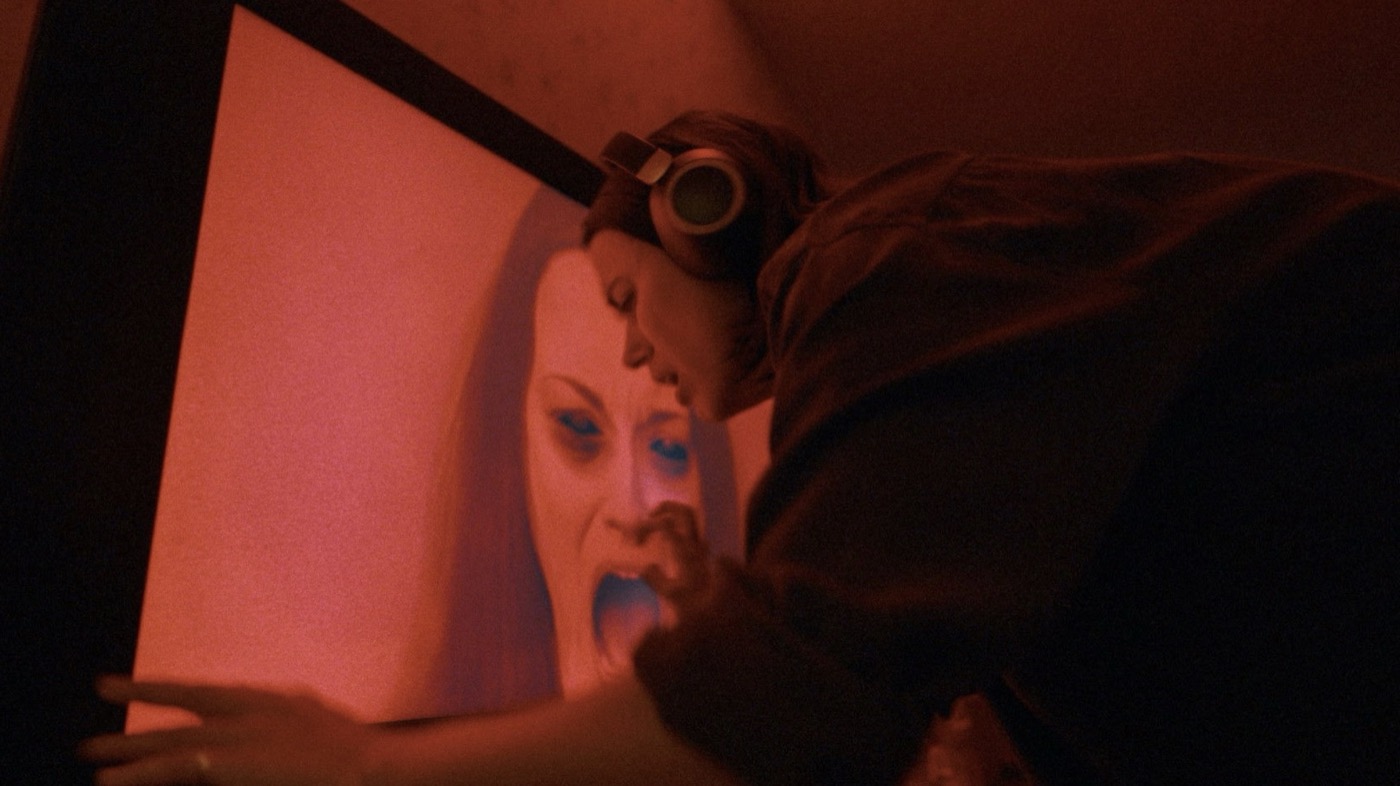
There’s a confidence in Tuason’s filmmaking that promises a long career of mystifying audiences. It’s little surprise he has been tapped to helm Blumhouse’s Paranormal Activity reboot. However, many of these technical merits are somewhat squandered by the script. The longer the narrative unwinds, the more the screenplay collapses under its own ambition. Evy’s guilt hints at a meditation on filial responsibility, while the introduction of an ancient demon associated with infertility positions the film as an allegory for maternal anxiety. Individually, these ideas have potential, but Tuason appears reluctant to fully examine them. Instead, he relies on tropes reminiscent of The Babadook (2014) or Hereditary (2018) to sustain ambiguity. While the unexplained is often terrifying, here it feels less like deliberate obfuscation and more like a reluctance to commit. Rather than weaving threads into a tapestry, the result leaves more questions than answers.
Online marketing has audaciously claimed Undertone is “the scariest movie you’ll ever hear”. While that is demonstrably overstated, Tuason certainly possesses a talent for crafting a suffocating atmosphere that tightens like a noose. Many horror films have attempted to replicate the unease of ‘Creepypastas’ or ominous YouTube links, but most misunderstand the appeal of discovery. Undertone is the rare exception that captures the feeling of stumbling down a digital rabbit hole and finding something inexplicably sinister. The underlying themes could be explored with greater depth, but Tuason’s command of tone suggests he will spend many years unsettling audiences.
CANADA | 2025 | 94 MINUTES | 2:35:1 | COLOUR | ENGLISH

writer & director: Ian Tuason.
starring: Nina Kiri, Adam DiMarco & Michèle Duquet.