TEENAGE MUTANT NINJA TURTLES Trilogy (1990-93)
A shell-shocking saga of mutants, martial arts, and New York mayhem, it's the Teenage Mutant Ninja Turtles trilogy...

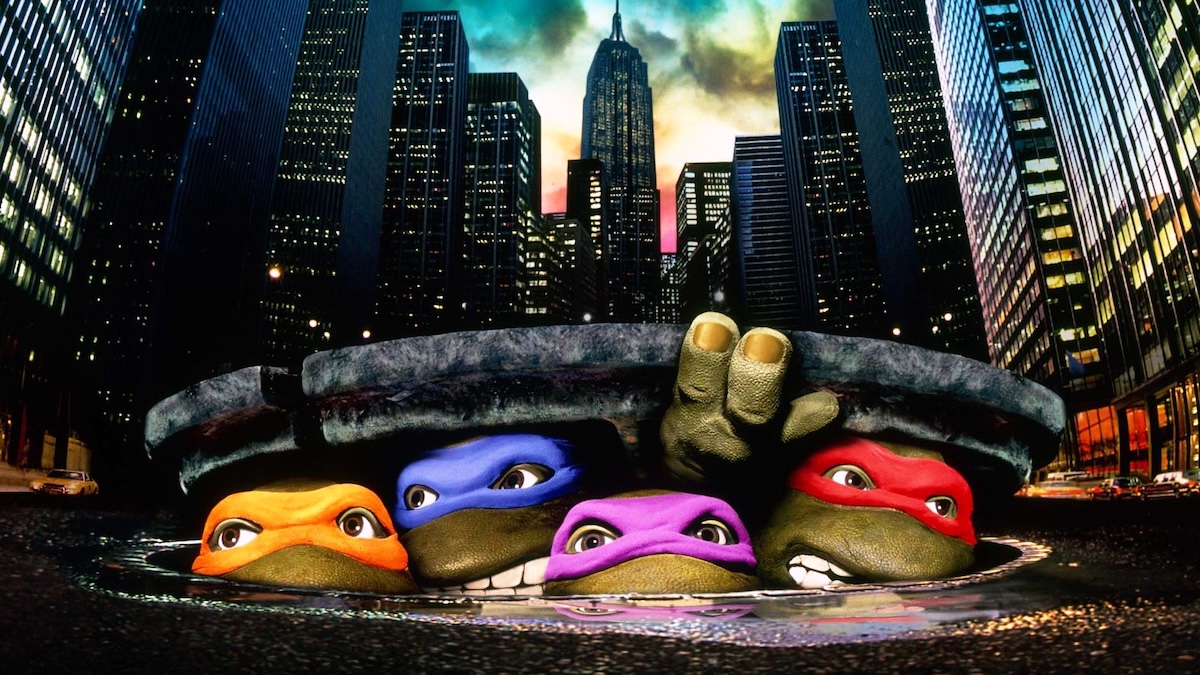

A shell-shocking saga of mutants, martial arts, and New York mayhem, it's the Teenage Mutant Ninja Turtles trilogy...
Hollywood always cashes in on the latest trends amongst children. This practice started to take shape during the 1980s, often with terrible results. The short-lived cartoon He-Man and the Masters of the Universe (1983–84) was adapted into a 1987 live-action film starring Dolph Lundgren, with limp results. It’s thus unsurprising that most of the decade’s popular cartoons only received “movies” in the glorified shape of extended “episodes” (i.e. 1984’s Transformers: The Movie or 1985’s The Care Bears Movie). It was actually more commonplace for children’s TV to sanitise films aimed more at adults, with cartoons of Rambo: First Blood (1982), Ghostbusters (1984), and even the ultra-violent RoboCop (1987)!
In 1990, things started to change with the independently produced Teenage Mutant Ninja Turtles, which was a childhood favourite for millennials like myself. It’s difficult to describe how ubiquitous the crime-fighting Turtles were back then, driven by the success of the CBS animated series (1987–1996). In a pre-internet age, school kids experienced much the same entertainment, meaning everyone watched the cartoon, bought the action figures, ate from the lunch boxes, wore the T-shirts, and played the video games. A big cultural event like the release of a live-action $13M movie seemed to come out of nowhere, but Teenage Mutant Ninja Turtles grossed a whopping $202M ($496M adjusted for 2025 inflation) and became the highest-grossing indie film ever made at the time.

Like most kids of the ’90s, my awareness of TMNT (or Teenage Mutant Hero Turtles as the cartoon was rebranded in the UK, as the BBFC disliked the violent connotations of the word ‘ninja’) revolved around the ’80s cartoon. For years, I thought director Steve Barron had intended to remake the colourful hand-drawn series in a way that appealed to Bruce Lee-loving adults; hence why it was darker and stranger in tone, with the controversial word ‘Ninja’ restored for us Brits.
I’ve since become aware that the CBS cartoon was itself adapting Kevin Eastman and Peter Laird’s cult 1984 comic-books, which offered more mature and violent content, riffing on Marvel’s Howard the Duck and Daredevil (‘The Foot’ is a blatant spoof of ‘The Hand’). Those indie comics were inked in black-and-white for a pulp noir feel, the Turtles weren’t distinguishable by colour-coded bandanas, and it was an altogether grittier take, despite being a concept that lent itself to a money-spinning reinterpretation for youngsters. In that sense, the ’87 cartoon was really no different to how kids’ TV had been translating R-rated material into family-friendly animations for years already—only a far deeper cut.
Honestly, while I loved the 1990 film because I could see my cartoon heroes in “the real world,” beautifully brought to life by the Jim Henson Creature Workshop (this film was one of Jim Henson’s final projects before his untimely death), as a boy I was disappointed it didn’t include more elements from the cartoon series. Where were Bebop and Rocksteady, the mutant warthog and rhino? Why not at least tease the alien stomach-octopus Krang and his subterranean Technodrome fortress? Was the gadget-laden Turtle Van in for repair? And why wasn’t reporter April O’Neil (Judith Hoag) rocking a signature yellow jumpsuit?
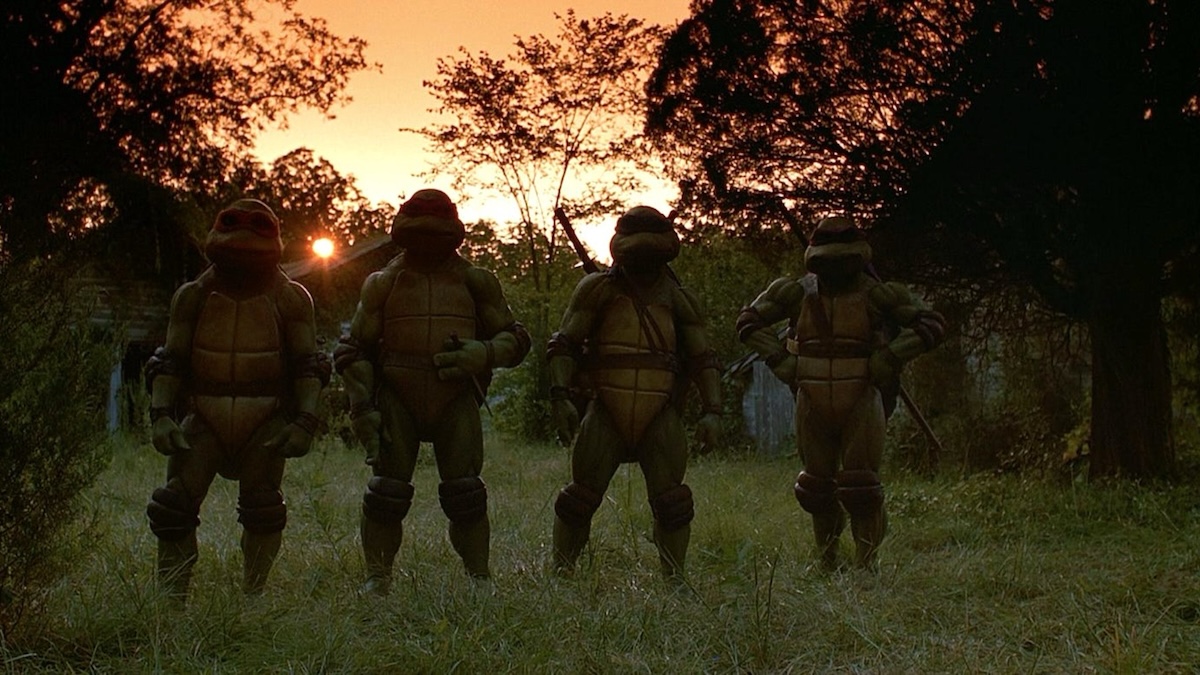
As an 11-year-old, I wondered if the recent success of Tim Burton’s Batman (1989) had influenced how TMNT turned out, as that movie similarly re-imagined what I took to be a camp 1960s TV show into a much darker adventure. And while that’s not entirely true — Batman has often been portrayed as a dark vigilante, it’s just that most people were only familiar with Adam West’s comedic approach—I still wonder if pre-production on TMNT opted to avoid the outlandish aspects of the cartoon because Burton’s Batman had been such a phenomenal success. Still, they quickly leaned more into kid-friendly silliness with its two sequels…
It was a fascinating period for adapting children’s material for the big screen, as it felt like the US film industry was more accustomed to developing stuff that appealed to adults — but knowing that kids would likely see and enjoy it on video later. (The fact American children can actually see R-rated content with an accompanying adult perhaps always skewed Hollywood’s thinking this way, in the days when domestic success was often enough to make your money back.)
The end result were “family films” of questionable tones and content, which resulted in the ’80s and early-’90s being full of edgy films intended for children that raise eyebrows today. The best example is perhaps the freakish, kinky choices that went into making Batman Returns (1992), triggering a parental outcry and backlash from McDonalds trying to sell their Happy Meals with Michelle Pfeiffer wearing a leather catsuit on the boxes.

Four mutated turtles emerge from the shadows to protect New York City from a gang of criminal ninjas.
For anyone living in a shell all their life, the Ninja Turtles are four mutated amphibious brothers, discarded into the New York City sewers, before being taken under the wing of a similarly mutated rat called Splinter (Kevin Clash), who trains them in the martial art of ninjutsu. Having grown up into wise-cracking teenagers with a craving for pizza, the Turtles —honourable leader Leonardo (David Forman, voiced by Brian Tochi), tech genius Donatello (Leif Tilden, voiced by Corey Feldman), fun-loving Michelangelo (Michelangelo Sisti, voiced by Robbie Rist), and hot-tempered Raphael (Josh Pais) — emerge into the metropolis above to fight street crime, soon befriending TV reporter April O’Neil and vigilante Casey Jones (Elias Koteas). Together, they must stop a crime spree masterminded by a mask-wearing warrior known as ‘the Shredder’ (David McCharen), who leads an underground ninja army bolstered by the city’s disaffected youth.
Viewed today, there’s a lot about TMNT that feels held back by the limitations of having gymnasts in rubber suits perform all the stunts and fights. It mostly works, but there’s not much that’s as thrilling to watch when compared to the thrills and spills of the average 1980s Jackie Chan film. That said, being produced by Golden Harvest, a leading Hong Kong film studio, means there’s always a strong tactility to the action sequences. The amazing animatronic suits, while occasionally showing limitations when it comes to lip-syncing, are a marvellous way to bring the characters to life and make them feel part of the environments. When the Turtles were remade using full-CGI in 2014, what we gained in photo-realistic movements and flesh we lost in design, charm, and believability.
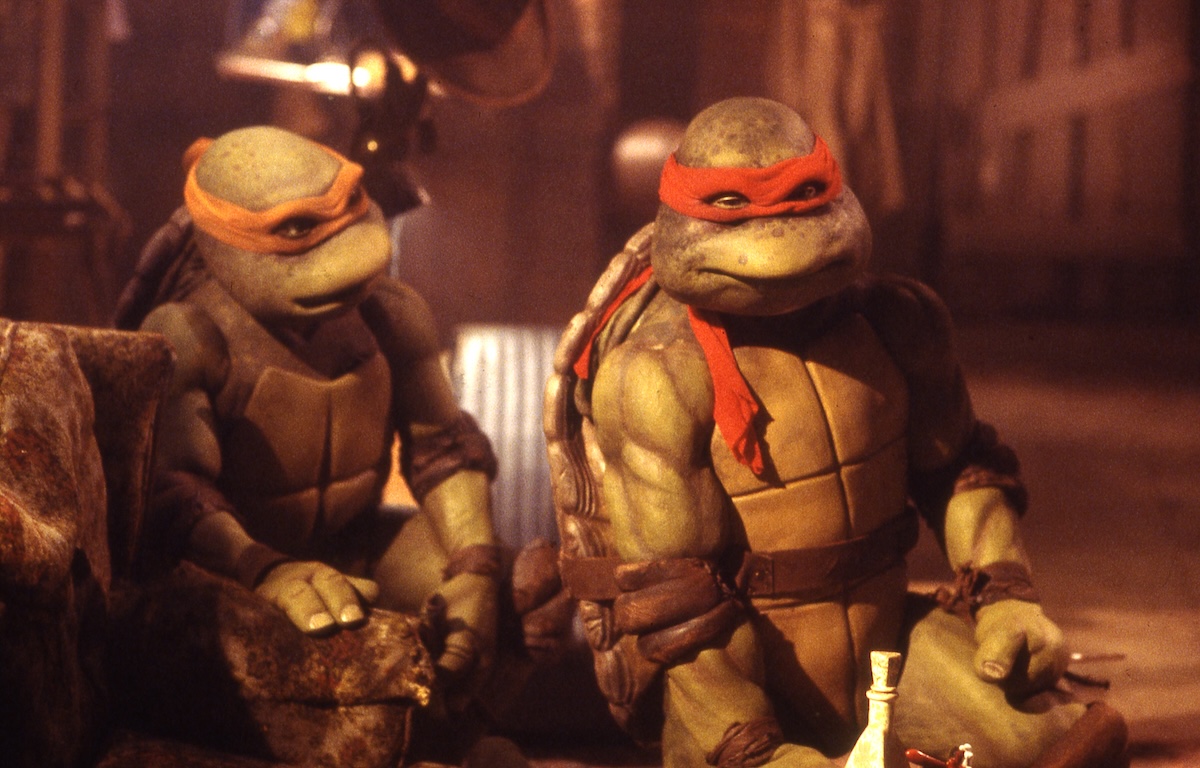
The film’s more of a visual treat than anything else, but it does have solid messaging about family. Splinter and Shredder are surrogate father figures, but at opposite ends of the spectrum: Splinter teaches discipline and respect to the Turtles, accepting his “sons” are of an age where they are naturally playful and mischievous; whereas Shredder is luring rebellious teens away from their parents, with the promise of money and a cool warehouse to hang out playing games and skateboarding, for no good reason beyond increasing his own power and wealth.
The two human performances are decent fun too, even if Judith Hoag’s role as a reporter does not effectively play into April’s storyline. But she’s fun in the role, and it must have been tough to play opposite the Turtles, which is likely why they hedged their bets by involving the Casey Jones character, for her to bounce off more in the second act. Elias Koteas (Crash) is also good, effectively doing a version of the Han Solo handsome scoundrel trope to April’s more down-to-earth Princess Leia. Their relationship is certainly clichéd and a version of something we have seen many times, but both characters don’t fade into irrelevance as they might have done with two weaker actors.
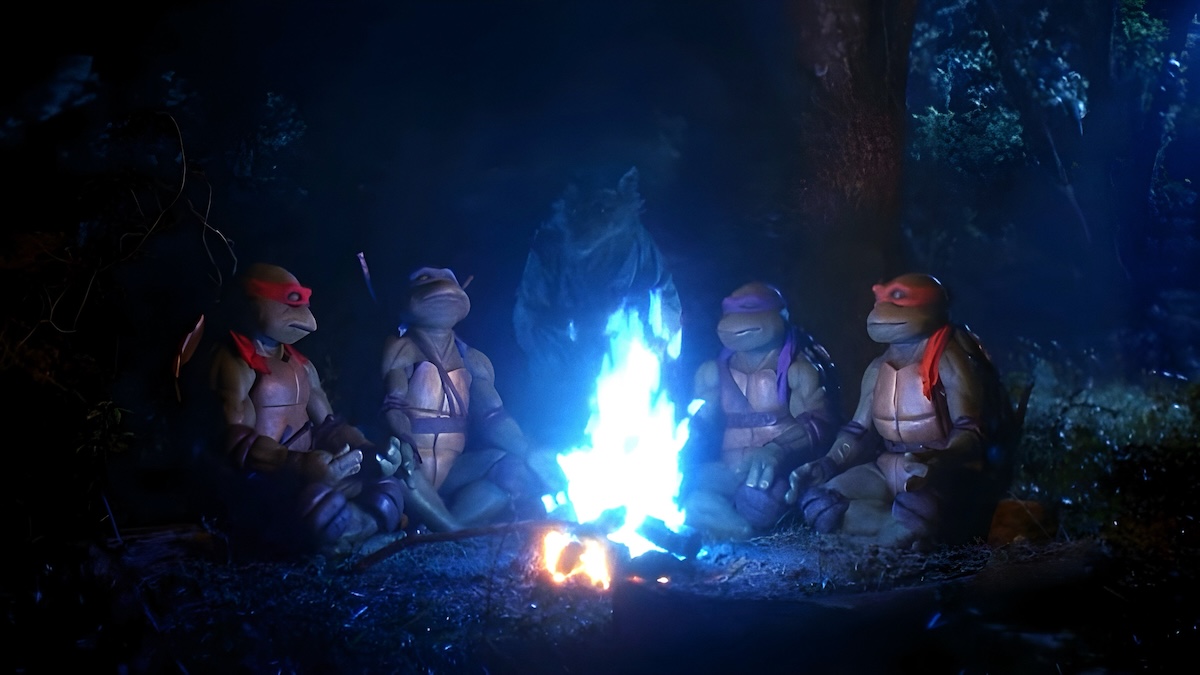
What remains unexpected about TMNT is just how much it feels like an adult film, with John Fenner’s cinematography making New York City look as dirty and grimy as it felt in ’80s gangster films. There’s no attempt to beautify the place just because this is a kids’ film, partly because so few scenes take place in broad daylight (perhaps to hide the seams of the Turtle suits), and this gives TMNT a peculiar vibe. It looks and feels like they wanted to emulate Taxi Driver (1976), but with giant turtle-men and goggled ninjas leaping around brownstone rooftops, with a talking rat and a guy wearing a suit of knives.
Many fans speak about the later CG animated film, Teenage Mutant Ninja Turtles: Mutant Mayhem (2023), being the first time these characters felt like actual teenagers, but that’s a little revisionist. The 1990 Turtles are likewise silly and immature, dancing around to “Tequila” rather than meditating with their sensei, teasing each other, having stupid disagreements, and only eventually learning to come together in peaceful communion in order to speak to a kidnapped Splinter psychically. I think their adolescent nature is just harder to remember when placed against such an otherwise dark and fairly serious backdrop. There aren’t too many outright comical moments that lean into their childish personalities and fun-loving nature, beyond the odd sight gag—like Michelangelo’s head ducking into his shell to avoid a lethal blow.

There are certainly problems and disappointments in the film, which were apparent even back when it was released. Shredder looks formidable but ends up being a rather tedious villain with none of the personality the character had in the cartoon; some of the fights lack a spark and quality that makes you believe the Turtles are incredibly skilled fighters (Michelangelo seems to think spinning a single nunchaku is a peak demonstration of talent); April’s written as assertive but frequently become a damsel in distress who needs rescuing; the crime spree storyline does not escalate or go anywhere interesting with bigger stakes; the mid-story retreat to a farm for the Turtles to recuperate slams the brakes on the narrative flow too much; and the final confrontation with Shredder is a colossal disappointment.
I would love to say TMNT taught Hollywood how to translate children’s IP into a successful live-action film, and things were forever improved… but, of course, we were two years away from the epic disaster of Super Mario Bros. (1993). But TMNT was a rare success during a time when pleasing kids while satisfying adults didn’t come as naturally to studios, and only Disney animations soon found a formula they kept recycling with Aladdin (1992).
HONG KONG • USA | 1990 | 93 MINUTES | 1.85:1 | COLOUR | ENGLISH • FRENCH
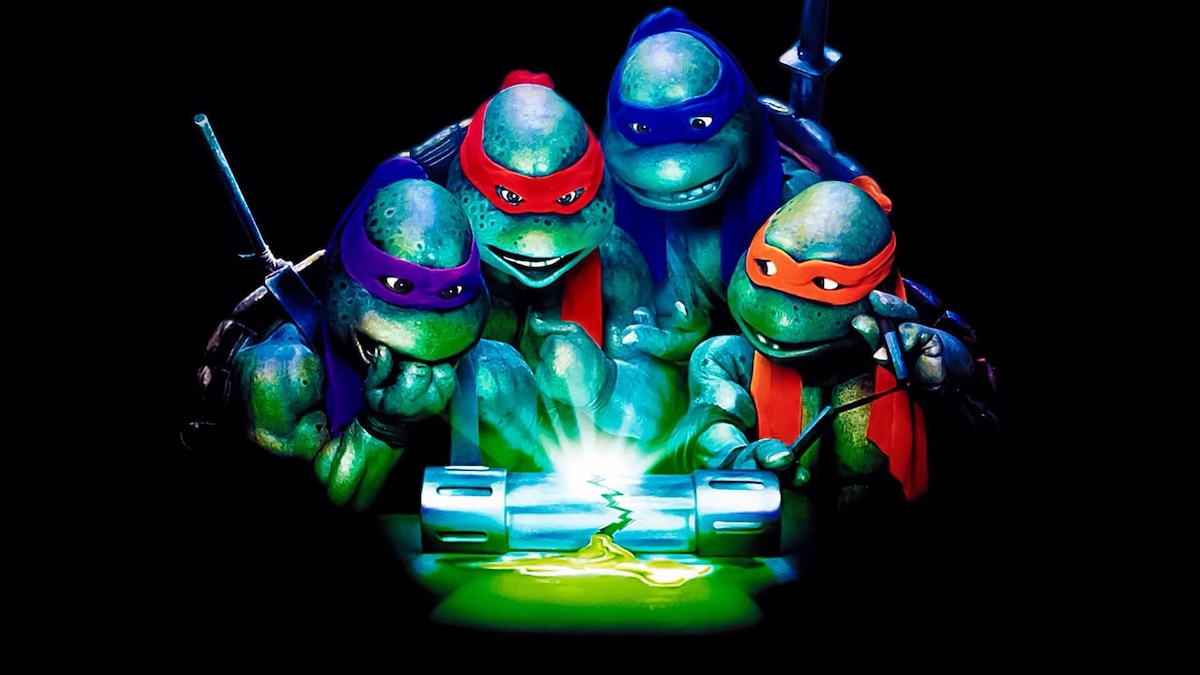
The Turtles discover their origins while they endeavour to save New York City from the evil Shredder and his Foot Clan.
As the first film had been a huge success, a sequel was fast-tracked into production and released only a year later. Hearing the concerns from parents about TMNT’s unexpectedly “adult” tone and instances of swearing (is “DAMN” really all that upsetting?), Teenage Mutant Ninja Turtles II: The Secret of the Ooze was toned down to be a more family-friendly adventure. But while it smoothes some rough edges, it’s still not as imaginative as the animated series that was still extremely popular, although it explores areas of the lore one might have expected to be the focus last time…
In Secret of the Ooze, Shredder (François Chau) somehow survives being crushed to death in the back of a trash compactor, so re-assembles the remnants of the Foot Clan and swears revenge on the Ninja Turtles. His plan involves using the “ooze” that mutated them, by kidnapping the head scientist behind the ‘mutagen’, Professor Jordan Perry (David Warner), and forcing him to create two super-strong allies in the form of snapping turtle Tokka and grey wolf Rahzar.
The sensibilities of this sequel are more lighthearted and family-friendly, with an emphasis on humour and the fun interplay and banter between the Turtles. The ooze and the mutated enemies shift the film away from trying to apply a bit of “seriousness” to the concept, instead appealing more directly to children who just want to see their half-shell heroes fight monsters as they do in the cartoon. And while diluting the TMNT concept leads to some questionable decisions — like the Turtles rarely using their ninja weapons (especially Raphael’s sai and Michelangelo’s nunchaku), sometimes even replacing them with food items — I don’t remember this even occurring to me as a boy. But it doesn’t hurt the film too much, as there’s otherwise more action and hand-to-hand combat than we saw in TMNT.
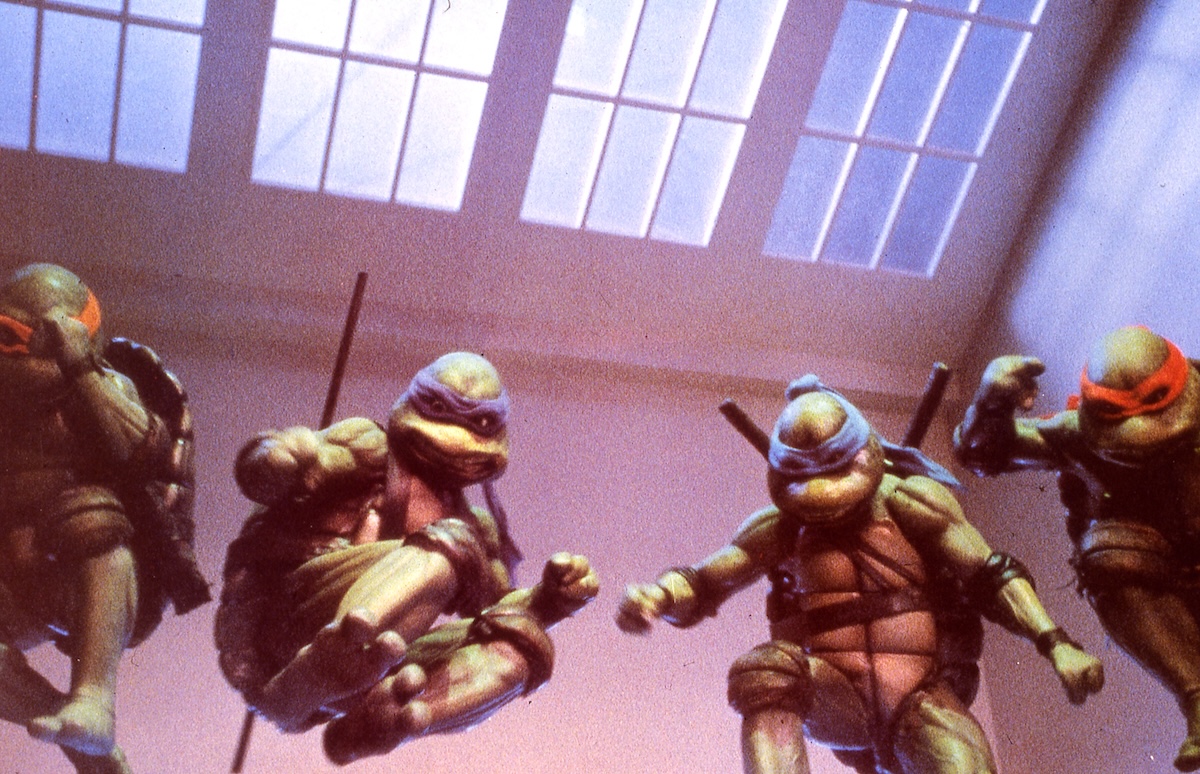
April O’Neil (Paige Turco) also returns, but Judith Hoag doesn’t reprise the role —allegedly because producers disliked her moaning about the long hours on set and the amount of violence. Turco’s a decent alternative (despite looking even less like the cartoon character than Hoag), but after a promising reintroduction as a close friend of the Turtles whose apartment is regularly trashed by their partying, before a segue into reporting on a toxic waste leak, April’s role soon diminishes. She’s not involved in anything that matters by the end! Shredder even has to threaten the life of a random stage musician at a nightclub during the climax, when it feels like April could have been in that position after trailing the action and being more of a participant in events alongside David Warner.
Ditto the Turtles’ new human friend, pizza delivery driver Keno (Ernie Reyes Jr.), who is set up well as another martial artist who can join the adventure, but spends most of the film meditating with Splinter — who warns him against getting involved in any fighting, which is advice Keno wisely ignores to at least get a key moment of heroism towards the end. It feels like the producers just loved working with Reyes Jr. so much (he was Donatello’s stunt performer in TMNT), that they created this entire character for him to get his face on camera, but they neglected to give him anything worthwhile to do.
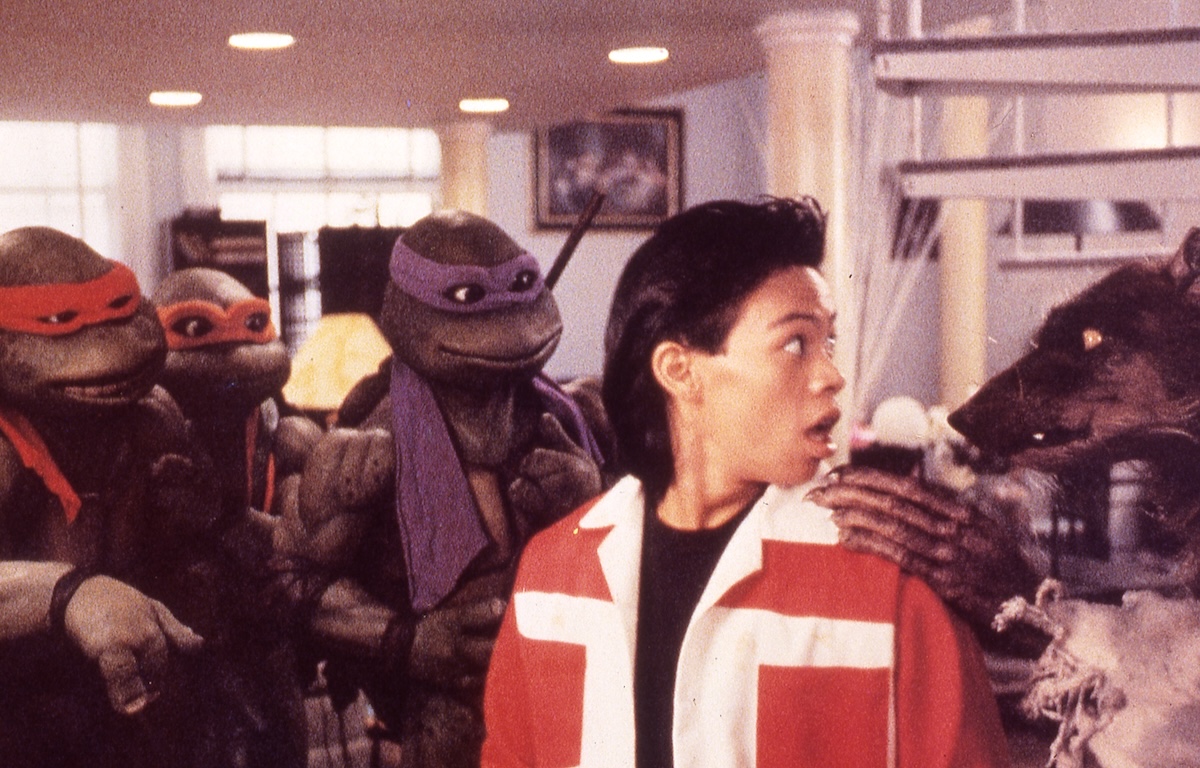
With a doubled budget of $25M, it’s hard to see where that extra money went. There are two new mutant monsters to create, an impressive new set for the Ninja Turtles’ lair in an abandoned subway station, and maybe David Warner’s agent haggled a hefty pay cheque, but there’s otherwise not a great deal that makes Secret of the Ooze feel like it needed to cost twice as much.
Perhaps the increased time the Turtles are on camera ate into the production budget, as there’s certainly little time spent on anything else and no big subplots to explore. The Turtle suits, still created by Jim Henson’s Creature Workshop, also seem to allow the performers a greater degree of movement this time. The kicks and flips they’re all able to pull off are remarkable, given how cumbersome one would imagine these costumes would be to even walk around in! But perhaps concessions were made with the animatronic heads, which seem slightly less nuanced than before. The quality of the lip movements looks more staccato. And with more scenes being filmed during the day or on brighter sets, you notice a few more seams — especially around the necks where the heads attach to the suits.
I saw Secret of the Ooze at the cinema and thought it was much better than the first film. It was closer to the cartoon’s tone in several ways, which I thought was a definite improvement. Today, I still think this sequel is a good follow-up, but it does feel more disposable and silly when seen through adult eyes. It does a worse job with its human characters, the story is far too simplistic, and the possibilities inherent in the idea of mutating gunk don’t get properly explored. It took until the Mutant Mayhem movie to really lean into the potential there! Even the fantastic idea of the Turtles facing a mutated ‘Super Shredder’ only lasts a few minutes at the end, with a disappointing act of self-defeat under a jetty that Shredder seems hell-bent on dismantling.
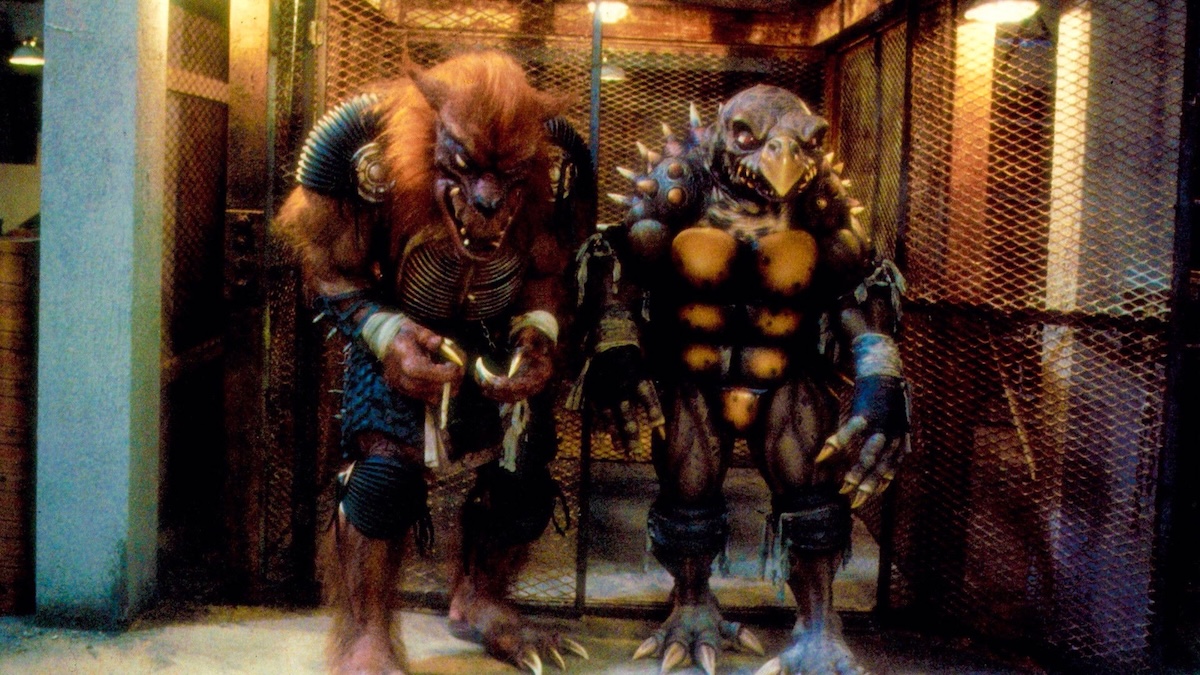
I could also never understand why Tokka and Rahzar weren’t written to be Bebop and Rocksteady from the cartoon, but apparently it’s because those characters were new creations for the 1987 series and co-creator Peter Laird disliked them for being too one-note. His partner Eastman denies this explanation, however, saying they just wanted to expand the TMNT lore and create new enemies —which I think sounds more plausible, as Tokka and Rahzar are even more one-note than their animated counterparts.
While certainly not as fascinating or noteworthy as TMNT, Secret of the Ooze has its charms and provides enough good-hearted family fun and action-comedy nonsense. If nothing else, there’s a lot to poke fun at when viewed today, such as the Turtles randomly stumbling upon a nightclub performance by rapper Vanilla Ice mid-fight —who almost immediately breaks into the now-iconic “Ninja Rap”. Does anything date a 1991 film more than this sequence? Maybe Ice’s fee took up most of that $25M budget, who knows.
HONG KONG • USA | 1991 | 89 MINUTES | 1.85:1 | COLOUR | ENGLISH
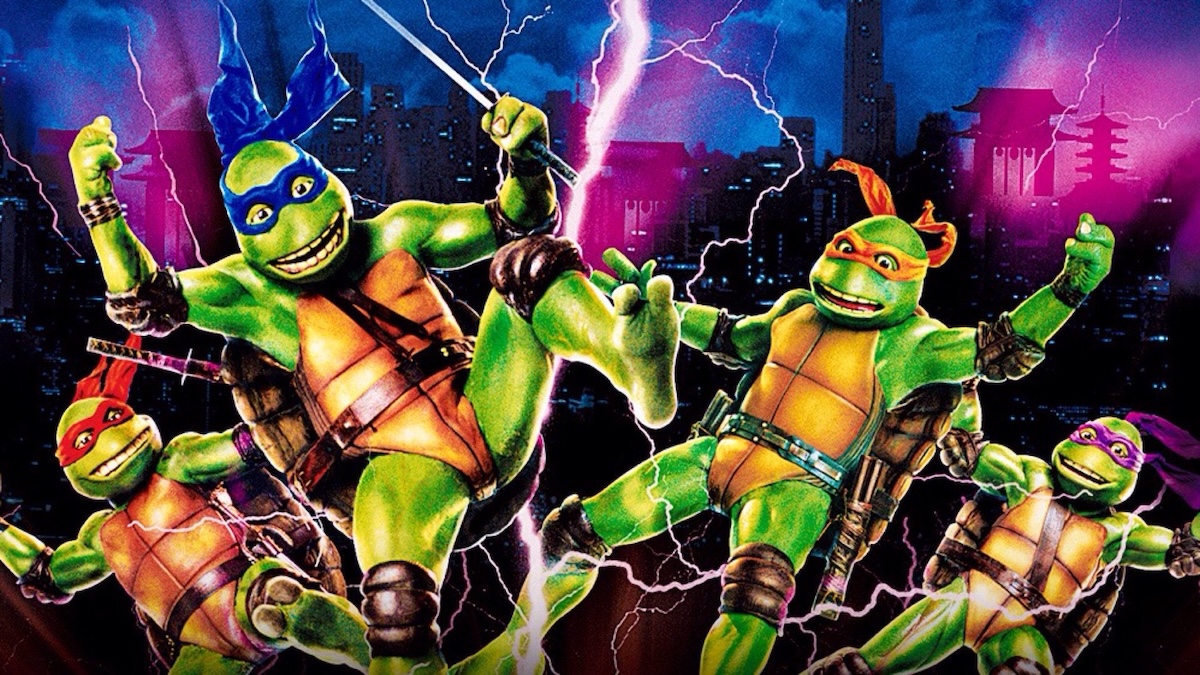
When April O’Neil discovers an ancient sceptre with magical powers, the Turtles travel back to 17th-century Japan to rescue her from the evil clutches of Lord Norinaga.
Despite the CBS cartoon running until 1996, the TMNT brand was fading by 1993. Kids embrace trends with great enthusiasm, but every fad reaches saturation point. And while the Turtles have enjoyed several revivals since and remain well-known pop culture icons, that first mainstream success only lasted a smidge into the ’90s before fizzling out.
Ironically, having become an actual teenager by the time Teenage Mutant Ninja Turtles III came out, I wasn’t as keen on the franchise. Jurassic Park (1993) and dinosaurs were all the rage. And to be honest, as new cartoon episodes had become less accessible in the UK (as the series transferred to the niche of satellite TV), there wasn’t as much widespread interest in the Turtles by this time. I didn’t even know this film existed for years after its release, such was the extent that TMNT had dropped off my radar. In some ways, the baton was passed to Mighty Morphin’ Power Rangers (1993–95) — the best of the many shows trying to emulate the success of TMNT with a similarly cumbersome title and teens doing martial arts, only with added Transformers-style giant robots!
Teenage Mutant Ninja Turtles III (often erroneously referred to as Turtles in Time, which was a video game) takes the cartoonish evolution of these films a step further than even the brighter, softer-edged Secret of the Ooze. The third film is seriously wacky, with a story that finds the Turtles thrown back in time to feudal Japan and mistaken for kappa (water demons). Of course, by immediately removing the franchise’s iconic Big Apple backdrop and most of its related elements, a great deal of what fans enjoy about TMNT is lost. The idea would make a great episode of the cartoon, where you know you’ll be back to familiar surroundings soon, but as the backdrop to a whole film… it’s a problem.
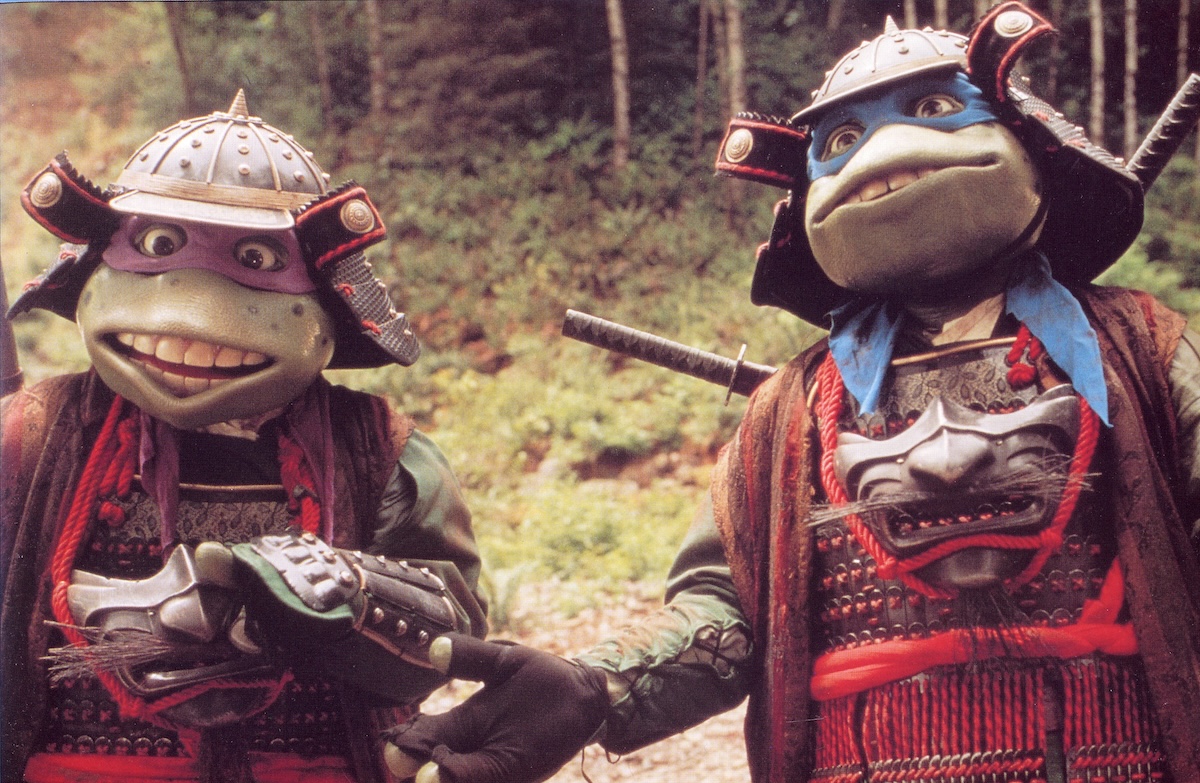
Here, April buys a Japanese sceptre at a flea market and finds it has the ability to make you switch places (and clothes) with someone from Japan, circa 1603. April thus finds herself thrown back in time to the Land of the Rising Sun, to be imprisoned by soldiers loyal to Lord Norinaga (Sab Shimono), who is feuding with his son Kenshin (Henry Hayashi), just as an English trader called Walker (Stuart Wilson) has arrived to supply Norinaga with arms and men. Prince Kenshin is simultaneously thrown into modern-day NYC, appearing before the astonished Ninja Turtles, who decide to use the sceptre to mount a rescue mission —switching places with four of Norinaga’s honour guards — but time’s of the essence as the sceptre’s power is fading.
The TMNT trilogy is interesting for broadly doing what fans demanded and fixing some mistakes as they go, but also forgetting to keep what had actually worked. The third film is the closest in tone and spirit to the ’80s cartoon; it brings back fan favourites Casey Jones and Corey Feldman to voice Donatello, April gets more to do, and the scale and ambition of the story exceeds both of the previous films in many ways. However, it’s hobbled by losing the services of the Jim Henson Creature Shop, as the Turtles themselves are noticeably less expressive and look cheap.
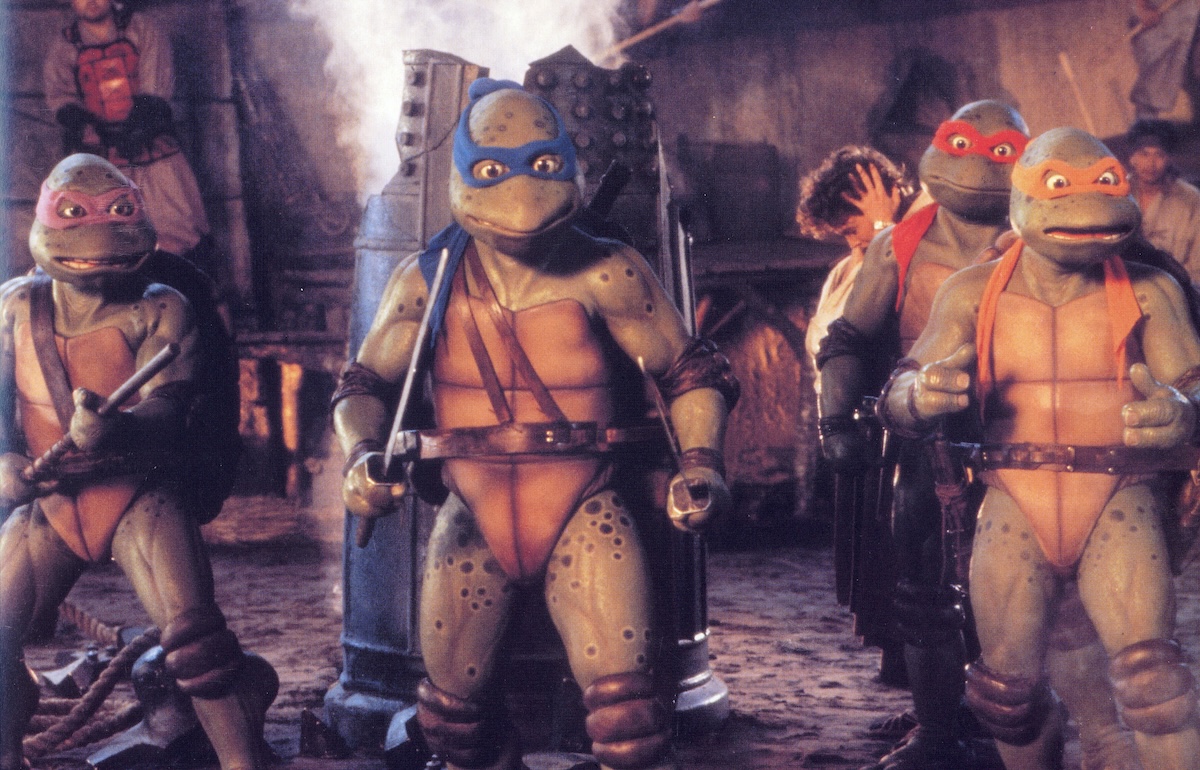
The Turtles’ now talk with an off-putting snap of their rubberised lips, their lime green bodies are covered in weird ‘liver spots’, and the cinematography doesn’t hide any of the shortcomings in frequent bright daylight. They’re not atrocious suits, but the drop in quality makes TMNT III feel like a feature-length TV pilot rather than a $21M film — that’s only $4M less than the last film. It feels like the money went on the location shooting, the large sets, the period costumes, and employing a wider variety of actors and stunt performers. Splinter actually fares much worse than the Turtles, looking like a giant rat plushie (also now voiced with less personality by James Murray).
There even appears to be some residual Bill & Ted’s Excellent Adventure (1989) influence, as the present-day storyline finds Casey Jones babysitting the Japanese guards that switched places with the Turtles, so he shows them life in a modern city with not-so-hilarious results. And all those characters have no defining identities. It makes you wonder why they didn’t simplify the story by having everyone go back to feudal Japan, but presumably they knew the story wasn’t substantial enough to be the sole focus for 96 minutes.
TMNT III will likely appeal to the younger members of the fanbase, perhaps below the age of seven. But beyond that, it’s difficult to find much that’s compelling about the story or characters, and you’re constantly aware that the Turtles don’t talk as believably and their comedy antics aren’t as amusing or witty as they’d been (at times) in the earlier films.
USA • HONG KONG • CHINA • JAPAN | 1993 | 96 MINUTES | 1.85:1 | COLOUR | ENGLISH

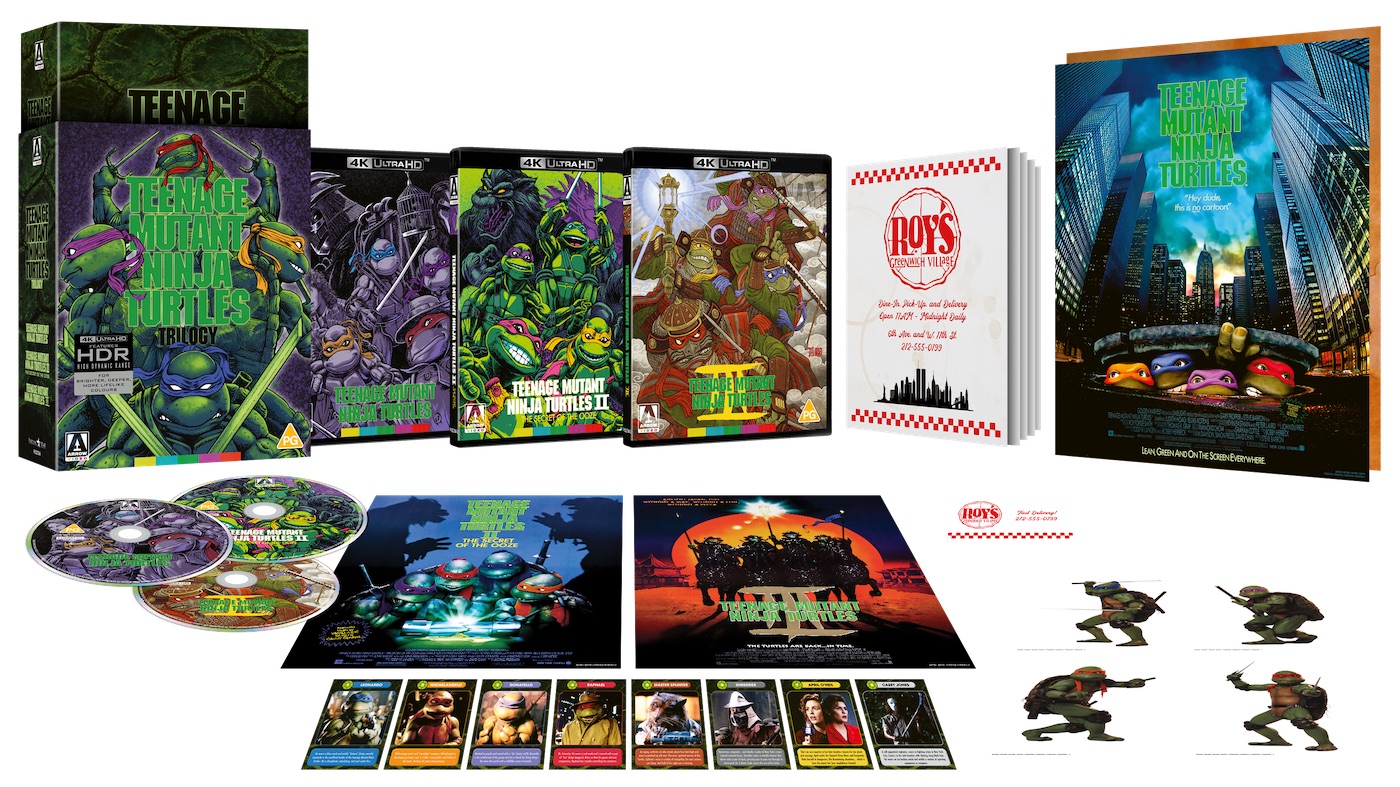
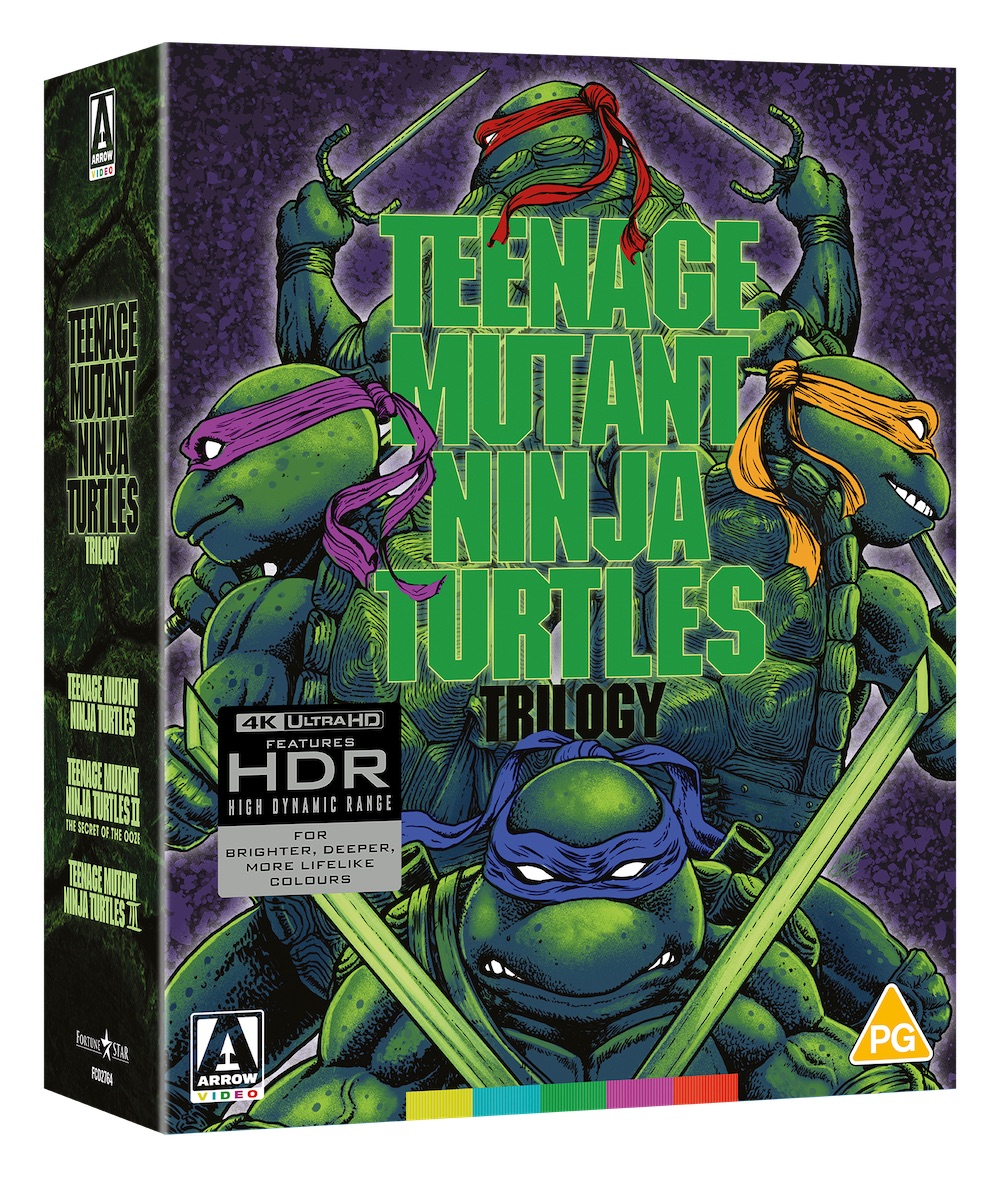
Arrow Video brings the beloved Teenage Mutant Ninja Turtles trilogy to 2160p 4K Ultra HD with transfers that are significant upgrades over the previous Blu-rays, although I wouldn’t call them a major revelation to my eyes. They’re simply great preservations using the 35mm prints, delivering sharper details and better colour presentation.
They all still look like products of their time, with the first movie steeped in shadows that don’t suddenly reveal previously hidden details thanks to Dolby Vision HDR—although the over-darkened scenes on earlier home releases have been fixed here. Fans will also appreciate that Arrow hasn’t used aggressive Digital Noise Reduction (DNR) to smooth all the film grain away, so it still looks like a movie shot on celluloid with that slightly grungy indie film aesthetic.
TMNT II and III both offer good visual presentations too, blessed with vibrant colours and improved textures in 4K. The second film was scanned to 4K using an interpolative print, not the negative, but details are great and the textures on the turtle suits really stand out well.
III looks the cleanest in some ways, being the newer film. However, Shelly Johnson’s cinematography in TMNT II eclipses what Canon Films stalwart David Gurfinkel achieved with the final movie — which looks like one of those slightly too-vibrant Canon action movies — so overall, I prefer the look of II. But both sequels are excellent visual upgrades.
TMNT enjoys a full Dolby Atmos upgrade to the audio, while the sequels have to make do with the still-good DTS-HD Master Audio 5.1 and lossless LPCM stereo mixes. All the tracks sounded good to my ear, but this is a rare case where the Atmos is good, but the stereo mix seems to do a better job with the dialogue. There’s also a special “warrior” sound mix for TMNT, which is apparently the stereo encoded with DTS-HD for a moderately superior experience.

directors: Steve Barron (TMNT) • Michael Pressman (TMNT2) • Stuart Gillard (TMNT3).
writers: Todd W. Langen (TMNT, TMNT2) • Bobby Herbeck (TMNT) •Stuart Gillard (TMNT3). (Based on characters created by Kevin Eastman & Peter Laird).
starring: Judith Hoag (TMNT) • Elias Koteas (TMNT, TMNT3) • Paige Turco (TMNT2, TMNT3) • David Warner (TMNT2) • Stuart Wilson, Sab Shimono & Vivian Wu (TMNT3).